
Bilbao
Museum itinerary · Bilbao

The Bilbao estuary from Portugalete’s Rialia to Santurtzi’s Museum of the Sea

Ironworks, fishing and a walk along the left bank

See how factories and rail shaped Portugalete at Rialia. Continue to Santurtzi’s fishing port for the stories of river pilots and sardine sellers. Compare the waterfront walk with the Renfe C-1 route and allow time for each museum’s morning hours.

Museum stops
2
Visits and transfers
2 hr 57 min
Suggested days
Tue, Wed, Thu, Fri, Sat, & Sun
Why these museums go together

Start with iron, industry and the way Portugalete related to the estuary. Then follow the water to a fishing community and look at the very different work that took place closer to the sea. Leave time to see the waterfront between the two museums.

Rialia explains how iron ore, transport and factories shaped the left bank of the Nervión. Santurtzi’s Museum of the Sea shifts to the fishing harbour and work done on and beside boats. Walk the water between them, looking for how directions, distances and shore conditions shaped both kinds of labour. Follow one thing moving outward from Portugalete and one thing moving inland from Santurtzi. You will see how the same estuary supported several distinct economies.

HistoryLocal heritage
Route map
© OpenStreetMap contributors

The itinerary, stop by stop

Stop 1 · 1 hr 15 min
Rialia Industry Museum

Use Rialia’s themed floors to trace industry from the Altos Hornos de Vizcaya model to the relationship of transport, iron and the river. Look for a detail showing how material got to or from a factory and connect it to a worker’s story. End with the Portugalete and maritime landscape section where accessible. Before leaving, point to the banks and routes that you will follow in person.

What to look for

Altos Hornos de Vizcaya model
Look at how the plant fits beside the water and routes its materials. Use the scale model to trace a connection between industrial equipment and the landscape.
Iron and labour
Choose an object or documentary in the iron material. Read how processes depended on workforces and how deindustrialisation changed the district.
Rail and machinery
Where available, look for material on the Babcock & Wilcox locomotive or other machinery. Relate its movement or power to what you saw at the plant model.
Portugalete’s maritime landscape
Use the town and estuary floor to place the bridge and water in the same view. It helps turn the next walk into part of the visit.

Walk · 27 min

Getting to Santurtzi Museum of the Sea

Walk via Paseo de la Canilla, Portugaleteko Burdinazko Kaia, Puerto Pesquero de Santurtzi. The mapped pedestrian route is about 2.06 km; allow 27 minutes door to door. The Renfe Cercanías C-1 is an alternative: board at Portugalete on Manuel Calvo, pass Peñota and alight at Santurtzi. Allow about 10–12 minutes for the short train ride and the two walks combined, plus time to reach the platform and wait. Compare actual departures with the waterfront walk before leaving Rialia.

Stop 2 · 1 hr 15 min
Santurtzi Museum of the Sea

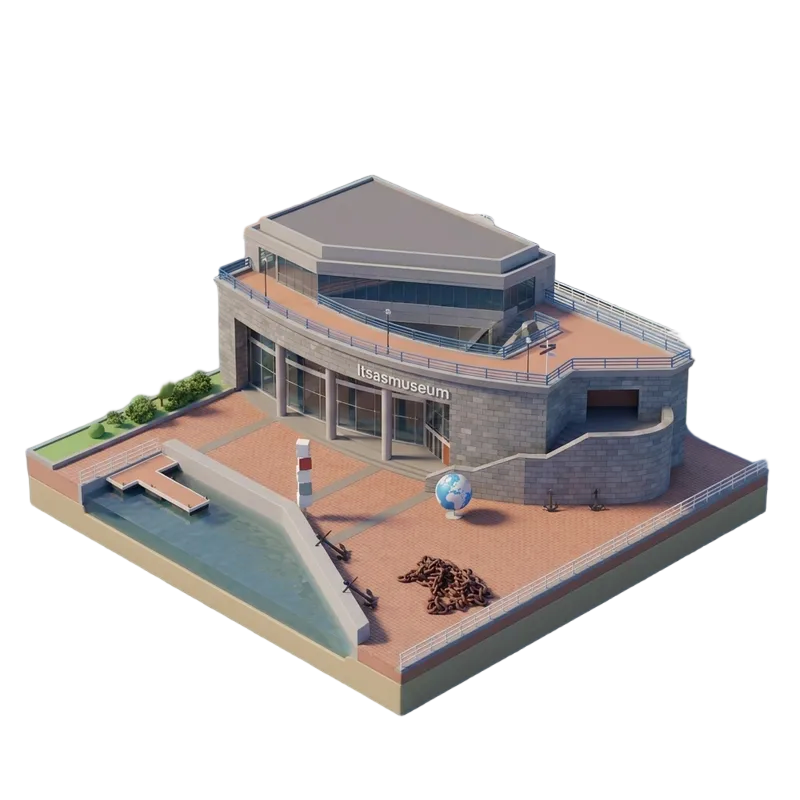
Find the Museum of the Sea in the fishermen’s guild building at the fishing port. Start with navigation and the difficult estuary entrance, then move to local fishing and the lives of sardine sellers. Read one story about people who worked on shore as well as people on boats. Finish by looking outside from the port edge or comparing the modern fishing harbour with the maritime view you left after Rialia.

What to look for

The estuary bar and pilots
Follow the explanation of the sandbar that complicated access. Picture the knowledge a pilot needed to bring a ship across it.
The sardine sellers
Look at how sellers followed the fleet and carried fish to markets inland. This is maritime work even when much of it takes place away from boats.
Boat races and local practices
Use the material on rowing races when shown to compare a boat’s working role with its later sporting or public identity.
The harbour outside
After the inspection of shore and boat work, look for where the guild building sits in relation to moorings and paths. If you want to board Agurtza, treat it as a separate visit.
Timing, booking and admission

Set your pace

Start Rialia at its usual 10:00 opening and spend 75 minutes comparing the model of industry, the estuary and the town. Leave around 11:15. The mapped waterfront walk is about 2.05 kilometres; allow 27 minutes at an ordinary pace and extra time for a stop near the bridge or old port edge. Aim for Santurtzi around noon and allow 75 minutes for the interpretation centre. If you take the C-1, check the next departure before leaving. Walking can be as quick door to door once the platform wait is included.

What to book ahead

Do this outing in the morning. Rialia closes at midday and only opens mornings on Sundays and holidays. Check Santurtzi’s last entry and any separate booking if adding the Agurtza boat.

Tickets and museum passes

Rialia lists its own admission, Tuesday conditions and a reduced category referencing Itsasmuseum or the coastal museum network on the tariff page. Check eligibility instead of assuming entry to either stop is covered. Santurtzi’s Museum of the Sea and the Agurtza fishing boat can involve different tickets or visit arrangements. This itinerary budgets for the interpretation centre, not the extra time of a scheduled boat visit.

Sources and route research

Explore Inspiring Art Exhibitions in Bilbao Museums
Experience the vibrant Basque artistic heritage and creative showcases.
Immerse yourself in the creative landscape of the Basque Country. Plan your next cultural outing by discovering museum exhibitions in Bilbao. Find diverse art displays, historic retrospectives, and contemporary design showcases across various local institutions.
Visitable Storage Exhibition at Euskal Museoa Bilbao
Euskal Museoa Bilbao
Permanent exhibition

Visitable Storage Exhibition at Euskal Museoa Bilbao

Go behind the scenes to explore anthropological museum conservation.

Experience a specialized guided tour of anthropological objects not featured in the main galleries. Learn how the museum manages, catalogs, and conserves its heritage collection.

Visitable Storage Exhibition
Watercolor and ink drawing of gestural hands in purple washes, featured in the Eskuak exhibition by Eduardo Chillida and Nicolás de Lekuona.
Michel Mejuto Gallery
From Sep 7, 2018

Chillida and Lekuona Drawings at Michel Mejuto Gallery

An artistic dialogue focused on expressive Basque hand studies.

Explore sketches and charcoal studies by Eduardo Chillida and Nicolás de Lekuona. Learn how these Basque modern artists investigated human gesture through draftsmanship.

View Exhibition Drawings
Purple watercolor sketch showing a small wooden beach shack suspended by ropes inside a gallery, representing June Crespo's installation Pura vida.
Michel Mejuto Gallery
From Jul 12, 2006

June Crespo: Abierto por vacaciones III at Michel Mejuto Gallery

A contemporary sculpture residency project by June Crespo.

Explore the conceptual installation 'Pura vida' by emerging artist June Crespo. The work features a human-scale shelter built from construction materials, contrasting an exotic exterior with an intimate interior.

View Exhibition Details
Bilbao

Explore Museums in Bilbao: Your Guide to Cultural Attractions

Discover artistic, historical, and industrial venues in Spain.

Browse a wide range of Bilbao cultural venues in one place. Access detailed profiles for local art collections, Basque heritage sites, and historical monuments to build your perfect travel plans.