Vienna
Art Nouveau heritage

Anker Clock: Vienna's Art Nouveau Masterpiece

A unique clock bridge where history comes to life with music in Hoher Markt.

ArchitectureDesignLocal heritage

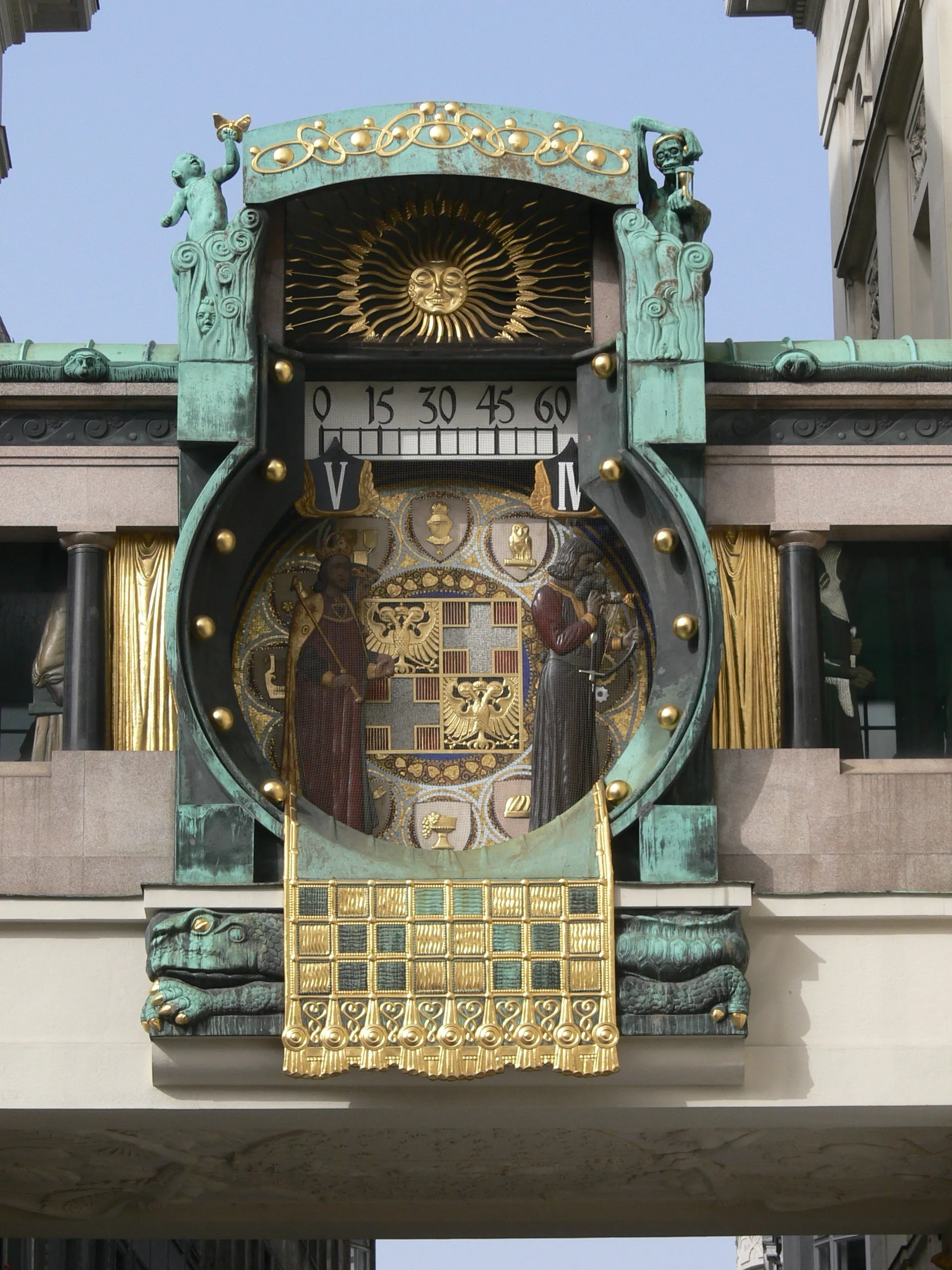
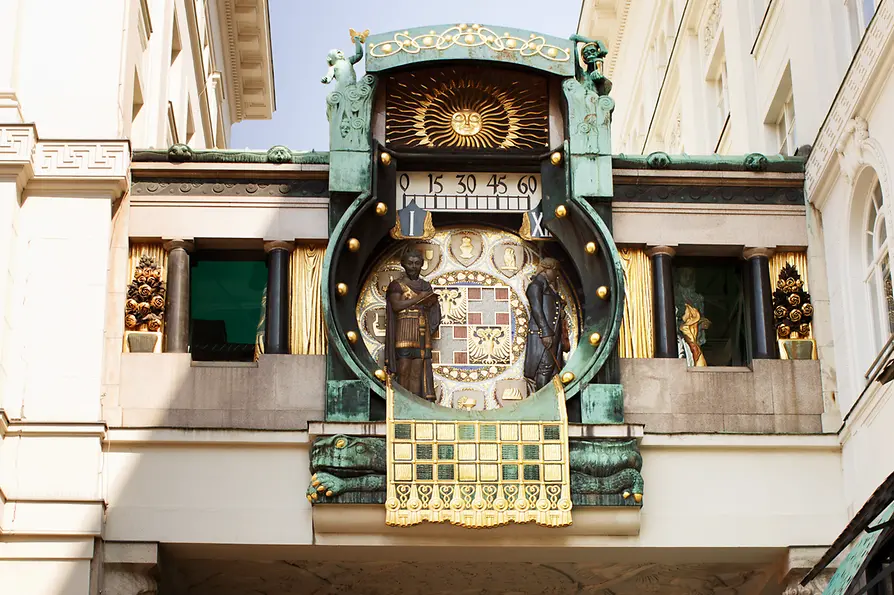
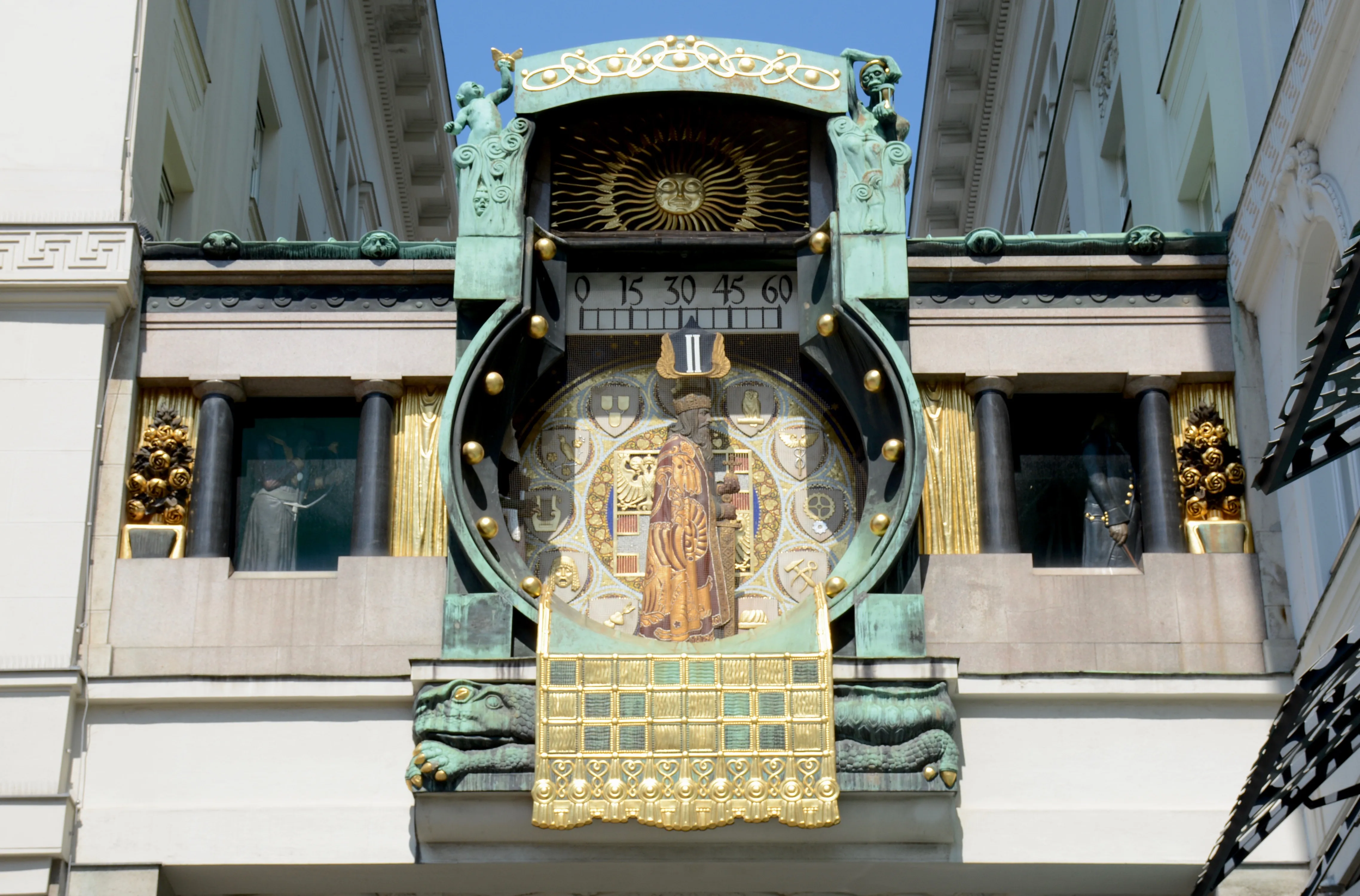
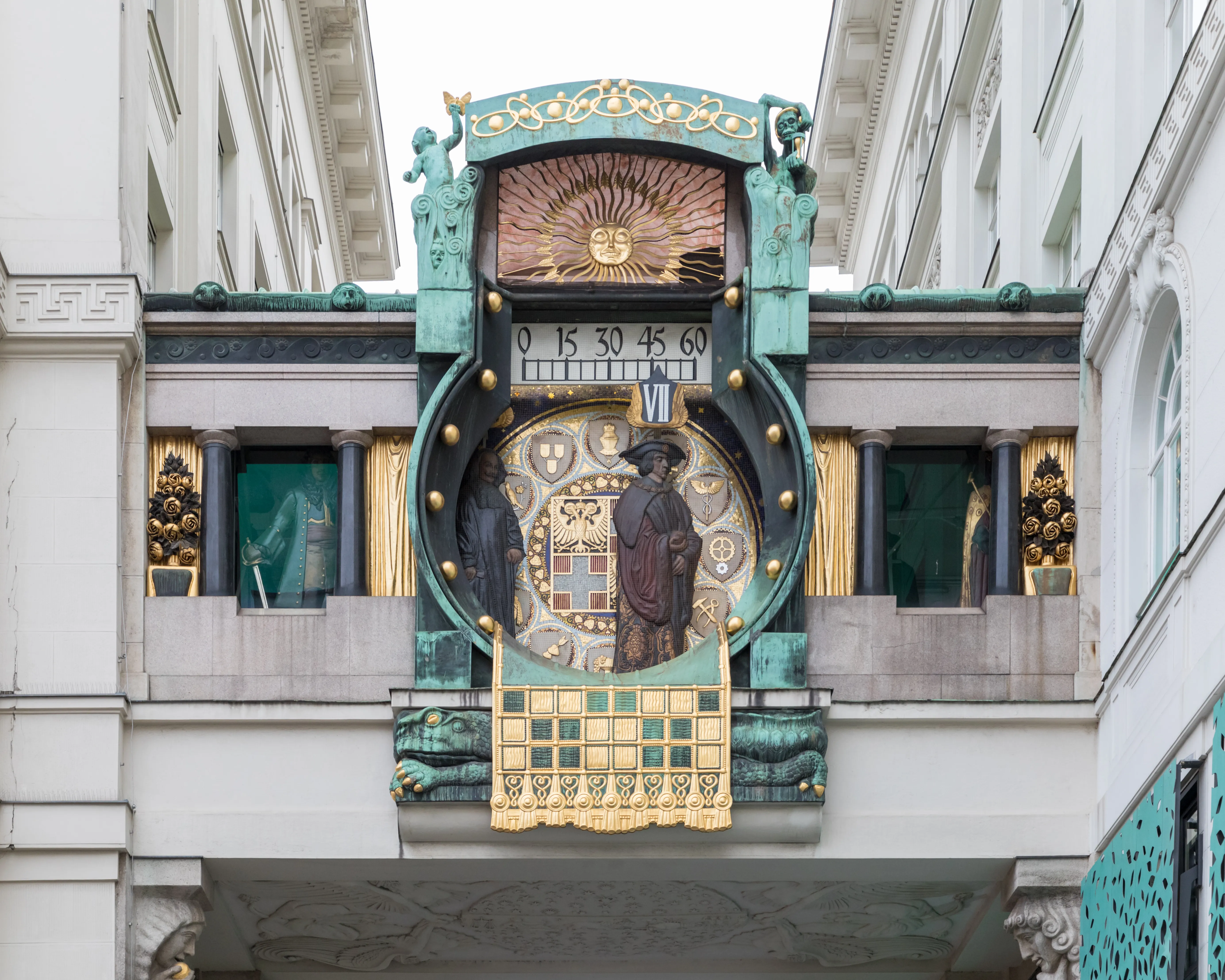
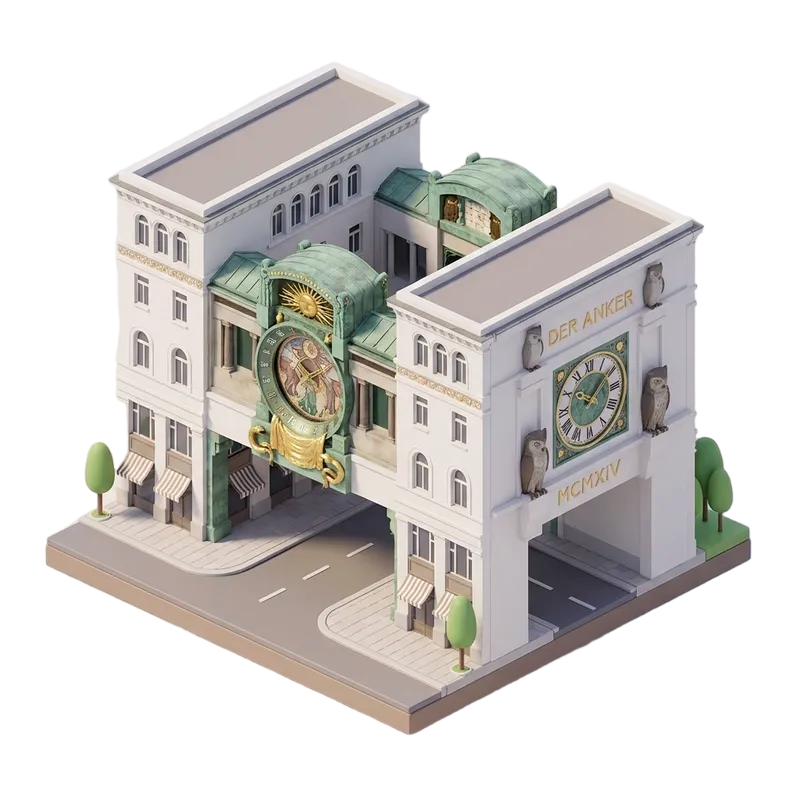
The Anker Clock is an impressive Art Nouveau timepiece connecting two buildings on Hoher Markt. Built between 1911 and 1914, it features twelve historical figures that parade across the bridge over 12 hours. Every day at noon, all figures appear together accompanied by music.

The Anker Clock, an Art Nouveau masterpiece from 1914, features a daily parade of twelve historical figures accompanied by music on Hoher Markt.

Anker Clock
Anker Clock: A Historic Art Nouveau Landmark

The Anker Clock, an Art Nouveau masterpiece from 1914, is a distinctive timepiece and decorative bridge located in Vienna's Hoher Markt. Designed by Franz Matsch, it forms a unique connection between two parts of the Anker Insurance building. Visitors can observe its intricate design and the hourly movement of twelve historical figures. A highlight is the daily noon parade, where all figures appear simultaneously, accompanied by period-appropriate music, offering a unique public art experience.

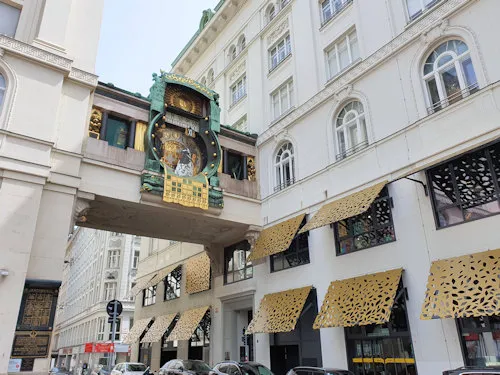
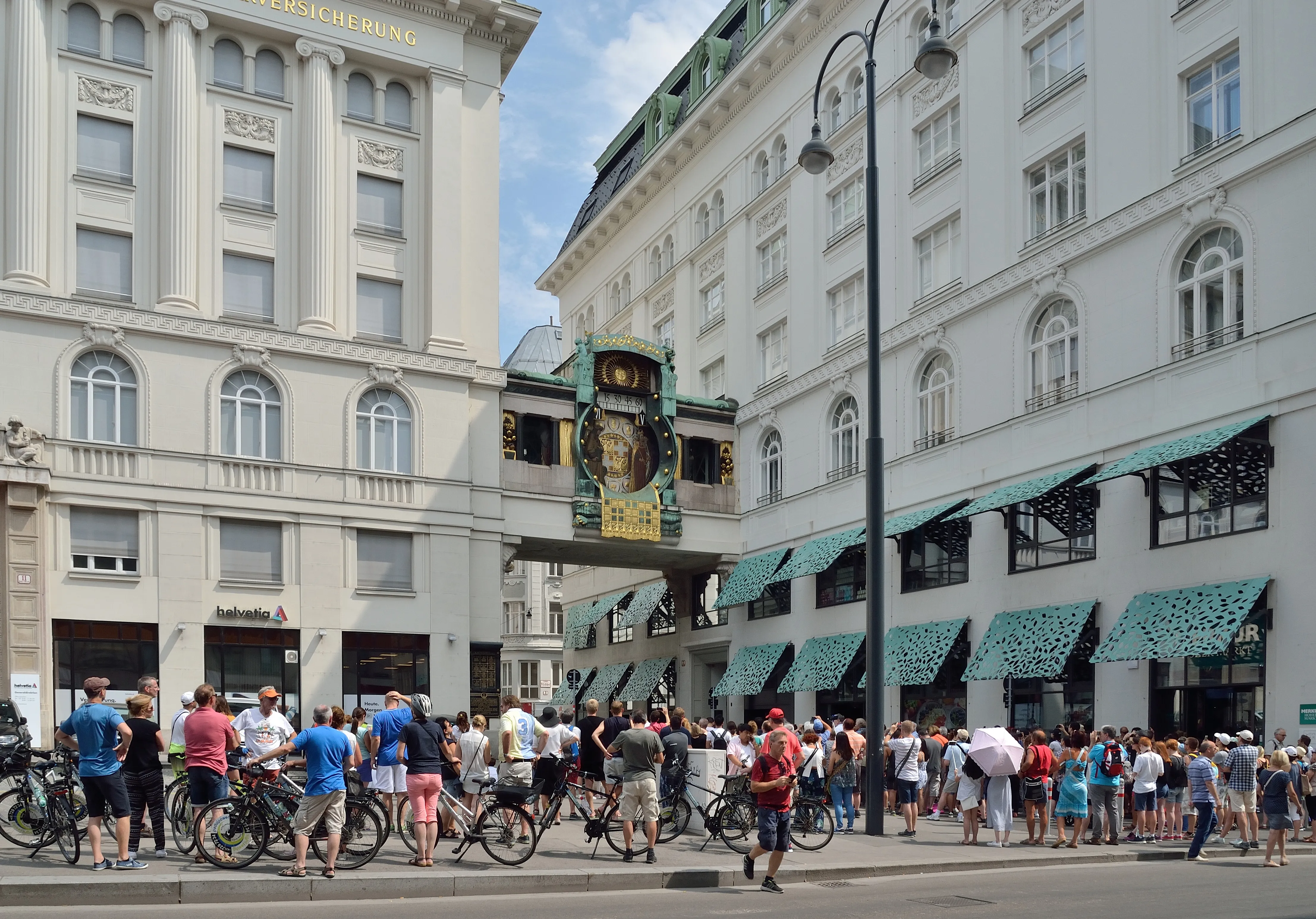
Art Nouveau clock bridge with golden details spanning a street between buildings
Anker Clock opening hours in Vienna

Check today’s opening status, weekly schedule, and special date changes for Anker Clock. Use these opening hours to plan your arrival and avoid closed times in Vienna.

Monday
Tuesday
Wednesday
Thursday
Friday
Saturday
Sunday
00:00-00:00
00:00-00:00
00:00-00:00
00:00-00:00
00:00-00:00
00:00-00:00
00:00-00:00
Anker Clock Location in Vienna

The Anker Clock is prominently situated on Hoher Markt, within Vienna's historic Innere Stadt neighborhood. This celebrated Art Nouveau timepiece forms a decorative bridge, providing a central and accessible spot for visitors to witness its unique daily spectacle of historical figures.

© OpenStreetMap contributors

Hoher Markt 10-11

1010 Vienna

Innere Stadt, Wien, AT

Planning Your Visit to the Anker Clock

The Anker Clock in Vienna's Innere Stadt is an outdoor attraction, best viewed from the street. Plan your visit to coincide with the daily parade of historical figures, which occurs at noon accompanied by music. During the Advent season, Christmas carols are also played daily at 5 pm. This allows visitors to experience the clock's full display.

Planning Your Visit to the Anker Clock

The Anker Clock's Daily Historical Parade

The Anker Clock, a celebrated Art Nouveau masterpiece, offers a unique public art experience in Vienna's Hoher Markt. Designed by Franz Matsch between 1911 and 1914, this distinctive timepiece forms an ornate bridge connecting sections of the Anker Insurance Company building. Visitors can observe its intricate design and the hourly movement of twelve historical figures. The primary attraction is the daily noon parade, when all figures appear simultaneously, each accompanied by period-appropriate music. During the festive Advent season, the clock also plays traditional Christmas carols daily in the late afternoon, adding a seasonal charm to this significant landmark.

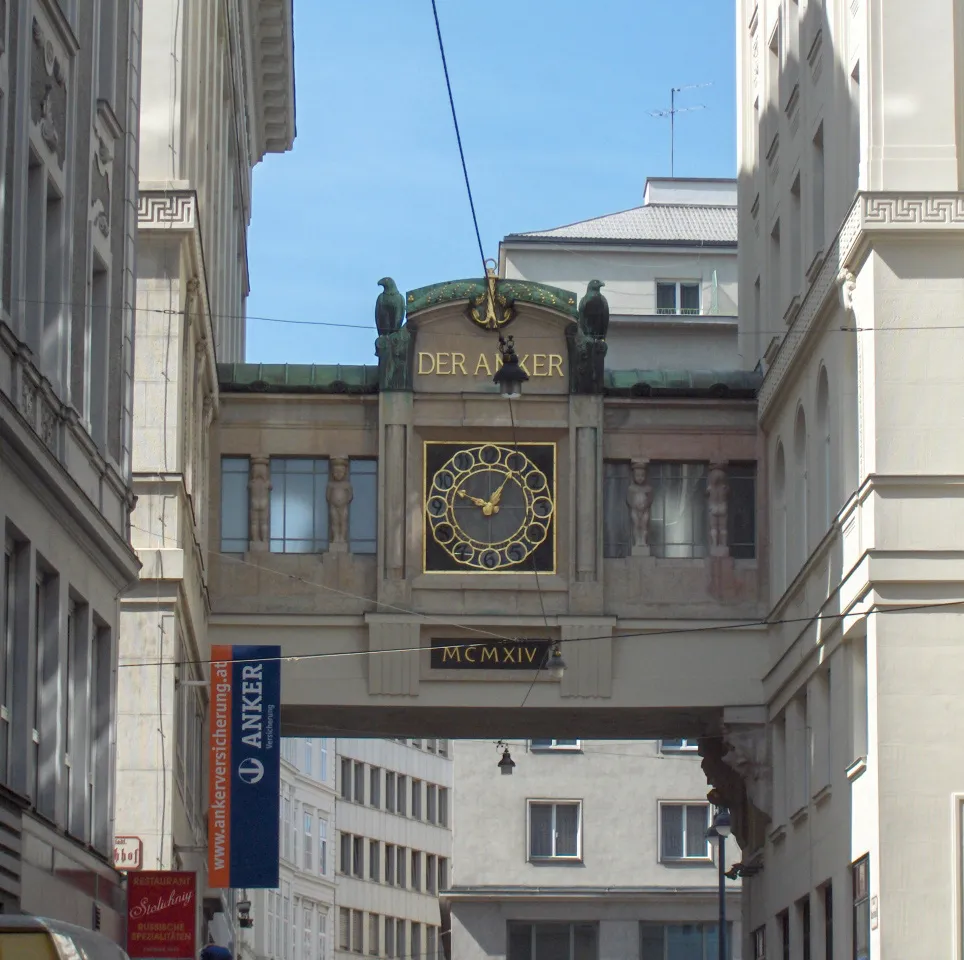
Art nouveau clock bridge spanning a street with 'DER ANKER' inscription above the clock face and 'MCMXIV' below, flanked by buildings under a clear blue sky

Anker Clock History and Context

The Anker Clock, a celebrated *Art Nouveau* timepiece located in Vienna's Hoher Markt, was conceived in 1911 by the 'Der Anker' insurance company. Designed by Franz Matsch, its construction, connecting two parts of the Ankerhof building, was delayed by World War I, with full installation in the summer of 1915. Severely damaged by arson in April 1945 during World War II, the clock resumed operation in 1956 with a new sound system replacing its original organ. A comprehensive restoration in 2005 led to the Ankeruhr being placed under monument protection, preserving its unique blend of art and music history.

  • Ankeruhr an der Helvetia insurance building

    Overview

    The Ankeruhr is a large musical clock located at the Helvetia insurance building on Hohen Markt 10-11 in Vienna's old town. It is considered a prominent work of Jugendstil and a popular tourist attraction.

  • Plan for the Ankeruhr developed in 1911

    1911Founding

    In 1911, the insurance company 'Der Anker' planned to erect a large public clock at its new headquarters in the Ankerhof. Franz Matsch was commissioned for the artistic design, and Franz Morawetz for the clockwork.

  • Construction delayed by World War I

    1914-1914Construction

    The Ankerhof building was occupied on June 29, 1914, with the clock's completion targeted for autumn 1914. However, the outbreak of World War I caused material and personnel shortages, delaying construction.

  • Mechanical organ first activated in December 1914

    1914Milestone

    The mechanical organ of the Ankeruhr was first put into operation on December 2, 1914, attracting an audience of a thousand spectators.

  • Ankeruhr installation completed in summer 1915

    1915Milestone

    The Ankeruhr installation was completed in the summer of 1915, with a first test run taking place on August 18, 1915, coinciding with the Emperor's birthday. The spectacle was repeated in 1916.

  • Music program changed after WWI due to political shifts

    Milestone

    After World War I, the music program was altered due to the fall of the monarchy. The Imperial Anthem was removed and replaced with a piece from Haydn's 'The Creation'. The clock was simply switched on without ceremony.

  • Ankeruhr heavily damaged in WWII fire

    1945Renovation

    On April 11, 1945, during World War II, the Ankerhof and the Ankeruhr were severely damaged by arson. The clock could only be put back into operation in 1956.

  • Organ replaced with sound system in 1956

    1956Renovation

    Following the damage sustained during World War II, the organ of the Ankeruhr could not be repaired and was replaced by a sound system in 1956 when the clock resumed operation.

  • New music program recorded in 1978

    1978Renovation

    The current set of twelve music pieces for the Ankeruhr was recorded in 1978, based on the original organ scores, and was produced in a Viennese church.

  • Ankeruhr placed under monument protection

    2005Heritage status

    The Ankeruhr was placed under monument protection and is listed in the Austrian monument register. This occurred during a complete restoration in mid-2005, patronized by the Federal Monuments Authority.

  • Full restoration completed in mid-2005

    2005Renovation

    A comprehensive restoration of the Ankeruhr was carried out in mid-2005 under the patronage of the Federal Monuments Authority, ensuring its preservation and continued operation.

  • Temporary malfunction in May 2013

    2013Milestone

    Following maintenance during the switch to daylight saving time on March 31, 2013, the Ankeruhr experienced a malfunction. The figural elements stopped moving and were still from mid-April until May 24, 2013.

  • Ankeruhr as a bridge structure

    Architecture

    The Ankeruhr functions as a bridge connecting the two parts of the Ankerhof building, spanning the alley 'Bauernmarkt'. This 'clock bridge' measures ten meters in span and seven and a half meters in height.

  • Figural consoles supporting the clock bridge

    Architecture

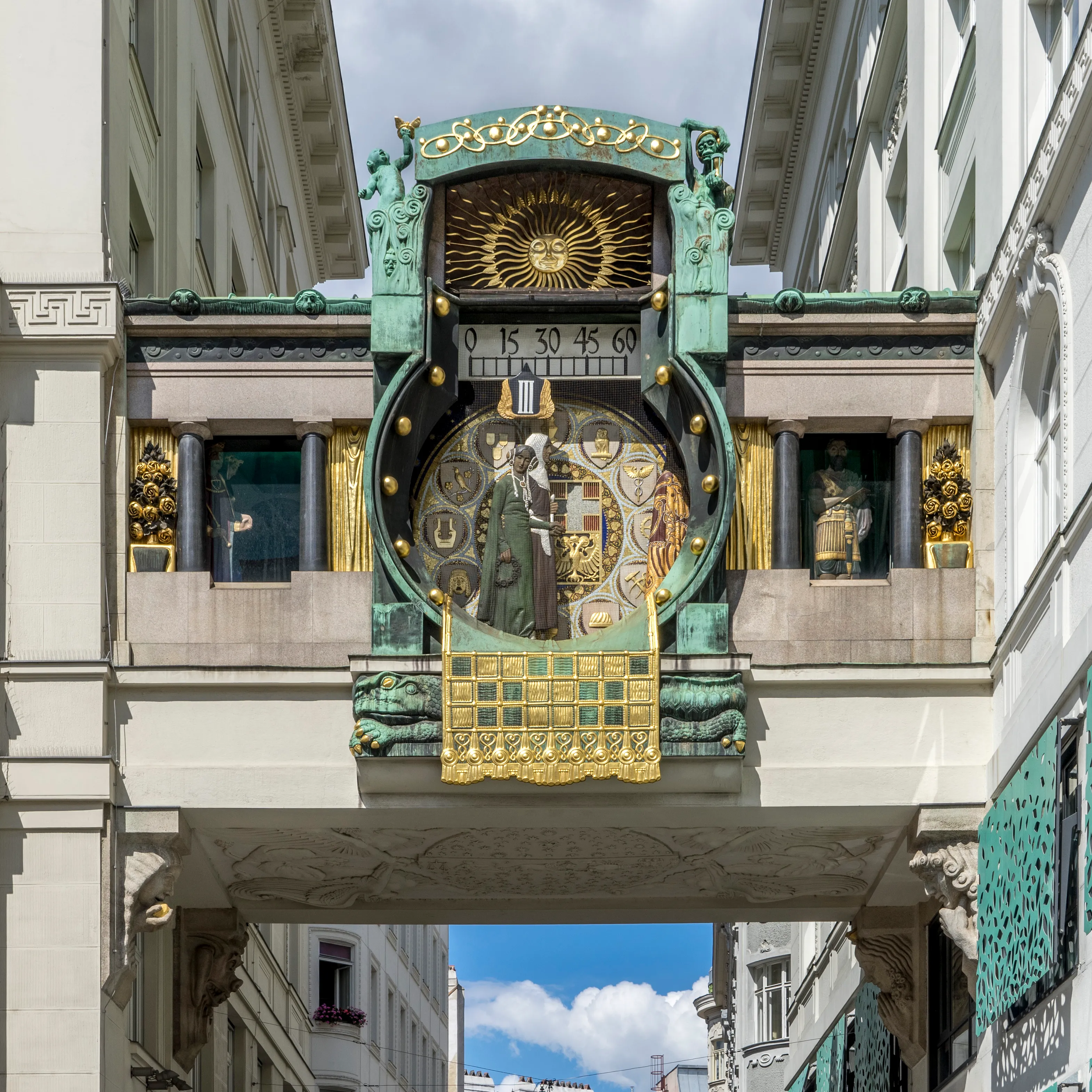
    The Ankeruhr bridge is supported by four figural consoles, depicting Adam and Eve on the front and an angel and devil on the rear. Above the clock is a sun disk, flanked by allegories of life and death.

  • Linear clock design with sliding figures

    Architecture

    The Ankeruhr is designed as a linear clock where figures move along a scale for one hour via a chain drive before being replaced by the next. Roman numerals indicate the hour, and minutes are read on the scale.

  • Selection of historical figures by Franz Matsch

    Architecture

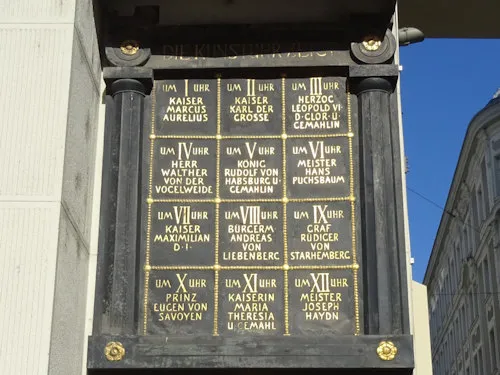
    The figures, each 2.6 to 2.8 meters high and made of hammered copper, were personally selected by Franz Matsch. Each figure is associated with a specific music piece.

  • Mosaic background with Viennese symbols

    Architecture

    The background of the Ankeruhr features a 12m² mosaic of glass, metal, and marble, centered with the double eagle and the old coat of arms of Vienna. It is surrounded by twelve other shields symbolizing various aspects of culture and trade.

  • Basilisk figure from Viennese folklore

    Architecture

    Beneath the Ankeruhr lies a Basilisk, a creature from Viennese folklore, adding a mythical element to the artwork.

  • Representation of historical figures and music

    Cultural significance

    The Ankeruhr presents twelve figures from different eras, each accompanied by a fitting musical piece, representing a unique synthesis of horology, art, and music history.

Anker Clock FAQs: Beyond the Noon Parade

Curious if the Anker Clock requires a ticket to see its daily historical parade, or what special melodies ring out during Advent? You might be surprised by some answers. Get ready to plan your perfect moment with this unique Viennese landmark.

When is the best time to visit the Anker Clock?

The best time to visit the Anker Clock is daily at noon to see the parade of twelve historical figures accompanied by music. During the Advent season, special Christmas carols are also played daily at 5 pm.

Does the Anker Clock require an entry ticket?

No, the Anker Clock is an outdoor attraction that can only be viewed from the street and does not require a ticket or entry fee for viewing.

What specific events can I see daily at the Anker Clock?

Daily at noon, the Anker Clock features a parade of twelve historical figures, each playing music from its era. During the Advent season, Christmas carols are also played daily at 5 pm.

How much time should I allocate to visit the Anker Clock?

As the Anker Clock is an outdoor attraction viewed from the street, there is no specific recommended visit duration. You can plan your visit around the daily noon parade of figures or the 5 pm Christmas carols during Advent.

Visiting the Anker Clock

The Anker Clock is an outdoor art nouveau attraction located in Vienna's Hoher Markt and can only be viewed from outside. To witness the full spectacle of the historical figures parading across the dial, plan your visit for noon, when the event occurs daily accompanied by music. During the Advent season, additional Christmas carols are played each day at 5 pm. These specific times offer the best opportunities to experience the clock's unique features.

Anker Clock Visitor Fit

The Anker Clock in Vienna is particularly suited for visitors interested in unique public art, Art Nouveau architecture, and local historical landmarks. As an outdoor attraction, it offers a distinct experience for those who appreciate mechanical clocks and historical displays in an urban setting. The daily musical parade of historical figures at noon provides a focal point, highlighting Vienna's rich heritage for onlookers.

Photos of the Anker Clock

Explore a collection of photos showcasing Vienna's Anker Clock, an Art Nouveau masterpiece adorned with intricate golden details and green patina. These images capture its distinctive bridge structure spanning Hoher Markt, along with views of the historical figures that animate its dial. Visitors can anticipate visuals highlighting the clock's unique craftsmanship and its prominent place in the city's public art.

An ornate Art Nouveau clock bridge with golden and green details spanning a street between buildings
Art nouveau clock bridge spanning a street with 'DER ANKER' inscription above the clock face and 'MCMXIV' below, flanked by buildings under a clear blue sky
Ornate Art Nouveau clock with green and gold detailing, featuring a central clock face with historical figures and a sunburst design above, mounted on a building facade.
Art Nouveau clock with golden figures, sun motif, and ornate details on a building facade
Art Nouveau clock with sculptures of historical figures and a sunburst design on a building facade
Art Nouveau clock bridge with golden details spanning a street between buildings
Art Nouveau clock with gold and green details, featuring a central figure and sun motif on a building facade
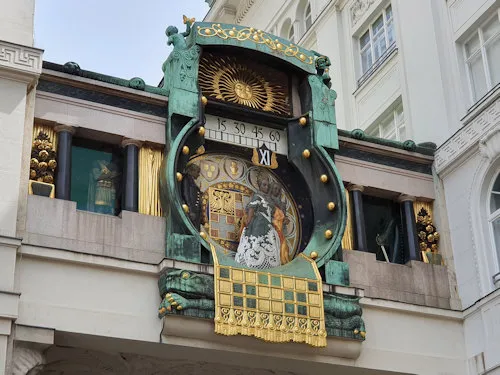
Art Nouveau clock with green patina and golden details mounted on a building facade
Anker Clock bridge connecting two buildings with a crowd of people and bicycles below
Close-up of a black and gold plaque on the Anker Clock with inscribed names of historical figures
Vienna

Find Museums in Vienna: Discover Cultural Sites by Interest and Theme

Uncover Vienna's rich artistic legacy, history, and scientific collections.

Explore the depth of Vienna's cultural offerings and discover institutions by what truly interests you. Whether it's historical landmarks, fine art, or specialized topics, easily locate your next memorable experience.

Discover nearby museums similar to Anker Clock in Vienna and plan your next cultural stop with confidence.
These recommendations prioritize real proximity to Anker Clock and help you find high-fit alternatives faster across Vienna.
Use this curated list to compare museums near Anker Clock without opening multiple search pages. Each card gives you fast visual context and direct access to key details so you can decide quickly. If you are building a full day in Vienna, this section helps you chain nearby visits with less planning effort.