Centre Pompidou Málaga Unveils "Gesture and Matter" Exhibition Exploring Post-War Abstract Expressionism
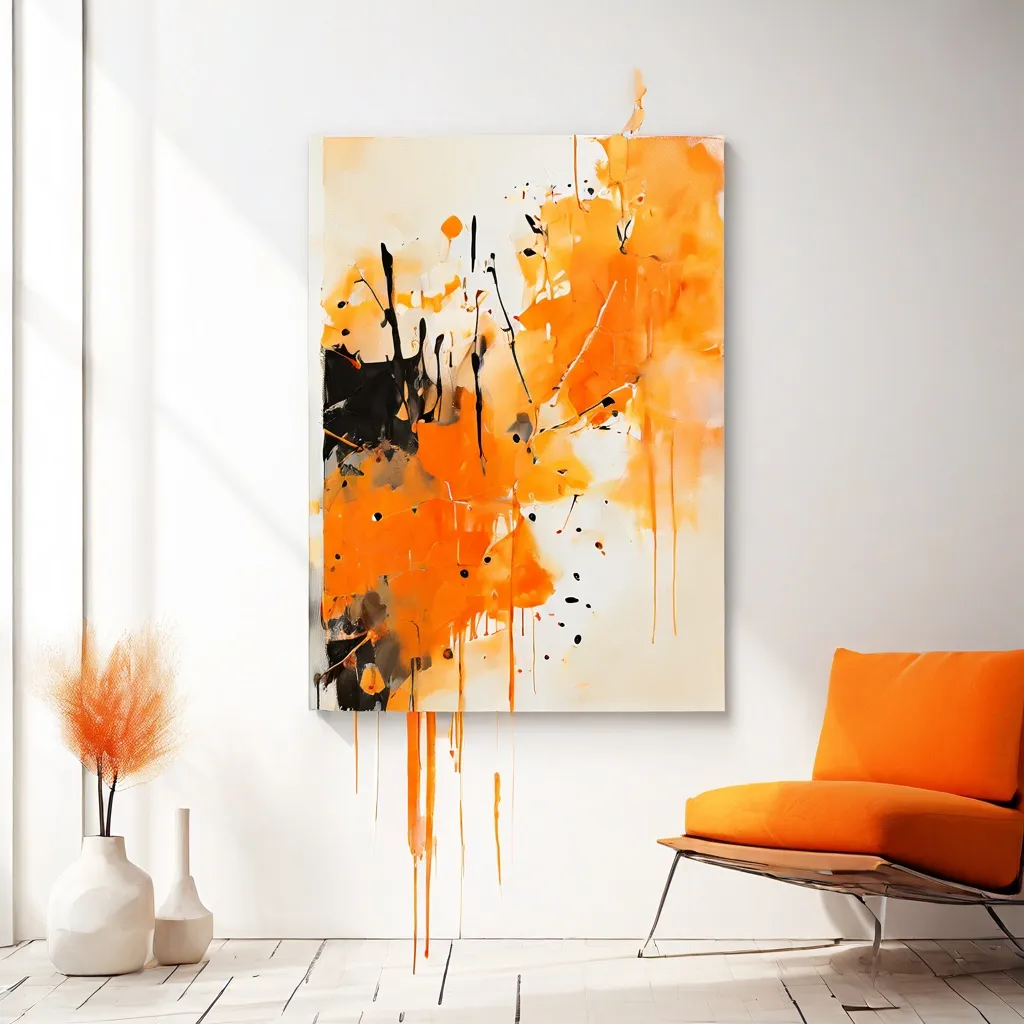
The Centre Pompidou Málaga has launched a major temporary exhibition titled Gesture and Matter: International Abstractions (1945-1965). Curated by Christian Briend and Anne Foucault, the display offers a deep dive into the global evolution of abstract expressionism over a critical twenty-year period. Visitors can explore this extensive collection on the Málaga waterfront through September 7, 2026.
Organized in collaboration with the Fundación "la Caixa," the exhibition traces how the profound trauma of World War II pushed artists to completely break away from established traditions, seeking to reinvent painting from the ground up.
What to Expect at the Málaga Exhibition: Two Decades of Artistic Revolution
Following the end of the war, Paris temporarily regained its status as the center of the international art scene, sharing this role with a rising New York. The French capital became a bustling showcase for abstract art, sustained by a robust network of galleries and art critics. It attracted a diverse community of creators, including European refugees fleeing authoritarian regimes, as well as American and Asian artists.
"Art Autre" and the Power of the Gesture
In 1952, art critic Michel Tapié coined the term "art autre" (other art) to group artists who rejected both geometric abstraction and figurative forms. Pioneers like Jean Fautrier and Wols paved the way for this style, while Georges Mathieu became known for works composed of direct paint application, heavy impastos, and spontaneous splashes.
Transatlantic Exchanges and Action Painting
As New York grew into a formidable artistic hub, its young painters maintained a strong connection to Paris. Jackson Pollock, the seminal figure of Action Painting, had his first European exhibition in Paris in 1952. His signature "all-over" compositions and dripping techniques left a lasting impression on European contemporaries. Nearby, Joan Mitchell and Sam Francis experimented with the physical canvas, treating large-scale surfaces as performative spaces for highly physical, gestural expressions.
The Gravity of Black and White
The exhibition features a dedicated segment called "Black is a Color," illustrating how abstract painters utilized black for its solemn and heavy qualities. Artists like Pierre Soulages and André Marfaing embraced this monochromatic gravity. Gérard Schneider translated musical rhythm into powerful brushstrokes, while Hans Hartung scaled up gestural ink designs onto canvas. This dramatic contrast of light and dark also served to convey tragedy and historical weight, as seen in the work of Spanish artist Antonio Saura, whose style echoed the drama of traditional Spanish Baroque masters.
East Meets West: Calligraphy and Gutai
During the 1950s, Paris also served as a meeting point for young Japanese avant-garde artists. The exhibition highlights the exchange between French critics and Japan's Gutai movement—featuring prominent figures like Kazuo Shiraga. Similarly, Chinese painter Zao Wou-Ki achieved a delicate synthesis of abstract movement and traditional East Asian landscape painting, a development that mirrored the fascination with Eastern spirituality and calligraphy among Western creators like Jean Degottex and Mark Tobey.
Art as Resistance and Transition
Throughout the 1950s, abstract expressionism became a unifying visual language across Europe. In oppressive environments like Francoist Spain and communist Poland, this experimental approach was adopted as a form of cultural resistance. By the mid-1960s, the movement began to decline as artists returned to figurative representations through Pop Art and new minimalist styles, a transition represented in the exhibition's final room by the work of Michel Parmentier.
The exhibition displays a highly international roster of artists, including Afro Basaldella, François Arnal, Camille Bryen, Jean Degottex, Jean Fautrier, Sam Francis, Simon Hantaï, Hans Hartung, Toshimitsu Imai, Tadeusz Kantor, André Marfaing, Georges Mathieu, Manolo Millares, Joan Mitchell, Ernst Wilhelm Nay, Michel Parmentier, Jackson Pollock, Judit Reigl, Key Sato, Antonio Saura, Gérard Schneider, Kazuo Shiraga, Pierre Soulages, Mark Tobey, Wols, and Zao Wou-Ki.
Planning Your Visit to Centre Pompidou Málaga
The exhibition runs through September 7, 2026. Visitors can view the collection during the museum's regular opening hours:
- Mondays: 09:30 – 20:00
- Tuesdays: Closed
- Wednesdays to Sundays: 09:30 – 20:00
To guarantee entry, you can purchase tickets online or read more about the museum's currently running exhibitions on their official site.
For those planning to explore local culture, Musemap (musemap.art) helps you navigate the city’s thriving creative landscape. You can easily browse museums in Málaga, discover local events on the interactive cultural map, or check the latest listings in our what's on section.