Vienna
Vienna's Imperial Legacy

Imperial Crypt Wien: Overview of the Habsburg Burial Site

Wien's solemn imperial memorial site, home to Habsburg royal tombs.

HistoryArchitectureArtLocal heritage

Discover the Imperial Crypt, the historic burial site of the Habsburg dynasty beneath Vienna's Capuchin Church. It houses 150 remains, showcasing a unique evolution of funerary art from austere to elaborate Baroque sarcophagi, including Maria Theresa's magnificent double-tomb.

The Imperial Crypt is the historic burial site for the Habsburg dynasty in Vienna, featuring 150 interments and centuries of elaborate funerary art.

Imperial Crypt
About the Imperial Crypt

The Imperial Crypt, also known as the Capuchin Crypt, is the primary burial site for the powerful Habsburg dynasty, active since 1633. Located beneath the Capuchin Church in Vienna, it contains the remains of 150 individuals, including emperors and empresses. The crypt offers a unique perspective on the evolution of burial art through its diverse sarcophagi, showcasing styles from simple to elaborate Baroque masterpieces. This historic site continues to serve as an important memorial, linking Vienna's imperial past with the present.

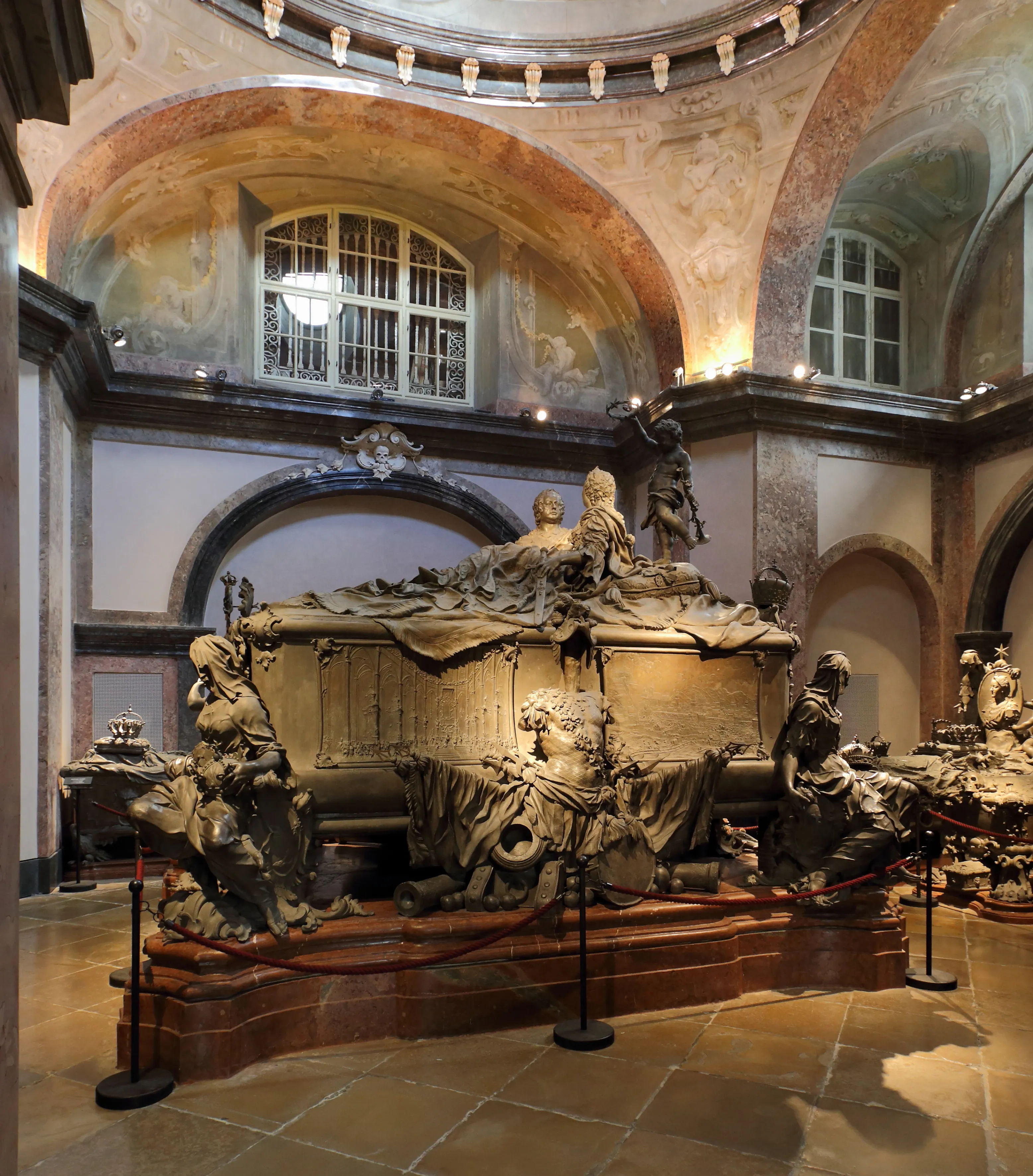
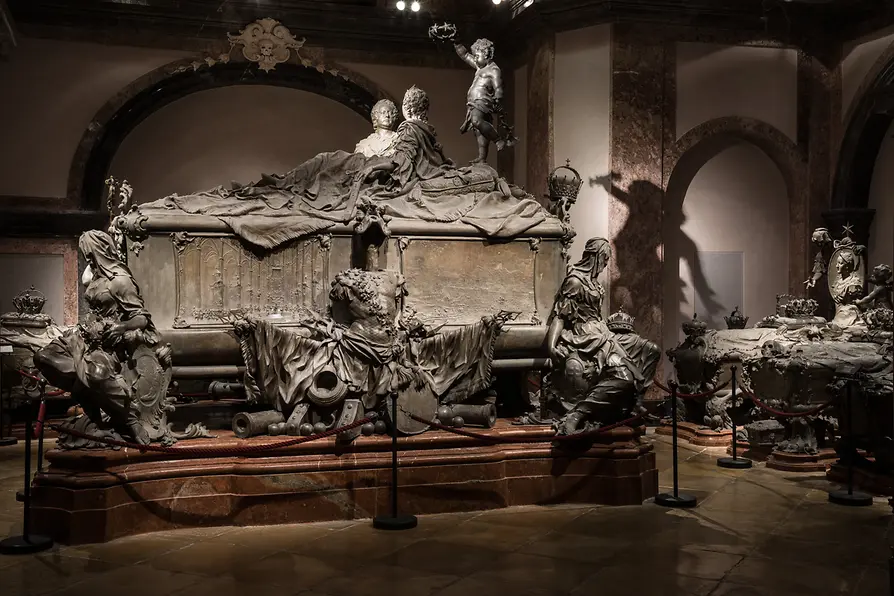
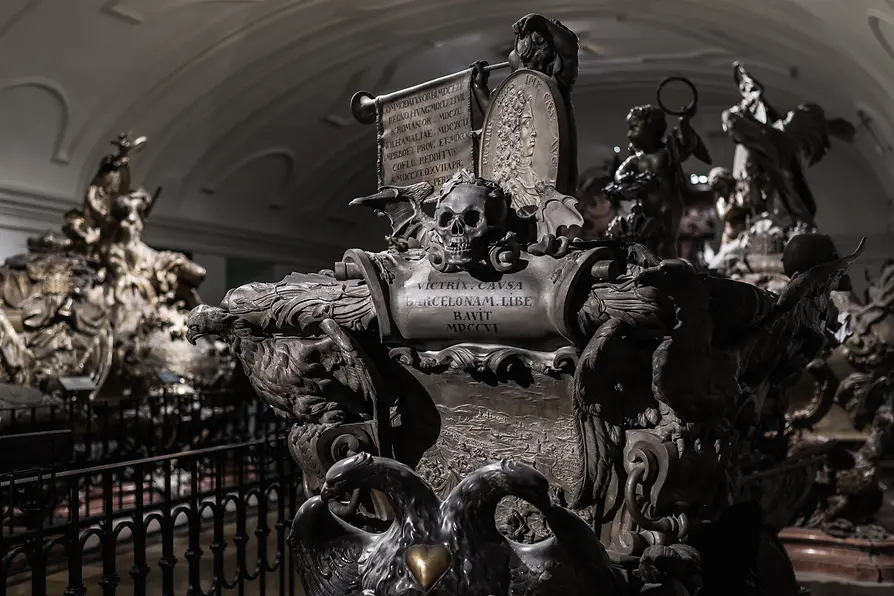
Large ornate sarcophagus with sculpted figures in a vaulted stone chamber with arched windows
Imperial Crypt Location in Vienna

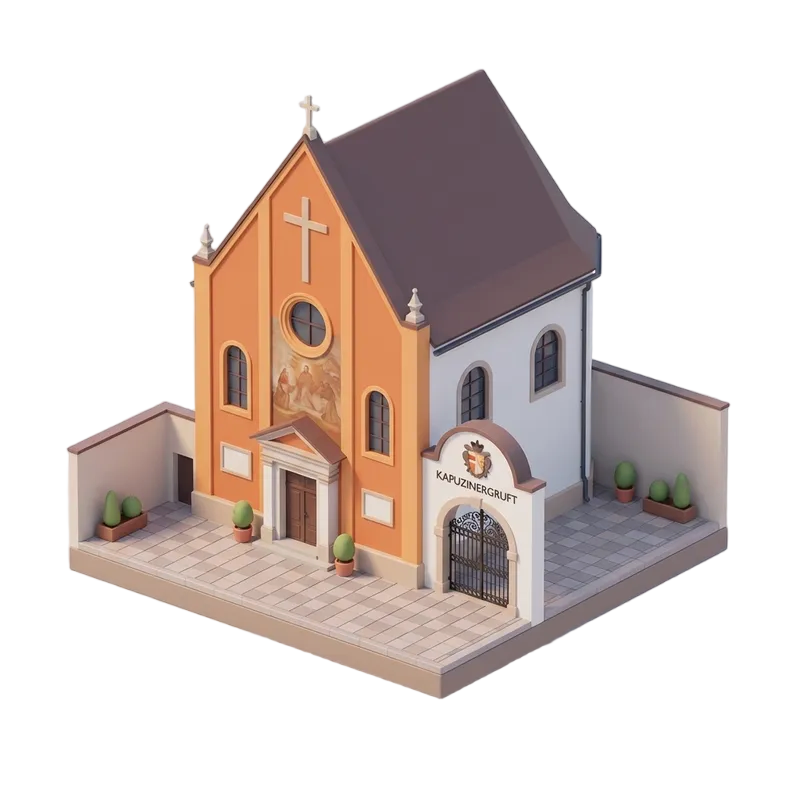
The Imperial Crypt is situated beneath the Capuchin Church and monastery at Tegetthoffstraße 2 in Vienna, Austria. This central location makes it an accessible site for visitors interested in the historic burial place of the Habsburg dynasty, offering insight into centuries of funerary art within the heart of the city.

© OpenStreetMap contributors

Tegetthoffstraße 2

1010 Wien

Wien, AT

Planning Your Visit to the Imperial Crypt

To plan your visit to the Imperial Crypt in Vienna, allocate approximately 45 to 60 minutes to explore this significant imperial memorial site. This duration allows ample time to experience the tombs of Habsburg rulers and family members. On-site parking is also available for guests arriving by car.

Planning Your Visit to the Imperial Crypt

The Imperial Crypt Experience

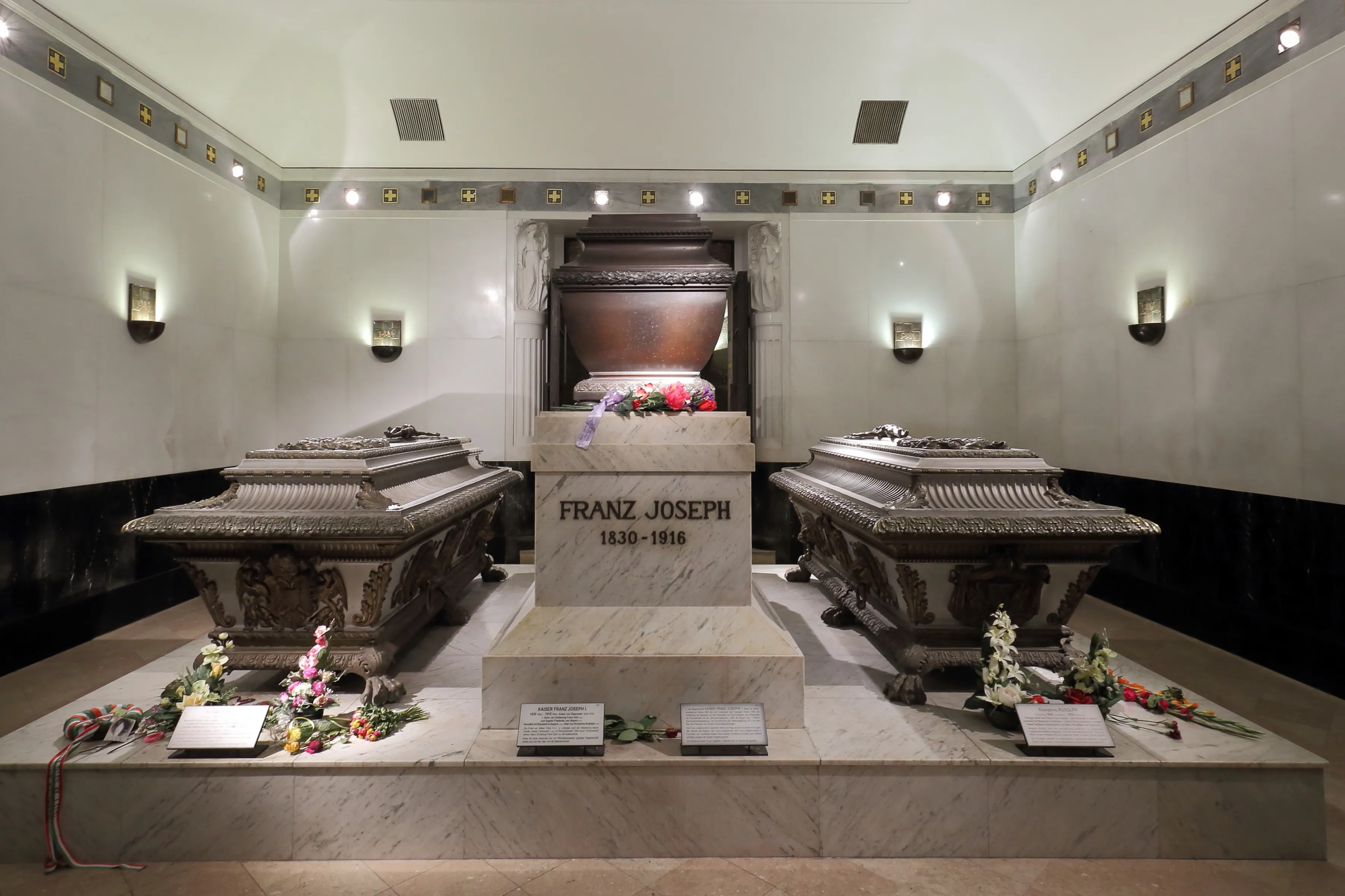
The Imperial Crypt, also known as the Capuchin Crypt, offers a profound journey into centuries of Habsburg imperial history and funerary art in Vienna. As the primary burial site for the powerful dynasty since 1633, it houses 150 interments, including emperors and empresses. Visitors can trace the evolution of burial art through diverse sarcophagi, from the simple to the elaborate Baroque masterpiece of Maria Theresa and Franz I Stephan. The crypt provides a unique insight into European power and personal tragedy, notably featuring the tombs of Emperor Franz Joseph I, Empress Elisabeth, and Crown Prince Rudolf. It remains an active memorial, connecting Austria's imperial past to the present day.

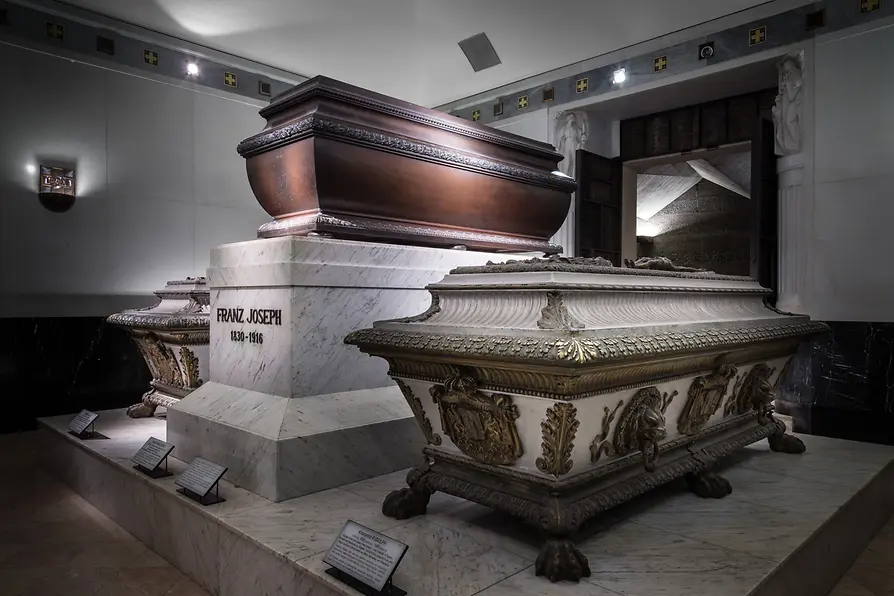
Ornate sarcophagi in a dimly lit crypt with a central tomb labeled 'FRANZ JOSEPH' and floral tributes

History of the Imperial Crypt

The Imperial Crypt in Vienna, conceived by Anna of Tyrol, was founded in 1618 and dedicated in 1632. By 1633, it had become the principal burial site for the House of Habsburg, a role it continues to fulfill. Over centuries, the crypt underwent numerous expansions, with significant contributions from rulers like Emperor Leopold I and Empress Maria Theresa, who added a notable domed vault in 1754. Further architectural developments and major tomb rearrangements, including the New Vault in the 1960s, adapted the space. This **long-standing imperial memorial** site underscores its enduring historical significance, with recent interments maintaining its tradition.

  • Imperial Crypt founded

    1618Founding

    The Imperial Crypt was founded in 1618, with plans and construction commencing after funds were released following the death of Anna of Tyrol in that year. It was dedicated in 1632.

  • Church construction and dedication

    1632Construction

    Construction of the church housing the Imperial Crypt progressed slowly due to the Thirty Years' War. The church was dedicated on July 25, 1632.

  • First entombment in the Imperial Crypt

    1633Milestone

    The first entombments in the Imperial Crypt occurred at Easter 1633, with the remains of Emperor Matthias and Empress Anna being transferred to the Founders Vault.

  • Enlargement of the crypt

    1657-1720Construction

    Emperor Leopold I initiated an enlargement of the crypt in 1657 under the nave of the church. His son, Joseph I, extended it further westward, and Charles VI continued this westward expansion starting in 1720.

  • Involvement of Lukas von Hildebrandt in crypt enlargement

    1720Architecture

    The architect Lukas von Hildebrandt was involved in an enlargement of the crypt during the expansion efforts initiated by Emperor Charles VI.

  • Maria Theresa's domed addition to the crypt

    1754Architecture

    Empress Maria Theresa commissioned a westward addition to the crypt in 1754 that extended into the monastery garden. This addition featured an imposing dome designed by architect Jean Jadot de Ville-Issey.

  • Johann Aman's addition to the crypt

    1824Architecture

    During Emperor Francis II's reign, architect Johann Aman made an addition to the north side of the crypt in 1824.

  • Monastery rebuilding and vault construction

    1840Construction

    In 1840, the monastery surrounding the church was torn down and rebuilt during Emperor Ferdinand's reign. As part of this project, architect Johann Höhne built the Ferdinand Vault and the Tuscan Vault.

  • Construction of Franz Joseph Vault and annexes

    1908Construction

    In 1908, to celebrate Emperor Franz Joseph I's 60 years on the throne, architect Cajo Perisic built another mausoleum chamber and a chapel. New annexes for visitors were also created.

  • New Vault construction by Karl Schwanzer

    1960-1962Construction

    The New Vault was built by architect Karl Schwanzer between 1960 and 1962. It added about 20% to the crypt's space and was used in a massive rearrangement of tombs.

  • Major rearrangement of tombs

    1960Renovation

    As part of the construction of the New Vault in 1960, a major rearrangement of tombs occurred. About half of all tombs were moved to more orderly locations, including into the New Vault and walled-up into piers.

  • Crypt accessibility and air conditioning upgrades

    2003Renovation

    In 2003, a project made the crypt accessible to disabled visitors, opened previously unused doors for a more direct visitor route, and installed air conditioning to control humidity and prevent tomb deterioration.

  • Most recent entombment

    2023Milestone

    The most recent entombment in the Imperial Crypt was in 2023, with the burial of Archduchess Yolande of Austria.

  • Founding concept by Anna of Tyrol

    1617Notable person

    Anna of Tyrol, wife of Emperor Matthias, conceived the idea for a Capuchin cloister and burial crypt for herself and her husband. She provided funds for it in her will made in 1617.

  • Emperor Leopold I enlarges the crypt

    1657Notable person

    Emperor Leopold I enlarged the crypt in 1657 by building under the nave of the church. His three wives and 16 children are also buried in the crypt.

  • Emperor Charles VI's contribution to crypt expansion

    1720Notable person

    Emperor Charles VI continued the westward expansion of the crypt in 1720, extending it under the chancel and apse choir. He was also involved with architect Lukas von Hildebrandt in this enlargement.

  • Empress Maria Theresa's architectural addition

    1754Notable person

    Empress Maria Theresa commissioned a domed addition to the crypt in 1754, extending it into the monastery garden. The design is attributed to architect Jean Jadot de Ville-Issey.

  • Johann Aman's architectural work

    1824Notable person

    Architect Johann Aman designed an addition to the north of the crypt in 1824 during the reign of Emperor Francis II.

  • Johann Höhne's vault construction

    1840Notable person

    Architect Johann Höhne built the Ferdinand Vault and the Tuscan Vault in 1840 as part of the monastery reconstruction.

  • Cajo Perisic's construction for Franz Joseph I's jubilee

    1908Notable person

    Architect Cajo Perisic built a mausoleum chamber and chapel in 1908 for Emperor Franz Joseph I's jubilee celebrations.

  • Karl Schwanzer designed the New Vault

    1960-1962Notable person

    Architect Karl Schwanzer designed and oversaw the construction of the New Vault between 1960 and 1962, significantly expanding the crypt's space and enabling tomb rearrangement.

  • Principal Habsburg burial site since 1633

    1633Cultural significance

    Since 1633, the Imperial Crypt has served as the primary burial place for members of the House of Habsburg, housing the remains of 145 royalty and urns of four others.

  • Diverse sarcophagi styles

    Collection

    The Imperial Crypt contains 107 visible metal sarcophagi and five heart urns, displaying a range of styles from plain to exuberant rococo.

  • Conservation efforts for tombs

    1852Overview

    Recognizing the deteriorating condition of the tombs due to environmental factors and visitor numbers, restoration efforts began in 1852, with a dedicated association formed in 1956 and significant conservation work continuing to the present day.

Imperial Crypt FAQs: Uncovering Visitor Questions

Considering a visit to Vienna's Imperial Crypt? You likely have a few questions on your mind, from its precise address in the city to how you might get in touch. Our frequently asked questions section is here to help you dig up all the practical answers before you arrive.

How can I contact the Imperial Crypt for general inquiries?

Information regarding the direct contact methods for the Imperial Crypt, such as a general inquiry form or visitor information service, is not available in the provided details.

What is the phone number to reach the Imperial Crypt?

The telephone number for directly contacting the Imperial Crypt is not specified in the available information. For urgent matters, visiting their official site might offer alternative ways.

Does the Imperial Crypt provide an email address for visitor questions?

A specific email address for visitor inquiries at the Imperial Crypt is not listed in the information provided. Please check the official website for any updates.

What is the full address of the Imperial Crypt?

The Imperial Crypt is situated at Tegetthoffstraße 2, 1010 Wien, Austria.

Tips for Visiting the Imperial Crypt

When planning a visit to the Imperial Crypt in Vienna, visitors can typically expect to spend between 45 to 60 minutes exploring the site. This allows ample time to experience this significant memorial. For those arriving by car, parking facilities are available nearby, adding convenience to your visit.

Imperial Crypt Visitor Profile

The Imperial Crypt in Vienna is particularly suited for individuals, couples, and groups, including students, who have an interest in history, architecture, and art, specifically focusing on local and imperial heritage. Visitors can anticipate a contemplative experience exploring the burial site of the Habsburg dynasty, with an average visit lasting between 45 to 60 minutes.

Imperial Crypt Photo Gallery

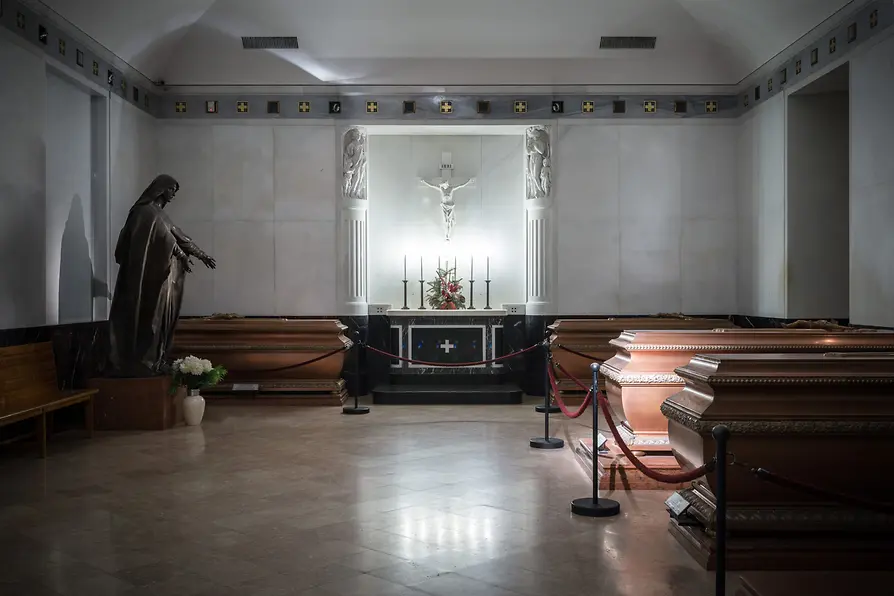
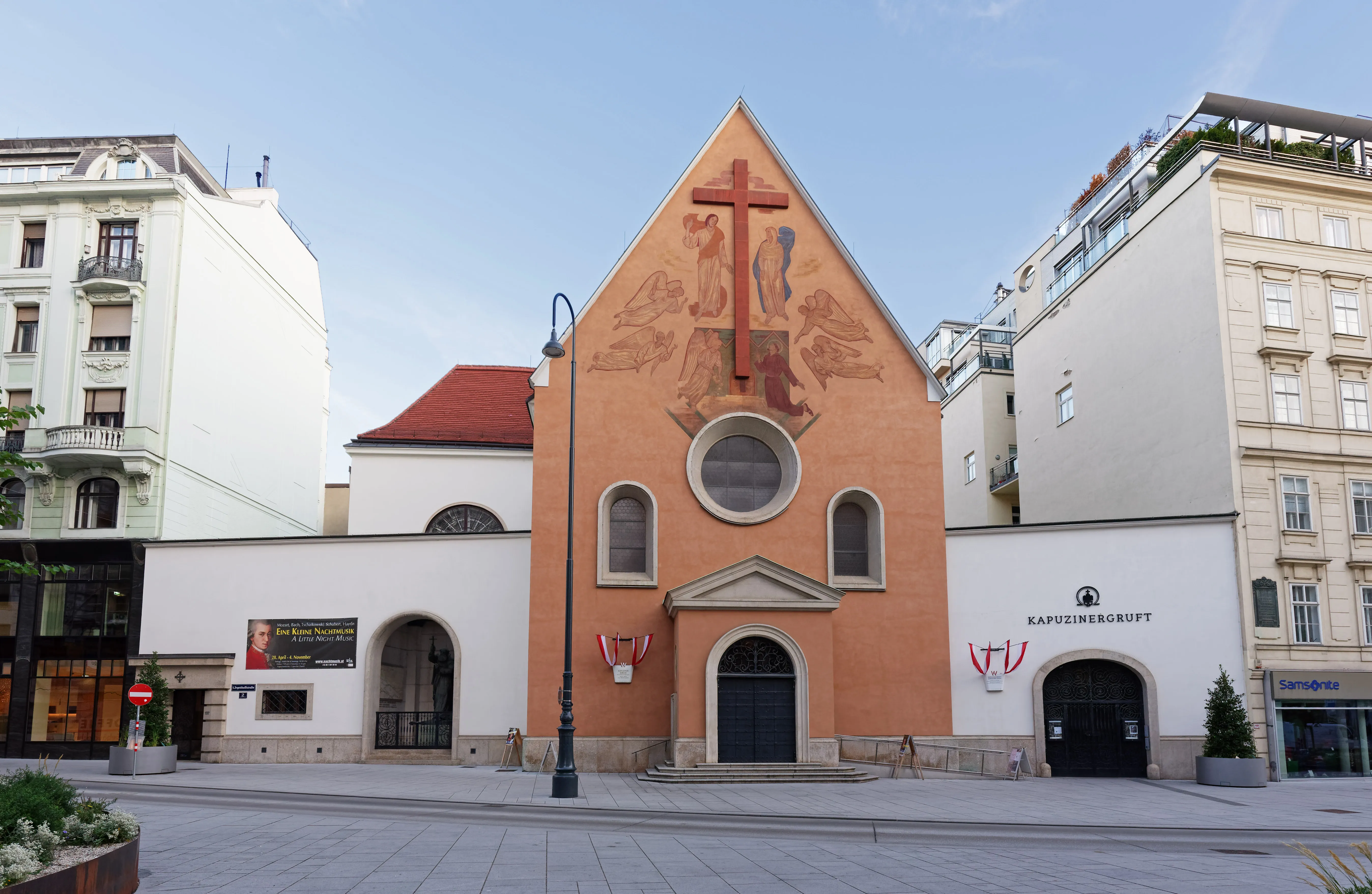
Explore the Imperial Crypt through a series of captivating images showcasing the elaborate sarcophagi of the Habsburg dynasty in Vienna. These photos reveal intricately sculpted figures and varied funerary art, from grand Baroque masterpieces like Maria Theresa's tomb to more modern memorials such as Franz Joseph I's. The gallery captures the solemn atmosphere of the vaulted stone chambers, along with exterior views of the Capuchin Church.
Ornate sarcophagi in a dimly lit crypt with a central tomb labeled 'FRANZ JOSEPH' and floral tributes
Large ornate sarcophagus with sculpted figures in a vaulted stone chamber with arched windows
The Capuchin Church with an orange facade, a large cross, and religious artwork above the entrance, surrounded by urban buildings.
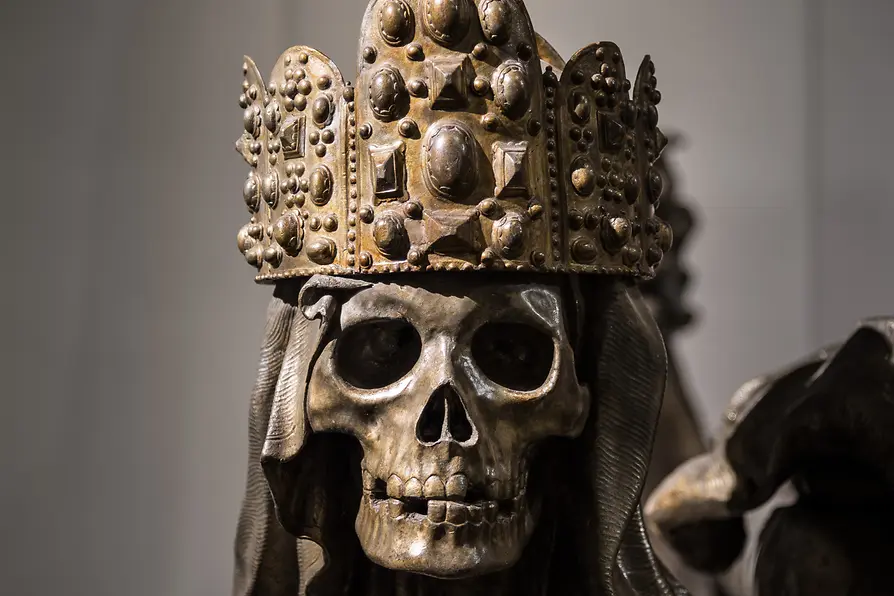
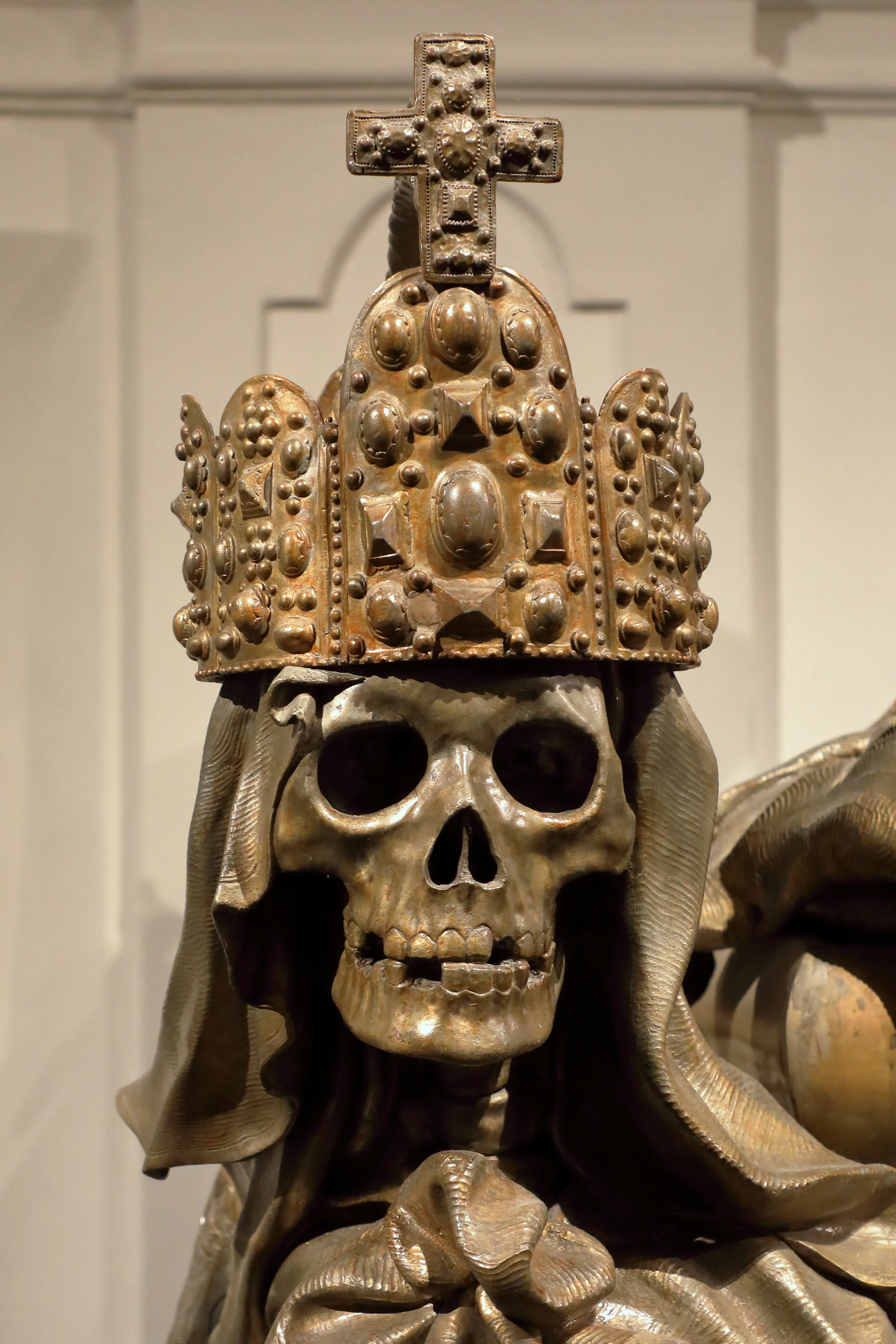
Bronze sculpture of a skeleton wearing a detailed crown and cross
Interior of the Imperial Crypt with sarcophagi, a central altar, and a statue in a dimly lit room
Close-up of a skull wearing a detailed crown
A large stone sarcophagus with sculpted figures of mourners and a central reclining figure, surrounded by other tombs in a dimly lit chamber with arched architecture
Two ornate sarcophagi in a dimly lit crypt, one with a dark wooden lid and the other with gold and white detailing, surrounded by informational plaques.
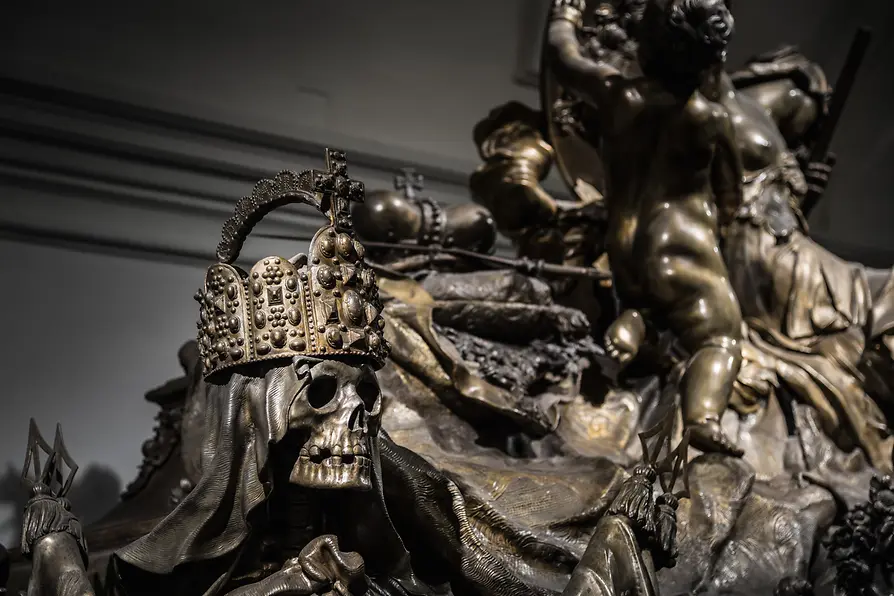
Bronze sculpture of a crowned skeleton with intricate details and surrounding figures
Ornate tomb with skulls and carvings in the Imperial Crypt
Vienna

Find Museums in Vienna: Discover Cultural Sites by Interest and Theme

Uncover Vienna's rich artistic legacy, history, and scientific collections.

Explore the depth of Vienna's cultural offerings and discover institutions by what truly interests you. Whether it's historical landmarks, fine art, or specialized topics, easily locate your next memorable experience.
Discover nearby museums similar to Imperial Crypt in Vienna and plan your next cultural stop with confidence.
These recommendations prioritize real proximity to Imperial Crypt and help you find high-fit alternatives faster across Vienna.
Use this curated list to compare museums near Imperial Crypt without opening multiple search pages. Each card gives you fast visual context and direct access to key details so you can decide quickly. If you are building a full day in Vienna, this section helps you chain nearby visits with less planning effort.