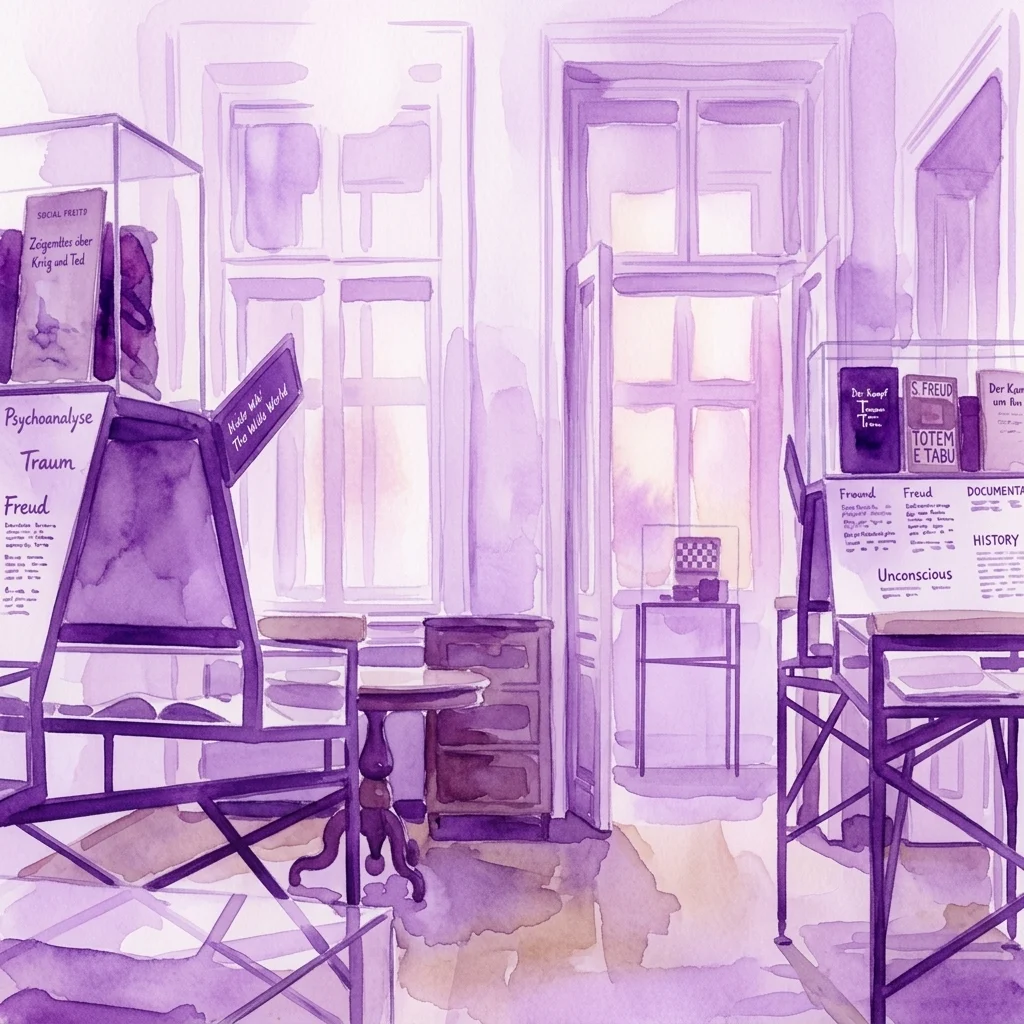
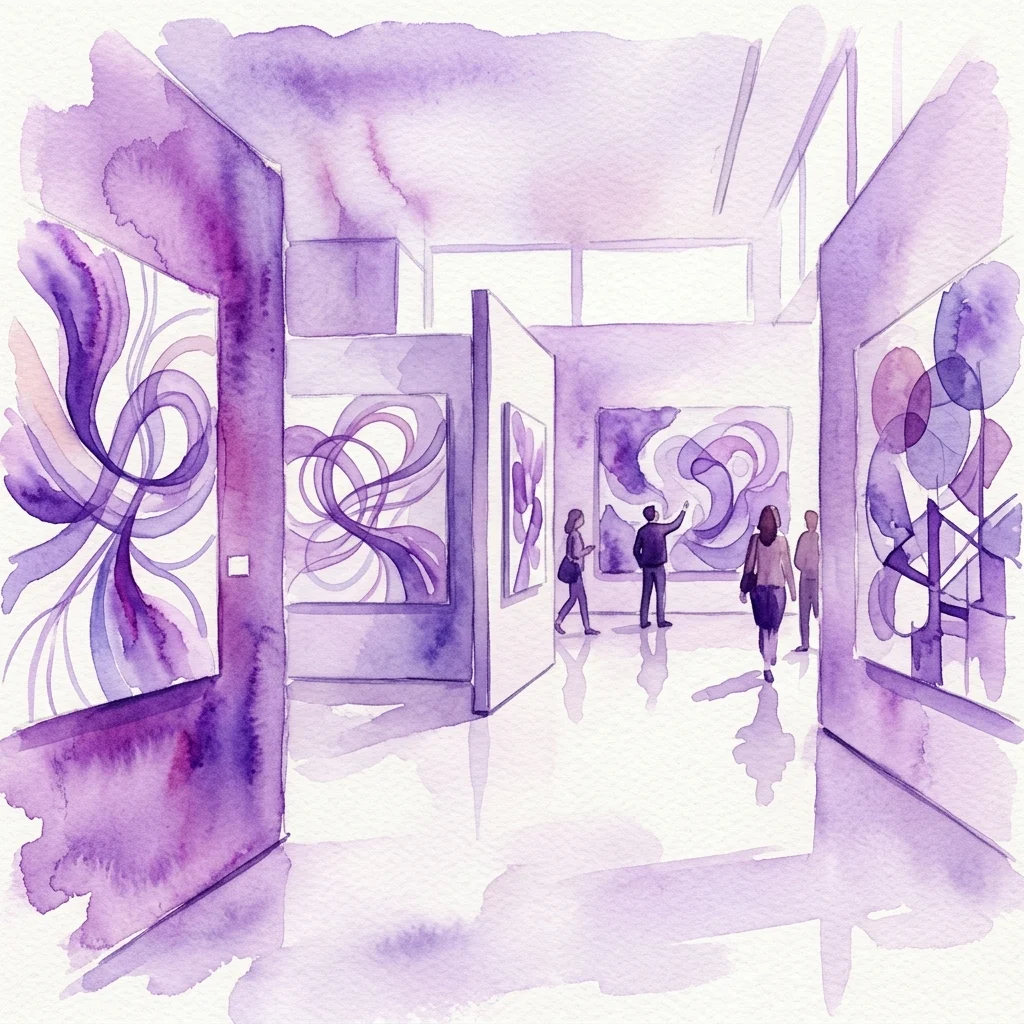
This permanent exhibition, located in Sigmund Freud's former practice rooms (1896-1906), showcases selected works from the Sigmund Freud Museum's conceptual art collection. It features twelve artworks by prominent artists, exploring themes relevant to psychoanalysis and the nature of perception.
The permanent exhibition "Hidden Thoughts of a Visual Nature" is situated in the "medical apartment" at Berggasse 19, which served as Sigmund Freud's practice from 1896 to 1906. This presentation features selected works from the Sigmund Freud Museum's conceptual art collection, established in 1989 with an installation by Joseph Kosuth. Twelve artworks by artists including John Baldessari, Wolfgang Berkowski, Pier Paolo Calzolari, Jessica Diamond, Georg Herold, Susan Hiller, Ilya Kabakov, Joseph Kosuth, Sherrie Levine, Haim Steinbach, Franz West, and Heimo Zobernig are displayed in the premises of Freud's "first" practice.
The exhibition thoughtfully integrates these artworks with the historical context of the rooms. For instance, Joseph Kosuth's and Heimo Zobernig's pieces are displayed in the former waiting room, which hosted the Wednesday Psychological Society. Kosuth's wall installation prompts the integration of new ideas, while Zobernig's work probes the structural parallels between vision and reality. Found objects and linguistic elements by Sherrie Levine and Wolfgang Berkowski animate the former treatment room, where works of art directly engage with core themes of psychological investigation. Georg Herold critically examines "civilized" sexual morality, while Haim Steinbach highlights communication within psychoanalytic therapy. John Baldessari uses photographic references to explore the uncanny, and Susan Hiller delves into the concept of "seeing oneself in others" through archival materials from Freud's estate. Franz West's "Liège" occupies the space where Freud's couch might have been, serving as a commentary on the instrumental nature of the psychoanalytic setting. In the room where Freud wrote "The Interpretation of Dreams," Jessica Diamond's self- and other-referential piece "Me-constellation" is presented. Ilya Kabakov's installation, utilizing furniture from Berggasse 19, unfolds its symbolism in Freud's former desk area, referencing "The Man Who Flew Into His Picture." Pier Paolo Calzolari's "Avido" (greed) in the former kitchen highlights sexual desire, a space used for discreet departures.
The preserved architecture of Freud's workplace serves not only as the birthplace of psychoanalysis but also as a resonant backdrop for the displayed art. Major ideas tested and formulated by Freud here—such as the relationship between the sexes, the discrepancy between experience and memory, or individual versus social determination—find echoes in the artworks. The exhibition's approach, where art interacts intimately with the historical space rather than a neutral "white cube," creates a unique unity of effect, merging the artworks with their surroundings and their profound historical implications.