Prague
Prague · Medieval Art & Gothic History

Convent of St. Agnes of Bohemia - National Gallery Prague

A historic Prague site showcasing significant medieval art from Central Europe.

HistoryArchitectureArtLocal heritageContemporary

Explore one of Prague's earliest Gothic structures, originally a royal burial site and home to St. Agnes of Bohemia. Today, it hosts a significant collection of medieval art and a sculpture garden featuring modern Czech artists, offering a journey through centuries of history and artistic expression.

The Convent of St. Agnes of Bohemia is a significant Gothic monastery in Prague, preserving medieval art, historical architecture, and contemporary sculpture within its ancient walls and gardens.
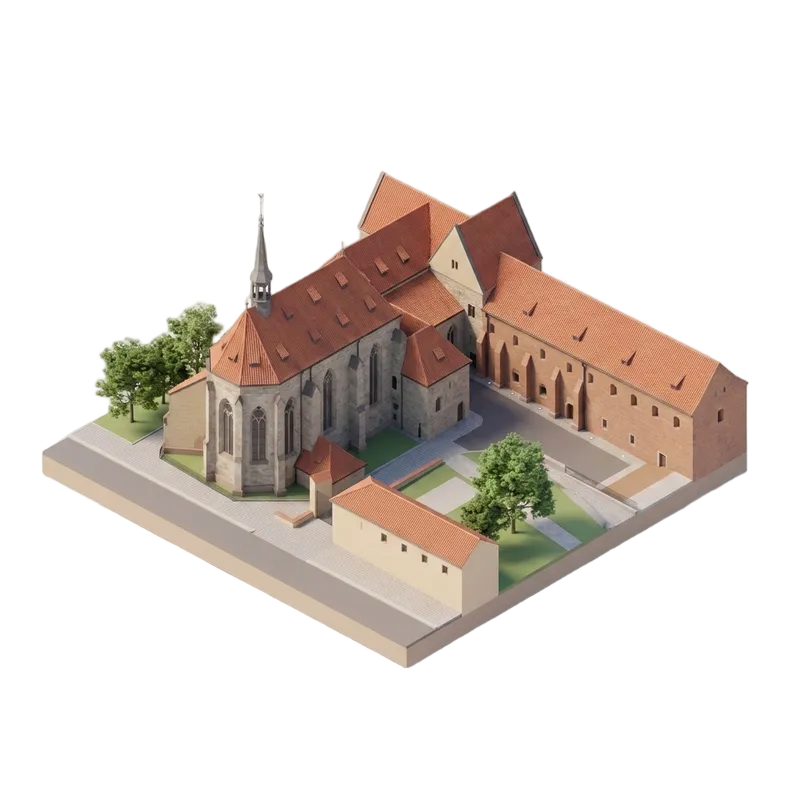
Convent of St. Agnes of Bohemia - National Gallery Prague
About the Convent of St. Agnes of Bohemia

The Convent of St. Agnes of Bohemia - National Gallery Prague, situated in Prague, is a historically significant 13th-century Gothic monastery. Founded by Premyslid Princess St. Agnes, it is recognized as one of the most important Gothic structures north of the Alps. Today, this national heritage site houses the National Gallery Prague's permanent exhibition of medieval art from Bohemia and Central Europe. Visitors can explore its unique ancient architecture, a lapidarium of historical fragments, and an expansive sculpture garden.
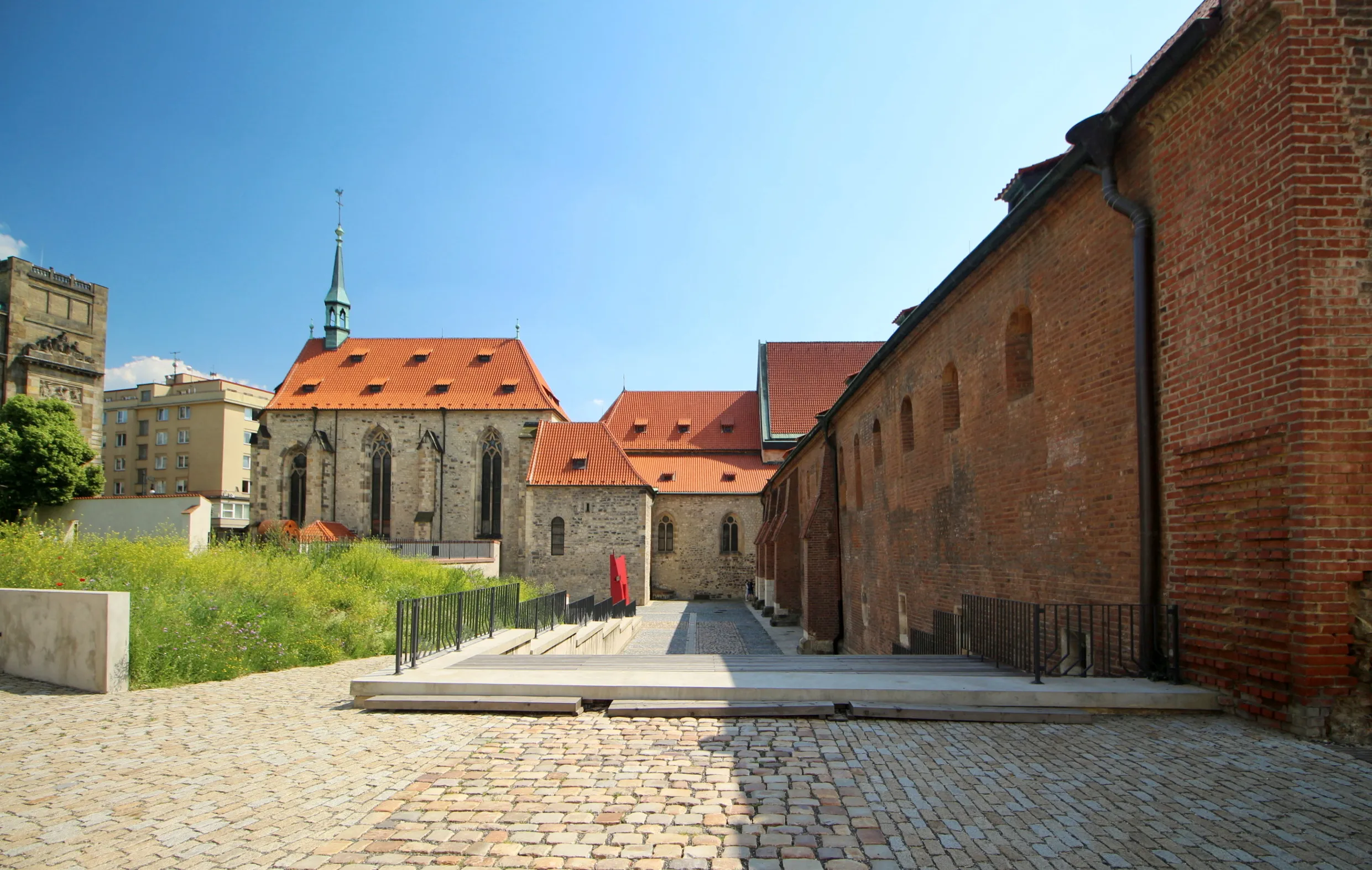
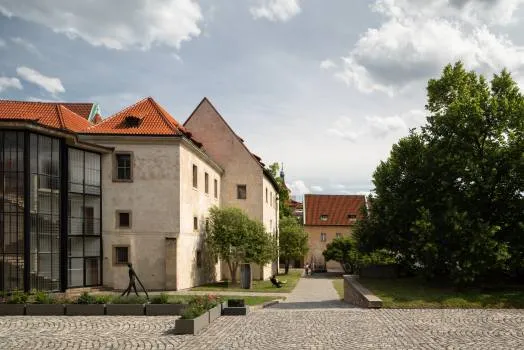
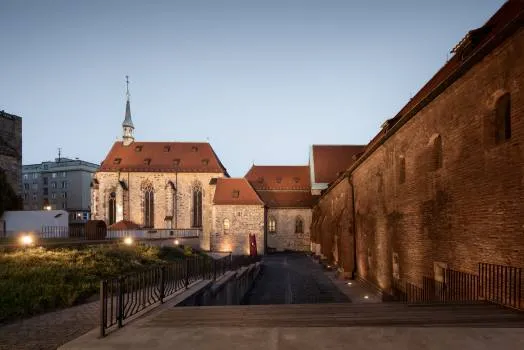
A courtyard view of the Convent of St. Agnes of Bohemia with red-tiled roofs, brick walls, and a church spire under a blue sky
Convent of St. Agnes of Bohemia - National Gallery Prague opening hours in Prague

Check today’s opening status, weekly schedule, and special date changes for Convent of St. Agnes of Bohemia - National Gallery Prague. Use these opening hours to plan your arrival and avoid closed times in Prague.

Monday
Tuesday
Wednesday
Thursday
Friday
Saturday
Sunday
-
10:00-18:00
10:00-18:00
10:00-18:00
10:00-18:00
10:00-18:00
10:00-18:00
Convent of St. Agnes of Bohemia Ticket Information

Admission to the Convent of St. Agnes of Bohemia in Prague includes options for adult general entry and discounted tickets. Free entry is provided for visitors under 16, and specific free entry days are also available. School groups of 10 or more people aged 16 and above can purchase special group rates. A 10-day pass is also offered for access to National Gallery Prague permanent exhibitions, available only at cash desks.

Basic Admission
CZK 250.00
Discounted Admission
CZK 140.00

Upon meeting reduced admission conditions

School Groups
CZK 60.00

From 16 years old, minimum 10 people

Visitor facilities at Convent of St. Agnes of Bohemia

The Convent of St. Agnes of Bohemia - National Gallery Prague provides a range of facilities to support an inclusive visitor experience, including step-free access and lifts throughout the building. Guests will find wheelchair-accessible toilets and may request the use of a wheelchair during their visit. While guided tours are primarily focused on programmes for school and interest groups with specific needs, these services are available by individual arrangement.

wheelchair-accessible toilets

Available

Lifts

Available

Step-free access

Available

wheelchair available for use

Available
Convent of St. Agnes of Bohemia Location

The Convent of St. Agnes of Bohemia - National Gallery Prague is situated at U Milosrdných 17 in the historic city of Prague. This significant 13th-century Gothic monastery offers visitors an opportunity to explore medieval art and historical architecture within its ancient walls and gardens, providing a cultural experience central to the city's heritage.

© OpenStreetMap contributors

U Milosrdných 17

110 00 Prague

Prague, CZ

Convent of St. Agnes of Bohemia Visitor Information

The Convent of St. Agnes of Bohemia - National Gallery Prague in Prague offers various visitor areas, including extensive gardens with sculptures that are freely accessible. Visitors can arrive via public transport, and while the ground floor features a self-guided tour and lapidarium, step-free access to the upstairs exhibition is currently limited due to a technical issue.

Convent of St. Agnes of Bohemia Visitor Information

Convent of St. Agnes of Bohemia: Gothic Heritage and Art Collections

The Convent of St. Agnes of Bohemia - National Gallery Prague offers a distinct experience within a 13th-century Gothic monastery in Prague. As one of the oldest Gothic structures north of the Alps, this site embodies centuries of history, including its past as a Premyslid royal burial place. It now houses the National Gallery Prague's permanent exhibition of medieval art from Bohemia and Central Europe. Visitors explore the preserved convent architecture, a lapidarium with fragments, and serene gardens displaying contemporary Czech sculptures, blending historical depth with artistic breadth.
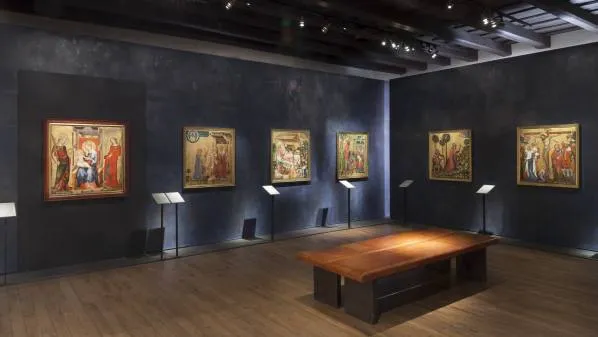
Gallery with medieval paintings on dark walls and a wooden table

History and Cultural Significance of the Convent of St. Agnes

The Convent of St. Agnes of Bohemia, founded in Prague in 1231 by Agnes of Bohemia, rapidly emerged as a significant center for the Poor Clares and Franciscans, integrating Bohemia into contemporary cultural movements. Its impressive *early Gothic architecture*, including the Church of St. Salvator, served as a crucial Přemyslid dynasty mausoleum, reflecting royal patronage and imperial ambitions. After periods of varied use, from an armory during the Hussite Wars to later housing, the convent underwent comprehensive renovations in the early 20th century. The National Gallery Prague acquired the site in 1963, leading to its national cultural heritage landmark status in 1978 and its present role showcasing medieval art.

  • Founded in 1231

    1231Founding

    The convent of Saint Agnes, a monastery for the Poor Clares and Franciscans, was founded in 1231. Agnes of Bohemia, who also became the abbess, established the convent with support from the Pope and her family, linking Bohemia to contemporary clerical and cultural movements.

  • First construction period completed in 1234

    1234Construction

    The initial construction phase, which included the church of St. Francis and a spacious east wing, was completed and consecrated in 1234. Agnes' brother, King Wenceslaus I, donated the land and granted privileges for the convent's establishment.

  • Second construction period includes monastery and chapel of St. Barbara

    Architecture

    The second construction period involved building the male section, including a monastery and the chapel of Saint Barbara, which was connected to the church of St. Francis. A residential building was adapted into the chapel of the Virgin Mary, and Agnes' private chapel and suite were constructed.

  • Third construction period features mausoleum and chapel of Virgin Mary

    1253Architecture

    Following her brother's death in 1253, Agnes initiated a third construction phase, building a mausoleum and a chapel of the Virgin Mary, which served as a repository for significant relics. This phase reflected Ottokar II's imperial ambitions through its architecture, incorporating the latest European styles.

  • Peak influence ended with Wenceslaus III

    Historical period

    After Agnes' death in 1282 and the subsequent shift of royal patronage to the Cistercian monastery in Zbraslav, the glorious times of the Convent of St. Agnes concluded with the deaths of Wenceslaus II and Wenceslaus III.

  • Rebuilt during Charles IV's reign in the 14th century

    Historical period

    In the 14th century, during the reign of Charles IV, the convent underwent significant reconstruction. The dormitory was vaulted, windows were modified, and new portals were added. The chapel of St. Barbara was rebuilt into a larger chapel for the Minors.

  • Used as armory and mint during Hussite Wars

    Historical period

    During the Hussite Wars, the convent was repurposed as an armory and a mint. Following this period, under Habsburg rule, Dominicans occupied the female section while the male section was sold off.

  • Sold in 1782 and converted into housing

    1782Ownership

    In 1782, during Emperor Josef II's dissolution of monasteries, the convent was sold. The new owners converted it into small flats for the poor, workshops, and storages, marking a significant decline in its institutional use.

  • Renovation plans and work occurred at the turn of the 20th century

    1900-1914Renovation

    Several renovation plans emerged in the late 19th century, with actual renewal work commencing around the turn of the 20th century and continuing until 1914. Post-World War II, archaeological and historical research was conducted.

  • National Gallery Prague acquired ownership in 1963

    1963Ownership

    The National Gallery became the owner of the Convent of St. Agnes in 1963, leading to a final phase of renovation. This acquisition marked a significant shift in the convent's institutional management and purpose.

  • Designated a national cultural heritage landmark in 1978

    1978Heritage status

    Since 1978, the convent has been recognized as a national cultural heritage landmark. It now functions as a gallery, exhibiting Medieval Arts of Bohemia and Central Europe.

  • Architecture influenced by royal patronage and monastic knowledge

    Architecture

    The convent's architecture is characterized by its generous scale, influenced by Agnes of Bohemia's royal means and her intimate knowledge of monastic life. It reflects a blend of romance and Gothic elements, alongside Burgundian Cistercian influences.

  • Church of St. Francis originally featured two naves and a southern aisle

    Architecture

    The Church of St. Francis was originally built with two naves and three vault bays each, along with a southern aisle. A specific area was designed for the Poor Clares to attend mass privately, accessible directly from the dormitory.

  • Convent buildings constructed from bricks with detailed layouts

    Architecture

    Unlike the church, the convent buildings were constructed from bricks. They included a hallway connecting to a cloister, a chapter house, refectory, scriptorium, dormitory, and original kitchens and toilets, with specific architectural details reflecting their functions.

  • Presbytery of St. Francis featured specialized masonry

    Architecture

    The presbytery of the Church of St. Francis, connected to the male part of the convent, showcased different Mason's marks indicating new stonemasonry techniques during its construction. It included vault bays, round supports with capitals, and large windows.

  • Chapel of Virgin Mary and Agnes' suite were multi-leveled

    Architecture

    A multi-leveled building connected to the presbytery was rebuilt into the chapel of the Virgin Mary. Agnes' private chapel and bedroom were constructed above this, featuring an indoor staircase for access and connection to the outer convent.

  • Poor Clares’ Cloister built with fewer vault bays than planned

    Architecture

    The cloister of the Poor Clares, constructed during the second building phase, was planned to have eight vault bays per wing but was ultimately built with six in each.

  • Kitchen constructed in the 1350s with a vaulted design

    1350-1359Architecture

    A kitchen, designed with a square floor plan, vault, and ribs connecting to a chimney, was built in the 1350s.

  • Church of St. Salvator served as Přemyslid dynasty mausoleum

    Architecture

    The Church of St. Salvator, with its high architectural quality, functioned as the Přemyslid dynasty mausoleum. Its nave and pentagonal end were designed by an unknown French master, and capitals depict Bohemian rulers and their wives, including Agnes.

  • Symbolic representation of Přemyslid dynasty power

    Cultural significance

    The dedication of the church to Christ the Redeemer and its symbolic architectural elements, such as ruler portraits and specific geometric ratios, represented an effort by the Přemyslid dynasty to bolster its kin's power and echo the Carolingian Renaissance.

  • Museum of Medieval Art established

    Collection

    A museum dedicated to 'Medieval Art in Bohemia and Central Europe 1200–1550' is housed on the first floor of the convent, forming part of the National Gallery Prague.

Convent of St. Agnes of Bohemia: Your FAQ Curiosities Answered

Planning your visit to the Convent of St. Agnes of Bohemia in Prague? You might be wondering if your NGP Club of Friends membership gets you priority entry (sadly, it doesn't!) or if a digital card works (it absolutely does!). Find these answers and more practical details in our full FAQ section.

How long is an NGP Club of Friends membership valid after purchase?

A purchased membership card for the NGP Club of Friends is valid for one year from the date of purchase. If you are renewing, the validity of your new membership begins immediately after your original one expires. If your previous membership has already expired, the new validity starts from the date of purchase.

Can I use a digital membership card for the NGP Club of Friends?

Yes, you can use an electronic version of your NGP Club of Friends membership card, which is provided as a QR code. This digital card can be stored in Apple Wallet or other digital wallets on your phone, though you may be asked to verify your identity upon entry to exhibitions.

How can I become a member of the NGP Club of Friends?

You can purchase a membership for the NGP Club of Friends at any National Gallery Prague ticket office during opening hours, where your card will be issued immediately. Alternatively, you can complete the online application form and pay the annual fee on their website.

What are the age requirements for a Senior Membership at the National Gallery Prague?

Senior Membership for the NGP Club of Friends is available exclusively for individuals who are 65 years of age or older. Security staff may ask Senior Membership holders to verify their age by presenting a valid photo ID when entering exhibition spaces.

Practical Tips for Visiting the Convent of St. Agnes

When planning your visit to the Convent of St. Agnes of Bohemia - National Gallery Prague, be aware that while the convent offers step-free access, there is a temporary limitation to lift platform access for upstairs exhibitions due to a technical issue. Visitors can explore the compound's ground floor, which includes a self-guided historical tour and a lapidarium. The extensive convent gardens, featuring contemporary sculptures, are open to the public free of charge year-round. A complimentary app, 'The Hidden Secrets of Mediaeval Paintings', is also available to enhance your understanding of the medieval art housed within the convent.

Convent of St. Agnes of Bohemia: Visitor Profile

The Convent of St. Agnes of Bohemia in Prague is well-suited for various visitors, including couples, solo explorers, student groups, and larger gatherings interested in history, medieval art, and architecture. Guests can explore the ground floor's historical tour and lapidarium, while the gardens offer contemporary sculpture. While the venue provides amenities like step-free access and available wheelchairs, visitors with mobility needs should be aware that access to the upstairs exhibition may be temporarily limited due to a lift issue.

Convent of St. Agnes of Bohemia Photos

Explore images of the Convent of St. Agnes of Bohemia in Prague, revealing its historic Gothic architecture with red-tiled roofs, stone walls, and tranquil courtyards. The gallery also showcases its medieval art collection, featuring religious paintings within atmospheric exhibition spaces. Visitors can expect views of the preserved 13th-century complex and its artistic treasures.

white NGP logo with 230 LET text on black background
A courtyard view of the Convent of St. Agnes of Bohemia with red-tiled roofs, brick walls, and a church spire under a blue sky
Gallery with medieval paintings on dark walls and a wooden table
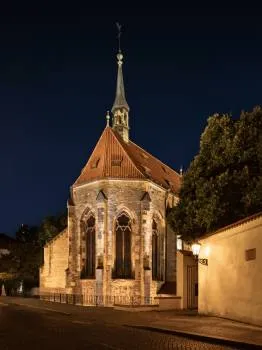
Gothic convent building at night with a tall spire and arched windows, illuminated by warm lights
Historic stone buildings with red-tiled roofs and a modern glass extension in a courtyard with cobblestone paths and greenery
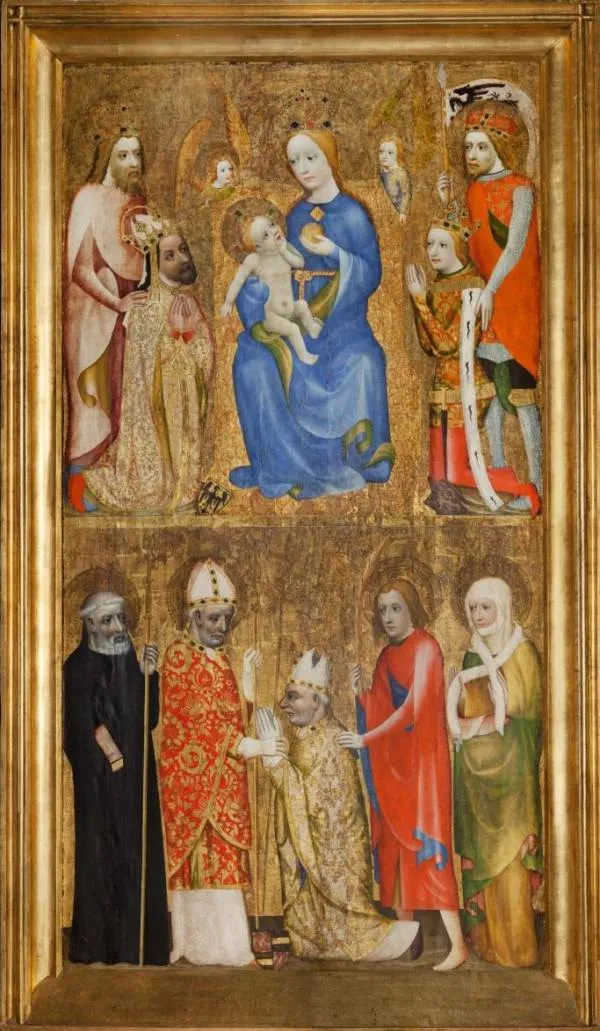
medieval painting of religious figures including the Virgin Mary and Christ Child in a golden frame
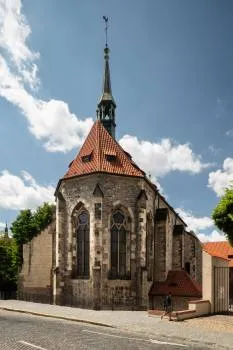
Gothic stone building with red-tiled roof and spire under blue sky
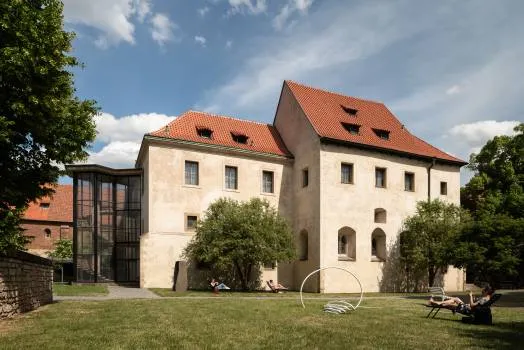
A historic building with a red-tiled roof and light stone walls, surrounded by green grass and trees under a blue sky, with a modern glass extension on the left side.
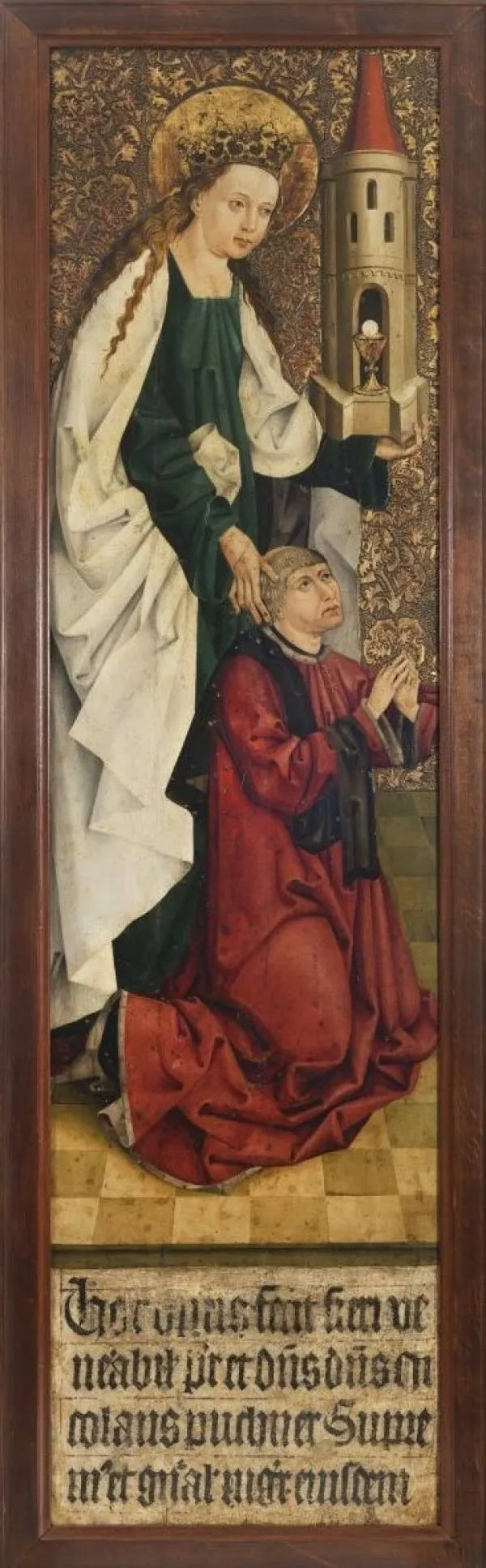
Medieval painting of the Virgin Mary with a halo standing over a kneeling figure in red robes, with a tower and ornate background
Gothic convent with a spire and red-tiled roofs illuminated at dusk
Prague

Find Prague Museums: Your Comprehensive Search for Cultural Attractions

Discover art, history, and science museums in Prague.

Explore diverse collections and find specific institutions that match your interests. Easily locate renowned galleries, historical sites, and unique exhibits to plan your cultural journey through Prague.

Explore Convent of St. Agnes of Bohemia - National Gallery Prague with Prague
Guides, visitor info, and museum details in Prague
Find everything about Convent of St. Agnes of Bohemia - National Gallery Prague in one place, including tickets, opening hours, current exhibitions, location details, visitor tips, nearby attractions, and the latest museum updates. Use these pages to plan your visit, discover what to see, and get practical information before you go.
Discover nearby museums similar to Convent of St. Agnes of Bohemia - National Gallery Prague in Prague and plan your next cultural stop with confidence.
These recommendations prioritize real proximity to Convent of St. Agnes of Bohemia - National Gallery Prague and help you find high-fit alternatives faster across Prague.
Use this curated list to compare museums near Convent of St. Agnes of Bohemia - National Gallery Prague without opening multiple search pages. Each card gives you fast visual context and direct access to key details so you can decide quickly. If you are building a full day in Prague, this section helps you chain nearby visits with less planning effort.