Prague
Czech 20th-century history

National Monument at Vítkov, Prague

A monumental functionalist memorial showcasing 20th-century Czech history in Prague.

HistoryArchitectureLocal heritage

Perched on Vítkov Hill, the National Monument commemorates Czechoslovak legionaries and statehood. Visitors can explore exhibitions on 20th-century Czech history, see the Tomb of the Unknown Soldier, and admire a large equestrian statue of Jan Žižka, all while enjoying panoramic city views.

The National Monument at Vítkov is a significant functionalist memorial on Vítkov Hill, featuring historical exhibitions, a Tomb of the Unknown Soldier, and the Jan Žižka equestrian statue.

National Monument at Vítkov
National Monument at Vítkov: History and Significance

The National Monument at Vítkov is a prominent functionalist building on Vítkov Hill in Prague. It honors Czechoslovak legionaries and the formation of the Czechoslovak Republic, housing the permanent exhibition 'The Crossroads of Czech and Czechoslovak Statehood.' This exhibition delves into pivotal moments of 20th-century Czech history, while the site also features the Tomb of the Unknown Soldier and the colossal equestrian statue of Jan Žižka. Visitors can also enjoy sweeping panoramic views of Prague from this national cultural monument.

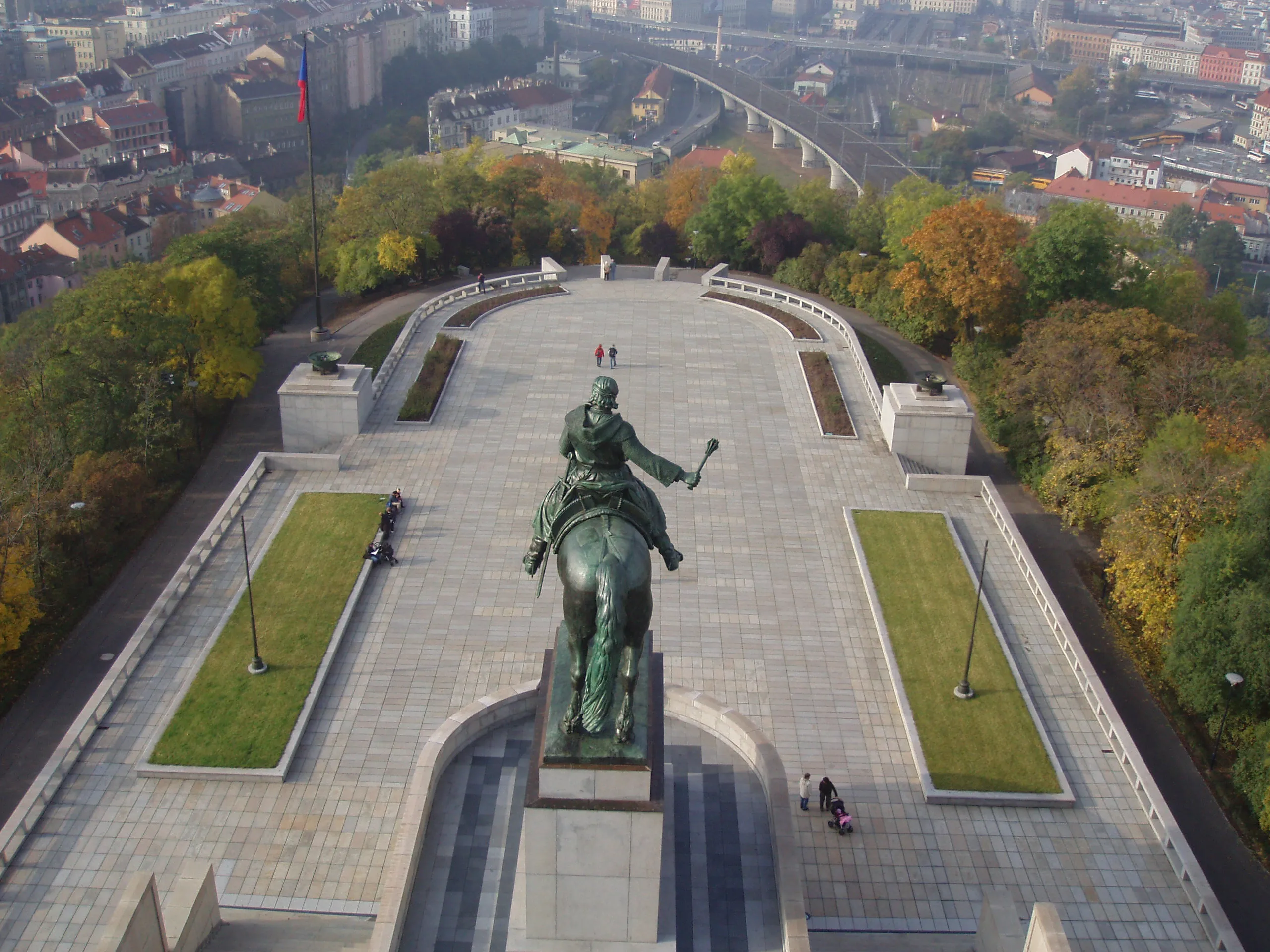
Aerial view of a large equestrian statue on a pedestal in a wide plaza with a cityscape in the background
National Monument at Vítkov opening hours in Prague

Check today’s opening status, weekly schedule, and special date changes for National Monument at Vítkov. Use these opening hours to plan your arrival and avoid closed times in Prague.

Monday
Tuesday
Wednesday
Thursday
Friday
Saturday
Sunday
-
10:00-18:00
10:00-18:00
10:00-18:00
10:00-18:00
10:00-18:00
10:00-18:00
National Monument at Vítkov on Vítkov Hill

The National Monument at Vítkov is prominently located on Vítkov Hill in Prague's Žižkov neighborhood. This elevated position offers visitors unique panoramic views across the city, complementing the monument's historical exhibitions and colossal Jan Žižka equestrian statue. Its situation provides a distinct landmark for those exploring 20th-century Czech history within the capital.

© OpenStreetMap contributors

U Památníku 1900

130 00 Prague

Žižkov, Prague, CZ

Visitor Information for National Monument at Vítkov

Plan your visit to the National Monument at Vítkov, which offers free admission. Ensure you arrive before the last admission of the day at 5:30 p.m. The memorial is accessible to visitors and is located in the Žižkov neighborhood of Prague.

Visitor Information for National Monument at Vítkov

The National Monument at Vítkov Visitor Experience

The National Monument at Vítkov, a striking functionalist structure erected on Vítkov Hill in Prague, serves as a significant tribute to Czechoslovak statehood and its legionaries. Visitors can explore the permanent exhibition 'The Crossroads of Czech and Czechoslovak Statehood,' offering in-depth insights into pivotal moments of 20th-century Czech history. The experience is further enriched by key features such as the revered Tomb of the Unknown Soldier and the impressive equestrian statue of Hussite leader Jan Žižka, one of the world's largest. Beyond its historical narratives, the monument provides extensive panoramic views across the city, complemented by an on-site café and available educational programs, allowing for a comprehensive and reflective visit.

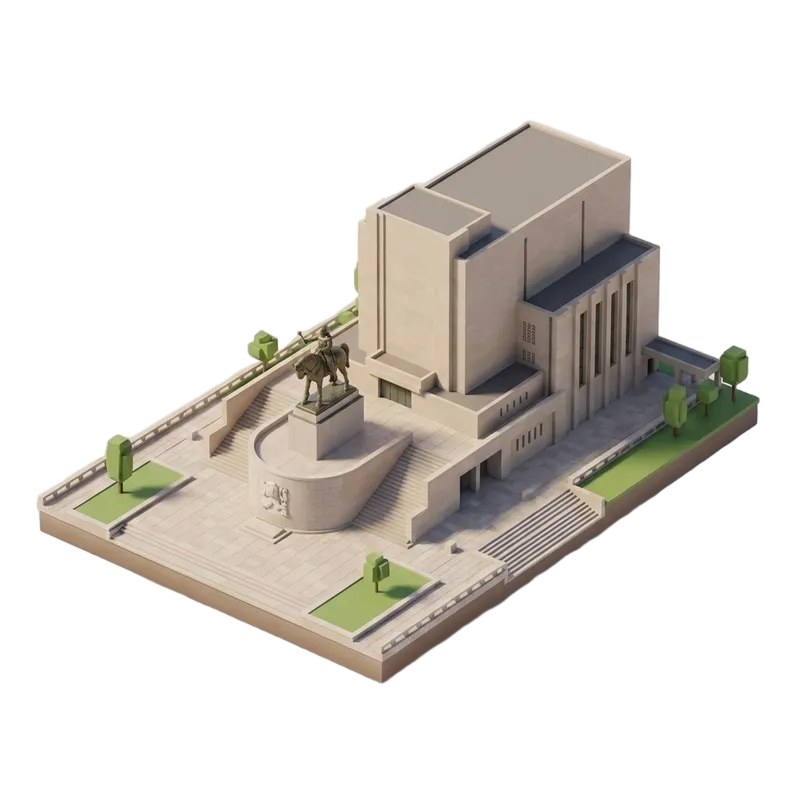
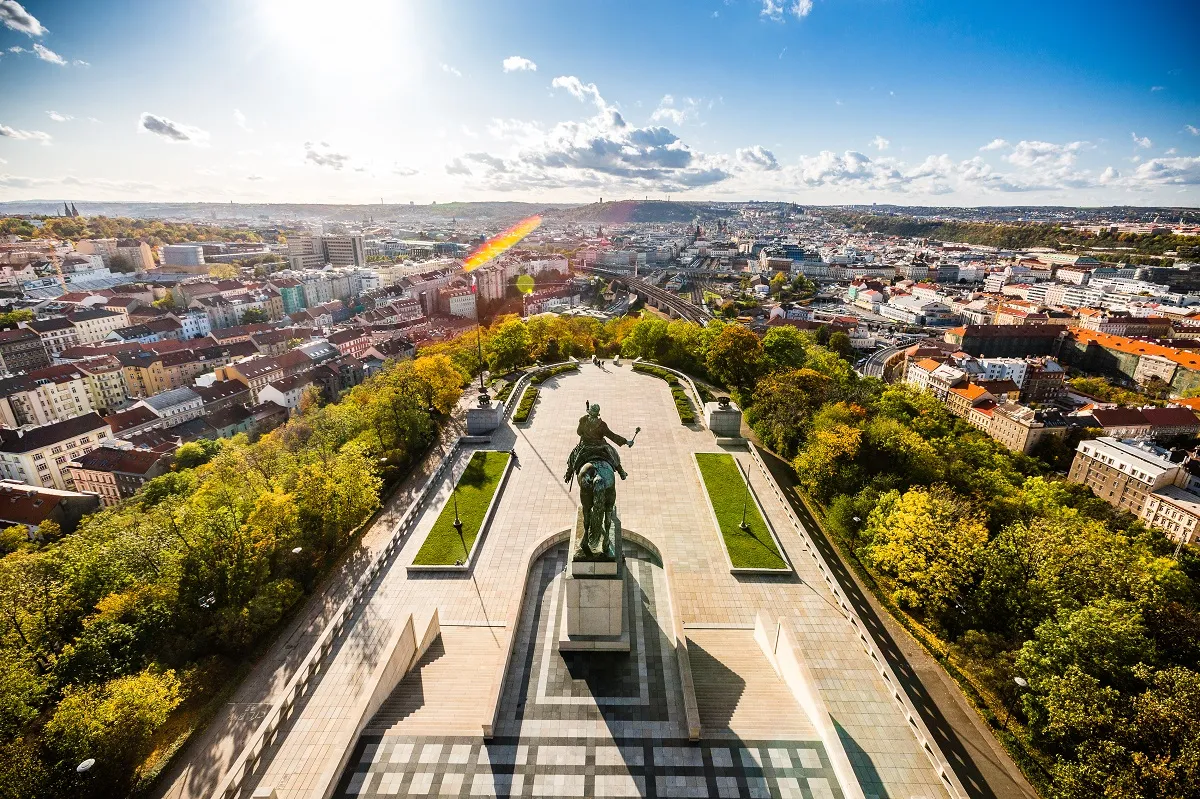
Aerial view of the National Monument at Vítkov with a large equestrian statue at the center, surrounded by trees and a cityscape under a blue sky.

History of the National Monument at Vítkov

The **National Monument at Vítkov** began construction in 1928, largely completed by 1933, celebrating Czechoslovak statehood and honoring its legionaries. Standing on Vítkov Hill, the monument also commemorates Jan Žižka's pivotal 1420 victory, with his colossal equestrian statue unveiled there in 1950. Post-World War II, the site underwent a *significant ideological shift*, repurposed as a communist pantheon and establishing the Tomb of the Unknown Soldier in 1949. After the removal of communist symbols in 1990, the National Museum acquired it in 2000. Following extensive restoration from 2007 to 2009, it reopened as a prominent venue for historical exhibitions.

  • Construction of the National Liberation Monument commenced

    1928-1933Construction

    The construction of the National Liberation Monument began in 1928 with the laying of the cornerstone on Vítkov Hill, coinciding with the 10th anniversary of Czechoslovakia's creation. The main structure was completed by 1933, with interior works involving many artists continuing thereafter.

  • Jan Zazvorka designed the museum

    1927-1929Notable person

    Architect Jan Zazvorka won the first prize in an art contest for the design of the Monument, which included a museum at the foot of the hill. The construction of this museum began in 1927 and was finished two years later.

  • Museum construction completed

    1929Construction

    The museum building located at the foot of Vítkov Hill, designed by architect Jan Zazvorka, was completed in 1929. This was part of the larger project for the National Liberation Monument.

  • Monument's initial purpose and WWII interruption

    1938-1945Historical period

    The Monument was being prepared for official state property transfer in 1938, intended as a tribute to the resistance against Nazism. However, the outbreak of World War II and the Munich Conference prevented its formal transfer, and its lower buildings were seized by the Germans.

  • Equestrian statue commissioned and built

    1931-1945Construction

    Sculptor Bohumil Kafka was commissioned in 1931 to create the monumental equestrian statue of Jan Žižka. Kafka worked on the sculpture for ten years, completing a plaster model in November 1941. The casting and final assembly occurred after the country's liberation.

  • Equestrian statue unveiled

    1950Opening

    The colossal equestrian statue of Jan Žižka was unveiled on July 14, 1950, commemorating the anniversary of the Battle of Vítkov. The sculpture, weighing 16.5 tonnes, is tethered to the Monument's structure.

  • Tomb of the Unknown Soldier established

    1949Heritage status

    The Czechoslovak Tomb of the Unknown Soldier was initially established in Prague's Old Town Hall in 1922. After being demolished by Nazis in 1941, consideration was given to relocating it. Remains from the Battle of the Dukla Pass were interred in the National Monument on October 9, 1949.

  • Monument converted to Communist pantheon

    1948-1950Ownership

    Following World War II and the February 1948 communist coup, the Monument's ideological function shifted. The veneration of legionary tradition was suppressed, and the Monument was repurposed as a 'proletariat pantheon' by the Communist Party of Czechoslovakia.

  • Gottwald Mausoleum construction completed

    1953-1953Construction

    The Klement Gottwald Mausoleum was established within the Monument following a decision by the Communist Party's Central Committee in 1953. Technical facilities for embalming were built underground, completed in October 1953, inspired by models in Moscow and Sofia.

  • Gottwald Mausoleum removed

    1962Renovation

    Klement Gottwald's body was cremated in 1962, and the technical facilities for the Mausoleum were removed. The sarcophagus, originally intended for President Masaryk, was repurposed. Only the control room and laboratory ground plan remain from the original design.

  • Urns removed from Monument

    1990Collection

    After the Velvet Revolution in 1989, funerary urns of Klement Gottwald and other prominent Communist Party members, which had been displayed in the Monument since 1962, were removed in 1990. They were subsequently buried in a community grave at Olšany Cemetery.

  • National Museum acquired the Monument

    2000Ownership

    In 2000, the National Museum in Prague took ownership of the National Monument at Vítkov. This transfer preceded significant restoration efforts.

  • Major restoration and reopening

    2007-2009Renovation

    Following its acquisition by the National Museum, the Monument underwent extensive restoration. After more than two years of reconstruction, it was reopened to the public on October 29, 2009.

  • Jan Žižka connection to Vítkov Hill

    1420Notable person

    Jan Žižka, a leader of the Hussites, defeated Catholic forces led by King Sigismund in 1420 at the Battle of Vítkov Hill, a pivotal event commemorated by the monument.

  • Commemorating Czech statehood

    Overview

    The National Monument at Vítkov in Prague is a significant building dedicated to commemorating Czech statehood. It features the third-largest bronze equestrian statue in the world and houses exhibitions on Czech and Czechoslovak state history.

  • Tomb of the Unknown Soldier re-established

    2010Heritage status

    Remains from the Battle of Zborov were intended for the Tomb of the Unknown Soldier at Vítkov after World War II, fulfilling an original idea. On May 8, 2010, other remains from Zborov were added, honoring those who fell for the Czech and Czechoslovak states.

National Monument at Vítkov: Curious Questions, Clear Answers

Curious about visiting the National Monument at Vítkov? We've gathered some answers for you! For example, you might be pleased to learn that exploring this impressive monument on Vítkov Hill won't cost you a penny, as admission is entirely free. Find more handy details to plan your visit.

How can I contact the National Monument at Vítkov?

You can contact the National Monument at Vítkov by using the embedded contact form available on their website for general enquiries.

Is there an email address for the National Monument at Vítkov?

An email address for direct inquiries to the National Monument at Vítkov is not provided in the available visitor information.

Does the National Monument at Vítkov provide a phone number?

A direct phone number for the National Monument at Vítkov is not provided in the available visitor information.

What is the admission fee for the National Monument at Vítkov?

Admission to the National Monument at Vítkov is free for all visitors.

Visitor Tips for the National Monument at Vítkov

To ensure a smooth visit to the National Monument at Vítkov, be aware that admission is free. Plan your arrival before the last admission time of 5:30 p.m. The memorial is also accessible to visitors, facilitating an inclusive experience.

Visitor Information for National Monument at Vítkov

The National Monument at Vítkov in Prague is designed to suit a wide range of visitors, including families, students, solo explorers, and groups interested in the region's past. Those with an interest in Czech history, architecture, and local heritage will find the site particularly engaging. The memorial is accessible, accommodating visitors with accessibility needs. It offers an opportunity to delve into significant historical narratives and appreciate the monumental architecture.

National Monument at Vítkov Photo Gallery

Explore striking images of the National Monument at Vítkov, showcasing its distinctive functionalist architecture and the monumental equestrian statue of Jan Žižka. The gallery provides glimpses into the grand interior halls and solemn spaces within this significant memorial in Prague. Visitors can also preview the panoramic views of the city from its location on Vítkov Hill.

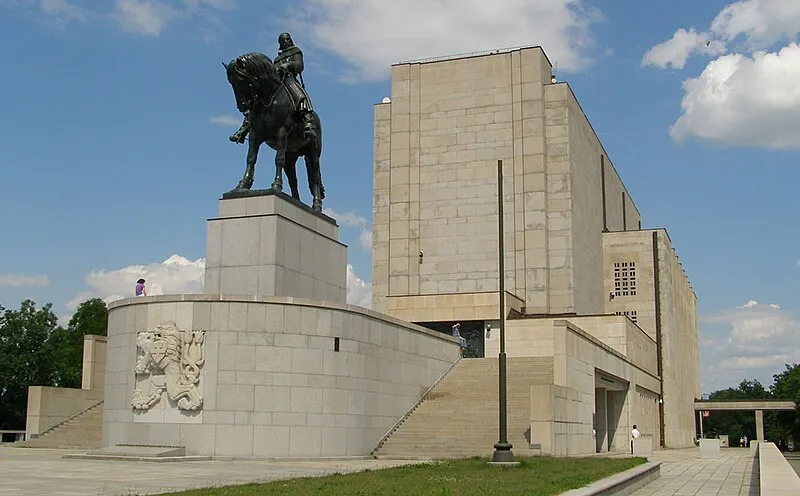
Aerial view of the National Monument at Vítkov with a large equestrian statue at the center, surrounded by trees and a cityscape under a blue sky.
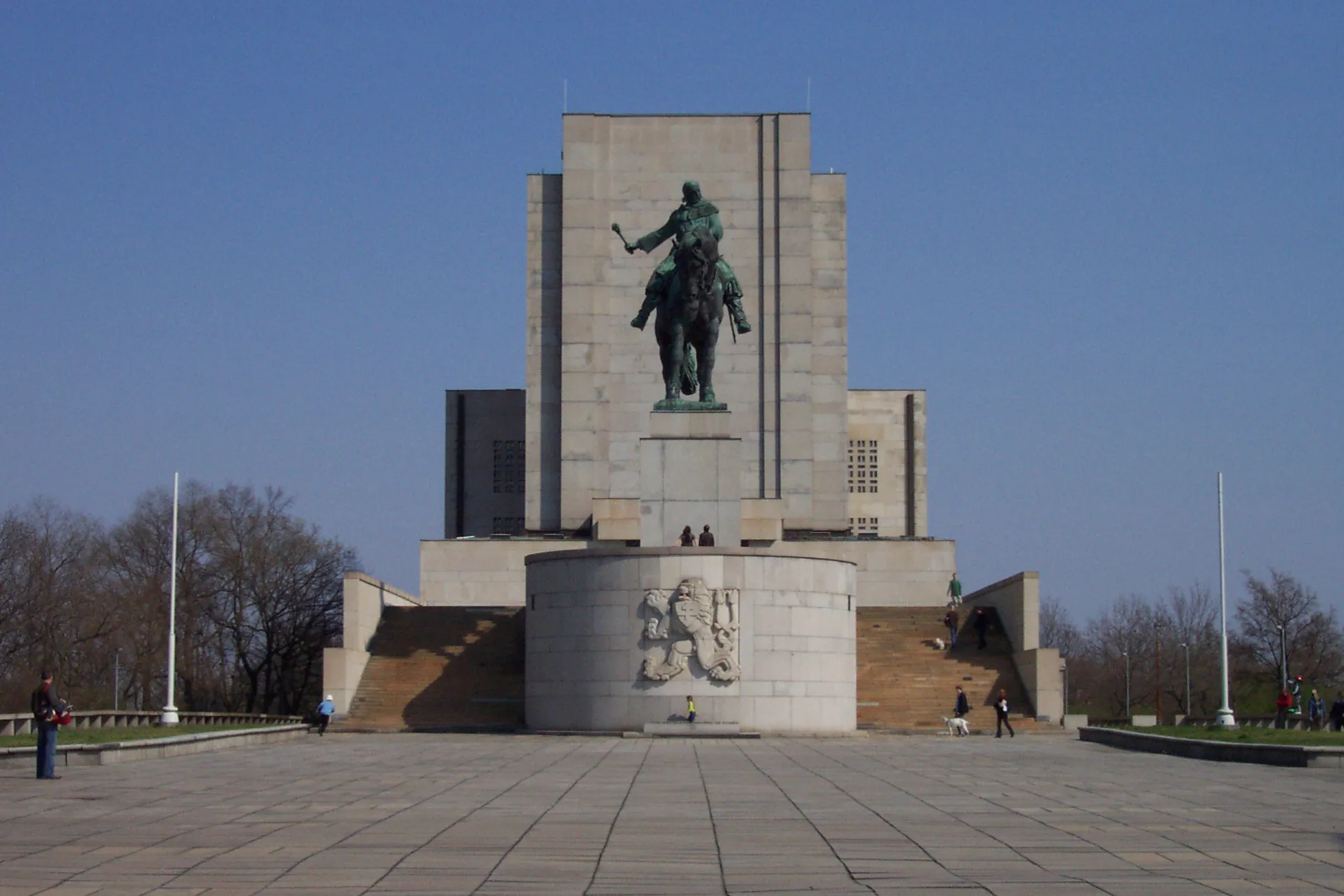
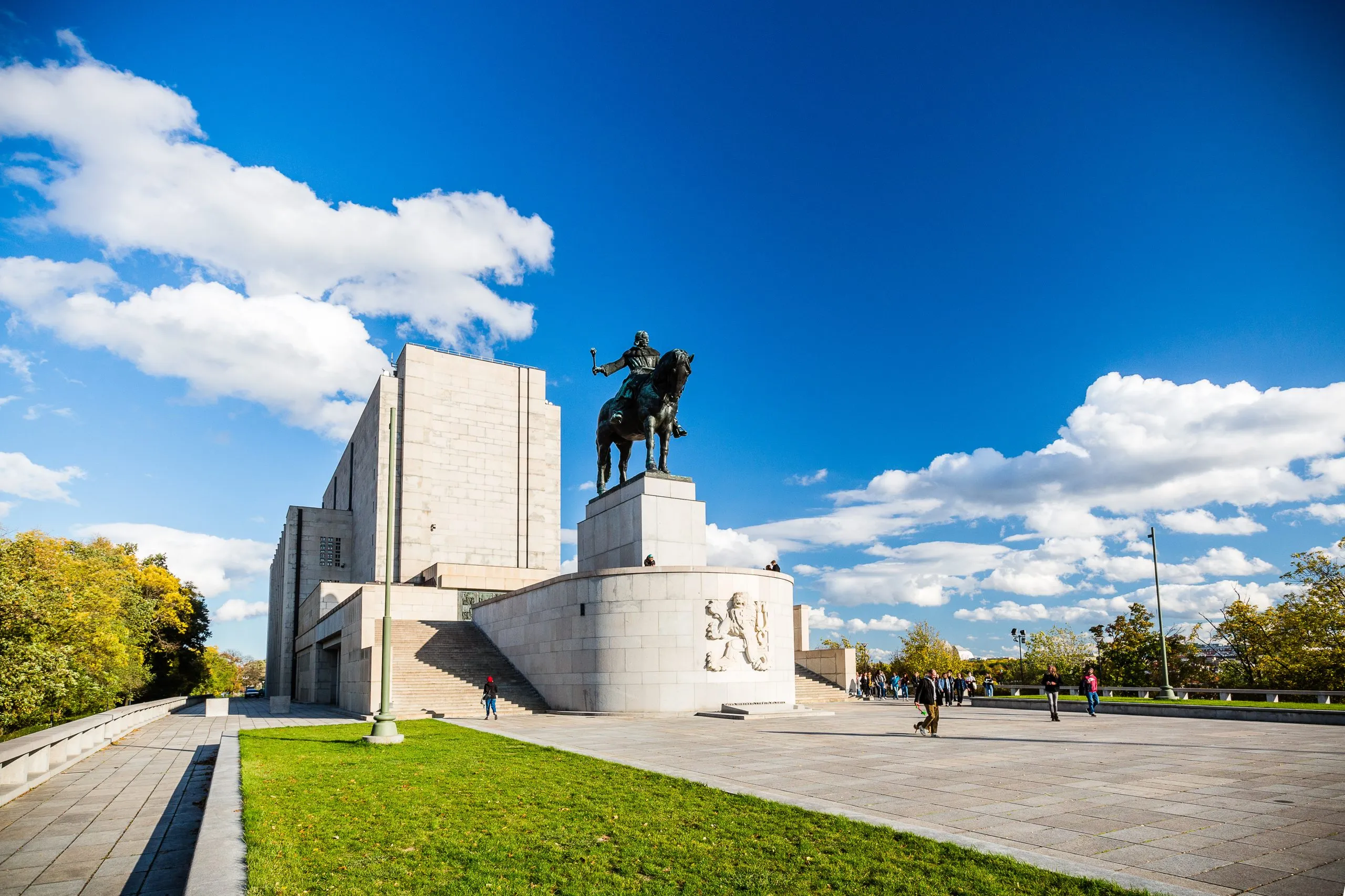
A large concrete monument with a green equestrian statue on top, set against a clear blue sky, with a paved plaza in the foreground.
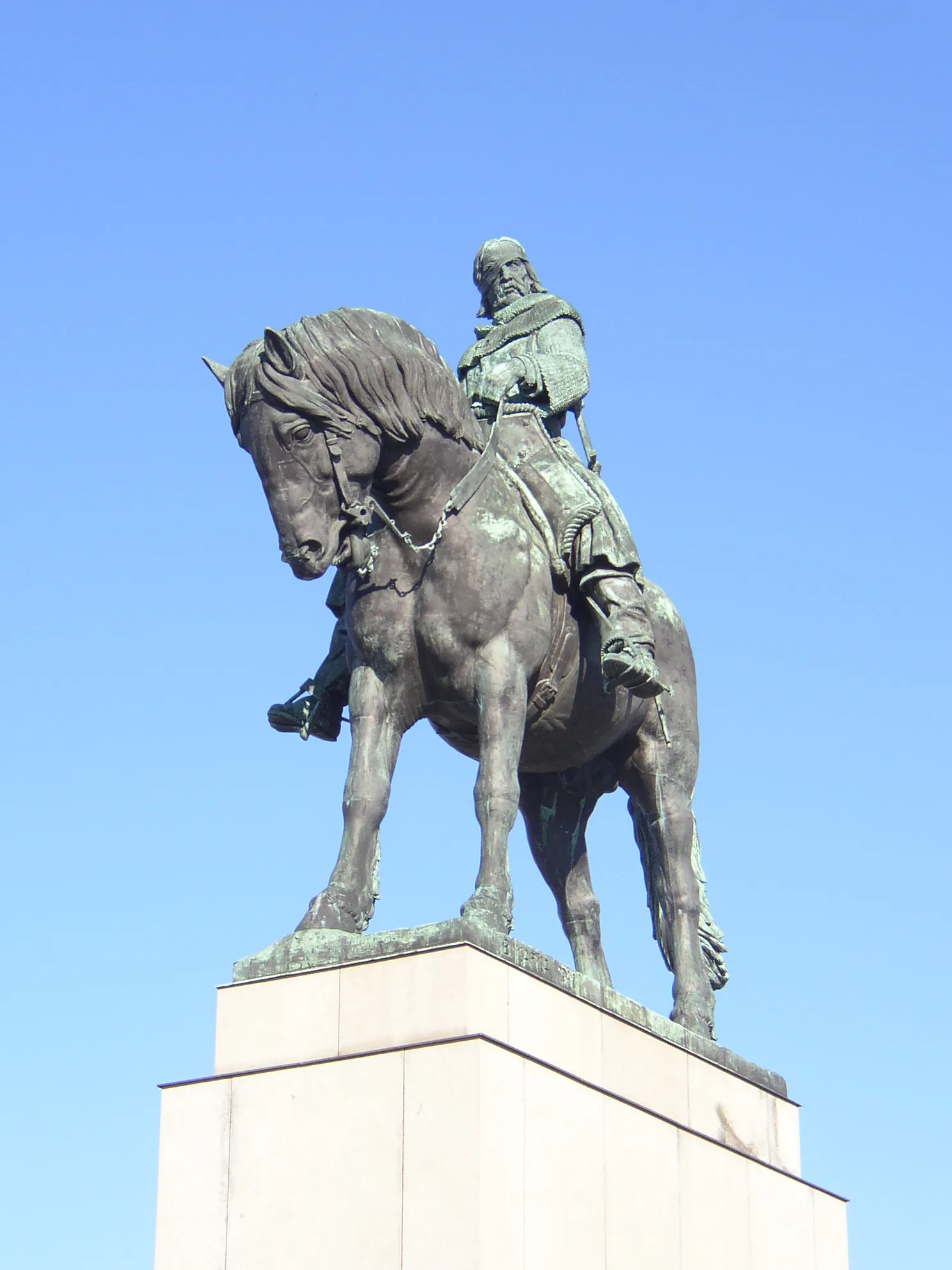
Bronze equestrian statue of a man on horseback on a large pedestal against a blue sky
Aerial view of a large equestrian statue on a pedestal in a wide plaza with a cityscape in the background
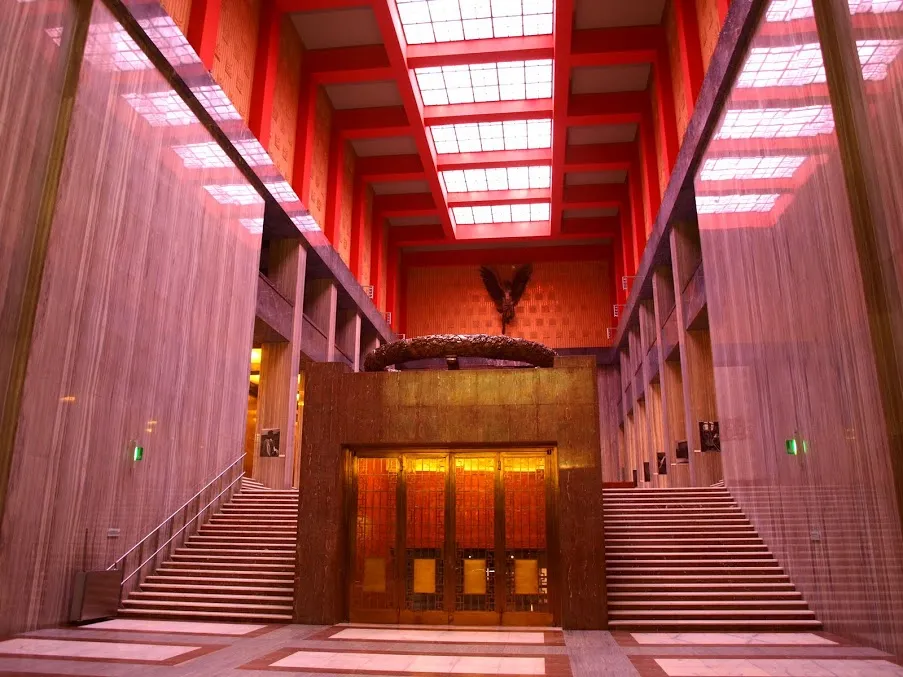
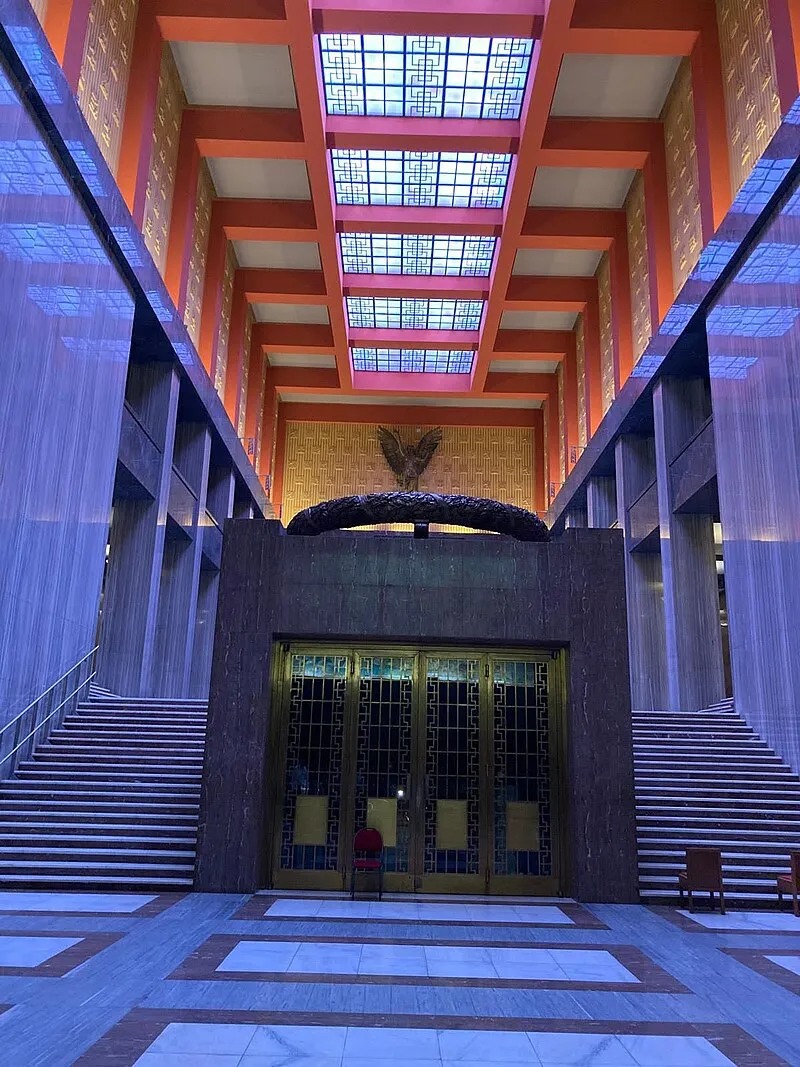
Interior of a grand hall with red beams, a central golden entrance, and a large equestrian statue in the distance.
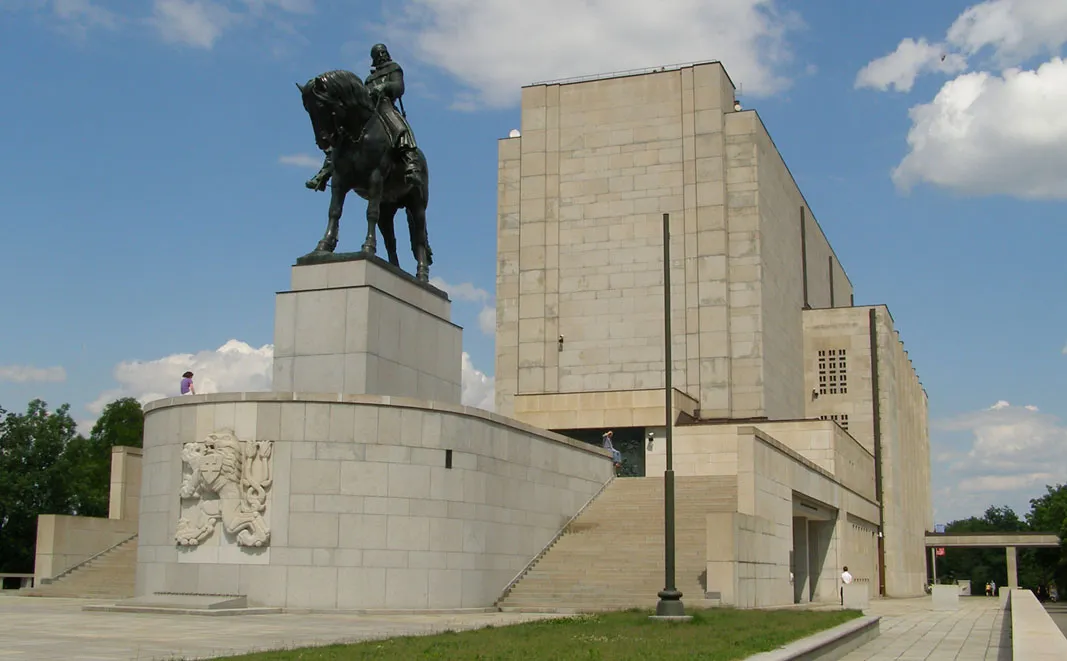
A large equestrian statue on a stone pedestal next to a modernist concrete building under a blue sky with clouds
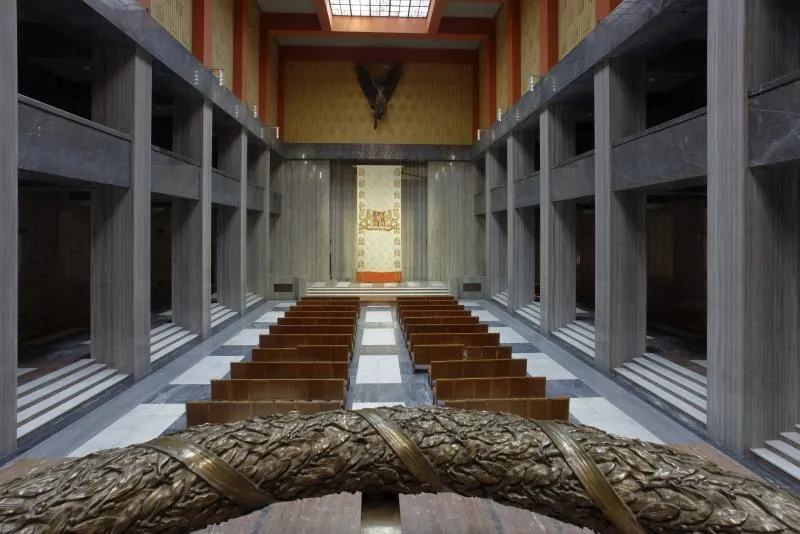
Interior of the National Monument at Vítkov with wooden pews, concrete columns, and a central altar
A large equestrian statue on a pedestal in front of a modernist building at Vítkov Hill, with green grass and a blue sky.
A large equestrian statue on a stone pedestal next to a modernist building under a blue sky with clouds
Interior hall with red beams, skylights, and a central entrance with a bronze sculpture above the doors
Prague

Find Prague Museums: Your Comprehensive Search for Cultural Attractions

Discover art, history, and science museums in Prague.

Explore diverse collections and find specific institutions that match your interests. Easily locate renowned galleries, historical sites, and unique exhibits to plan your cultural journey through Prague.

Explore National Monument at Vítkov with Prague
Guides, visitor info, and museum details in Prague
Find everything about National Monument at Vítkov in one place, including tickets, opening hours, current exhibitions, location details, visitor tips, nearby attractions, and the latest museum updates. Use these pages to plan your visit, discover what to see, and get practical information before you go.
Discover nearby museums similar to National Monument at Vítkov in Prague and plan your next cultural stop with confidence.
These recommendations prioritize real proximity to National Monument at Vítkov and help you find high-fit alternatives faster across Prague.
Use this curated list to compare museums near National Monument at Vítkov without opening multiple search pages. Each card gives you fast visual context and direct access to key details so you can decide quickly. If you are building a full day in Prague, this section helps you chain nearby visits with less planning effort.