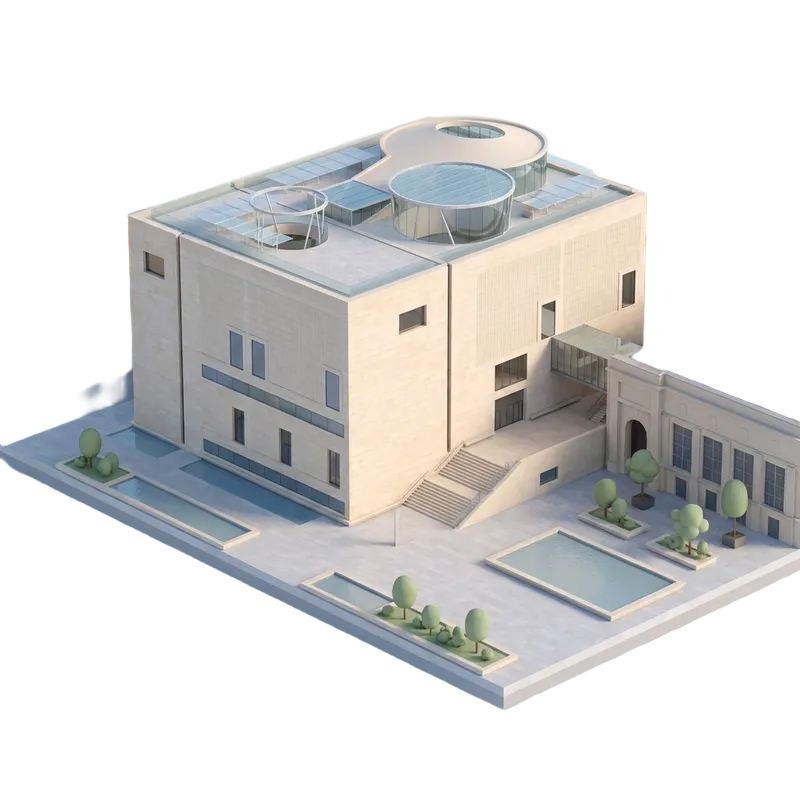
Vienna
Dinosaurs & Ancient Artifacts

Natural History Museum Vienna: Collections of Natural Wonders

Explore ancient artifacts, vast mineral collections, and the iconic Venus of Willendorf in Vienna.

ScienceHistoryNatureLocal heritageArt

Discover extensive collections spanning Earth's geological past, diverse ecosystems, and the evolution of life. The museum showcases specimens from paleontology, mineralogy, zoology, and anthropology, alongside special exhibitions and unique insights into medical history with its moulage collection.

The Natural History Museum Vienna houses vast scientific collections exploring Earth's natural world, from ancient fossils to modern biodiversity and human development.
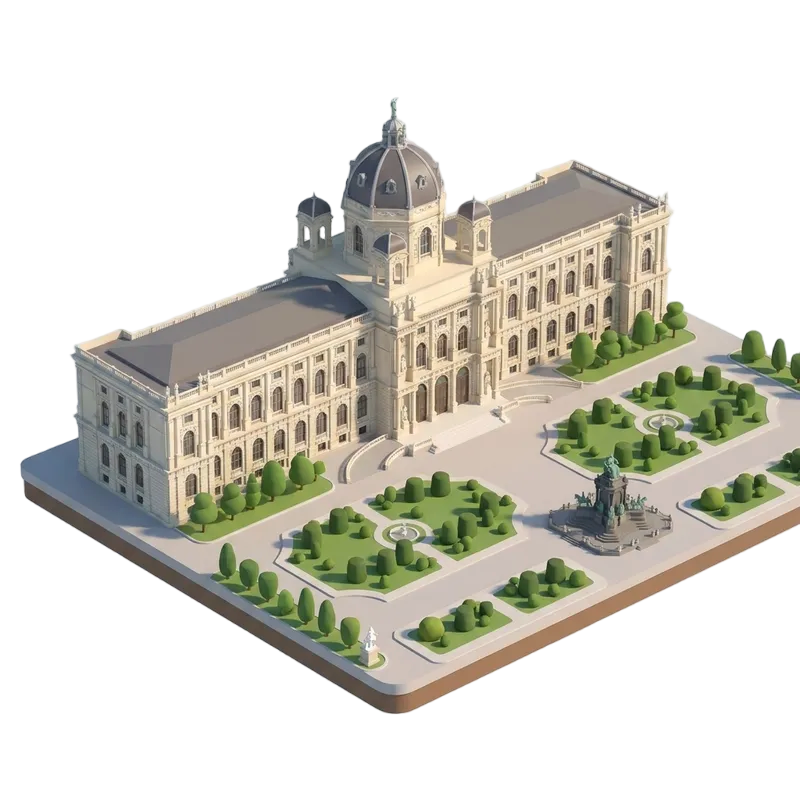
Natural History Museum Vienna
Natural History Museum Vienna: Earth's Natural World and Biodiversity

The Natural History Museum Vienna is a prominent institution in Vienna dedicated to showcasing Earth's natural world, from its ancient origins to contemporary biodiversity. It houses vast scientific collections spanning mineralogy, paleontology, zoology, and anthropology. The museum's exhibitions invite visitors to explore the evolution of life and the diversity of ecosystems. A unique permanent display, 'The Art of the Moulage,' also offers a historical perspective on medical documentation.
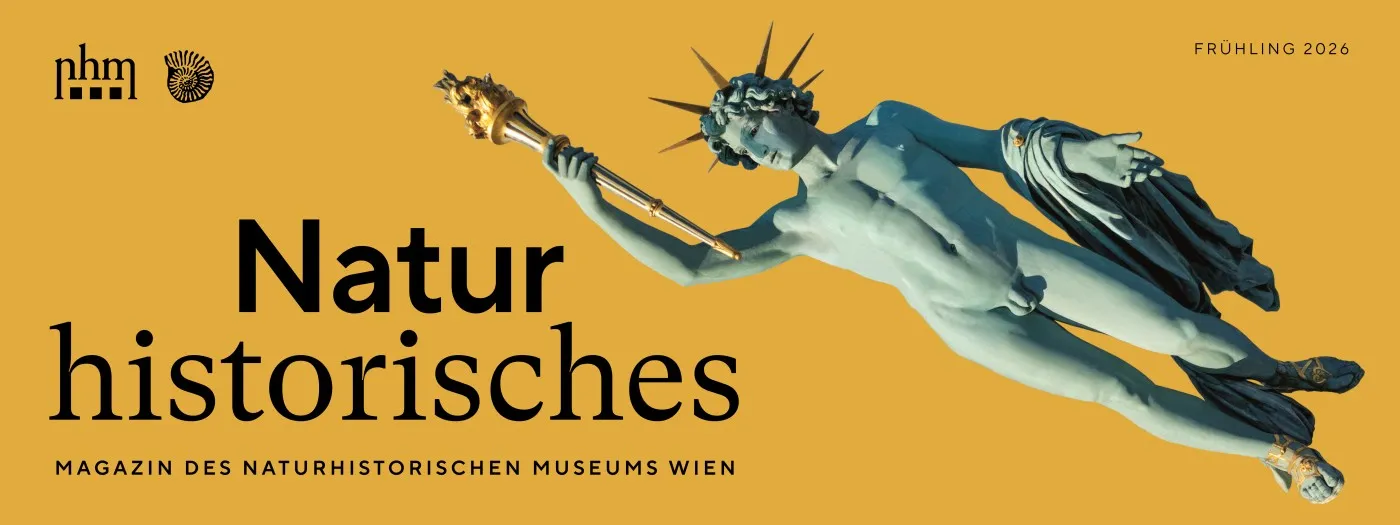
Classical statue of a winged figure holding a staff with a globe, set against a mustard-yellow background with text 'Natur historisches' and 'Magazin des Naturhistorischen Museums Wien'.
Natural History Museum Vienna opening hours in Vienna

Check today’s opening status, weekly schedule, and special date changes for Natural History Museum Vienna. Use these opening hours to plan your arrival and avoid closed times in Vienna.

Monday
Tuesday
Wednesday
Thursday
Friday
Saturday
Sunday
09:00-18:00
-
09:00-20:00
09:00-18:00
09:00-18:00
09:00-18:00
09:00-18:00
Natural History Museum Vienna Tickets and Admission

The Natural History Museum Vienna operates on a paid admission basis for general entry. Current information does not indicate specific free entry options, nor are there mentions of dedicated group, student, or senior tickets. Visitors interested in frequent access can consider an Annual Pass for unlimited visits to the museum's collections, or the Bundesmuseen Card, which offers entry to several museums.

Entrance NHM
Price not listed
Entrance Narrenturm
Price not listed
Combined ticket NHM & Narrenturm
Price not listed
Visitor amenities at the Natural History Museum Vienna

The Natural History Museum Vienna offers a range of facilities designed to support visitor comfort and inclusion. Guests can utilize wheelchair access and accessible toilet facilities to navigate the building, while elevators are available to assist with movement between levels. Additionally, limited accommodations are provided for those visiting with prams to ensure a practical experience for families.

toilets for people with impaired mobility

Available

elevator

Available

Wheelchair access

Available

Prams

Limited
Museum Pass Access at the Natural History Museum Vienna

Visitors to the Natural History Museum Vienna can utilize selected city sightseeing passes to facilitate their entry. Depending on the chosen pass, admission to the museum's extensive collections of prehistoric objects and mineralogy is either included as a primary benefit or integrated into a flexible attraction selection. Please refer to the specific pass details below to understand how your card functions during your visit.

Natural History Museum Vienna Location

The Natural History Museum Vienna is centrally located at Burgring 7 in the historic Innere Stadt neighborhood of Vienna. This prime position places it within easy reach of many other significant cultural sites, making it a convenient destination for visitors exploring the city's rich heritage on foot.

© OpenStreetMap contributors

Burgring 7

1010 Vienna

Innere Stadt, AT

Visiting the Natural History Museum Vienna

When planning your visit to the Natural History Museum Vienna, it is recommended to make a reservation. Ensure your entry by noting that the last admission is half an hour before closing. Additionally, specific groups, such as children and school groups, must register in advance. To avoid fraud, always purchase tickets through the official museum website.

Visiting the Natural History Museum Vienna

Natural History Museum Vienna Exhibits and Collections

The Natural History Museum Vienna, a major institution in Vienna, offers a comprehensive journey through Earth's natural world, from its ancient origins to contemporary biodiversity. Its extensive scientific collections encompass mineralogy, geology, paleontology, zoology, and anthropology, providing visitors a deep exploration into the evolution of life and diverse ecosystems. Guests can explore numerous halls showcasing intricate minerals, meteorites, impressive dinosaur skeletons, and ancient fossils. The museum also features significant exhibits on animal diversity and human evolution, along with unique displays like "The Art of the Moulage," which presents historical medical wax models. This focus ensures a rich and educational experience for all who visit, highlighting the wonders of natural sciences and Earth's scientific heritage.
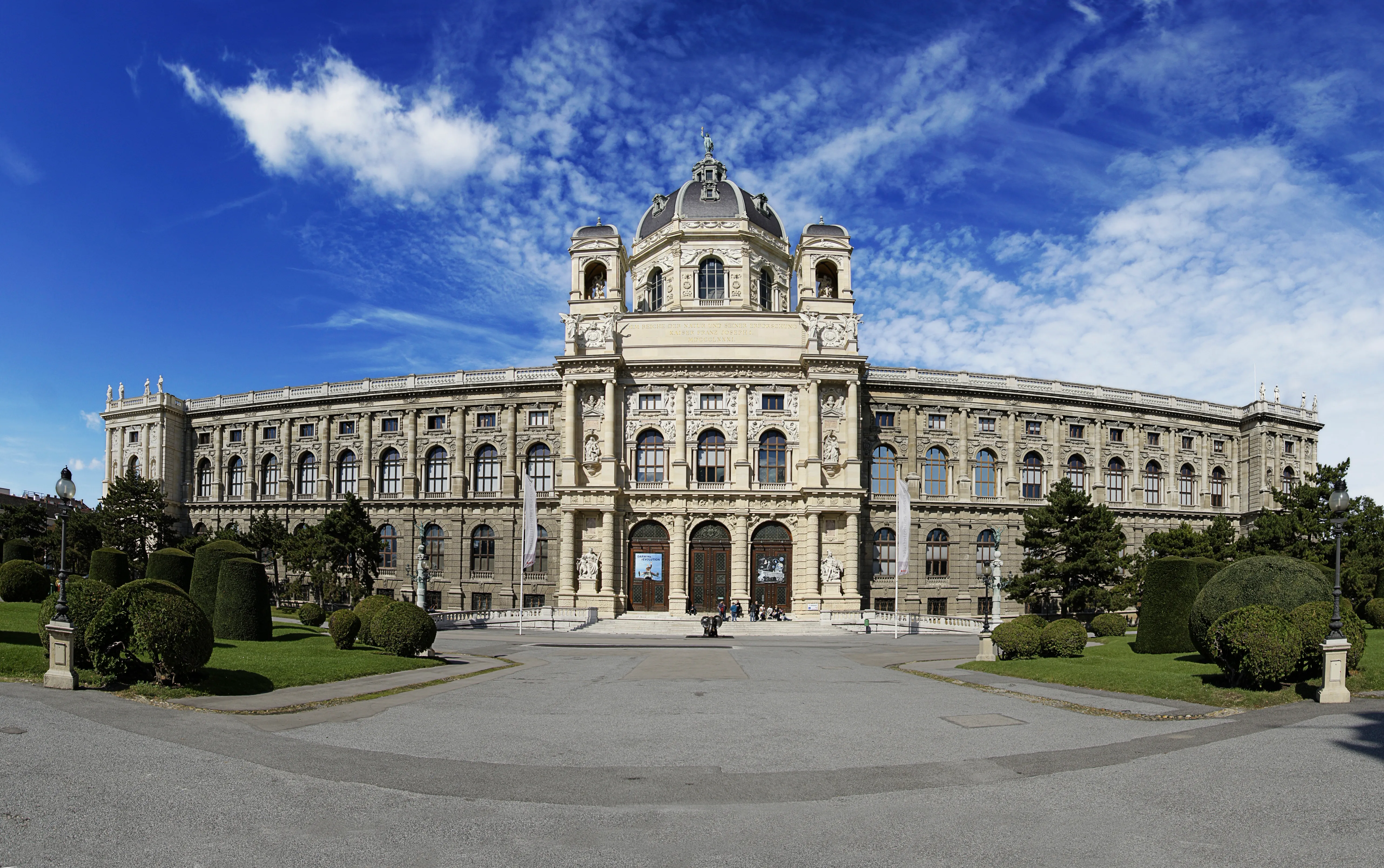
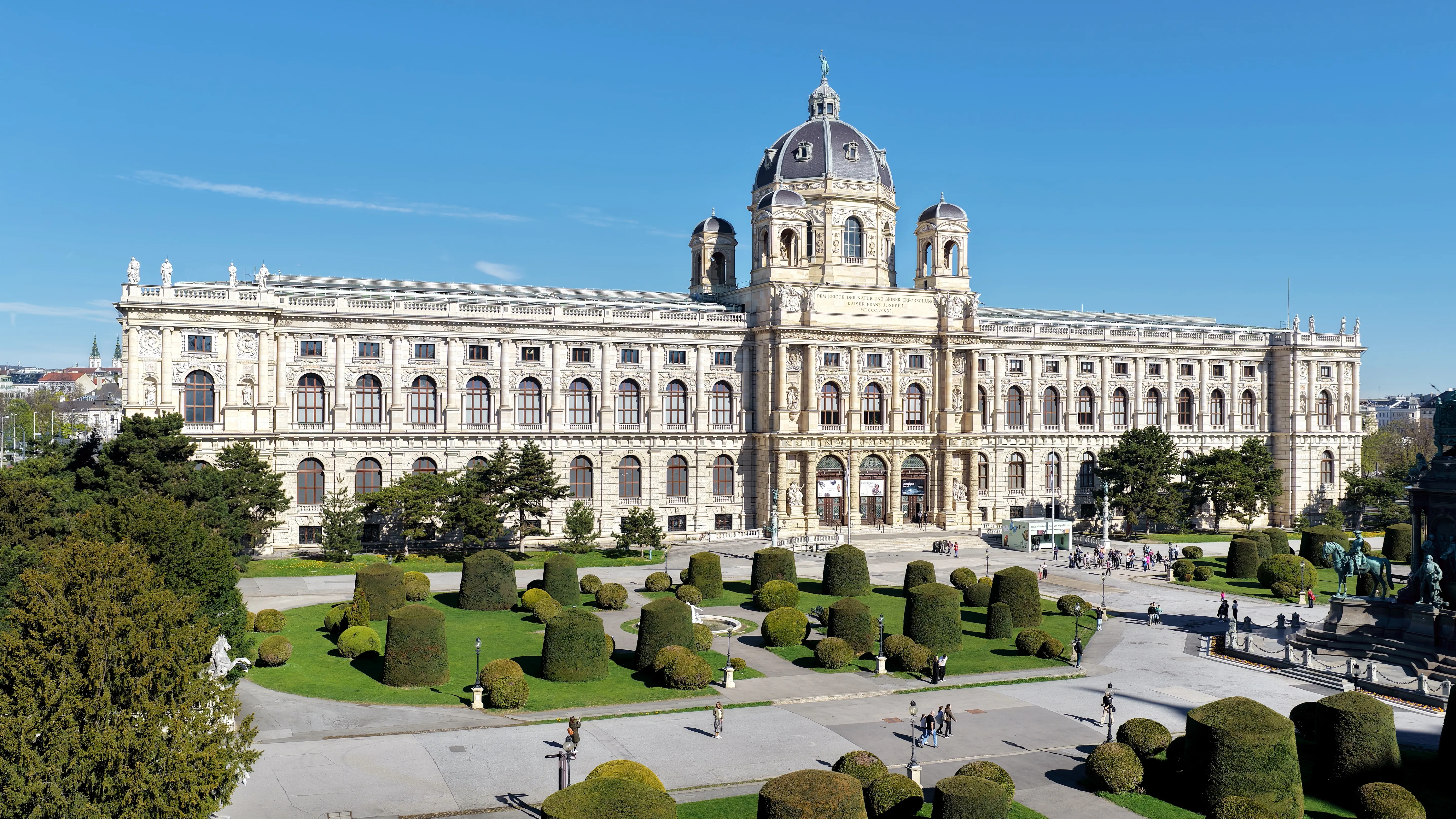
Wide panoramic view of the Natural History Museum Vienna's grand neoclassical facade with central dome, symmetrical wings, and manicured gardens under a bright blue sky
Top exhibition picks at Natural History Museum Vienna
Curated museum program highlights and what to see now in Vienna
Discover high-interest exhibitions at Natural History Museum Vienna, selected to help you prioritize your route, compare show themes, and plan a more rewarding museum visit in Vienna.
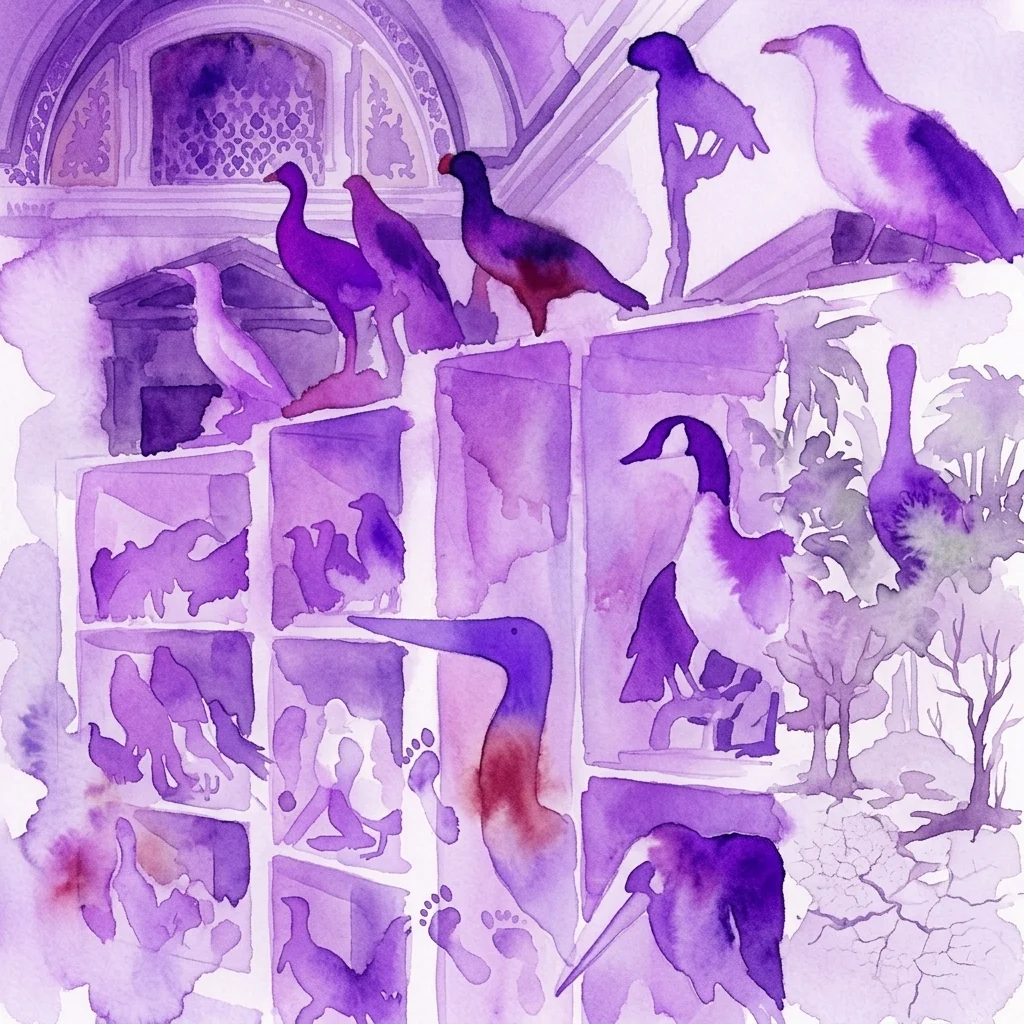
A watercolor illustration of diverse bird species in various habitats, including rainforests and riparian zones, depicted in purple tones to highlight environmental challenges and biodiversity.
Permanent exhibition

Natural History Museum Vienna Presents the New Permanent Bird life Exhibition

Explore avian diversity, evolution, and habitats starting September 30, 2026.

Journey through the 'Bird life' exhibition, opening as a permanent display on September 30, 2026, at the Natural History Museum Vienna. Discover common characteristics, evolutionary paths, and the vital role of birds in ecosystems. This exhibit focuses on Central European and global habitats, addressing biodiversity and conservation.

Bird life Exhibition
Watercolor illustration of a museum exhibit on sexually transmitted diseases, featuring antique medical instruments and anatomical models under purple lighting.

Safe Sex: The Comeback of Sexually Transmitted Diseases Exhibition in Vienna

Exploring the history and modern resurgence of STIs at Narrenturm.

Delve into the history of sexually transmitted infections from ancient times to present-day challenges. Learn about prevention, public health, and the social impact of STIs in this insightful exhibition. Discover the vital role of education in promoting well-being.

Safe Sex Exhibition
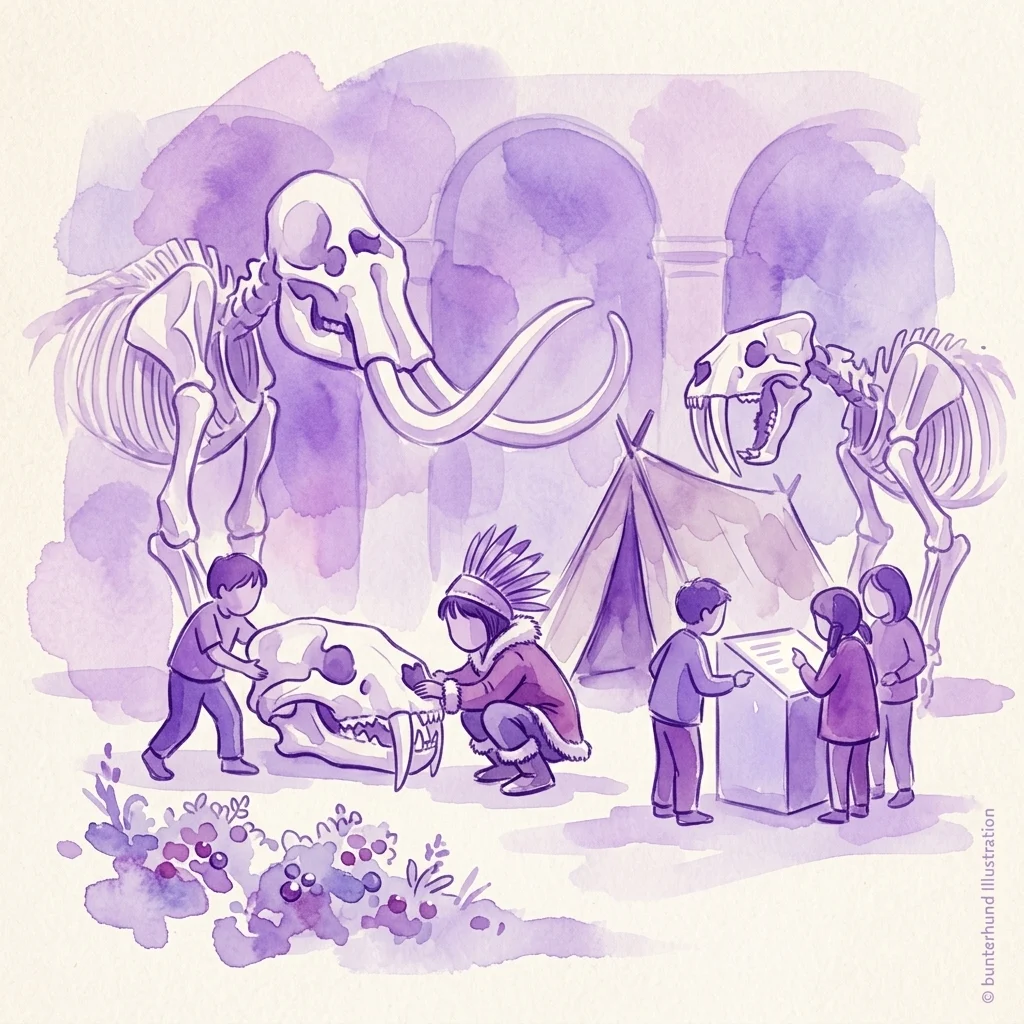
Illustration of children exploring Ice Age animal skeletons, including a mammoth and saber-toothed cat, in a museum setting with a tent and interactive display.
From May 21, 2025

Ice Age Children and their World Exhibition at Natural History Museum Vienna

Explore ancient daily life and culture from a child's unique perspective.

Discover how children lived, played, and interacted with their environment during the Ice Age. This immersive display at the Natural History Museum Vienna showcases their world through interactive exhibits focusing on daily routines and the importance of animals.

Ice Age Exhibition
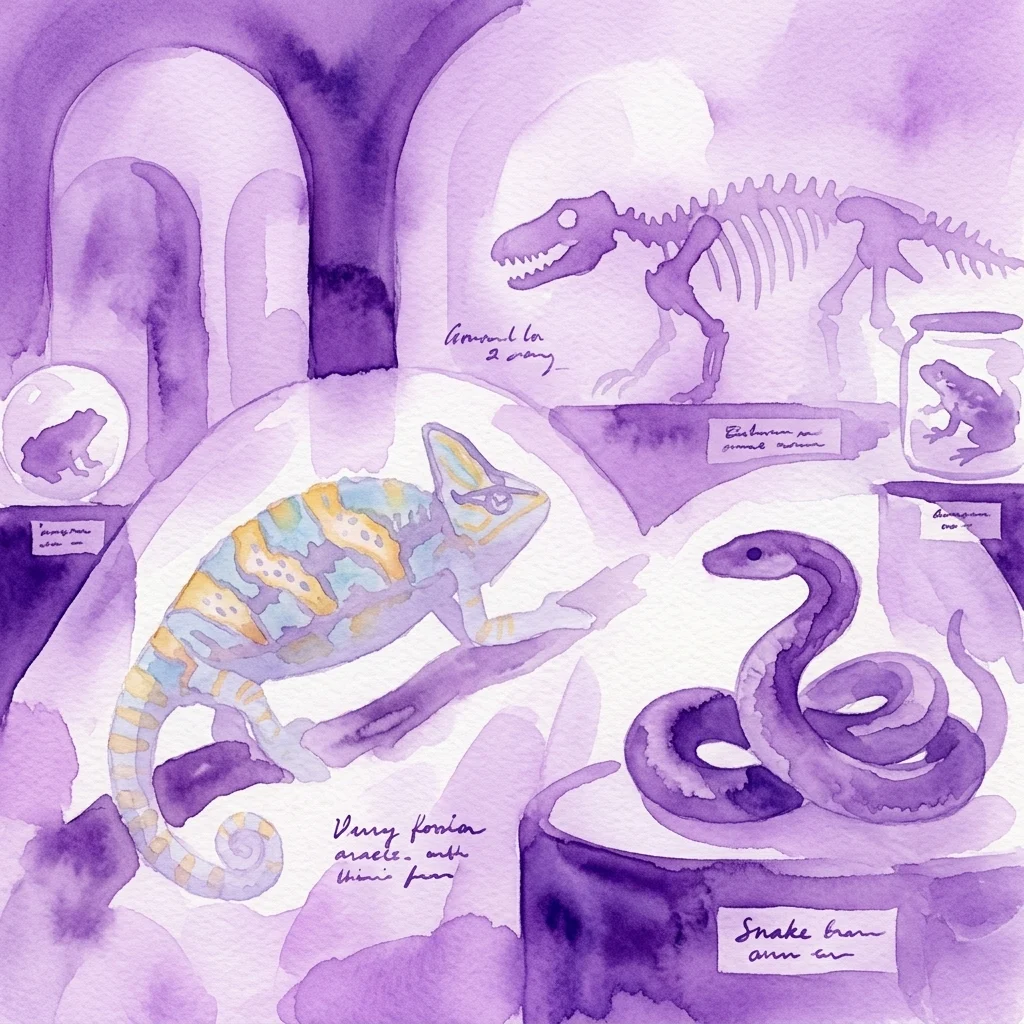
Watercolor illustration of a museum exhibit featuring a chameleon, snake, frog, and dinosaur skeleton, representing the 'Toes, tails & tiny trails' exhibition on amphibians and reptiles.
From Apr 30, 2025

"Toes, tails & tiny trails": Permanent Amphibian & Reptile Exhibition in Vienna

Discover natural history and zoology at the NHM Vienna.

Immerse yourself in the world of amphibians and reptiles, exploring 1,000 species with lifelike dioramas. This exhibition at the Natural History Museum Vienna offers deep insights into biodiversity, habitats, and conservation efforts.

Toes, tails & tiny trails
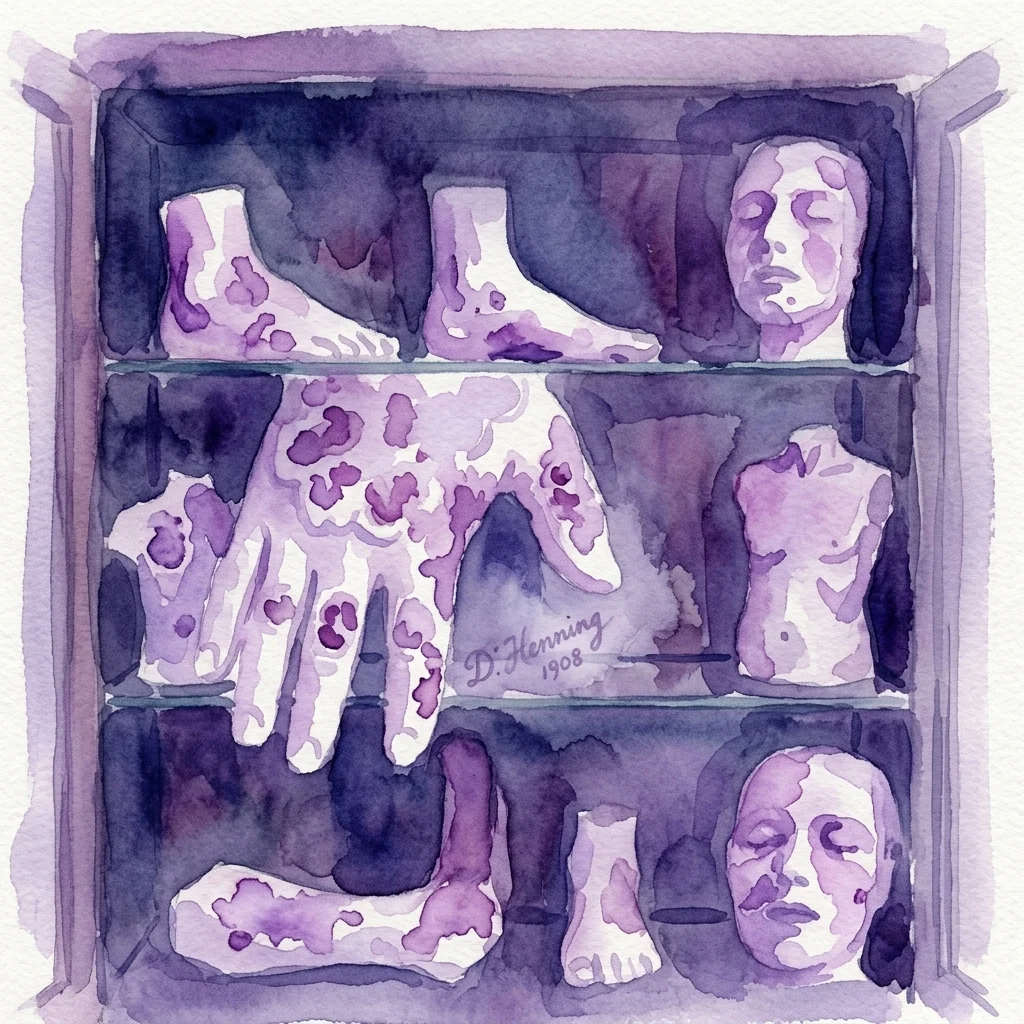
A watercolor illustration of medical moulages depicting skin diseases and injuries, displayed in a cabinet. The artwork, signed 'D. Henning 1908', shows realistic models of hands, feet, and faces with lesions, highlighting the historical medical teaching tools.
From Oct 8, 2025

The Art of the Moulage: Permanent Medical Replica Exhibition in Vienna

Discover historical medical teaching aids and their artistic significance.

Explore "The art of the moulage," a fascinating permanent exhibition revealing the artistry and historical importance of wax and silicone medical models. Learn how these incredibly realistic replicas were crucial for medical teaching from the late 19th century onwards.

The Art of the Moulage
A watercolor artwork in purple and blue hues depicting a family portrait with abstract, layered figures, evoking a somber and historical mood.
From Mar 13, 2024

The Cold Eye: Tarnów Ghetto Jewish Families Photography Exhibition in Vienna

A poignant historical exhibition documenting lives before the Holocaust tragedy.

View powerful photographs of Jewish families from the Tarnów Ghetto, taken in 1942. This exhibition highlights their daily lives before the war and the tragic impact of German occupation and persecution. Learn about this critical examination of human suffering.

The Cold Eye Exhibition
A watercolor painting of a mountain landscape with purple and white hues, depicting a glacier retreating into the valley, symbolizing climate change and environmental loss.
Until Jan 10, 2027

Glaciers out of balance: Natural History Museum Vienna Exhibition on Climate Change

Jürgen Merz photography reveals disappearing Alpine ice.

Experience the stark reality of climate change through "Glaciers out of balance," an exhibition showcasing critical environmental photography. Discover how glaciers serve as vital indicators of a warming planet, with a focus on the dramatic retreat in the Alpine region.

Glaciers Exhibition
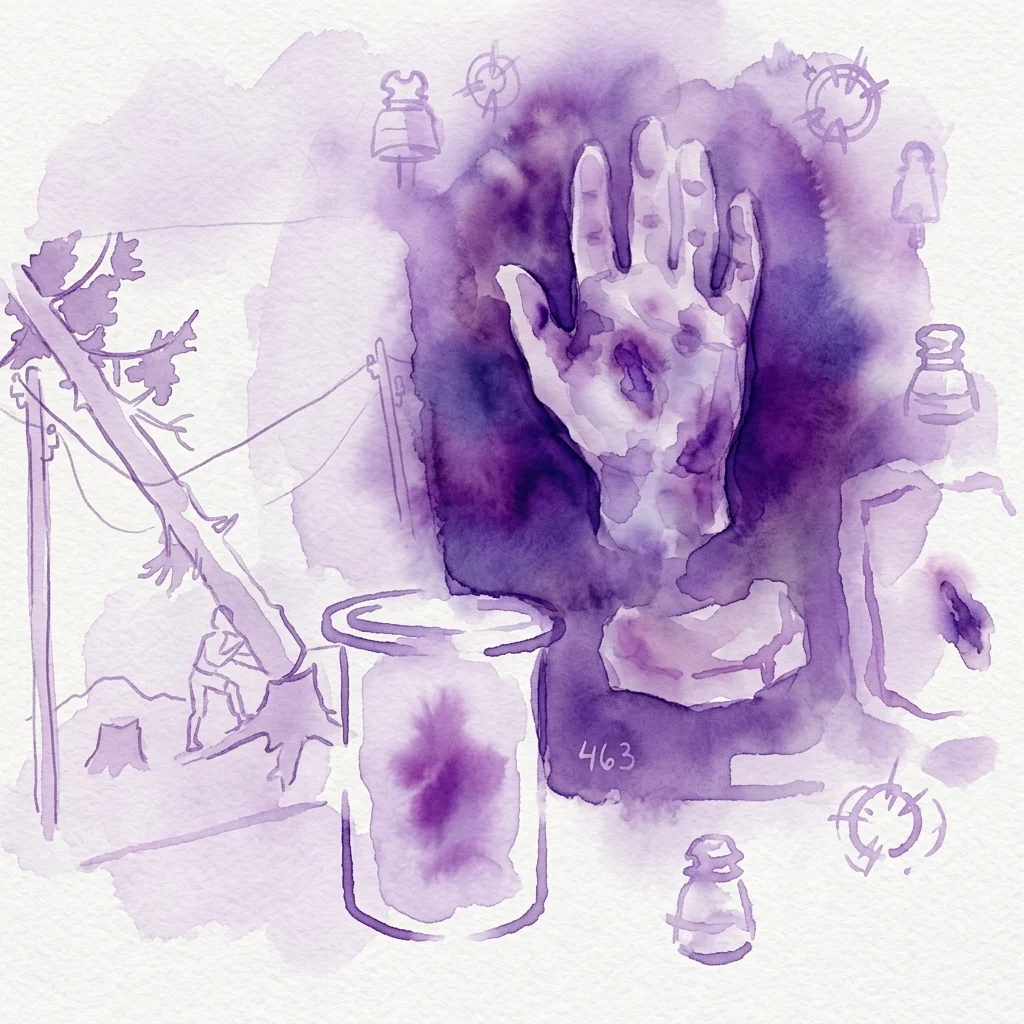
A watercolor illustration of a preserved moulage hand showing electrical shock damage, surrounded by historical electrical devices and diagrams in a museum exhibition setting.
Jun 23, 2026 – Apr 24, 2027

Caution, High Voltage! Electrical Accidents Exhibition in Vienna

Exploring electrical safety history and electropathology since 1882.

Examine the history of electrical accidents and their impact on humans and animals. This exhibition highlights the evolution of safety measures and the origins of electropathology.

Exhibition Details

History of the Natural History Museum Vienna

The origins of the Natural History Museum Vienna trace back to 1750 when Emperor Francis I acquired a vast natural history collection. This foundational collection was later opened to the public by Maria Theresa, establishing the institution in line with Enlightenment principles. Construction of its grand, historicist-style building in Vienna began in 1871 under Emperor Franz Joseph I. The museum officially opened its doors as the **Imperial Natural History Museum** in 1889, solidifying its role as a major scientific and cultural landmark.

  • Museum origins trace back to 1750 imperial purchase

    1750Founding

    The earliest collections of the Natural History Museum Vienna date back over 250 years, initiated in 1750 when Holy Roman Emperor Francis I purchased the world's largest collection of natural history objects from scholar Jean de Baillou, marking the first step in creating the museum.

  • Maria Theresa opened natural science collection to the public

    Overview

    After Emperor Francis I's death, Maria Theresa transferred the natural science collection to the state and opened it to the public, establishing the first museum in line with Enlightenment principles and visions.

  • Ignaz von Born expanded collections with minerals from various regions

    Collection

    Mineralogist Ignaz von Born was tasked with classifying and expanding the collections, leading to minerals from many different regions being sent to Vienna and added to the museum's holdings, transforming it into a center of practical research.

  • Scientific expedition to Brazil yielded diverse natural items

    1755Collection

    In 1755, Emperor Francis I commissioned Nicolaus Joseph Jacquin to travel to the Caribbean, Antilles, Venezuela, and Colombia, returning with many live animals and plants, as well as 67 cases of natural world items.

  • Austrian expedition to Brazil collected plants, animals, and minerals

    1817Collection

    To mark a royal marriage, Emperor Francis II sponsored a scientific expedition to Brazil in 1817, which lasted 18 years and aimed to collect and bring back all plants, animals, and minerals of scientific interest to Vienna.

  • SMS Novara expedition gathered vast natural and ethnological items

    1857Collection

    Between 1857 and 1859, the SMS Novara sailed the globe on an ambitious expedition, with scientists collecting a vast haul of minerals, animals, plants, and items of ethnological interest for the museum.

  • North Pole expedition collected natural history items

    1872Collection

    The Austro-Hungarian North Pole expedition (1872–1874), which discovered Franz Joseph Land, resulted in scientists returning to Vienna with invaluable travel journals, observations, and a number of natural history items of interest.

  • New museum building construction began in 1871

    1871Construction

    Construction for the new Imperial Natural History Museum, commissioned by Emperor Franz Joseph I and designed by Gottfried Semper and Carl Hasenauer, began in the fall of 1871.

  • Imperial Natural History Museum opened to the public in 1889

    1889Opening

    The Imperial Natural History Museum (K.k. Naturhistorisches Hofmuseum), created during an extensive reorganization, was opened to the public on August 10, 1889, by Emperor Franz Joseph I.

  • Museum designed by Gottfried Semper and Carl Hasenauer

    Architecture

    The Natural History Museum and the Museum of Fine Arts were commissioned by Emperor Franz Joseph I and designed by architects Gottfried Semper and Carl Hasenauer, featuring identical exteriors and facing each other.

  • Historicism style museum construction completed in 1881

    1871-1881Architecture

    The Natural History Museum, built in the popular 19th-century historicism style, with elements from the Renaissance, saw its facade finished in 1881 and construction completed later.

  • Museum dome features bronze statue of Helios

    Architecture

    The museum's roof is crowned with a 65-meter dome bearing a large bronze statue of the Greek sun god Helios, symbolizing the life-giving element essential for nature.

  • Hans Canon painted the ceiling fresco 'The Circle of Life'

    Architecture

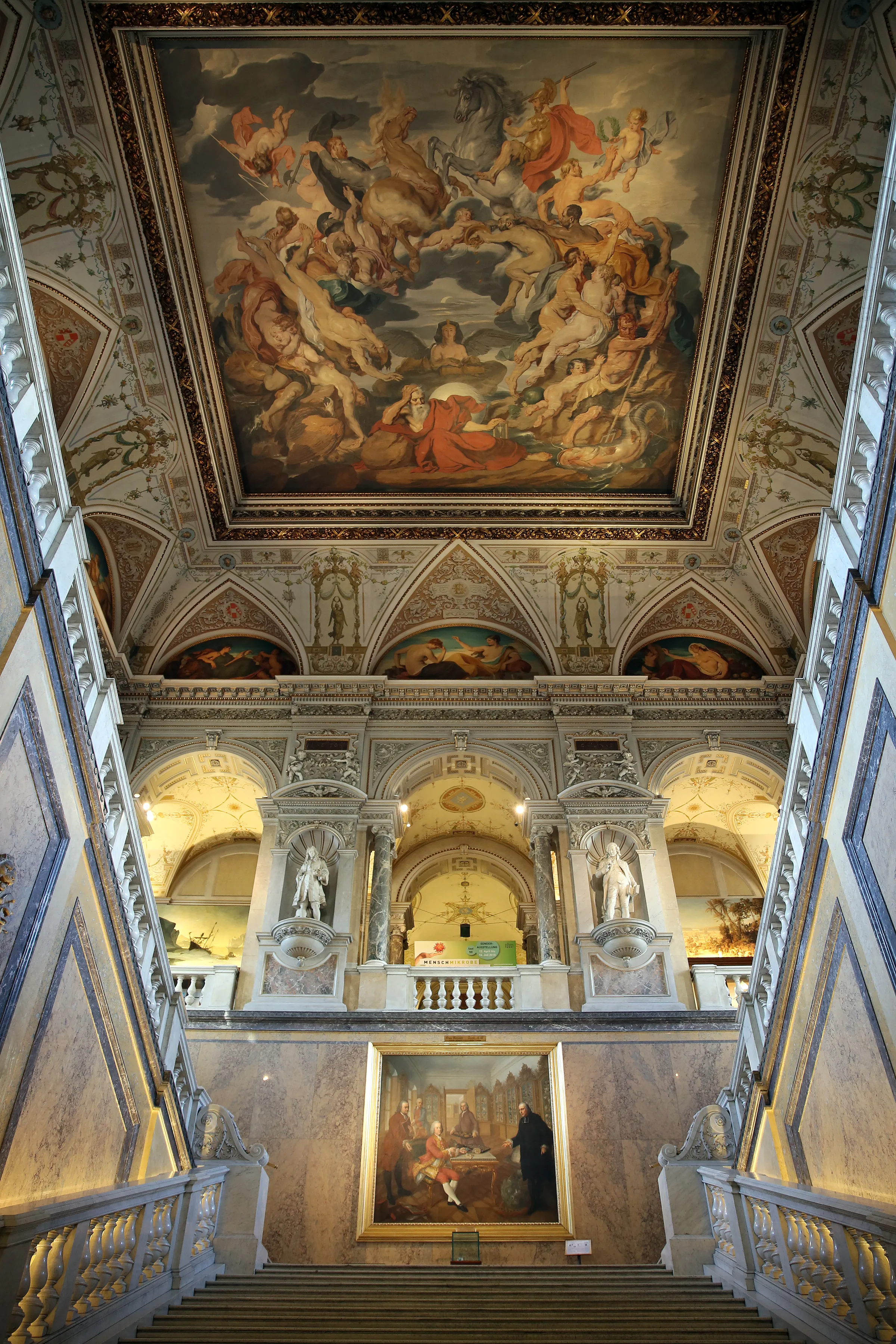
    The grand staircase features Hans Canon's ceiling fresco, 'The Circle of Life,' a dramatic allegory of humanity's rise and decline, reflecting the scientific thought of the time and the dominance of nature.

  • Museum acquired William Earl Hidden's mineral collection in 1889

    1889Collection

    In 1889, the museum purchased the extensive collection of William Earl Hidden from Newark, New Jersey, for 15,000 fl. with aid from the Imperial Household's fund, involving complex repayment transactions.

  • Crown Prince Rudolf's natural history collection was partially transferred

    1889Collection

    In 1889, items from Crown Prince Rudolf's private natural history collection, including his mineral collection, were entrusted to the Imperial Natural History Court Museum, contrary to his will which left them to teaching institutions.

  • Collection of Staatsrath Freiherr von Braun acquired 1906-1907

    1906-1907Collection

    Prior to the monarchy's collapse, the museum purchased the significant collection of Staatsrath Freiherr von Braun, totaling over 2,500 items, during the years 1906–1907.

  • Isidor Weinberger donated amethyst specimen and meteorite collection

    Collection

    Patron Isidor Weinberger donated a large amethyst specimen from Brazil and purchased Aristides Brezina's meteorite thin sections, presenting them to the museum.

  • Ferdinand von Hochstetter appointed first superintendent in 1876

    1876Notable person

    Ferdinand von Hochstetter, a professor of mineralogy and geology, was appointed as the first superintendent of the Imperial Natural History Museum in 1876 and proposed a new organization for the museum.

  • Franz Ritter von Hauer succeeded Hochstetter as superintendent

    1885Notable person

    Geologist and paleontologist Franz Ritter von Hauer became the superintendent of the museum in 1885, succeeding Ferdinand von Hochstetter.

  • Franz Steindachner served as acting and regular director

    1898Notable person

    Franz Steindachner acted as temporary director in 1896-1897 and then served as director from 1898 to 1919.

  • Hans Rebel was director from 1925 to 1932

    1925Notable person

    Hans Rebel served as the first Director of the museum from 1925 to 1932.

  • Hermann Michel served as director twice

    1933Notable person

    Hermann Michel served as the museum's director from 1933 to 1938 and again from 1945 to 1951.

  • Hans Kummerlöwe was Director of Scientific Museums during WWII

    1939Notable person

    Hans Kummerlöwe held the position of 'First Director of the Scientific Museums in Vienna' from 1939 to 1945.

  • Christian Köberl served as Director General until 2020

    2010Notable person

    Christian Köberl was the Director General and chief executive officer of the museum from 2010 to 2020.

  • Katrin Vohland is the current Director General

    2020Notable person

    Katrin Vohland has served as the Director General and chief executive officer since June 2020.

  • Repatriation of Māori and Moriori remains in 2022

    2022Heritage status

    In 2022, the museum returned the remains of about 64 Māori and Moriori people, collected by Andreas Reischek, to the Museum of New Zealand Te Papa Tongarewa.

  • Building designated as part of Imperial Forum project

    Cultural significance

    The Natural History Museum and the adjacent Museum of Fine Arts were originally designed to be part of a much larger, unrealized project: an Imperial Forum.

  • Gem and precious stone collection is one of Europe's most comprehensive

    Cultural significance

    The collection of gems and precious stones within Hall IV is noted as being one of the most comprehensive and valuable of its kind on the European continent.

Natural History Museum Vienna: Curious Visitor Questions

Got questions about exploring the Natural History Museum Vienna? Whether you're wondering about specific opening days like Tuesdays, late hours on Wednesdays, or if a reservation is recommended, we have the practical answers you need. Dive into the details before your adventure among the dinosaurs and dazzling minerals in Vienna.

What is the phone number for the Natural History Museum Vienna?

The direct phone number for general inquiries at the Natural History Museum Vienna is +43 1 52177 - 0.

Does the Natural History Museum Vienna have an email address for visitor inquiries?

An email address for general visitor inquiries for the Natural History Museum Vienna is not explicitly provided in the available information.

How can I contact the Natural History Museum Vienna?

The Natural History Museum Vienna can be reached by phone for general inquiries at +43 1 52177 - 0. You can also visit their official website for more contact and location information.

Where can I find more contact details for the Natural History Museum Vienna?

You can find more contact and location information for the Natural History Museum Vienna on their official website at https://www.nhm-wien.ac.at/en/information/contact__location.

Tips for Visiting the Natural History Museum Vienna

When planning your visit to the Natural History Museum Vienna, it is recommended to make reservations, and registration is required for children, youth, and school groups. Note that the last entrance is half an hour before the museum's closing time. To ensure a smooth experience, always purchase tickets directly from the official museum website to avoid potential fraud. The museum provides wheelchair access via a dedicated side entrance at Burgring 7 and offers the option to borrow a wheelchair. An elevator is available, though visitors with accessibility needs should inquire about its current operational status before arrival due to ongoing construction, and prams are allowed through the main entrance.

Visitor Fit at Natural History Museum Vienna

The Natural History Museum Vienna in the Innere Stadt neighborhood of Vienna is well-suited for a diverse audience, including families, children, students, and various groups interested in science, history, and nature. The museum provides wheelchair access via a ground-level side entrance and offers accessible toilets; visitors planning to use the elevator are advised to inquire about current availability due to ongoing construction. While prams are permitted through the main entrance, specific groups such as children, youth, and school groups are required to register in advance for their visit.

Photos of the Natural History Museum Vienna

Explore a visual journey through the Natural History Museum Vienna, showcasing its impressive collections. Visitors can expect to see grand exhibition halls filled with diverse displays, including remarkable dinosaur skeletons, glistening minerals, and historical artifacts that highlight Earth's vast natural history.
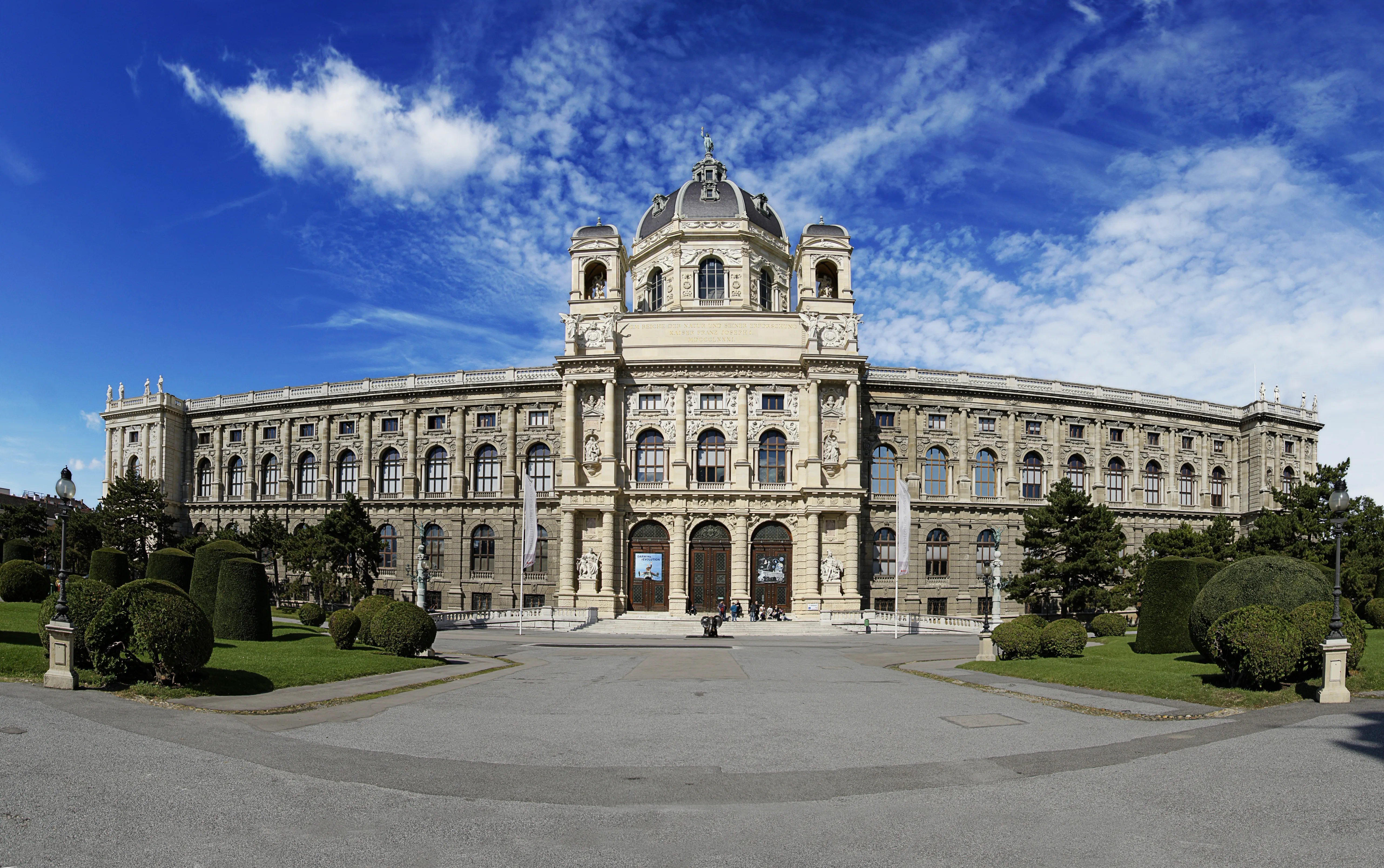
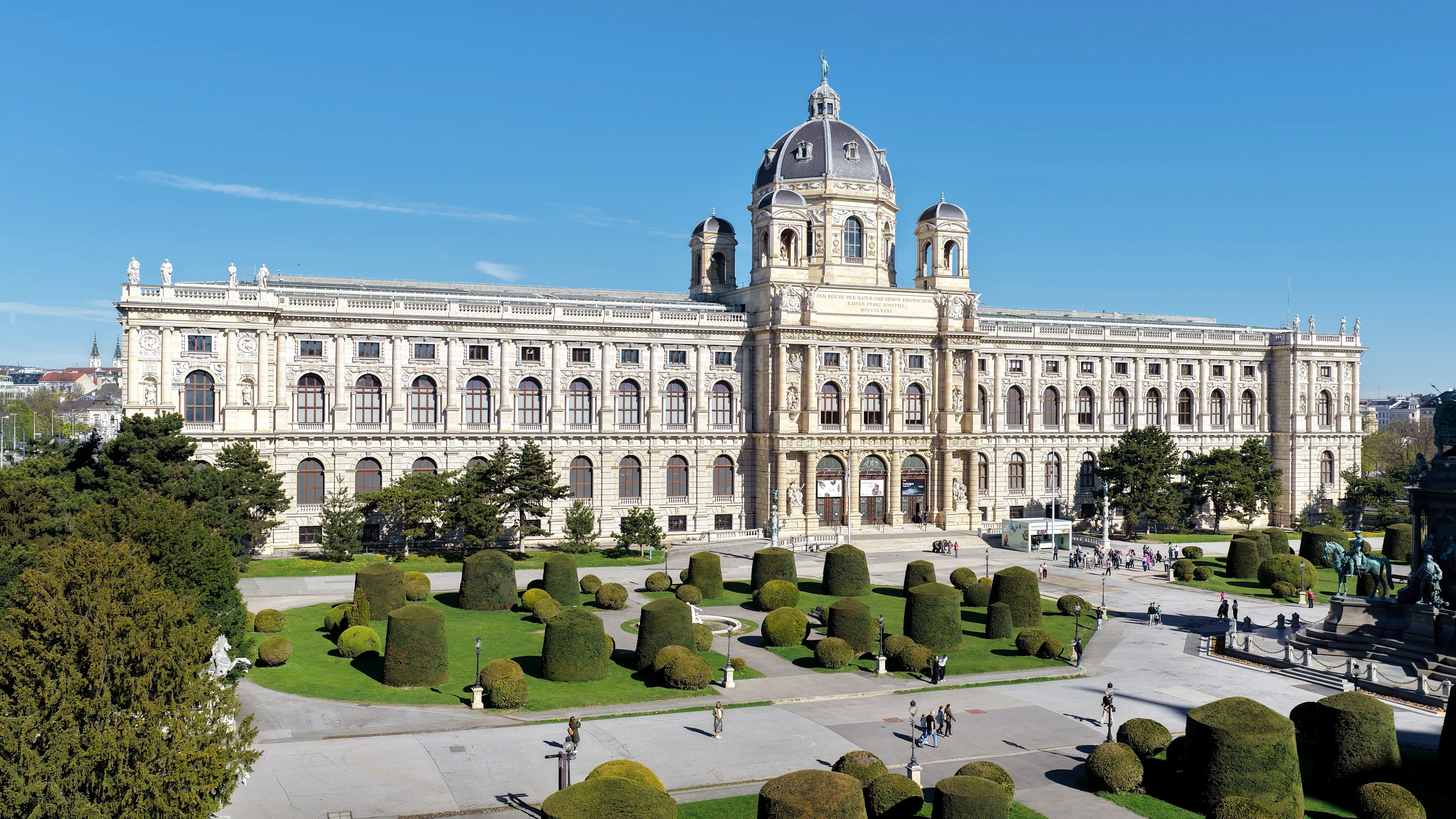
The Natural History Museum Vienna with its grand neoclassical facade, central dome, and symmetrical wings under a blue sky with white clouds.
A grand neoclassical building with a central dome and symmetrical wings, surrounded by manicured green lawns and sculpted hedges under a clear blue sky
Black background with gray lowercase letters phm and three red squares below
Wide panoramic view of the Natural History Museum Vienna's grand neoclassical facade with central dome, symmetrical wings, and manicured gardens under a bright blue sky
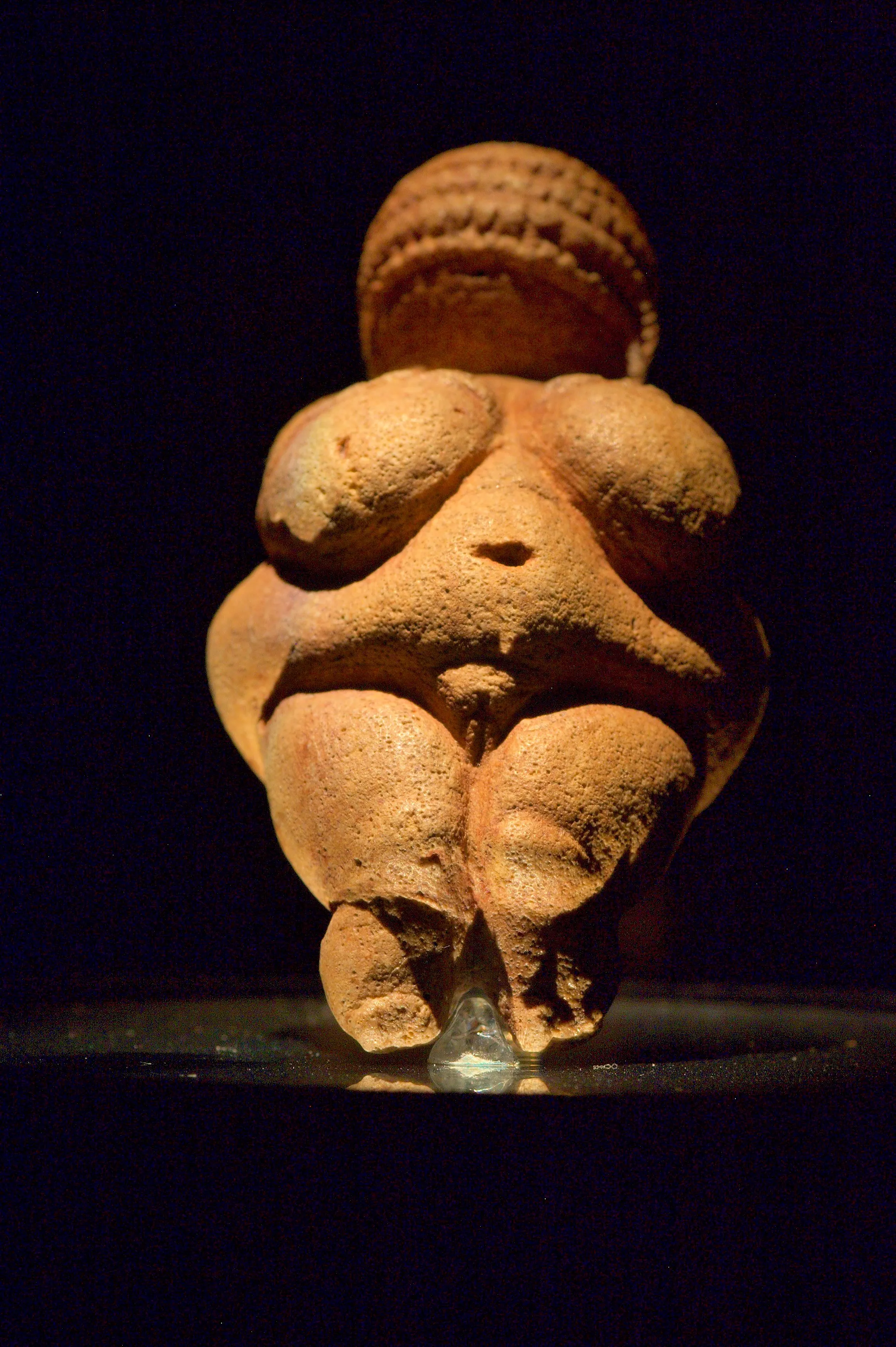
A close-up of the Venus of Willendorf, a prehistoric figurine made of limestone, displayed on a glass pedestal against a dark background.
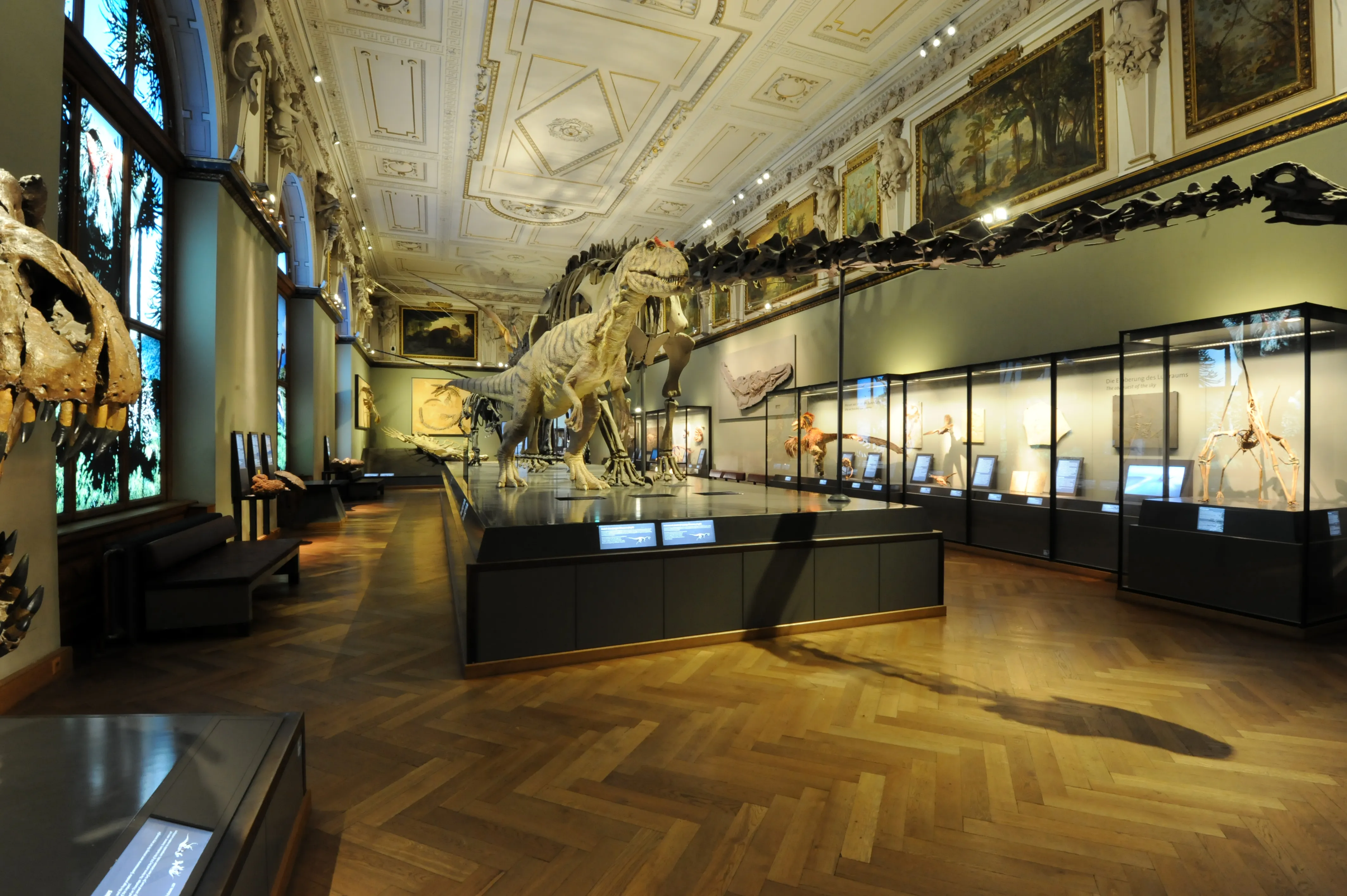
Large dinosaur skeleton in a museum hall with ornate ceilings and wooden floors
Interior of the Natural History Museum Vienna showing a grand staircase with a large ceiling fresco and marble decorations
Classical statue of a winged figure holding a staff with a globe, set against a mustard-yellow background with text 'Natur historisches' and 'Magazin des Naturhistorischen Museums Wien'.
Wide exterior view of the Natural History Museum Vienna showing its grand neoclassical facade with a central dome, arched windows, and a manicured garden with trimmed round hedges under a clear blue sky.
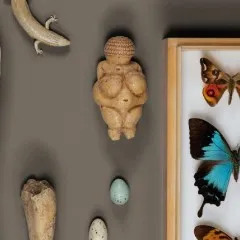
Venus of Willendorf figurine displayed with butterflies, a lizard, and other natural history specimens in a glass case
Vienna

Find Museums in Vienna: Discover Cultural Sites by Interest and Theme

Uncover Vienna's rich artistic legacy, history, and scientific collections.

Explore the depth of Vienna's cultural offerings and discover institutions by what truly interests you. Whether it's historical landmarks, fine art, or specialized topics, easily locate your next memorable experience.

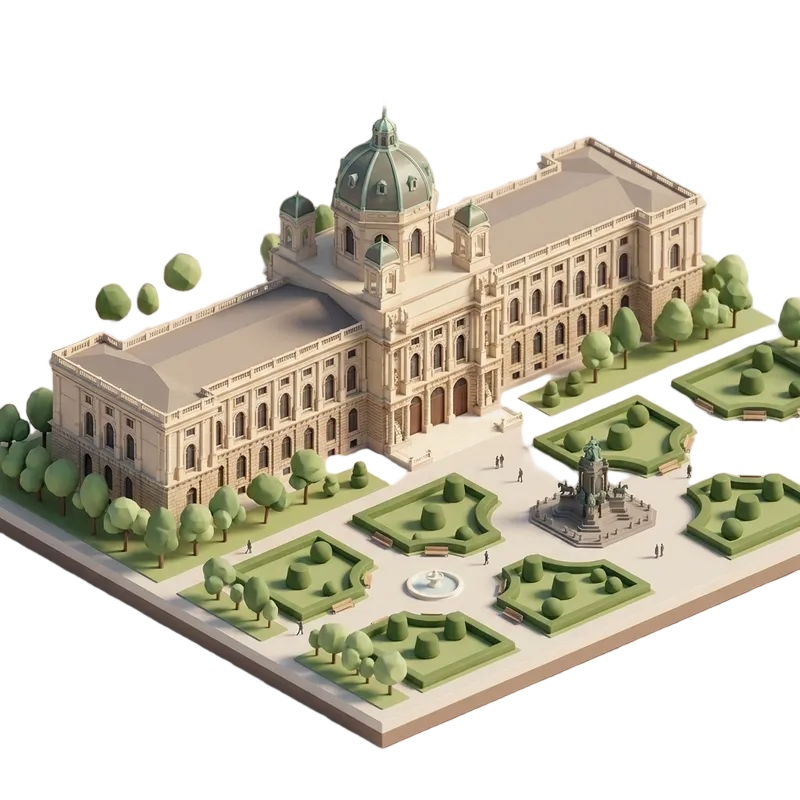
Explore Natural History Museum Vienna with Vienna
Guides, visitor info, and museum details in Vienna
Find everything about Natural History Museum Vienna in one place, including tickets, opening hours, current exhibitions, location details, visitor tips, nearby attractions, and the latest museum updates. Use these pages to plan your visit, discover what to see, and get practical information before you go.
Discover nearby museums similar to Natural History Museum Vienna in Vienna and plan your next cultural stop with confidence.
These recommendations prioritize real proximity to Natural History Museum Vienna and help you find high-fit alternatives faster across Vienna.
Use this curated list to compare museums near Natural History Museum Vienna without opening multiple search pages. Each card gives you fast visual context and direct access to key details so you can decide quickly. If you are building a full day in Vienna, this section helps you chain nearby visits with less planning effort.