Vienna
Vienna's Imperial Heritage

Schönbrunn Palace, Vienna: Imperial Grandeur and Park Ensemble

An essential guide to Vienna's historic imperial residence, grounds, and visitor experiences.

HistoryArchitectureArtDesignLocal heritage

Explore Schönbrunn Palace, a former imperial summer residence, and its vast Baroque gardens. Tour opulent state rooms, discover fascinating history, and enjoy attractions like the Gloriette and Children's Museum. It offers a glimpse into Austrian royal life and magnificent architectural and landscape design.

Visit Schönbrunn Palace, a UNESCO World Heritage site and former imperial residence, to explore opulent rooms and vast Baroque gardens.
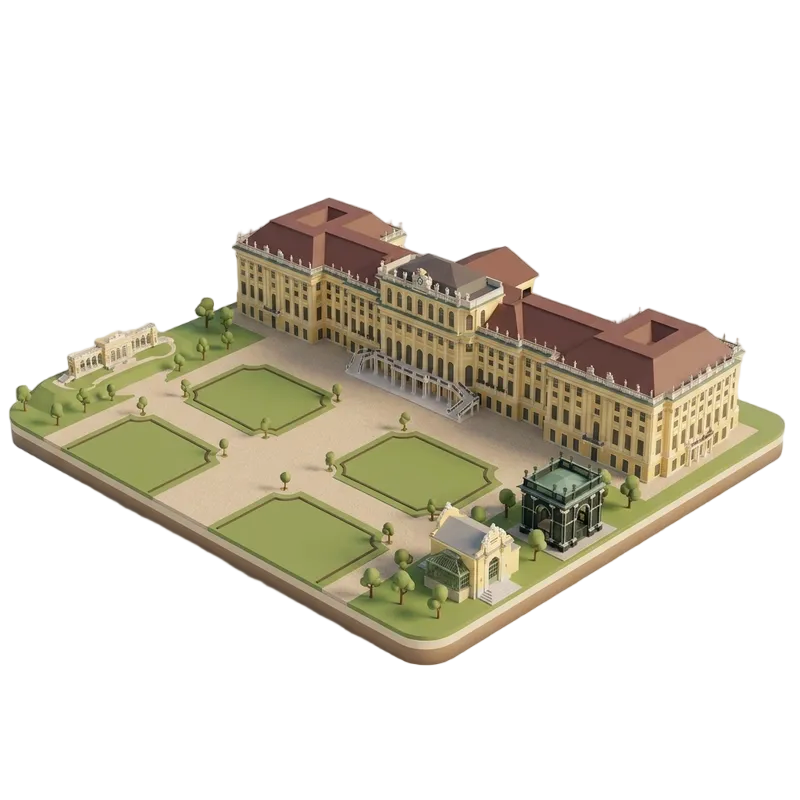
Schönbrunn Palace
Schönbrunn Palace: Imperial Residence and Park

Schönbrunn Palace, a UNESCO World Heritage Site in Vienna, served as the main summer residence for Habsburg emperors such as Maria Theresa and Franz Joseph. This grand Baroque complex encompasses lavish state rooms, imperial apartments, and an expansive park featuring ornate gardens and the Gloriette. Visitors can delve into centuries of Austrian imperial history and experience the grandeur of courtly life through various tours and attractions on the palace grounds.
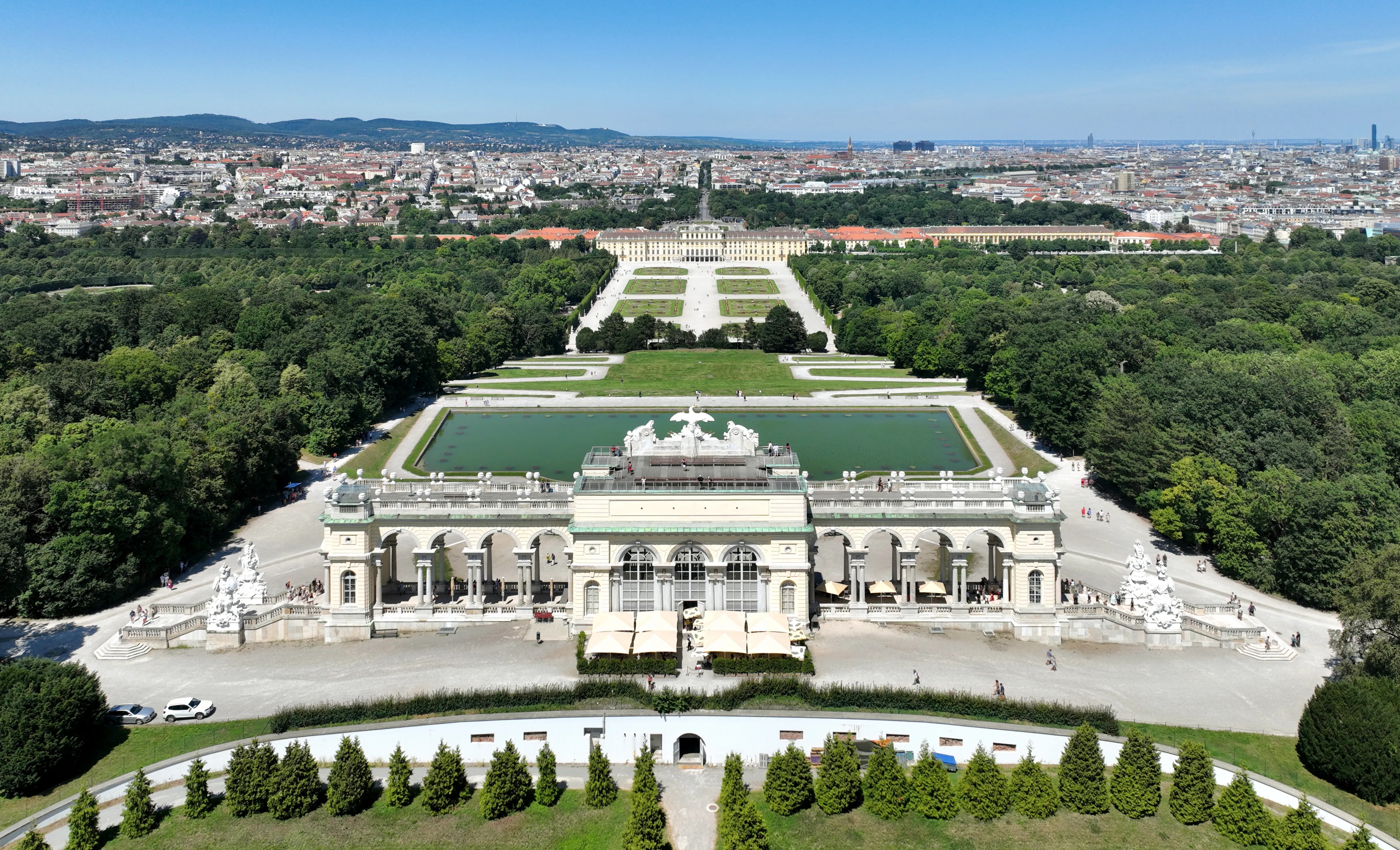
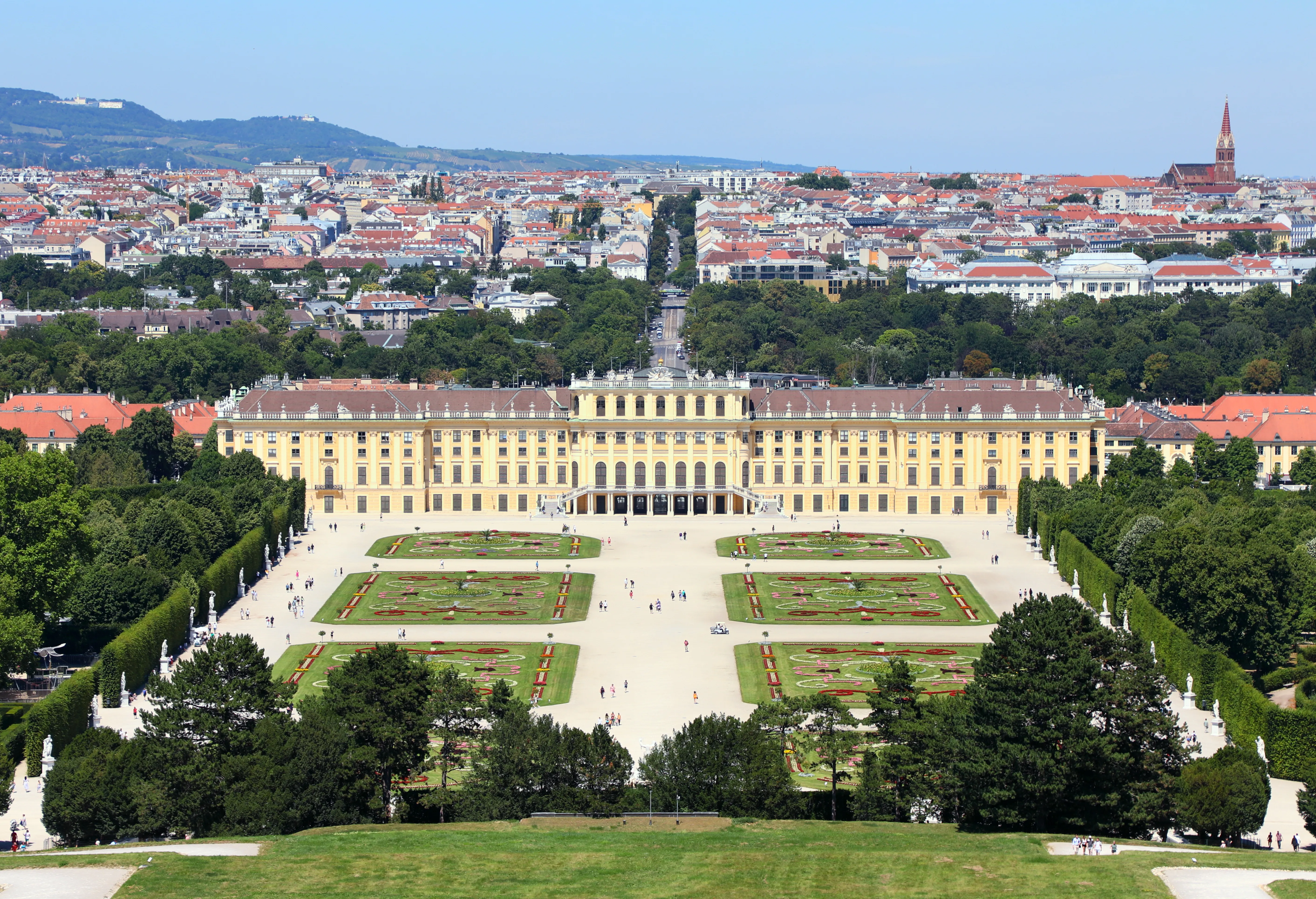
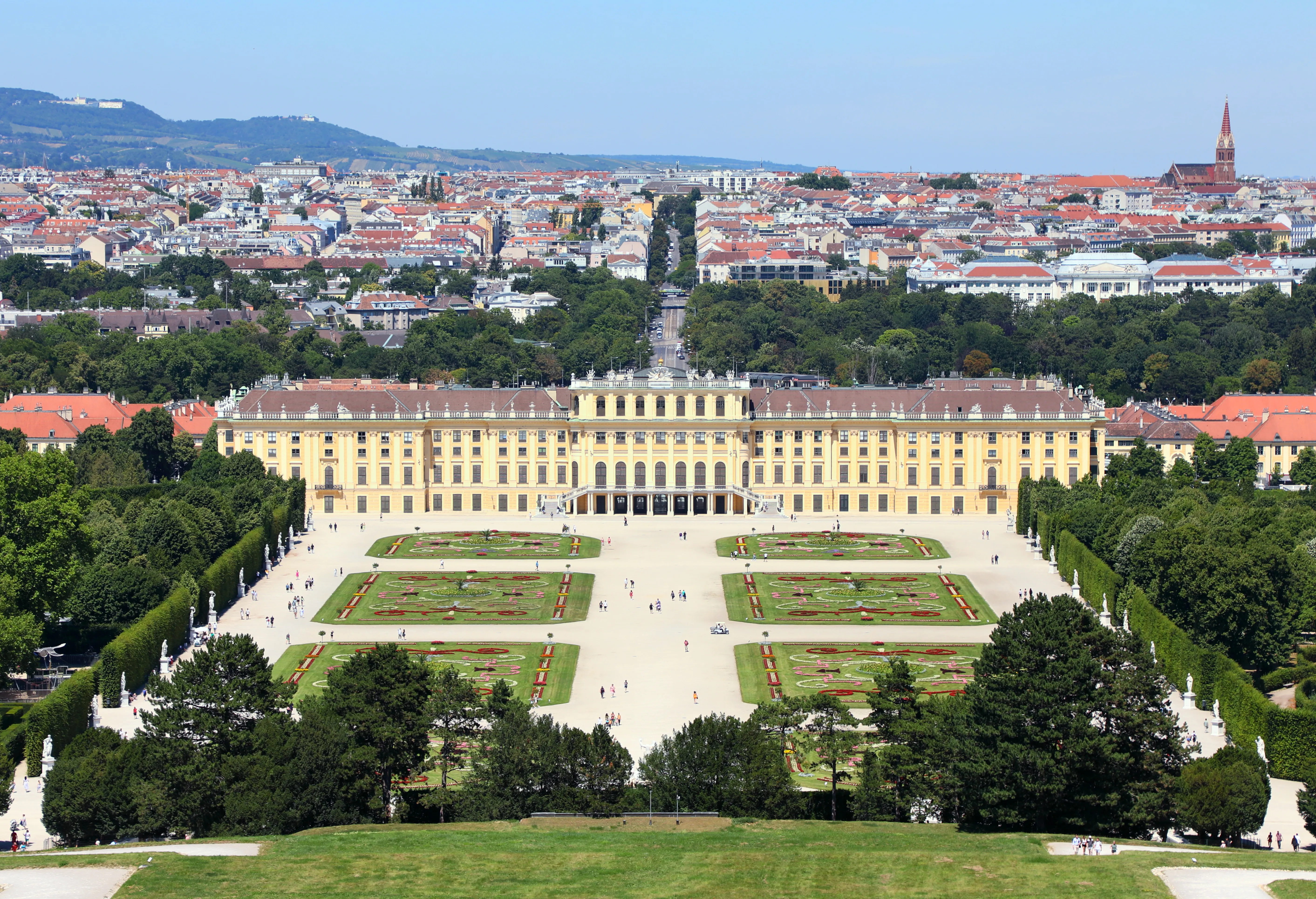
Aerial view of Schönbrunn Palace with its grand facade, central fountain, and formal gardens extending towards the city skyline.
Schönbrunn Palace opening hours in Vienna

Check today’s opening status, weekly schedule, and special date changes for Schönbrunn Palace. Use these opening hours to plan your arrival and avoid closed times in Vienna.

Monday
Tuesday
Wednesday
Thursday
Friday
Saturday
Sunday
08:30-17:30
08:30-17:30
08:30-17:30
08:30-17:30
08:30-17:30
08:30-17:30
08:30-17:30
Schönbrunn Palace Ticket Information

Schönbrunn Palace offers various admission options, including different ticket types for adults, children, students, and seniors. Group rates are also available, particularly for school groups. While general admission is paid, free entry is provided for children under six years old when accompanied by a Sisi Pass holder. Many tickets include an audio guide or printed description, and fixed admission times apply, so online booking is recommended to secure preferred time slots. Visitors should note that all prices are subject to seasonal changes.

Adults
€49.00

Includes audio guide

Children (aged 6–18)
€36.00

Includes audio guide

Adults
€42.00

Includes audio guide

Visitor Amenities and Accessibility at Schönbrunn Palace

Schönbrunn Palace is designed with extensive accessibility features to ensure a welcoming experience for all visitors, including step-free access to major display areas and dedicated elevator support. The venue provides specialized services such as tactile tours and video-based sign language guides to accommodate guests with visual or hearing impairments. While many areas are fully barrier-free, some parts of the palace gardens and historical terraces have limited access due to original architectural layouts, and seating within the state rooms is available on a limited basis.

Accessible parking

Available

Barrier-free Toilets

Available

Tactile tours

Limited

Elevator access

Available
Family visits at Schönbrunn Palace

Schönbrunn Palace provides engaging opportunities for young visitors through its dedicated Children's Museum and the expansive palace park. Children can explore imperial history through interactive exhibits, dress-up opportunities, and various challenges within the Baroque maze and Labyrinthikon playground. Families may consult the dedicated visit page for planning details.

Schönbrunn Palace offers a dedicated Children's Museum, interactive maze, and labyrinthine playground, providing immersive historical experiences for families.

Why families will enjoy it

  • Children's Museum with interactive imperial-life exhibits
  • Baroque maze with viewing platform and harmony stones
  • Labyrinth with physical and mathematical play challenges
  • Labyrinthikon playground designed for active play

Activities and resources for children

Interactive experience

Children's Museum Schönbrunn Palace

Ages 3+PaidBooking required

An interactive museum exploring the everyday life of imperial children.

Play area

Labyrinth and Labyrinthikon Playground

A large park area featuring a maze, physical challenges, and an innovative playground.

Location of Schönbrunn Palace

Schönbrunn Palace is situated at Schönbrunner Schloßstraße 47 in the 13th district of Vienna, known as Hietzing. This historic position places the UNESCO World Heritage site amidst its expansive Baroque gardens, offering visitors a grand imperial experience just west of the city center. Its extensive grounds provide a distinctive setting for exploring the former summer residence of the Habsburg emperors.

© OpenStreetMap contributors

Schönbrunner Schloßstraße 47

1130 Vienna

Vienna, AT

Visiting Schönbrunn Palace

Pre-booking an online ticket is recommended for your visit to Schönbrunn Palace in Vienna. The last admission to all attractions within Schönbrunn Palace is 45 minutes before the stated closing time. Visitors should also note that dogs are not permitted in either the Palace or the Park.

Visiting Schönbrunn Palace

Schönbrunn Palace Visitor Experience

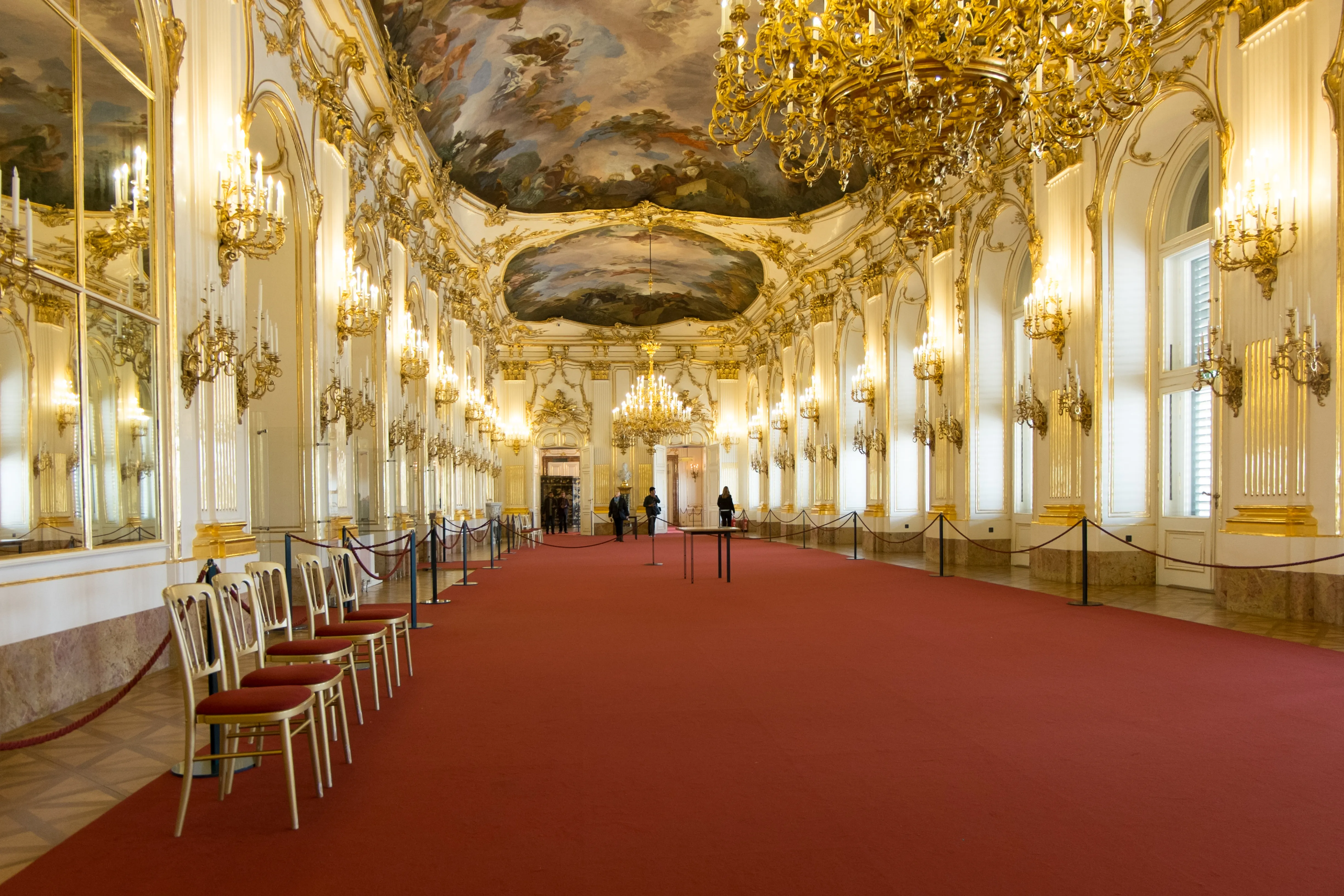
Schönbrunn Palace in Vienna offers a profound journey into Austria's imperial past, serving as the main summer residence for Habsburg emperors like Maria Theresa and Franz Joseph. As a UNESCO World Heritage Site, this magnificent Baroque complex invites visitors to explore lavish state rooms, imperial apartments, and iconic spaces such as the grand Hall of Mirrors and Great Gallery, all showcasing exquisite Rococo art and design. The experience extends to its expansive Baroque park, featuring ornate gardens, historic fountains like Neptune Fountain, and the panoramic views from the Gloriette. Guests can delve into centuries of courtly life and architectural grandeur through various tours and attractions that highlight the distinct heritage of this historic landmark.

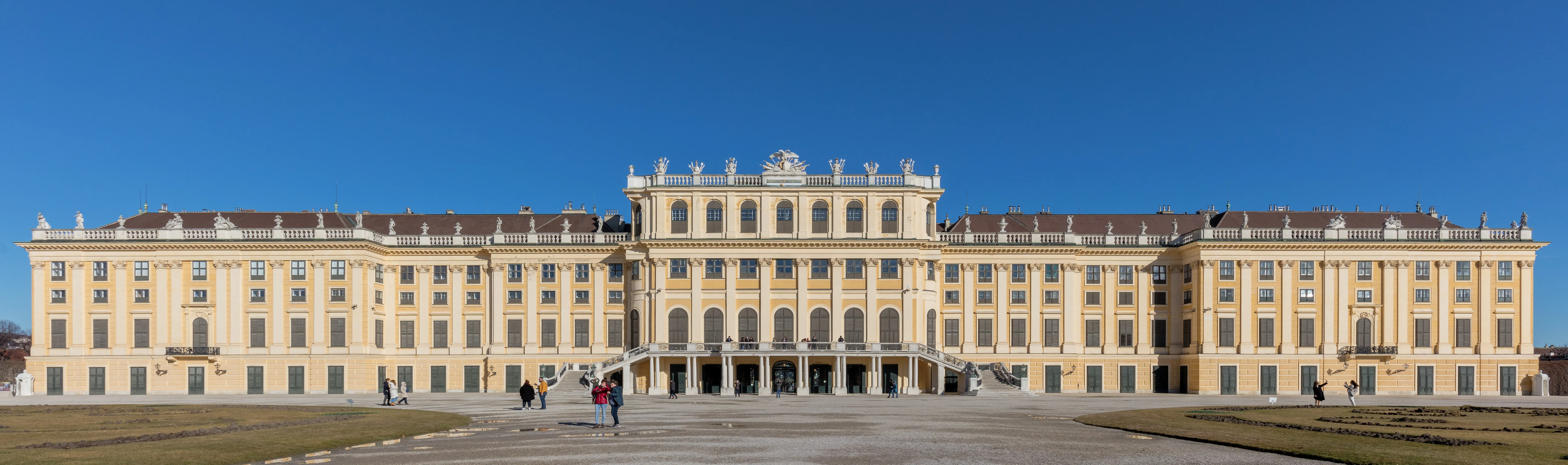
Panoramic view of Schönbrunn Palace with its long golden facade and classical architecture under a blue sky

Schönbrunn Palace Historical Context

Schönbrunn Palace's origins trace back to 1569 when Emperor Maximilian II acquired the land for royal hunting grounds. The estate developed significantly, becoming the primary summer residence for Habsburg monarchs, with its current form extensively remodeled in the 1740s and 1750s under Empress Maria Theresa. Following the collapse of the monarchy in 1918, the palace transitioned into a public museum, preserving centuries of imperial heritage for visitors in Vienna. This **remarkable Baroque ensemble** was inscribed as a UNESCO World Heritage Site in 1996, highlighting its profound cultural and architectural importance. The palace has also served as a venue for significant diplomatic events, including the 1961 meeting between U.S. President John F. Kennedy and Soviet Premier Nikita Khrushchev.

  • Summer residence of the Habsburg rulers

    Overview

    Schönbrunn Palace served as the primary summer residence for the Habsburg monarchs. Its name, meaning 'beautiful spring', originates from an artesian well that supplied water to the court. The palace is a significant architectural, cultural, and historical monument in Austria, with a history spanning over 300 years.

  • Initial purchase of land and establishment of hunting grounds

    1569Founding

    In 1569, Holy Roman Emperor Maximilian II acquired a floodplain near the Wien river. He ordered it to be fenced for use as a royal hunting ground, stocked with various game animals like pheasants, ducks, deer, and boar. Exotic birds were also kept in a separate section, and fishponds were created.

  • Palace construction and remodeling

    1740-1750Construction

    The Schönbrunn Palace, in its current form, was built and extensively remodeled between the 1740s and 1750s during the reign of Empress Maria Theresa, who received the estate as a wedding gift. Later, Francis I commissioned a redecoration of the palace's exterior in the neoclassical style.

  • Franz Joseph's connection to Schönbrunn

    1916Notable person

    Emperor Franz Joseph, who had the longest reign of any Austrian Emperor, was born at Schönbrunn Palace and spent a significant portion of his life there. He ultimately died at the palace on November 21, 1916.

  • Transition to Austrian Republic ownership

    1918Ownership

    Following the collapse of the Habsburg monarchy in November 1918, Schönbrunn Palace and its grounds became the property of the newly formed Austrian Republic. It was subsequently preserved and maintained as a museum.

  • Damage and requisition during WWII and Allied Occupation

    1945-1955Renovation

    Schönbrunn Palace suffered damage from bombing by American aircraft in February 1945. During the Allied Occupation of Austria (1945–1955), the palace was requisitioned to serve as office space for the British Delegation to the Allied Commission for Austria and as headquarters for the British Military Garrison in Vienna.

  • Reopening as a museum after Allied Occupation

    1955Renovation

    Following the reestablishment of the Austrian Republic in 1955, Schönbrunn Palace was once again fully accessible as a museum. It continues to be a significant site and is sometimes used for important state events.

  • Management by Schloss Schönbrunn Kultur-und Betriebsges.m.b.H.

    1992Ownership

    Since 1992, Schönbrunn Palace and its gardens have been owned and managed by Schloss Schönbrunn Kultur-und Betriebsges.m.b.H., a company fully owned by the Republic of Austria. This company undertakes the preservation and restoration of the palace properties without state subsidies.

  • UNESCO World Heritage Site designation

    1996Heritage status

    In 1996, UNESCO inscribed Schönbrunn Palace and its gardens on the World Heritage List. It was recognized as a remarkable Baroque ensemble and a significant example of the synthesis of arts (Gesamtkunstwerk).

  • Baroque palace architecture

    Architecture

    The palace is a 1,441-room Baroque structure, described as one of Austria's most important architectural, cultural, and historic monuments. Its history reflects the evolving tastes of successive Habsburg monarchs over more than 300 years.

  • Neoclassical exterior by Franz I

    Architecture

    Franz I commissioned the redecoration of the palace's exterior in the neoclassical style, contributing to its present-day appearance. This architectural modification is a significant aspect of the palace's visual history.

  • Construction of the Gloriette structure

    1775Architecture

    Since 1775, a 60-meter-high structure known as the Gloriette has crowned the hill at the end of the garden axis. Maria Theresa ordered its construction using recycled stone from the demolition of Schloss Neugebäude, intending it to glorify Habsburg power.

  • Erection of the Roman Ruin folly

    1778Architecture

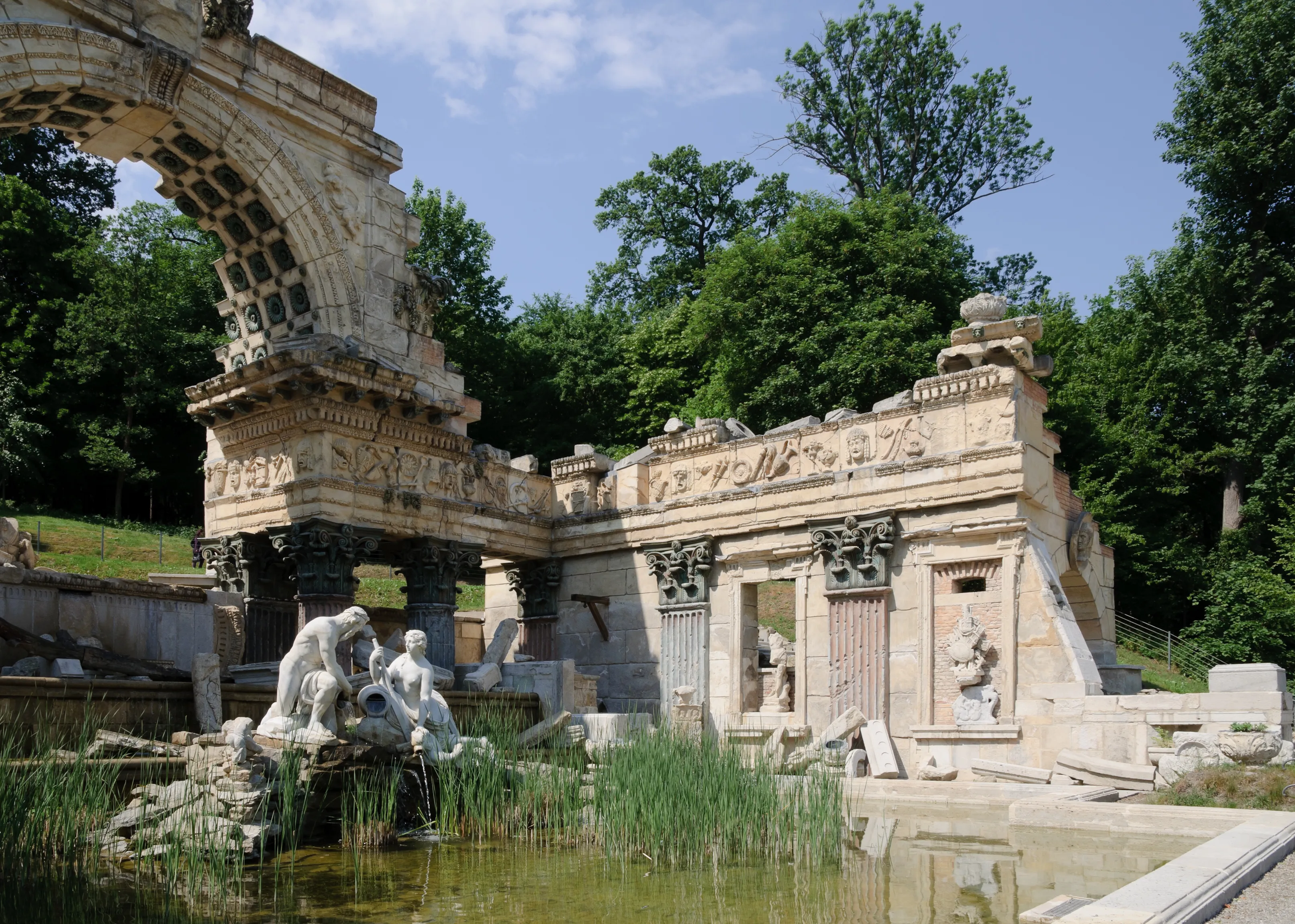
    Designed by architect Johann Ferdinand Hetzendorf von Hohenberg, the 'Roman Ruin' was erected in 1778. This architectural folly, originally called the Ruin of Carthage, consists of a rectangular pool surrounded by a large arch and walls, designed to evoke an ancient, crumbling edifice.

  • Construction of the Orangery

    1755Architecture

    An orangery was erected around 1755, indicating the palace's historical amenities for cultivating plants. This structure was later complemented by a palm house built in 1882, replacing earlier, smaller glass houses.

  • Origin of the name Schönbrunn

    Collection

    The name 'Schönbrunn', translating to 'beautiful spring', originates from an artesian well located on the grounds from which the court obtained its drinking water. This natural resource was significant enough to lend its name to the entire estate.

  • Eleonora Gonzaga's association with the estate

    1638-1643Notable person

    Eleonora Gonzaga, wife of Ferdinand II, spent considerable time at the estate due to her love for hunting. After Ferdinand II's death, she was bequeathed the area as her widow's residence, and from 1638 to 1643, she added a palace to the existing Katterburg mansion.

  • Site of Kennedy-Khrushchev meeting

    1961Cultural significance

    Schönbrunn Palace has hosted significant international events, notably the 1961 meeting between U.S. President John F. Kennedy and Soviet Premier Nikita Khrushchev. This event underscores the palace's role as a venue for important diplomatic encounters.

  • Filming location for 'Sissi' trilogy

    1950-1959Milestone

    The palace and its gardens served as a prominent filming location for the popular 'Sissi' film trilogy in the 1950s, contributing to its image in popular culture and its appeal as a tourist destination.

  • Filming location for 'The Great Race'

    1965Milestone

    The 1965 comedy film 'The Great Race' was filmed at Schönbrunn Palace, utilizing its distinctive architecture and grounds for key scenes. This highlights the palace's versatility as a cinematic backdrop.

  • Filming location for 'Armour of God'

    1986Milestone

    Jackie Chan filmed scenes for his 1986 film 'Armour of God' on the grounds of Schönbrunn Palace. This international production further cemented the palace's global recognition.

  • Founding of the Schönbrunn Palace Orchestra

    1997Milestone

    The Schönbrunn Palace Orchestra was founded in 1997, specifically to perform concerts at the palace. Maestro Guido Mancusi has led the orchestra since 1998 and also founded its Chamber Opera program.

  • Annual Summer Night Concert Schönbrunn began

    2004Milestone

    Since 2004, the Vienna Philharmonic has performed its annual Summer Night Concert Schönbrunn in the palace gardens. This event has become a recurring cultural highlight associated with the palace.

  • 10 Euro commemorative coin featuring the palace

    2003Other

    The Schönbrunn Palace was chosen as the main motif for a high-value Austrian commemorative coin. The 10 Euro silver coin, minted in October 2003, features a depiction of the palace's central facade and a fountain.

Schönbrunn Palace: Unexpected Questions, Practical Answers

Wondering if your drone can capture the grandeur of Schönbrunn Palace, or if you can cycle through its historic park in Vienna? While some activities are best left outside the palace grounds, our comprehensive FAQ section has the answers to these and many other practical questions to help you plan your visit smoothly.

Can visitors bring bicycles into Schönbrunn Palace Park?

Bicycles are not allowed to be taken into the Schönbrunn Palace Park. Visitors should make alternative arrangements for their bicycles.

Is drone usage permitted at Schönbrunn Palace?

No, the use of drones or any other remote-controlled aircraft is strictly prohibited on the grounds of Schönbrunn Palace for all visitors.

How do I check for lost items at Schönbrunn Palace?

You can check for any items found at Schönbrunn Palace by visiting the Schönbrunn Group's official Lost & Found page online.

Can I take photos or videos inside Schönbrunn Palace?

Yes, personal photography and filming are generally allowed in the state rooms of Schönbrunn Palace during opening hours. However, tripods, selfie sticks, flash, or similar lighting equipment are prohibited. All recordings must be for personal, non-commercial use only.

Practical Tips for Visiting Schönbrunn Palace

Pre-booking an online ticket is recommended for your visit to Schönbrunn Palace in Vienna to ensure smoother entry. Visitors should be aware that the last admission to all attractions is 45 minutes before closing time. Additionally, children aged 14 and under must be accompanied by an adult to enter the Maze & Labyrinth. For comfort, limited seating is available in the state rooms, and the palace offers barrier-free access to all display areas, including accessible toilets and lifts. Please note that dogs are not permitted in either the Palace or the Park.

Schönbrunn Palace Visitor Profile

Schönbrunn Palace in Vienna welcomes a broad spectrum of visitors, including families, couples, solo travelers, and groups, with its deep exploration of history, architecture, and art. The palace offers extensive accessibility, featuring step-free access throughout display areas, accessible parking, and lifts to ensure a comfortable visit for many. Specialized experiences include guided tours for visually impaired guests with tactile elements and sign language video guides. Families can also enjoy the Children's Museum, though children under 14 require adult supervision in the Maze & Labyrinth, and while assistance dogs are permitted, other pets are not allowed in the palace or park.

Schönbrunn Palace Photos

Explore the visual splendor of Schönbrunn Palace in Vienna, showcasing its iconic yellow Baroque facade and grand courtyards. The gallery highlights the palace's extensive formal gardens, featuring the majestic Neptune Fountain and the Gloriette. Inside, visitors can anticipate opulent imperial interiors adorned with golden chandeliers and ornate details, offering a glimpse into Habsburg history.
Aerial view of Schönbrunn Palace with its grand facade, central fountain, and formal gardens extending towards the city skyline.
Schönbrunn Palace with its long yellow facade and central entrance under a blue sky
Ornate interior hall with red carpet, gold chandeliers, and a painted ceiling at Schönbrunn Palace
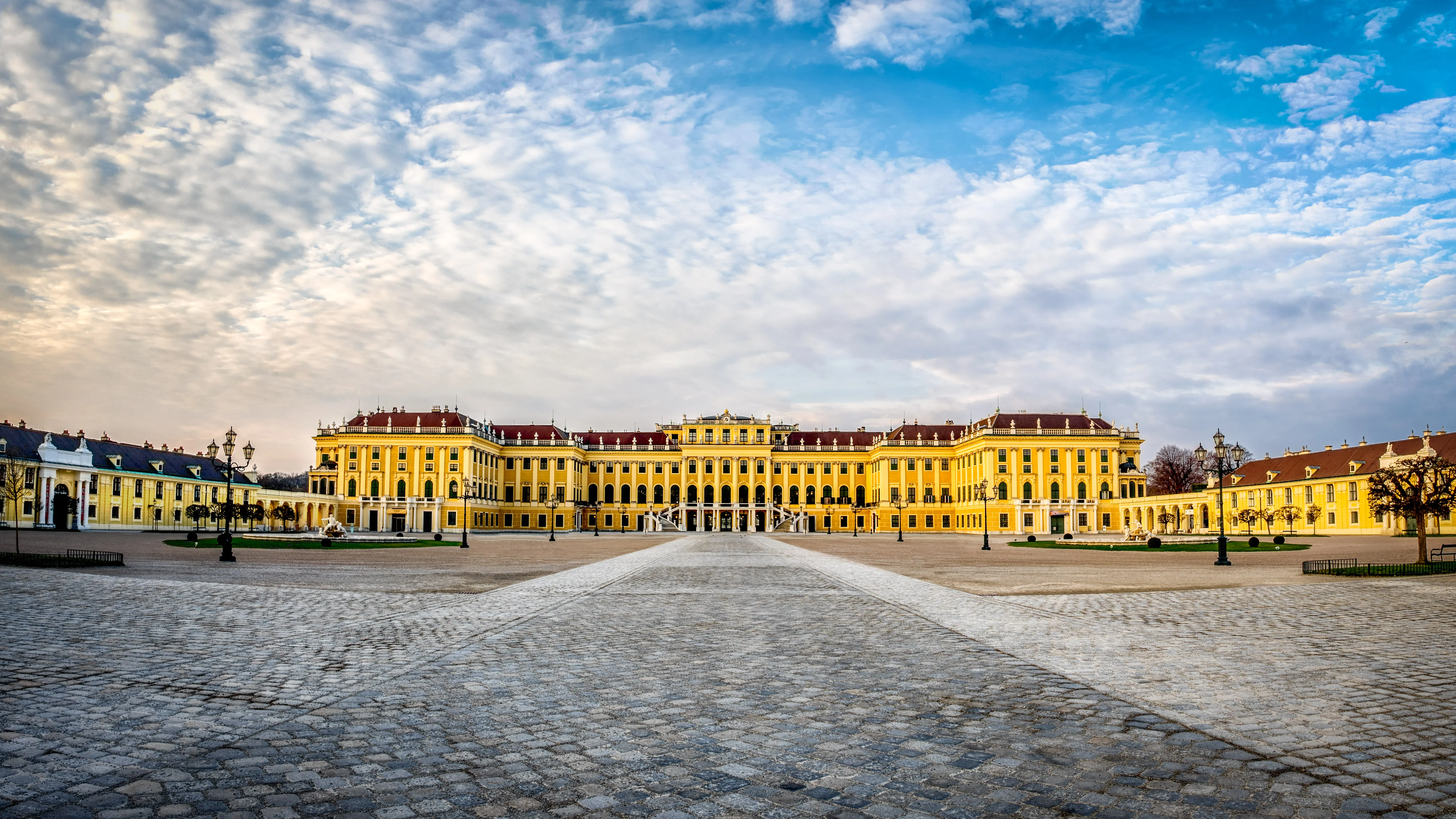
Schönbrunn Palace with a wide cobblestone courtyard and a bright blue sky with white clouds
Panoramic view of Schönbrunn Palace with its long golden facade and classical architecture under a blue sky
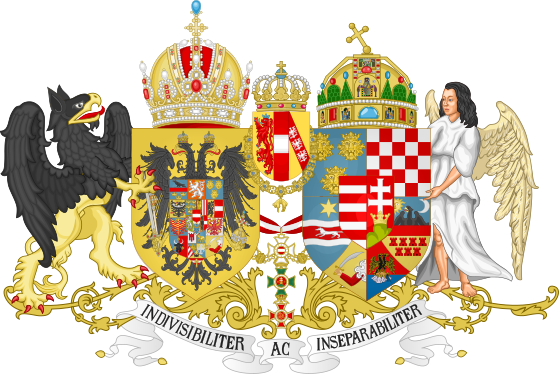
The coat of arms of Austria-Hungary featuring an eagle, multiple shields, and an angel on a black background
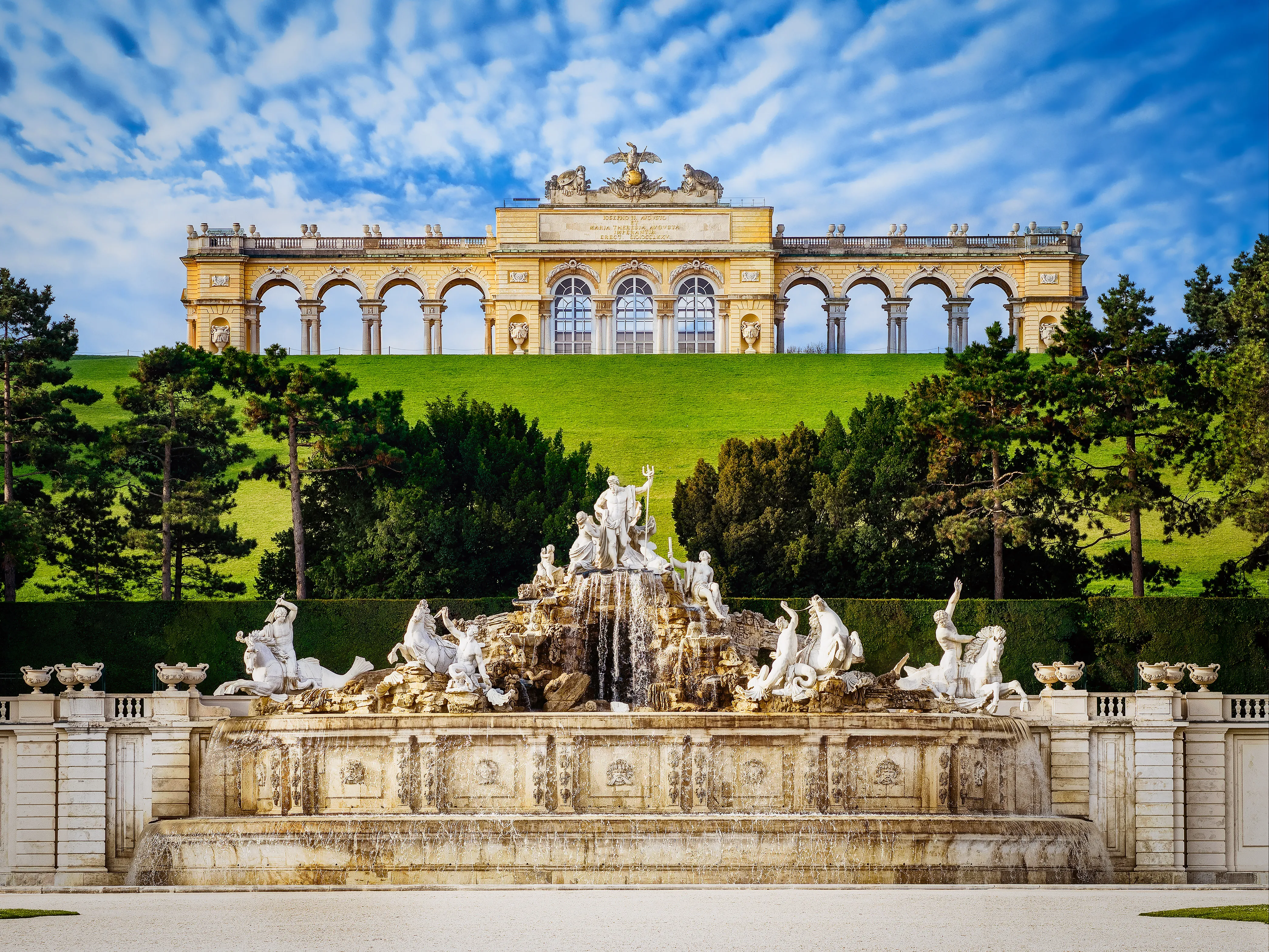
Neptune Fountain with sculptures and the Gloriette building in the background at Schönbrunn Palace
Schönbrunn Palace with its yellow façade, formal gardens, and surrounding cityscape under a clear sky
Elevated wide view of the yellow Schönbrunn Palace with formal parterre gardens in the foreground and the city of Vienna stretching into the distance.
Stone archway and classical ruins with statues and a pond in a garden setting
Vienna

Find Museums in Vienna: Discover Cultural Sites by Interest and Theme

Uncover Vienna's rich artistic legacy, history, and scientific collections.

Explore the depth of Vienna's cultural offerings and discover institutions by what truly interests you. Whether it's historical landmarks, fine art, or specialized topics, easily locate your next memorable experience.

Explore Schönbrunn Palace with Vienna
Guides, visitor info, and museum details in Vienna
Find everything about Schönbrunn Palace in one place, including tickets, opening hours, current exhibitions, location details, visitor tips, nearby attractions, and the latest museum updates. Use these pages to plan your visit, discover what to see, and get practical information before you go.
Discover nearby museums similar to Schönbrunn Palace in Vienna and plan your next cultural stop with confidence.
These recommendations prioritize real proximity to Schönbrunn Palace and help you find high-fit alternatives faster across Vienna.
Use this curated list to compare museums near Schönbrunn Palace without opening multiple search pages. Each card gives you fast visual context and direct access to key details so you can decide quickly. If you are building a full day in Vienna, this section helps you chain nearby visits with less planning effort.