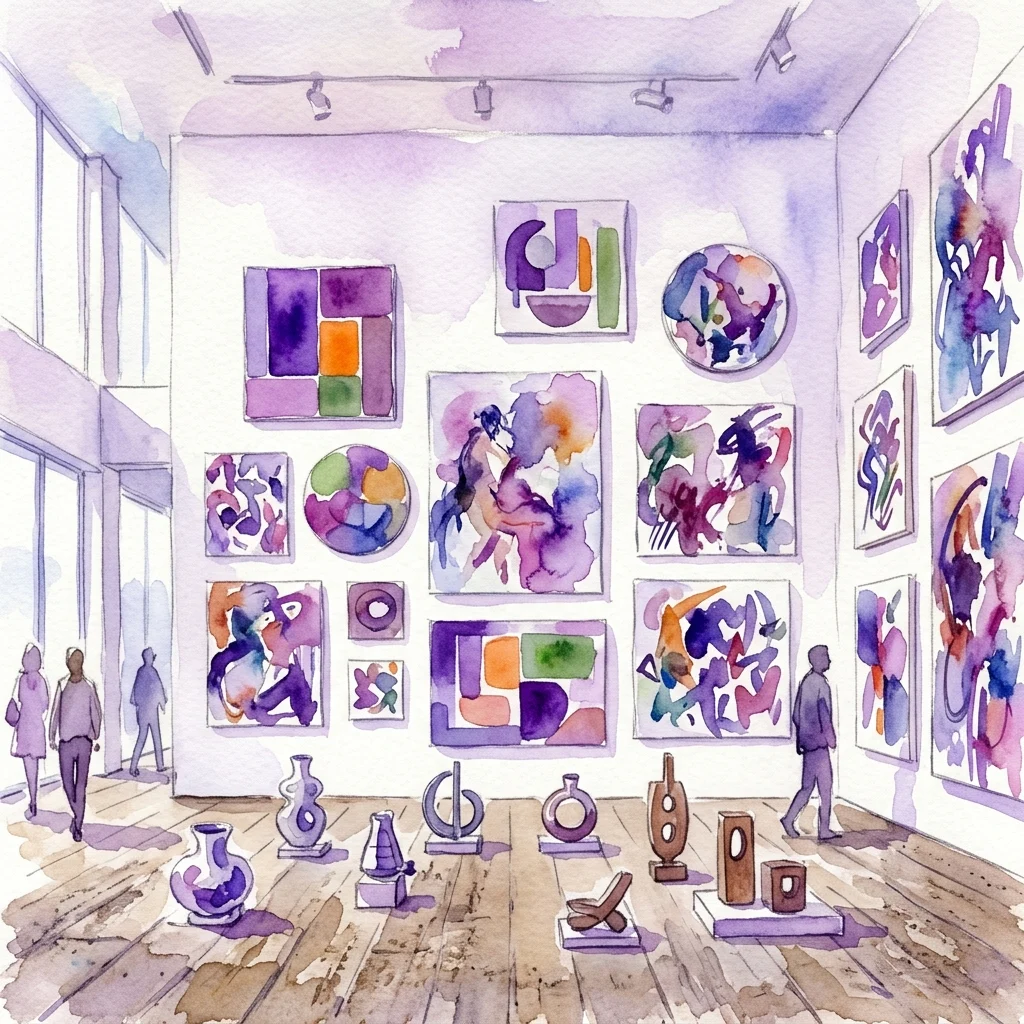
This exhibition traces Jiří Valenta's artistic journey from his early material structures to his ethereal 'white on white' paintings. It highlights key works from the 1960s and 70s, exploring themes of order, the spirit overcoming matter, and man's encounter with the universe.
The exhibition "Jiří Valenta. Breath of Icons, Language of Meditation." charts the significant creative path of Jiří Valenta, beginning with his works from the 1960s and 70s that stemmed from earthy material structures and culminated in ethereal paintings characterized by 'white on white' compositions.
The show opens symbolically with the large informel plaque (Collage II) from 1960, setting the tone for Valenta's inherent sensitiveness towards order, which art historian František Šmejkal described as originating from 'the spirit overcoming the matter.' The collection includes paintings from the 1960s such as 'Portrait of the Situation' (1965) and 'Portrait of the Annunciation' (1966). Valenta's emigration to northern Germany in 1968, following the occupation year, led him to create the nine-painting cycle 'Tribute to Master Theoderic,' subtitled 'Nine Attempts to Hang a Man into Space' (1968), and a series of etchings titled 'Dodauer Billiard (Anthropometric Exercises)' from 1969.
After relocating to Plön in 1970, Valenta, working as a girdler, sensitively integrated this experience into his 'Votive Plates for St. Lala' and 'Votive Plates on St. Krapp' cycles (1970). The latter cycle, particularly the 'Plate on St. Krapp,' forms a central part of the exhibition, alongside delicate paper collages. In 1977, Valenta voluntarily ceased his painting activities to focus on photography. His final paintings were presented in deep white frames, covered with glass, and affixed to substantial bottom plates, resembling reliquaries. Throughout his career, Valenta consistently explored themes of humanity's interaction with a higher universal order, achieving a profound sense of meaning and spiritual fulfillment.