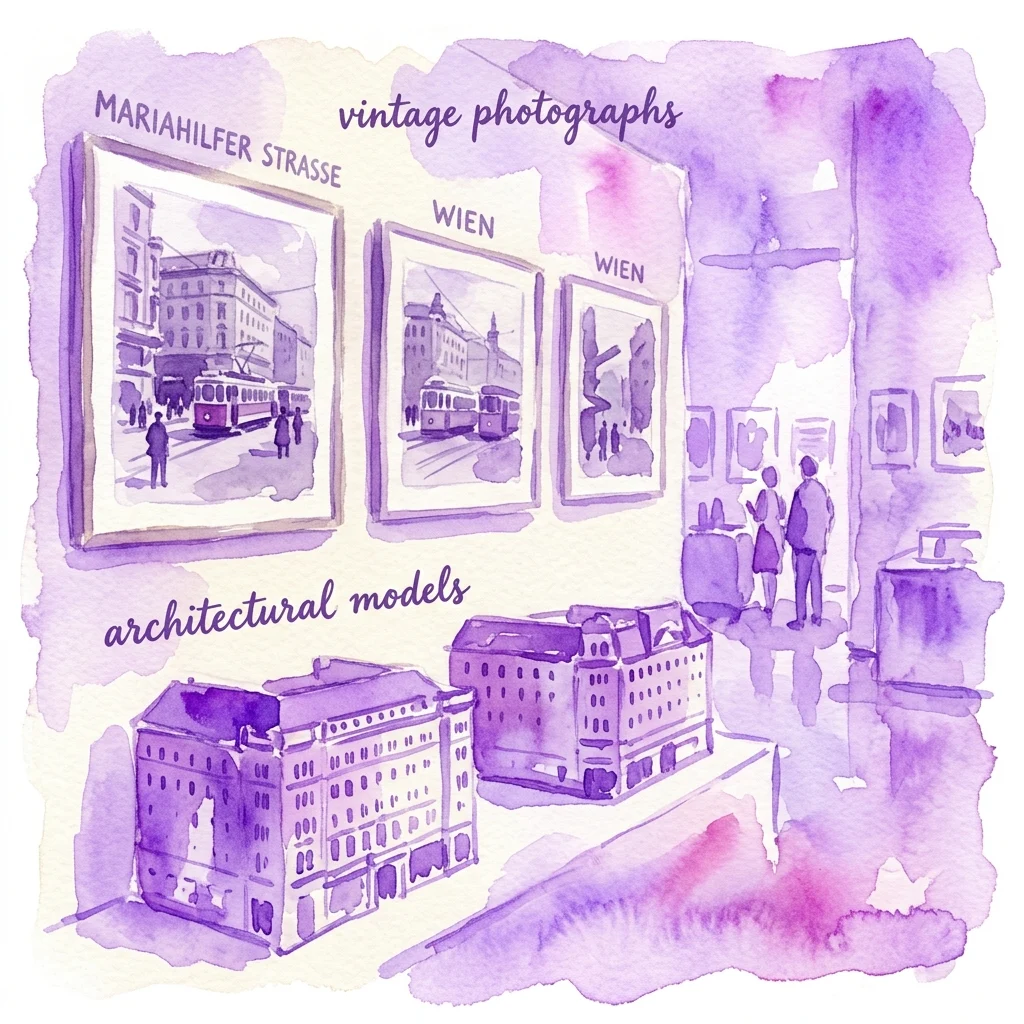
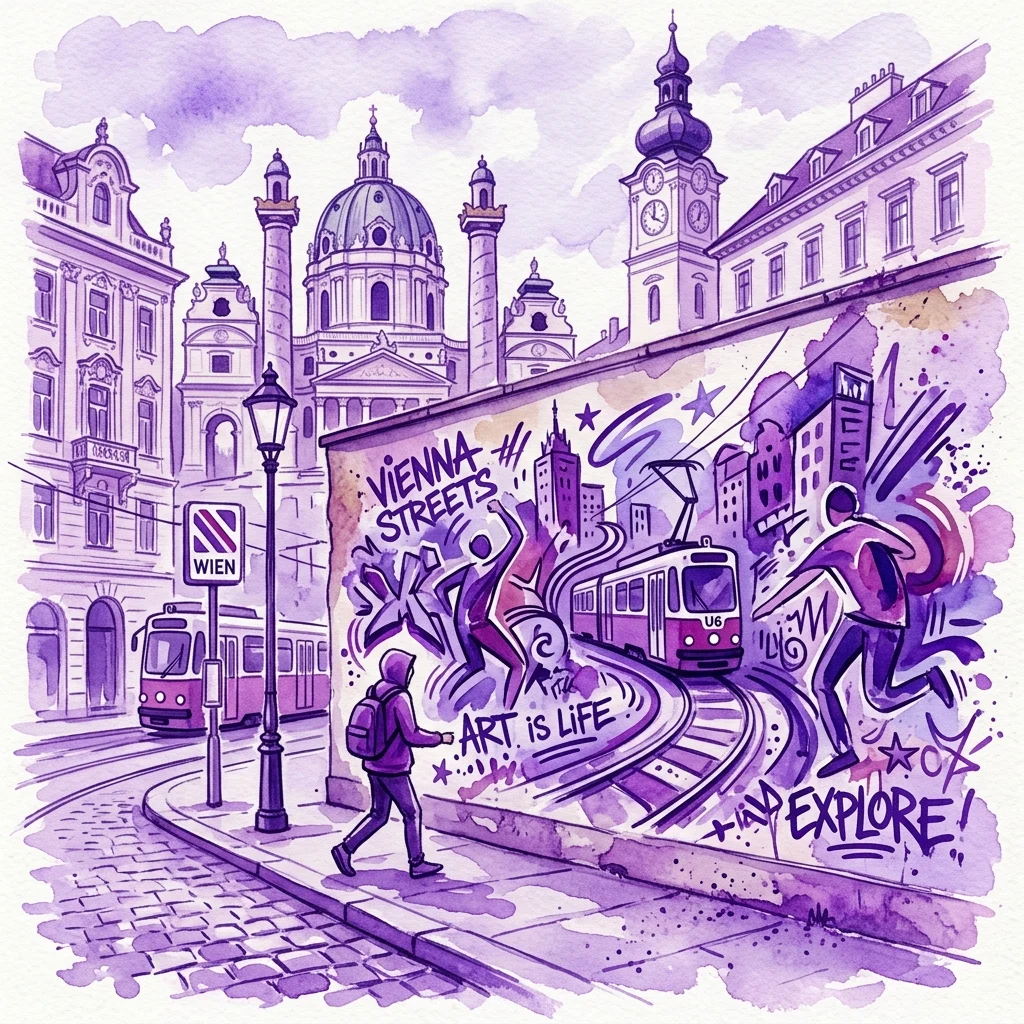
This exhibition explores the historical evolution of street naming and house marking systems in Vienna. It details the transition from house names to numbered addresses and the introduction of street signs, highlighting how street names served not only for orientation but also as a form of political propaganda through various historical periods.
Originally, Viennese houses were identified by house names and signs that often related to their location or owners, such as 'Zum krummen Baum' or 'Zum kleinen Anker.' As the city grew and names repeated, maintaining orientation became difficult, leading to discussions about introducing house numbers. In 1782, the government mandated the writing of street names on houses.
However, the color of the lettering quickly faded. In conjunction with the introduction of new orientation numbers from 1862 onwards, the practice of naming streets with cast zinc plates was adopted. Street names primarily serve as a means of orientation, but they have frequently also been used for political propaganda. The political turning points of 1848, 1918, 1934, and 1945 saw street names disappear and reappear, reflecting the changing political landscape of the city.