
Vienna
Open now

Is Contraception a Medical Responsibility? A Historical Exhibition

Explore the scientific, ethical, and religious debates surrounding reproductive health and Hermann Knaus's research.

This exhibition thoroughly examines the complex history of contraceptive methods and the intense debates they sparked. It highlights the significant contributions and controversies surrounding physician Hermann Knaus, particularly his early 20th-century research into reproductive physiology. Discover how his work spurred widespread discussion and practical applications regarding reproductive health. The content delves into scientific disagreements, ethical implications, and societal perspectives.

About Is contraception a medical responsibility? at Museum of Contraception and Abortion in Vienna

Read curatorial context and practical visitor information for Is contraception a medical responsibility? at Museum of Contraception and Abortion in Vienna

Exhibition summary

This exhibition explores the scientific and societal discussions surrounding contraception, particularly focusing on the research and methods developed by Hermann Knaus. It delves into the medical, ethical, and religious debates of the early to mid-20th century regarding reproductive health.

Curatorial context

The exhibition 'Is contraception a medical responsibility?' delves into the complex history of contraceptive methods and the debates they ignited, with a significant focus on the contributions and controversies surrounding physician Hermann Knaus. The content highlights Knaus's initial research into reproductive physiology, which inadvertently led to a method for estimating fertile periods. It details how this discovery, initially a byproduct of his work, eventually spurred practical applications and widespread discussion, particularly after the German Gynecologists' Congress in 1931, which marked a turning point for research and advertising of contraceptives. The page further examines the reception of Knaus's methods, including scientific disagreements, such as those with Günter Karl Friedrich Schultze, and the broader societal and ethical implications. It touches upon the positions of the Catholic Church, as articulated in the encyclical Casti connubii, and the views of various medical professionals and reformers like Magnus Hirschfeld regarding the accessibility and control of contraception. The exhibition also addresses the commercialization of contraceptive calendars and the inherent challenges and limitations of rhythm-based methods due to cycle variability, reflecting the ongoing discourse on whether contraception was primarily a medical or a societal issue.

Admission and ticket notes

Visitor information regarding opening hours and tickets can be found on the museum's website.

Is contraception a medical responsibility? key exhibition facts

Review exhibition status, schedule, venue context, and attribution details for Is contraception a medical responsibility? at Museum of Contraception and Abortion in Vienna

Venue
Museum of Contraception and Abortion
Current status
Open now
Exhibition schedule
Information not currently available
Artist line / attribution
Hermann Knaus is prominently featured in relation to his research and its impact.
More from Museum of Contraception and Abortion
Explore additional exhibitions from the same institution
Review other exhibitions from Museum of Contraception and Abortion in Vienna to compare themes, timelines, and program direction while planning your museum visit.
Illustration of the history of pregnancy testing, showing ancient Egyptian grain tests, medieval urine analysis, frog-based tests, and modern HCG tests, all in purple watercolor style.
Permanent exhibition

Pregnancy Test: Historical Methods at Museum of Contraception and Abortion

Explore ancient traditions to early scientific techniques for confirming conception.

This exhibition explores the evolving history of pregnancy testing, from ancient observational practices to pioneering scientific discoveries. Discover curious stories and diverse cultural approaches to understanding human conception across the centuries. It offers insights into women's health through a historical lens.

The Pregnancy Test

Watercolor illustration of a T-shaped intrauterine device (IUD) with purple arms, an orange copper coil, and a blue thread, displayed on textured paper.
Permanent exhibition

Explore the Swing CU 380 IUD Exhibition at the Contraception History Museum

A historical plastic and copper T-coil device from 1995.

This permanent exhibit showcases the Swing CU 380, an intrauterine device used for contraception. Examine this well-preserved 1995 medical object to understand its design and role in reproductive health.

Swing CU 380 Exhibit
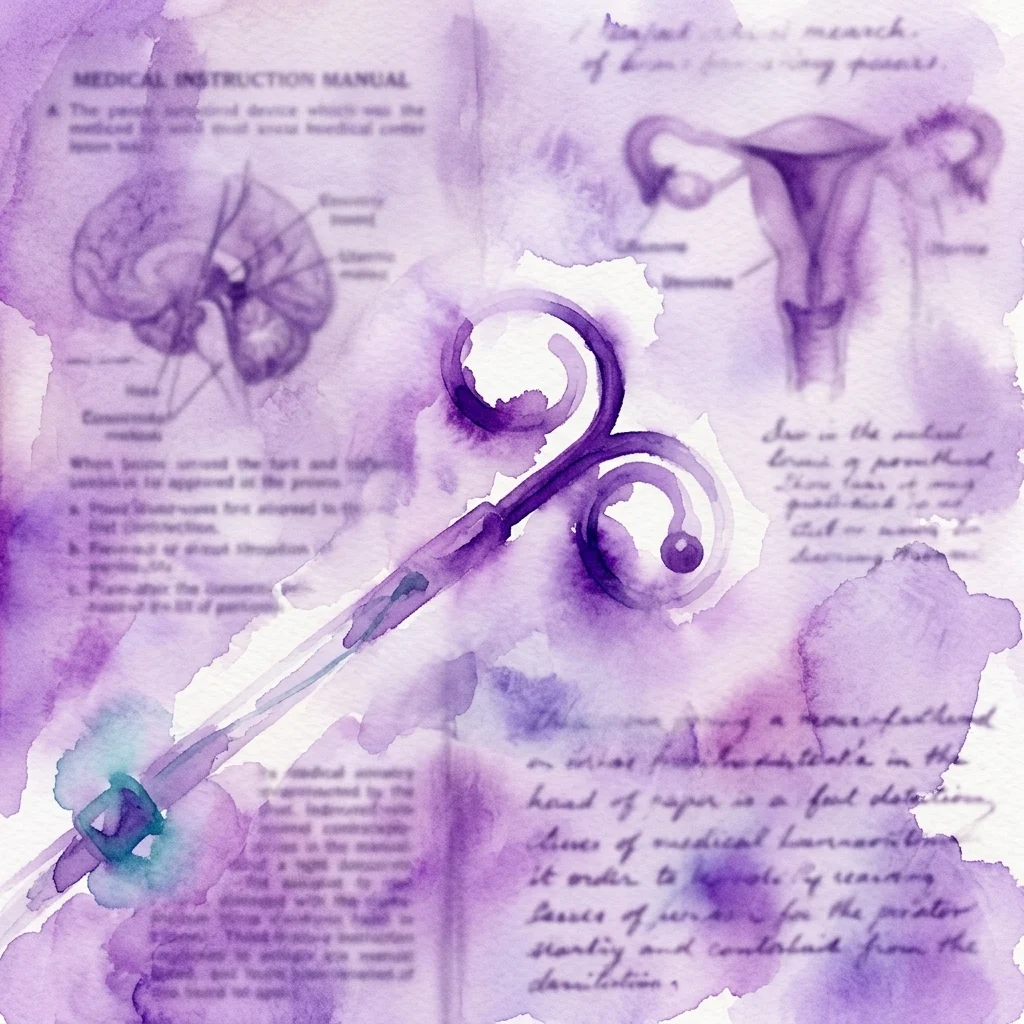
Close-up of a Saf-T-Coil 33S plastic spiral contraceptive with a small ball, displayed over medical instruction manuals and archival documents on a purple watercolor background.
Permanent exhibition

Saf-T-Coil 33S: 1970s Contraceptive Artifact at Museum of Contraception and Abortion

Explore this unique medical device and pharmaceutical history collection item.

Learn about the Saf-T-Coil 33S, a plastic spiral contraceptive collected for market research. This artifact from the early 1970s includes an instruction manual, offering insight into its design and historical use as a birth control device.

Saf-T-Coil 33S
A watercolor illustration of the Gräfenberg Ring, a coiled wire contraceptive device from the early 20th century, rendered in purple and blue hues on a white background.
Permanent exhibition

The Gräfenberg Ring: A Historical Medical Device from Contraception Research

Pioneering contraceptive coil developed by Ernst Gräfenberg around 1920.

This entry explores the Gräfenberg Ring, an important coiled wire device made of medical steel. Learn about its origins as a contraceptive, linked to Ernst Gräfenberg and medical history around 1920.

Gräfenberg Ring
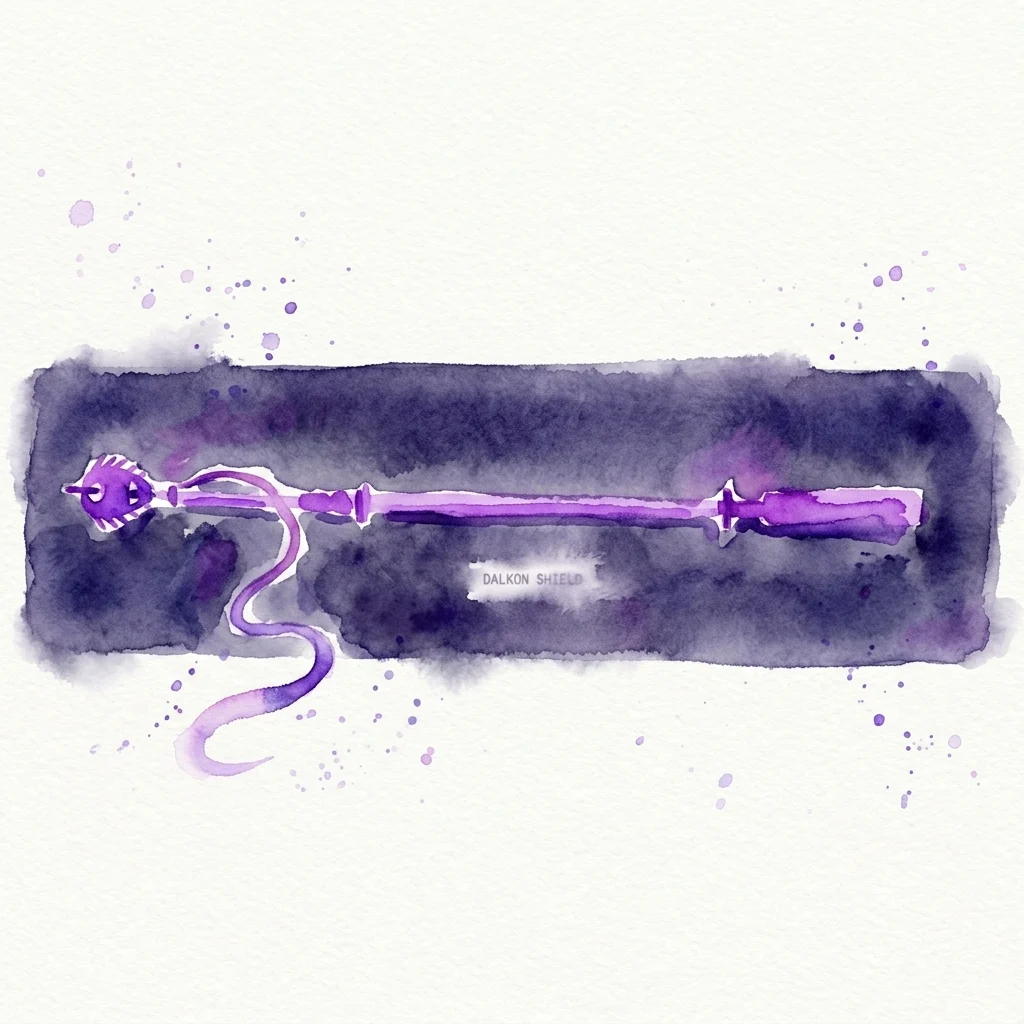
A purple watercolor illustration of a Dalkon Shield contraceptive device with its insertion applicator, displayed on a dark background with artistic splatters.
Permanent exhibition

Dalkon Shield (brown) with insertion device: A Medical History Artifact

Explore the controversial history of this contraceptive coil.

Examine a brown Dalkon Shield contraceptive coil and its specific insertion device. This artifact offers insight into past birth control technologies and their impact, forming part of the Museum of Contraception and Abortion's collection.

Dalkon Shield Exhibit
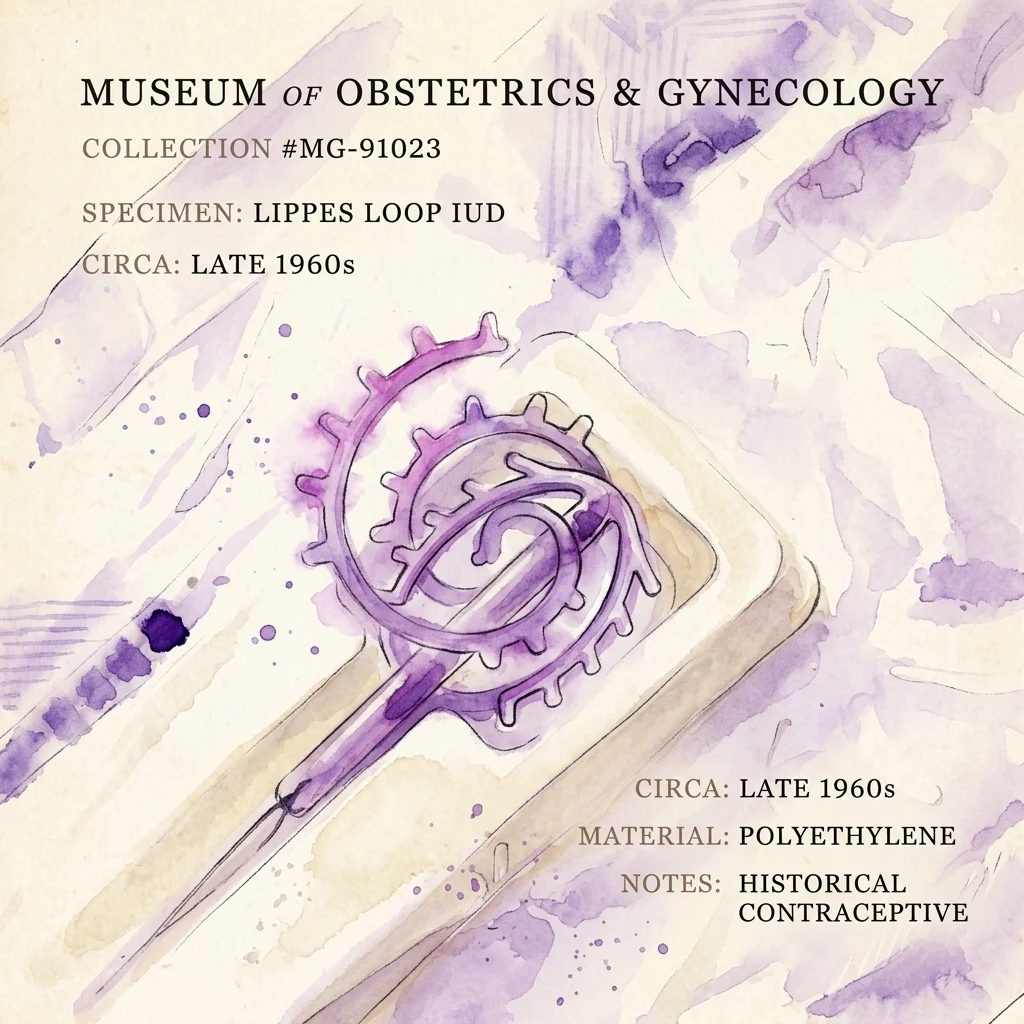
Illustration of a Lippes Loop IUD, a historical contraceptive device made of polyethylene, displayed in a museum collection from the late 1960s.
Permanent exhibition

Discover the Multiload: A Historical Contraceptive Device from 1979 Medical History

Explore the plastic spiral's design and its market research significance.

The Multiload is a unique historical artifact representing contraceptive technology from 1979. This distinctive plastic spiral with protruding teeth was a key item collected by a pill manufacturer for significant market research purposes.

Multiload Exhibit
Vienna

Discover Current Exhibitions in Vienna: Your Essential Exhibition Search Guide

Explore Vienna's dynamic art and cultural displays today.

Find compelling art, history, and science exhibitions happening throughout Vienna. This specialized resource helps you locate unique cultural experiences and plan your visit to inspiring displays. Explore Vienna's rich cultural scene with ease.