This exhibition showcases the works of two pivotal Czech artists, František Kupka and Otto Gutfreund, whose pieces form the core of the Kampa Museum's collection. It delves into Kupka's journey towards abstract art and his unique concepts of color, line, and plane, alongside Gutfreund's significant contributions to Cubist sculpture and its evolution in European art.
The exhibition at the Kampa Museum highlights the essential works of František Kupka and Otto Gutfreund, artists whose oeuvres constitute the foundation of the Jana and Meda Mládek collection. František Kupka (1871–1957), a leading Czech painter of the 20th century, is presented through key paintings and drawings from the Kampa Museum collections. The exhibition traces his development from figurative works to abstract art, exploring his personal "color plans" and his focus on point, line, and plane, which diverged from contemporary Cubist spatial concepts.
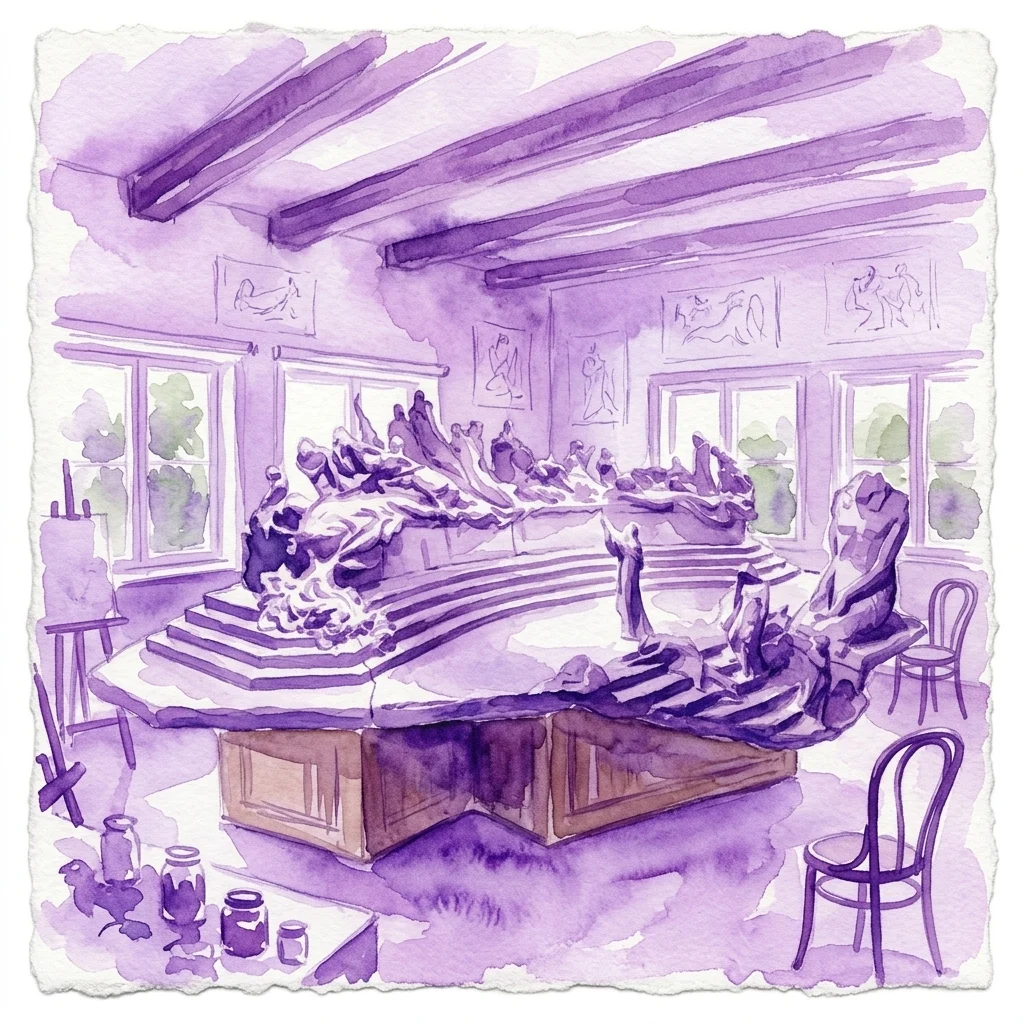
Otto Gutfreund (1889–1927) is recognized for his pivotal role in European sculpture, particularly his advancement of Cubism. Having absorbed Cubism's early principles in Paris, Gutfreund developed Cubo-Expressionism and later explored Cubist sculpture by activating space with radical forms. His work uniquely infused metaphysical content, characteristic of Central European art, into the Cubist idiom. Following his Cubist period, Gutfreund shifted towards figural sculptures with simple, rounded shapes, which importantly defined the visual style of the newly established Czechoslovak Republic in 1918. The exhibition offers insights into these distinct artistic trajectories and their profound impact on modern art.