This exhibition at Museum Kampa celebrates the life and work of married artists Jaroslava Kurandová and Zdeněk Rybka, whose artistic journeys were significantly shaped by historical events. It explores their shift from academic figurative painting to geometric rigor in the 1960s and their subsequent return to art after periods of withdrawal.
Museum Kampa showcases the significant artistic contributions of Jaroslava Kurandová (1936–2024) and Zdeněk Rybka (b. 1938), a married couple whose lives and careers were intertwined and deeply affected by historical upheavals.
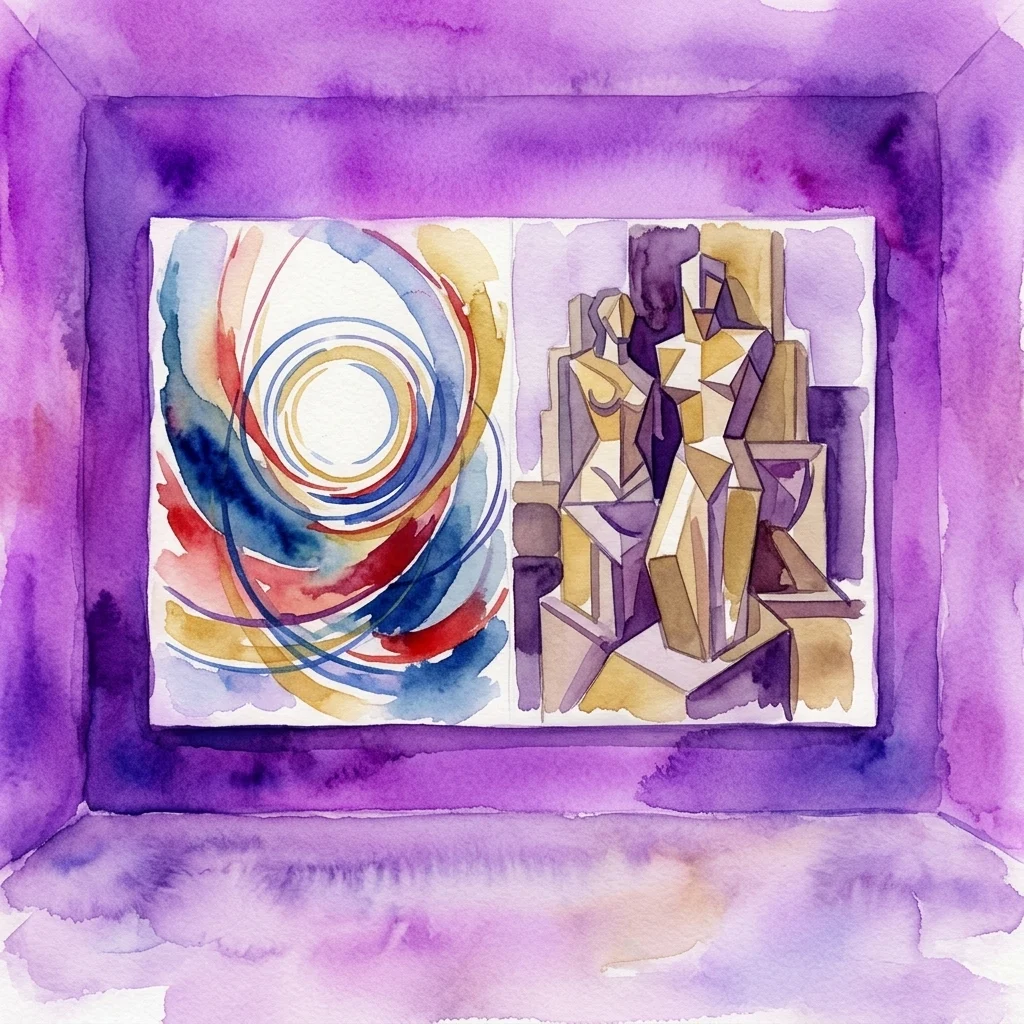
During the 1960s, both artists moved away from academic figurative painting towards geometric abstraction and a bold use of color, becoming members of the Klub konkretistů. Kurandová extended her work into three-dimensional space using materials like nitro-lacquered hardboard and plexiglass, while Rybka experimented with electrography, creating images with a unique glowing halo effect. Following the 1968 invasion, they withdrew from public life to teach, returning to their artistic practice in the late 1980s. Rybka introduced a new direction called Vântîl, characterized by absurdity and irreverence, and returned to expressive figurative painting within a geometric framework. Kurandová's later work involved parallel rows of metal or plexiglass strips on canvas, conveying movement and energy, often with a strong sense of civic engagement.
The exhibition aims to restore these two creators to art history's narrative, highlighting how historical events shaped their paths and artistic output. Kurandová's dedication to art education is presented as an ethical continuation of her oeuvre, establishing her as a charismatic and respected teacher. Rybka's potential career trajectory, perhaps in California's avant-garde art scene, is contemplated, underscoring the impact of political circumstances on artistic development. The exhibition emphasizes Kurandová's stance of silence not as weakness but as conviction, and Rybka's continued exploration of geometric principles in his expressive figurative painting.