
Strasbourg
Museum itinerary · Strasbourg

How Strasbourg was built: the cathedral quarter in three museums

Read a city model, a cathedral figure and a fortified island

Explore Le 5e Lieu, original Gothic sculpture at Œuvre Notre-Dame and the 1727 relief model at Strasbourg’s Historical Museum on one compact museum walk.

Museum stops
3
Visits and transfers
3 hr 28 min
Suggested days
Tue, Wed, Thu, Fri, Sat, & Sun
Why these museums go together

Begin with a tactile city model across the square from the cathedral. Find a roofline outside that you can recognise in miniature. Across the same square, stone carvers made figures legible to a crowd far below. In the old butchers’ building by the river, the model of Strasbourg in 1727 pulls the view back again.

The exhibition at Le 5e Lieu helps orient you before the sculpture workshop and stained glass. In the Historical Museum, look for the water crossing nearest the cathedral on the 1727 model. You have just walked between points its makers had to survey.

ArtArchitectureLocal heritage
Route map
© OpenStreetMap contributors

The itinerary, stop by stop

Stop 1 · 45 min
Le 5e Lieu

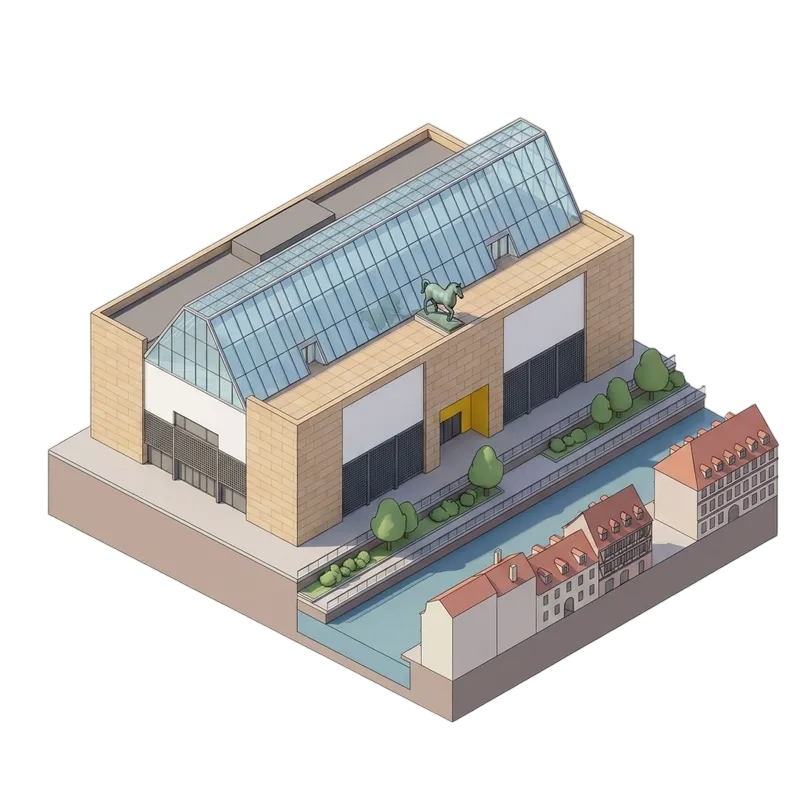
In A Trip through Strasbourg, use the architecture exhibition to orient yourself to the city’s neighbourhoods before looking at individual details outside. Begin on level one at A Trip through Strasbourg. Use the interactive city model to place yourself, then compare the Grande-Île and Neustadt displays. End with the architectural panorama or a view from the building. In forty-five minutes these three moments are more useful than reading every panel. Keep a street or building detail to compare after crossing the square.

What to look for

The interactive city model
Locate the current square and the water around Grande-Île first. Follow one stage of the city’s expansion before changing displays. Seeing later areas accumulate around the historic core stops the model from becoming an inventory of isolated landmarks.
Grande-Île and Neustadt
Contrast the older island streets and the later imperial extension through the exhibition’s maps and models. Choose a difference you can locate without a long detour, such as the shape of a block or relation to a canal.
An architectural panorama
Use the 360-degree presentation to connect Place du Château and Place de la Cathédrale. Pick one façade or roofline, then match it to what you can see through the window or outside. The contrast between model and street view makes the city easier to read.
Living with water
If time allows, choose the materials about the waterways or how the city relates to its setting. Pick a bridge or quay to find on another walk. Keeping this an optional final section protects the main cathedral museum visit on days with shortened hours.

Walk · 3 min

Getting to Musée de l'Œuvre Notre-Dame

Both entrances are on Place du Château. Walk from Le 5e Lieu at no. 5 to the museum at no. 3, allowing about three minutes to find the signed doorway.

Stop 2 · 1 hr 15 min
Musée de l'Œuvre Notre-Dame

The historic building of the cathedral works houses Gothic sculpture and medieval stained glass. Look at how close viewing changes what you can see in the expression, drapery and surfaces of architectural figures. Start with the architectural sculptures and compare one figure from a distance with the detail you can see in a museum. Move on to medieval glass and a late Gothic bust. Finish with the drawings or the courtyards and garden when accessible. If a drawing or glass piece is off view, keep one stone figure and another available material to make the comparison.

What to look for

Ecclesia and Synagoga
Where displayed, compare the balance and attributes of the paired cathedral figures. Read the interpretation in its medieval Christian context, including its anti-Jewish symbolism, rather than treating the allegory as a neutral portrait.
The Wissembourg head
If the fragment is on view, spend time with the division of the glass and the marks that form the face. Look at the step between design and material: the face has to be legible through colour, light and separate sections.
The leaning man attributed to Nicolas Gerhaert
Compare the bend and expression with the more distant architecture-bound figures earlier in the visit. Move slightly to see what happens to the direction of the gaze. If absent, choose another late Gothic sculpture with a similarly individual posture.
Drawings of the cathedral
If available, choose one architectural design or reproduction and match a visible line to a part of the building. This is also a good bridge back to the city model, because both museums ask what a reduced drawing can explain about an actual place.
Courtyards and Gothic garden
Finish in the open parts of the complex if available. Look back at the museum’s historic façades and the square. They offer a compact transition from objects designed for buildings back to the larger architectural setting.

Walk · 5 min

Getting to Strasbourg Historical Museum

Leave Place du Château for Place du Marché aux Cochons de Lait, then look for the Historical Museum beside the river at 2 rue du Vieux-Marché-aux-Poissons. Allow about five minutes.

Stop 3 · 1 hr 20 min
Strasbourg Historical Museum

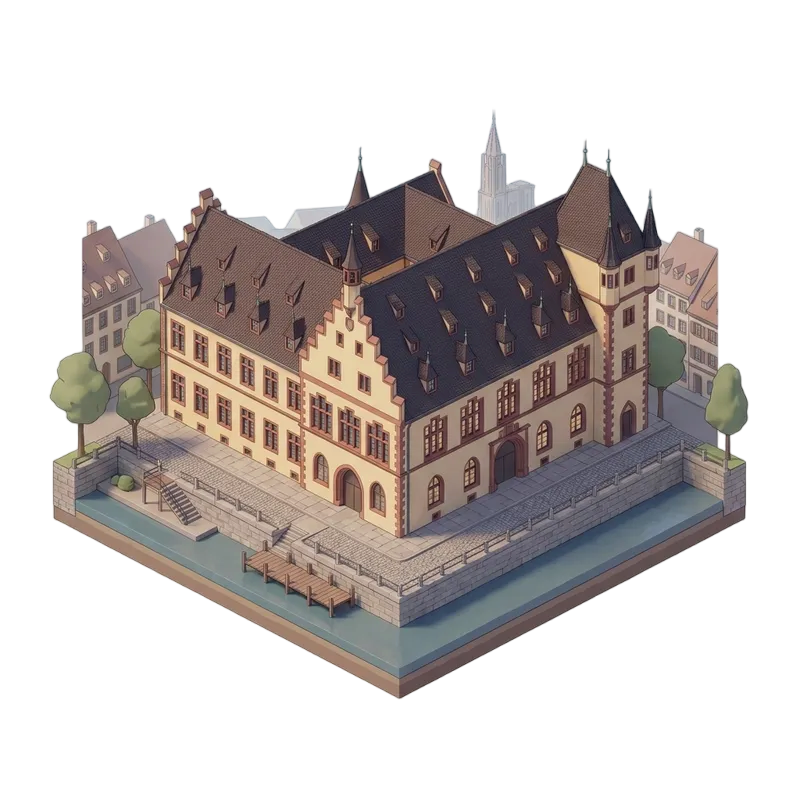
The former municipal slaughterhouse now houses the city’s story. Spend time with the 1727 relief model and look for the routes and rivers you have just encountered at street level. Start with a short look at the former butchers’ building and use the lower collection to see how the city traded, governed or produced texts. Then go to the first-floor relief model and look for the waterways and outline of the fortified city. Finish with the later galleries if time remains. With a short visit, keep one printed object downstairs and the model upstairs.

What to look for

Printing and Gutenberg’s Strasbourg years
The museum sets Gutenberg’s time in the city alongside the spread of printing and religious change. Find an available printed object, portrait or interpretation. Compare how reading a caption in a museum differs from how print distributed ideas in a growing city.
The 1727 relief model
Find the first-floor model commissioned by Louis XV. Locate a waterway or street relationship you noticed during the walk and then follow the fortifications toward the edges. Use the elevation to understand how much of the city’s defence an ordinary street view hides.
The later city and Europe
If time allows, pick one modern object or interpretation around the city’s civic life and European institutions. Compare the subject’s scale with the fortified 1727 model. If time is short, end at the model and look back at the modern street on the way out.
Timing, booking and admission

Set your pace

Start at 11:00 when Le 5e Lieu opens. On weekdays have an early lunch after that first visit, then enter Œuvre Notre-Dame at 14:00 and the Historical Museum around 15:20. At weekends the two museums usually stay open through lunch.

What to book ahead

Use Strasbourg’s municipal calendar for the date. The cathedral-quarter museums generally close on Monday, and their weekday lunch closure matters even though the buildings are close together.

Tickets and museum passes

The exhibition at Le 5e Lieu is free to visit independently. Compare the city museum day pass with two individual admissions for Œuvre Notre-Dame and the Historical Museum.

Sources and route research

Explore Art and Cultural Exhibitions in Strasbourg Museums
Diverse programming showcasing historical, artistic, and modern thematic collections.
Navigate through curated displays and cultural programs hosted by local institutions. These venues frequently present rotating art exhibitions in Strasbourg that offer deep insights into local heritage and international artistic movements.
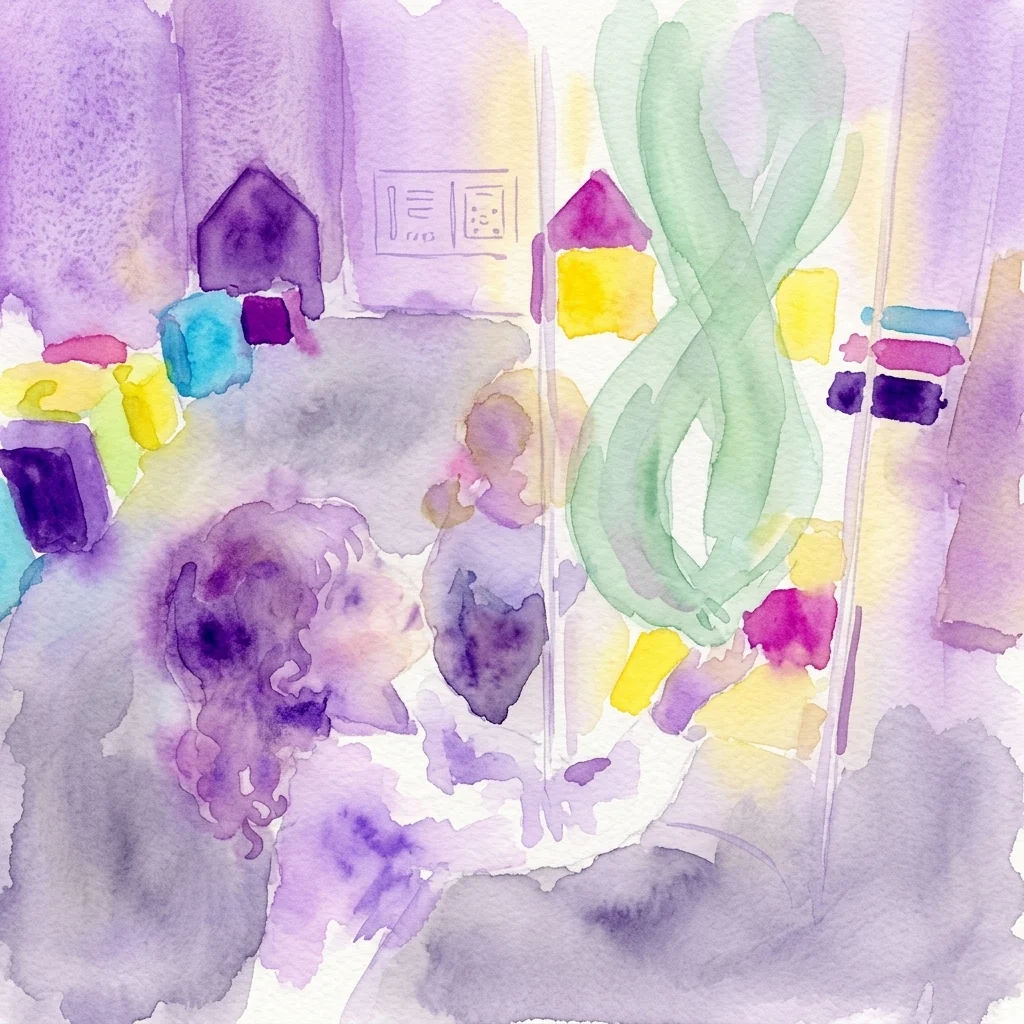
Children playing inside a colorful indoor play space featuring modular mini-houses, scattered foam blocks, and a large green twisted climbing rope.
Le Vaisseau
Permanent exhibition

The Playhouses at Le Vaisseau: Interactive Exhibition for Children

Explore physical and motor skill development through hands-on free play.

Children aged 3 to 6 can discover themed houses featuring sound-producing steps, tactile surfaces, and cog walls. This exhibition supports child-led exploration and independent movement to foster confidence and curiosity.

The Playhouses
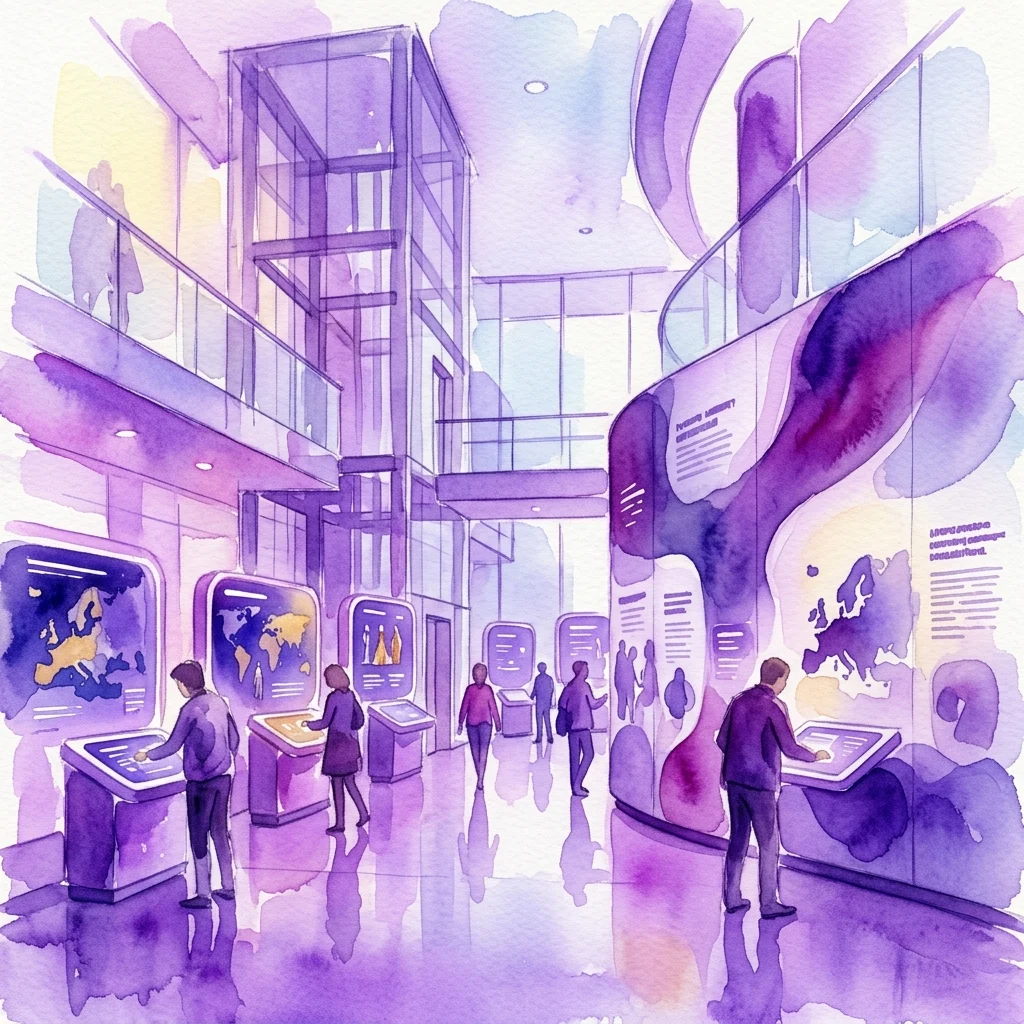
Watercolor rendering of the Parlamentarium Simone Veil interior, showing visitors engaging with digital interactive displays and European map panels in a modern multi-level exhibition space.
European Parliament Strasbourg Visitor Experience
Permanent exhibition

The Parlamentarium Simone Veil at the European Parliament in Strasbourg

Interactive exhibit on EU history and legislative processes.

Visit this permanent exhibition to understand the functions of the European Parliament. The space features displays on the legislative process and celebrates the legacy of Simone Veil.

Parlamentarium Simone Veil
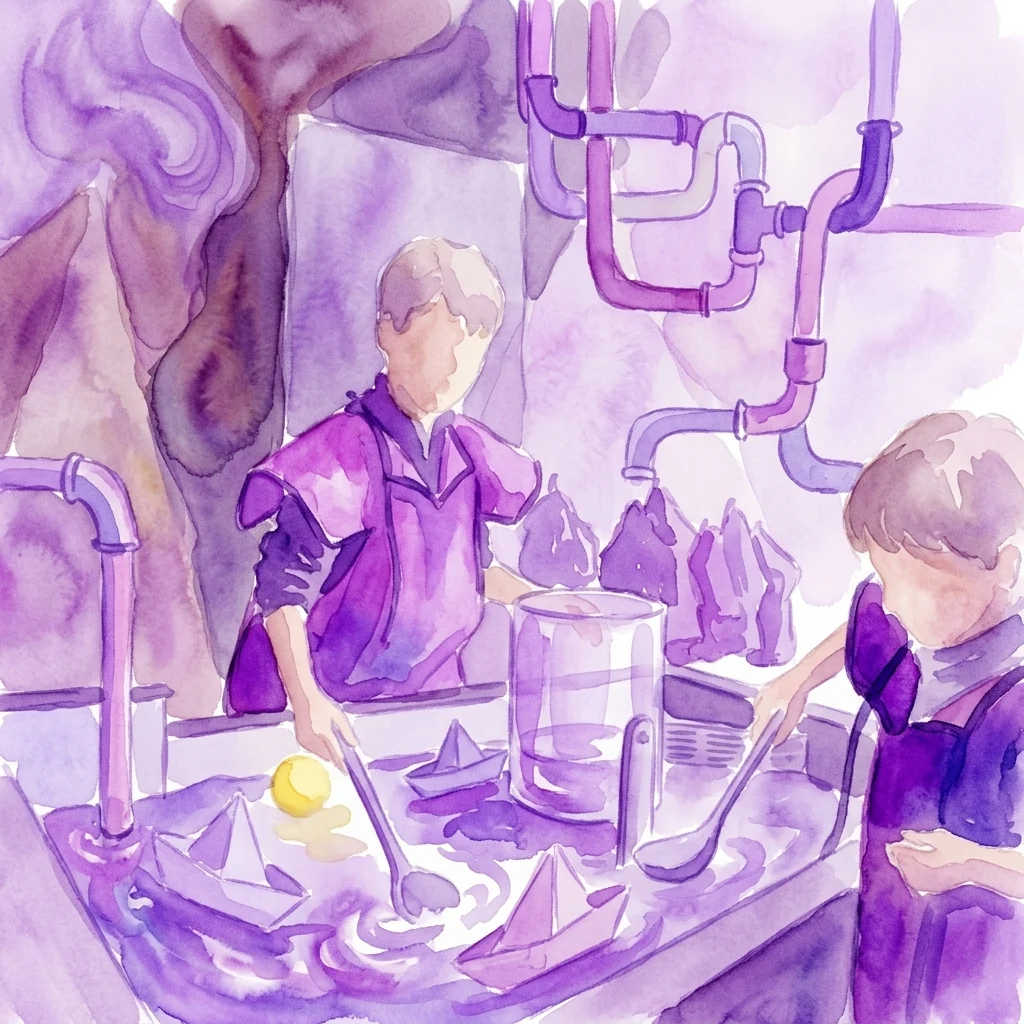
Watercolor illustration of two children playing at an interactive water exhibit with purple pipes, floating origami boats, and flowing channels.
Le Vaisseau
Permanent exhibition

The Oasis: Hands-on Water Physics Exhibition at Le Vaisseau

A permanent sensory exploration of aquatic science for all ages.

Engage with water properties through interactive stations that encourage problem-solving and play. Visitors can explore buoyancy and fluid motion in this unique, hands-on scientific environment.

The Oasis Exhibition
Strasbourg

Explore Diverse Museums and Cultural Institutions Across Strasbourg

A guide to the rich heritage and artistic venues in Strasbourg.

Uncover the intellectual and creative history of the region through a variety of permanent collections. From Gothic architecture to fine art galleries, find places that spark curiosity and provide deep insight into Alsatian life.