Vienna
Vienna City Center · Beethoven's Residence

Beethoven Pasqualatihaus: A Historic Residence Museum in Vienna

Explore the Vienna residence connected to Beethoven's iconic works.

MusicHistoryLocal heritage

Explore the Vienna residence where Ludwig van Beethoven composed some of his most significant works, including symphonies and his only opera. This preserved site, managed by the Wien Museum, offers a glimpse into 19th-century life and the composer's creative world through manuscripts and personal items.

Discover the historic Vienna residence where Ludwig van Beethoven lived and composed many masterworks between 1804 and 1814, now a poignant memorial.

Beethoven Pasqualatihaus
About Beethoven Pasqualatihaus

The Beethoven Pasqualatihaus in Vienna's first district served as Ludwig van Beethoven's residence intermittently from 1804 to 1814, a remarkably productive period where he composed works like Fidelio and Für Elise. Managed by the Wien Museum, this site provides an authentic 19th-century atmosphere across rooms on the fourth floor, evoking Beethoven's original living space. Visitors can view original manuscripts, personal artifacts, and a famous portrait by Joseph Willibrord Mähler, offering a direct connection to his life and creative process.

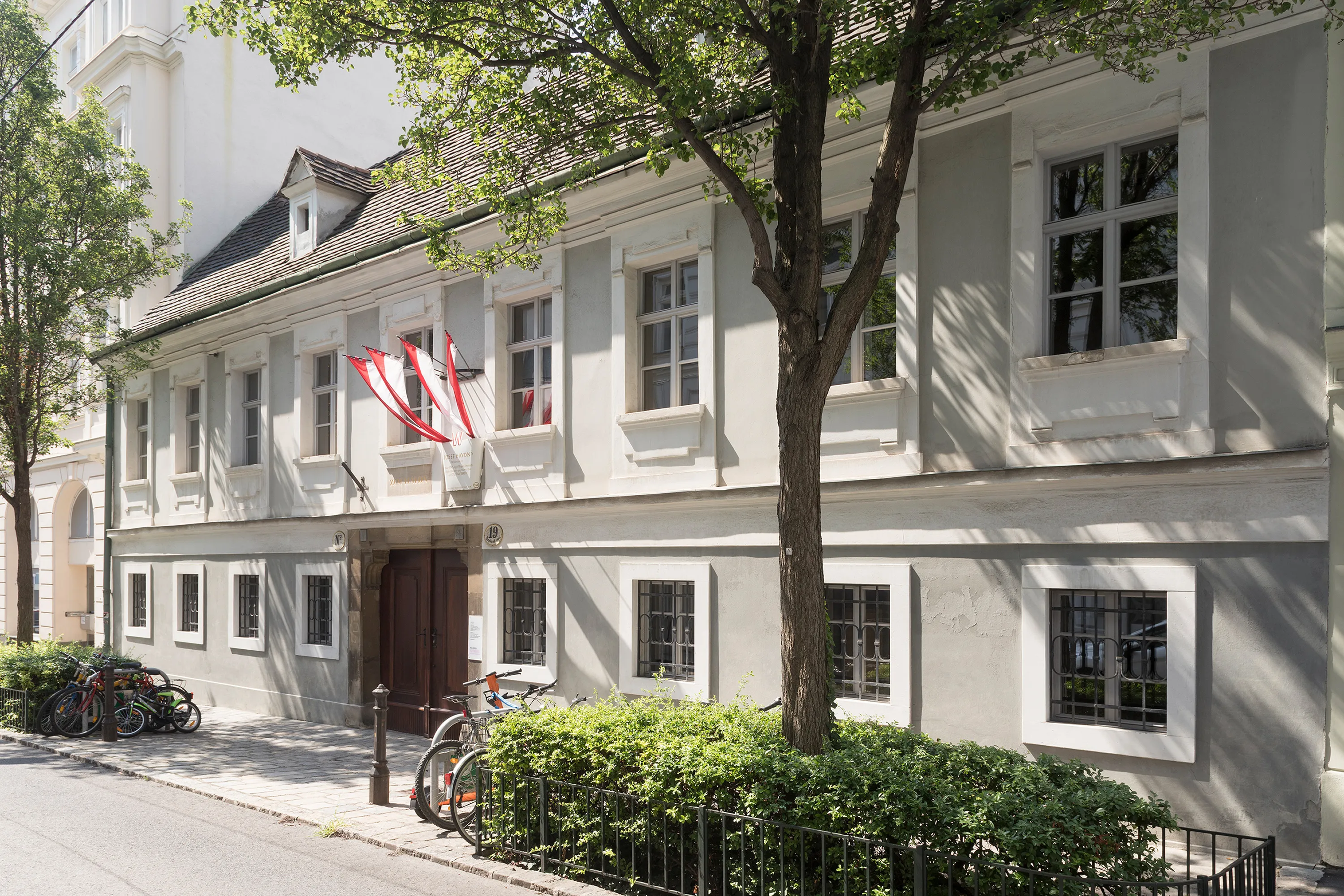
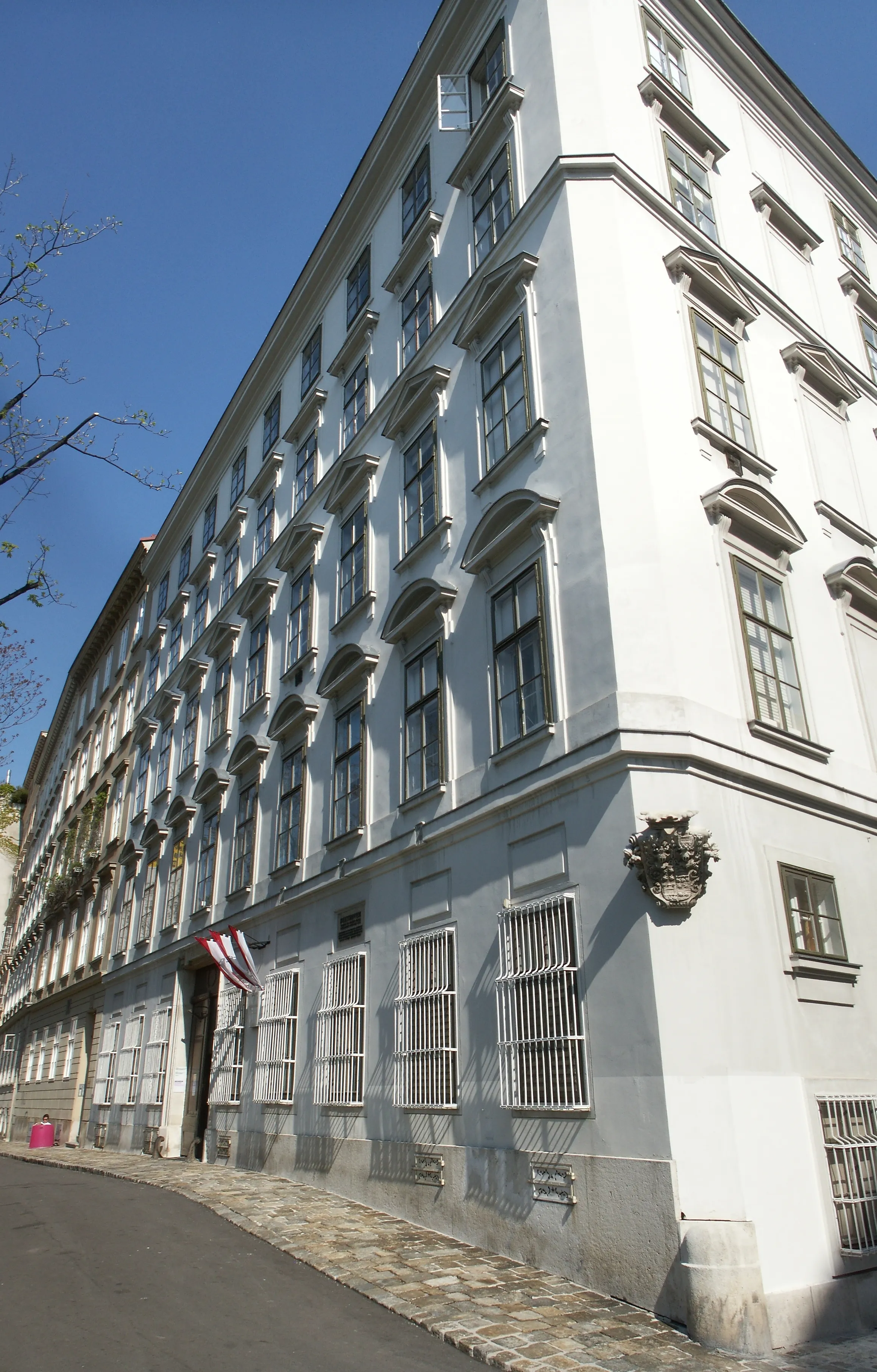
light gray building with white window frames and a red and white flag above the entrance
Beethoven Pasqualatihaus opening hours in Vienna

Check today’s opening status, weekly schedule, and special date changes for Beethoven Pasqualatihaus. Use these opening hours to plan your arrival and avoid closed times in Vienna.

Monday
Tuesday
Wednesday
Thursday
Friday
Saturday
Sunday
-
10:00-13:00 · 14:00-17:00
10:00-13:00 · 14:00-17:00
10:00-13:00 · 14:00-17:00
10:00-13:00 · 14:00-17:00
10:00-13:00 · 14:00-17:00
10:00-13:00 · 14:00-17:00
Beethoven Pasqualatihaus Admission Information

The Beethoven Pasqualatihaus in Vienna offers mixed admission. Visitors can enjoy free entry on the first Sunday of each month. Additionally, specific groups such as Friends of Wien Museum, ICOM members, and annual ticket holders, including those with a Wien Museum Annual Ticket, do not require an admission fee. The Wien Museum Annual Ticket provides one year of access to all Wien Museum locations, including special exhibitions.

Wien Museum Annual Ticket

€29.00

Valid for one year from date of purchase. Admission to all locations of the Wien Museum, including special exhibitions.

Beethoven Pasqualatihaus in Vienna's First District

The Beethoven Pasqualatihaus is situated at Mölker Bastei 8 in Vienna's historic first district, placing it within a central and accessible area of the city. This location provides visitors with convenient access to other cultural sites and helps contextualize Beethoven's life within the vibrant heart of the Austrian capital.

© OpenStreetMap contributors

Mölker Bastei 8

1010 Vienna

Vienna, AT

Planning Your Visit to Beethoven Pasqualatihaus

To plan your visit to the Beethoven Pasqualatihaus in Vienna, general admission is €5, with free entry for visitors under 19 and on the first Sunday of each month. Photography and videography are permitted for private use, though flashes, tripods, and selfie sticks are prohibited. The museum also provides free audio guides and cloakroom services to enhance your experience.

Planning Your Visit to Beethoven Pasqualatihaus

The Beethoven Pasqualatihaus Experience

The Beethoven Pasqualatihaus in Vienna provides an intimate look into the creative life of Ludwig van Beethoven. This significant residence, where he lived intermittently between 1804 and 1814, was a sanctuary for composing pivotal works, including his opera Fidelio, the Fourth, Fifth, and Seventh Symphonies, and the iconic "Für Elise." Managed by the Wien Museum, the site evokes an authentic 19th-century atmosphere across several rooms on the fourth floor, reflecting Beethoven's original living space. Visitors can explore a collection featuring original manuscripts, personal artifacts, and a notable portrait by Joseph Willibrord Mähler. Ascending the historic spiral staircase further enhances the sense of connection, allowing guests to engage directly with his musical genius and the historical context of his Vienna years.
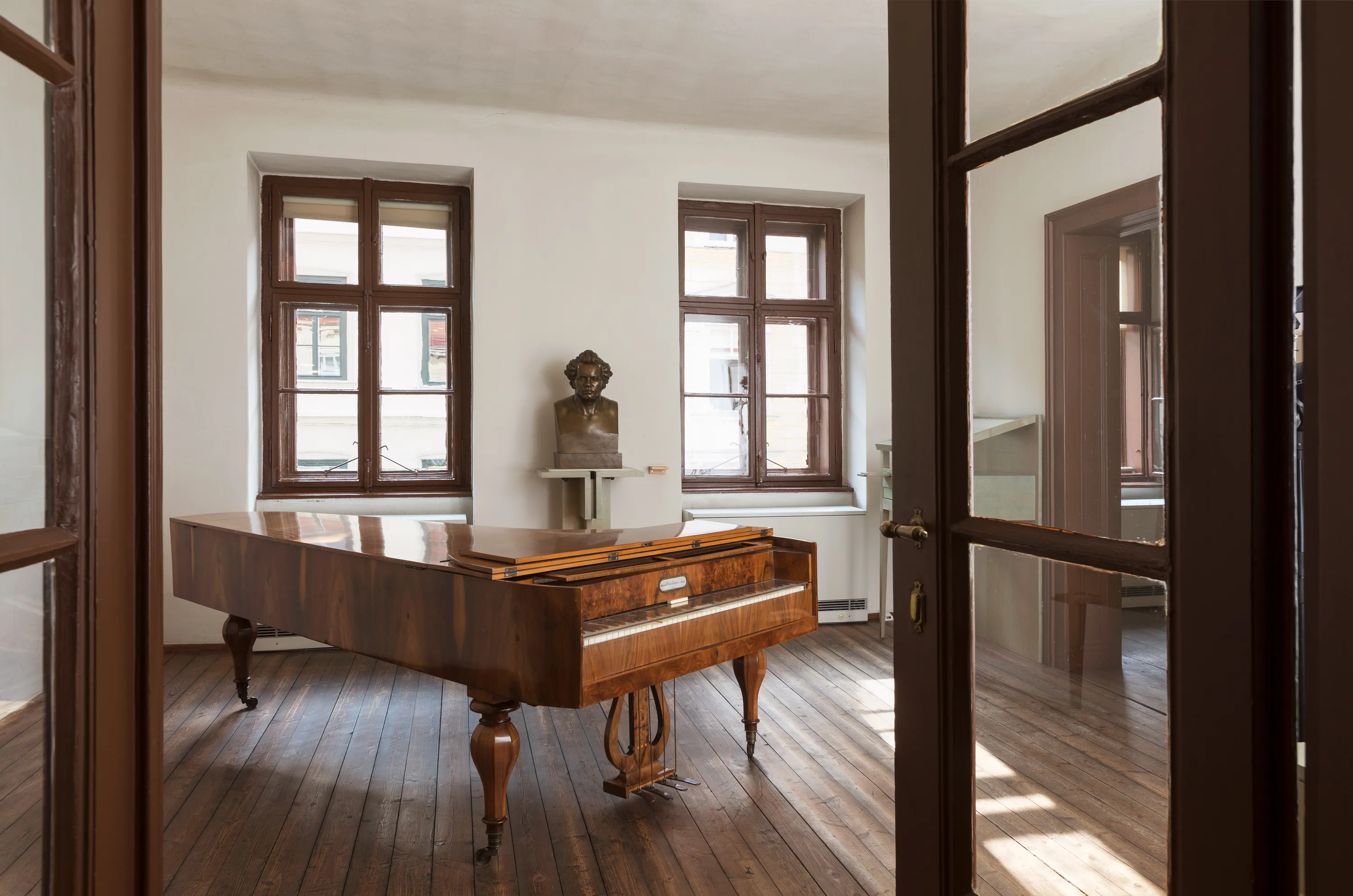
A wooden grand piano in a room with wooden floors and two windows, viewed through a doorway with glass panels.

History of Beethoven Pasqualatihaus

The Pasqualati House, originally constructed in 1797 by Peter Mollner, gained its lasting historical significance through its association with Ludwig van Beethoven. Between 1804 and 1815, the renowned composer resided here across two periods for a total of eight years, a time when he created **seminal works** such as his Fifth and Sixth Symphonies, Für Elise, and the opera Fidelio. The building in Vienna also has earlier musical connections, having hosted composers Florian Gassmann and Antonio Salieri in 1770 before its current form. Today, the Beethoven Pasqualatihaus, managed by the Vienna Museum, preserves this legacy with a memorial established in 1997, featuring artifacts and facsimiles in a space reminiscent of Beethoven's original apartment.

  • Building completed in 1797

    1797Founding

    The Pasqualati House, notable for being a residence of Ludwig van Beethoven, was built in 1797 by Peter Mollner for Joseph Benedikt, Baron Pasqualati von Osterberg, by joining two smaller residences.

  • Construction by joining residences

    Architecture

    The building was created by joining two smaller residences. One older building contained a stonemason's workshop, while another housed tenants like Count Leander Anguissola and Johann Jakob Marinoni, who published a plan of Vienna there.

  • Florian Gassmann and Antonio Salieri lived there in 1770

    1770Notable person

    In 1770, composers Florian Gassmann and his student Antonio Salieri lived in one of the smaller residences that were later incorporated into the Pasqualati House, which was then known as the 'Schmidisches Haus'.

  • Beethoven resided in the house for eight years

    1804-1814Notable person

    Johann Baptiste, Baron Pasqualati von Osterberg, patron of Beethoven, allowed the composer to live in his house for a total of eight years across two periods.

  • Beethoven composed major works at Pasqualati House

    1804-1815Notable person

    Between 1804 and 1815, Beethoven twice resided in the Pasqualati House, composing significant works such as the Fifth and Sixth Symphonies, Für Elise, the Archduke Trio, and his opera Fidelio.

  • Bettina Brentano visited Beethoven there

    1810-1814Notable person

    During Beethoven's second stay in the Pasqualati House, Bettina Brentano visited him there and described their meeting in her book 'Goethes Briefwechsel mit einem Kinde'.

  • Publication of "Vom Pasqualati Haus" series

    1991-2000Milestone

    Between 1991 and approximately 2000, the musicological series "Vom Pasqualati Haus" was published from the building, indicating its continued association with musical scholarship.

  • Adalbert Stifter Museum was located there

    1947Collection

    From 1947, the Adalbert Stifter Museum was housed in three rooms of the Pasqualati House, contributing to the building's cultural significance before the Beethoven museum was established.

  • Pasqualati House as Beethoven's residence

    1804-1814Overview

    The Pasqualati House is historically significant as a frequent residence of Ludwig van Beethoven, where he lived for a total of eight years and composed some of his most celebrated works.

  • Classicist style architecture

    Architecture

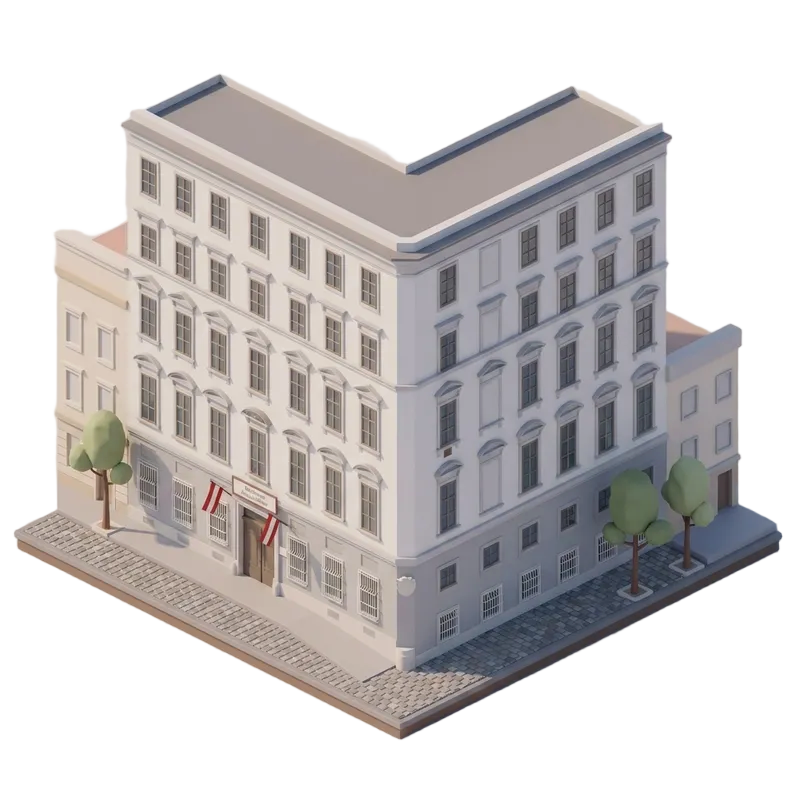
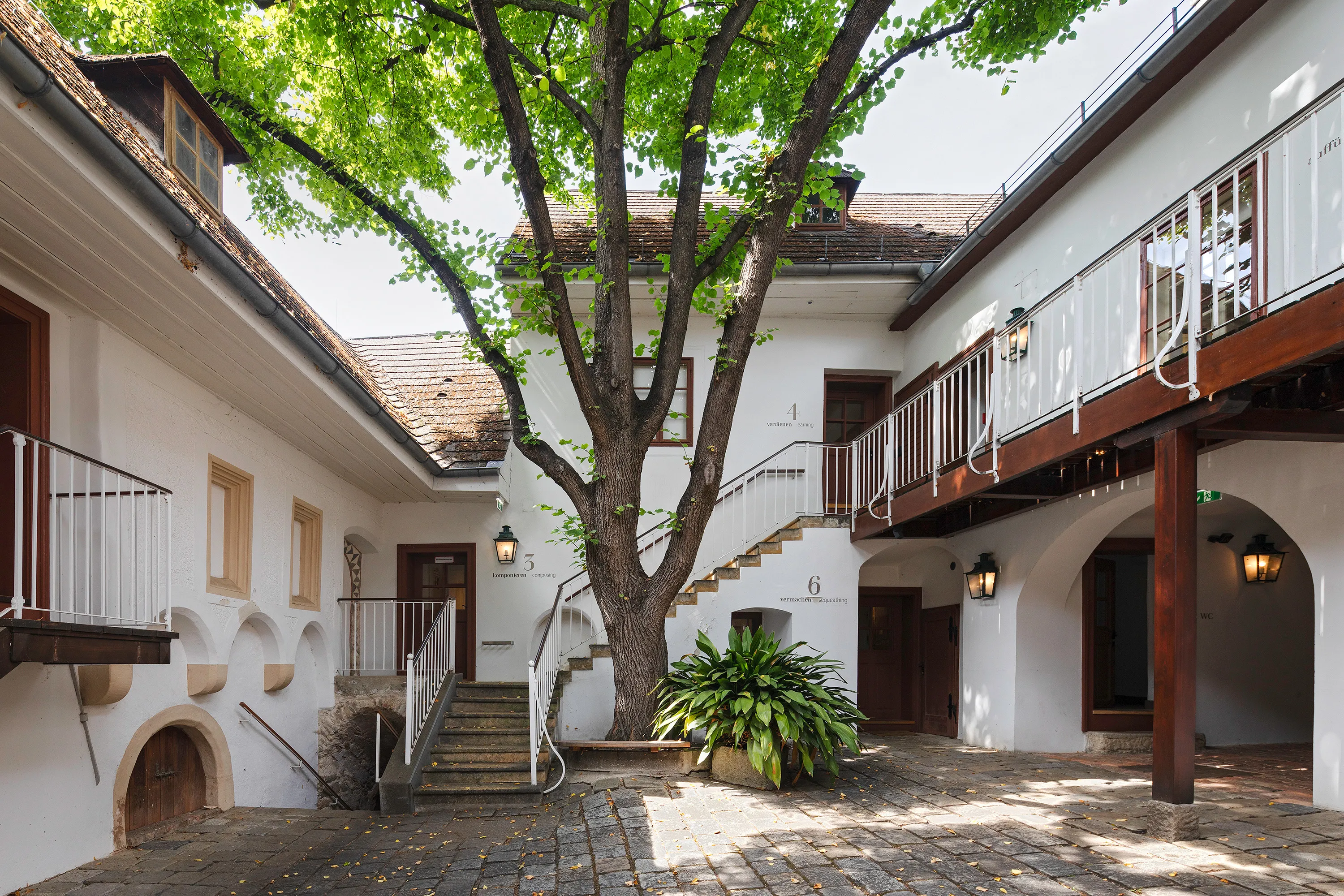
    The Pasqualati House is a block corner building in the classicist style. Its original features include the Pasqualati coat of arms, a rectangular portal, a driveway, a courtyard, a spiral staircase with wrought-iron railings, and cellar vaults.

  • Original construction elements remain

    Architecture

    Elements dating from the original construction of the Pasqualati House, including the roof truss and cellar vault, are still present, along with the spiral staircase made from Kaisersteinbruch stone.

  • Plaque commemorates Beethoven

    Milestone

    A plaque has been installed on the Pasqualati House to commemorate Ludwig van Beethoven's significant association with the building, highlighting its historical and cultural importance.

  • Beethoven memorial established

    1997Collection

    An apartment on the 4th floor of the Pasqualati House hosts a memorial dedicated to Beethoven, featuring his portrait, items from his possessions, facsimiles, and audio stations with his music.

  • Belongs to the Vienna Museum

    Ownership

    The Beethoven memorial at the Pasqualati House is owned by the Vienna Museum, indicating its institutional affiliation and management.

Beethoven Pasqualatihaus: Your Questions, Answered

Considering a visit to Beethoven Pasqualatihaus? Perhaps you're curious if your 14-year-old can explore unaccompanied, or if a unique museum basket is available for family discovery. Our FAQs answer these and other practical questions, ensuring your time at this significant Vienna landmark is perfectly composed.

What should I do if I lose something at Beethoven Pasqualatihaus?

If you lose an item at Beethoven Pasqualatihaus, please email [email protected]. Found objects are regularly transferred to the Central Lost Property Service of the City of Vienna.

Can I bring my assistance dog to Beethoven Pasqualatihaus?

Yes, assistance dogs are permitted in all Wien Museum locations, with the sole exception of the Hermesvilla. Beethoven Pasqualatihaus falls under this general policy.

Can visitors use baby strollers inside Beethoven Pasqualatihaus?

Baby strollers are generally permitted in the exhibition areas of Beethoven Pasqualatihaus if there is sufficient space. However, please note that not all areas of Wien Museum locations can be visited without using stairs, and staff at the ticket office can provide specific information.

Am I allowed to take photos inside Beethoven Pasqualatihaus?

Photography and film footage are allowed for private use in the permanent exhibition, provided no tripod, selfie stick, or flash is used. Please do not photograph objects marked with a crossed-out camera symbol.

Planning Your Visit to Beethoven Pasqualatihaus

Visitors to the Beethoven Pasqualatihaus can utilize complimentary audio guides and cloakroom services to enhance their experience. Photography and videography are permitted for private use, though flashes, tripods, and selfie sticks are prohibited. Entry is free for visitors under 19 years old, and admission is also complimentary on the first Sunday of each month. Reduced admission rates are available for various eligible groups, including seniors, students, and Vienna City Card holders.

Who Might Enjoy Visiting Beethoven Pasqualatihaus

The Beethoven Pasqualatihaus in Vienna is well-suited for visitors with an interest in classical music, history, and local heritage. Individuals, couples, and students keen to explore the life and creative period of Ludwig van Beethoven will find the preserved residence engaging. The experience focuses on historical immersion, offering a glimpse into the composer's former home and a quiet appreciation of his legacy in Vienna.

Beethoven Pasqualatihaus Photo Gallery

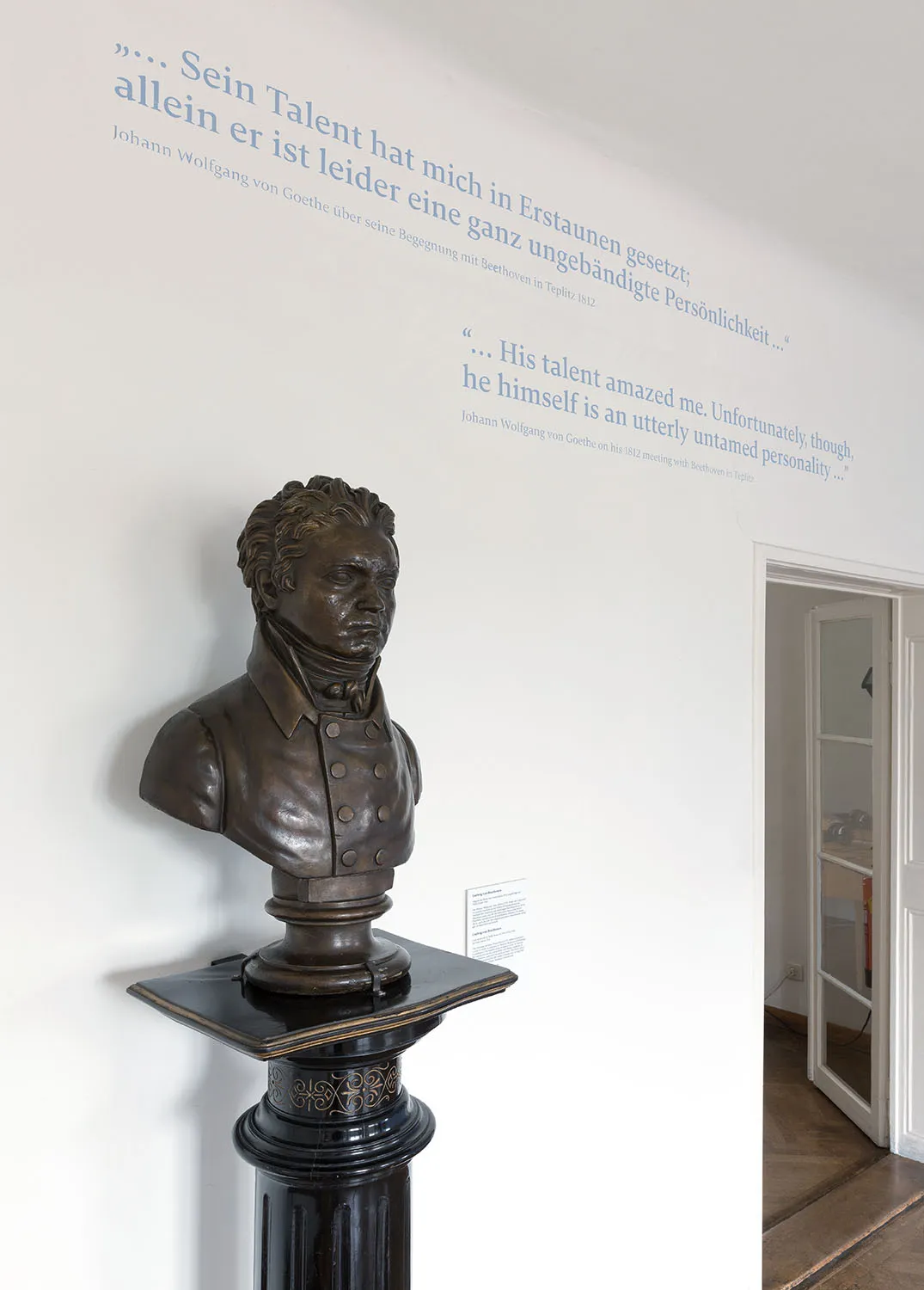
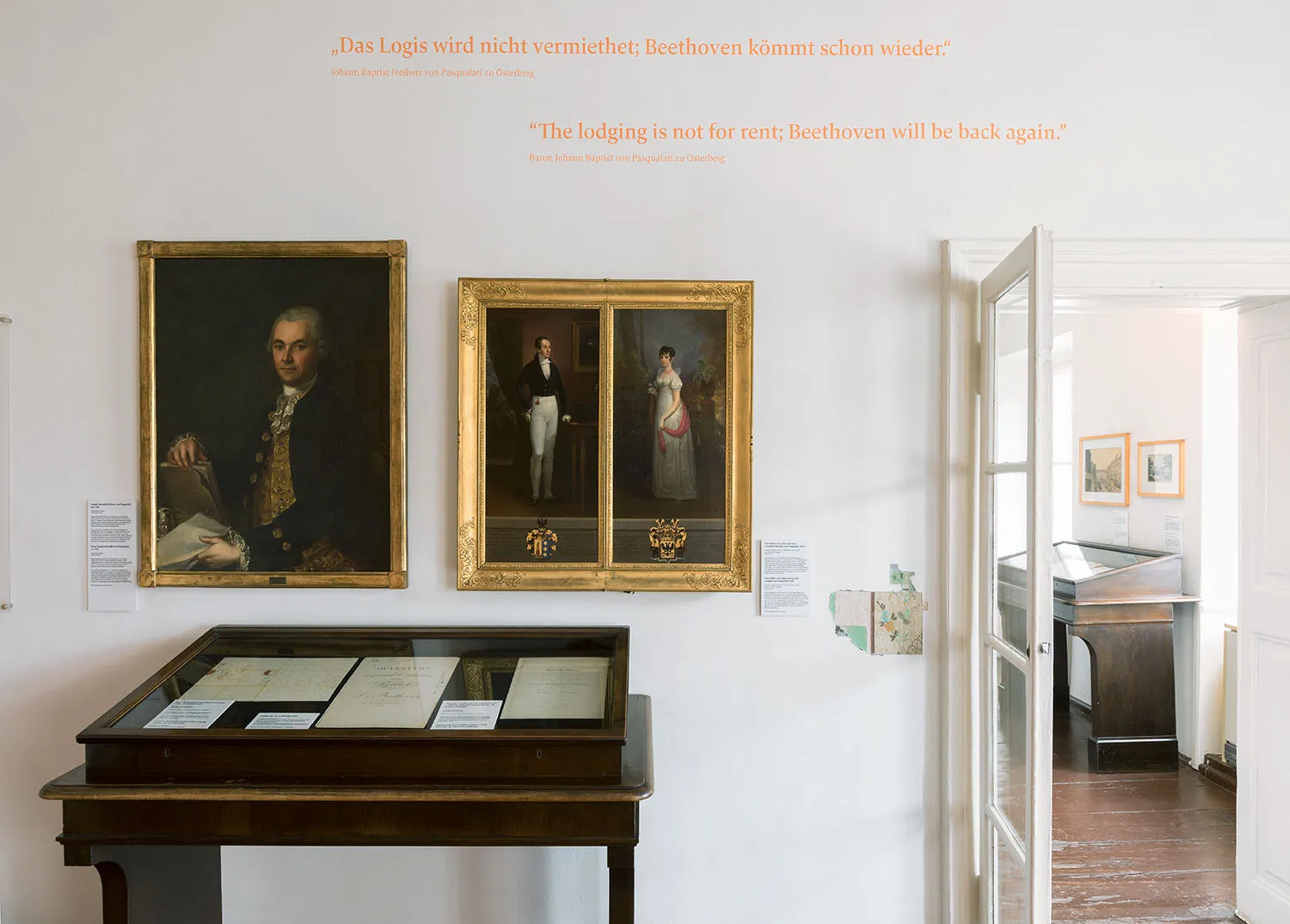
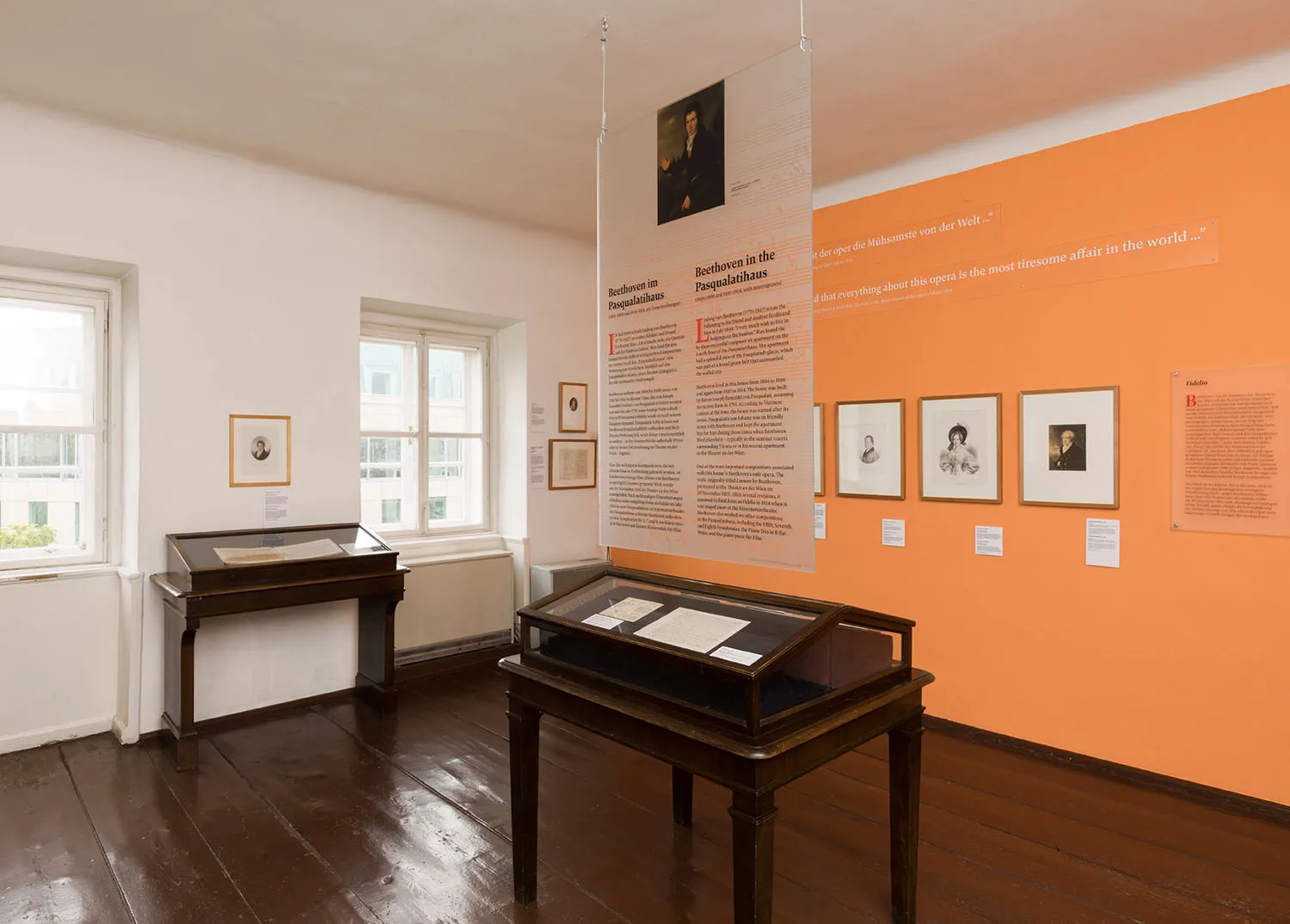
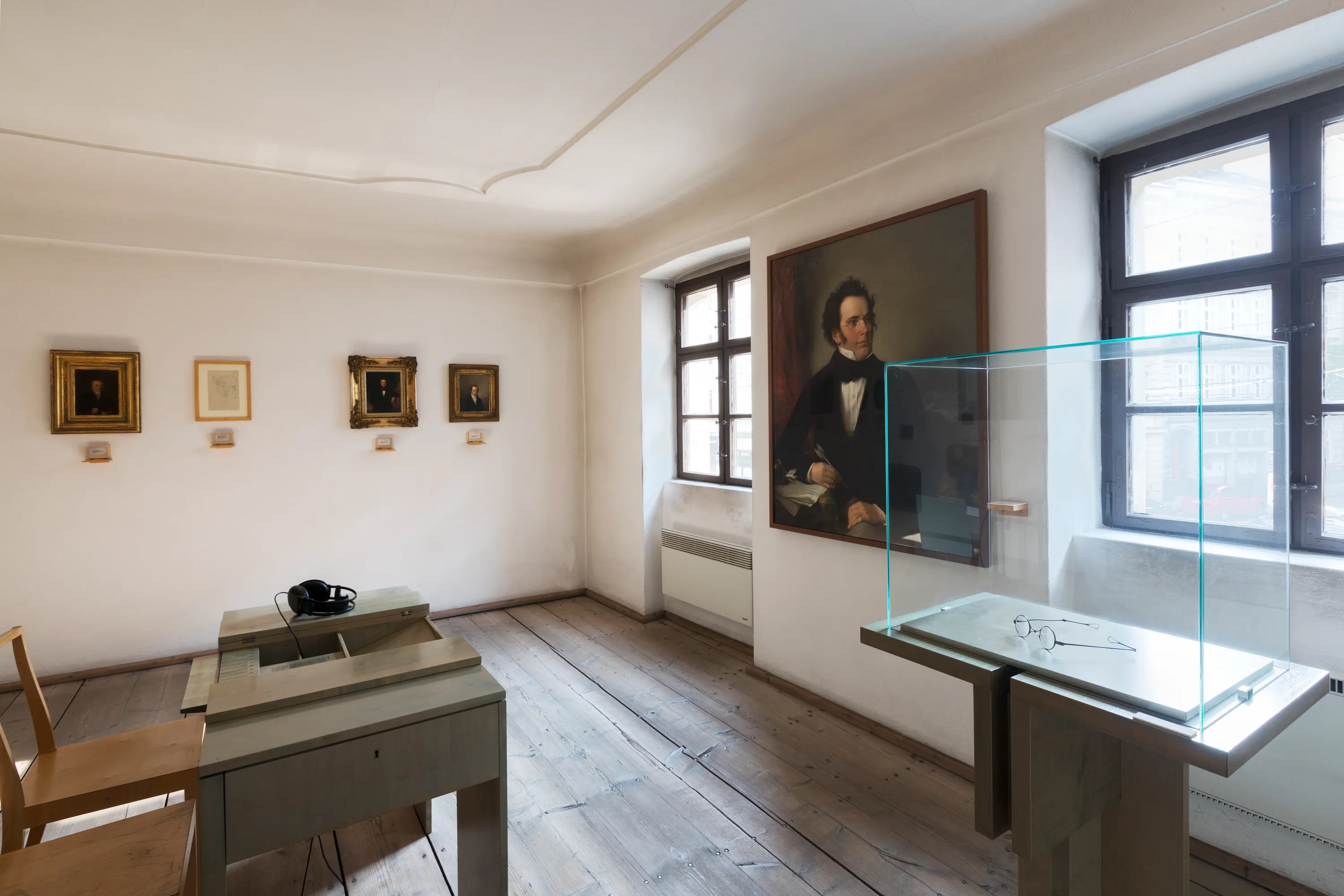
Discover a visual journey through the Beethoven Pasqualatihaus, offering glimpses of Ludwig van Beethoven's former residence in Vienna. The gallery reveals the historic building's elegant exterior, alongside evocative interior spaces with period furnishings like grand pianos and busts. You'll also see exhibition displays featuring manuscripts and personal artifacts, reflecting the composer's life and creative period.
A wooden grand piano in a room with wooden floors and two windows, viewed through a doorway with glass panels.
Courtyard with a large tree, stone steps, and white buildings with wooden balconies
light gray building with white window frames and a red and white flag above the entrance
White historic building with multiple windows and a flag near the entrance under a blue sky
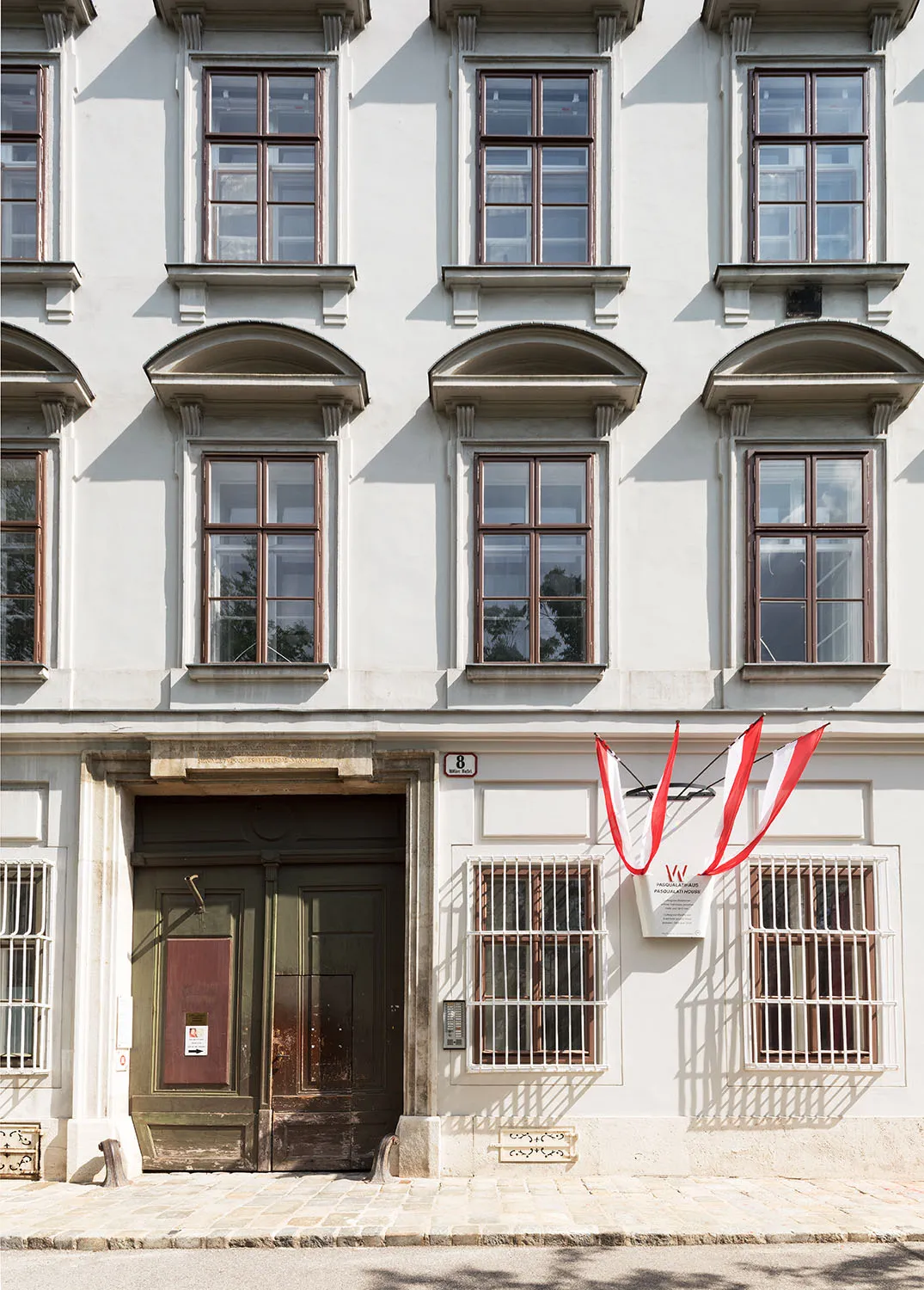
A light-colored building facade with arched windows, a green entrance door, and a red and white banner with a 'W' logo
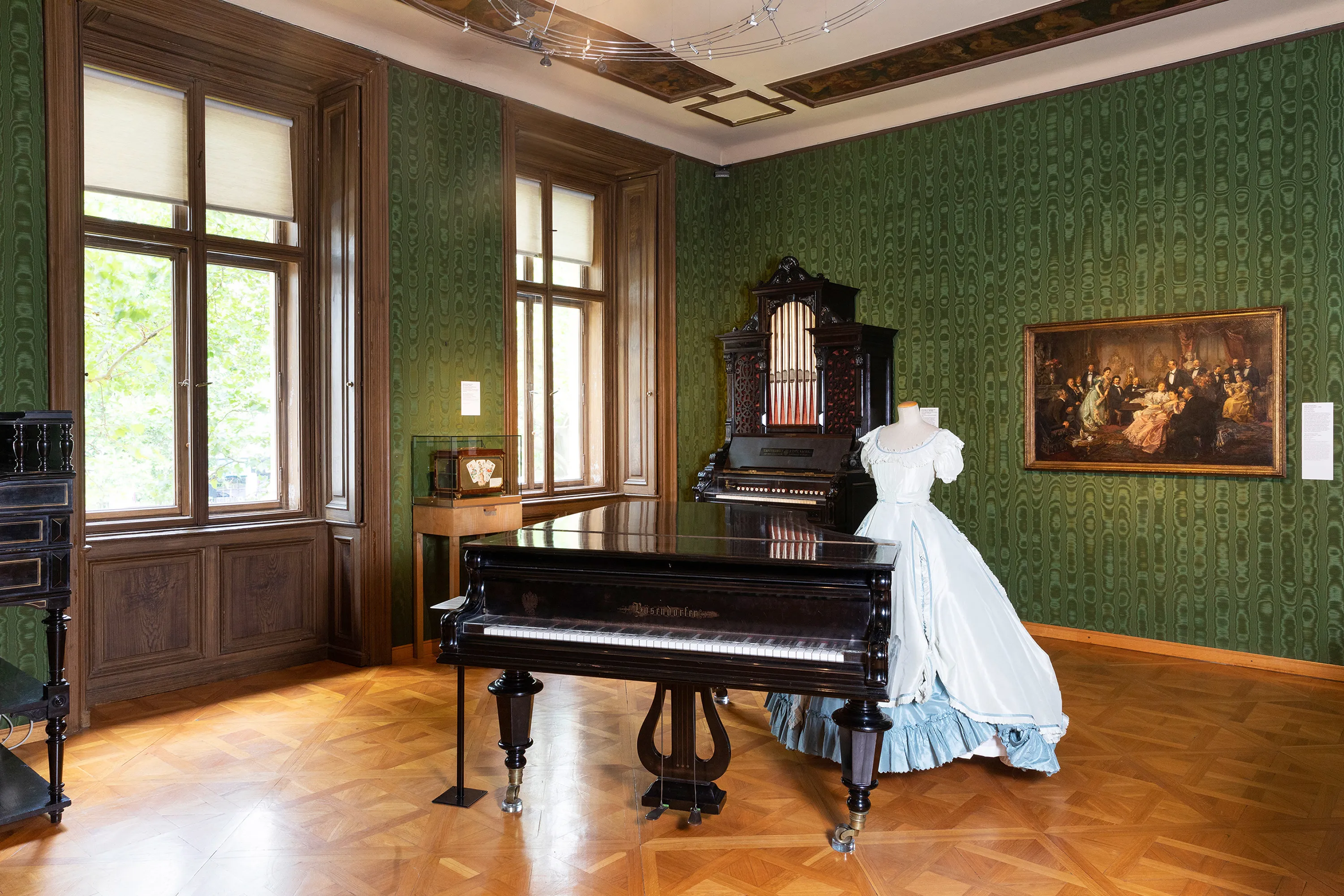
A grand piano in a room with green wallpaper, wooden floors, and a mannequin in a white dress.
Bronze bust of Beethoven on a black pedestal with quotes on the wall
Interior of Beethoven Pasqualatihaus with two framed portraits on a white wall and a display case in the foreground
Interior of Beethoven Pasqualatihaus with wooden display cases, framed documents, and an orange wall with informational text.
Interior room with a portrait of Beethoven, framed artworks, and display cases on wooden floors
Vienna

Find Museums in Vienna: Discover Cultural Sites by Interest and Theme

Uncover Vienna's rich artistic legacy, history, and scientific collections.

Explore the depth of Vienna's cultural offerings and discover institutions by what truly interests you. Whether it's historical landmarks, fine art, or specialized topics, easily locate your next memorable experience.

Explore Beethoven Pasqualatihaus with Vienna
Guides, visitor info, and museum details in Vienna
Find everything about Beethoven Pasqualatihaus in one place, including tickets, opening hours, current exhibitions, location details, visitor tips, nearby attractions, and the latest museum updates. Use these pages to plan your visit, discover what to see, and get practical information before you go.
Discover nearby museums similar to Beethoven Pasqualatihaus in Vienna and plan your next cultural stop with confidence.
These recommendations prioritize real proximity to Beethoven Pasqualatihaus and help you find high-fit alternatives faster across Vienna.
Use this curated list to compare museums near Beethoven Pasqualatihaus without opening multiple search pages. Each card gives you fast visual context and direct access to key details so you can decide quickly. If you are building a full day in Vienna, this section helps you chain nearby visits with less planning effort.