Vienna
Viennese Neo-Gothic Heritage

Votive Church, Vienna: Neo-Gothic Architecture & Historic Significance

Delve into the rich history and dramatic design of this Viennese landmark.

ArchitectureHistoryArt

The Votive Church is a striking neo-Gothic basilica on Vienna's Ringstrasse, built in gratitude for Emperor Franz Joseph's survival. Visitors can admire its towering architecture, discover historic masterpieces in its museum, and experience the "Light of Creation" show.

This significant neo-Gothic basilica, built in gratitude for Emperor Franz Joseph's escape from assassination, stands prominently on Vienna's Ringstrasse and houses a museum.
Votive Church
Votive Church: Neo-Gothic Basilica and Museum

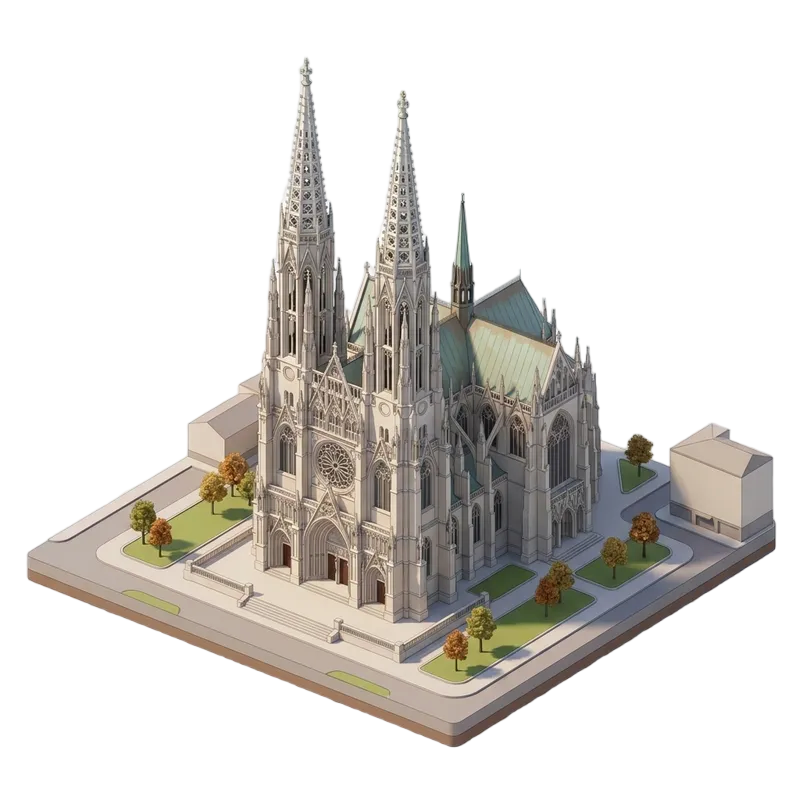
The Votive Church in Vienna is a prominent neo-Gothic basilica, originally conceived in 1854 as a token of gratitude after an assassination attempt on Emperor Franz Joseph. Consecrated in 1879, this architectural landmark on the Ringstrasse exemplifies European Historicism with its distinctive twin towers and functions as a cosmopolitan place of worship. Visitors can also explore a museum housed in its elevated oratory, showcasing historic masterpieces like the 15th-century 'Antwerp Altar'.
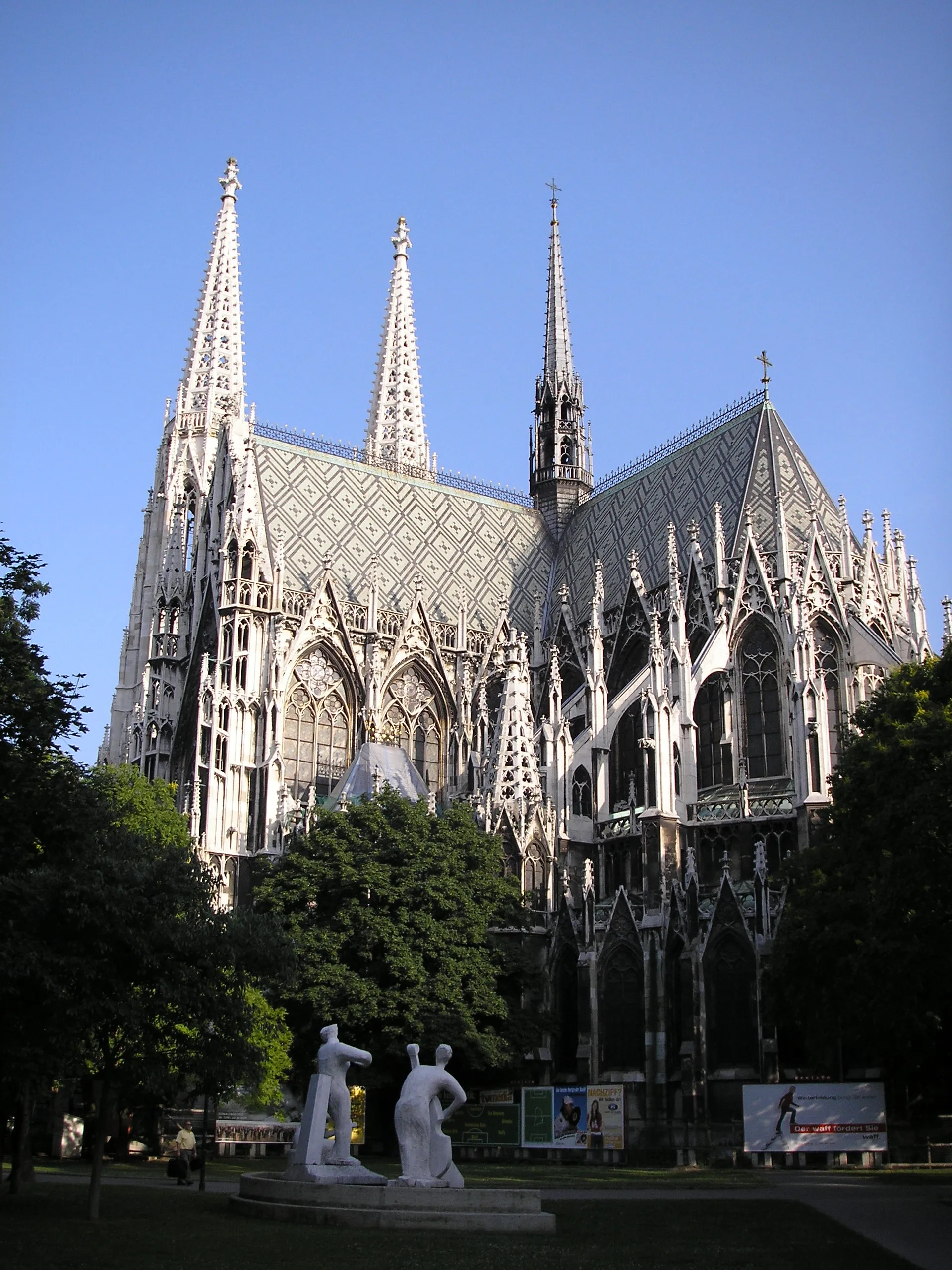
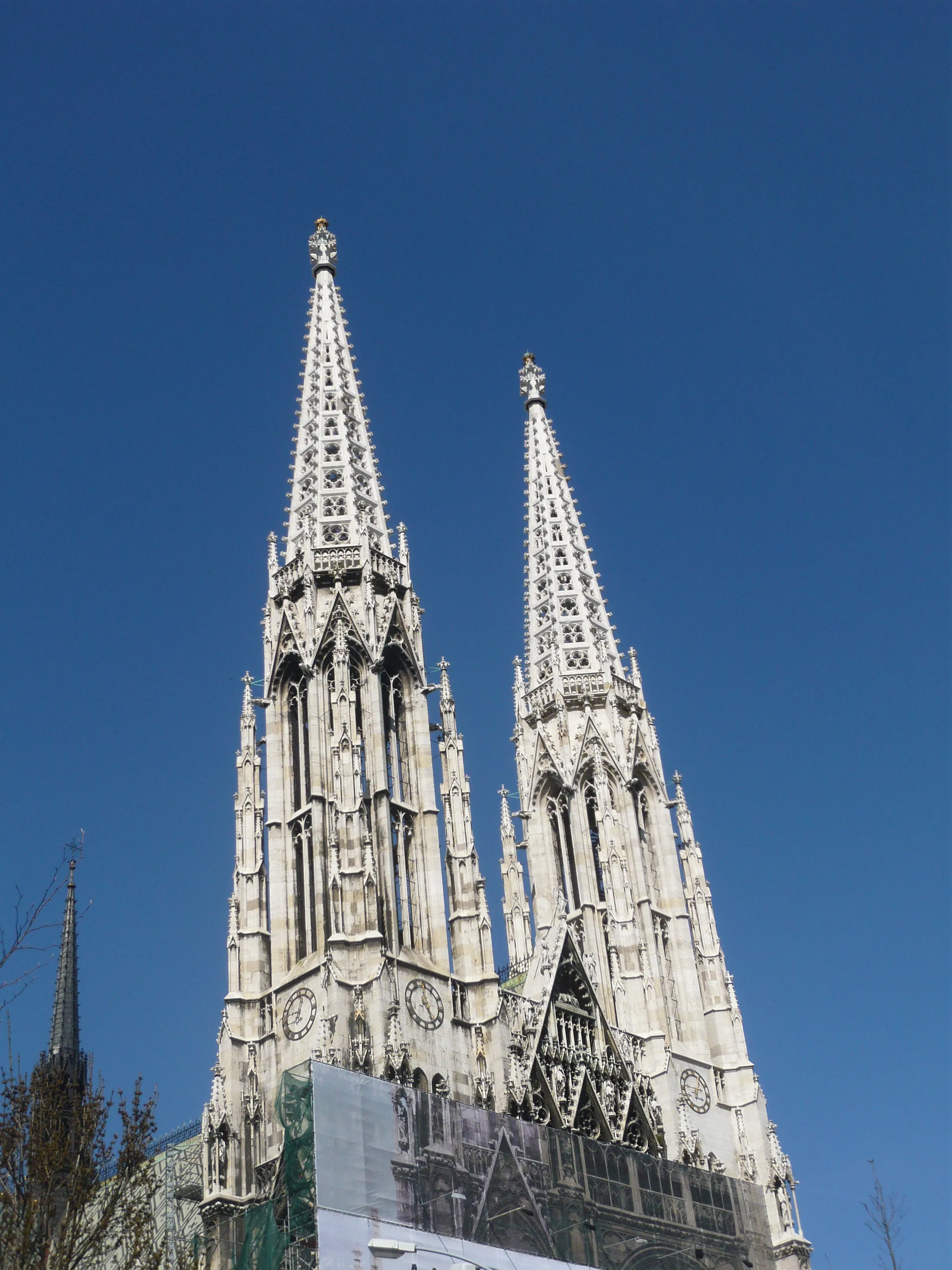
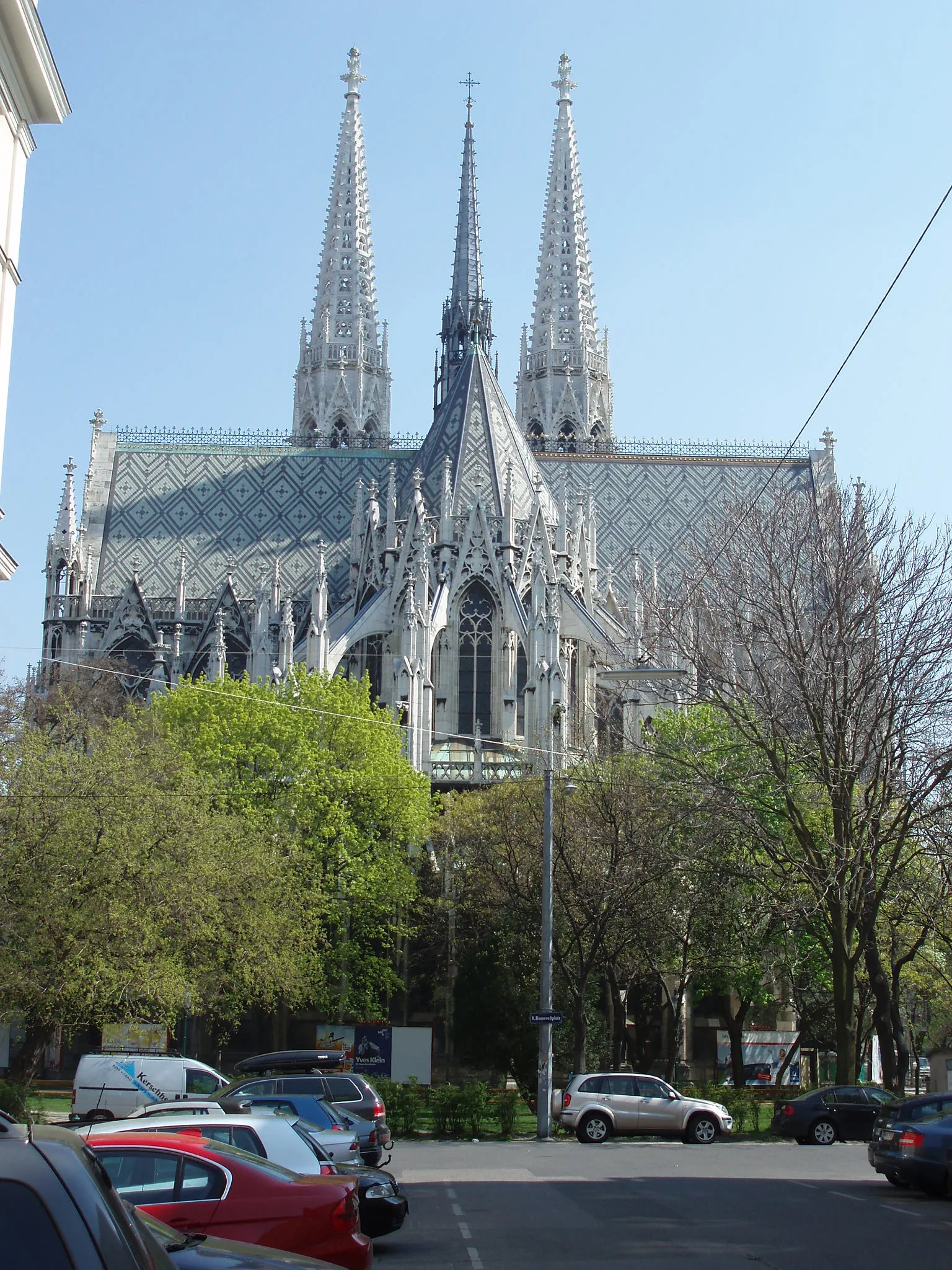
Neo-Gothic church with twin spires and detailed stonework under a clear blue sky, surrounded by trees and a white sculpture in the foreground
Votive Church opening hours in Vienna

Check today’s opening status, weekly schedule, and special date changes for Votive Church. Use these opening hours to plan your arrival and avoid closed times in Vienna.

Monday
Tuesday
Wednesday
Thursday
Friday
Saturday
Sunday
-
10:00-16:00
10:00-16:00
10:00-16:00
10:00-16:00
11:00-19:00
09:00-13:00
Votive Church Admission

Admission to the Votive Church in Vienna is generally paid, with various ticket categories available for visitors. Options include tickets for unrestricted or restricted views, which can be affected by internal features like chandeliers. Reduced admission is offered to children aged 6 to 17, pupils, international students up to 25 years, and individuals with a disability rating of 50% or higher, requiring valid identification. Children under six years of age are not admitted to the Votive Church.

Category I (unrestricted view)
€27.00

without viewing restriction

Category I (reduced, unrestricted view)
€22.00

For children 6-17 years, pupils and international students up to 25 years, and individuals with a disability rating of 50% or higher without viewing restriction

Category II (restricted view)
€22.00

with restricted view, for example due to chandeliers in the middle of the church

Visitor amenities and accessibility

The Votive Church provides specific facilities to support visitor comfort and inclusion. Accessibility is available on a limited basis, with the main church interior reachable via a designated side entrance and ramp, although some areas such as the internal museum remain restricted. Additionally, the church offers limited linguistic support through services held in multiple languages.

Wheelchair accessible

Limited

Multi-language Holy Mass

Limited
Votive Church Location in Vienna

The Votive Church is situated on Rooseveltplatz in Vienna's Alsergrund neighborhood. This prominent neo-Gothic basilica stands near the historic Ringstrasse, making it a noticeable landmark in the city. Its central location offers convenient access for visitors exploring Vienna's cultural landscape.

© OpenStreetMap contributors

Rooseveltplatz

1090 Vienna

Alsergrund, AT

Planning Your Visit to Votive Church

A visit to the Votive Church in Vienna, including its "Light of Creation" show, typically lasts about 30 minutes. The "Light of Creation" show has specific viewing times, and the on-site museum requires a prior appointment for entry. While the main entrance has steps, an accessible side entrance is available, though the museum itself is not barrier-free due to a spiral staircase.

Planning Your Visit to Votive Church

Votive Church: Neo-Gothic Architecture and Historic Collections

The Votive Church in Vienna stands as a striking example of neo-Gothic architecture, conceived as a monument of gratitude for Emperor Franz Joseph's survival from an assassination attempt. Located prominently on Vienna's Ringstrasse, this significant basilica is distinguished by its imposing twin towers and intricate French cathedral design, making it a key example of European Historicism. Visitors can explore its grand interior, illuminated by 78 stained glass windows, and delve into its profound sense of history. The on-site museum, housed in the former court oratory, presents significant artworks, including the renowned 15th-century "Antwerp Altar," offering a deeper appreciation of the church's art and historical context. Additionally, the "Light of Creation" show provides a unique sensory experience.
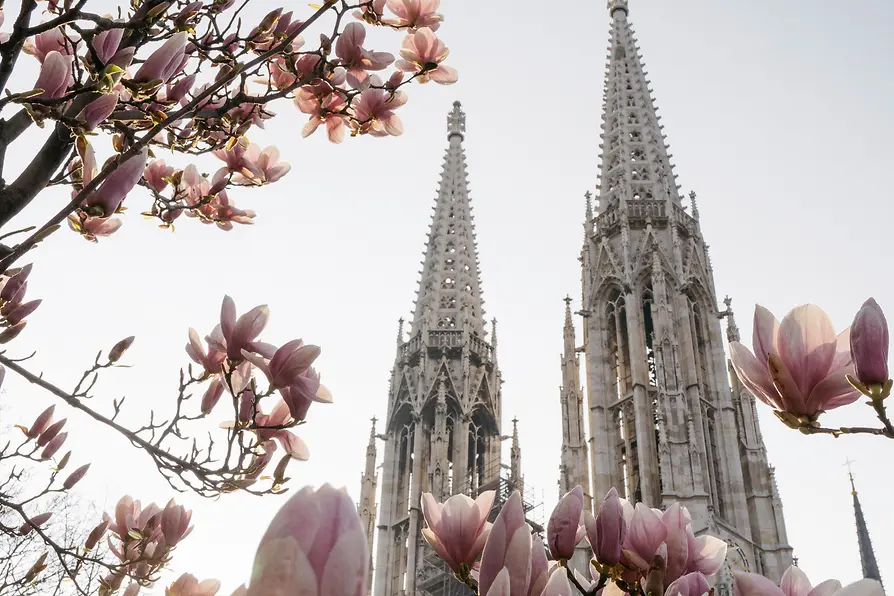
Twin spires of the Votive Church framed by pink magnolia blossoms

Votive Church: History and Significance

The Votive Church in Vienna originated as a **votive offering** following an assassination attempt on Emperor Franz Joseph in 1853, initiated by his brother Archduke Ferdinand Maximilian. Construction began in 1856, with Heinrich von Ferstel, then 26, designing the church in a distinctive neo-Gothic style inspired by French cathedrals. Dedicated in 1879, it became one of the first notable structures on the nascent Ringstraße boulevard. Over its history, the church sustained damage during World War II, leading to extensive renovations and the replacement of its original Emperor window, reflecting evolving societal values. This grand monument continues to stand as a significant architectural landmark.

  • Church founded after assassination attempt on Emperor Franz Joseph

    Founding

    Following an assassination attempt on Emperor Franz Joseph in 1853, his brother Archduke Ferdinand Maximilian initiated a campaign for donations to build a church as a votive offering for the Emperor's survival and as a monument to the people's devotion to the Imperial House.

  • Construction began in 1856

    1856Construction

    The construction of the Votivkirche began in 1856, following an architectural competition where Heinrich von Ferstel's neo-Gothic design was selected.

  • Neo-Gothic design by Heinrich von Ferstel

    Architecture

    Architect Heinrich von Ferstel, aged 26 at the time, designed the church in the neo-Gothic style, drawing inspiration from French Gothic cathedrals but incorporating an individual design concept. This unique approach distinguishes it from medieval cathedrals built over generations.

  • Church dedicated in 1879

    1879Opening

    The Votivkirche was dedicated on April 24, 1879, coinciding with the silver anniversary of Emperor Franz Joseph and Empress Elisabeth, twenty-six years after construction began.

  • First building on the Ringstraße

    Overview

    The Votivkirche was one of the initial structures erected on the Ringstraße boulevard. Due to the presence of city walls at the time, it was initially intended as a garrison church for soldiers stationed in Vienna after the 1848 Revolution.

  • Extensive renovations after World War II damage

    Renovation

    The church sustained significant damage during World War II and subsequently underwent extensive renovations to restore it.

  • Design similarity to Stephansdom

    Heritage status

    The Votivkirche's architectural style, particularly its patterned roof tiling, leads to frequent confusion with the Stephansdom, despite being over 700 years younger. This similarity, along with constant maintenance due to its sandstone construction, highlights its historical and architectural significance.

  • Design inspiration for other churches

    Cultural significance

    The architectural design of the Votivkirche has served as a model for other churches, including the Gedächtniskirche in Speyer, Germany, the Cathedral of Saint Helena in Montana, USA, and the Sint-Petrus-en-Pauluskerk in Ostend, Belgium.

  • Replacement Emperor window reflects changing times

    Architecture

    The original Emperor window, depicting Franz Joseph's deliverance, was destroyed in WWII. The replacement window, restored in 1964, was modified to be less monarchical and more religious, reflecting evolving societal values.

  • Main altar's ciborium inspired by Italian Gothic examples

    Architecture

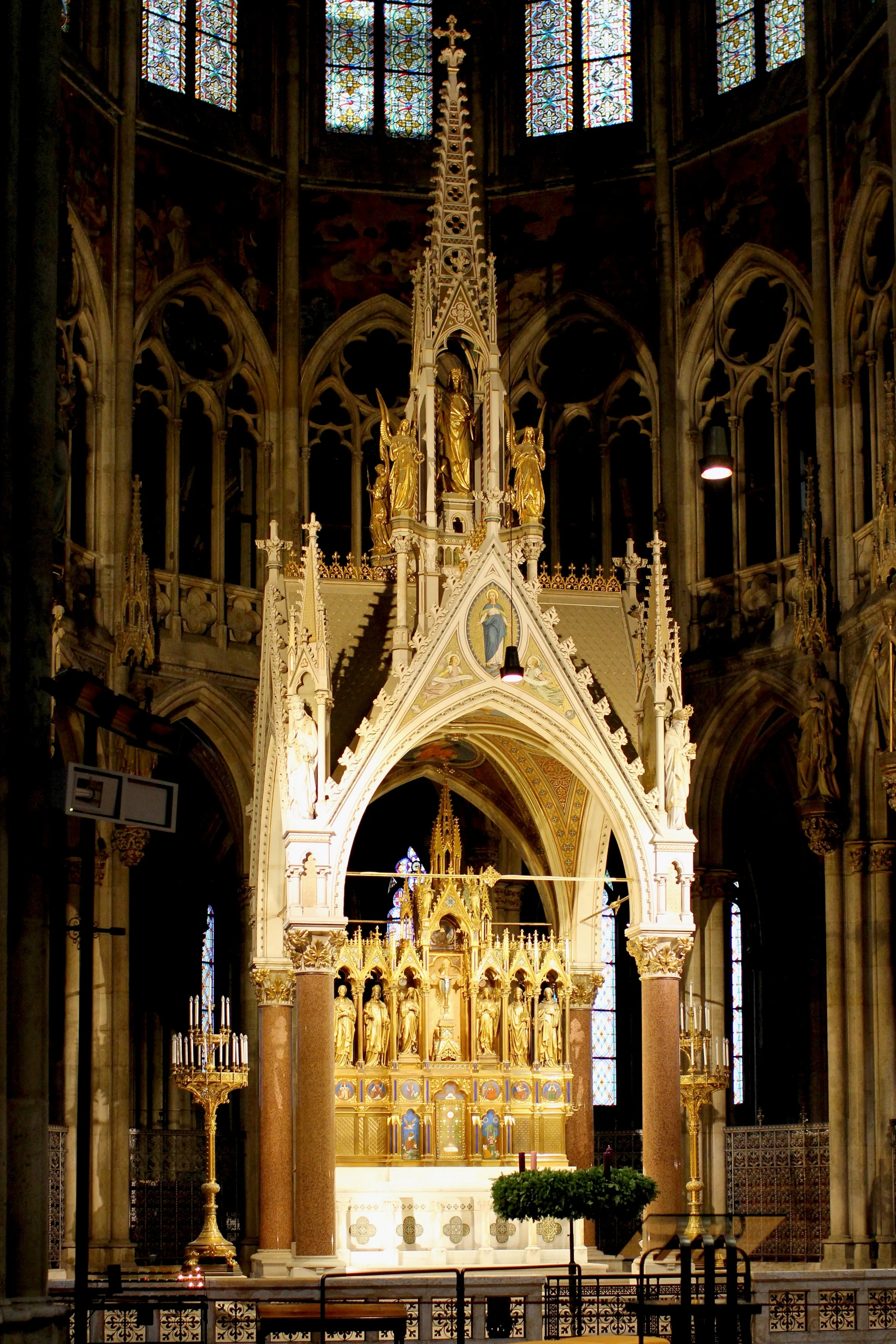
    The main altar features an elaborate ciborium inspired by examples found in Italian Gothic churches like the Basilica of St. John Lateran and the Basilica of Saint Paul Outside the Walls in Rome.

  • Architect Heinrich Ferstel portrayed under the pulpit

    Notable person

    The architect of the Votivkirche, Heinrich Ferstel, is depicted under the hexagonal Neo-Gothic pulpit by sculptor Viktor Tilgner, a practice similar to how the sculptor of the Stephansdom is portrayed.

  • Antwerp altar moved to museum

    Collection

    A famous polychrome Antwerp altar from the Late-Gothic period (circa 1530), formerly in the Rosary chapel, was relocated to a museum in 1986.

  • Nicholas, Graf von Salm sarcophagus in baptistry

    Collection

    The Renaissance sarcophagus of Nicholas, Graf von Salm, a defender of Vienna in 1529, is located in the baptistry and was set up as a token of gratitude by Emperor Ferdinand I.

Votive Church: Your FAQs, Unlocked

Curious about the Votive Church in Vienna? Our FAQs cover everything from general admission to why tiny tots under six might need to find alternate arrangements, and if it's open on Mondays (spoiler: it's not!). Find all your essential visitor information here.

How do I contact the Votive Church by phone?

You can reach the Votive Church for general enquiries by phone at +43 1 406 11 92.

Does the Votive Church have an official website?

Yes, the official website for the Votive Church is https://www.votivkirche.at/.

What is the Votive Church's email address?

You can email the Votive Church for general enquiries at [email protected].

Are reservations or timed entry required for the Votive Church?

Yes, visiting the Votive Church requires timed entry and reservations are recommended. The museum located within the church also requires a prior appointment.

Practical Visitor Tips for Votive Church

To plan your visit to the Votive Church, an estimated duration of about 30 minutes is recommended. Timed entry and reservations are advised for a smoother experience. The main church building is accessible via a side entrance with a ramp, as the primary entrance has steps. Please note that the museum housed within the church requires a prior appointment and is not barrier-free due to a spiral staircase.

Who the Votive Church Suits

The Votive Church in Vienna particularly appeals to visitors interested in impressive Neo-Gothic architecture, European history, and religious art. Those exploring significant historical sites and art collections will appreciate its intricate design, stained glass windows, and the museum housing historic masterpieces like the Antwerp Altar. While the main church building is accessible via a side entrance and ramp, guests with mobility needs should note that the on-site museum is not barrier-free due to a spiral staircase. Planning ahead is advisable for your visit, as timed entry is recommended and the museum requires a prior appointment.

Votive Church Photos

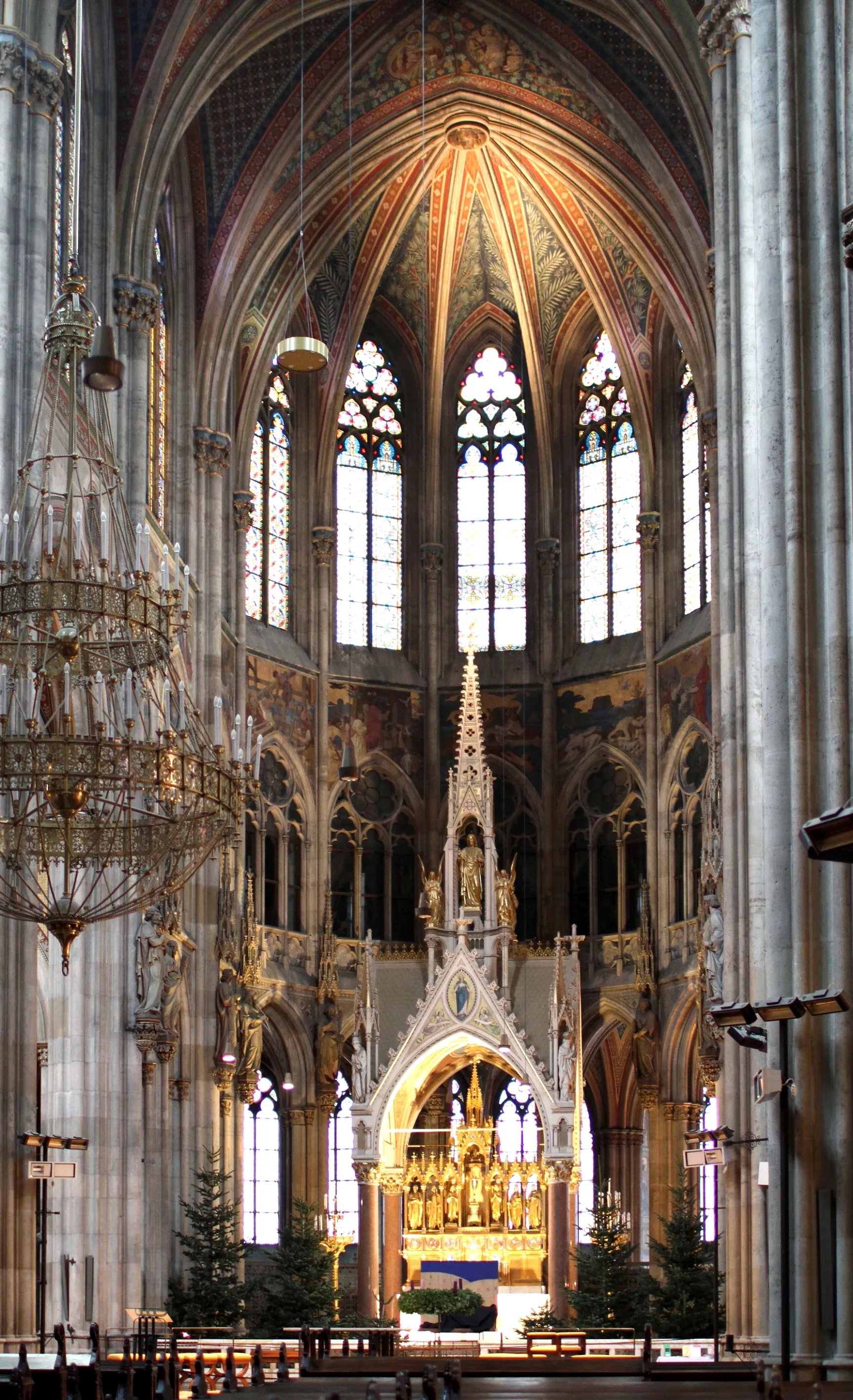
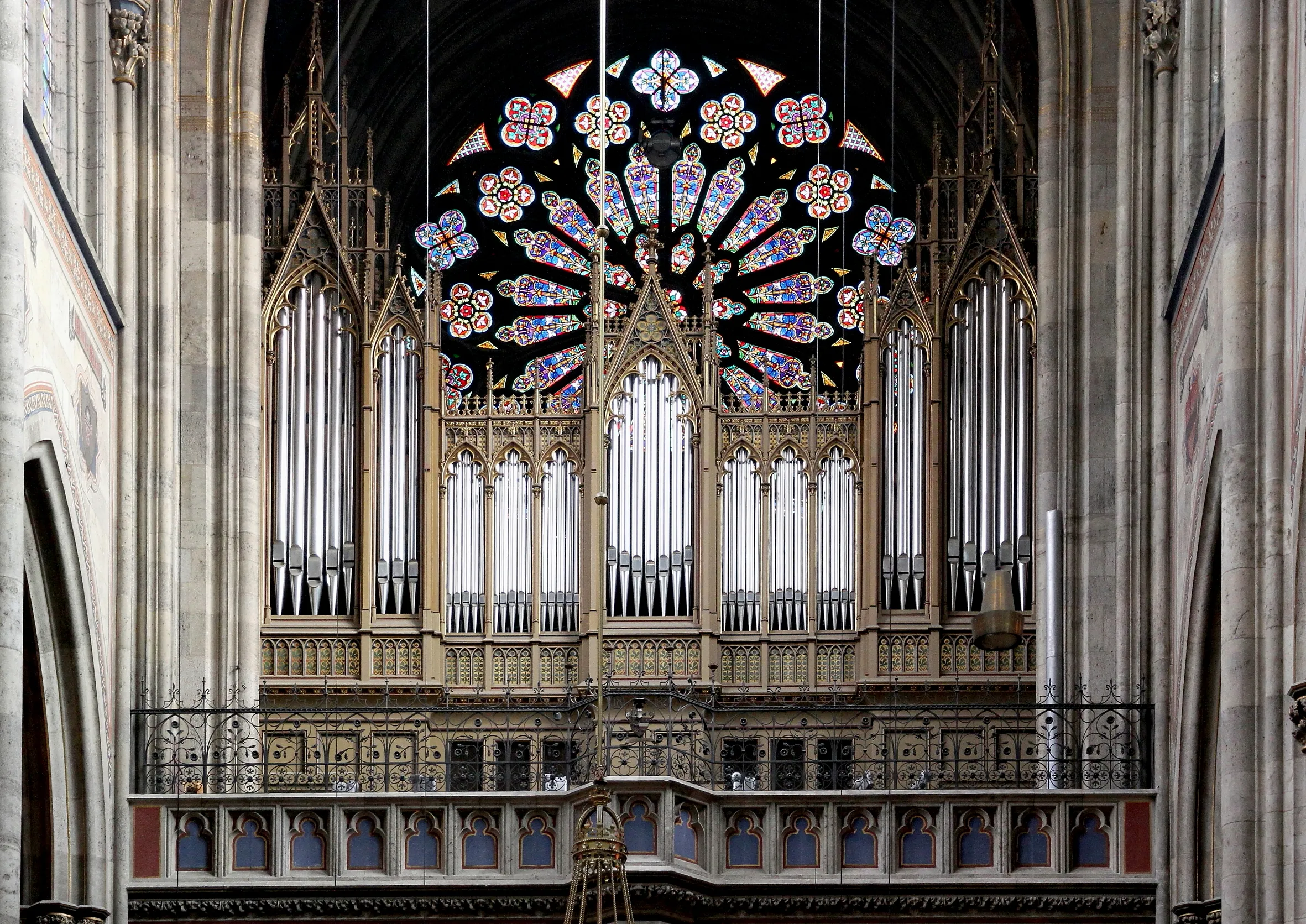
Explore the visual grandeur of the Votive Church in Vienna through these images. You'll see its magnificent neo-Gothic exterior, featuring iconic twin spires and intricate stonework, often set against a clear sky. Inside, discover high vaulted ceilings, vibrant stained glass windows, and the ornate high altar, offering a glimpse into its rich architectural details and serene atmosphere.
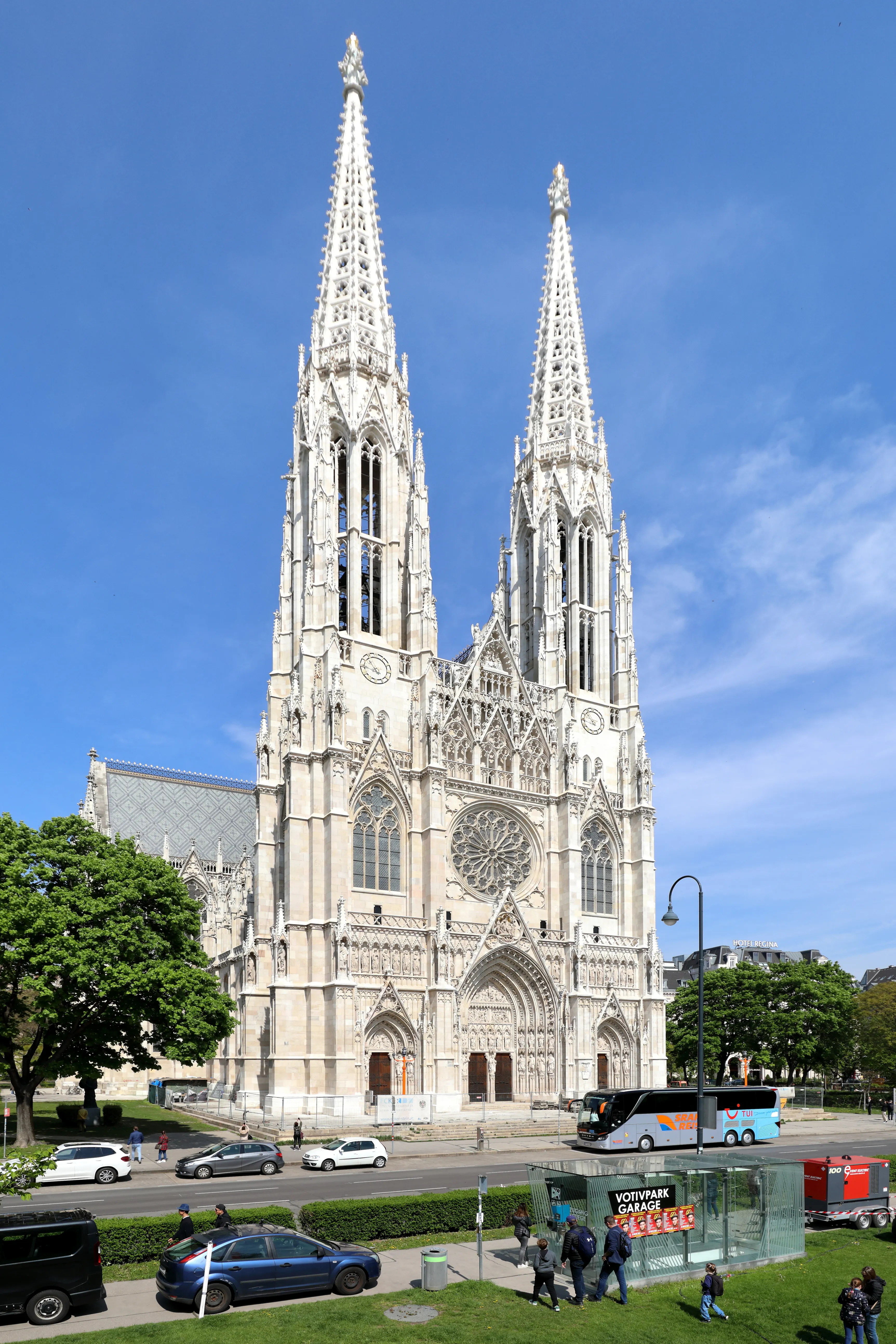

Neo-Gothic church with twin spires and a large rose window under a blue sky
White text logo reading 'LIGHT OF CREATION VOTIVKIRCHE' on a black background
Twin spires of the Votive Church against a clear blue sky
Neo-Gothic church with twin spires and detailed stonework under a clear blue sky, surrounded by trees and a white sculpture in the foreground
Interior of the Votive Church with high arched ceilings, stained glass windows, and a large chandelier.
A large pipe organ beneath a colorful stained glass rose window inside a gothic church.
Interior of the Votive Church showing a grand high altar with golden statues, pointed arches, and stained glass windows.
Neo-Gothic church with twin spires and ornate stonework, surrounded by trees and parked cars
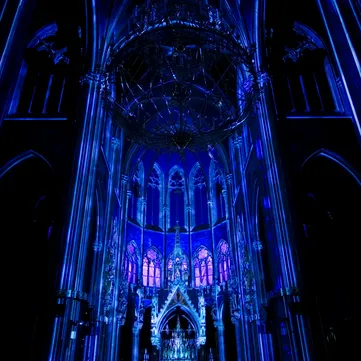
Interior of a neo-Gothic church with blue lighting, tall columns, and stained glass windows
Twin spires of the Votive Church framed by pink magnolia blossoms
Vienna

Find Museums in Vienna: Discover Cultural Sites by Interest and Theme

Uncover Vienna's rich artistic legacy, history, and scientific collections.

Explore the depth of Vienna's cultural offerings and discover institutions by what truly interests you. Whether it's historical landmarks, fine art, or specialized topics, easily locate your next memorable experience.

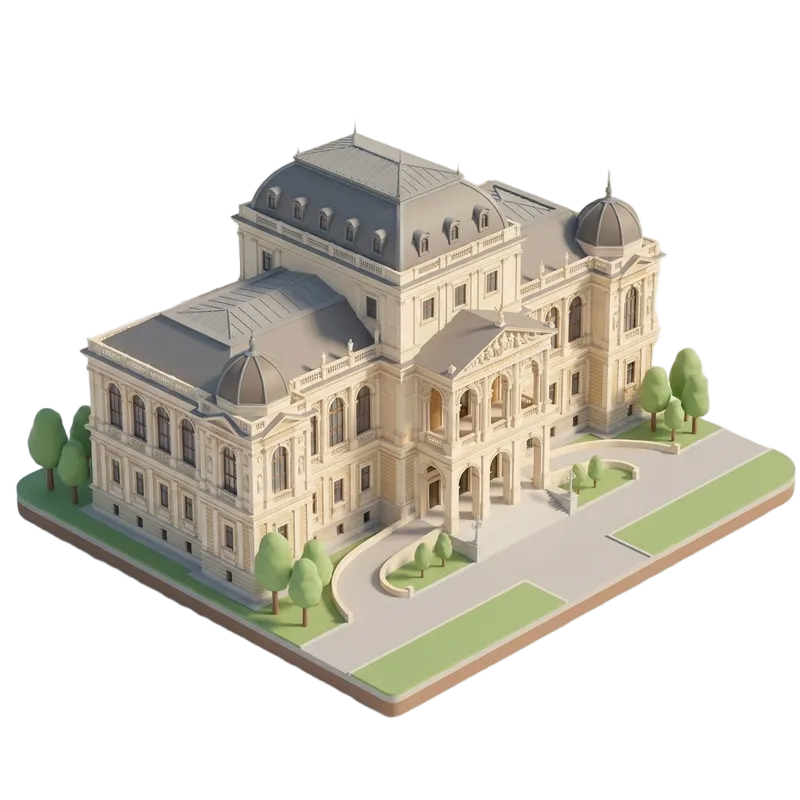
Explore Votive Church with Vienna
Guides, visitor info, and museum details in Vienna
Find everything about Votive Church in one place, including tickets, opening hours, current exhibitions, location details, visitor tips, nearby attractions, and the latest museum updates. Use these pages to plan your visit, discover what to see, and get practical information before you go.
Discover nearby museums similar to Votive Church in Vienna and plan your next cultural stop with confidence.
These recommendations prioritize real proximity to Votive Church and help you find high-fit alternatives faster across Vienna.
Use this curated list to compare museums near Votive Church without opening multiple search pages. Each card gives you fast visual context and direct access to key details so you can decide quickly. If you are building a full day in Vienna, this section helps you chain nearby visits with less planning effort.