Vienna
Vienna's academic heritage

The University of Vienna: History, Architecture, and Tours

Discover a landmark of Viennese intellectual life with arcaded courtyards.

ArchitectureHistoryArt

Explore the main building of the University of Vienna, inaugurated in 1884 by Emperor Franz Joseph I. Guided tours reveal its significant architectural features, including the Arcade Court and the Main Ceremonial Chamber with Klimt mural copies. Discover the history of this esteemed institution through its impressive interiors.

Discover the historic main building of the University of Vienna, an architectural landmark on the Ringstrasse, offering guided tours of its grand halls and notable courtyards.
University of Vienna
About the University of Vienna

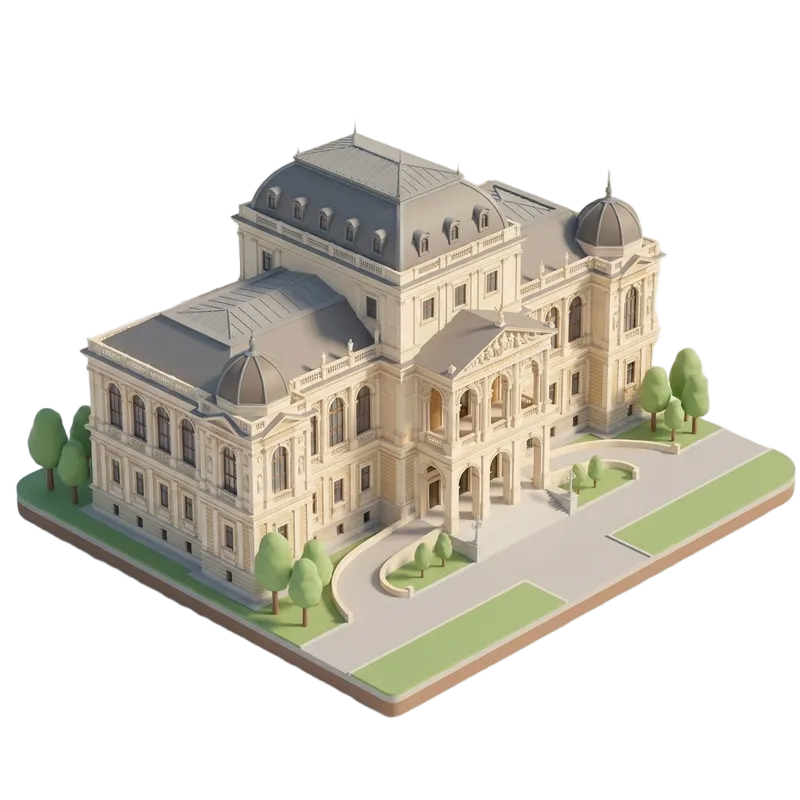
The University of Vienna's historic main building, an architectural landmark on Vienna's Ringstrasse, offers a journey through centuries of academic history. As the oldest university in the German-speaking cultural area, its grand design features unique spaces. Guided tours highlight the distinctive Arcade Court and the Main Ceremonial Chamber, noted for its ceiling adorned with copies of Gustav Klimt's mural paintings, providing insight into its legacy and artistic importance.
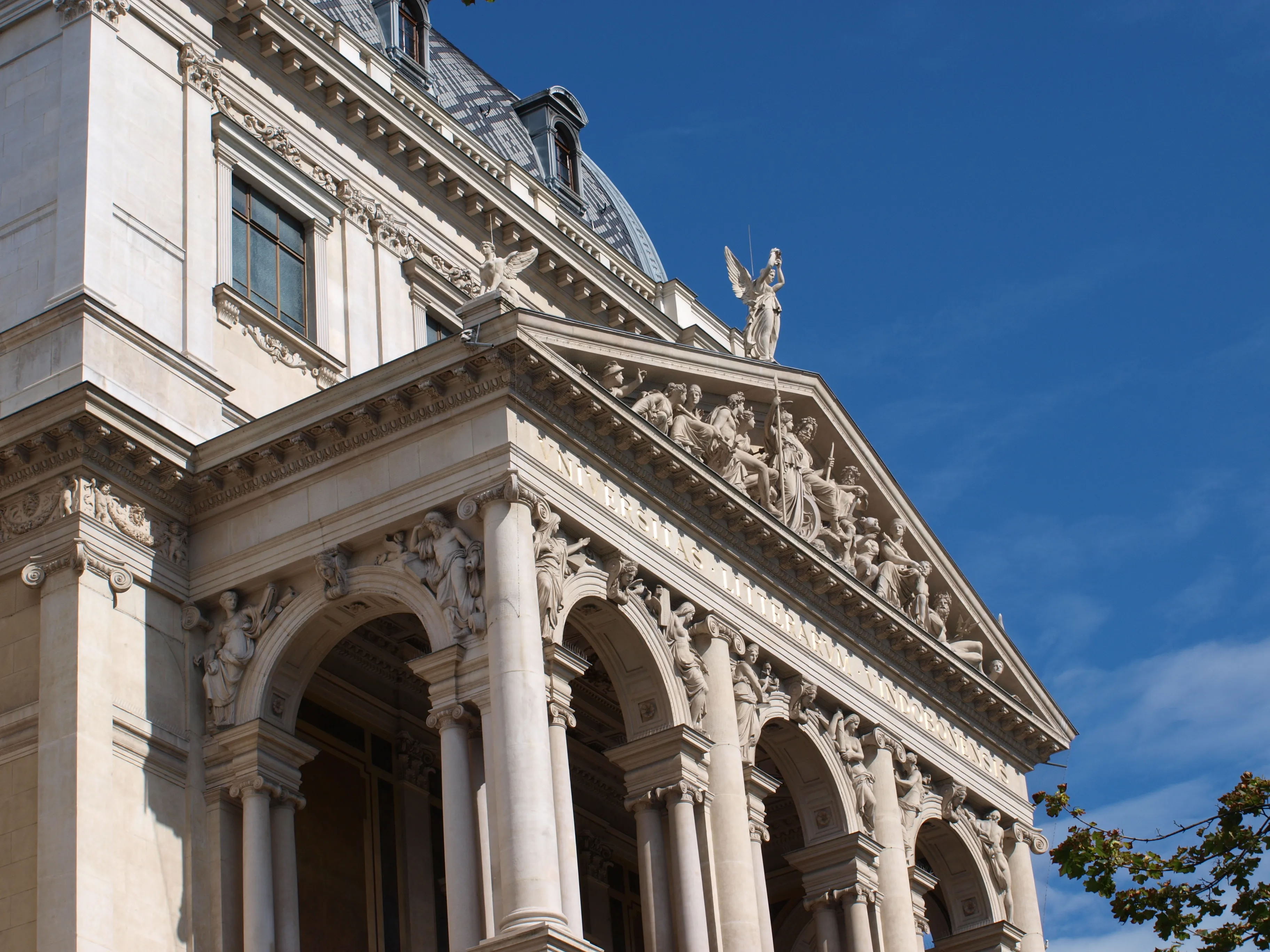
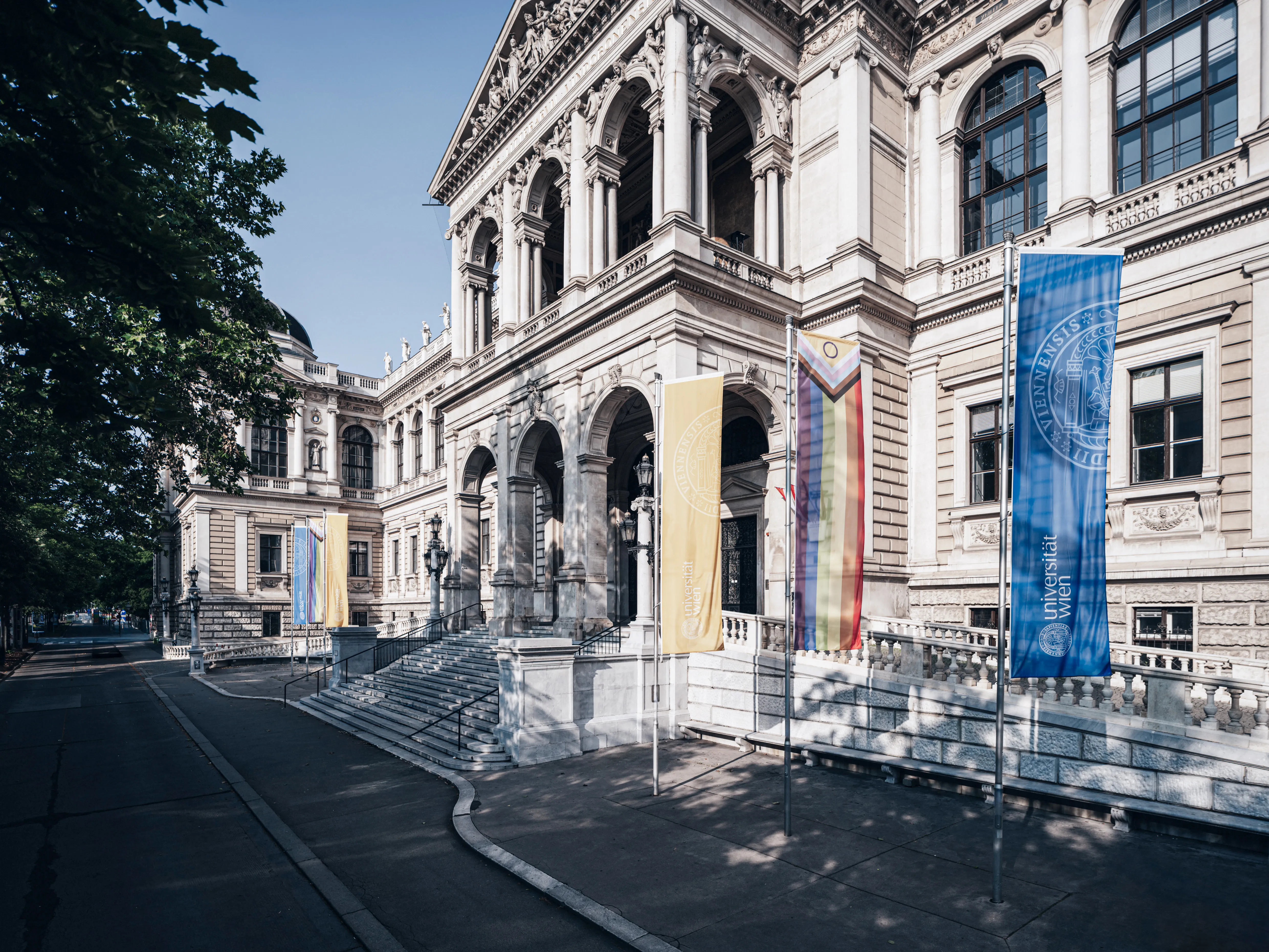
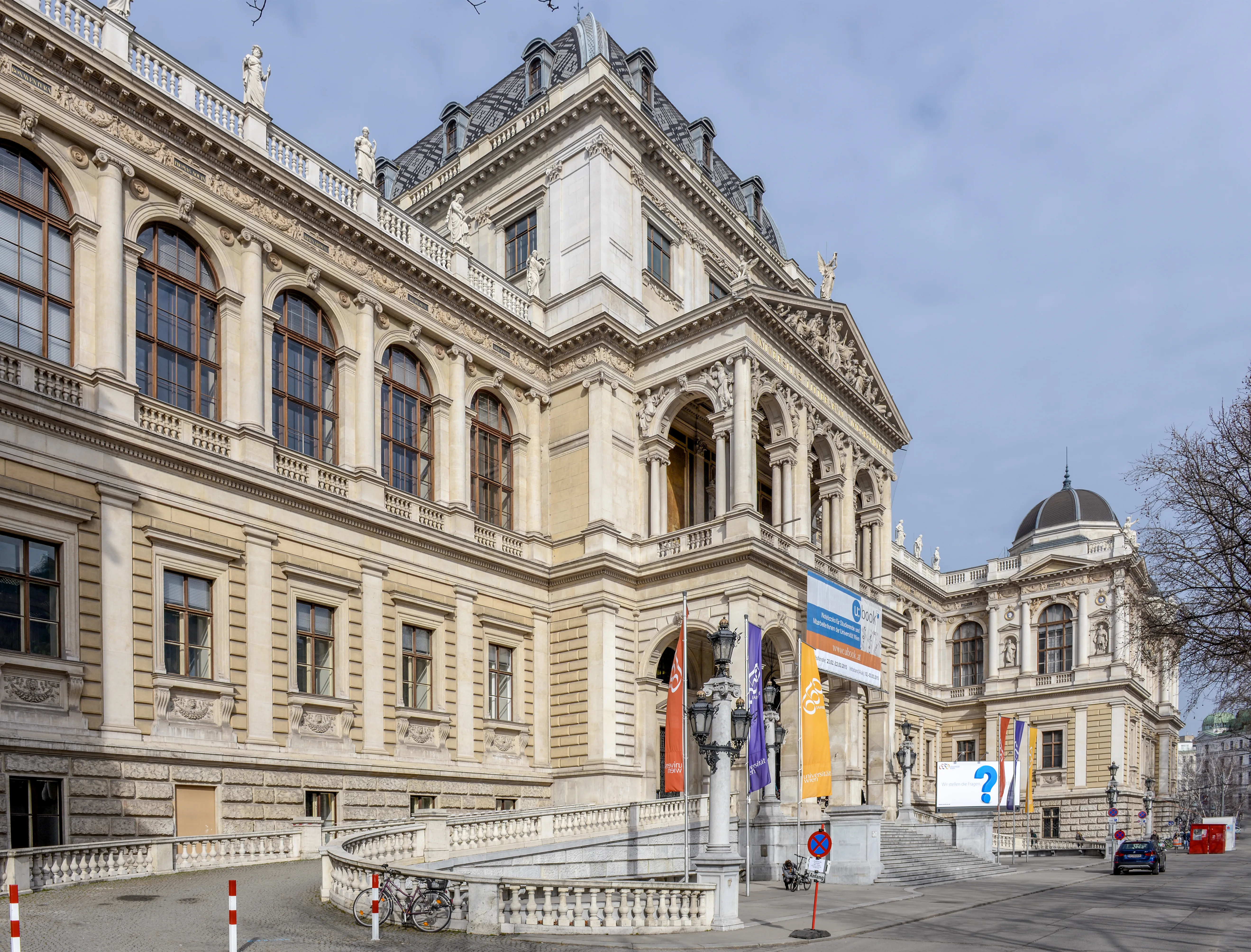
Neoclassical facade of the University of Vienna with columns, sculpted pediment, and dome under a blue sky
University of Vienna opening hours in Vienna

Check today’s opening status, weekly schedule, and special date changes for University of Vienna. Use these opening hours to plan your arrival and avoid closed times in Vienna.

Monday
Tuesday
Wednesday
Thursday
Friday
Saturday
Sunday
06:00-22:00
06:00-22:00
06:00-22:00
06:00-22:00
06:00-22:00
07:00-19:00
-
University of Vienna Admission

Access to the guided tours at the University of Vienna is ticketed. While general admission applies, children under six years old receive free entry. Concessionary tickets are available for students, pupils, conscripts, and seniors, allowing for a reduced rate. Visitors can purchase tickets directly at the concierge desk without needing any prior reservation or registration.

Adults
€5.00
Children (< 6 years)
Free

Children under 6 years

Students, pupils, conscripts, and seniors
€3.00

Valid for students, pupils, conscripts, and seniors

University of Vienna Location

The University of Vienna is prominently situated at Universitätsring 1 in Vienna. This monumental building on the historic Ringstrasse offers visitors a chance to explore its grand halls and arcaded courtyards through guided tours, providing a glimpse into centuries of academic and architectural heritage within the city.

© OpenStreetMap contributors

Universitätsring 1

1010 Vienna

Vienna, AT

Planning Your Visit to the University of Vienna

The University of Vienna offers guided tours of its main building every Thursday and Saturday, providing visitors with a focused experience typically lasting 60 minutes. Reservations are not required, allowing for flexible planning. Tickets for these tours can be purchased directly at the concierge desk, which is situated at the main entrance of the University of Vienna at Universitätsring 1, 1010 Vienna.

Planning Your Visit to the University of Vienna

University of Vienna: Historic Main Building Experience

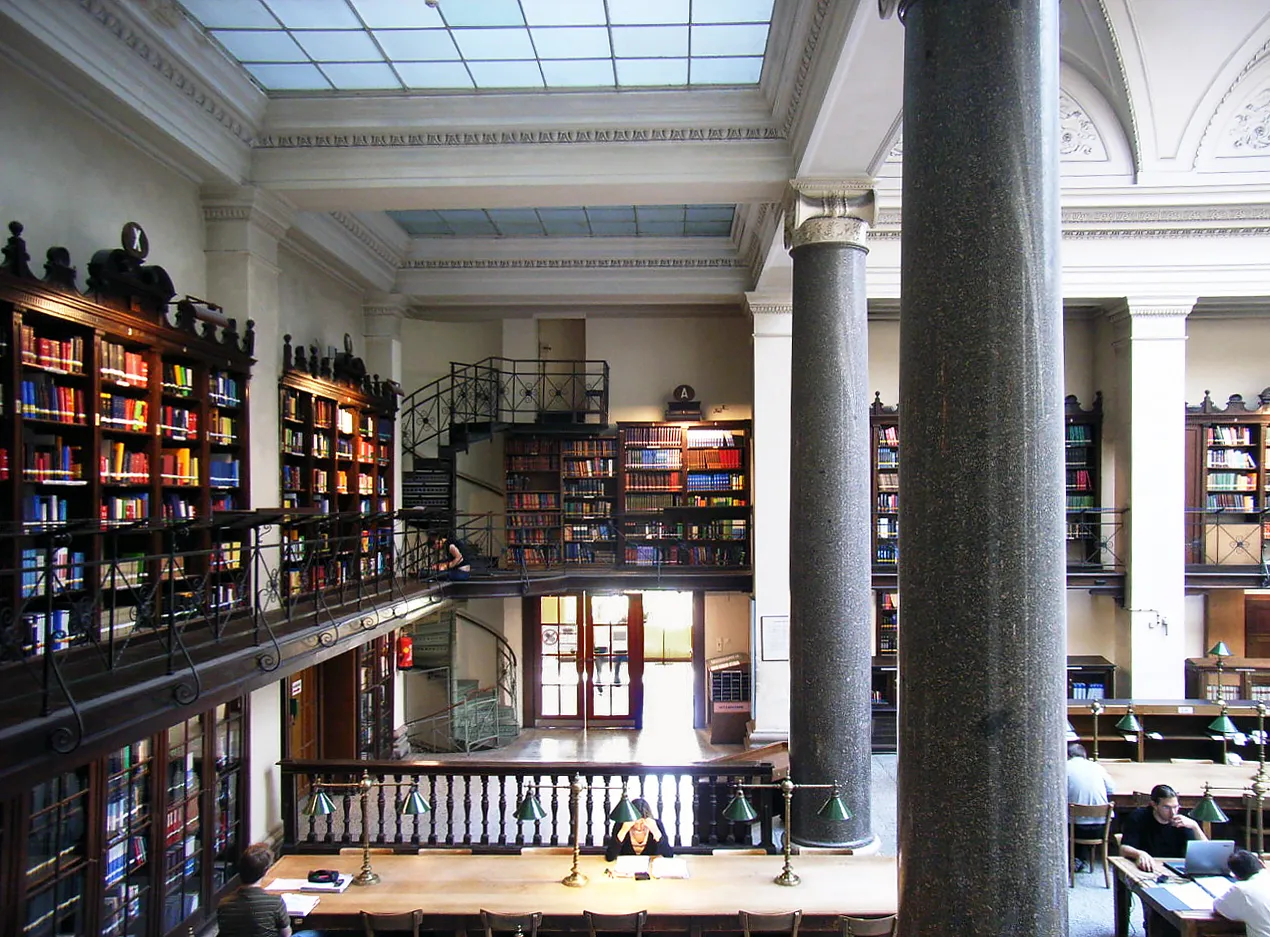
The University of Vienna's main building, an architectural landmark on the Ringstrasse, offers visitors a deep dive into centuries of academic history and grand design in Vienna. Inaugurated in 1884 by Emperor Franz Joseph I, this historic site provides guided tours that showcase its distinctive features. Guests can explore the unique Arcade Court and the impressive Main Ceremonial Chamber, known for its ceiling adorned with copies of Gustav Klimt's mural paintings. The tours further extend to the historic Great Reading Room of the University Library, providing insight into both the institution's legacy and the building's artistic importance. This experience combines an appreciation for late 19th-century architecture with an understanding of one of Europe's oldest academic institutions.
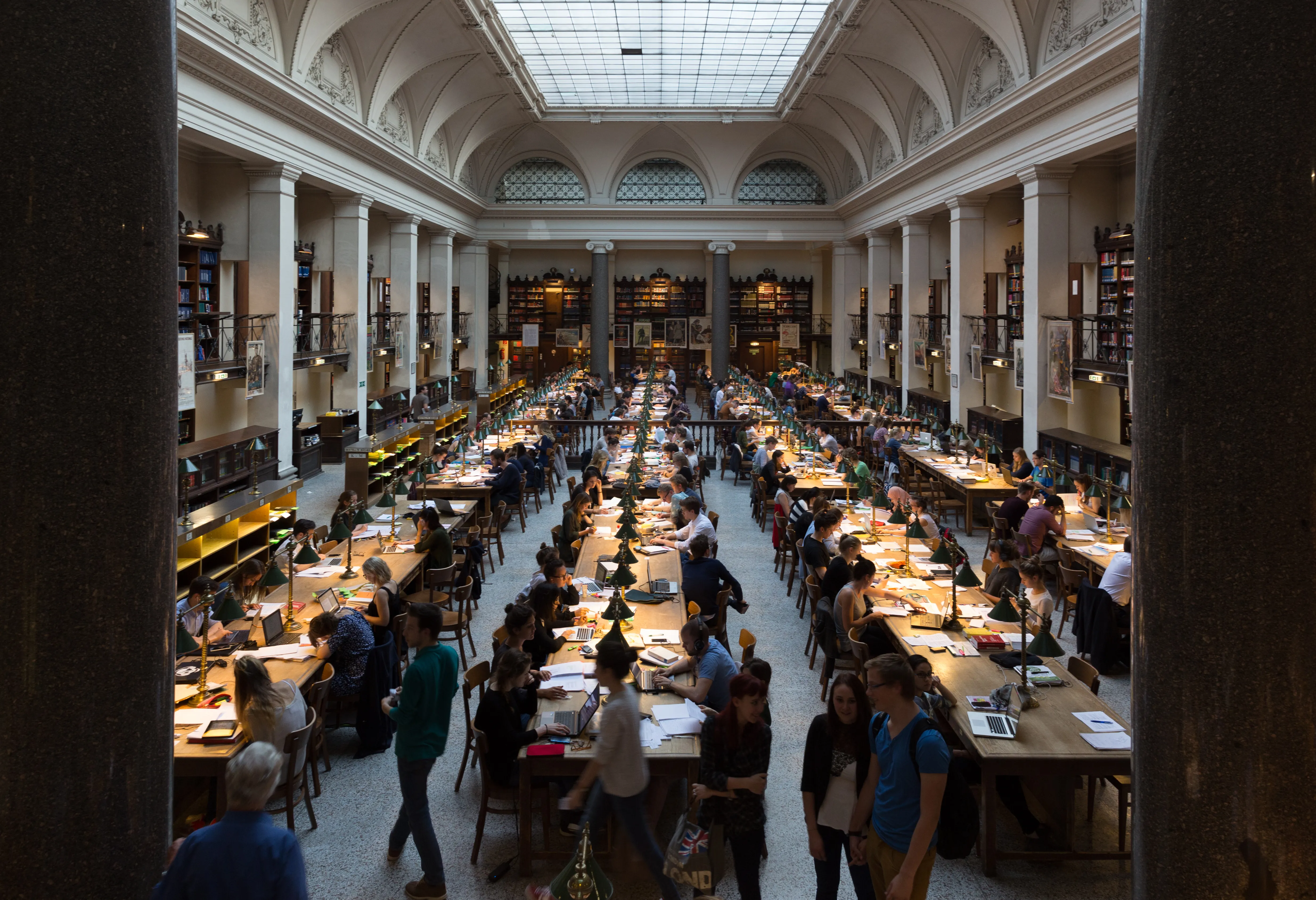
Grand reading room with high arched ceilings, columns, and rows of tables with people studying

History of the University of Vienna

Founded in 1365 by Duke Rudolf IV, the **University of Vienna** is the oldest university in the German-speaking world. Its history includes the opening of its first dedicated building in 1385 and its growth into a significant center for Humanism by the 15th century. The university's current monumental Ringstraße building was constructed between 1877 and 1884. This institution has been a hub for influential thinkers, notably serving as the birthplace of the Austrian School of Economics, and began admitting women as full students in 1897. Its rich academic legacy in Vienna is underscored by associations with 17 Nobel Prize laureates.

  • Founded in 1365 by Duke Rudolf IV

    1365Founding

    The University of Vienna was established on March 12, 1365, by Duke Rudolf IV of Austria, and was initially known as "Alma Mater Rudolphina". Despite initial papal hesitation, it eventually received papal assent in 1384.

  • Oldest university in the German-speaking world

    Overview

    Founded in 1365, the University of Vienna is the oldest university in the German-speaking world and is one of the largest higher learning institutions in Europe, with approximately 85,000 students and 11,000 employees.

  • Associated with 17 Nobel Prize laureates

    Overview

    The University of Vienna has a distinguished academic history, being associated with 17 Nobel Prize laureates and numerous other scholars of historical and academic significance.

  • First university building opened in 1385

    1385Construction

    The first dedicated building for the University of Vienna was opened in 1385, marking a physical establishment for the institution as it grew to become the largest university in the Holy Roman Empire.

  • Center of Humanism in the 15th century

    1450-1500Historical period

    During the mid-15th century, the University of Vienna was home to over 6,000 students and became a significant center during the advent of Humanism.

  • Setback during the Reformation

    1517-1648Historical period

    The university experienced a setback during the Reformation due to its close ties with the church, compounded by epidemics, economic stagnation, and the Ottoman Siege of Vienna in 1529, which led to a sharp decline in enrollment.

  • Jesuit Order incorporated in 1623

    1623Ownership

    In 1623, Emperor Ferdinand II incorporated the Jesuit College into the university, strengthening the influence of the Jesuit Order, which had been installed there in 1551.

  • Jesuit influence reduced in the mid-18th century

    1740-1780Renovation

    In the mid-18th century, the Jesuits' influence over the university diminished, and Empress Maria Theresa brought the institution under the control of the monarchy, shifting its focus towards training physicians and civil servants.

  • Liberalization and German as instruction language under Joseph II

    1780-1790Renovation

    Emperor Joseph II continued reforms by abolishing official attire, allowing Protestants and Jews to enroll by 1782, and establishing German as the compulsory language of instruction in 1783.

  • Philosophical Faculty upgraded after 1848 Revolution

    1848Renovation

    Following the Revolution in 1848, significant changes were made, including upgrading the Philosophical Faculty to equal status with Theology, Law, and Medicine, and granting the university greater academic freedom.

  • Main building constructed between 1877 and 1884

    1877-1884Construction

    The current main building of the University of Vienna, designed by Heinrich von Ferstel, was constructed on the Ringstraße between 1877 and 1884.

  • Women admitted as full students in 1897

    1897Milestone

    Women were first admitted as full students to the University of Vienna in 1897, initially limited to the Philosophy department, with other faculties gradually following.

  • Elise Richter became first woman to receive habilitation in 1907

    1907Notable person

    Ten years after women were first admitted, Elise Richter became the first woman to receive habilitation and was appointed professor of Romance languages in 1907.

  • Reformed under Nazi regime in 1938

    1938Historical period

    Following the Anschluss in 1938, the University of Vienna underwent political reforms, leading to the dismissal of numerous teachers and students for political and racial reasons.

  • Reopened for teaching in April 1945

    1945Milestone

    Kurt Schubert, later a doyen of Judaic Studies, was permitted by Soviet occupation forces to reopen the university for teaching in April 1945, though Ludwig Adamovich was elected the official rector later that month.

  • University reforms in 1993 and 2002

    1993-2002Renovation

    University reforms in 1993 and 2002 largely restored professors as the primary decision-makers and granted the university full legal capacity, increasing the number of faculties and separating the medical faculty.

  • Campus of the University of Vienna opened in 1998

    1998Opening

    The Campus of the University of Vienna, created by converting the old general hospital, was opened in 1998 and now houses numerous departments and specialist libraries.

  • University of Vienna Biology Building opened in October 2021

    2021Opening

    A new University of Vienna Biology Building was opened in October 2021, as part of the university's ongoing expansion of its infrastructure.

  • Ranked in the top 100 globally by THE in 2025

    2025Milestone

    In the Times Higher Education (THE) ranking for 2026, the University of Vienna reached the top 100 for the first time, securing the 95th position.

  • Oldest university library in German-speaking world

    1365Overview

    Founded in 1365, the University Library of the University of Vienna is the oldest university library in the German-speaking world and has grown to become Austria's largest library.

  • Library holds 7.8 million volumes by 2024

    2024Collection

    By 2024, the University Library of the University of Vienna comprises the Main Library and 33 specialist libraries, holding approximately 7.8 million volumes, including historical works and contemporary scientific literature.

  • Associated with 17 Nobel Prize laureates

    Notable person

    The University of Vienna has affiliations with 17 Nobel Prize winners, including figures like Erwin Schrödinger, Karl Landsteiner, and Anton Zeilinger.

  • Cradle of the Austrian School of Economics

    Notable person

    The university was the birthplace of the Austrian School of Economics, with key figures such as Carl Menger, Eugen von Böhm-Bawerk, and Friedrich Hayek studying or instructing there.

  • Home to influential thinkers and scholars

    Cultural significance

    The university has been a center for influential figures across various disciplines, including Sigmund Freud in psychoanalysis, Gregor Mendel in genetics, and Stefan Zweig in literature.

Curious Questions & Practical Answers for the University of Vienna

Ever wondered if the University of Vienna closes on Sundays, or perhaps how much a guided tour costs for the little ones? Our FAQs cover these and more, from ticket details to opening hours, ensuring your visit to this monumental building is as smooth as possible. Dive in to find answers before you arrive!

How can I contact the University of Vienna?

For general inquiries, the University of Vienna can be contacted via its official website at https://www.univie.ac.at/. No direct phone number or email address is provided in the available information.

What is the contact phone number for the University of Vienna?

A direct contact phone number for the University of Vienna is not provided in the available information. Please refer to their official website for general inquiries.

Where can I find information about guided tours at the University of Vienna?

Details regarding guided tours for the University of Vienna can be found on their dedicated tours page: https://event.univie.ac.at/en/tours/ready-for-a-discovery-tour/.

Does the University of Vienna have a visitor email address?

An email address specifically for visitor inquiries at the University of Vienna is not provided in the available information. You may find alternative contact methods on their official website.

University of Vienna Visitor Tips

When planning a visit to the University of Vienna, guided tours of the main building are available on Thursdays and Saturdays. These tours typically last approximately 60 minutes, and reservations are not required, allowing for flexible planning. Visitors can purchase tickets for guided tours directly at the concierge desk, which is located at the main entrance of the University of Vienna in Vienna.

University of Vienna Visitor Profile

The University of Vienna's main building offers a suitable cultural experience for visitors interested in architecture, history, and art. It appeals to solo travelers, couples, student groups, and other groups seeking to explore its academic legacy and grand design. Guided tours, lasting approximately 60 minutes, highlight architectural splendors like the Arcade Court and artistic details such as the Gustav Klimt mural paintings. As reservations are not required, it provides a flexible option for an enriching visit in Vienna.

University of Vienna Building Photos

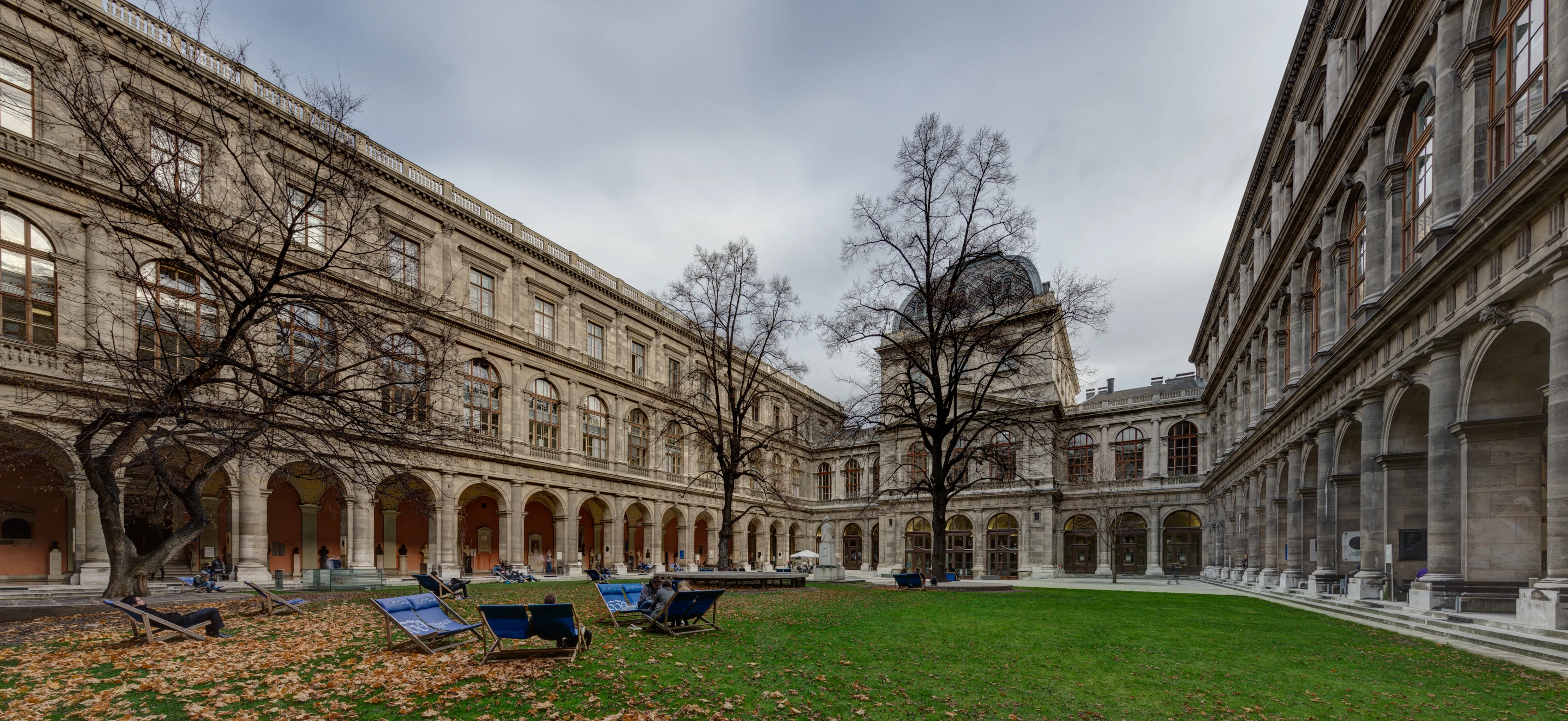
Explore photos of the University of Vienna's historic Ringstrasse building, showcasing its magnificent classical architecture in Vienna. Images capture the grand exterior facade, intricate interior halls, ornate staircases, and the serene Arkadenhof courtyard. Visitors can preview the impressive academic environment and its detailed design elements, from sweeping arches to ornate ceilings.

University of Vienna wordmark with a circular seal on the left and blue text on the right
Neoclassical facade of the University of Vienna with columns, sculpted pediment, and dome under a blue sky
Grand neoclassical building with arched windows and a stone facade, entrance with flags and signage
Grand reading room with high arched ceilings, columns, and rows of tables with people studying
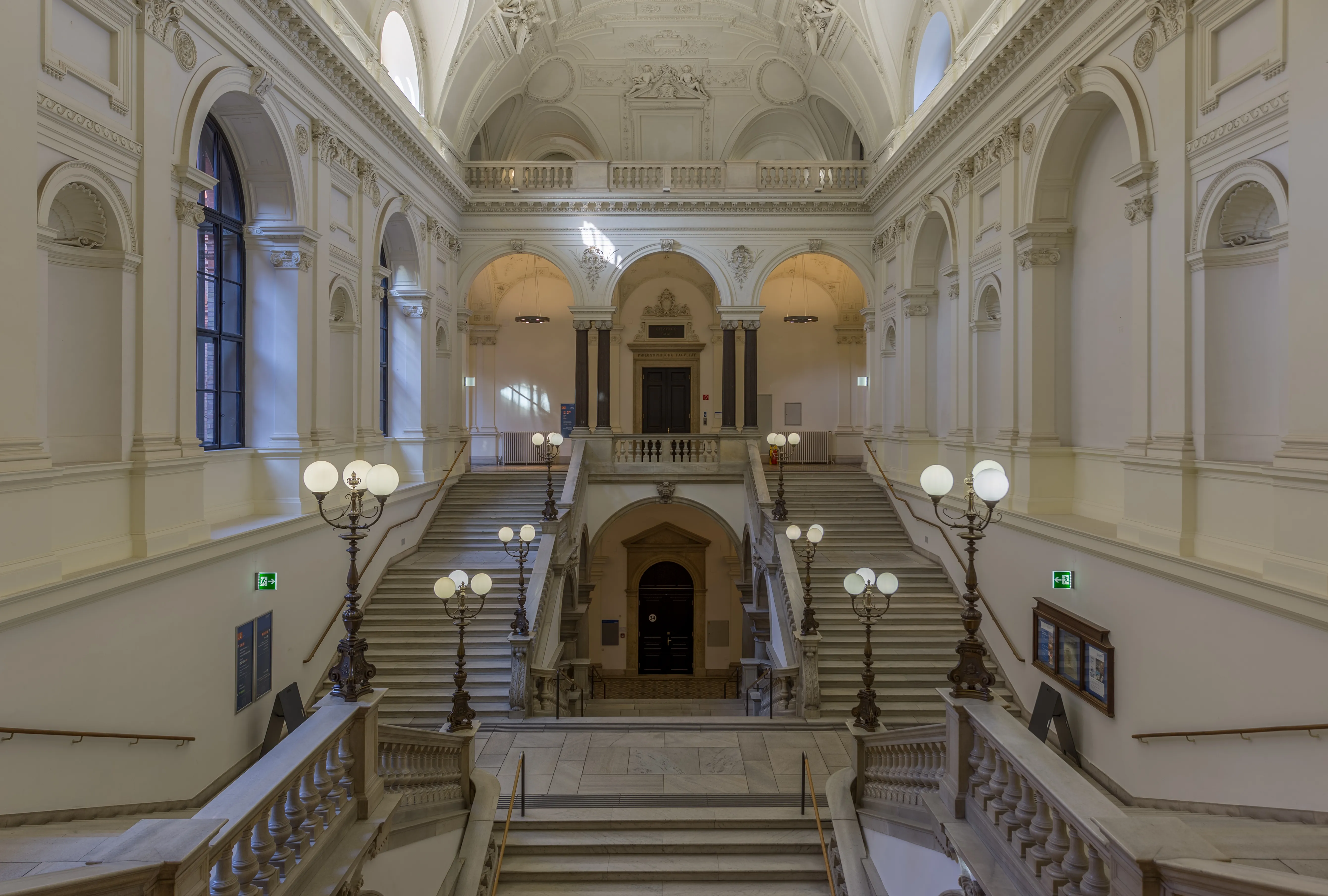
Interior of the University of Vienna with a grand central staircase, arched doorways, and ornate lighting fixtures
Grand neoclassical building with arched entrances and columns, featuring banners on the facade, surrounded by trees and a paved walkway.
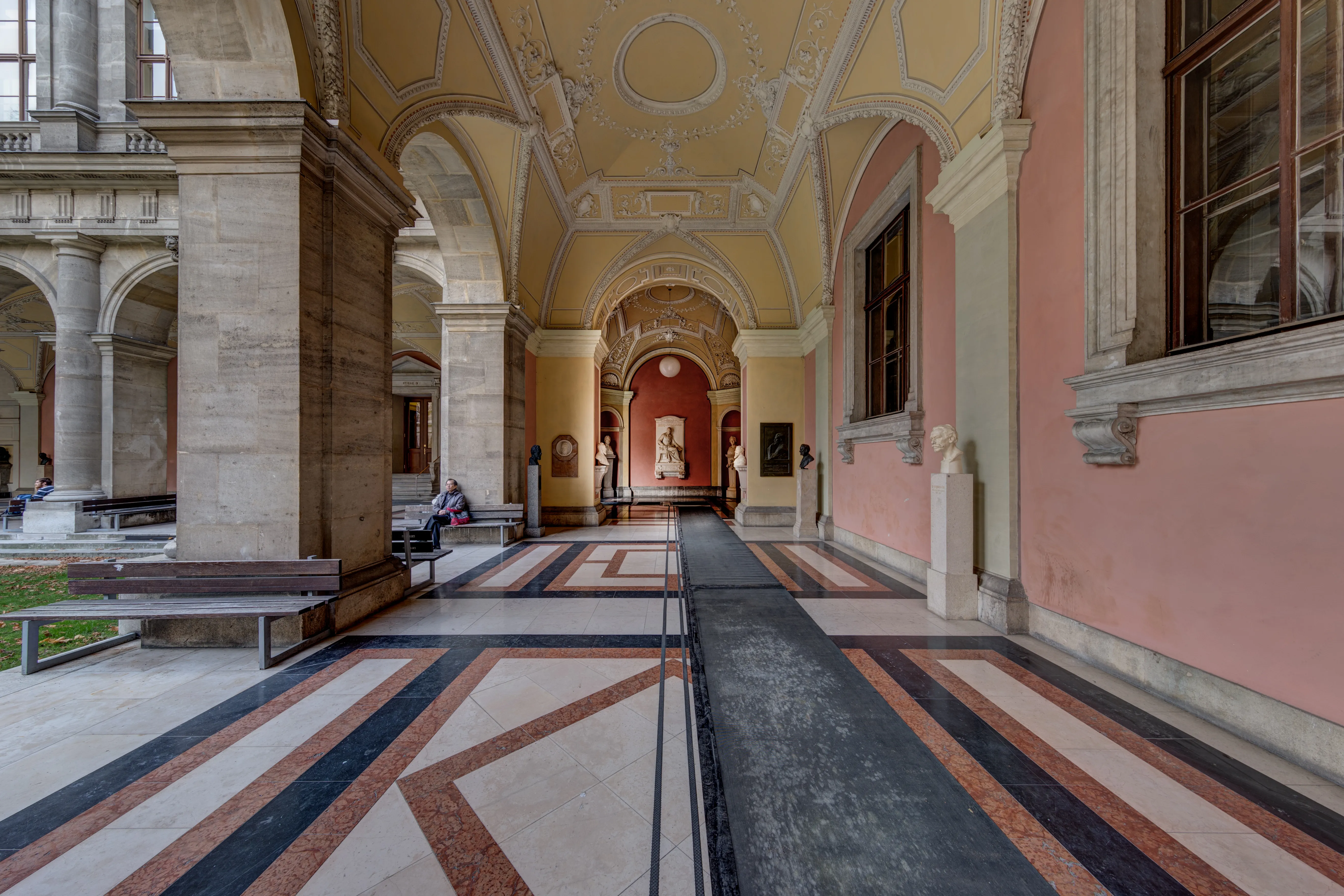
Interior courtyard of the University of Vienna with arched colonnades, patterned floor, and ornate ceiling
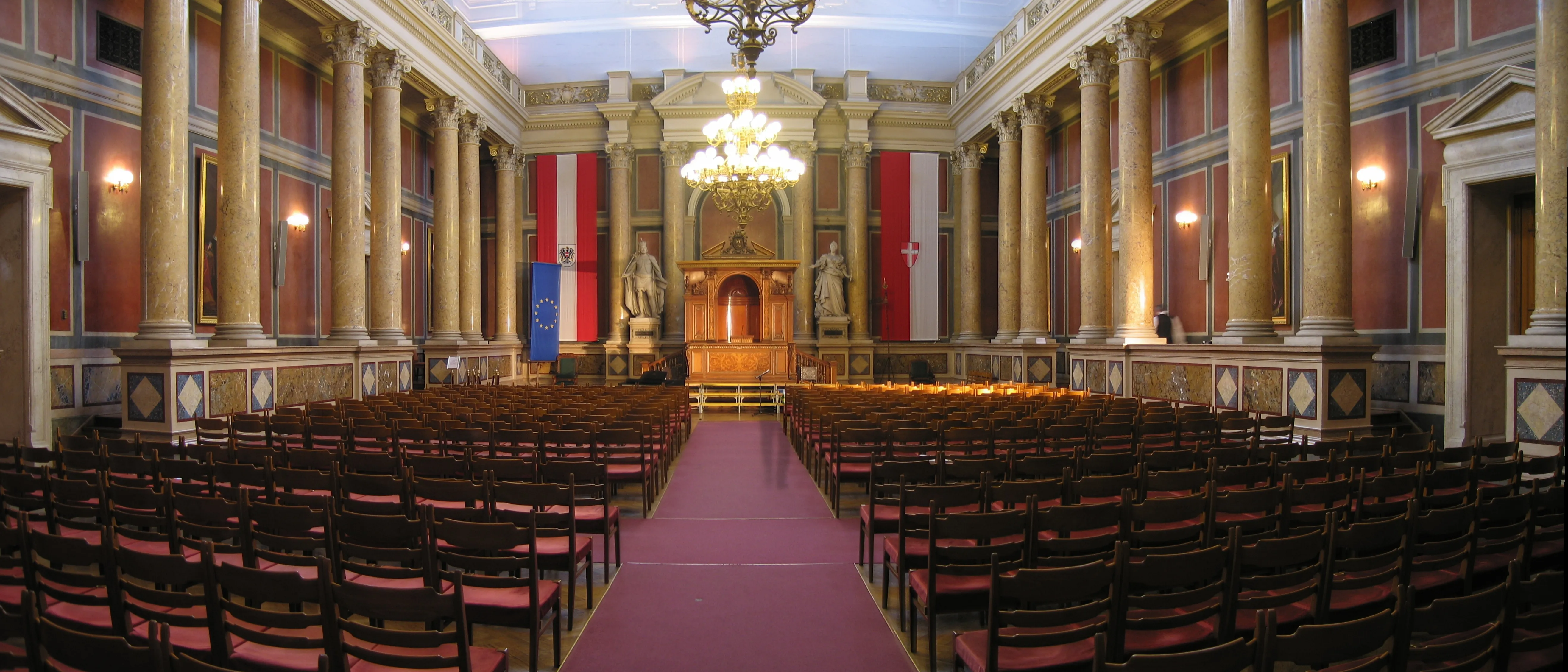
Grand hall with rows of wooden chairs, a red carpet, tall columns, and a chandelier at the University of Vienna.
Classical arcaded buildings surrounding a grassy courtyard with bare trees and benches at the University of Vienna
Interior of a grand library with high ceilings, large columns, and bookshelves filled with books. People are studying at desks.
Vienna

Find Museums in Vienna: Discover Cultural Sites by Interest and Theme

Uncover Vienna's rich artistic legacy, history, and scientific collections.

Explore the depth of Vienna's cultural offerings and discover institutions by what truly interests you. Whether it's historical landmarks, fine art, or specialized topics, easily locate your next memorable experience.

Explore University of Vienna with Vienna
Guides, visitor info, and museum details in Vienna
Find everything about University of Vienna in one place, including tickets, opening hours, current exhibitions, location details, visitor tips, nearby attractions, and the latest museum updates. Use these pages to plan your visit, discover what to see, and get practical information before you go.
Discover nearby museums similar to University of Vienna in Vienna and plan your next cultural stop with confidence.
These recommendations prioritize real proximity to University of Vienna and help you find high-fit alternatives faster across Vienna.
Use this curated list to compare museums near University of Vienna without opening multiple search pages. Each card gives you fast visual context and direct access to key details so you can decide quickly. If you are building a full day in Vienna, this section helps you chain nearby visits with less planning effort.