This content details the significant role of the 'Deutscher Klub' in the NS power seizure in Austria during 1938. It outlines how the club's members occupied key ministerial and leadership positions across various sectors, effectively facilitating the 'Anschluss' with Germany.
The 'Deutscher Klub,' a society that had rented rooms in Vienna's Hofburg since 1923 and was founded in 1908 as an umbrella organization for national-German student fraternities, celebrated the 'Anschluss' on March 11, 1938. With around 1,000 members, they saw their long-standing political goal of unification with Germany realized. The club's leadership expressed satisfaction that their members held five of the nine ministerial positions in the interim cabinet led by Chancellor Arthur Seyß-Inquart, who was also a long-standing member. The text highlights how club members subsequently took over numerous leadership roles in Austria as it was 'gleichgeschaltet' (coordinated with Nazi Germany).
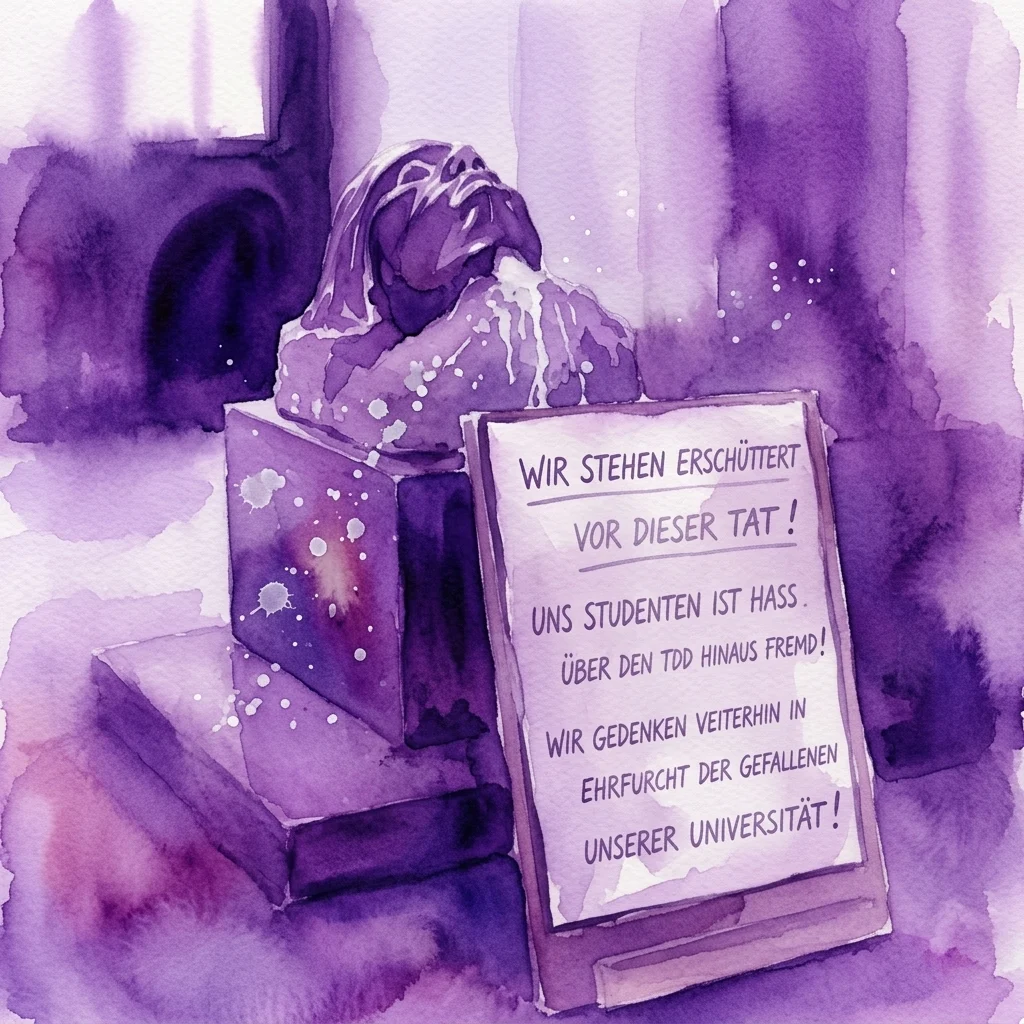
Individuals from the club, including future mayors of Vienna like Hermann Neubacher and Hanns Blaschke, along with Richard Riedl, who founded the club, filled influential positions. In administration, Otto Wächter, as State Commissioner, oversaw the dismissal of officials based on race or political grounds. In the banking sector, Rudolf Pfeiffer rose to lead the Creditanstalt-Wiener Bankverein, while Richard Buzzi took charge of the Austrian National Bank. The cultural and scientific spheres also saw significant club influence, with members appointed as directors of prestigious institutions such as the Burgtheater, the National Library, and the Natural History Museum, as well as the President of the Academy of Sciences. Notably, nearly the entire leadership of the University of Vienna, including the rector, pro-rector, and three deans, comprised members of the 'Deutscher Klub.' The NS administration eventually dissolved the 'Deutscher Klub' as part of the broader 'Gleichschaltung' process, though it was re-established after 1945.