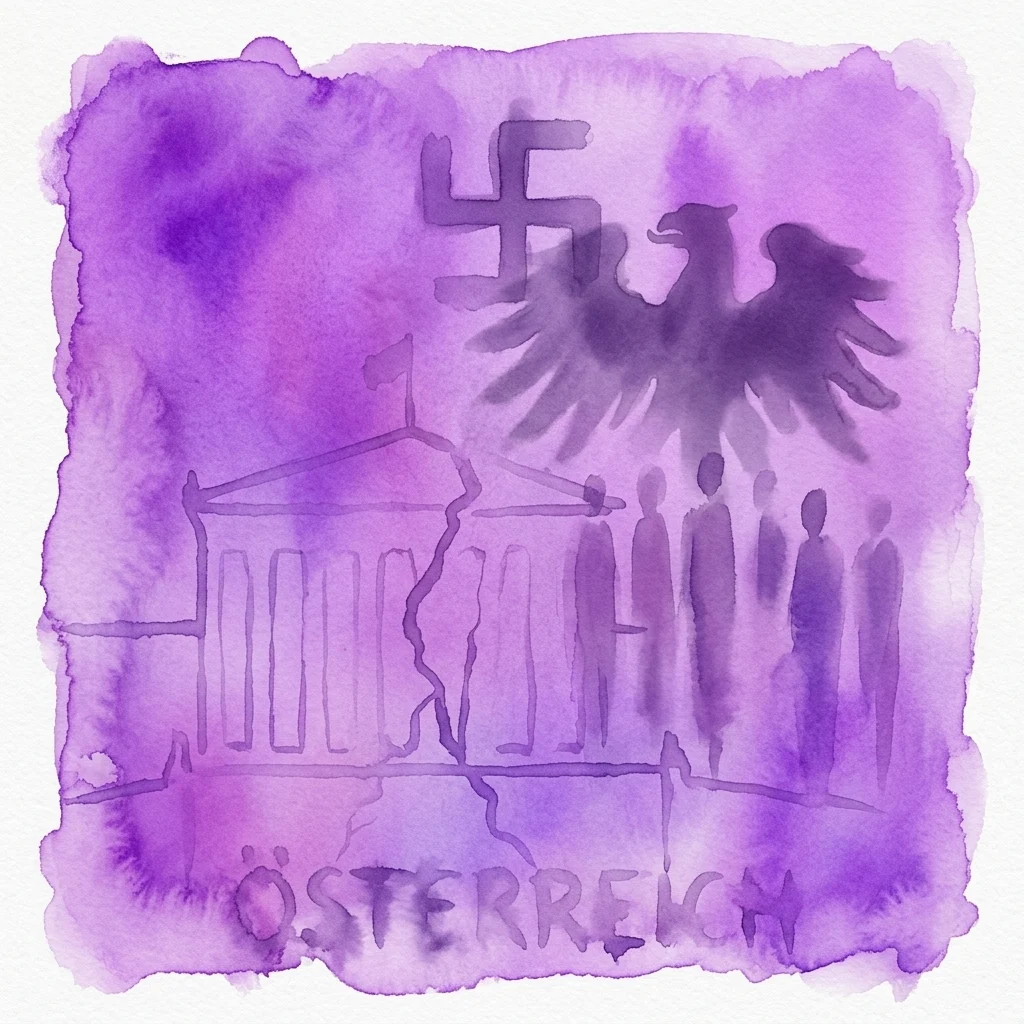
This web exhibition explores the process of rebuilding St. Stephen's Cathedral and the Pummerin bell after World War II, examining how the cathedral became a national symbol. It delves into the untold stories of the reconstruction, highlighting the roles of women, artists, and the complex societal and political contexts of the time, including the period of National Socialism.
Seventy years after the consecration of the Pummerin bell and the reopening of St. Stephen's Cathedral on April 26, 1952, this web exhibition investigates how the landmark became what it is today. The work on the 'Myth of St. Stephen's Cathedral' began in April 1945, with images of the burned ruin quickly becoming iconic. Through donation appeals, newsreels, newspapers, and radio, the cathedral was portrayed as a 'national sanctuary' to which all of Austria was called to contribute, regardless of political affiliation, as a poster proclaimed: 'Whether left, whether right, whether poor, whether rich, all of Austria chooses St. Stephen's.'
A closer look at the reconstruction reveals previously unknown or forgotten stories. These include the young architect who led the rebuilding in the early months, and artists who were assigned to clearing rubble due to their Nazi party membership. It also highlights monument preservation experts who opposed the use of steel for the roof structure, deeming it 'undignified.' Women played a significant role, not only in traditionally male roles but also in leadership positions. Gertrude Stolz executed the chasing work on the Pummerin's decorative elements, the tower knob was crafted by the then only female master tinsmith in Austria, and a female roofing apprentice made headlines for her work on the steep roof.
The narrative of the post-1945 reconstruction involved a concurrent silence about National Socialism, yet the NS past is inscribed in the rebuilt cathedral. Lucca Chmel's photographic work was a mandated 'atonement' for her NSDAP membership. In the 1960s, artists Otto Hurm and Rudolf Hermann Eisenmenger, who had been entrusted with prestigious commissions during the NS era, submitted designs for a stained-glass window and a clock. Furthermore, demolition stones from the 'Aryanized' Palais Rothschild, which served as a hub for the expulsion and murder of Jewish populations from 1938 to 1945 and was demolished in 1954/1955, are invisibly incorporated into the cathedral. The first signs of remembrance for the victims of National Socialism found their way into the cathedral in the 1980s. In the Chapel of St. Barbara, a cross contains earth and ashes from Auschwitz and earth from Mauthausen, and a bust of Sister Maria Restituta Kafka commemorates a courageous woman executed in 1943 for her criticism of the Nazi regime.