This exhibition explores the complexities of the First World War, focusing on the political decisions, military campaigns, and societal impacts, particularly concerning Austria-Hungary. It details the escalation from a regional conflict to a global war, the major fronts, and the eventual dissolution of the monarchy.
The exhibition 'Der Erste Weltkrieg' (The First World War) delves into the multifaceted nature of this global conflict, beginning with the assassination of Archduke Franz Ferdinand on June 28, 1914, and the subsequent political decisions that led to war. It meticulously outlines the escalation from a localized Balkan conflict to a world war, driven by intricate alliance systems and military mobilization plans. The exhibition details the struggles on various fronts, including the initial failures of offensives, the costly campaigns in Galicia, the breakthrough at Gorlice-Tarnów, and the opening of new fronts with Italy. It also addresses the immense societal impact, highlighting how the war was fought not only on the front lines but also by industries and through the critical struggle for food supplies, with every individual feeling the consequences.
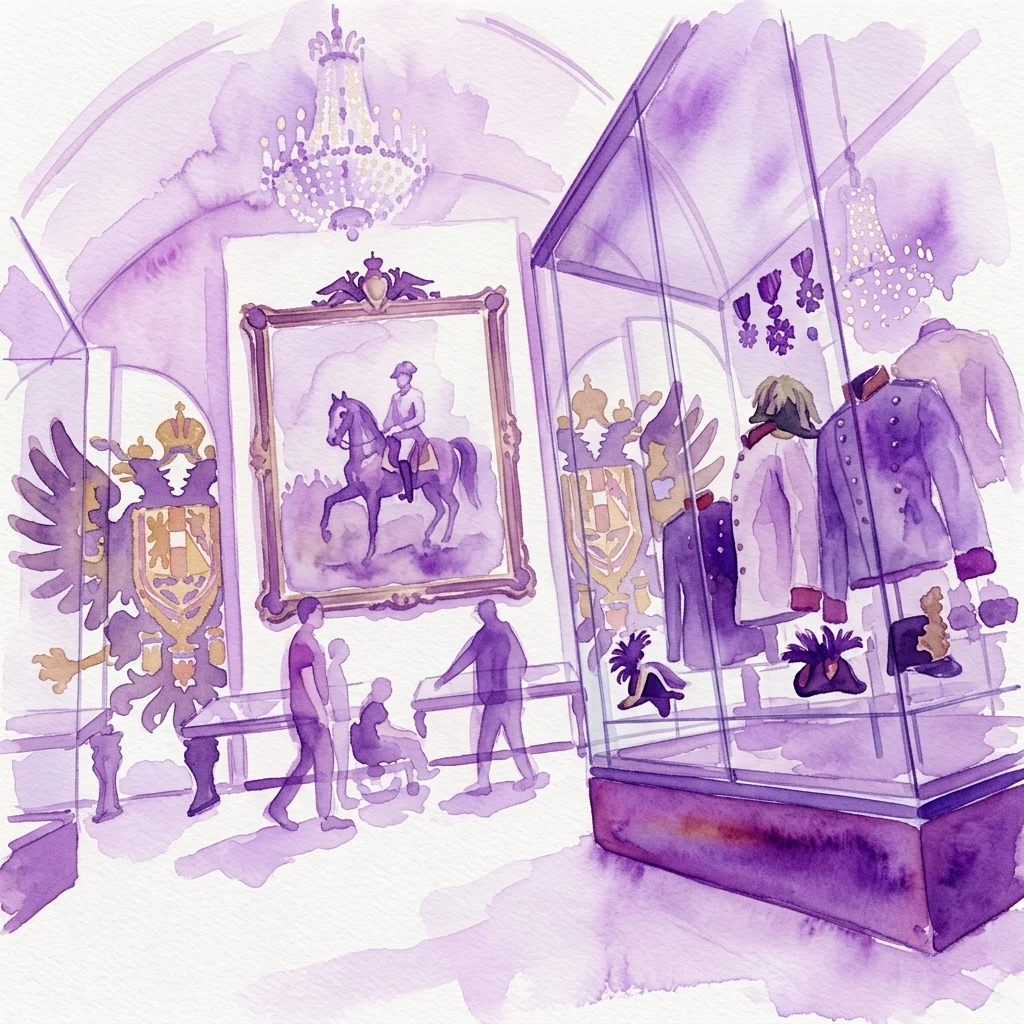
The narrative continues through the challenging years of 1916 and 1917, covering the Italian and Russian fronts, the entry of Romania, and the eventual stabilization of fronts following peace agreements with Russia. It touches upon the optimistic outlook for the Central Powers at the start of 1918, juxtaposed with the increasingly chaotic internal situations marked by severe food crises, strikes, and mutinies, especially within Austria-Hungary. The exhibition also notes the significant impact of the United States' entry into the war and the ultimate unraveling of the Habsburg Monarchy in the autumn of 1918, marking a profound transformation of Europe. The display includes various artifacts such as military equipment, uniforms, newspapers, and personal items, offering a comprehensive view of the war's human and material dimensions.