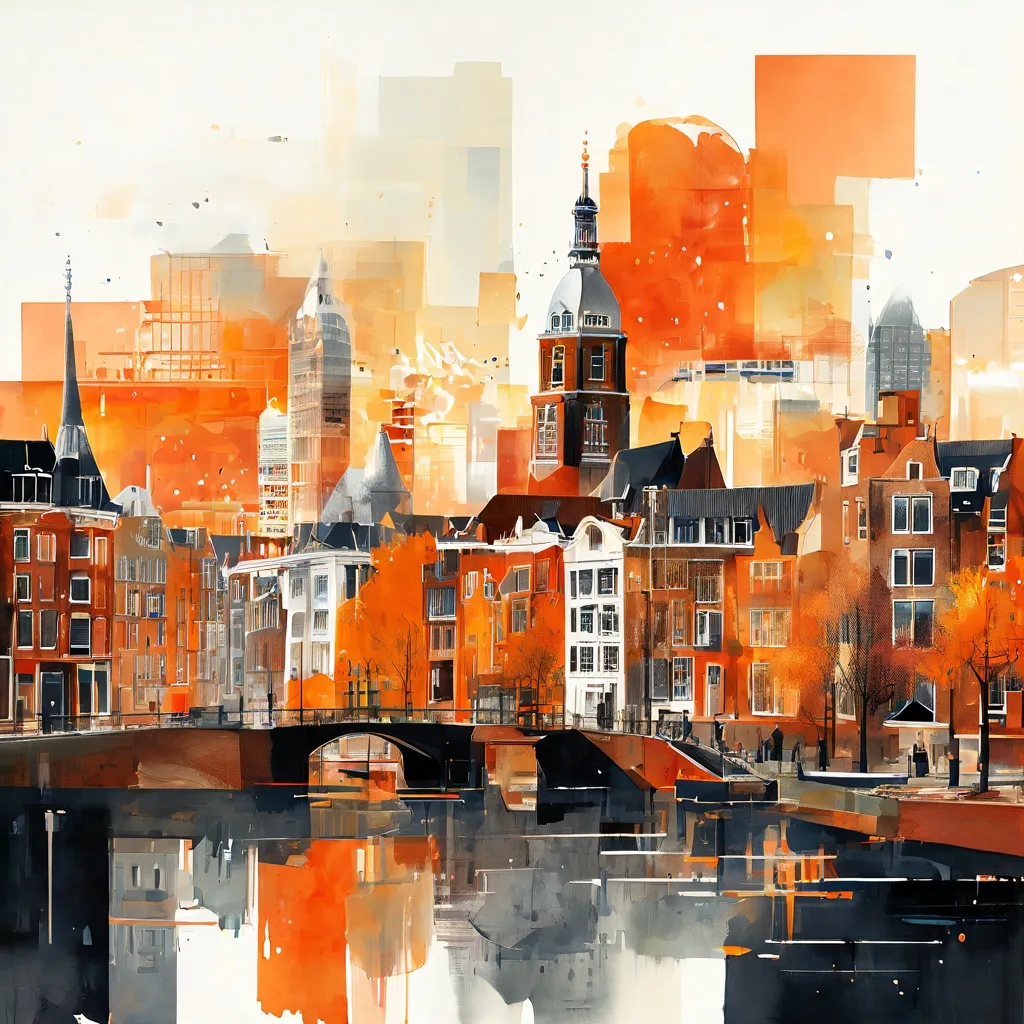
Visualizing Amsterdam's Future: ARCAM Hosts "De Partijlijnen 2026" Event
The Amsterdam Centre for Architecture (ARCAM) recently hosted "De Partijlijnen 2026," an innovative event that brought together architects, urban planners, and landscape architects to visually interpret the election programs of various political parties in Amsterdam. Held at the OBA Oosterdok Theater, the initiative transformed political ambitions into tangible spatial concepts, offering a unique perspective on the city's future development across key areas such as housing, mobility, ecology, and social inclusion.
This event aimed to explore how Amsterdam's electoral promises would manifest visually if translated into architectural and urban design. The outcome was a diverse and critical panorama of the city's potential future, prompting politicians to react to these visual interpretations. Participants could review initial images and statements from the event, with further discussions and critical notes slated for future online viewing. A comprehensive collection of these visualizations is available for review here.
Architectural Visions for Amsterdam's Livable Neighborhoods
One central theme was the future of housing and livable neighborhoods. Time to Access, interpreting the PvdA program, envisioned a robust social foundation for Amsterdam, emphasizing sustainable construction like timber frame housing and the potential of housing cooperatives. PvdA representative Lian Heinhuis highlighted the party's focus on affordable housing and the need for social cohesion in neighborhoods.
De Architekten Cie. examined the VVD's program, noting ambitions for a cleaner, safer city and economic growth, but also identifying a lack of concrete choices regarding affordable homeownership for middle-income groups and balancing growth with livability. VVD representative Wout Deterink stressed the importance of retaining families in Amsterdam and the party's openness to redeveloping older social housing, provided residents can return.
Exploring Social Equity and Mobility in the City
The discussions extended to social equity and mobility. Urhahn, analyzing the SP program, presented a dual vision of a strong, top-down municipality tackling major societal challenges alongside active, bottom-up citizen initiatives. SP’s Angelo Delsen emphasized addressing poverty and ensuring affordable housing, advocating for a societal contribution from those with greater means.
DUTCH Architect, interpreting Volt's vision, placed Amsterdam within a broader European network, highlighting cross-border knowledge exchange. Their work also focused on adapting existing urban blocks through small interventions to create significant impact on housing, and on data-driven approaches to address issues like vacant properties. Volt candidate Pim van Burk cited Antwerp's approach to vacant property taxation as a potential lesson for Amsterdam.
Cabaret artist Vincent Bijlo contributed an intermezzo on the accessible city, articulating that true independence is rooted in acknowledging mutual dependence, making accessibility a fundamental norm for everyone.
Green Spaces, Community, and Inclusive Urban Planning
Further discussions revolved around green spaces, community, and inclusive urban planning. INBO, visualizing the GroenLinks program as a triptych reminiscent of Hieronymus Bosch, depicted ideals of a just, sustainable, and inclusive city. GroenLinks representative Anneke Veenhoff reiterated the party's commitment to creating green, affordable, and pleasant living environments by prioritizing green spaces over paved areas.
Bureau SLA presented D66's program as "a bag of contradictory optimism," balancing ambitious housing targets and new parks with relaxed building regulations and climate-adaptive construction. D66 council member Suleyman Aslami highlighted the party's commitment to ambitious urban plans while considering the needs of all residents, including children and women, to ensure an accessible and inclusive city.
Civic Architects, interpreting BIJ1's program, focused on counteracting gentrification, increasing rental housing for families, and achieving equitable investment in cultural facilities outside the city center. BIJ1 candidate Tofik Dibi underscored the historical disparities in cultural provision across city districts and advocated for equal access to amenities for all Amsterdammers.
Ecological Considerations and Community Connection
The topic of ecology and community was addressed by lyongo architecture, which viewed the Partij voor de Dieren's program as a call for "Party for Ecology," integrating human needs within a broader ecosystem. Lyongo Juliana argued for architecture and urban planning to be intrinsically linked with nature, advocating for diverse housing forms that reflect different ways of life. Partij voor de Dieren representative Dave de Vos reinforced the belief that ecological principles ultimately benefit everyone, contributing to a livable society and a beautiful, sustainable Amsterdam.
Bureau B+B analyzed DENK Amsterdam's program, highlighting a focus on connection, equality, and social justice, promoting a polycentric city with strong neighborhoods and equitable investment outside the city center. DENK representative Sheher Khan emphasized the importance of connection and accepting differences for Amsterdam to remain a vibrant city.
Finally, SOME Architects offered a "CDA fairy tale" vision of Amsterdam, focusing on the family as the cornerstone of society, new residential high-rises in Amsterdam School style, and addressing climate change impacts. CDA council member Rogier Havelaar emphasized the need for clear choices in urban development, ensuring beautiful and inclusive construction while criticizing rising local taxes and municipal financial mismanagement.
These diverse architectural interpretations and political responses at "De Partijlijnen 2026" provided a unique forum for understanding the complex challenges and varied visions for Amsterdam's future. For those interested in exploring more about the city's architectural landscape, Musemap (musemap.art) offers a platform to discover museums in Amsterdam or explore the city map for other cultural spots.