Foam Fotografiemuseum Amsterdam Traces the Artistic History of AI Imagery
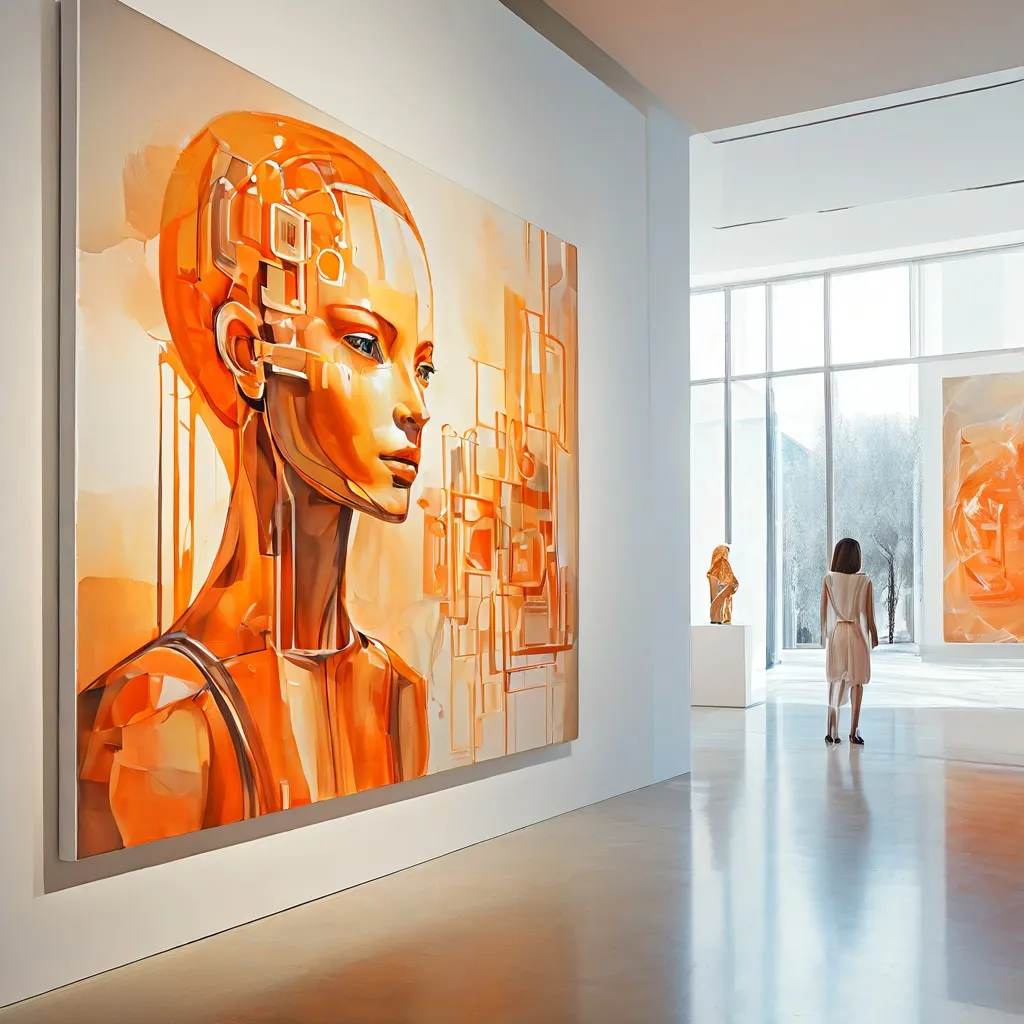
Foam Fotografiemuseum Amsterdam offers a deep exploration into the historical journey of artificial intelligence (AI) imagery, examining its evolution from ancient concepts to its contemporary role in visual art. This insightful analysis, featured within Foam Magazine #66: Missing Mirror – Photography Through the Lens of AI, delves into how AI is reshaping our understanding of images, reality, and creative expression. The article reflects on humanity's enduring ambition to imbue inanimate objects with life, a quest that mirrors the development of AI in art.
From Ancient Concepts to Modern Digital Art
The fascination with creating artificial beings dates back to ancient myths, later appearing in literature through works like Mary Shelley’s Frankenstein. The modern understanding of artificial intelligence began to solidify with the advent of electronic computers in the mid-20th century. Key figures like Alan Turing, with his seminal 1950 paper ‘Computing Machinery and Intelligence,’ and John McCarthy, who coined the term "artificial intelligence" in 1956, laid the groundwork for this transformative field. Early developments included programs like the General Problem Solver and the creation of the first chatbot, ELIZA, in the 1960s.
The Genesis of Computer-Aided Creation
Parallel to AI's initial growth, computer-generated art also began to emerge. Artists in the 1960s, often collaborating with scientists due to limited access to computers, started utilizing autonomous systems and algorithms for artistic expression. This period saw the rise of generative art and generative photography, which combined traditional photographic methods with mathematical algorithms to create visual aesthetics. Early exhibitions, such as the one at Kunsthalle Bielefeld in 1968, showcased works by pioneers like Hein Gravenhorst and Gottfried Jäger.
Early AI Systems and Generative Principles
A significant milestone arrived with Harold Cohen, who introduced one of the first AI art systems, AARON, in the early 1970s. AARON used predefined rules to autonomously generate images, making independent decisions on composition. Initially producing abstract line drawings, AARON later evolved to create more complex, colorful, and even realistic forms, highlighting AI's potential for creative autonomy.
AI's Evolution and its Impact on Contemporary Photography
Following a period known as the ‘AI winter’ in the 1970s, AI experienced a resurgence in the 1980s with innovations like the Expert System. The 1990s and 2000s saw computers become more accessible, and the internet provided vast datasets, leading to milestones such as IBM’s Deep Blue defeating chess champion Garry Kasparov.
The Rise of Neural Networks and GANs
Since the 2010s, neural networks and machine learning have revolutionized AI. Generative Adversarial Networks (GANs), developed by Ian Goodfellow in 2014, have been particularly transformative in AI art. GANs utilize two neural networks that train simultaneously to produce highly detailed and complex images. Artists like Robbie Barrat, Mario Klingemann, Helena Sarin, and David Young have adopted GANs, with approaches varying from using large internet datasets to training models on personal watercolors and photographs. Works like Klingemann’s The Butcher’s Son (2017) and Sarin’s AI Candy Store exemplify these early artistic applications.
Mainstream Recognition and New Creative Horizons
The constructed image through AI gained significant attention in the traditional art world when the French collective Obvious sold Portrait of Edmond de Belamy at Christie’s auction in 2018. Renowned artists like Hito Steyerl have also incorporated neural networks into their video installations, such as Power Plants at the Venice Biennale. Technology giants like Google contributed with DeepDream, and OpenAI’s CLIP and diffusion models have further expanded AI's capabilities, allowing for the creation of art from textual prompts.
This progression has had a profound impact on the post-photography genre, where artists like Bas Uterwijk (Ganbrood) create portraits of historical figures using neural networks, and Roope Rainisto employs custom-trained diffusion models to craft nostalgic yet futuristic images. The widespread availability of platforms like DALL.E, Stable Diffusion, and Midjourney has made AI art creation accessible to a broader audience.
Experiencing the Intersection of Photography and AI in Amsterdam
The growing acceptance of AI art is evident in its inclusion in prestigious institutions and events worldwide, including the Los Angeles County Museum of Art, Centre Pompidou Paris, the Museum of Modern Art New York, Art Basel, and major auction houses. This legitimization mirrors how photography itself evolved from a technical tool to a recognized art form.
Foam Fotografiemuseum Amsterdam continues to be a central venue for exploring these dynamic shifts in visual culture. The institution's commitment to examining the overlaps between art, technology, and society ensures that visitors can engage with the cutting edge of contemporary photography and AI.
To delve deeper into these themes, Foam Magazine #66: Missing Mirror offers further insights into how AI impacts our relationship with images and reality. You can find more information about the magazine and its content through Foam’s official channels, including an option to Order online.
Discover more about the innovative exhibitions and artistic discussions at Foam Fotografiemuseum Amsterdam and other cultural institutions by browsing available museums on Musemap (musemap.art), or explore the city's artistic landscape on our interactive map.