
Bruges
Museum itinerary · Bruges

Lace, Merchant Families and Everyday Life in Bruges’ Quiet Quarter

Go from a merchant’s chapel to working bobbins and a reconstructed old sweet shop.

Start at the Adornes estate, where a merchant family built its own chapel. Continue along Balstraat to see the skills behind Bruges lace, then look at who shopped, worked and studied in the everyday interiors of the Folk Museum.

Museum stops
3
Visits and transfers
3 hr 15 min
Suggested days
Tue, Wed, Thu, Fri, & Sat
Why these museums go together

The private chapel tells the story of a merchant family; around the corner, the lace school and restored workers’ houses reveal who made, sold and used the things that filled the city.

Start with a family that could commission an extraordinary chapel, then see what skill it took to make luxury textiles in Bruges and where ordinary people learned, shopped and worked. The walks along Balstraat make the shift in scale tangible. You move from private worship to trades that needed years of practice within the same neighbourhood.

DesignLocal heritageHistory
Route map
© OpenStreetMap contributors

The itinerary, stop by stop

Stop 1 · 1 hr 5 min
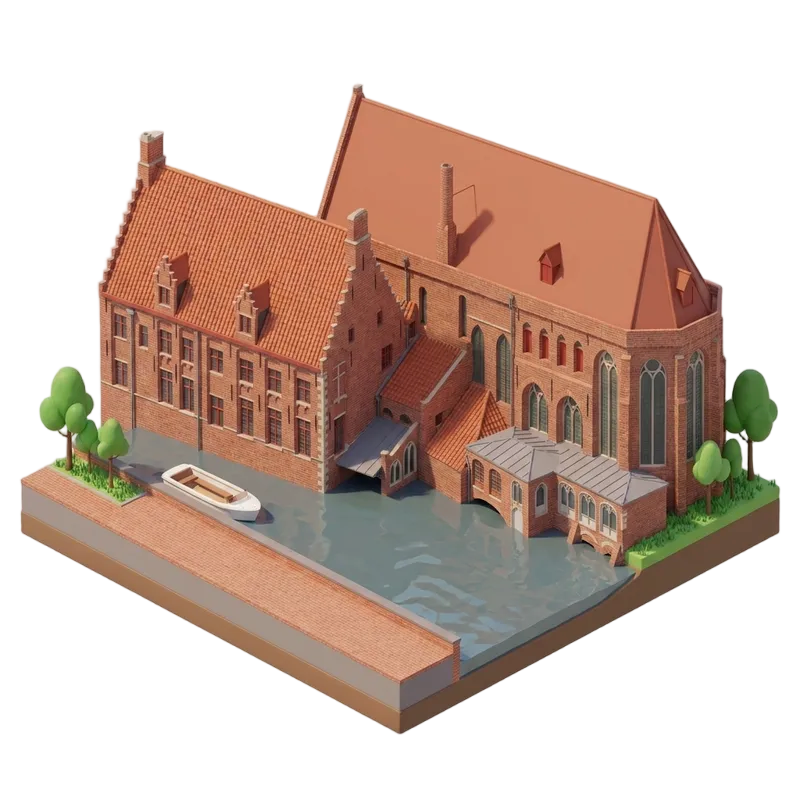
Adornes Estate

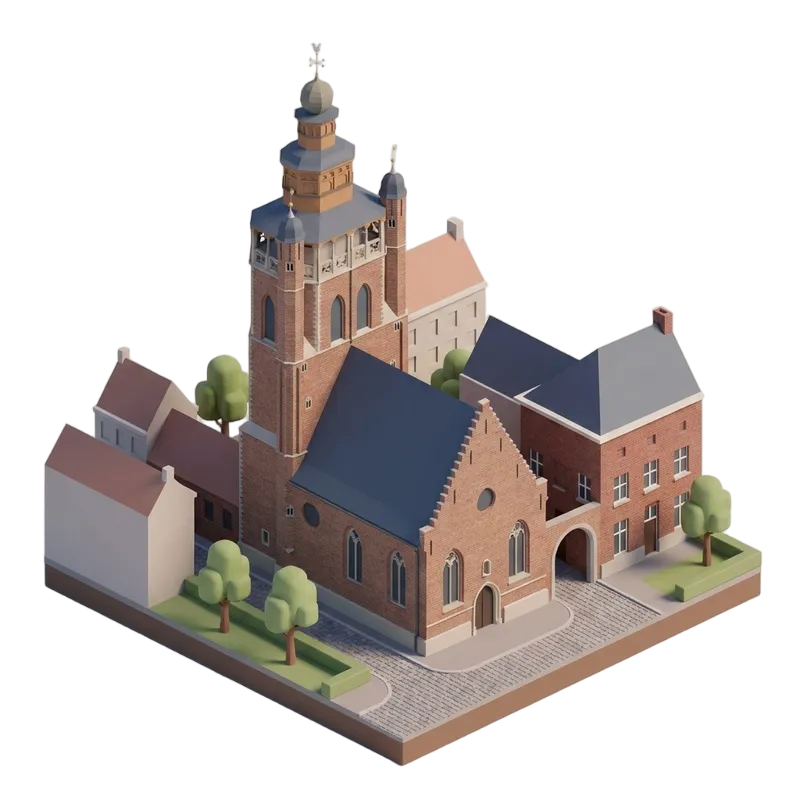
Start with the displays about the family or the current Anselm exhibition. Then give the Jerusalem Chapel time as a building: compare the chapel levels, look for the features that evoke pilgrimage, and ask which private rooms are in the current visitor circuit. When the oratory and private gallery are accessible, place them immediately after the chapel so the connections are still clear.

What to look for

Jerusalem Chapel’s separate levels
Notice how a visit moves between different levels and between open sightlines and secluded spaces. The arrangement makes more sense after reading about the family and its relation to Jerusalem.
Anselm’s trading and travel story
Look for the links between trading, civic office and long-distance journeys. Try to connect one place named in the exhibition with a specific decision the family made in Bruges.
Private gallery and Saint Catherine
If the restored passage is on the route, look for the alabaster figure of Saint Catherine. Set the small sculpture against the architecture it shares with the passage to the family’s devotional space.

Walk · 3 min

Getting to Kantcentrum

Walk via Balstraat. Budget 3 min for roughly 80 m.

Stop 2 · 1 hr
Kantcentrum

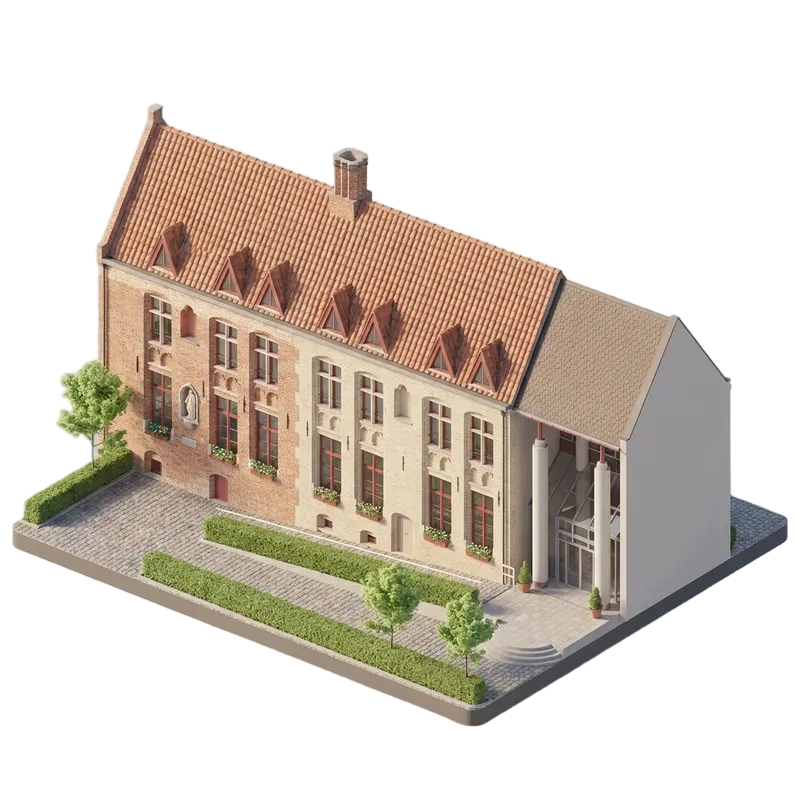
Spend the first half hour downstairs in the old Apostoline Sisters’ lace school. Look at the museum pieces and compare their edges, repeats and empty spaces. Move upstairs for the demonstration and watch the lace maker complete several repeated movements before asking about the pattern. If the demonstration is unavailable, use two contrasting forms of lace downstairs to make the technique visible.

What to look for

Patterns, tools and taught skill
Compare a pattern and the lace it produces. Focus on a small repeat to see how something that looks improvised depends on measured spacing and precise movement.
Lace in the Bruges collections
Choose one heavy-looking design and one with larger openings. Notice how the gaps shape the pattern just as much as the thread itself.
Upstairs bobbin-lace demonstration
Follow the hands through a full repeated sequence and look at what stays fixed on the cushion while the bobbins move. That contrast helps explain why a complex piece can be built in relatively small steps.

Walk · 2 min

Getting to Volkskundemuseum

Walk via Balstraat. Budget 2 min for roughly 60 m.

Stop 3 · 1 hr 5 min
Volkskundemuseum

Use the recreated workspaces as a short circuit rather than treating them as a collection of isolated curiosities. Start with the classroom, then compare the tailor’s workshop and a shop. Leave 15 minutes for the exhibition attic if open, particularly when visiting with someone who remembers everyday objects from the 1950s or 1960s.

What to look for

The classroom
Use the furniture and layout to picture how pupils and teacher saw one another. Ask a child to compare the room with their current classroom, starting with what a teacher could reach from the front.
The tailor’s workshop
Look for what sits within arm’s reach and what the tailor would use only occasionally. Compare its orderly working surfaces with the pattern tools you just saw at the lace school.
Sweet shop, moulds and old games
Look closely at the things a child would have recognised: sweets, games, biscuit or chocolate shapes. This is a good last connection to how people shopped and played outside the more formal spaces you visited earlier.
Children of the Past attic display
If open, choose one interactive corner and ask someone who remembers that period to explain a difference they notice. When younger visitors make the comparison themselves, it helps turn the objects downstairs into a living local history.
Timing, booking and admission

Set your pace

Enter Adornes around 13:30 and leave after 65 minutes. The Kantcentrum is a short walk away; aim for 14:40 so the afternoon demonstration is running. Leave for the Folk Museum around 15:40 and give its recreated rooms about 65 minutes. Keep 10 minutes for ticketing and queues. On a late start see the chapel and one room at Adornes, then go straight to the demonstration and save the Folk Museum’s attic for a future visit.

What to book ahead

Check the estate’s restoration notices before setting the date; the chapel, historic domestic spaces and Anselm displays may be presented through a different visitor route. The Lace Centre lists afternoon demonstrations from 14:00, except Sunday and holidays. Confirm the Folk Museum’s last entry and special hours before relying on a late finish.

Tickets and museum passes

Start around 13:30 and check the Kantcentrum demonstration times before leaving. Allow a separate Adornes ticket and compare the Kantcentrum–Folk Museum combination ticket with individual entry.

Sources and route research

Discover Art Exhibitions and Museum Programming in Bruges
Explore rich Flemish heritage and creative temporary displays.
Immerse yourself in the cultural landscape of Bruges by exploring local museum exhibitions. Discover everything from historic artifacts to modern masterpieces in renowned galleries across the city. Find your next inspiring cultural experience and plan your visual itinerary.
Purple watercolor painting of a solitary armchair in a softly rendered interior space, evoking stillness and quiet observation.
Adornes Estate
From Feb 5, 2022

Simply Photography Exhibition by Willy Vynck at Adornes Estate

Striking black and white contemporary art in Bruges.

See Willy Vynck's photographic collection focusing on the understated elegance of everyday reality. Hosted at Adornes Estate, these black and white images reveal form, shadow, and silent human interactions.

Simply Exhibition
Purple watercolor illustration featuring a chapel tower with arched windows and a hanging spherical ornament.
Adornes Estate
From Jan 28, 2023

Explore the Backstage Photographic Exhibition at Adornes Estate, Bruges

Archival photography mapping 150 years of historic estate life.

Witness the physical and social transformations of this historic Bruges landmark. This exhibition showcases archival photographs of chapel restorations, family celebrations, and the daily activities of past residents.

Backstage Exhibition Details
A purple and pink watercolor painting of a greenhouse interior filled with plants and structural beams, featuring the word "MELANCHOLY" on a wall.
Adornes Estate
From May 14, 2022

Melancholy: Poetry of the Mind Exhibition at Adornes Estate

Contemporary art reflecting on creative genius and loss.

This exhibition, hosted at the Adornes Estate's historic Jerusalem Chapel, reconsiders the multifaceted nature of melancholy. Viewers can contemplate various paintings and contemporary works that challenge modern taboos surrounding sorrow, introspection, and creative drive.

Melancholy Exhibition
Bruges

Explore the Cultural Heritage with Museums in Bruges

Discover local Flemish art and medieval history collections.

Browse the historic cultural institutions of Bruges at your own pace. Gain insights into religious art, medieval history, and traditional craftsmanship that define this UNESCO World Heritage city.