
Salzburg
Museum itinerary · Salzburg

Mozart, the court and the festival district on a Salzburg museum day

From the family piano to the prince-archbishops’ rooms

Link Mozart’s Residence and Birthplace with the Rupertinum and DomQuartier. Walk across the Salzach and reserve the final afternoon for the court rooms.

Museum stops
4
Visits and transfers
4 hr 41 min
Suggested days
Wed, Thu, Fri, Sat, & Sun
Why these museums go together

Begin in the larger Tanzmeisterhaus and cross the river to the narrow Getreidegasse apartment. Even without hearing a note, their very different rooms say something about making a living through music. The Rupertinum brings you into today’s arts district before the state rooms reveal the scale of the Salzburg court.

The order turns the houses into a comparison of space and audience. A modern exhibition beside the festival venues interrupts the biography. The final palace puts the power and wealth of the old patrons into view.

MusicArtHistory
Route map
© OpenStreetMap contributors

The itinerary, stop by stop

Stop 1 · 55 min
Mozart Residence

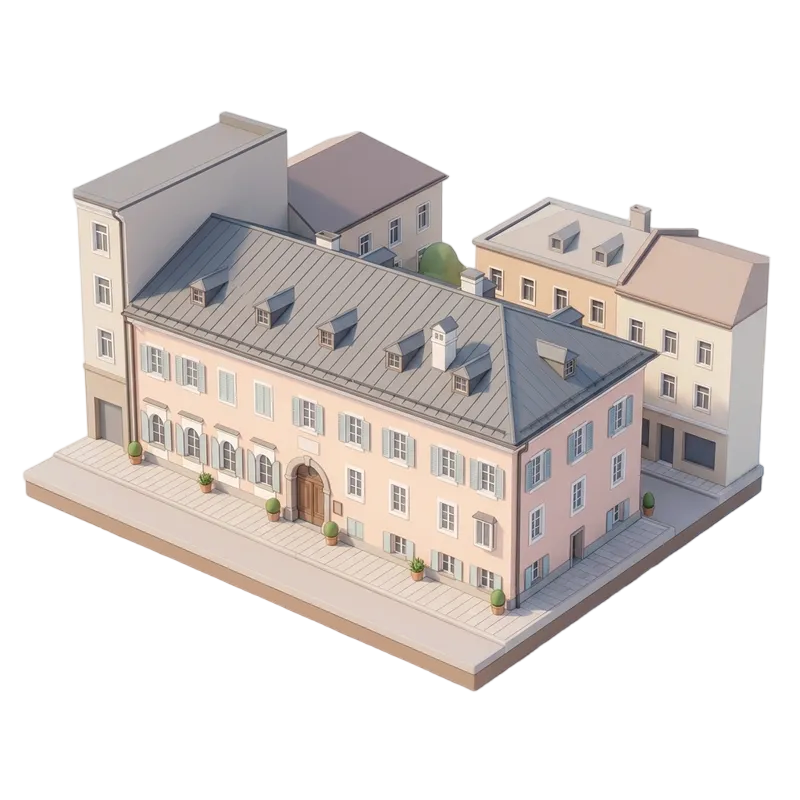
Start in the Tanzmeisterhaus on Makartplatz, where the family lived after leaving Getreidegasse. Look for the dance-master’s hall and imagine rehearsals and guests sharing a room. An instrument and a document can say more about earning a living than a complete row of portraits. Keep the size of this space in mind when you cross the river.

What to look for

Dance-master’s hall
Look at the floor area and the way the room is shaped to accommodate more people than the rooms at Getreidegasse. Its name reflects the building’s earlier use. Consider where an audience, players and other household activities might have fit around one another.
Instruments and working documents
Compare a keyboard or another available instrument with the smaller childhood violin seen earlier. Check the evidence in the display for how an instrument or document is linked to the family. That distinction matters when rooms or individual originals move between exhibitions.
The Magic Flute House
The Mozarteum includes the small wooden building in the courtyard when accessible. Think about its later relocation and museum presentation before assuming it always stood on this spot. It gives the route a different scale between a family hall and a small working space.
Family and the Makartplatz address
Before leaving, pick a letter, portrait or other available object related to the family. Compare its everyday or public purpose with the arrangement of the rooms. Step onto Makartplatz and look at the building in relation to the river crossing you just made.

Walk · 7 min

Getting to Mozart's Birthplace

Follow the walking route via Makartplatz → Staatsbrücke → Getreidegasse. The mapped distance is about 470 m, or 7 minutes on foot.

Stop 2 · 1 hr
Mozart's Birthplace

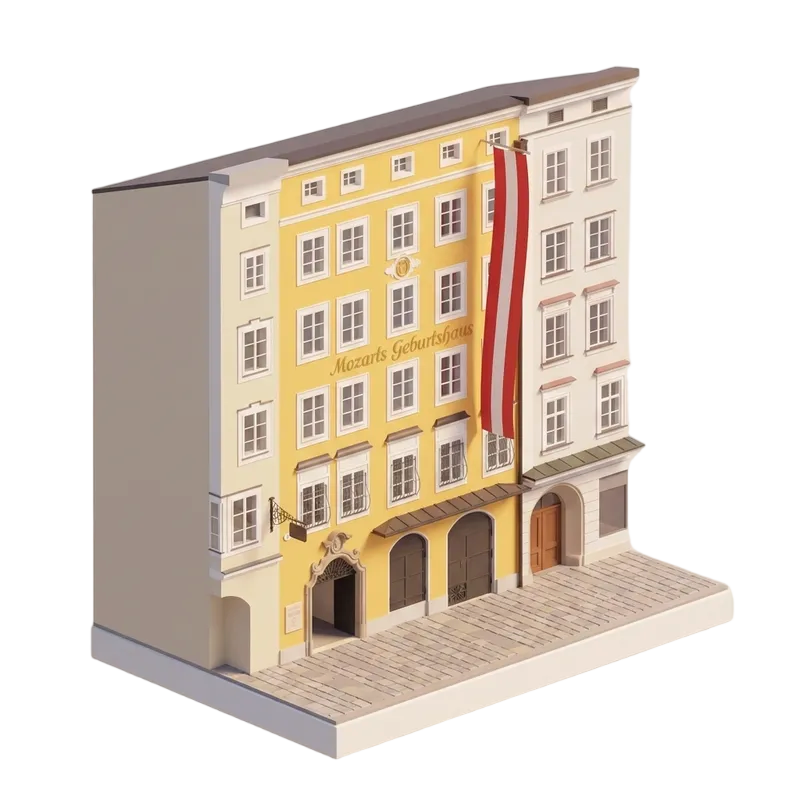
Start with the family’s rooms and the exhibits on Mozart’s early life. As you move through the narrow building, look for the details that make the famous prodigy part of a real Salzburg household. Start in the rooms linked to Mozart’s family and childhood and give the instruments time before following the separate material about theatre. The exhibition spans three storeys, so check the room map or ask staff rather than following crowds through every room. If an instrument is away, compare the official examples in the museum material and keep the original domestic space as your anchor.

What to look for

Childhood violin
Compare its proportions with the idea of a standard concert instrument. The Mozarteum attributes it to the Salzburg court maker Andreas Ferdinand Mayr. If it is visible, look first at the object’s scale, then read how the family’s musical and professional connections explain where it came from.
Concert violin
Where on view, compare the instrument associated with the Klotz workshop with the childhood violin. Notice differences you can judge without hearing the sound: body, scale and signs of workmanship. The museum’s instrument notes explain why a surviving object can be interesting even if an original label is misleading.
The old family apartment
Find the original residential rooms and look at their size rather than trying to reconstruct every furnishing. Consider what it meant to study, practise and receive news within a modest town dwelling. Carry that spatial comparison to the larger house across the Salzach.
Theatre and portraiture
Use the museum’s presentation of Mozart’s connections to opera and its portraits to see the difference between family life and the public image of a composer. Pick one picture or stage-related item and decide what it simplifies about the person you are meeting through the objects.

Walk · 3 min

Getting to Museum der Moderne Salzburg Altstadt (Rupertinum)

Follow the walking route via Universitätsplatz → Wiener-Philharmoniker-Gasse → Max-Reinhardt-Platz. The mapped distance is about 240 m, or 3 minutes on foot.

Stop 3 · 55 min
Museum der Moderne Salzburg Altstadt (Rupertinum)

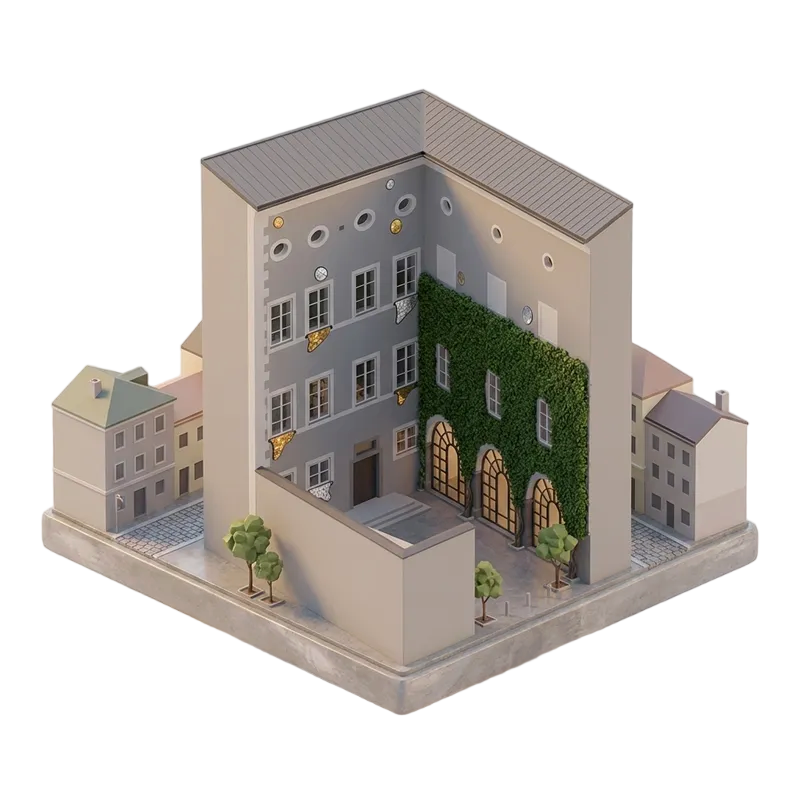
Enter the early Baroque building on Max-Reinhardt-Platz. Beside the festival venues, this is a good place to see what Salzburg exhibits now. Give one room to a slow comparison of two works. A background detail, colour or margin can change where you stand and how you read a small image before you return to the streets of the old court.

What to look for

Kokoschka’s Backgrounds
Scheduled to 30 May 2027, this exhibition makes the surroundings within a composition the subject of a visit. Choose where a background crease, colour or open area directs your eye. Use the same question in another print or painting show after the display changes.
Irma Rafaela Toledo if displayed
The venue schedules the Toledo exhibition to 30 May 2027 and presents paintings, drawings and prints. Compare how one idea changes across two materials. If the show is gone, choose a current artist working on paper for the same close reading.
The early Baroque Rupertinum
Notice what changes when contemporary work is given an older room, doorway or circulation route. Compare one doorway view with what a work looks like when you stand close. Architecture is a dependable part of the outing even as the exhibitions change.
Looking at a small work twice
Give the same work one look before and one after the caption. Note what you learned from the surface that the caption could not tell you. Unlike moving quickly through a second large building, this makes the small-scale stop an intentional part of the route.

Walk · 6 min

Getting to DomQuartier Salzburg

Follow the walking route via Max-Reinhardt-Platz → Alter Markt → Residenzplatz. The mapped distance is about 430 m, or 6 minutes on foot.

Stop 4 · 1 hr 35 min
DomQuartier Salzburg

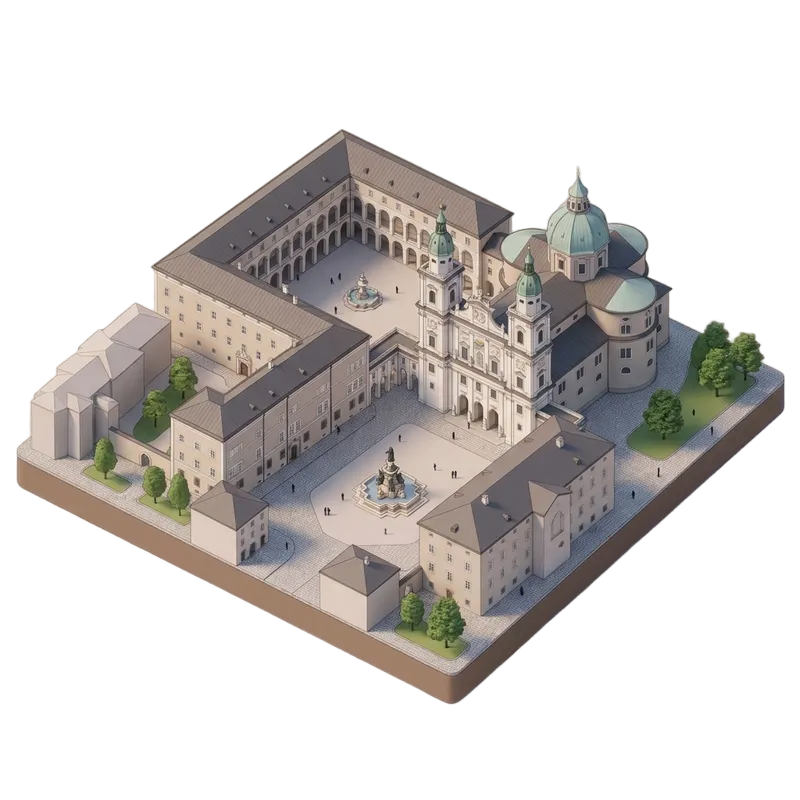
Begin with the state rooms and note the sequence from reception to ceremony. Continue along the open circuit towards the cathedral collections, keeping time for the route between buildings. During the published restoration the Residenzgalerie remains closed until autumn 2027. The changing scale of rooms and viewpoints matters here as much as any single painting.

What to look for

State rooms of the Residenz
Look along the sequence of doorways before concentrating on a ceiling or piece of furniture. The arrangement controls how guests approached the rulers. Choose one room and see which part would have been visible before a guest entered.
Terrace and organ loft
Use the arcade terrace for the relation between the buildings and the square. The upper route near the organ gives a different view of the cathedral interior. Notice what becomes legible from above and compare it with the street-level approach.
Cathedral Museum and St Peter’s collection
Give a liturgical object and one sculpture or painting time before moving on. Look for signs that the object was handled, carried or set at a distance. If an oratory is closed, use the remaining church or abbey objects for the same comparison.
Cabinet of Art and Curiosities
Compare objects in the historical cabinet arrangement before reading why they were selected. Which seem valuable for craft and which for rarity? The cabinet is another carefully staged room and a useful counterpart to the state apartments where you began.
Timing, booking and admission

Set your pace

Start around 09:30 and stop for lunch near Universitätsplatz after the Birthplace. Allow 55 minutes for one exhibition at the Rupertinum and enter the DomQuartier around 14:00. Its last admission is one hour before closing.

What to book ahead

Check the Rupertinum programme and the DomQuartier circuit for your date. During the published building works the Residenzgalerie is closed until autumn 2027; plan around the state rooms and cathedral museum instead.

Tickets and museum passes

The Mozarteum sells a combined ticket for its two houses valid for 24 hours. Rupertinum and DomQuartier are separate admissions. Compare city-card coverage if you have other Salzburg visits planned.

Sources and route research

Explore Inspiring Museum Exhibitions in Salzburg Austria
Immerse yourself in world-class art and historic displays.
Uncover artistic and historical displays across various venues. Learn about the rich variety of Salzburg museum exhibitions, featuring fine art, classical music heritage, and local cultural history.
Watercolor illustration of a grand Baroque stateroom in the Residenz Palace, featuring ornate purple ceiling frescoes, gilded stucco, and chandeliers.
DomQuartier Salzburg
Permanent exhibition

Explore the Residenz Palace State Rooms Exhibition at DomQuartier Salzburg

Tour the grand Baroque halls of the Salzburg Prince Archbishops.

Step into the luxurious ceremonial apartments featuring grand neoclassical interiors and 18th-century designs. View stunning frescoes by notable masters and inspect ornate stuccowork throughout the historic palace. Learn about the courtly customs and architectural evolution that shaped this power center.

Residenz State Rooms
Visit the St. Peter’s Museum Exhibition at DomQuartier Salzburg
DomQuartier Salzburg
Permanent exhibition

Visit the St. Peter’s Museum Exhibition at DomQuartier Salzburg

Explore sacred art and historic treasures of St. Peter's Abbey.

Discover historic paintings, precious vestments, and rare musical heritage at this permanent exhibition. Learn about centuries of monastic craftsmanship and liturgical history in Salzburg.

St. Peter’s Museum
Cathedral Museum and Cathedral Treasure Exhibition in Salzburg
DomQuartier Salzburg
Permanent exhibition

Cathedral Museum and Cathedral Treasure Exhibition in Salzburg

Permanent collection of sacred art and historic regional treasures

Discover a remarkable array of sacred artifacts, rare liturgical utensils, and Baroque sculptures at DomQuartier Salzburg. Highlights include the Early Mediaeval Cross of St Rupert and a reconstructed seventeenth-century Cabinet of Curiosities.

Cathedral Treasure Exhibition
Salzburg

Salzburg Museum Guide for Exploring Local Cultural Attractions

Discover historic arts and musical heritage in Salzburg.

Browse a comprehensive overview of the cultural landmarks and exhibition spaces throughout the city. Plan your itinerary by discovering historical centers, art galleries, and houses dedicated to classical music.