Gruuthusemuseum and Musea Bruges Resolve Historical Mystery: Portrait by Ingres Identified as Local Artist
Art historians have solved a long-standing mystery regarding a 19th-century portrait by French master Jean-Auguste-Dominique Ingres, revealing a deep connection to the creative legacy of Bruges. Researchers at Musea Bruges have successfully identified the previously anonymous subject of the 1813 drawing as the neoclassical painter Joseph Ducq (1762–1829).
Uncovering the Identity of a Bruges Neoclassical Master
For decades, the identity of the man in the portrait remained a subject of debate. In 1980, scholars tentatively identified the figure as a Bruges politician, Charles-Bernardin-Ghislain Coppieters-Stochove. However, recent investigation by Dr. Thijs Dekeukeleire, a researcher at Musea Bruges, has disproved this theory.
The breakthrough came after comparing the Ingres portrait with a lithograph print of Joseph Ducq created by his student, Adriaan Wulffaert, which is preserved in the Musea Bruges print collection. The precise visual match between the two works confirmed that Wulffaert's print was modeled directly on the original drawing by Ingres.
Discovering the International Footprint of Bruges Artists
The discovery highlights the active role local painters played in the broader European art world during the early 19th century. After completing his training at the Bruges Academy, Ducq traveled to artistic hubs like Paris and Rome to refine his practice. While in Rome, he became part of a vibrant collaborative circle of French and Flemish artists, which included Ingres.
The portrait was sketched by Ingres in 1813, likely as a parting gift shortly before Ducq returned to Belgium to assume the directorship of the Bruges Academy. Because Ingres rarely drew portraits of artists from this region, the piece holds an incredibly rare position within his wider body of work.
This investigation was conducted as part of the Apprentice-Master II research project, an initiative tracking the international trajectories of 19th-century artists from the region. While the original drawing remains in a private collection in Toronto, Canada, the revelation adds a fascinating chapter to the city's heritage.
For visitors exploring the local cultural landscape, Musea Bruges continues to uncover the rich narratives behind its collections through dedicated research hubs like the BRON research centre.
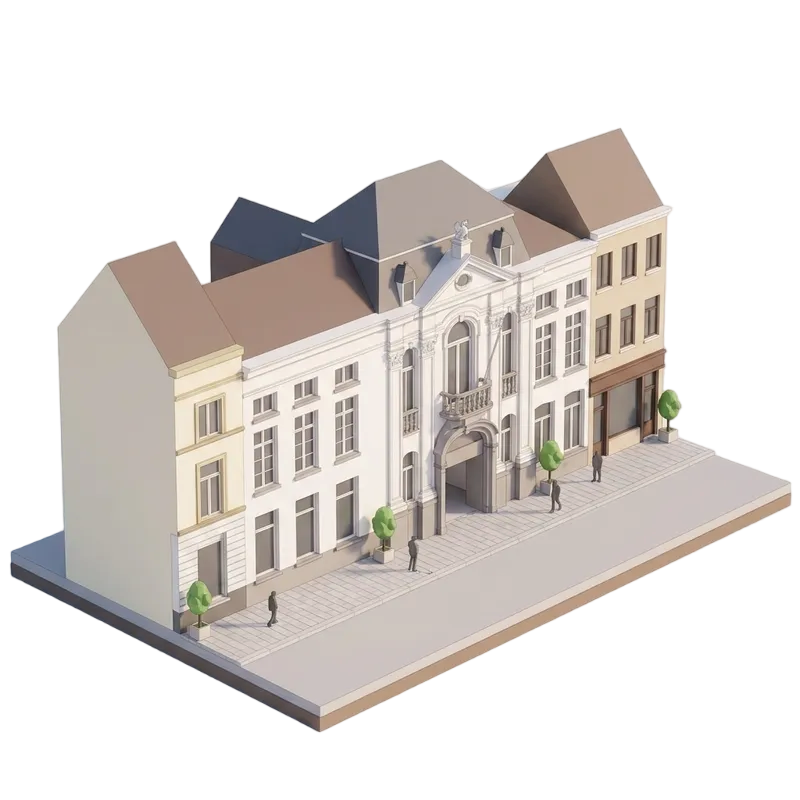
If you are planning to immerse yourself in the local heritage, visiting the historic Gruuthusemuseum palace offers a gateway into five centuries of creative history. You can use the Musemap (musemap.art) platform to easily browse museums across the city or check what's on to plan your next itinerary.