
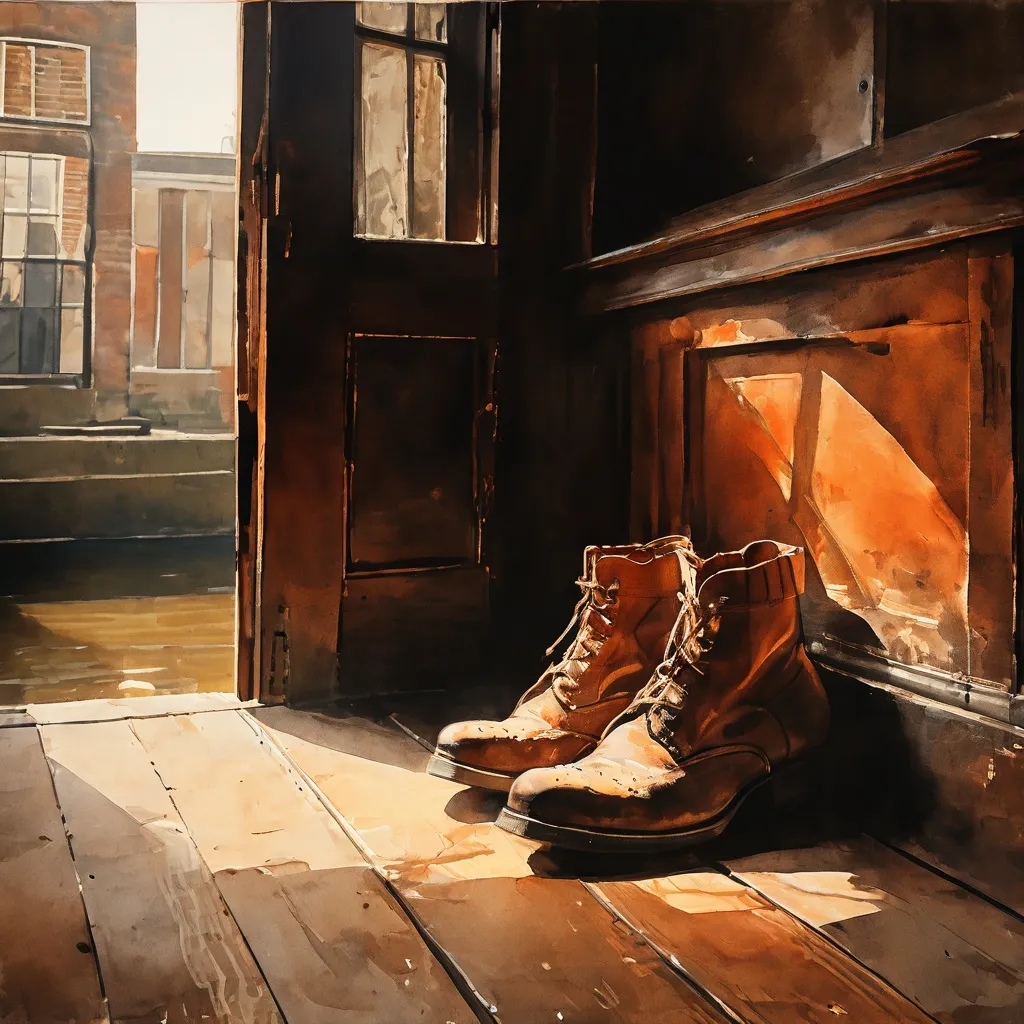
Hidden Shoes Reveal a Centuries-Old Mystery at Ons’ Lieve Heer op Solder in Amsterdam
During recent renovation work at Ons’ Lieve Heer op Solder (Museum Amstelkring), a significant historical discovery was made that sheds light on intriguing folk practices. Construction workers uncovered an unexpected collection of old leather shoes hidden beneath the wooden floor of a front room, close to the fireplace. While the initial find might have seemed minor to the builders focused on the renovation, museum conservator Theo Tienhooven recognized its potential importance and embarked on a deeper investigation into this curious relic from the past.
Unearthing a Curious Find During Renovations
The hidden footwear, which initially caused little stir, was later examined more closely by conservator Tienhooven. Upon inspection, it became clear that the discovery was not a matching pair, but rather two left shoes of different sizes. They also showed signs of extensive modification, with parts removed or reshaped, indicating they had been mended and reused over time—a common practice when shoes were valuable possessions.
Initial attempts to date the shoes were challenging due to their altered condition. While the conservator first speculated they might date back to the 17th century, potentially linking them to the secret church's early days, further analysis was needed. Experts at the Rijksmuseum's textile department provided a preliminary dating to the second half of the 19th century based on their visible characteristics. Currently, the shoes are awaiting more precise dating methods in a depot.
The Enigma of Concealed Footwear in Dutch Homes
To understand the broader context of this discovery, Tienhooven consulted with Inge Specht, a conservator at the Shoe Museum in Waalwijk. Specht corroborated the 19th-century estimate and highlighted a fascinating historical phenomenon: the deliberate concealment of shoes within buildings. This practice was particularly common in England, where academic conferences are sometimes dedicated to "concealed shoes."
These hidden shoes are believed to have served a magical purpose, intended to offer protection against evil spirits and other misfortunes. They were sometimes placed by residents as a form of warding off negativity, or by builders who feared disturbing existing spirits during construction. Such finds are frequently located near hearths, similar to the discovery at Ons’ Lieve Heer op Solder, and occasionally accompanied by other objects like fabric scraps or even cat skulls, though none were found with the Amsterdam shoes.
This practice wasn't confined to England; similar discoveries have been made across the Netherlands. Examples include a child's shoe, fabric, a cat skull, and a tassel found under the floor of Kasteel Amerongen; a bricked-in clog at the Groningen train station; and a whole and half men's shoe discovered in a Tilburg residence. These instances suggest a widespread belief in the protective power of hidden footwear.
What This Discovery Means for Visitors to Ons’ Lieve Heer op Solder
Despite the emerging historical context, some questions remain for conservator Tienhooven. The idea of a pastor, who once lived in the room, engaging in such a folk practice seems unlikely. It’s possible the shoes were placed later by builders during the late 19th-century conversion of the church into a museum, or perhaps during the installation of gas lines. A more precise dating of the shoes would significantly refine the narrative and deepen our understanding of their purpose.
For visitors to Ons’ Lieve Heer op Solder, this discovery adds an intriguing layer to the museum's already rich history, extending beyond its religious heritage to reveal forgotten domestic superstitions and cultural practices. While the exact story of these particular shoes remains partially shrouded in mystery, they offer a tangible link to the everyday beliefs and hidden lives of those who once inhabited this historic canal house.
To continue exploring fascinating cultural sites in Amsterdam and beyond, visit Musemap (musemap.art) and browse other captivating museums or find more hidden gems on the map.