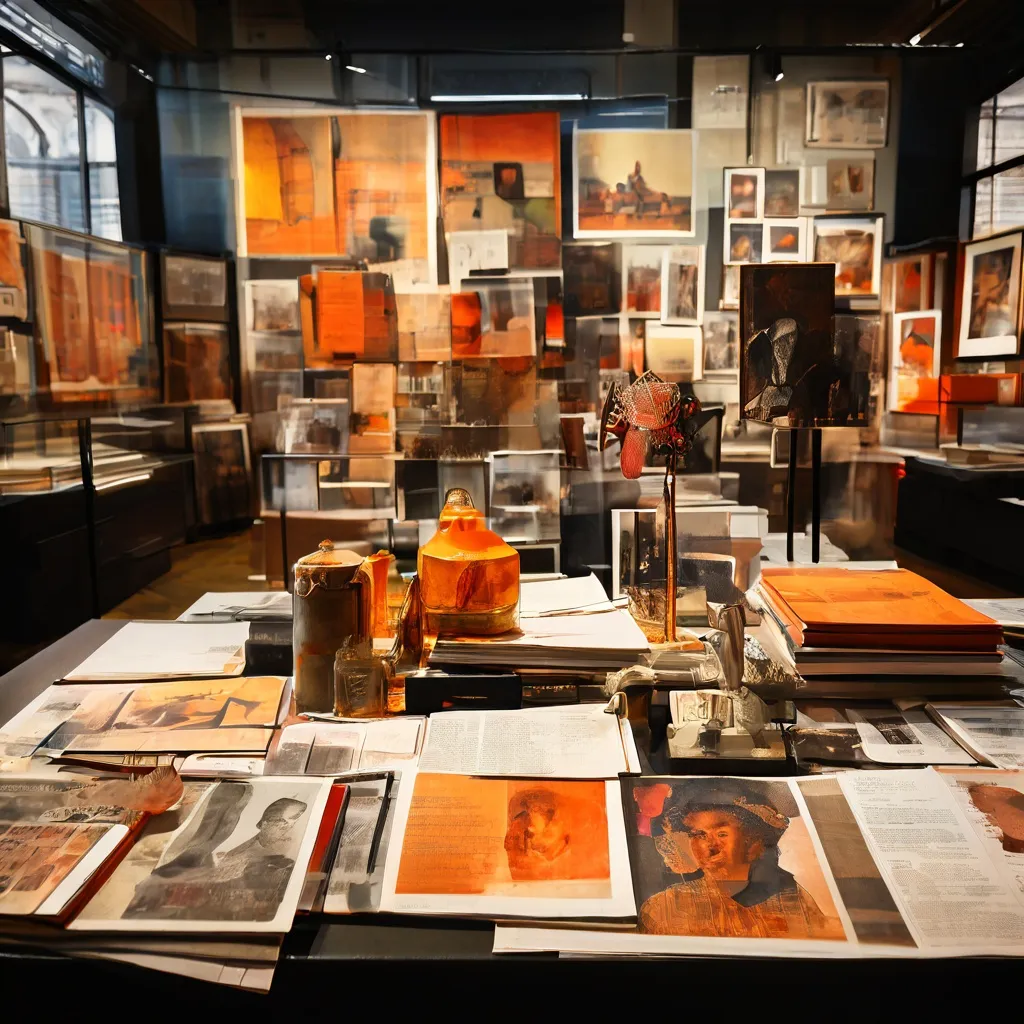
The Black Archives in Amsterdam Unveils 'Nos Tei' Exhibition, Documenting Black Queer History
The Black Archives in Amsterdam has presented "Nos Tei," an exhibition dedicated to documenting the rich history and ongoing activism of the Black queer community in the Netherlands. This significant project emerged from a critical need to ensure that Black queer perspectives are recognized and preserved within national cultural institutions.
Exploring the Origins of 'Nos Tei'
The inspiration for "Nos Tei" (Papiamentu for ‘we are here’ or ‘we exist’) came after the 2018 "With Pride" exhibition, which aimed to showcase forty years of LGBTQ+ activism in the Netherlands through the IHLIA, the Dutch archive of LGBTQ+ history. Filmmaker and activist Andre Reeder, who was involved in the pioneering Black queer collective Strange Fruit in the 1980s, expressed profound discomfort with the exhibition's largely white narrative, noting the exclusion of Black queer experiences like that of Strange Fruit.
Following Reeder's criticism, IHLIA engaged with activists to find a solution. This collaboration led to the involvement of Wigbertson Julian Isenia and Naomie Pieter, two young Black queer activists who were already developing "The Black Queer Archives" at The Black Archives. Instead of merely adding a late contribution to "With Pride," the activists proposed a new, dedicated exhibition: "Nos Tei," which would eventually tour alongside "With Pride."
The Importance of Documenting Black Queer Narratives
Isenia and Pieter emphasized the crucial role of creating their own archive at The Black Archives. They explained that while institutions might not intentionally exclude non-white narratives, a lack of awareness and sensitivity can lead to their omission. Establishing an independent archive provides essential control over content and ensures that the history of Black queers is told accurately and authentically. They noted that archiving this history is inherently a political act, especially for a community whose stories are often overlooked or whitewashed.
Through "Nos Tei," researchers uncovered compelling narratives. Naomie Pieter highlighted the deep history of intersectionality within the Black queer community, citing figures like Black lesbian activist Dolores Djodje, who was active across queer, anti-racism, and feminist movements. Julian Isenia also discovered different, non-Western understandings of sexuality, exemplified by theatermaker Fridi Martina, who navigated her identity in ways that transcended conventional categories.
Lessons from Decades of Black Queer Activism in Amsterdam
Discussions with activists involved in "Nos Tei" revealed both continuities and shifts in Black queer activism over the years. Discriminatory experiences within the broader white LGBTQ+ community persist, much as they did decades ago. Activists like Naomie Pieter articulated a contemporary paradox in the Netherlands: while protesting for LGBTQ+ rights is generally safe, demonstrating against racism often faces significant governmental and police obstruction. This highlights a persistent struggle that Black queer individuals navigate.
Regarding methods of activism, older generations often relied on collective gatherings, physical protests, and independent publications (zines). Julian Isenia noted actions like the Surinamese Homosexuals (SUHO) group collectively protesting colonial anti-homosexuality laws at the Surinamese embassy. While digital activism and online petitions are prevalent today, the activists suggested that a return to more spontaneous, collective street actions could still be powerful.
While "Nos Tei" marks a significant step, Julian Isenia reflected that it might not fully "restore honor" to Black queer history, noting that similar initiatives have emerged in the past. Naomie Pieter echoed this, expressing joy at the positive reception from the Black queer community, particularly older activists, but stressing that structural changes within cultural institutions are still needed to prevent future exclusions.
For those interested in exploring the diverse stories of Amsterdam's cultural landscape, Musemap (musemap.art) offers an opportunity to browse museums and discover more cultural spots across the city.