Madrid
Spanish Imperial Heritage

The Royal Site of San Lorenzo de El Escorial

A grand historical complex showcasing the legacy of the Spanish Empire.

HistoryArchitectureArtLocal heritage

The Royal Site of San Lorenzo de El Escorial is a vast monumental complex serving as a monastery, royal palace, and pantheon for Spanish kings. It embodies the cultural zenith of Spain's Golden Age, offering visitors a journey through significant historical spaces like its grand Basilica, ornate Library, and symbolic Battle Room.

This vast complex near Madrid combines a monastery, royal palace, pantheon, and library, reflecting the Spanish Golden Age and the reign of Philip II. It's a UNESCO World Heritage site set in the Guadarrama mountains.

Royal Site of San Lorenzo de El Escorial
Royal Site of San Lorenzo de El Escorial: A Monumental Legacy

The Royal Site of San Lorenzo de El Escorial is a vast complex near Madrid, combining a monastery, royal palace, pantheon, and library. Conceived by Philip II, this UNESCO World Heritage site embodies the Spanish Golden Age's ideological and cultural aspirations, blending Italian and Flemish styles. Visitors can explore diverse functions, from the grand Basilica and royal pantheon to the historically rich Library, nestled amidst the scenic Guadarrama mountains.

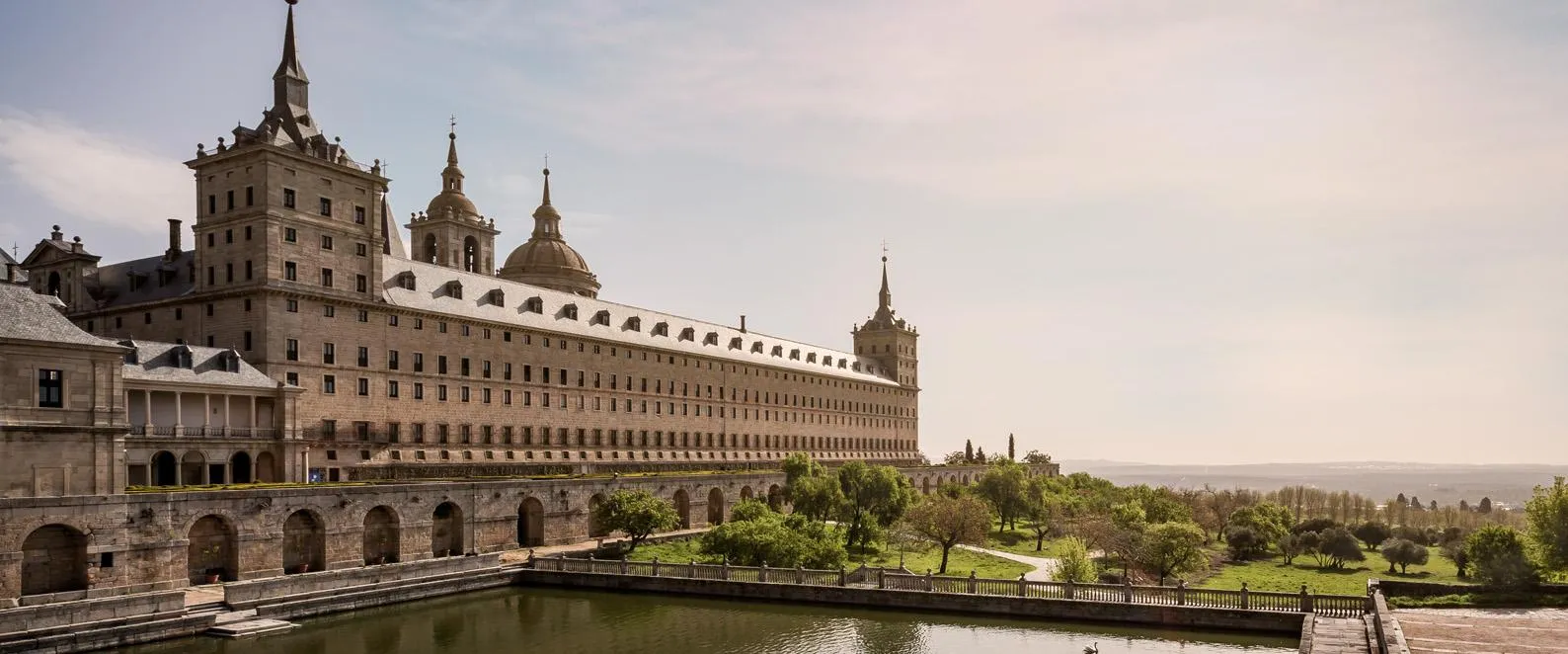
Large stone building with multiple spires and arched walkways beside a reflecting pool under a clear sky
Royal Site of San Lorenzo de El Escorial opening hours in Madrid

Check today’s opening status, weekly schedule, and special date changes for Royal Site of San Lorenzo de El Escorial. Use these opening hours to plan your arrival and avoid closed times in Madrid.

Monday
Tuesday
Wednesday
Thursday
Friday
Saturday
Sunday
-
10:00-19:00
10:00-19:00
10:00-19:00
10:00-19:00
10:00-19:00
10:00-19:00
Tickets and Admission to Royal Site of San Lorenzo de El Escorial

The Royal Site of San Lorenzo de El Escorial, located outside Madrid, offers a range of admission options for visitors. General entry is available, with reduced ticket prices for youth, students up to age 25, and seniors aged 65 and above. Children aged four and under can enter for free. Additionally, group tickets are offered, and there are various free entry conditions that may apply to specific categories, often requiring valid identification.

Standard Ticket
€14.00

For visitors who do not qualify for reduced or free rates Valid for self-guided visit

Reduced Ticket
€7.00

Children ages 5–16, seniors over 65, or students up to age 25 with valid student ID ID or passport proof required for age/status validation

Free Ticket (Under 5)
Free

Children under 5 years old Can only be acquired at the ticket office

Location of the Royal Site of San Lorenzo de El Escorial

The Royal Site of San Lorenzo de El Escorial is situated at Avenida de Don Juan de Borbón y Battenberg, 4, in the city of San Lorenzo de El Escorial, within the Madrid region of Spain. This vast complex is located near Madrid and nestled within the scenic Guadarrama mountains. Its setting provides a significant scenic backdrop for this historical journey, enhancing the visitor experience beyond the architectural marvels.

© OpenStreetMap contributors

Avenida de Don Juan de Borbón y Battenberg 4

28200 San Lorenzo de El Escorial

Madrid, ES

Planning Your Visit

To visit the Royal Site of San Lorenzo de El Escorial, located in San Lorenzo de El Escorial, it is recommended to make a reservation in advance. The site operates with timed entry to manage visitor flow throughout the day. This approach helps ensure a smoother experience at the historic complex.

Planning Your Visit

Discovering the Royal Site of San Lorenzo de El Escorial

The Royal Site of San Lorenzo de El Escorial, a monumental complex near Madrid, uniquely merges roles as a monastery, royal palace, pantheon, college, and library. Conceived by Philip II, this UNESCO World Heritage site exemplifies Spain's Golden Age, integrating Italian and Flemish artistic styles. Visitors can explore the grand Basilica, home to royal cenotaphs and the King's Pantheon, the solemn burial place for Spanish monarchs. The historically rich Library, notable for its frescoed vaults, and the symbolic Battle Room with military murals offer further insight. Set within the Guadarrama mountains, the site provides a profound journey through royal history and cultural heritage, complemented by serene Italian-style gardens.
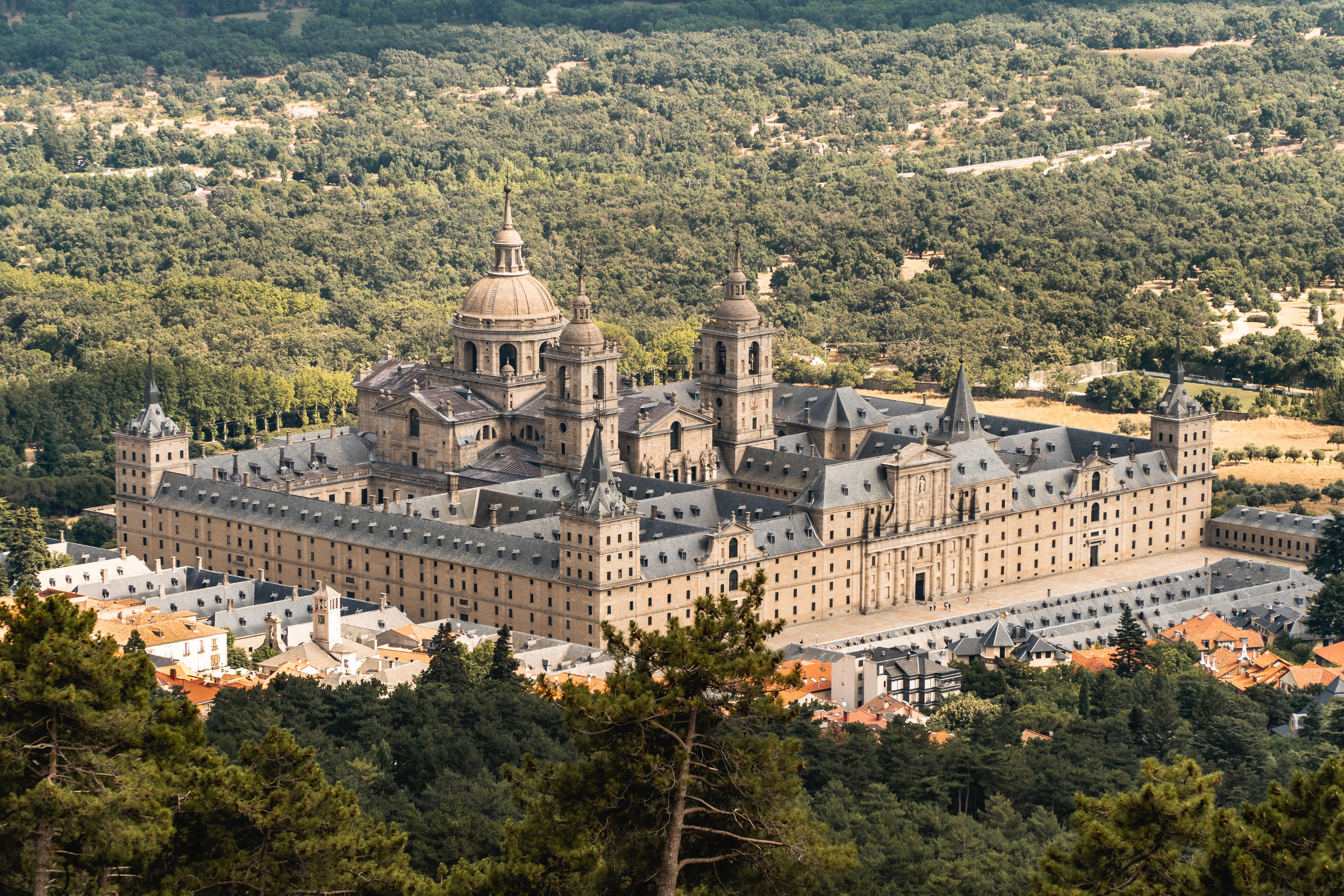
Aerial view of the Royal Site of San Lorenzo de El Escorial with its large complex, domes, and towers surrounded by green trees

History of the Royal Site of San Lorenzo de El Escorial

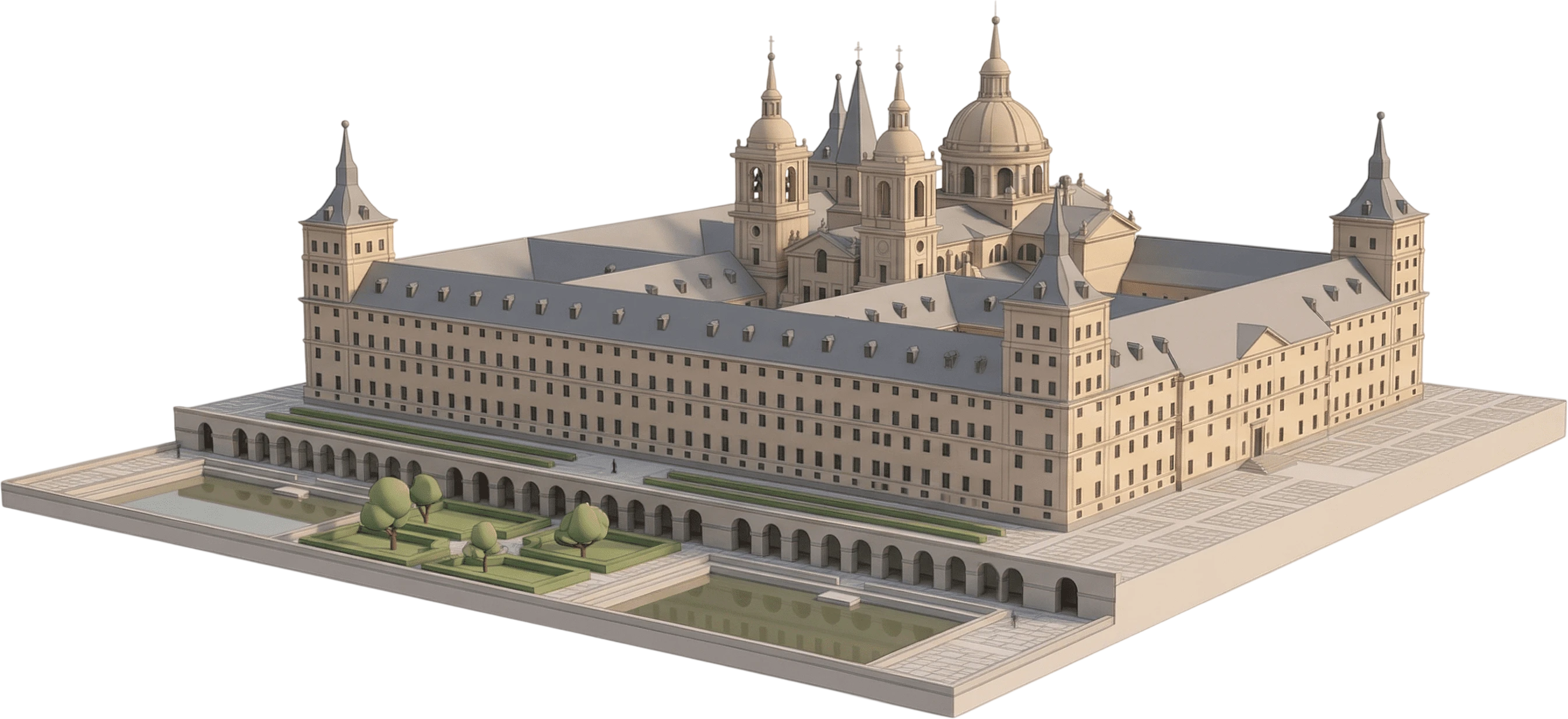
King Philip II initiated the construction of the Royal Site of San Lorenzo de El Escorial outside Madrid between 1563 and 1584. He envisioned this grand complex as a multifaceted monument, serving as a royal palace, a monastery for Hieronymite monks, and a necropolis for the Spanish monarchy, representing the power of the Spanish Empire. Designed by architects Juan Bautista de Toledo and Juan de Herrera, its austere aesthetic gave rise to the distinct **Herrerian style** of Spanish Renaissance architecture. Recognized as the largest Renaissance building in the world, it continues to house a vast library and significant art collections. Its profound historical and cultural importance was formally acknowledged with its designation as a UNESCO World Heritage Site in 1984.

  • Construction ordered by King Philip II

    1563-1584Founding

    King Philip II ordered the construction of El Escorial between 1563 and 1584. He envisioned it as a monument to Spain's role as a center of the Christian world, a princely mansion, a royal residence, a monastery, and a necropolis for his family.

  • Founded as a monastery and royal residence

    Founding

    El Escorial was established as both a royal palace and a monastery. Initially housing Hieronymite monks, it later became a monastery of the Order of Saint Augustine. It also included a boarding school, the Real Colegio de Alfonso XII, which is still in operation.

  • Designed in the Herrerian style

    Architecture

    The design of El Escorial, particularly its austere and severe aesthetic, became so iconic that it gave rise to a new architectural style of Spanish Renaissance architecture known as the Herrerian style.

  • Gridiron floor plan inspired by Temple of Solomon

    Architecture

    The building's floor plan is in the form of a gridiron, a design traditionally believed to honor Saint Lawrence. However, the most persuasive theory suggests it is based on descriptions of the Temple of Solomon by Flavius Josephus, with modifications to accommodate its multiple functions.

  • Juan Bautista de Toledo appointed architect

    1559Notable person

    King Philip II engaged the Spanish architect Juan Bautista de Toledo to collaborate on the design of El Escorial. Toledo, who had worked on St. Peter's Basilica in Rome, was appointed architect-royal in 1559.

  • Cornerstone laid in 1563

    1563-1584Construction

    The cornerstone for El Escorial was laid on 23 April 1563. The construction, overseen initially by Juan Bautista de Toledo, was completed in 1584, taking slightly less than 21 years.

  • Juan de Herrera took over construction

    1567-1584Notable person

    Following the death of Juan Bautista de Toledo in 1567, his apprentice Juan de Herrera took over the direction of the building's construction. Under Herrera, the complex was completed in 1584.

  • Designated a UNESCO World Heritage Site

    1984Heritage status

    On 2 November 1984, UNESCO declared The Royal Seat of San Lorenzo of El Escorial a World Heritage Site, recognizing its outstanding universal value.

  • Designated Spanish Cultural Heritage

    1931Heritage status

    The site was designated as a 'Monument' under Spanish Cultural Heritage on 3 June 1931, signifying its national historical and architectural importance.

  • Spanish royal necropolis

    Overview

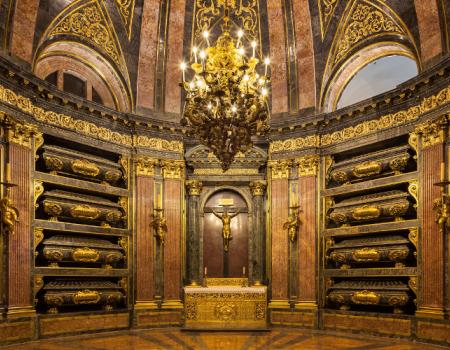
    El Escorial has served as the burial site for most Spanish kings of the last five centuries, including both Habsburg and Bourbon dynasties, making it a significant royal pantheon.

  • Vast library collection

    Collection

    The Royal Library at El Escorial contains over 40,000 volumes, including thousands of priceless manuscripts and a significant collection of early printed books, making it a major repository of knowledge.

  • Extensive collection of relics

    Collection

    Philip II donated one of the largest collections of relics in Catholic Christendom to El Escorial, consisting of approximately 7,500 relics stored in 570 sculpted reliquaries designed by Juan de Herrera.

  • Major revitalisation in 2024

    2024Renovation

    In 2024, El Escorial underwent a major revitalisation funded by €6.5m from the EU. This included reopening and reorganising the dormant painting and architecture galleries, and updating facilities with LED lighting, EV charging, and solar panels.

  • Monastery's imposing structure

    Architecture

    Built primarily from gray granite, El Escorial is a gigantic quadrangle, approximately 224 by 153 meters, with a severe and austere outward appearance, more akin to a fortress than a monastery or palace.

  • Art collection from various schools

    Collection

    The art gallery at El Escorial houses masterworks from the German, Flemish, Venetian, Lombard, Ligurian, Italian, and Spanish schools, spanning the fifteenth, sixteenth, and seventeenth centuries.

  • Architectural museum showcasing construction

    Architecture

    The architectural museum within El Escorial features eleven rooms displaying tools, materials, blueprints, and documents related to the edifice's construction, offering insight into its building process.

  • Basilica's Greek cross plan

    Architecture

    The basilica's plan was modified by Juan de Herrera from a Latin cross to a Greek cross, with a full circular dome over the center, influenced by St. Peter's Basilica but distinct in its stark Doric style.

  • Early modern library design

    Collection

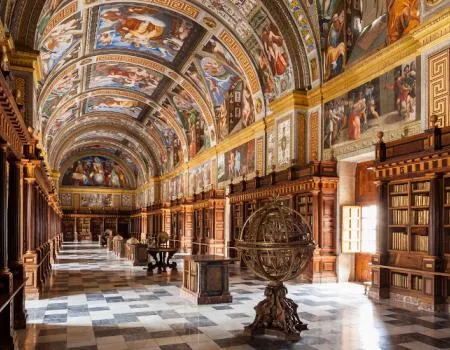
    The Royal Library, designed by Juan de Toledo and Juan de Herrera, was one of the first libraries in Europe to break with medieval design, adopting a 'wall system' for bookcases, and inspired Domenico Fontana's Vatican Library.

  • Symbol of Spanish monarchy and religion

    Cultural significance

    El Escorial's dual nature as a royal palace and monastery served as an architectural manifestation of the power of the Spanish monarchy and the ecclesiastical predominance of the Catholic religion in Spain during the 16th and 17th centuries.

  • Largest Renaissance building

    Historical period

    El Escorial is recognized as the largest Renaissance building in the world, reflecting the grandeur and architectural ambitions of 16th-century Spain.

  • Philip II's personal collection donated

    Collection

    Philip II donated his personal collection of documents and acquired numerous valuable libraries and works, laying the foundation for the Escorial's extensive library and art collections.

  • Site chosen for royal aspirations

    Milestone

    The austere location at the foot of Mount Abantos was chosen by Philip II for El Escorial, reflecting his desire for a princely mansion and a grand edifice to commemorate a military victory and serve as a royal necropolis.

  • Phrase for lengthy tasks

    Milestone

    The construction of El Escorial, completed in slightly less than 21 years, has led to the expression '_la obra de El Escorial_' in Spanish, meaning something that takes a long time to finish.

Got Questions About Your Royal Site of San Lorenzo de El Escorial Visit?

Planning your trip to the Royal Site of San Lorenzo de El Escorial? Wondering if you need to print your tickets (you don't!) or what to do if they vanish from your inbox? Find quick answers to these and other common questions about your visit, ensuring a smooth experience at this magnificent complex outside Madrid.

Can I buy tickets for San Lorenzo de El Escorial at the box office?

Yes, you can buy tickets at the box office for the Royal Site of San Lorenzo de El Escorial, but only for same-day entry. Advance tickets are not sold at the box office, and you may experience a wait depending on the number of visitors.

What payment methods are accepted for online ticket purchases for Royal Site of San Lorenzo de El Escorial?

For online ticket purchases for the Royal Site of San Lorenzo de El Escorial, you can pay using Visa or Mastercard, Google Pay, and Apple Pay.

Is it necessary to print my tickets for the Royal Site of San Lorenzo de El Escorial?

No, you do not need to print anything. You only need to display your confirmation email upon entry. Your tickets with QR codes are sent to you by email immediately after purchase and can also be accessed from your profile on the official website.

How far in advance can I buy tickets for Royal Site of San Lorenzo de El Escorial?

You can purchase tickets online for the Royal Site of San Lorenzo de El Escorial up to 90 days before your visit. For some specific sites and types of visits, same-day online purchases might also be available.

Tips for Visiting the Royal Site of San Lorenzo de El Escorial

When planning your visit to the Royal Site of San Lorenzo de El Escorial, it is recommended to make a reservation in advance. The complex operates with timed entry, which helps manage visitor flow and enhance the experience at this significant historical site. Considering this detail before your arrival can contribute to a smoother visit.

Royal Site of San Lorenzo de El Escorial: Visitor Fit

The Royal Site of San Lorenzo de El Escorial is particularly suited for visitors with an interest in Spanish history, grand architecture, and Renaissance art. Those fascinated by royal history, monastic life, and extensive historical libraries will find a rich experience within this monumental complex in San Lorenzo de El Escorial. Due to its significant scale, visitors should plan for a substantial exploration. Making reservations is recommended, as timed entry may be in effect for optimal access.

Photos of the Royal Site of San Lorenzo de El Escorial

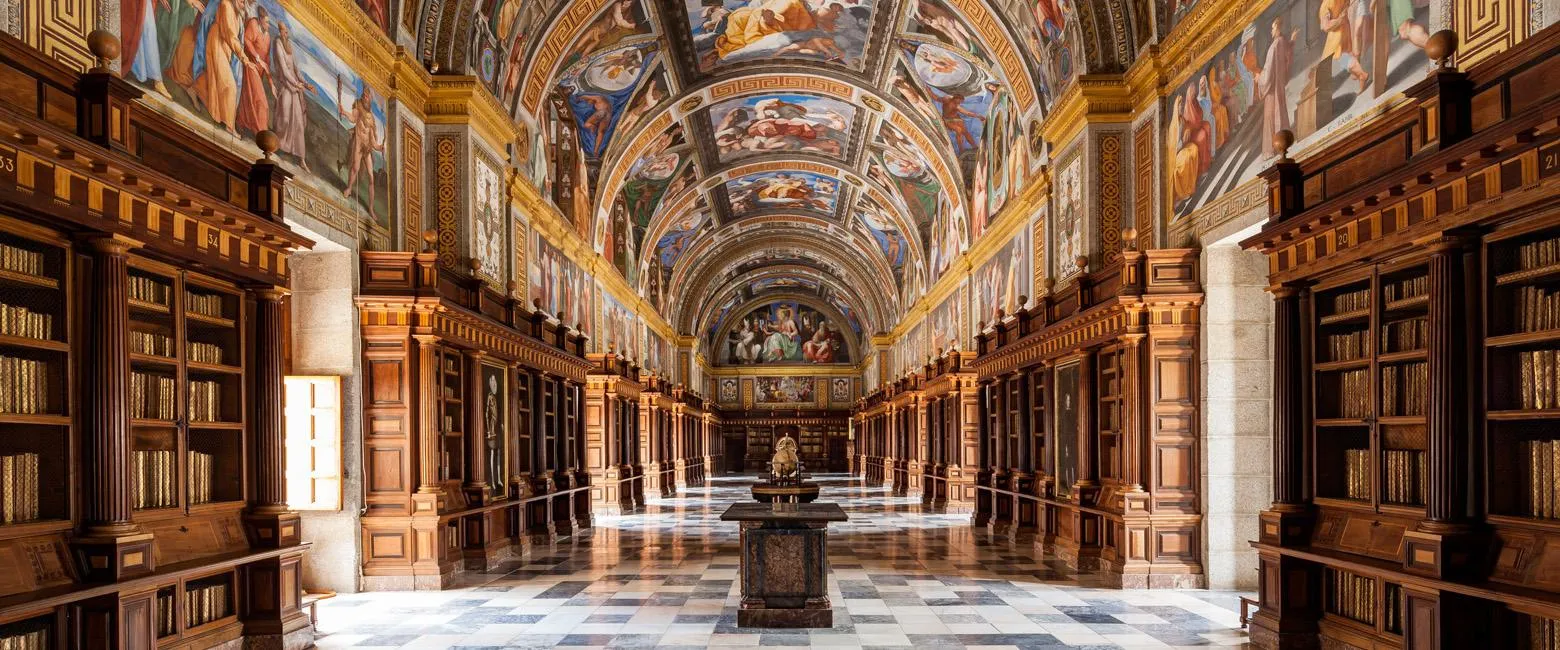
Explore visual highlights of the Royal Site of San Lorenzo de El Escorial through these photos. Discover the monumental scale of its exterior with domes and spires, set amidst green landscapes. Inside, view the opulent Royal Library with frescoed ceilings and ornate bookshelves, and the solemn grandeur of halls featuring gilded royal tombs and a majestic golden altar, reflecting centuries of history.
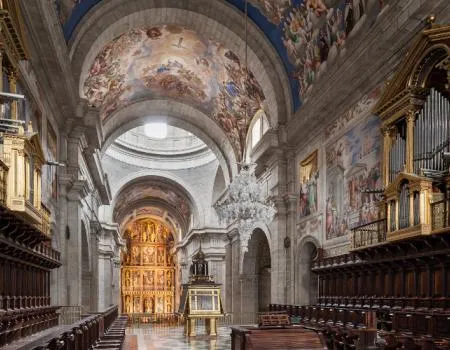
Interior of a grand cathedral with high arched ceilings, frescoes, and a golden altar at the far end
Aerial view of the Royal Site of San Lorenzo de El Escorial with its large complex, domes, and towers surrounded by green trees
Long hall of the Royal Library with wooden bookshelves, a vaulted ceiling with frescoes, and a central fountain
Interior of a grand hall with gilded shelves holding tombs, a central crucifix, and a large chandelier
Ornate interior of a library with a vaulted ceiling painted with frescoes, wooden bookshelves lining the walls, and a large celestial globe in the center.
Large stone building with multiple spires and arched walkways beside a reflecting pool under a clear sky
Heraldic royal crown with red velvet, gold arches, pearls, and a cross on a black background
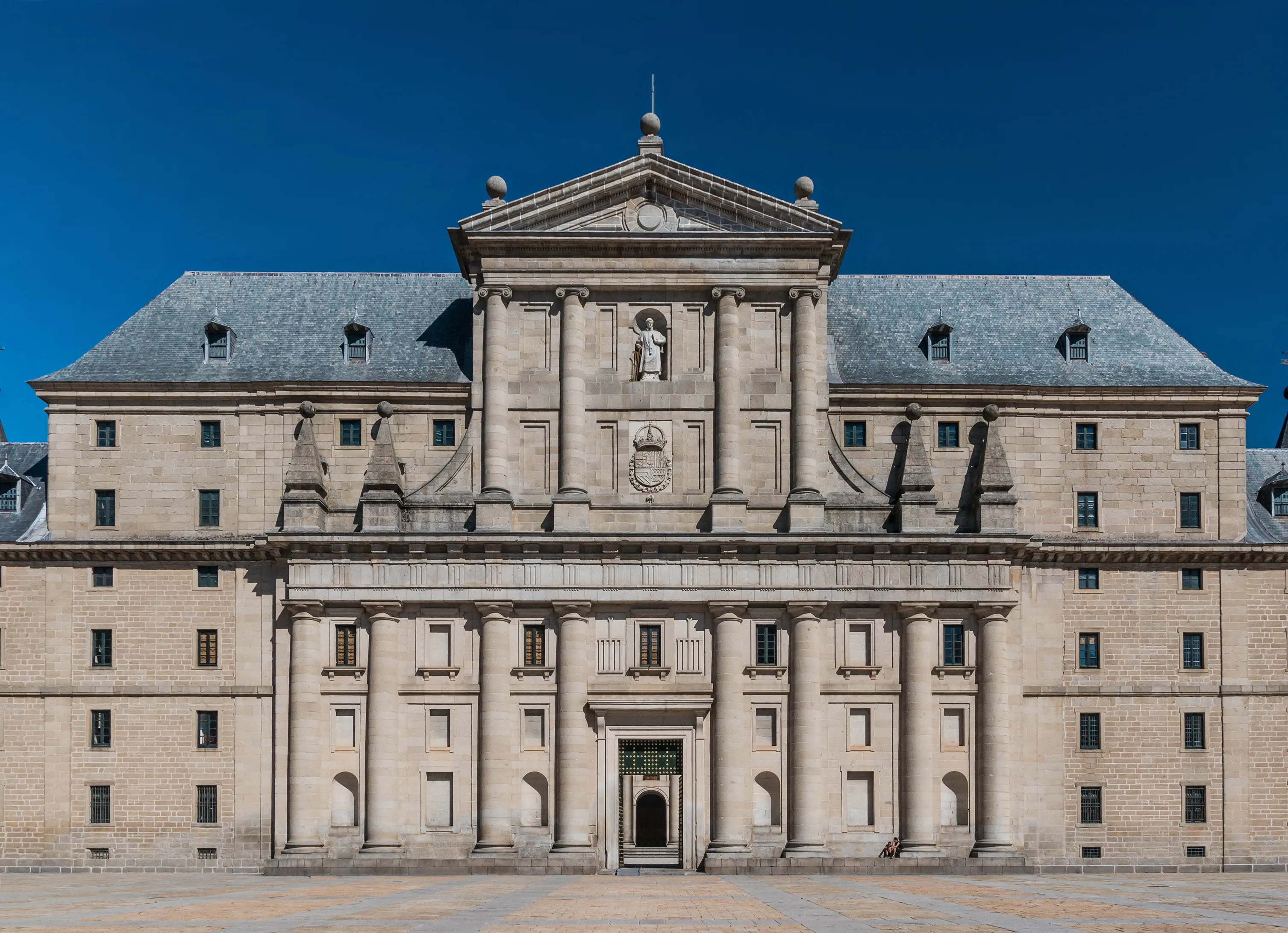
The facade of the Royal Site of San Lorenzo de El Escorial with a central entrance flanked by columns and a symmetrical design under a blue sky
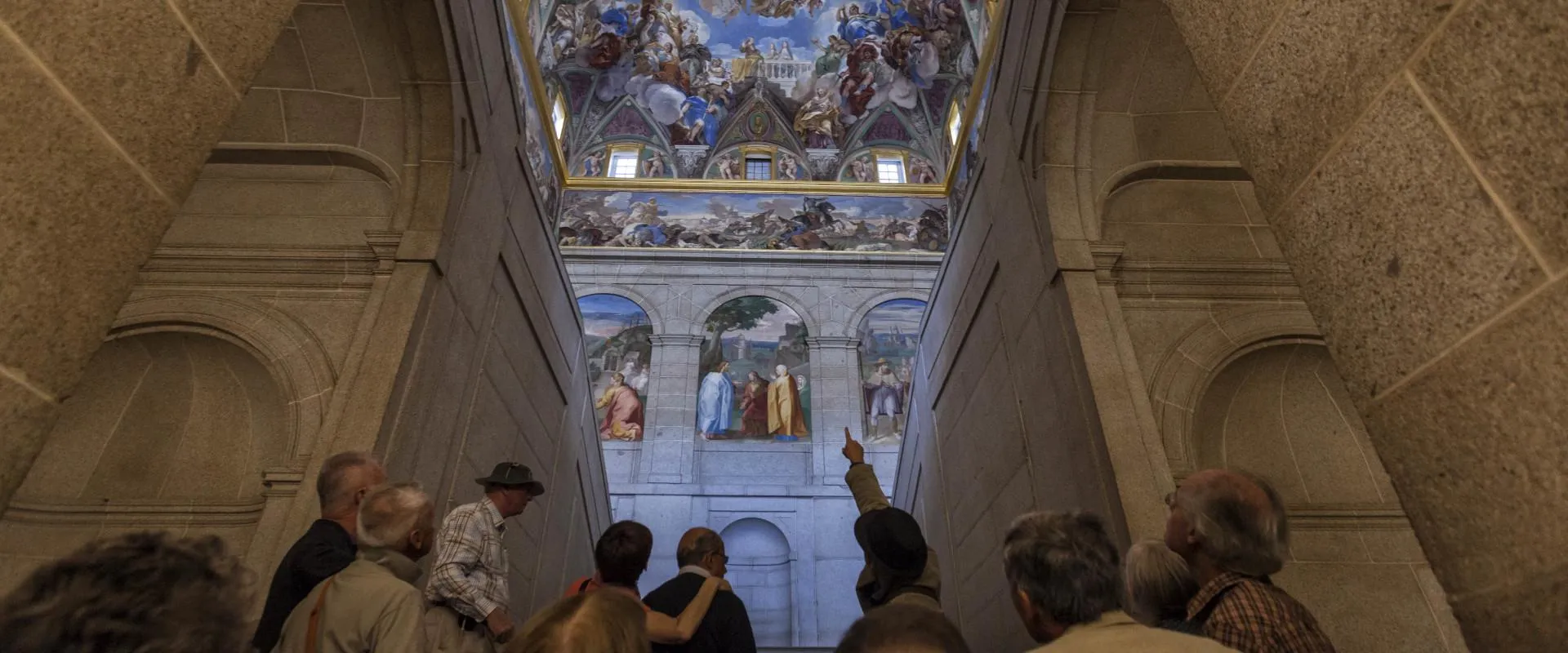
Visitors looking up at a large fresco ceiling in a stone hallway with arched alcoves
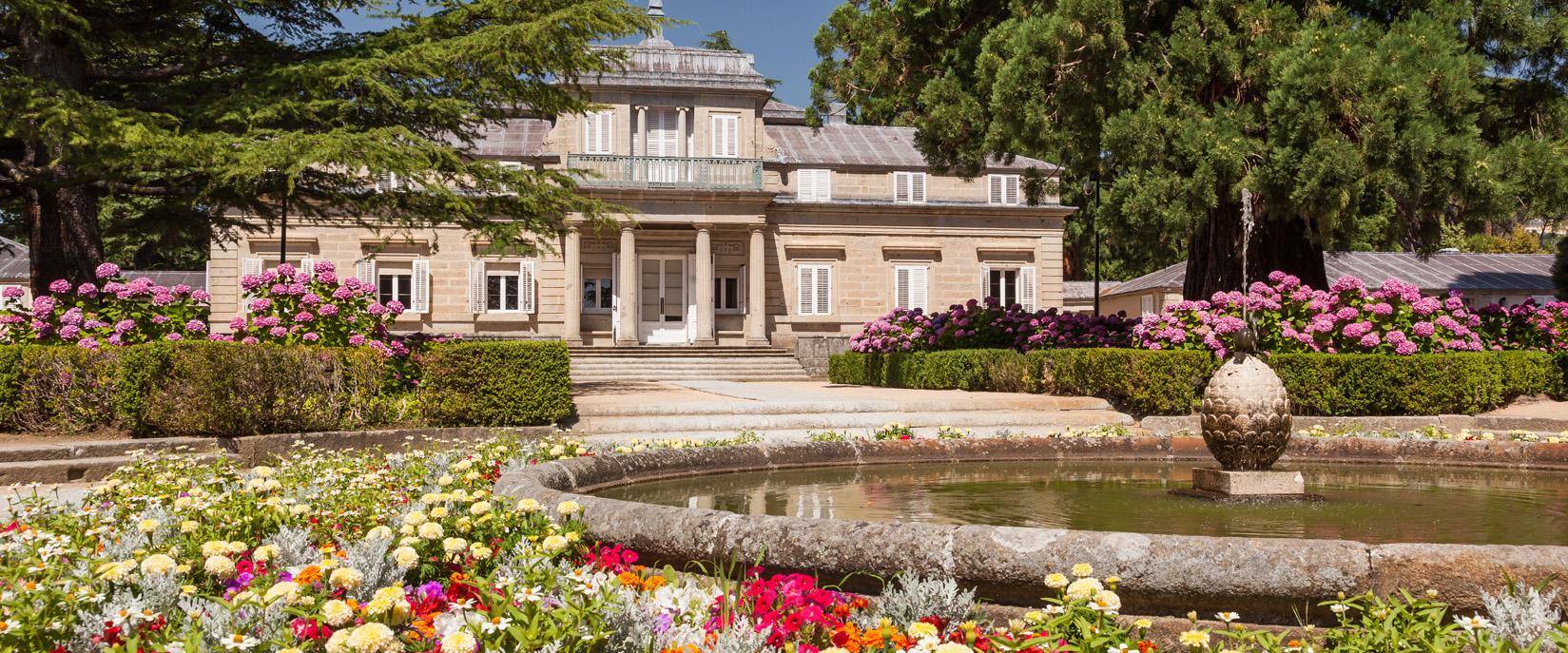
A grand building with classical architecture surrounded by colorful flowerbeds and a stone fountain in the foreground
Madrid

Find Madrid Museums: Search for Cultural Attractions and Historical Sites

Discover art, history, and unique cultural experiences throughout Madrid.

Locate inspiring museums in Madrid that match your specific interests. Uncover a wide range of cultural institutions, from renowned art galleries to captivating historical collections. Start your discovery of Madrid's vibrant cultural landscape now.

Explore Royal Site of San Lorenzo de El Escorial with Madrid
Guides, visitor info, and museum details in Madrid
Find everything about Royal Site of San Lorenzo de El Escorial in one place, including tickets, opening hours, current exhibitions, location details, visitor tips, nearby attractions, and the latest museum updates. Use these pages to plan your visit, discover what to see, and get practical information before you go.
Discover nearby museums similar to Royal Site of San Lorenzo de El Escorial in Madrid and plan your next cultural stop with confidence.
These recommendations prioritize real proximity to Royal Site of San Lorenzo de El Escorial and help you find high-fit alternatives faster across Madrid.
Use this curated list to compare museums near Royal Site of San Lorenzo de El Escorial without opening multiple search pages. Each card gives you fast visual context and direct access to key details so you can decide quickly. If you are building a full day in Madrid, this section helps you chain nearby visits with less planning effort.