Madrid
Royal Residence in Madrid

The Royal Palace of Madrid: Spain's Grand Royal Residence

An iconic landmark in Madrid showcasing Spain's rich royal heritage and artistry.

HistoryArchitectureLocal heritage

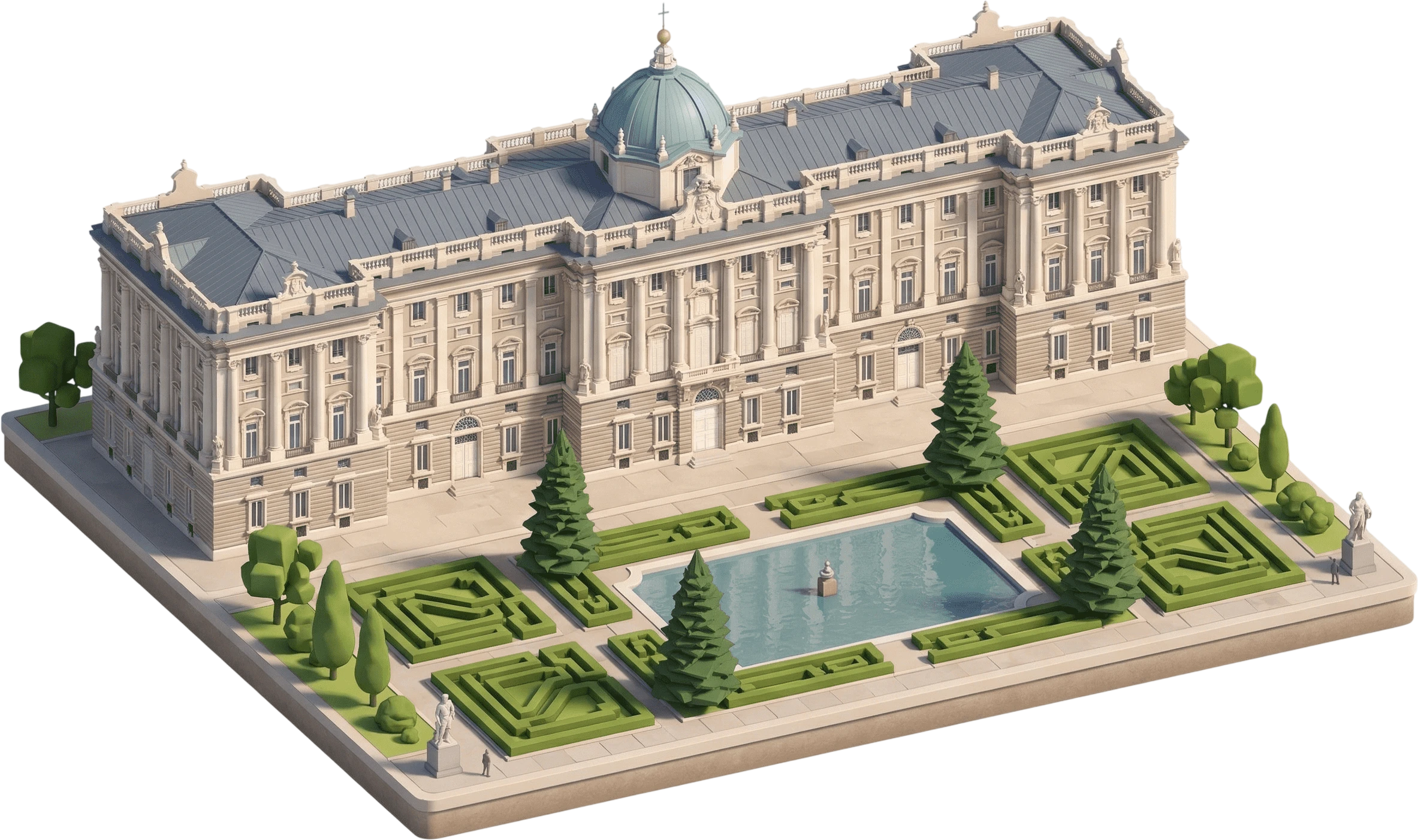
The Royal Palace of Madrid is a grand historic building that served as the official residence of the Spanish Royal Family. Visitors can explore various rooms and learn about the history and heritage of Spain's monarchy within its impressive walls.

The Royal Palace of Madrid is a historic royal residence offering a glimpse into centuries of Spanish monarchical history.

Royal Palace of Madrid
About the Royal Palace of Madrid

The Royal Palace of Madrid is a significant historic structure in Madrid, deeply connected to the Spanish Royal Family. While no longer the primary residence, this grand palace remains an important symbol of the Spanish monarchy, hosting official state ceremonies. It offers visitors insights into centuries of Spanish history and heritage through its impressive architecture and diverse historical rooms.

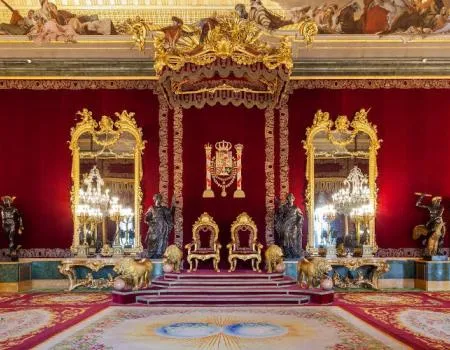
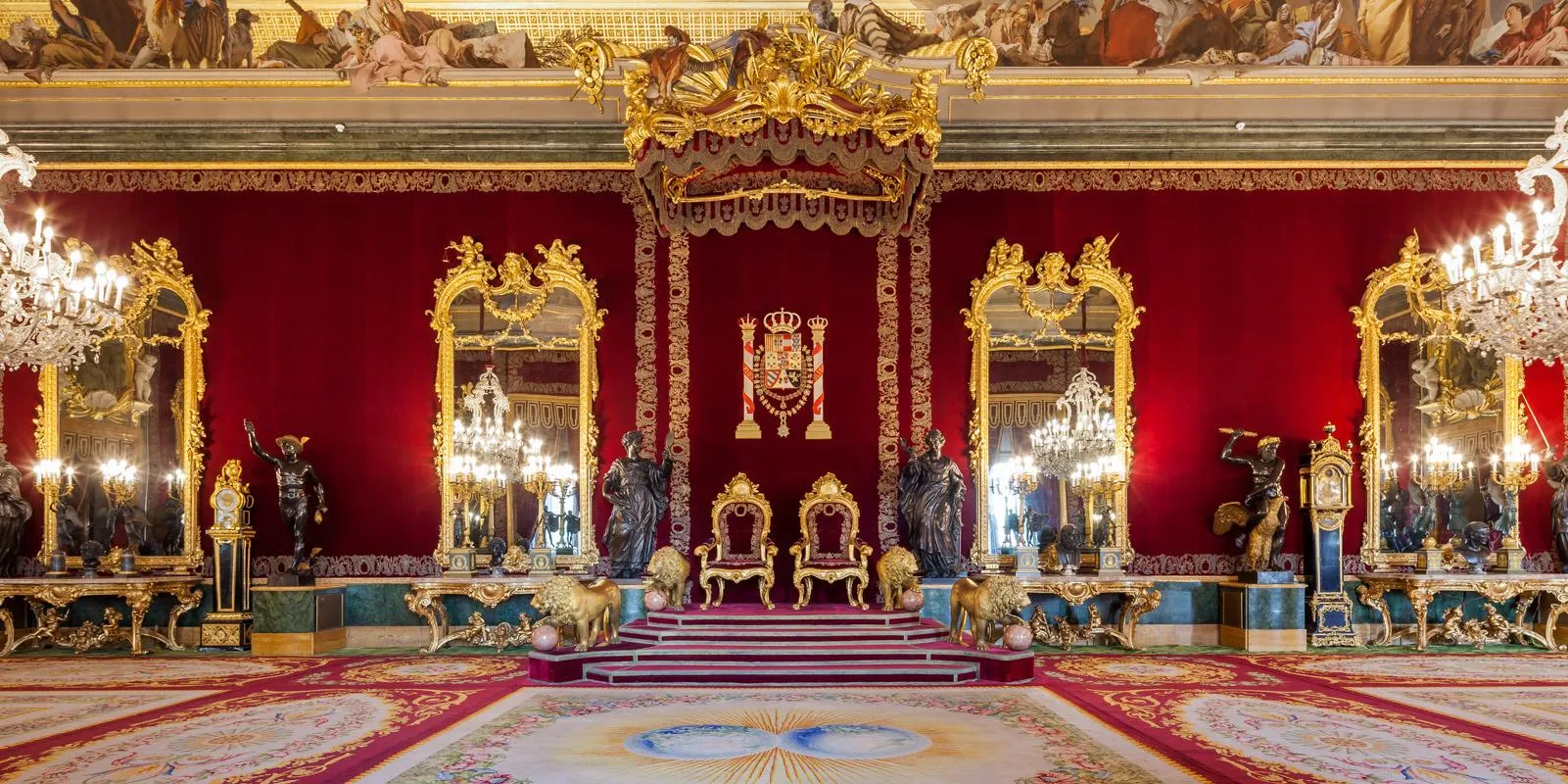
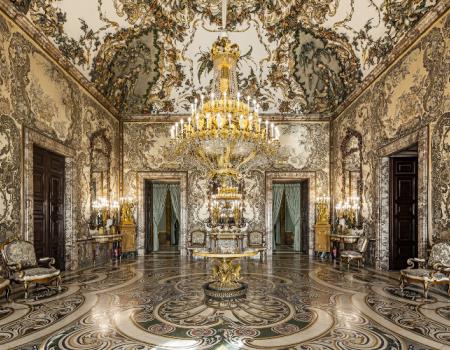
Ornate interior of the Royal Palace of Madrid with golden thrones, red walls, and a decorated ceiling
Royal Palace of Madrid Ticket Information

Admission to the Royal Palace of Madrid in Madrid offers a diverse ticket structure. Options include general entry for adults, alongside specific tickets for seniors, students, and groups. Free entry is available for children, and certain other visitor categories also qualify for complimentary access, with some requiring valid identification for verification. The palace aims to provide various ticket types to accommodate different visitor groups.

Basic Rate (General Admission)
€18.00

Standard admission for visitors who are not eligible for reduced or free rates. Self-guided visit.

Reduced Rate (Ages 5–16)
€9.00

Children and youth aged 5 to 16. Proof of age (ID or passport) is required for ages 14 to 16.

Reduced Rate (Seniors 65+)
€9.00

Available to visitors aged 65 and older. Proof of age required.

Visitor amenities and practical services at the Royal Palace of Madrid

The Royal Palace of Madrid provides a range of visitor amenities, including accessibility features such as wheelchair access and proximity to public transport options. Visitors can enhance their experience with available guided or audio tour services and relax at the terrace in the adjacent gardens. Please note that large bags are discouraged, and while online ticket booking is recommended due to limited daily capacity, photography is permitted throughout the interior without the use of flash or tripods.

Access for people with reduced mobility

Available

Terrace

Available
Extra charge

Audioguía

Available
Extra charge

Guía

Available
Extra charge
Royal Palace of Madrid Location

The Royal Palace of Madrid is located on Calle de Bailén in the heart of Madrid, making it a prominent and easily accessible landmark for visitors. Its central setting allows for convenient integration into exploring the city's rich history and cultural attractions. As a historic royal residence, its position offers a focal point for understanding Spain's monarchical past within the urban landscape.

© OpenStreetMap contributors

Calle de Bailén

28071 Madrid

Madrid, ES

Visiting the Royal Palace of Madrid

Visitors to the Royal Palace of Madrid should note that access is currently via the arch at Calle Bailén, corner of Calle Requena, due to ongoing remodeling. The Royal Armory is also temporarily closed for improvement works. Entry is permitted until one hour before closing, and photography without flash is allowed for personal use, though tripods and selfie sticks are prohibited.

Visiting the Royal Palace of Madrid

Experiencing the Royal Palace of Madrid

The Royal Palace of Madrid, a historic site in Madrid, presents a profound journey into centuries of Spanish monarchical history and heritage. While no longer the primary royal residence, this grand structure continues to serve as an important symbol for official state ceremonies. Visitors can explore a remarkable array of historical rooms, each meticulously reflecting distinct periods of royal life and significant events that shaped the nation's past. The architecture itself stands as a testament to the opulence and grandeur typical of a European royal residence, offering insights into Spain's historical footprint through the magnificent physical spaces it occupied.
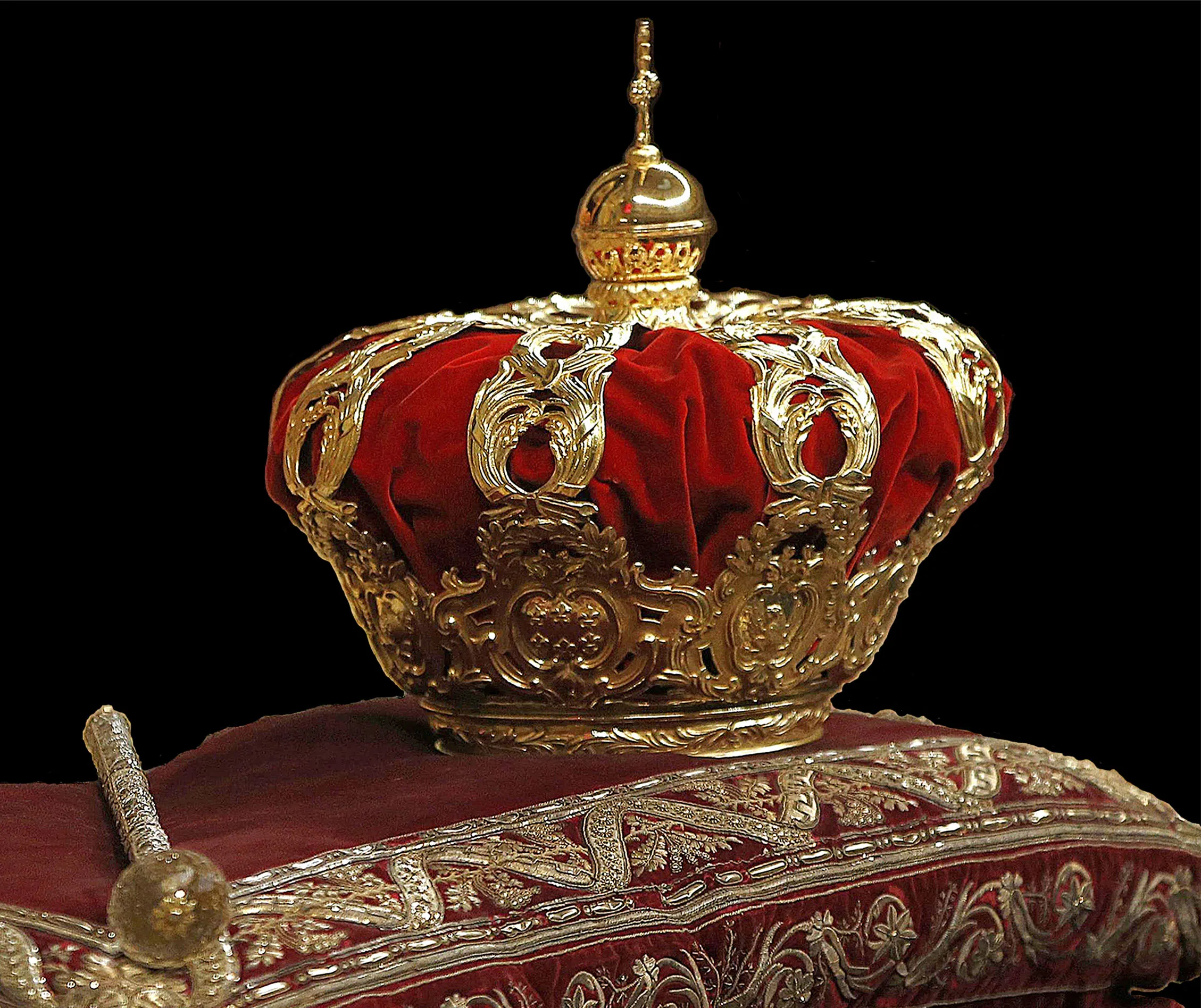
Ornate golden crown with red velvet lining on a decorative cushion

History of the Royal Palace of Madrid

The site of the **Royal Palace of Madrid** has a layered history, from a 9th-century Muslim fortress to a royal alcázar that burned down in 1734. Construction of the present palace began in 1735 for the Bourbon dynasty, overseen by architects like Filippo Juvarra and Juan Bautista Sacchetti. Built largely between 1738 and 1755 in a *grand Baroque and classical style*, King Charles III first occupied the residence in Madrid in 1764. Today, this significant landmark, recognized as a Monument in 1931, primarily serves as the official setting for Spanish state ceremonies.

  • Construction began in 1735

    1735Founding

    Construction of the current Royal Palace of Madrid, on behalf of the Bourbon dynasty, began on April 7, 1735, on the site of the previous Alcázar which had burned down. The project was initially inspired by Filippo Juvarra and later continued by Juan Bautista Sachetti.

  • New palace construction spanned 1738-1755

    1738-1755Construction

    The construction of the new Royal Palace spanned from 1738 to 1755. The design was influenced by Filippo Juvarra and continued by Juan Bautista Sacchetti, incorporating elements of Bernini's work.

  • Baroque and classical architectural styles

    Architecture

    The Royal Palace of Madrid is characterized by its Baroque and classical architectural styles. Filippo Juvarra, Juan Bautista Sacchetti, and Ventura Rodríguez were among the notable architects involved in its design and construction.

  • Designated a Monument in 1931

    1931Heritage status

    The Royal Palace of Madrid was officially designated as a Monument under Spanish Cultural Heritage ('Bien de Interés Cultural') in 1931, with the reference number RI-51-0001061.

  • 19th-century renovations for modern French style

    Renovation

    In the 19th century, Ferdinand VII initiated a thorough renovation to transform the palace into a modern French-style residence. Later, Alfonso XII planned a shift towards a Victorian-style, involving remodeling rooms and adding period furniture.

  • Repairs after Spanish Civil War damage

    Renovation

    In the 20th century, restoration work was undertaken to repair damage sustained during the Spanish Civil War. This involved repairing and reinstalling decorative elements and replacing damaged walls with faithful reproductions.

  • Largest royal palace in Europe

    Overview

    The Royal Palace of Madrid is recognized as the largest royal palace in Europe and one of the largest in the world, with an expansive area of 135,000m2 and 3,418 rooms.

  • Filippo Juvarra as initial architect

    Notable person

    Italian architect Filippo Juvarra was the initial architect for the new palace, devising a lavish project inspired by Bernini's plans for the Louvre. His disciple, Juan Bautista Sacchetti, continued the work.

  • Francesco Sabatini's neoclassical design contributions

    1760Notable person

    In 1760, Charles III enlisted the Neoclassical architect Francesco Sabatini to enlarge the building. Sabatini's work included plans for new wings and extensions, though not all were fully realized.

  • Interior features notable artworks

    Collection

    The palace's interior is rich in art, housing paintings by masters such as Caravaggio, Goya, and Velázquez, and frescoes by Tiepolo and Mengs. Many of these works are part of the Spanish royal collection.

  • Home to unique Stradivarius quintet

    Collection

    Among its significant collections, the Royal Palace preserves the world's only complete Stradivarius string quintet, adding to its historical and artistic importance.

  • Owned by Spanish state, managed by Patrimonio Nacional

    Ownership

    The Royal Palace of Madrid is owned by the Spanish state and is administered by Patrimonio Nacional, a public agency. It is open to the public for visits, except during state ceremonies.

  • Built on site of Muslim-era fortress

    Historical period

    The current palace stands on the site of a former Muslim-era fortress constructed by Emir Muhammad I of Córdoba in the 9th century, which was later expanded and renovated over centuries.

  • Previous Alcázar burned down in 1734

    1734Construction

    The royal alcázar that previously occupied the site of the current palace burned down completely on Christmas Eve, 1734. The fire originated in the rooms of French painter Jean Ranc.

  • Plaza de la Armería laid out in 1892

    1892Architecture

    The current layout of the Plaza de la Armería, facing the palace, was established in 1892 according to a plan by architect Enrique María Repullés. The square's history, however, dates back to 1553.

  • Sabatini Gardens construction began in 1933

    1933Architecture

    The Sabatini Gardens, adjacent to the north side of the palace, began construction in 1933 under the Republican government. Designed by Fernando García Mercadal, they were named after Francesco Sabatini.

  • Plaza de Oriente construction started in 1808

    1808-1844Architecture

    Construction of the Plaza de Oriente began in 1808 under King Joseph Bonaparte, who ordered the demolition of surrounding medieval structures. It was completed by Queen Isabella II in 1844, with architect Narciso Pascual Colomer creating the final design.

  • Royal Library houses historical documents

    Collection

    The Royal Library contains significant historical documents, including the Book of Hours of Isabella I of Castile and maps detailing the extent of the Spanish Empire. Its bookshelves date from the periods of Charles III, Isabella II, and Alfonso XII.

  • Royal Armoury one of the best in the world

    Collection

    The Royal Armoury is considered one of the world's finest, housing weapons and armor from the 13th century onwards. Despite losses during wartime, it retains significant European and global pieces.

  • Royal residence used for state ceremonies

    Cultural significance

    The Royal Palace of Madrid serves as the official residence of the Spanish royal family and is primarily used for state ceremonies, highlighting its ongoing ceremonial and symbolic importance.

  • Charles III occupied the palace in 1764

    1764Opening

    King Charles III was the first monarch to occupy the newly constructed palace in 1764, marking a significant point in its history as a royal residence.

  • Grand Staircase built by Sabatini in 1789

    1789Architecture

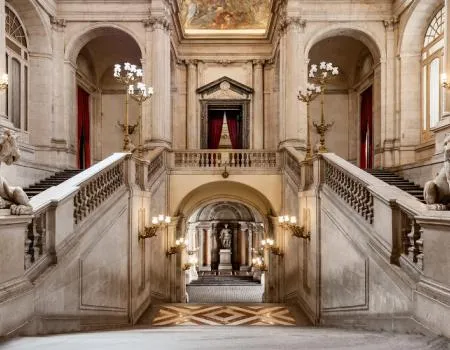
    The Grand Staircase of the Royal Palace, composed of a single piece of San Agustin marble, was built by Sabatini in 1789. Its ceiling features a fresco by Corrado Giaquinto.

  • Throne Room dates from Charles III's reign

    1772Architecture

    The Throne Room, dating from Charles III's reign in 1772, features a ceiling fresco by Tiepolo depicting the 'Apotheosis of the Spanish Monarchy' and is adorned with various bronze sculptures.

  • Queen's apartments converted to banquet hall in 1879

    1879-1885Renovation

    In 1879, the former queen's apartments under Charles III were converted into a banquet hall by Alfonso XII, a renovation completed in 1885. The original ceiling frescoes were retained.

  • Royal Chapel designed by Sacchetti and Rodríguez

    1748Architecture

    The Royal Chapel was designed in 1748 by Sacchetti and Ventura Rodríguez. Its interior features ceiling frescoes by Giaquinto and a silver relief depicting Pope Leo I stopping Attila.

  • Crown Room holds royal regalia and documents

    Collection

    The Crown Room, formerly an apartment of Maria Christina of Austria, contains Charles III's throne, scepter, and crown. It also displays documents related to royal speeches and the Order of the Golden Fleece.

  • Royal Pharmacy collection of pottery and jars

    Collection

    The Royal Pharmacy's collection includes jars from La Granja de San Ildefonso (19th century) and Talavera de la Reina pottery from the 18th century, reflecting its historical role in supplying medicines.

  • Campo del Moro Gardens developed from Philip IV's improvements

    Architecture

    The Campo del Moro Gardens, named after a Muslim leader's alleged camp, saw initial improvements by Philip IV. Isabella II and later Maria Christina of Austria oversaw further landscaping in Romantic and Baroque styles.

  • Sabatini Gardens opened to the public in 1978

    1978Opening

    The Sabatini Gardens, constructed by the Republican government to return the area to public use, were officially opened to the public by King Juan Carlos I in 1978.

Royal Palace of Madrid FAQs: Your Curiosities Answered

From knowing general admission prices for the Royal Palace of Madrid to figuring out who to call if you need the Royal Patronages department, your curiosities have a home here. Get answers on tickets, contacts, and how to share your feedback, ensuring you're well-prepared for your visit.

Does the Royal Palace of Madrid have free entry?

Yes, free admission is available for children under 5 years old, active teachers, legally unemployed individuals, and citizens or residents of the European Union and Ibero-American countries Monday to Thursday from 5:00 PM to 7:00 PM (4:00 PM to 6:00 PM in winter). Admission is also free for all visitors on International Museum Day on May 18.

Are there student tickets or senior discounts at the Royal Palace of Madrid?

Yes, the Royal Palace of Madrid offers a reduced entry fee of 9 EUR for students up to 25 years old with a valid national or international student card, as well as for seniors aged 65 and older.

What are the ticket prices for the Royal Palace of Madrid?

Standard adult tickets for a basic self-guided visit to the Royal Palace of Madrid cost 18 EUR, while a basic guided visit led by National Heritage staff is 26 EUR. You can also purchase combined tickets for the Royal Palace and the Royal Kitchen or the Royal Collections Gallery for 24 EUR.

How much are child tickets for the Royal Palace of Madrid?

Child tickets cost 9 EUR for youth aged 5 to 16, and entry is completely free for children under 5 years old. Please note that an ID or passport is required for children aged 14 to 16 to verify their eligibility.

Practical Visit Tips for the Royal Palace of Madrid

To help plan your visit to the Royal Palace of Madrid, note that photography is permitted in specific areas only, and the use of tripods is not allowed. The palace offers both guided tours and audio guides for those seeking more in-depth exploration. Visitors will find the venue to be wheelchair accessible with step-free entrances for ease of movement. For convenience during your visit, a cafe and toilets are available on-site, and tickets can be purchased directly at the entrance.

Royal Palace of Madrid Visitor Suitability

The Royal Palace of Madrid primarily appeals to visitors interested in Spanish history, royal heritage, and grand architecture. As a significant historic site in Madrid, it offers insights into centuries of monarchy through its impressive rooms and design. The palace also provides accessibility features such as wheelchair access and step-free entry for a more inclusive visit. Guests should note that while photography is generally permitted, certain limitations apply, including a prohibition on tripods.

Royal Palace of Madrid Interior Gallery

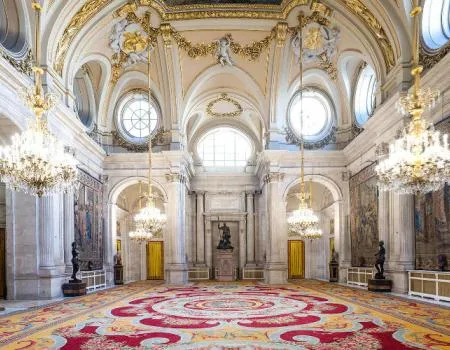
Discover the grandeur of the Royal Palace of Madrid through its photo gallery. Visitors can explore opulent interiors, featuring majestic grand staircases, elaborate frescoed ceilings, and richly decorated rooms such as the Throne Room and Hall of Mirrors. These images provide a visual journey into centuries of Spanish royal heritage in Madrid, showcasing gilded details and sparkling chandeliers.
Ornate interior of the Royal Palace of Madrid with golden thrones, red walls, and a decorated ceiling
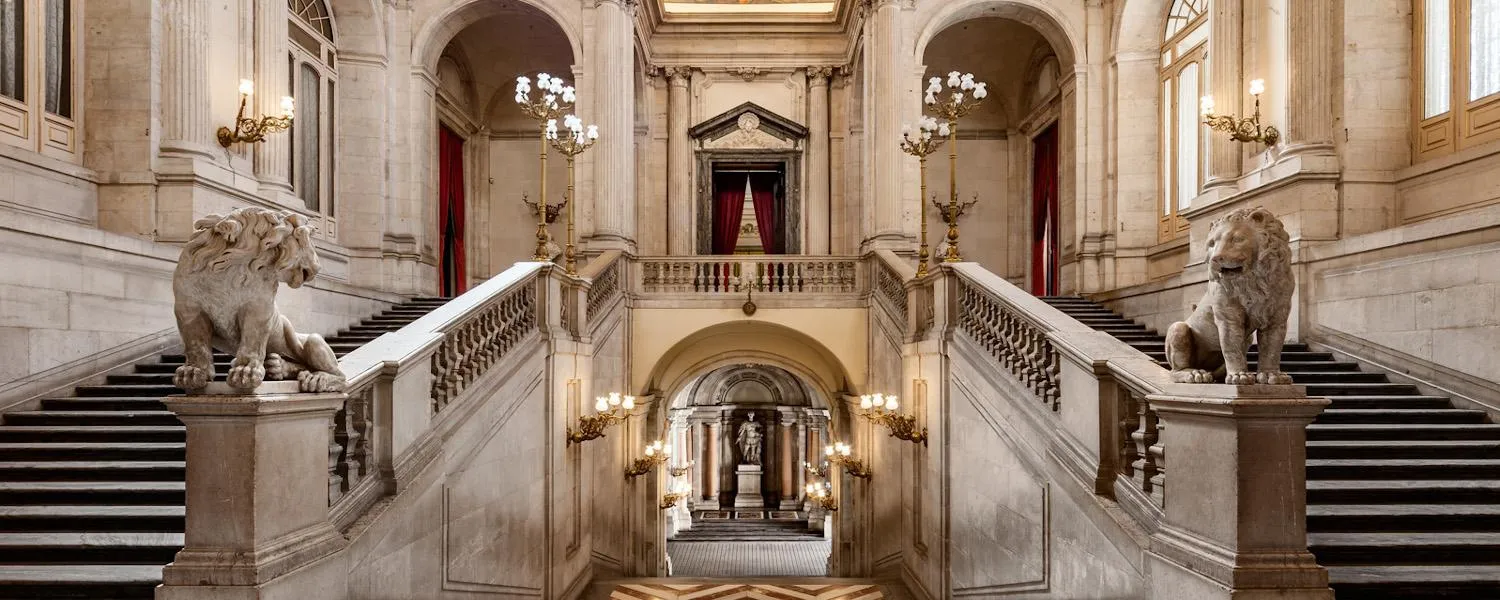
Grand interior staircase with stone railings, two lion statues, and arched hallways in the Royal Palace of Madrid
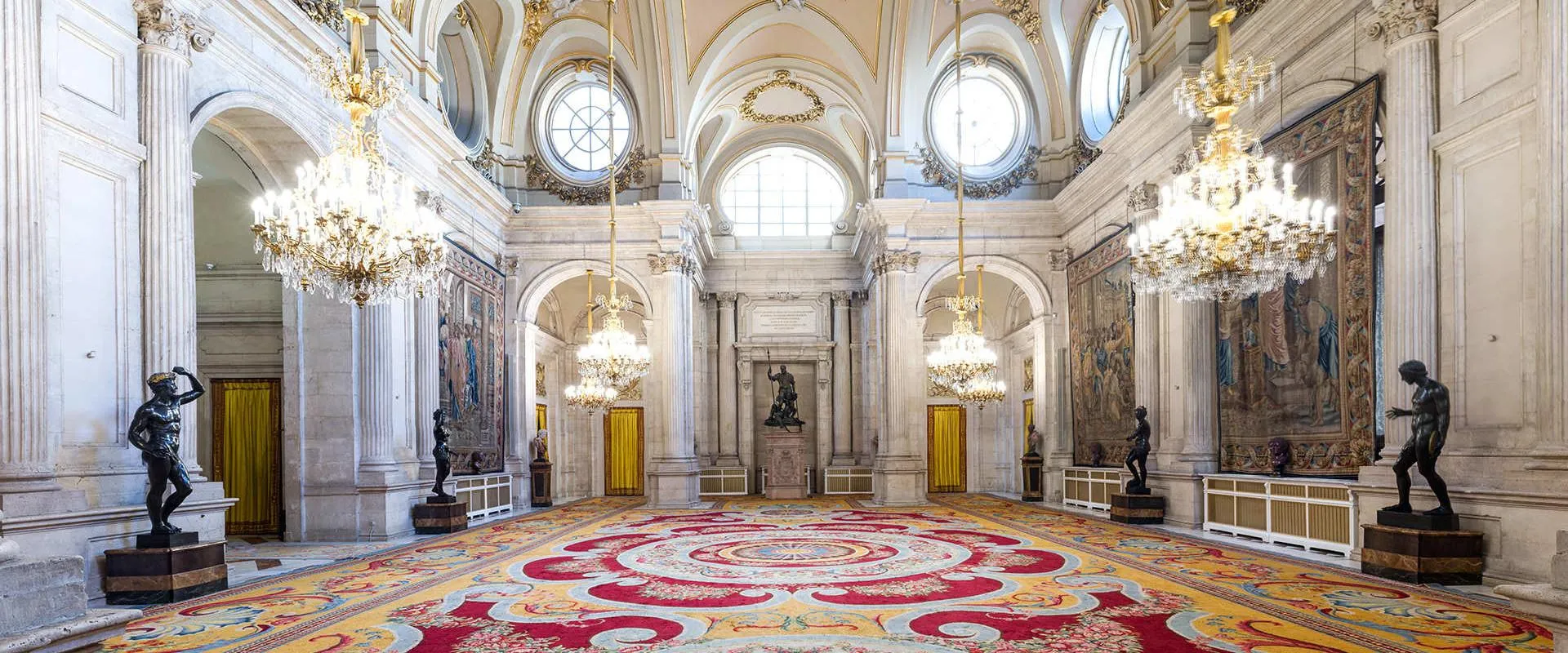
Grand hall with ornate chandeliers, frescoed ceilings, and a large patterned carpet in the Royal Palace of Madrid
Grand staircase in the Royal Palace of Madrid with ornate balustrades, chandeliers, and a central statue at the landing.
Ornate throne room with golden thrones, red walls, large mirrors, and chandeliers
Ornate interior hall with a large chandelier, frescoed ceiling, and marble floor
Ornate interior of the Royal Palace of Madrid with chandeliers, arched windows, and a large patterned carpet
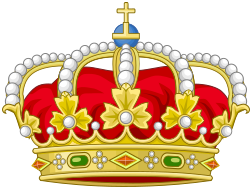
ornate royal crown with red velvet, gold arches, white pearls, and a cross on top
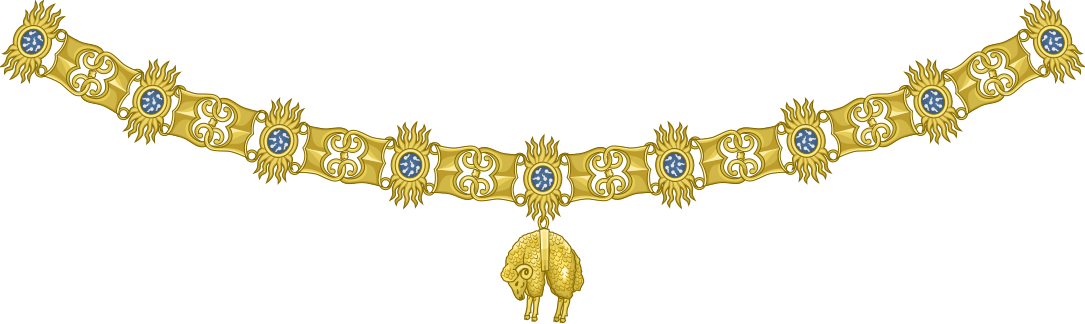
golden ceremonial chain with blue enamel medallions and a central pendant of a golden ram
Ornate golden crown with red velvet lining on a decorative cushion
Madrid

Find Madrid Museums: Search for Cultural Attractions and Historical Sites

Discover art, history, and unique cultural experiences throughout Madrid.

Locate inspiring museums in Madrid that match your specific interests. Uncover a wide range of cultural institutions, from renowned art galleries to captivating historical collections. Start your discovery of Madrid's vibrant cultural landscape now.

Explore Royal Palace of Madrid with Madrid
Guides, visitor info, and museum details in Madrid
Find everything about Royal Palace of Madrid in one place, including tickets, opening hours, current exhibitions, location details, visitor tips, nearby attractions, and the latest museum updates. Use these pages to plan your visit, discover what to see, and get practical information before you go.
Discover nearby museums similar to Royal Palace of Madrid in Madrid and plan your next cultural stop with confidence.
These recommendations prioritize real proximity to Royal Palace of Madrid and help you find high-fit alternatives faster across Madrid.
Use this curated list to compare museums near Royal Palace of Madrid without opening multiple search pages. Each card gives you fast visual context and direct access to key details so you can decide quickly. If you are building a full day in Madrid, this section helps you chain nearby visits with less planning effort.