Entry
Free
The Museo de la Biblioteca Nacional, also known as the BNE, safeguards Spain's vast collection of books, manuscripts, and artistic works. Visitors can explore its rich archives, delve into specialized reading rooms, or engage with various cultural exhibitions and educational programs that bring history to life.
Spain's premier institution for preserving national heritage, the BNE offers extensive digital and physical collections, research facilities, and cultural activities.
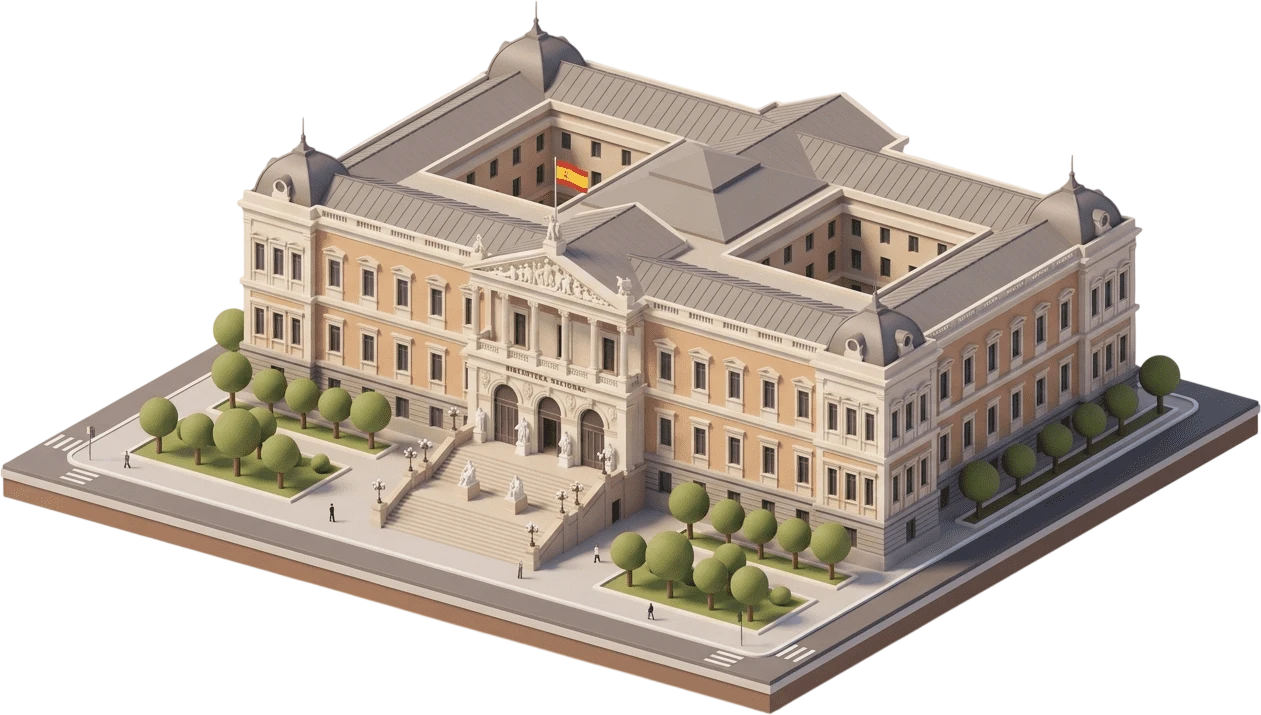
The Museo de la Biblioteca Nacional, officially the Biblioteca Nacional de España (BNE) in Madrid, is the principal custodian of Spain's vast bibliographic and documentary heritage. This premier institution offers extensive collections, including historical manuscripts, rare books, and a growing digital archive. It provides vital resources for researchers and the public, actively curating temporary exhibitions and cultural events. Visitors can explore centuries of Spanish knowledge and cultural legacy through its diverse access points.
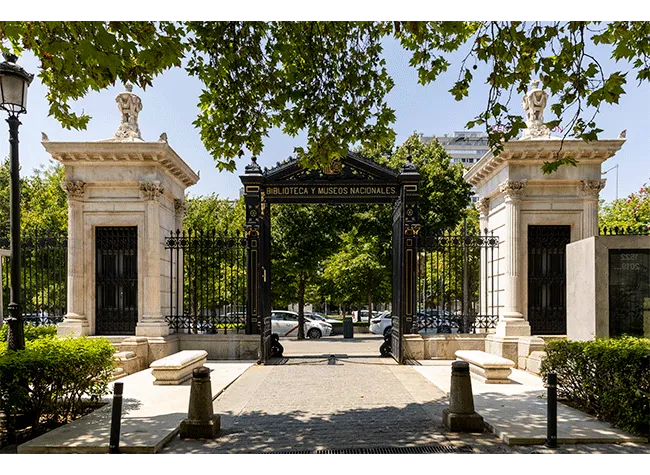
Check today’s opening status, weekly schedule, and special date changes for Museo de la Biblioteca Nacional. Use these opening hours to plan your arrival and avoid closed times in Madrid.
Admission to the Museo de la Biblioteca Nacional is free for all visitors. This policy ensures that guests can explore the museum's exhibitions and public areas without requiring a ticket purchase. It allows everyone to access the institution's significant collections and cultural offerings, enhancing the visitor experience in Madrid.
Entry
Free
The Museo de la Biblioteca Nacional provides various amenities designed to support visitor accessibility, including step-free access and elevator service between floors. Visitors can utilize available wheelchairs and benefit from inclusive tools such as hearing aid loops, Braille collections, and limited audio description or captioning services. Limited parking options are also available for visitors with disabilities, ensuring a more comfortable experience for all guests.
Plazas de aparcamiento para usuarios con discapacidad
AvailableCollares de bucle magnético
AvailableLibros en Braille
AvailableAscensores
AvailableThe Museo de la Biblioteca Nacional is situated on Paseo de Recoletos 20-22 in Madrid, Spain. This central location offers visitors convenient access to explore Spain's premier institution for preserving its national heritage, making it a key cultural destination for those interested in its extensive bibliographic and documentary legacy.
Paseo de Recoletos 20-22
28071 Madrid
Madrid, ES
Visitors to the Museo de la Biblioteca Nacional in Madrid can enjoy free access to its exhibitions, guided tours, and various cultural events. This open access means that specific entry tickets or advance reservations are not generally required for your visit. As there is no predefined visit duration, guests are welcome to explore the exhibits at their leisure, allowing for a flexible experience.

The Museo de la Biblioteca Nacional in Madrid serves as Spain's primary guardian of its vast bibliographic and documentary heritage. Visitors can explore an immense collection spanning historical manuscripts, rare books, prints, drawings, musical scores, and sound recordings, alongside a significant digital archive. The institution provides resources for both researchers and the public, offering specialized consultation rooms and extensive online catalogues. Beyond its archival role, the BNE actively curates engaging temporary exhibitions and cultural events, enriching access to centuries of Spanish history, art, architecture, and music through its diverse holdings, including unique architectural plans and historical-artistic objects. It is a hub for engaging with Spain's intellectual and artistic past.
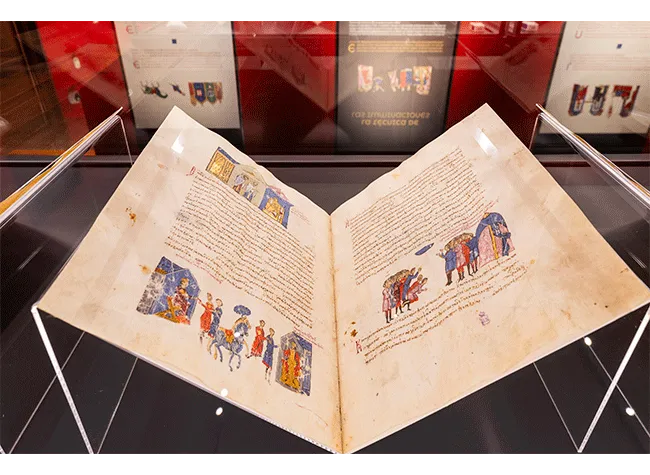
Established as the Royal Library by King Felipe V in 1711 to safeguard Spain's literary heritage, the Biblioteca Nacional de España opened to the public in Madrid in 1712. Renamed Biblioteca Nacional in 1836, it moved into its impressive permanent home on Paseo de Recoletos, officially inaugurated in 1896, continually expanding its vast collections through legal deposit and significant acquisitions. Today, as the superior library institution of the State since 1985, the Biblioteca Nacional de España upholds its legacy of *cultural preservation* and public accessibility, offering extensive physical and digital resources.
The Biblioteca Nacional de España was founded on December 29, 1711, when King Felipe V approved a plan to create a Royal Library, aiming to renew historical erudition and trace the roots of the Spanish nation and monarchy.
The Royal Library opened its doors to the public on March 1, 1712. A Royal Decree on January 2, 1716, clarified its public nature, stating it was open to 'all scholars' and establishing its operational rules.
The initial collection comprised materials from the private libraries of Spanish monarchs Felipe IV and Felipe V, with Felipe V adding over 6,000 volumes from France. Early additions also included confiscated works from 'austracistas' (supporters of the Austrian claimant) after the War of Succession.
The establishment of legal deposit in 1716 significantly expanded the library's collections. A Royal Order in 1750 granted the library the right to 'tantear' (preempt) books from sales, allowing it to select works not already in its holdings.
In 1738, the library published its first work, 'Bibliotheca Universal de la Polygraphia Española', authored by Cristóbal Rodríguez and supported by head librarian Juan de Ferreras. This marked an early phase of scholarly output from the institution.
During Juan de Ferreras's tenure, work began on creating indices and catalogs for public use. Librarian Juan de Iriarte was particularly active, producing the 'Regia Matritensis Bibliotheca Geographica et Chronologica' in 1729, the library's first catalog, followed by others on mathematics and Greek manuscripts.
A Royal Order in 1761, drafted by Juan de Santander and approved by King Carlos III, modified the library's original structure. It established the Royal Press, linking the library's editorial work with prominent printers and craftsmen, and elevated the head librarian's role to director.
Between 1760 and 1778, the library housed a type foundry workshop directed by Gerónimo Gil. This workshop became the foundation for the Royal Press's type foundry.
Throughout the 19th century, the Biblioteca Nacional underwent several relocations. It moved in 1809 to the convent of the Trinitarios Calzados, in 1819 to the former palace of the Admiralty, and again in 1826 to the former residence of the Marqués de Alcañices.
The Spanish 'desamortización' (disentailment) process in the 19th century led to the deposition of many works from suppressed religious institutions into the library. This included approximately 70,000 volumes from Madrid convents and significant funds from the Cortes Library and cathedrals like Ávila and Toledo.
By decree on November 28, 1836, the Biblioteca Real was renamed Biblioteca Nacional and placed under the jurisdiction of the Ministerio de la Gobernación de la Península (Ministry of the Interior).
In 1837, Antonia Gutiérrez Bueno became the first woman permitted access to the library for consultations, marking a social milestone.
The first regulation of the Biblioteca Nacional, approved in 1857, established the annual Bibliographic Awards, making the library a key promoter of bibliographical work in Spain and encouraging interest among librarians and bibliographers.
In 1866, Queen Isabel II laid the first stone for the Palacio de Archivos, Bibliotecas y Museos on Paseo de Recoletos. Construction proceeded slowly with modifications to the original design by Francisco Jareño Alarcón, later continued by Antonio Ruiz de Salces.
The construction of the new building on Paseo de Recoletos was finalized in 1892, and the Biblioteca Nacional officially opened its doors in this new location on March 16, 1896.
The 'Regulations for State Public Libraries' approved by Royal Decree on October 18, 1901, established the Biblioteca Nacional as the leading institution of all Spanish libraries, revoking the previous 1857 regulations.
During his directorship, Marcelino Menéndez Pelayo promoted the creation of specialized catalogs and revitalized the 'Revista de Archivos, Bibliotecas, y Museos,' making it a key instrument for library science development in Spain.
In 1930, Minister Elías Tormo created the Patronato (Board) of the Biblioteca Nacional, which appointed Miguel Artigas as director. This board oversaw restoration efforts and service reforms during the Second Spanish Republic.
Under Miguel Artigas and the Patronato during the Second Spanish Republic, the library underwent restoration and expansion of its building and a reorganization of its services, including the Salón de Lectura and extended opening hours.
During the Spanish Civil War, the library's most precious holdings were evacuated to Valencia and later to Geneva, Switzerland. Approximately 500,000 volumes were also transferred to the library by the Junta de Incautación for safekeeping.
In 1939, following the Civil War, the decimal system was introduced for cataloging collections in Spanish public libraries, including the Biblioteca Nacional.
The decade of the 1950s saw significant reforms in the library's organization and management, culminating in the Organic Decree of March 8, 1957, and its subsequent Regulation on December 20, 1957.
In 1970, the Instituto Bibliográfico Hispánico was established, encompassing the National Documentation and Bibliographic Information Service, Legal Deposit, and the National Planning and Bibliographic Coordination Commission, impacting the library's national functions.
In 1982, the library conducted its first feasibility study for automation, which led to the adoption of the SABINA system and later the ARIADNA automation system, operational by 1991.
In 1985, by Royal Decree, the Instituto Bibliográfico Hispánico, the Hemeroteca Nacional (National Periodicals Library), and the Document and Bibliographic Treasury Center were integrated into the Biblioteca Nacional.
In 1985, the BNE was officially declared the 'superior library institution of the State and the head of the Spanish Library System'.
In the late 1980s, construction began on a second storage facility in Alcalá de Henares, which was inaugurated in 1993. This expansion aimed to address space needs.
In 1991, the Statute of the Biblioteca Nacional was approved by Royal Decree, establishing it as an Autonomous Body and initiating a phase of expansion and new services.
The Museo del Libro (Book Museum) was inaugurated in 1995, a new cultural and educational offering that was later succeeded by the current Museo de la Biblioteca Nacional.
In 1996, the Biblioteca Nacional de España launched its own website on the internet, marking a significant step in its digital presence and accessibility.
On November 11, 2009, the new Statute came into effect, officially renaming the organism to 'Biblioteca Nacional de España' (National Library of Spain) for better international identification.
On May 5, 2010, the Council of Ministers decided to downgrade the head of the Biblioteca Nacional from Director General to Subdirector General, prompting the resignation of director Milagros del Corral.
In 2007, the new Museo de la Biblioteca Nacional was inaugurated, replacing the former Museo del Libro and expanding its cultural and educational offerings.
The Biblioteca Digital Hispánica (Hispanic Digital Library) was presented in 2008, serving as a portal for accessing the library's digitized resources.
In 2009, the Biblioteca Nacional initiated a project with the Internet Archive to collect, archive, and preserve the .es domain, aiming to preserve Spanish web heritage.
In October 2010, the BNE launched the 'Quijote Interactivo,' a digital and interactive version of Cervantes' work, enriched with contextual content like maps and information about 17th-century life.
As a result of a research project with the Ontology Engineering Group of the Polytechnic University of Madrid, a significant portion of BNE records were converted to RDF and made available as open data.
The BNE is active in international organizations like IFLA and OCLC, participating in the Virtual Authority File (VIAF) and contributing to standards development through ISO and the Spanish Association for Standardization and Certification (AENOR).
The library participated in Project IMPACT, analyzing character recognition for manuscripts, and Project ARROW, aiming to create a European database for orphan works where intellectual property rights are unknown.
On November 15, 2010, the Biblioteca Nacional de España presented its 'Catálogo bibliográfico de la colección de incunables', authored by Julián Martín Abad, cataloging 2,297 editions and 3,159 copies.
On December 13, 2011, the Spanish monarchs inaugurated the exhibition 'Biblioteca Nacional de España: 300 años haciendo historia,' marking the start of the Tricentennial commemoration of its founding.
In 1886, the Biblioteca Ducal de Osuna e Infantado was incorporated, representing a significant 19th-century acquisition including manuscripts and incunables, and also incorporating the libraries of the Marqués de Santillana and the Counts of Benavente.
The map collection assembled by Mendoza, originating from the Ministry of State, entered the National Library in 1913. It comprises 2,405 maps, primarily from Great Britain in the late 18th century, but also from other European countries.
The extensive library of Pascual de Gayangos, a bibliophile, editor, and Arabist, was acquired in 1900. It contained rare works, particularly from the 16th and 17th centuries, enriching the library's special collections.
The Biblioteca Nacional holds a collection dedicated to Cervantes, including the 'Colección de Cervantes' and the 'Cervantes-Sedó' collection, highlighting its importance in preserving works related to the author.
The Legal Deposit Law of 2011 and subsequent Royal Decree in 2015 regulate the legal deposit of online electronic publications, including websites, to preserve Spain's digital cultural heritage.
The library acquired the music collection of Infante Francisco de Paula Antonio in 1878. It contains over 650 works, mainly secular and sacred vocal music from the 16th to 18th centuries, with a notable focus on Italian opera.
In 1966, the 'Sección de África' (Africa Section) was inaugurated with the donation of Tomás García Figueras's specialized collection on Africa and the Arab world, particularly regarding Spain's Protectorate in Morocco.
Since 2020, an agreement allows for the deposit of all video games developed in Spain at the National Library, ensuring the preservation of this digital cultural heritage.
The Biblioteca Digital Hispánica (BDH) portal provides access to digitized materials, including books from the 15th-19th centuries, manuscripts, drawings, prints, maps, and sound recordings, with a significant focus on mass digitization of scores.
The Biblioteca Nacional manages the Collective Catalog of Periodical Publications (CCPP), which provides information on press and magazine collections held by major Spanish libraries, and includes data on approximately 88,000 serial titles across nearly 1,100 libraries.
The library's collection of newspapers and magazines is crucial for sociological and historical research, with most historical materials available digitally via the Hemeroteca Digital, despite ongoing space challenges with new acquisitions.
In the 20th century, the library faced criticism for allegedly failing to adequately preserve popular culture items like comic books and trading cards, with many items reportedly lost or poorly managed, leading to calls for a dedicated documentation center.
Got burning questions about visiting the Museo de la Biblioteca Nacional in Madrid? From confirming our Monday opening hours to navigating the best way to get in touch (hint: email isn't always the direct path!), our comprehensive FAQ section has the answers you need to plan your cultural exploration.
Yes, entry to Museo de la Biblioteca Nacional is free for all visitors. There is no admission charge.
Museo de la Biblioteca Nacional provides free admission for all visitors. Therefore, separate child, student, or senior tickets are not required as everyone enters for free.
Admission to Museo de la Biblioteca Nacional is free for all visitors. There are no general ticket costs for entry.
A direct email address for Museo de la Biblioteca Nacional is not provided, and visitors are instructed to use the contact form for general enquiries and information requests.
When planning your visit to the Museo de la Biblioteca Nacional in Madrid, note that the venue is designed to be wheelchair accessible with step-free entrance and elevators available. Visitors can also benefit from accessible parking options, though these are limited. To enhance the experience, Braille or tactile resources and assistive listening devices are provided. Additionally, some content includes subtitles or captions for accessibility.
The Museo de la Biblioteca Nacional in Madrid is designed to appeal to a wide array of visitors, including students, solo researchers, groups, and families with children. Those interested in Spanish history, art, architecture, and music will appreciate its extensive collections dedicated to the nation's literary and documentary heritage. The institution actively provides resources for researchers and offers cultural activities for the general public. Additionally, the venue is committed to accessibility, featuring step-free entrances, elevators, and assistive services such as Braille and listening devices. This focus makes it a suitable destination for visitors with diverse needs and interests.
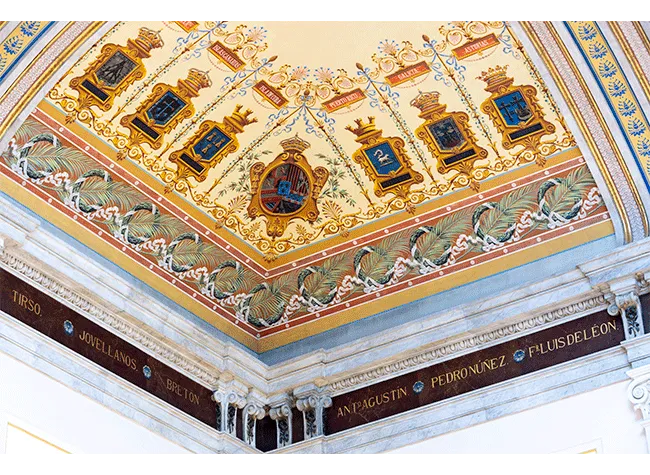
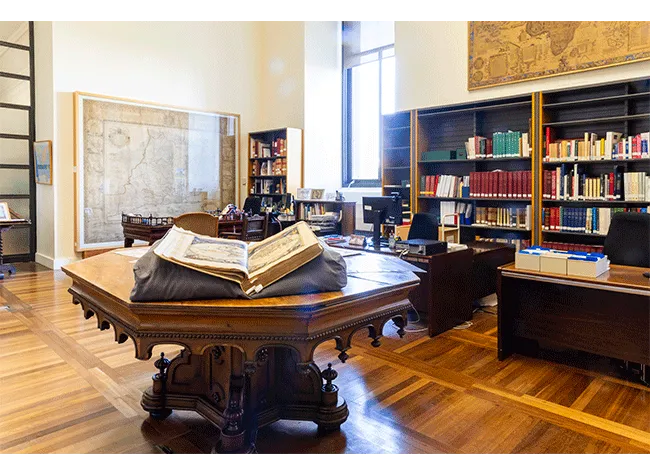
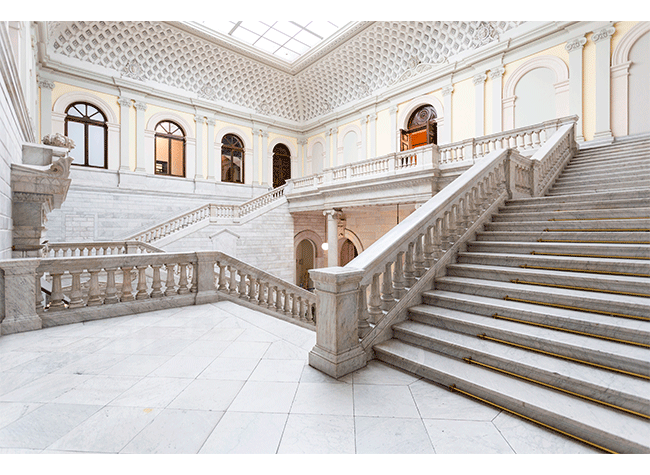
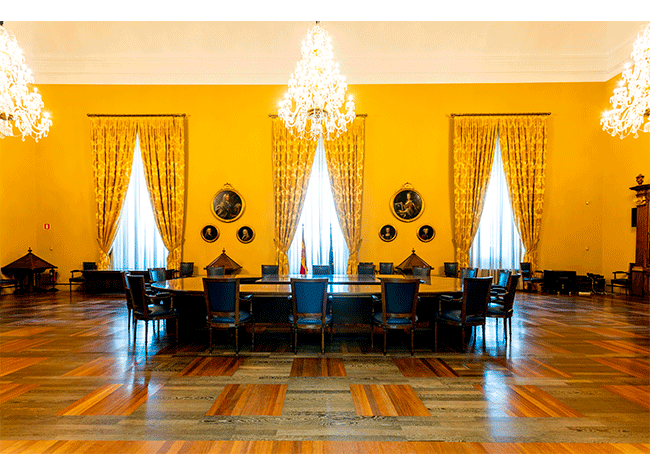
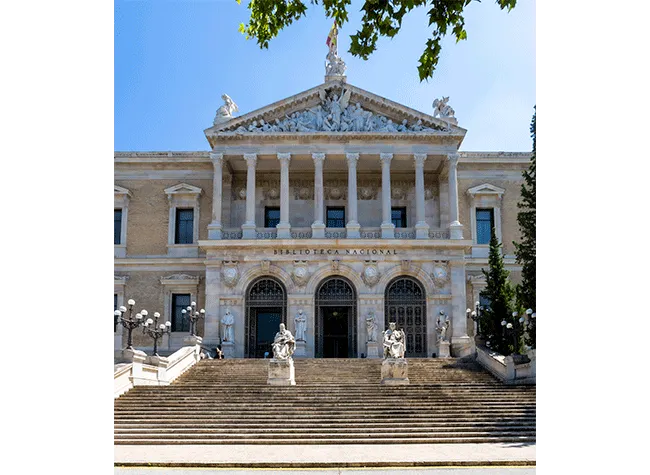
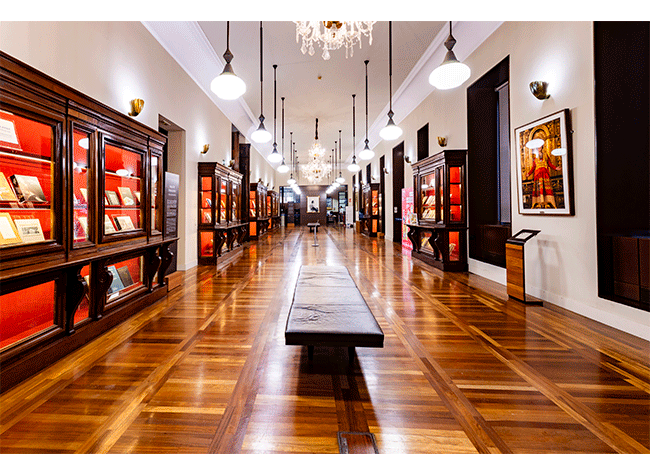
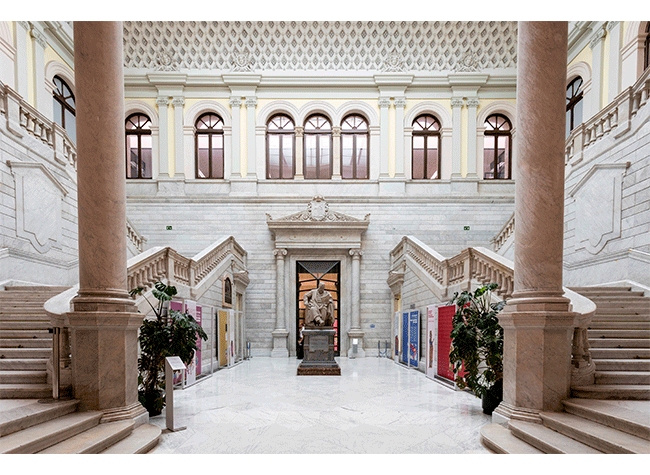
Explore the visual splendor of the Museo de la Biblioteca Nacional through a collection of photos. Images reveal the museum's grand neoclassical architecture, from its impressive exterior facade with columns to opulent interior spaces featuring marble staircases and ornate galleries. You'll also see glimpses of significant holdings, such as ancient manuscripts, offering a preview of Spain's rich literary and historical treasures preserved within.


Discover art, history, and unique cultural experiences throughout Madrid.
Locate inspiring museums in Madrid that match your specific interests. Uncover a wide range of cultural institutions, from renowned art galleries to captivating historical collections. Start your discovery of Madrid's vibrant cultural landscape now.