Madrid
Real Madrid's Football Heritage

Santiago Bernabéu Stadium and Museum: Home of Real Madrid in Madrid

Explore Real Madrid's rich football legacy in this iconic Madrid venue.

SportHistoryArchitectureLocal heritage

Journey through the iconic Santiago Bernabéu Stadium and its comprehensive Real Madrid C.F. Museum. Visitors can explore the players' changing rooms, dugouts, and enjoy panoramic views of the pitch, immersing themselves in the club's rich history and architectural evolution.

Explore the Santiago Bernabéu Stadium, home to Real Madrid C.F., and its museum showcasing the club's legendary trophies and history.

Santiago Bernabéu Stadium and Museum
Santiago Bernabéu Stadium and Museum Overview

The Santiago Bernabéu Stadium and Museum in Madrid offers a deep dive into the illustrious history of Real Madrid C.F. Visitors can explore the stadium's inner workings, including areas like the players' changing rooms and dugouts, alongside a panoramic view of the pitch. The extensive museum houses an unparalleled collection of the club's trophies, such as multiple European Cups and the FIFA Trophy for the best club of the 20th century. Additionally, the experience highlights the stadium's architectural evolution and its transformation into a modern 21st-century sporting landmark.

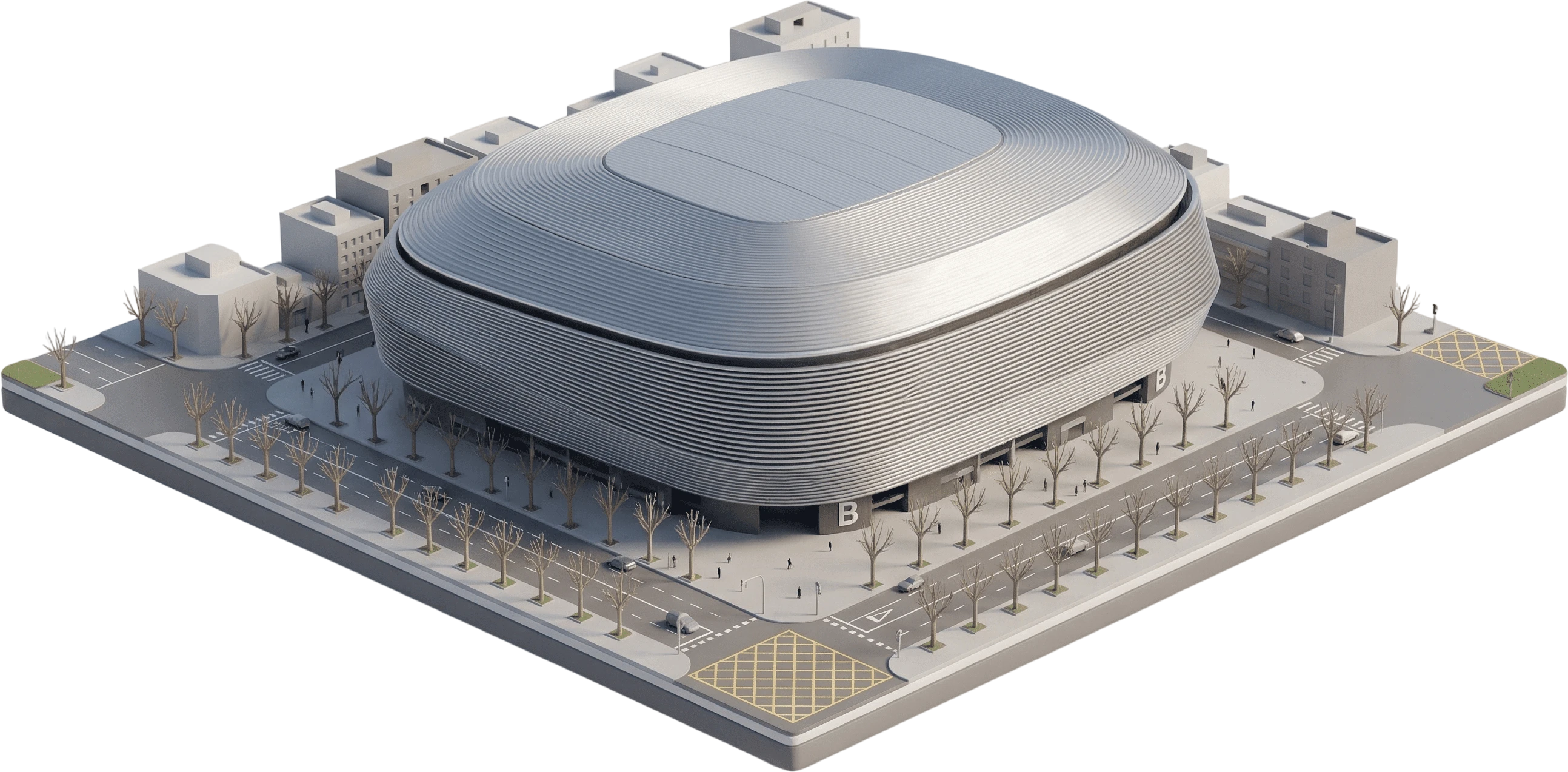
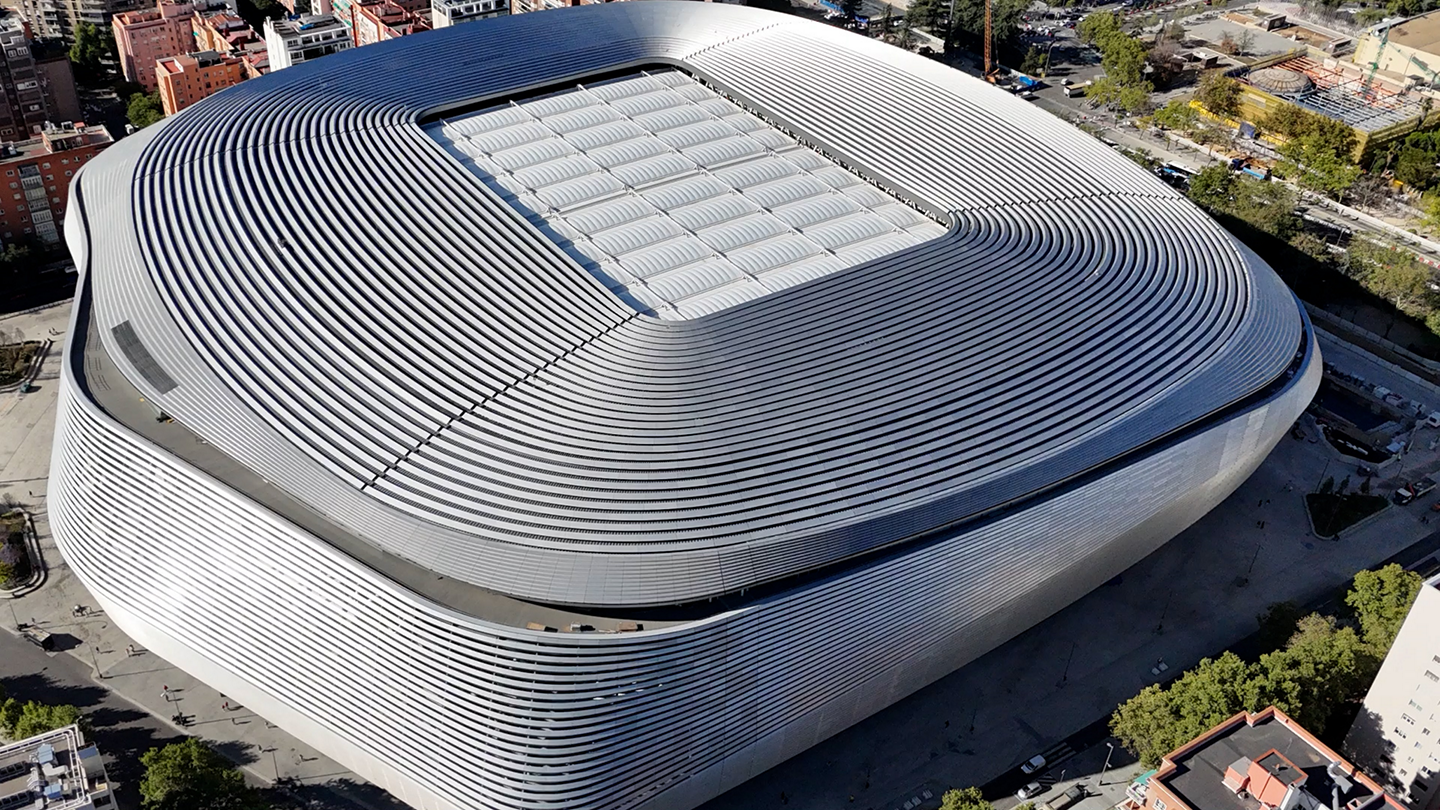
Aerial view of the Santiago Bernabéu Stadium with a curved metallic roof and surrounding urban area
Santiago Bernabéu Stadium and Museum opening hours in Madrid

Check today’s opening status, weekly schedule, and special date changes for Santiago Bernabéu Stadium and Museum. Use these opening hours to plan your arrival and avoid closed times in Madrid.

Monday
Tuesday
Wednesday
Thursday
Friday
Saturday
Sunday
09:00-19:00
09:00-19:00
09:00-19:00
09:00-19:00
09:00-19:00
09:00-19:00
09:30-18:30
Santiago Bernabéu Stadium and Museum Admission

Access to the Santiago Bernabéu Stadium and Museum, home of Real Madrid, requires a paid admission ticket for most visitors. Young children aged 0-4 years can enter free of charge, and Real Madrid club members also receive complimentary access upon presenting a valid ID. Group tickets are available for those visiting with a larger party, facilitating a smooth entry. However, specific discounted tickets for students or seniors are not currently provided for the stadium and museum experience.

Classic Tour (Online)
€37.00

Starting price. Valid for the selected date and time. Includes Real Madrid C.F. Museum, panoramic stadium view, dressing rooms, and dugouts.

Classic Tour (Box Office)
€40.00

Valid for the selected date and time. Purchased at the stadium ticket office.

Classic Tour for Madridistas (Online)
€29.00

Requires Madridista Platinum or Premium membership. Starting price.

Santiago Bernabéu Stadium and Museum in Madrid

The Santiago Bernabéu Stadium and Museum is located at Avenida Concha Espina 1, 28036 in Madrid, Spain. Its prominent position in the city ensures convenient access for visitors eager to explore the historic home of Real Madrid C.F. This central location makes it an ideal starting point for fans to discover the club's legendary trophies and rich football heritage.

© OpenStreetMap contributors

Avenida Concha Espina 1

28036 Madrid

Madrid, ES

Visiting Santiago Bernabéu Stadium and Museum

To plan a visit to Santiago Bernabéu Stadium and Museum in Madrid, visitors should check the official website for the latest operational hours and entry requirements. Given its popularity, advance preparation ensures a smoother experience. Consider potential crowd levels and allow sufficient time to explore the club's history and facilities.

Visiting Santiago Bernabéu Stadium and Museum

Santiago Bernabéu Stadium Experience

The Santiago Bernabéu Stadium and Museum in Madrid provides an immersive experience into Real Madrid C.F.'s storied history, allowing visitors to tour inner workings like players' changing rooms, dugouts, and panoramic pitch views. The Real Madrid C.F. Museum showcases an unparalleled trophy collection, featuring European Cups and the FIFA Trophy for the best club of the 20th century. This unique visit also details the stadium's architectural evolution into a modern 21st-century sporting landmark.
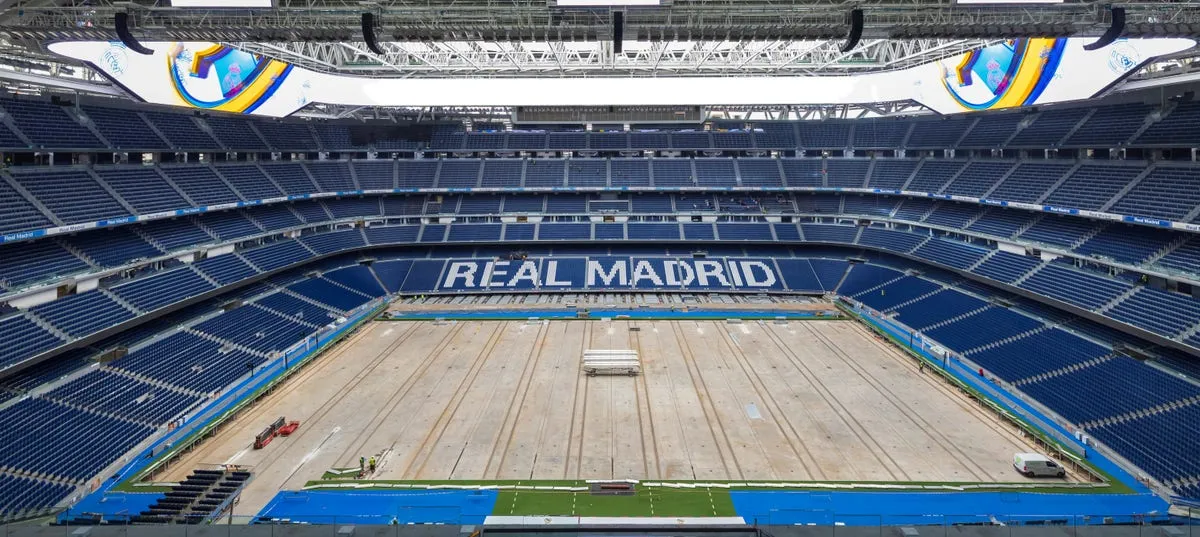
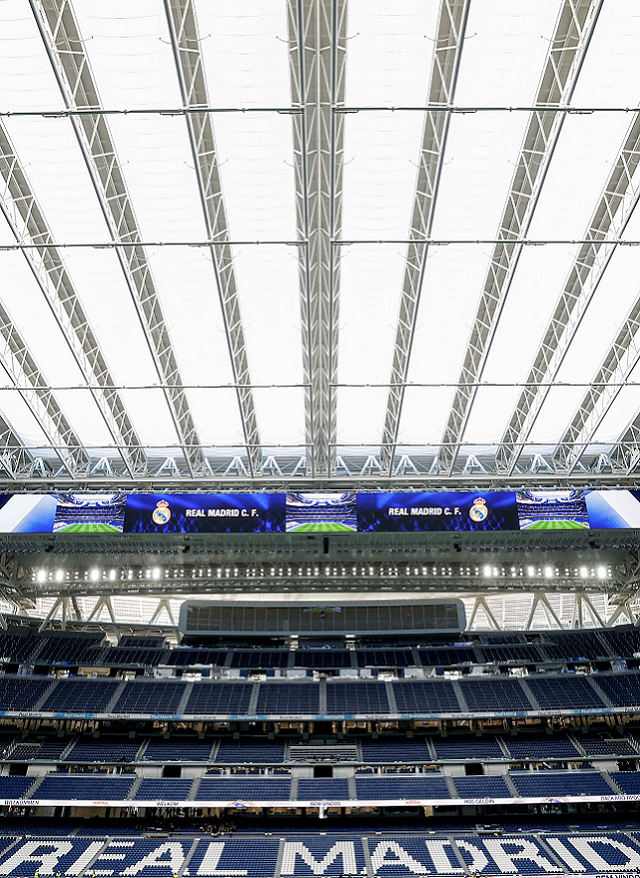
Interior of Santiago Bernabéu Stadium with blue seats, central field, and 'REAL MADRID' text

History of Santiago Bernabéu Stadium

The **Santiago Bernabéu Stadium** began construction in 1944, opening on December 14, 1947. Initially known as Estadio Real Madrid Club de Fútbol, it was renamed in 1955 to honor club president Santiago Bernabéu. This Madrid landmark has since undergone significant transformations, from preparations for the 1982 FIFA World Cup to a major modernization completed in 2024 with a retractable roof. The stadium holds a *storied legacy*, hosting numerous major international football finals and welcoming visitors to its museum and Tour Bernabéu since 1999.

  • Construction began in 1944

    1944Founding

    The need for a larger stadium led to the acquisition of land adjacent to the old Campo de Chamartín. Construction symbolically began on November 1, 1944, with Santiago Bernabéu initiating the groundbreaking.

  • Stadium constructed from 1944 to 1947

    1944-1947Construction

    The construction of the new stadium, designed by Manuel Muñoz Monasterio and Luis Alemany Soler, took place from October 1944 to December 1947. The project faced challenges with material shortages and technical difficulties, but was financed through bond issues.

  • Opened on December 14, 1947

    1947Opening

    The stadium, initially named Estadio Real Madrid Club de Fútbol, was inaugurated on December 14, 1947, with a match against Os Belenenses. Sabino Barinaga scored the first goal.

  • Renamed Santiago Bernabéu Stadium in 1955

    1955Ownership

    On January 4, 1955, following a General Assembly of Members, the stadium was officially renamed in honor of club President Santiago Bernabéu.

  • Expanded to 125,000 capacity in 1955

    1955Renovation

    A major renovation in 1955 expanded the stadium's capacity to 125,000 spectators, making it the largest stadium among the participants of the newly established European Cup.

  • Floodlights installed in 1957

    1957Renovation

    Floodlights were installed in March 1957, allowing for nighttime games. They were officially inaugurated on May 18, 1957, during a match against Sport Recife.

  • Club offices relocated to the stadium in 1965

    1965Renovation

    In 1965, all of the club's offices were transferred to the stadium, which had previously been moved between various locations in the city.

  • First electronic scoreboard installed in 1972

    1972Milestone

    On December 14, 1972, coinciding with the 25th anniversary of its inauguration, the stadium received its first electronic scoreboard, first used during a friendly match against Belenenses.

  • Renovated for the 1982 FIFA World Cup

    1980-1982Renovation

    The stadium underwent a significant renovation between 1980 and 1982 in preparation for the 1982 FIFA World Cup. This included covering two-thirds of the seating area and reducing capacity from 120,000 to 90,000.

  • Major expansion and renovation from 1992-1994

    1992-1994Renovation

    A significant expansion and renovation project between 1992 and 1994 added an amphitheater, new commercial spaces, and improved access. This work increased the stadium's capacity to 106,000.

  • Height increased and heating installed in 1990s

    1992-1994Renovation

    Following the 1992-1994 renovation, the stadium's height was increased, leading to issues with grass deterioration in winter. A polypropylene pipe network was installed beneath the pitch to circulate hot water and prevent freezing.

  • Capacity reduced to 74,328 in 1997

    1997Renovation

    In 1997, UEFA required an all-seating arrangement, which led to a reduction in the Santiago Bernabéu's capacity from 106,000 to 74,328 spectators.

  • Tour Bernabéu and club museum opened in 1999

    1999Opening

    The Bernabéu Tour and the club museum were opened on May 20, 1999, offering visitors an inside look at the team's history and the stadium.

  • Master Plan initiated in early 2000s for modernization

    2001-2006Renovation

    President Florentino Pérez launched a 'Master Plan' in the early 2000s aimed at improving spectator comfort, facility quality, and revenue generation. This included a €127 million investment between 2001 and 2006.

  • East side expansion completed in 2006

    2006Renovation

    The east side of the stadium was expanded as part of Florentino Pérez's Master Plan. This renovation, which also included a new facade and VIP areas, increased the capacity to 80,354 all-seated spectators.

  • Awarded 'Elite Stadium' status by UEFA in 2007

    2007Milestone

    On November 14, 2007, UEFA designated the Santiago Bernabéu as an 'Elite Stadium,' recognizing its quality and suitability for major international events, and it was chosen to host the 2010 Champions League final.

  • Capacity increased by 900 seats in 2011

    2011Renovation

    In the summer of 2011, an expansion was carried out in the first amphitheater, adding an extra row to the grandstand overhang and increasing the total capacity to 81,044 spectators.

  • Selected as venue for 2018 Copa Libertadores final

    2018Milestone

    In December 2018, the stadium was selected to host the second leg of the Copa Libertadores final, becoming the only stadium to have hosted finals of the FIFA World Cup, UEFA European Championship, Copa América, Copa Libertadores, and UEFA Champions League.

  • Ambitious renovation project announced in 2010, approved in 2011

    2010-2017Renovation

    An ambitious renovation project was announced in 2010 and approved by members in 2011, aiming to transform the stadium into an architectural icon. The project was later modified due to legal challenges and approved in its revised form in 2017.

  • Renovation works began in June 2019

    2019Renovation

    The major renovation works for the Santiago Bernabéu Stadium, designed by GMP Architekten, L35, and Ribas & Ribas, commenced in June 2019, with financing secured through multiple loans.

  • Renovation financing totaled €1.17 billion

    2019-2023Renovation

    The financing for the stadium's renovation reached €1.17 billion through several loans, including an additional €370 million in November 2023, to cover costs exacerbated by the COVID-19 pandemic and the invasion of Ukraine.

  • Renovated stadium features retractable roof and new technologies

    2024Renovation

    The extensive renovation, completed in late 2024, included the installation of a retractable roof and advanced technological features. The stadium's capacity was updated to 83,186.

  • Reopened on December 23, 2023, after partial renovation

    2023Opening

    The stadium officially reopened on December 23, 2023, following the completion of a significant phase of its renovation, which included work on the exterior and the installation of a retractable roof system.

  • Hosted multiple major football finals

    1957-2010Cultural significance

    The stadium has a rich history of hosting major finals, including the European Cup/UEFA Champions League on four occasions (1957, 1969, 1980, 2010), the 1964 European Nations' Cup final, and the 1982 FIFA World Cup final.

  • Named after Santiago Bernabéu

    1955Notable person

    The stadium was named after Santiago Bernabéu, a legendary footballer and president of Real Madrid, in honor of his significant contributions to the club and the stadium's development.

  • Designed by Manuel Muñoz Monasterio and Luis Alemany Soler

    1944Architecture

    The original design of the stadium was created by architects Manuel Muñoz Monasterio and Luis Alemany Soler, who won a competition for the project in 1944.

  • Modernization by Antonio Lamela

    1992Architecture

    Architect Antonio Lamela was involved in the expansion of the stadium in the 1990s, contributing to significant modernization efforts.

  • Total cost of original construction was 38.3 million pesetas

    1947Construction

    The initial construction of the stadium incurred a total expenditure of 38,300,000 pesetas, covering land acquisition, loans, works, fees, and compensation for expropriations.

  • Cost of 1982 renovation was 704 million pesetas

    1982Construction

    The renovation undertaken for the 1982 FIFA World Cup cost approximately 704 million pesetas, with the City of Madrid contributing 530 million.

  • Cost of 1990s renovation exceeded 5 billion pesetas

    1994Construction

    The expansion and renovation project completed in 1994 had a final cost exceeding 5 billion pesetas, significantly increasing the club's debt.

Curious About Your Visit? Santiago Bernabéu Stadium FAQs

From wondering if supervising adults need tickets (yes, they do!) to what happens if you leave your scarf in the cloakroom after an exciting match, the Santiago Bernabéu Stadium and Museum has answers. Dive into our full FAQ to ensure your visit is as smooth as a perfect penalty kick, with all the practical details you need for a winning experience.

How can I find public transport information for Santiago Bernabéu Stadium?

Detailed information regarding public transport options to reach Santiago Bernabéu Stadium is available on the 'plan your visit' page of the official website.

What is the age requirement for minors attending events at Santiago Bernabéu Stadium?

For sporting events at Santiago Bernabéu Stadium, minors must be accompanied by a supervising adult. For other events and concerts, minors under 16 years of age specifically require a supervising adult.

Do children need a ticket to enter Santiago Bernabéu Stadium events?

Yes, children require a ticket to access any event at Santiago Bernabéu Stadium. The specific prices and conditions for children's tickets vary per event.

What are the general opening hours for Santiago Bernabéu Stadium?

The opening and closing times for Santiago Bernabéu Stadium vary significantly depending on the specific event, activity, or service taking place. Visitors should consult the details for their particular event.

Tips for Visiting Santiago Bernabéu Stadium and Museum

When planning your visit to Santiago Bernabéu Stadium and Museum in Madrid, please note that on-site parking is not available. Visitors are encouraged to explore public transportation options or alternative parking solutions nearby. This advance planning can contribute to a more seamless experience upon arrival.

Santiago Bernabéu Stadium and Museum Visitor Suitability

The Santiago Bernabéu Stadium and Museum in Madrid appeals to a wide range of visitors. Football enthusiasts, particularly fans of Real Madrid, will appreciate the extensive collection of trophies and the club's rich history. The experience is suitable for families, kids, couples, solo travelers, and groups interested in sports, architectural evolution, and local heritage. Visitors can expect an engaging tour through the stadium's historic areas and museum exhibits.

Photos of Santiago Bernabéu Stadium and Museum

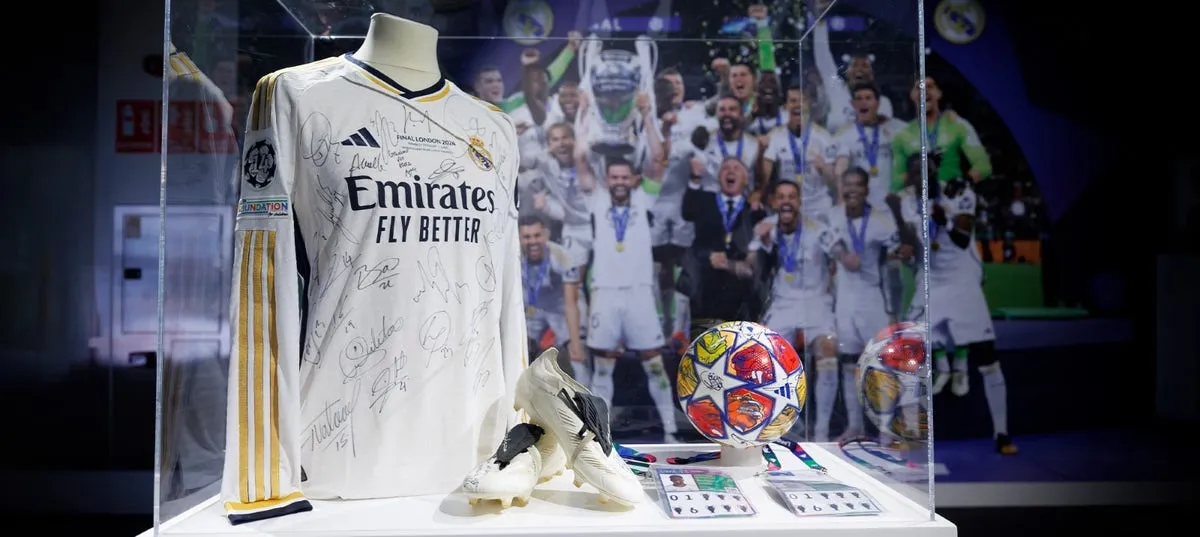
Explore a visual journey through the Santiago Bernabéu Stadium and Museum, showcasing its modern architecture from both aerial and interior perspectives. The gallery features panoramic views of the pitch with blue seating and the dugout area. You can also glimpse the extensive museum's collection of legendary trophies, including the Champions League Cup, alongside displayed Real Madrid jerseys and historical football memorabilia.

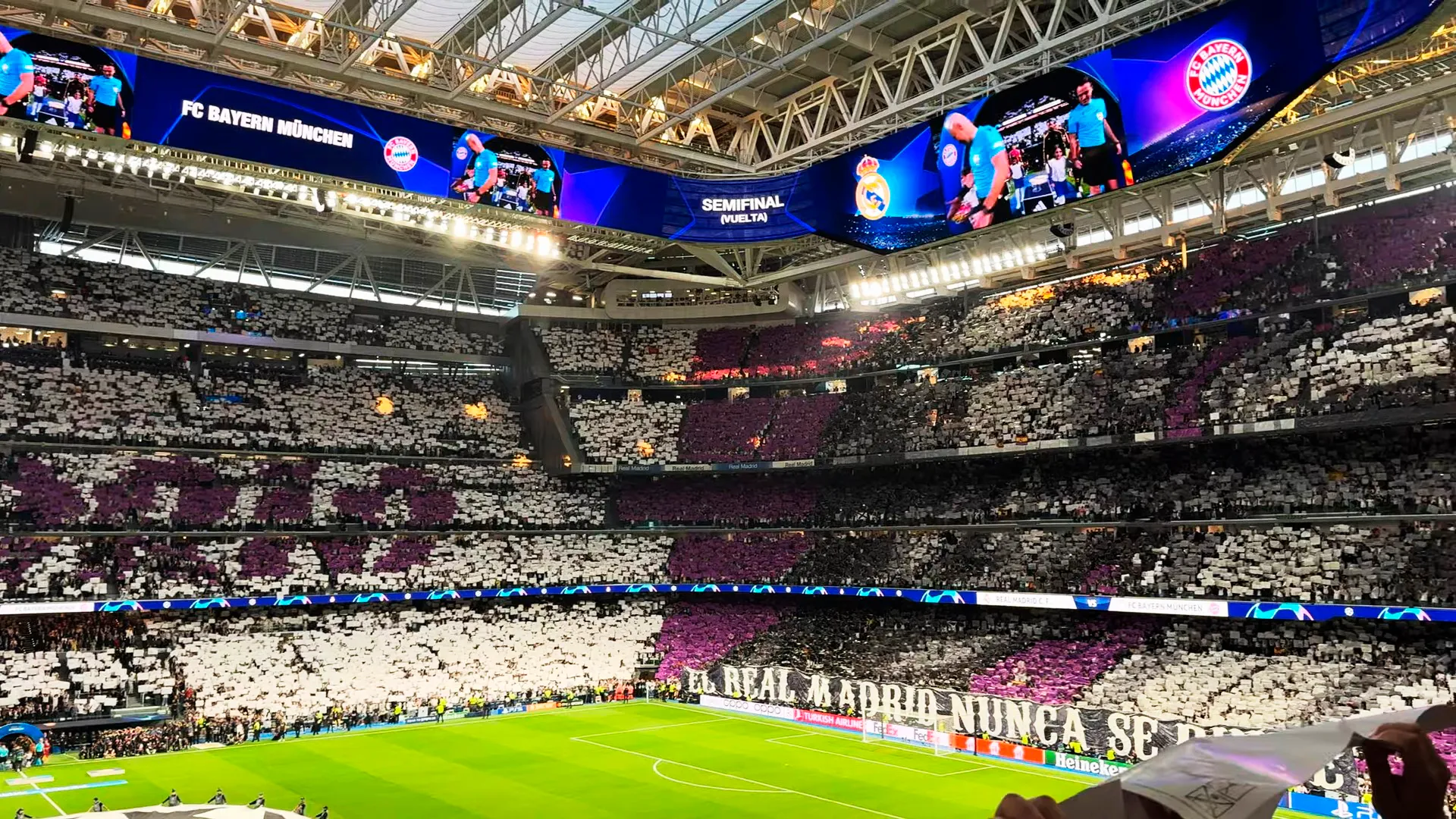
Interior of Santiago Bernabéu Stadium with blue seats, central field, and 'REAL MADRID' text
Aerial view of the Santiago Bernabéu Stadium with a curved metallic roof and surrounding urban area
Real Madrid CF crest with a golden crown and blue and white circular emblem
Interior of Santiago Bernabéu Stadium with filled stands, green field, and large digital screens
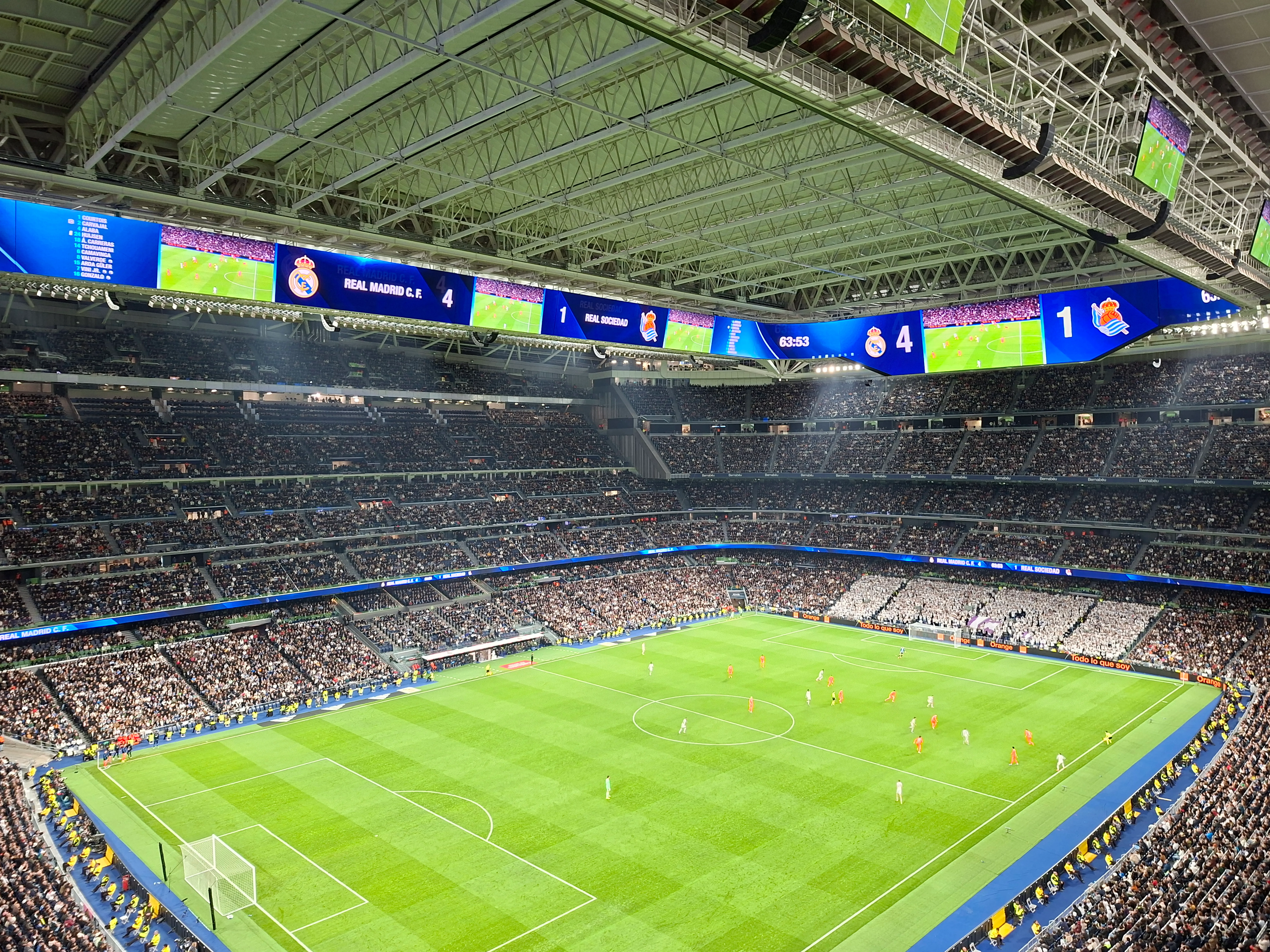
Interior of Santiago Bernabéu Stadium with a football match in progress, showing a green pitch, filled stands, and large digital scoreboards
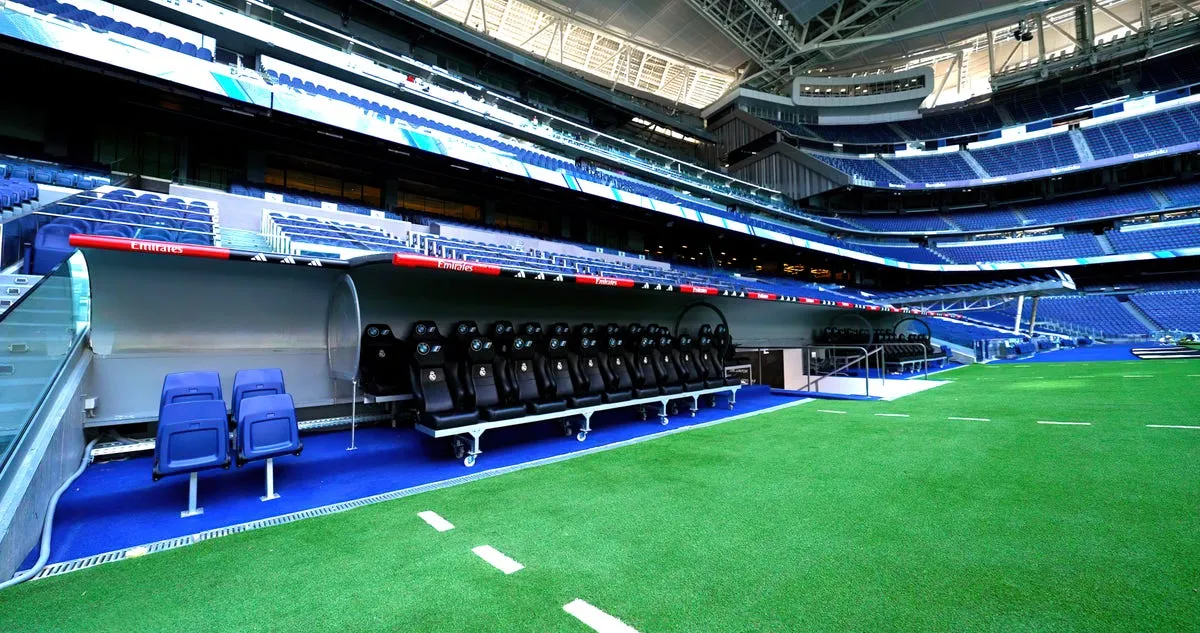
blue seats and dugout area inside a large stadium with green turf
A woman in a black suit gestures toward a display of golden UEFA Champions League trophies behind glass, with visitors observing.
Interior of Santiago Bernabéu Stadium with blue seats and a large roof structure
A Real Madrid jersey in a display case with a football and a team celebration photo in the background
A silver UEFA Champions League trophy with golden confetti falling around it on a green field background
Madrid

Find Madrid Museums: Search for Cultural Attractions and Historical Sites

Discover art, history, and unique cultural experiences throughout Madrid.

Locate inspiring museums in Madrid that match your specific interests. Uncover a wide range of cultural institutions, from renowned art galleries to captivating historical collections. Start your discovery of Madrid's vibrant cultural landscape now.

Explore Santiago Bernabéu Stadium and Museum with Madrid
Guides, visitor info, and museum details in Madrid
Find everything about Santiago Bernabéu Stadium and Museum in one place, including tickets, opening hours, current exhibitions, location details, visitor tips, nearby attractions, and the latest museum updates. Use these pages to plan your visit, discover what to see, and get practical information before you go.
Discover nearby museums similar to Santiago Bernabéu Stadium and Museum in Madrid and plan your next cultural stop with confidence.
These recommendations prioritize real proximity to Santiago Bernabéu Stadium and Museum and help you find high-fit alternatives faster across Madrid.
Use this curated list to compare museums near Santiago Bernabéu Stadium and Museum without opening multiple search pages. Each card gives you fast visual context and direct access to key details so you can decide quickly. If you are building a full day in Madrid, this section helps you chain nearby visits with less planning effort.