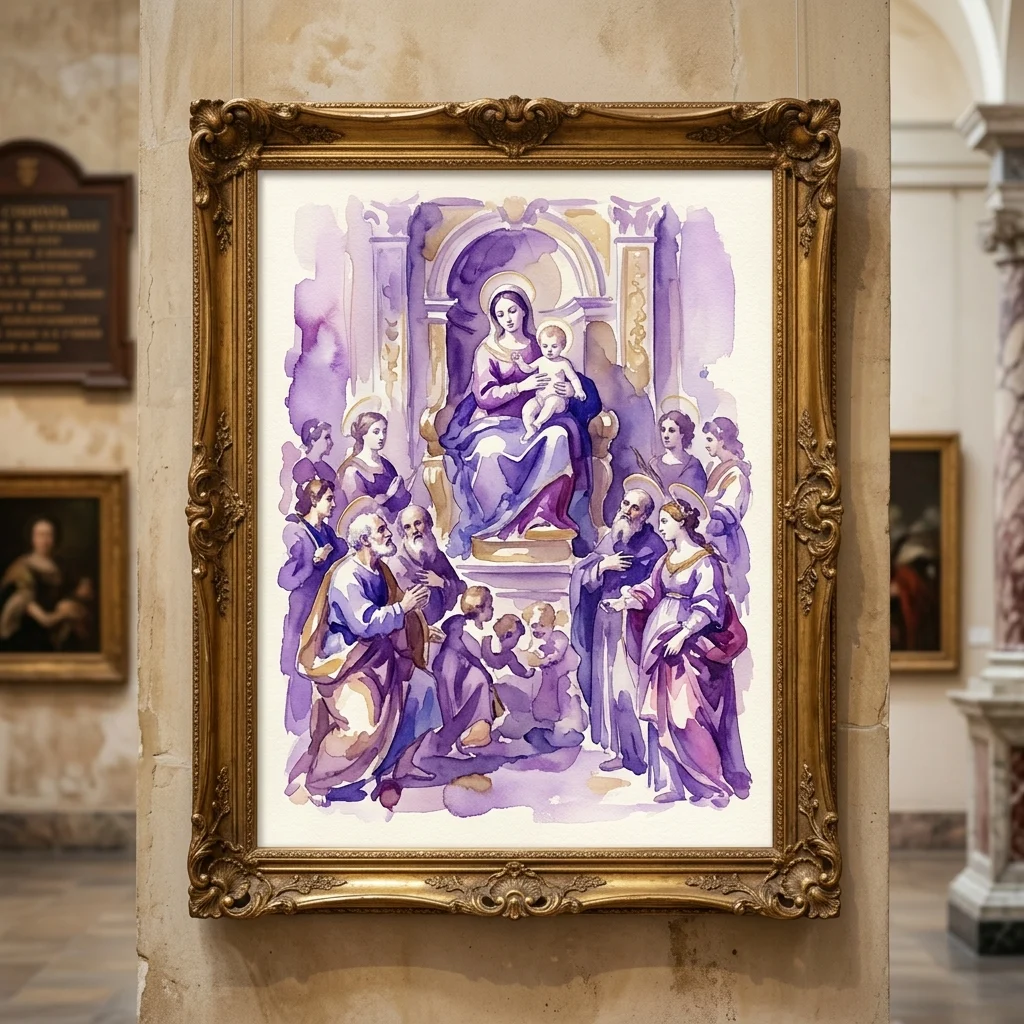
This oil on canvas painting, "Parable of the Workers in the Vineyard," was created around 1752 by Christian Wilhelm Ernst Dietrich. It depicts a scene from the Gospel of Matthew and is noted for its masterful pastiche of Rembrandt's style, a technique highly valued in the 18th century. The artwork was added to the collection in 1792 and is housed in the Palace on the Isle.
The artwork "Parable of the Workers in the Vineyard" (Przypowieść o robotnikach w winnicy), dated approximately 1752, is an oil on canvas painting by the German artist Christian Wilhelm Ernst Dietrich. The subject is drawn from the Gospel of Matthew (20:1–16). In the exhibition catalogues of Stanisław August, the painting is attributed to Dietrich. The work is characterized by its imitation of Rembrandt's manner, a highly appreciated skill in the 18th century that required significant artistic erudition and craftsmanship. Dietrich was known for his masterful pastiches of various painting schools, and this composition is no exception, though it does not directly copy Rembrandt's well-known 1637 depiction of the same theme or its derivatives.
Dietrich's oeuvre includes many landscapes, religious scenes, and portraits, with over 20 of his works noted in Stanisław August's gallery catalogue. This substantial presence indicates his popularity and high standing in the art market of the time. Initial negotiations for acquiring Dietrich's paintings, including four landscapes, began around 1767/68 through the artist Joseph Roos, who informed Bacciarelli. This particular painting, measuring 83.6 x 67.4 cm, was added to the collection in 1792 and is displayed in the Palace on the Isle's Picture Gallery.