Warsaw
Warsaw Old Town · Royal Heritage

Royal Castle in Warsaw: A Historic Royal Residence

Reconstructed royal residence featuring historic interiors and fine art.

ArtHistoryArchitecture

The Royal Castle in Warsaw invites visitors to explore its historical interiors and extensive art collections. Discover the King's apartments, view European paintings including masterpieces by Rembrandt, and admire decorative arts such as porcelain. The castle also features a dynamic schedule of temporary exhibitions, enriching the cultural experience for all.

Discover the Royal Castle in Warsaw, a historical residence featuring royal apartments, a significant collection of European paintings including Rembrandt, and diverse decorative arts.
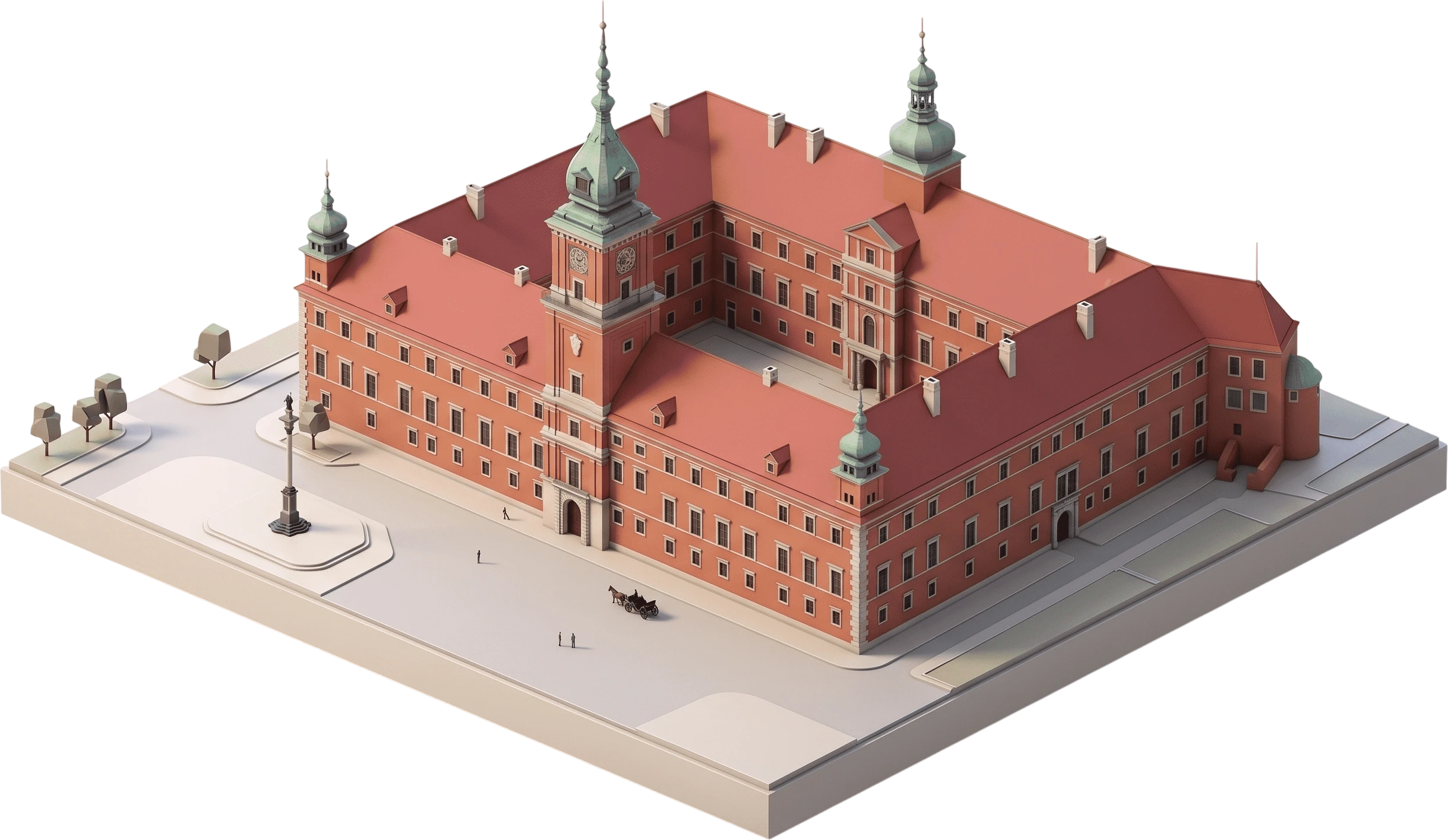
Royal Castle in Warsaw
About the Royal Castle in Warsaw

The Royal Castle in Warsaw is a prominent cultural institution located in the Old Town of Warsaw, offering both permanent and temporary exhibitions. Visitors can explore historical interiors like the Royal Apartments, once home to monarchs such as King Stanisław August. The castle also serves as a repository for an impressive array of European paintings, including Rembrandt's masterpieces in The Lankcoroński Gallery, along with significant decorative arts and sculptures. These collections provide diverse cultural and historical perspectives.
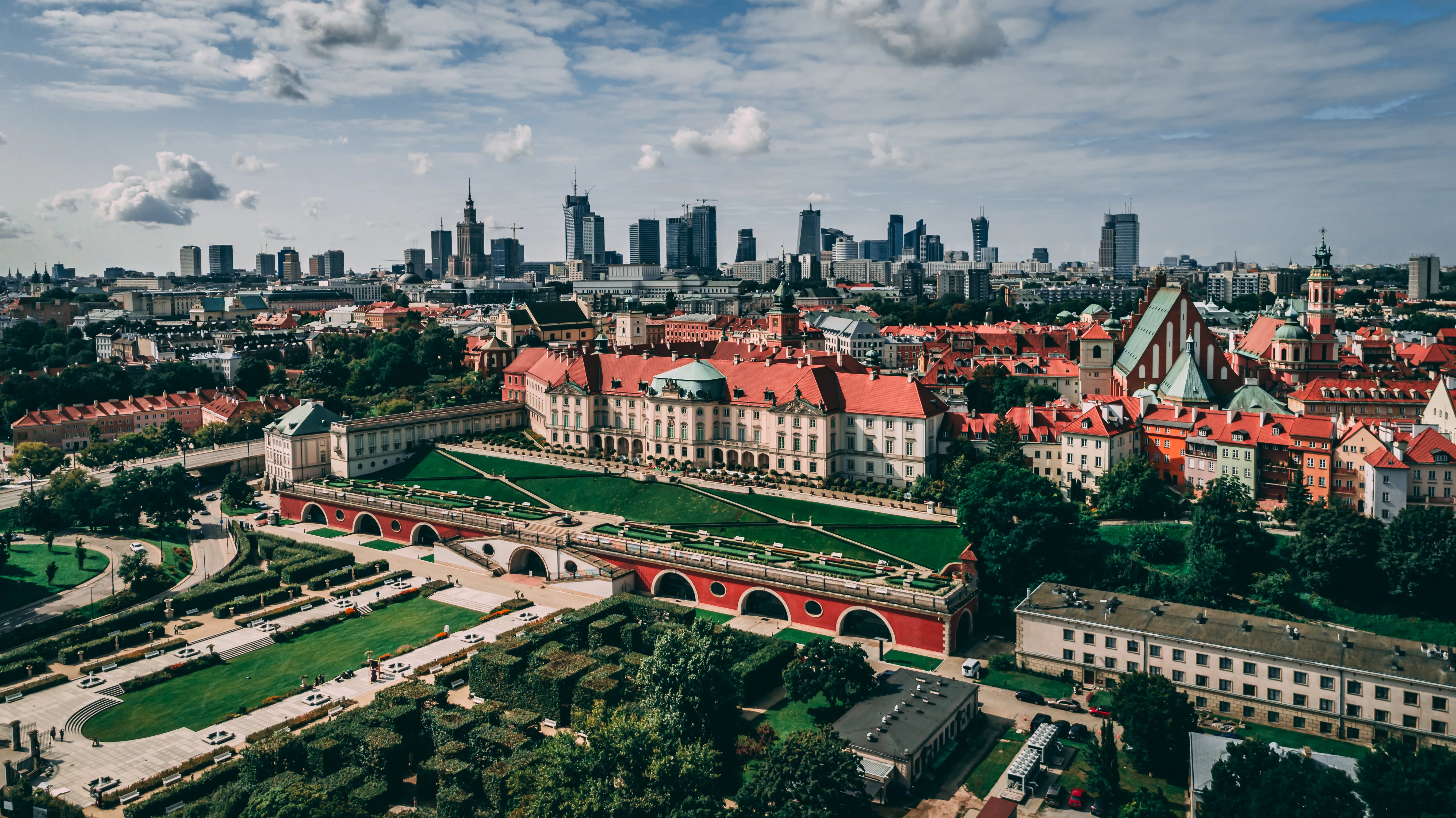
Aerial view of the Royal Castle in Warsaw with red-roofed buildings and green gardens, set against the modern city skyline
Royal Castle in Warsaw opening hours in Warsaw

Check today’s opening status, weekly schedule, and special date changes for Royal Castle in Warsaw. Use these opening hours to plan your arrival and avoid closed times in Warsaw.

Monday
Tuesday
Wednesday
Thursday
Friday
Saturday
Sunday
-
10:00-18:00
10:00-18:00
10:00-18:00
10:00-18:00
10:00-18:00
10:00-18:00
Royal Castle in Warsaw Tickets and Admission

The Royal Castle in Warsaw provides a range of admission options for visitors. General entry is available, along with specific tickets for students, seniors, and organized groups. The castle also offers free entry for children aged 0-7, complementing broader opportunities for complimentary admission. These varied ticket categories aim to accommodate diverse visitor needs.

Golden Route - Regular
PLN 110.00

Includes audioguide

Golden Route - Reduced
PLN 90.00

Discount eligibility required Includes audioguide

Golden Route - School Rate
PLN 1.00

With EU student ID card

Royal Castle in Warsaw Location and Area

The Royal Castle in Warsaw is centrally located at Plac Zamkowy 1 in the historic Old Town district of Warsaw. This placement means it sits at the heart of the city's UNESCO-listed Old Town, offering visitors convenient access to numerous other cultural sites and dining options within easy walking distance. Its prime position makes it a natural starting point for exploring the area's rich history and architecture.

© OpenStreetMap contributors

Plac Zamkowy 1

00-277 Warsaw

Old Town, Mazowieckie, PL

Visitor Information for the Royal Castle in Warsaw

The Royal Castle in Warsaw, situated in the Old Town, does not provide visitor parking due to its central historic location. Those arriving by car can find parking rules on Warsaw streets via zdm.waw.pl, with accessible parking on Podwale Street. Public transport is recommended, with "Plac Zamkowy" and "Stare Miasto" being the closest stops; timetable details are available on wtp.waw.pl.

Visitor Information for the Royal Castle in Warsaw

Royal Castle in Warsaw: Royal History and European Art

The Royal Castle in Warsaw, a significant cultural institution in the Old Town, uniquely blends Polish royal history with European art. Visitors explore richly appointed Royal Apartments, gaining insight into monarchical life. A key highlight is The Lankcoroński Gallery, showcasing European masterpieces, including prominent Rembrandt paintings. Beyond fine art, the castle houses extensive decorative arts collections and presents a dynamic schedule of temporary exhibitions, enriching every visit.
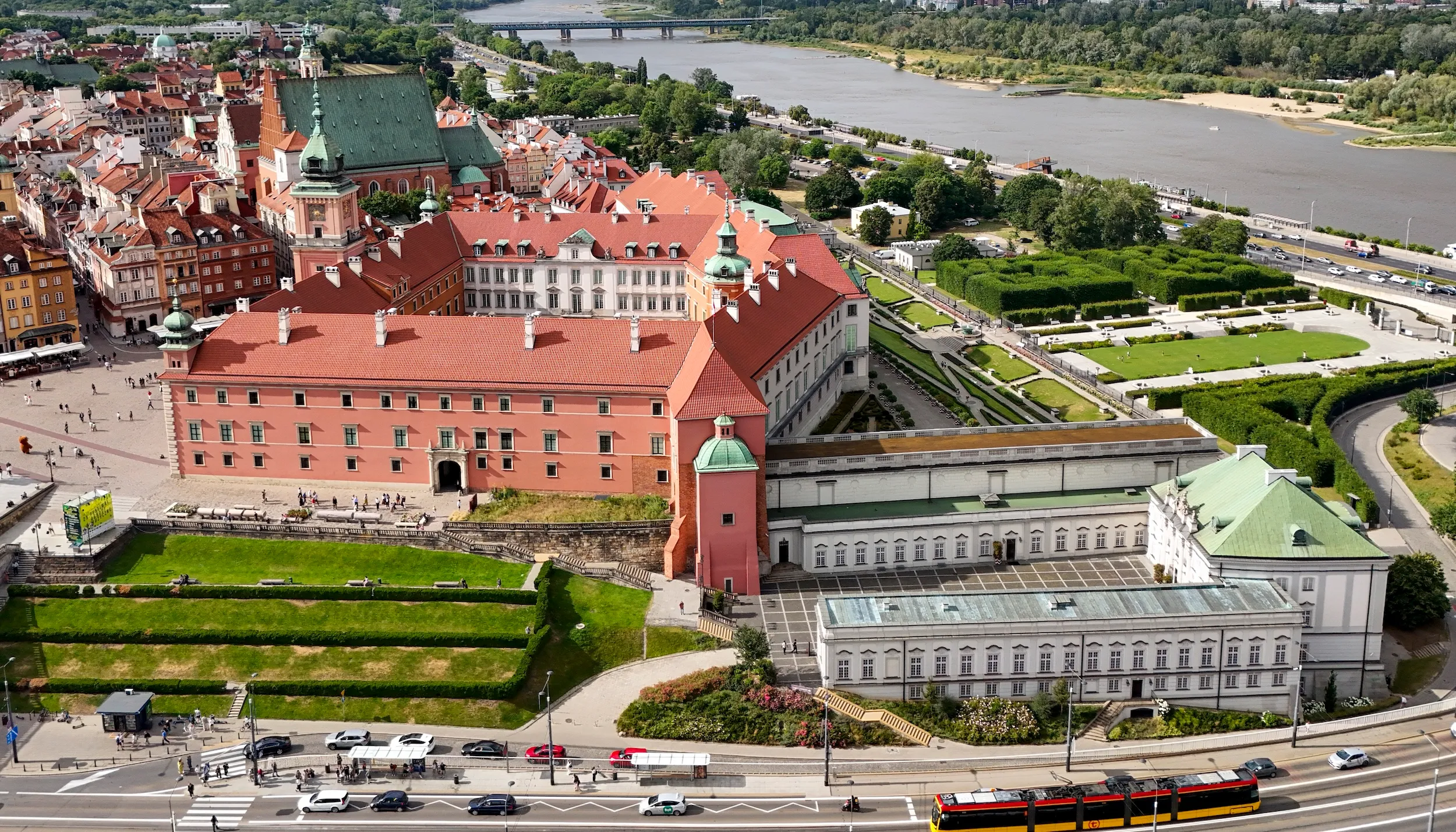
Aerial view of the Royal Castle in Warsaw with red-roofed buildings, green gardens, and the Vistula River
Top exhibition picks at Royal Castle in Warsaw
Curated museum program highlights and what to see now in Warsaw
Discover high-interest exhibitions at Royal Castle in Warsaw, selected to help you prioritize your route, compare show themes, and plan a more rewarding museum visit in Warsaw.
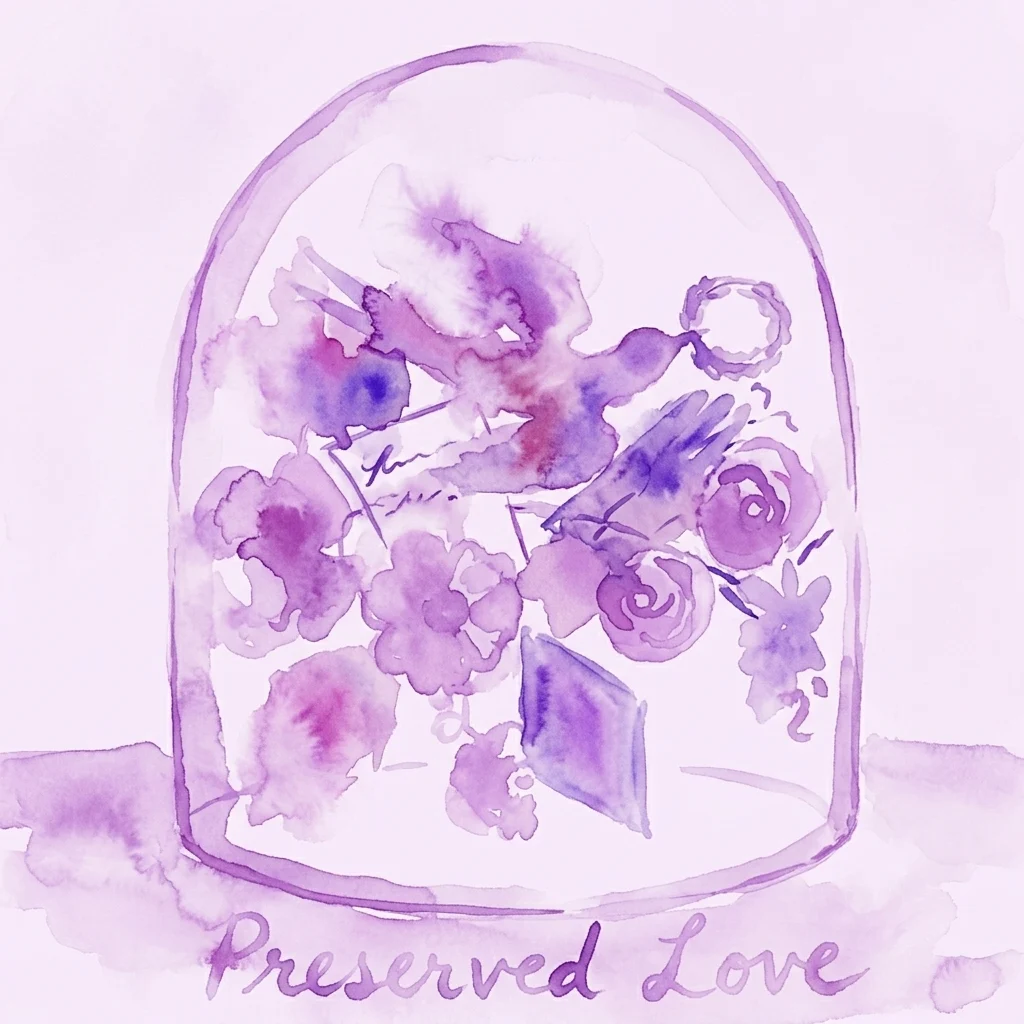
A watercolor illustration of a glass dome containing flowers, a ring, and a letter, with the text 'Preserved Love' below, evoking a theme of cherished love and history.
From Feb 14, 2026

Z miłości: Discover Historical Objects of Love at Royal Castle in Warsaw.

Explore intimate personal histories from the Hanna Szudzińska collection.

This exhibition uncovers historical items connected to love, romance, and marriage rituals. See how everyday objects preserve intimate and anonymous personal histories. It highlights collecting passion and artisan craftsmanship through centuries.

Z miłości Exhibition.
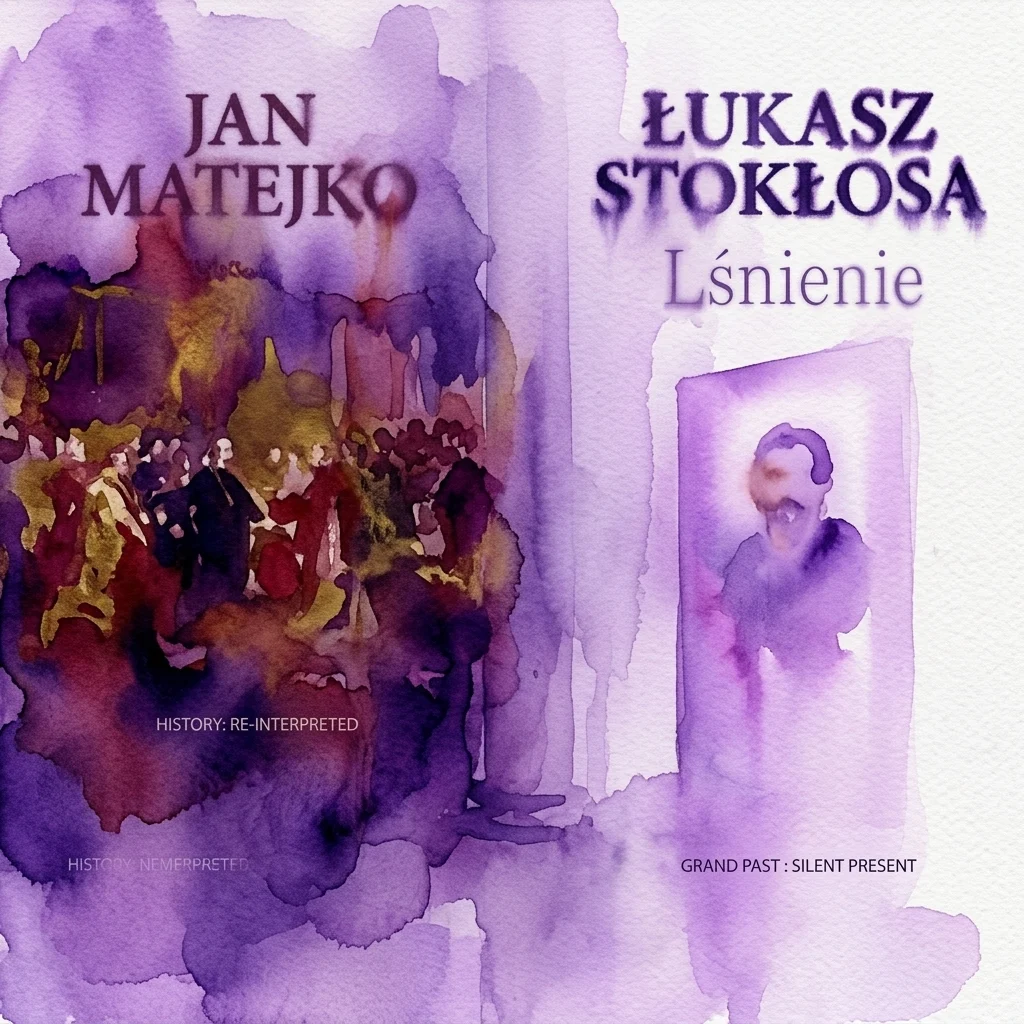
Promotional artwork for the exhibition 'Łukasz Stokłosa. Lśnienie' featuring watercolor-style depictions of Jan Matejko's historical painting and Stokłosa's contemporary work, with text highlighting 'History: Re-Interpreted' and 'Grand Past: Silent Present'.
Jan 16, 2026 – Oct 31, 2026

Łukasz Stokłosa. Lśnienie: Contemporary Art Exhibition at Royal Castle, Warsaw

A compelling artistic dialogue exploring history through modern painting.

Experience the unique 'Lśnienie' exhibition where Łukasz Stokłosa's art reimagines historical spaces. His contemporary works create a thought-provoking conversation with Jan Matejko's iconic historical paintings. Discover new interpretations of history and cultural identity.

View Exhibition Details
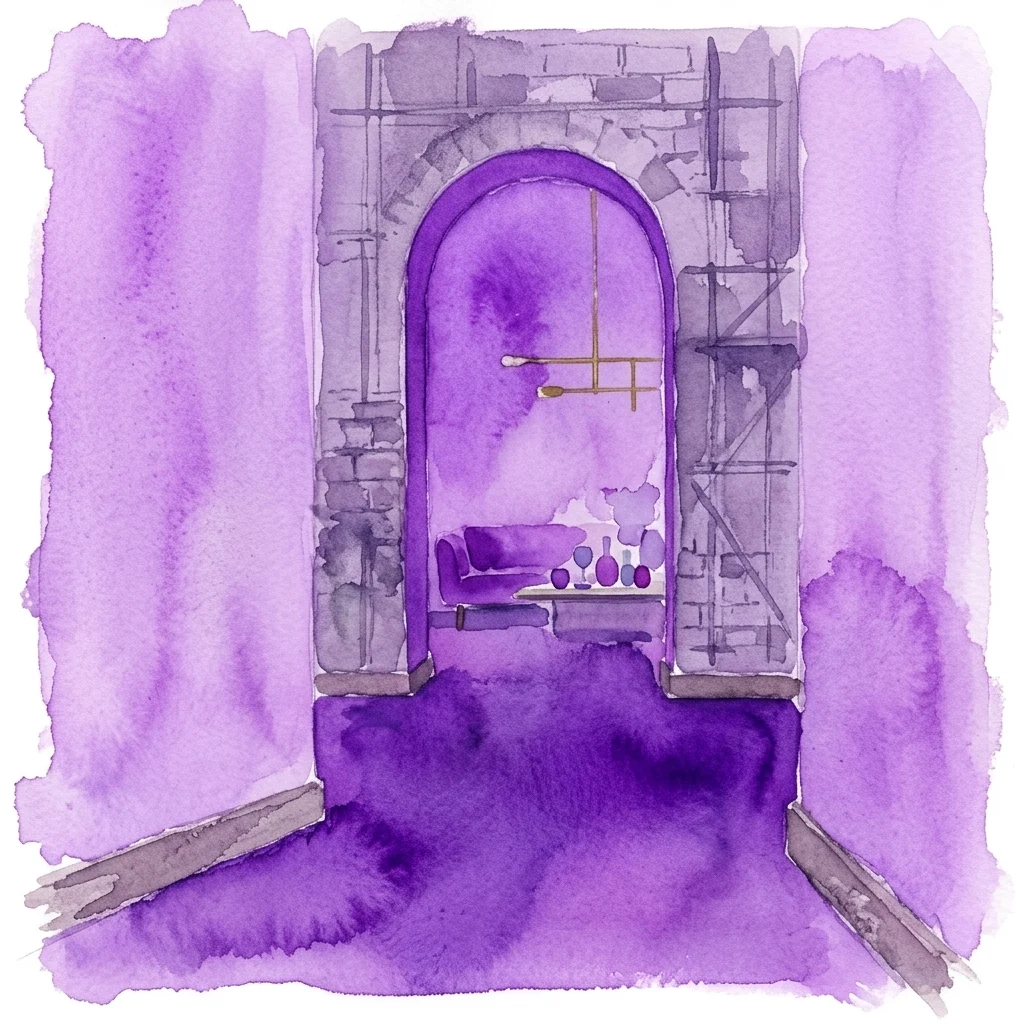
Purple watercolor illustration of an arched alcove in a castle interior, with elegant furnishings visible below a grand rounded doorway and scaffolding suggesting unfinished renovation.
From Oct 2, 2026

Secret Chambers of People's Power at the Royal Castle in Warsaw

Discover the 1970s project for exclusive VIP suites inside the museum.

View original period artifacts and documentary photography by Chris Niedenthal. The project reveals the conflicting ideologies that shaped the castle's restoration.

Secret Chambers Exhibition
Memesis: Karolina Jarzębak Exhibition Exploring Crisis at Royal Castle Warsaw
May 12, 2026 – Jun 28, 2026

Memesis: Karolina Jarzębak Exhibition Exploring Crisis at Royal Castle Warsaw

Contemporary marquetry art reflecting modern anxieties and digital culture.

Karolina Jarzębak's 'Memesis' uses traditional marquetry to critically examine contemporary narratives of global crisis and the digital age. This exhibition at the Royal Castle Warsaw integrates religious symbols with internet memes, portraying societal fragmentation. It offers a unique perspective on 21st-century existential concerns.

Memesis Exhibition
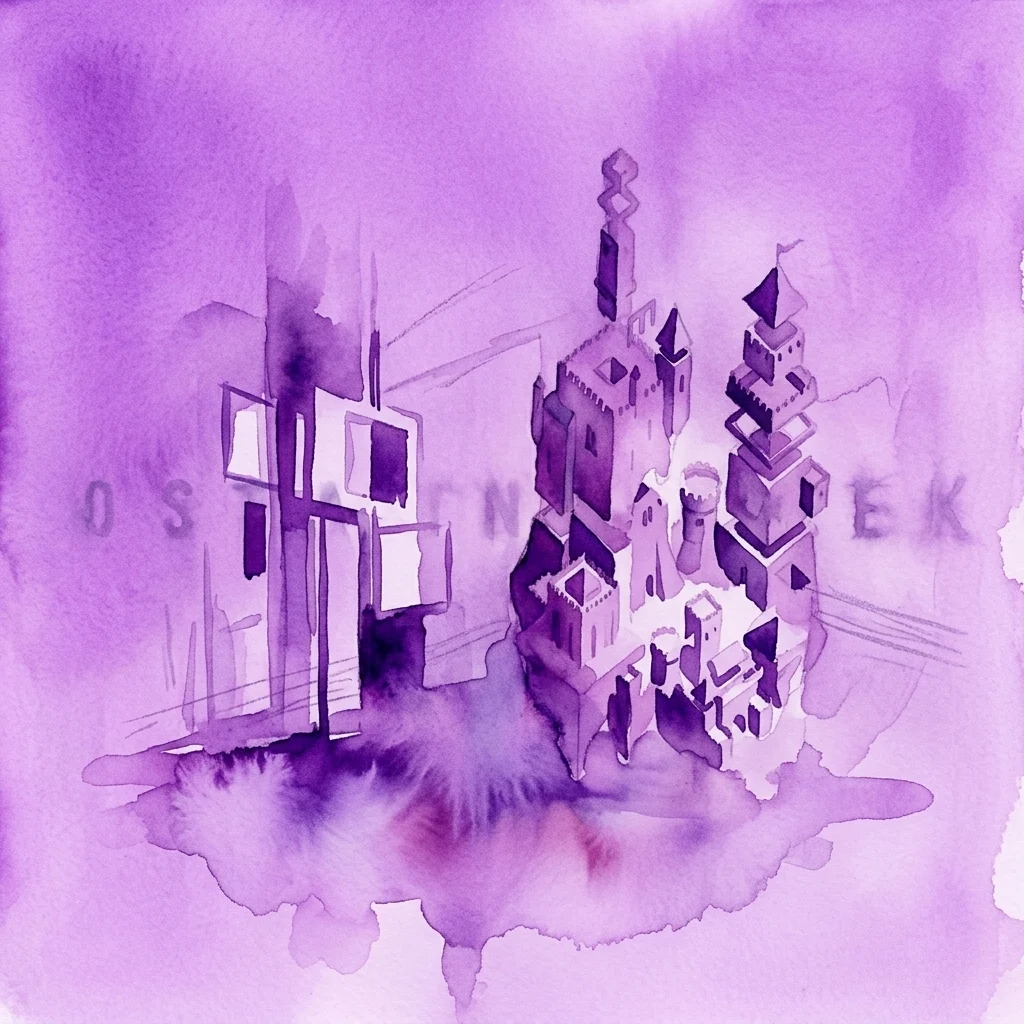
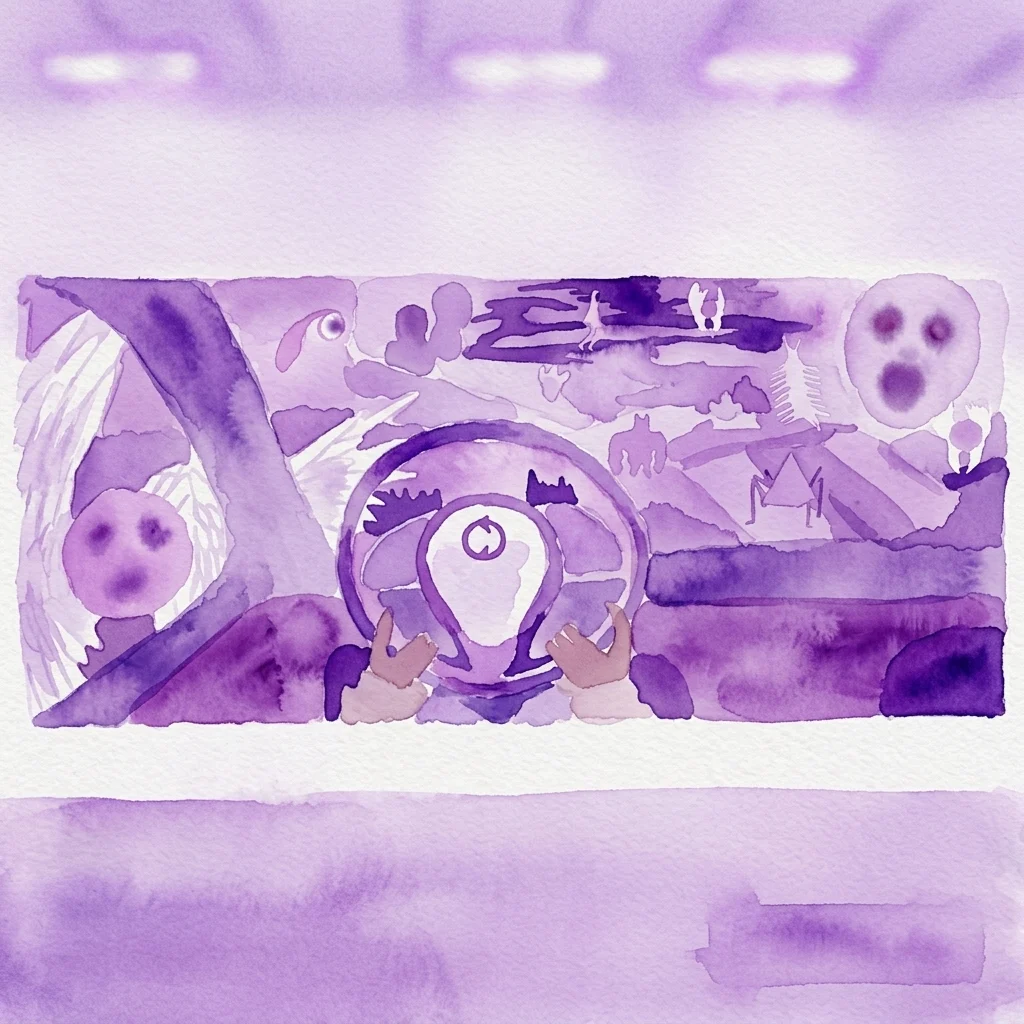
A purple watercolor illustration of a fantastical castle with modern architectural elements, representing the concept of 'zamczystość' in Polish culture.
Mar 26, 2026 – Jun 28, 2026

Ostatni zamek: Polish Castles, Culture, and Contemporary Art Exhibition in Warsaw

Discover 'zamczystość,' the cultural perception of castles, through art and photography.

This exhibition unpacks Poland's deep cultural ties to castles, exploring how the idea of 'zamczystość' shapes national identity. See contemporary art, photography, and installations showcasing this unique cultural phenomenon.

Ostatni zamek Exhibition
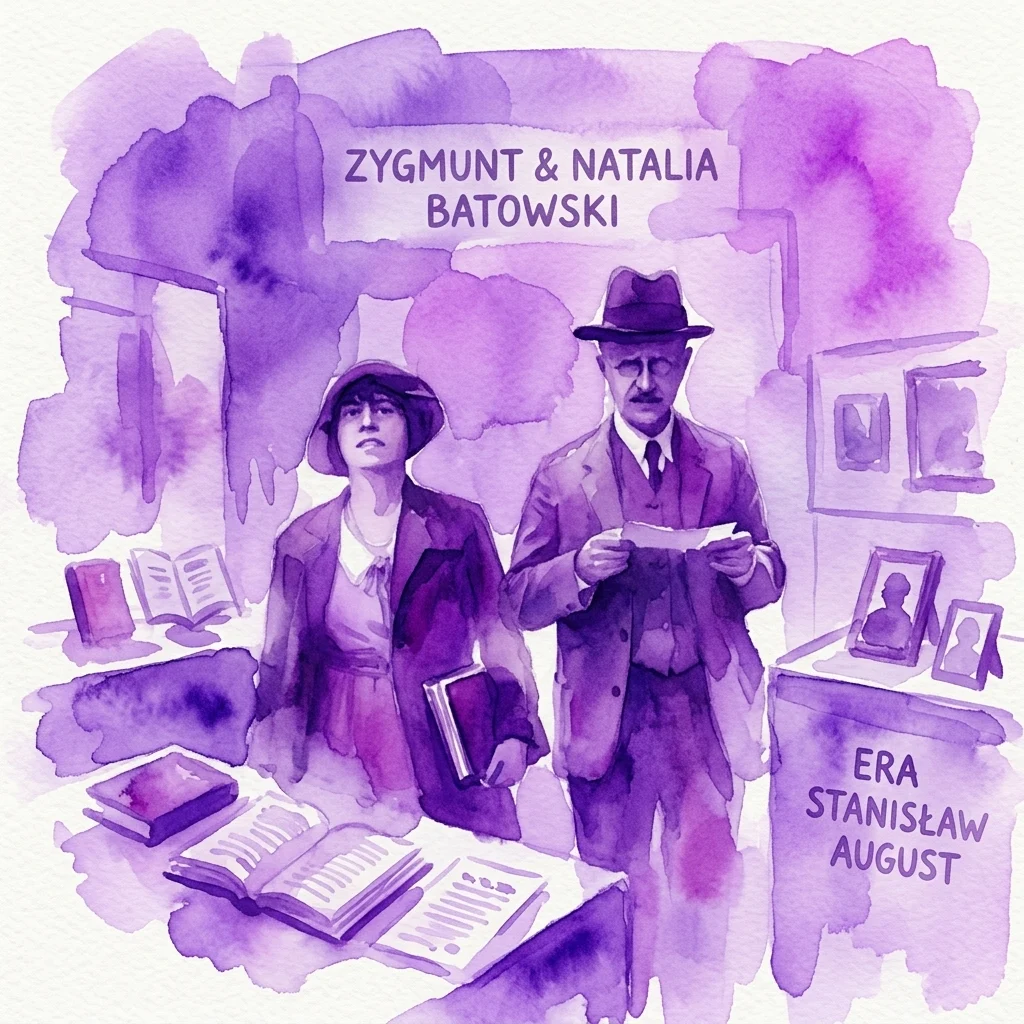
Discover Zygmunt & Natalia Batowski: Stanisław August Era Art Exhibition in Warsaw
Jun 19, 2026 – Jul 12, 2026

Discover Zygmunt & Natalia Batowski: Stanisław August Era Art Exhibition in Warsaw

Explore 18th-century Polish art history through dedicated researchers' studies.

Uncover the art historical legacies of Zygmunt and Natalia Batowski. This exhibition showcases their studies of 18th-century Polish art, featuring key manuscripts, publications, and artworks from the Stanisław August era. It offers a window into past research methods.

Exhibition Details
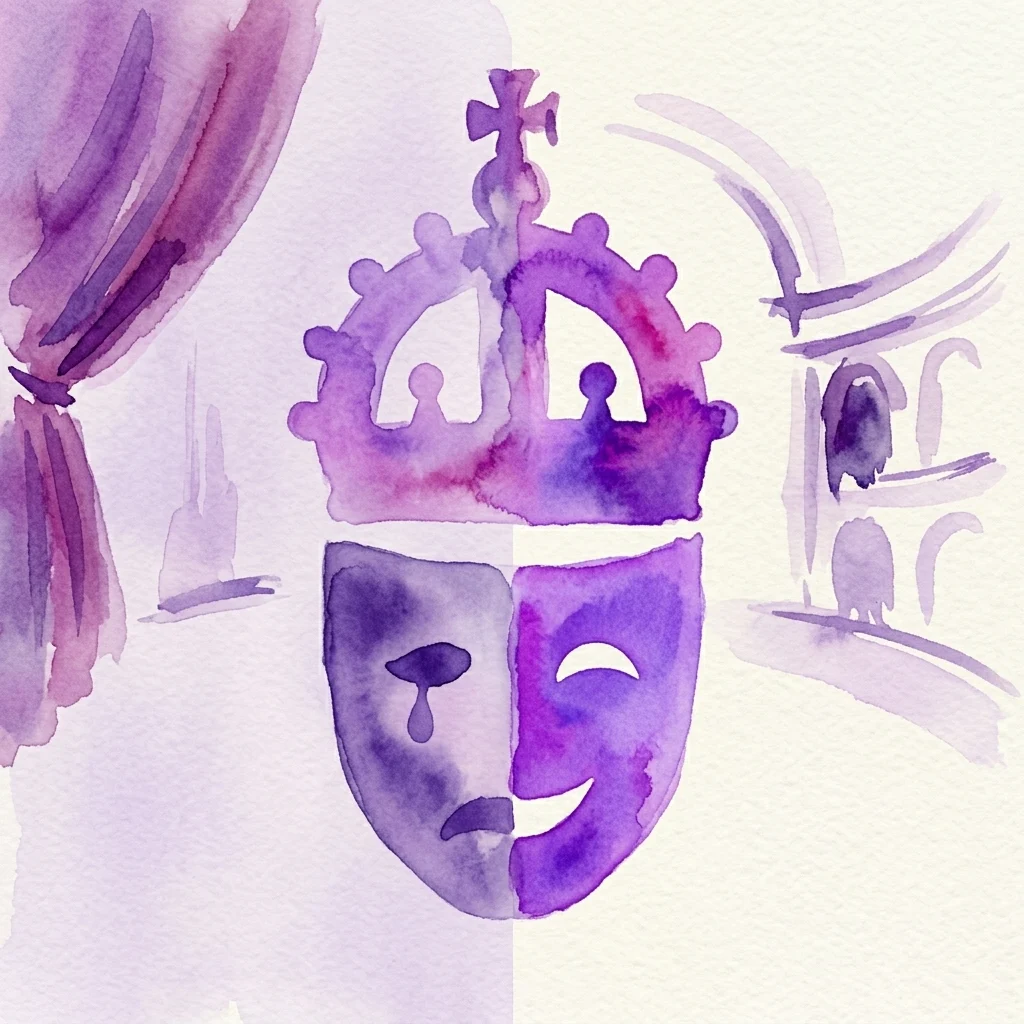
A watercolor illustration of a split theatrical mask with a crown, symbolizing the themes of drama and monarchy from the 'Wielka gra' opera of Władysław IV at the Warsaw Royal Castle.
Apr 17, 2026 – Jul 19, 2026

Wielka gra. Opera Władysława IV: Baroque Theater and Royal Power Exhibition in Warsaw

Discover 17th-century stagecraft and the political artistry of King Władysław IV.

Explore "Wielka gra," an exhibition at the Royal Castle in Warsaw. It reveals King Władysław IV's opera as a powerful tool of governance and cultural enrichment. Discover over a hundred objects, reconstructions, and interactive multimedia elements.

View Exhibition Details

Royal Castle in Warsaw History

The Royal Castle in Warsaw originated as a 14th-century ducal residence, growing into a central seat of power for the Polish-Lithuanian Commonwealth after the capital moved to Warsaw in the early 1600s. It served as a royal residence and parliamentary venue, notably witnessing the adoption of Europe's first modern codified national constitution in 1791. Devastated during World War II by shelling in 1939 and deliberate destruction in 1944, the castle underwent a **monumental reconstruction** from 1971 to 1984. This effort restored its historical appearance, culminating in its 1980 designation as a UNESCO World Heritage Site. Today, it stands as a testament to Polish resilience.

  • Castle's origins as ducal residence

    Founding

    The history of the castle dates back to the 14th century when the first Castle Tower was constructed. The complex was initially used as the residence of the Masovian dukes.

  • Designated to replace Wawel Castle

    1600-1699Overview

    In the early 1600s, the castle was designated to replace Wawel Castle in Kraków as the seat of the king, Parliament, and the Polish-Lithuanian Commonwealth.

  • Remodeling into Mannerist and Baroque styles

    1500-1747Architecture

    The medieval Gothic structure was remodeled into Italian Mannerism by architects Matteo Castelli and Giovanni Battista Trevano. The Baroque easternmost wing was designed by Gaetano Chiaveri and completed in 1747.

  • Construction of the Great Tower

    Founding

    During the rule of Duke Conrad, the wooden-earthen 'gord' called 'Small Manor' was erected. The next duke, Casimir I, decided to build the Great Tower, possibly one of the first brick buildings in Warsaw.

  • Construction of the Curia Maior

    1407-1410Construction

    The Curia Maior (Big Manor) was erected between 1407 and 1410 during the reign of Duke Janusz I the Elder. Its façade, still standing in 1944, was rebuilt after being knocked down by the Germans.

  • Incorporation into the Kingdom of Poland

    1526-1526Ownership

    When the Duchy of Masovia was incorporated into the Kingdom of Poland in 1526, the edifice became one of the royal residences.

  • Queen Bona Sforza's residence

    1548Historical period

    From 1548 onwards, Queen Bona Sforza resided in the castle with her daughters, who later became queens of Hungary, Sweden, and Poland.

  • King Sigismund II Augustus convenes parliaments

    1556-1564Historical period

    In 1556–1557 and in 1564, King Sigismund II Augustus convened royal parliaments in Warsaw, which met in the castle.

  • Warsaw Castle becomes seat of parliament

    1569Historical period

    Following the Lublin Union (1569), Warsaw Castle regularly became the place where the parliament of the Two-Nations State met.

  • Alterations for parliamentary purposes

    1569-1572Architecture

    The Curia Maior was altered to provide a meeting place for Parliament, with separate premises for the Chamber of Deputies and the Senate. This was one of the first European attempts to create a building solely for parliamentary use.

  • Erection of the Royal House

    1569-1572Architecture

    A new Renaissance style building, known as the 'Royal House', was erected next to the Curia Maior to house the King when parliament was in session.

  • Enlargement under Sigismund III Vasa

    1598-1619Founding

    The castle was enlarged between 1598 and 1619 under Sigismund III Vasa, who transferred the royal residence from Kraków to Warsaw. Giovanni Trevano was in charge of the reconstruction.

  • Construction of the northern and western wings

    1601-1619Architecture

    Between 1601 and 1603, Giacomo Rodondo finished the new northern wing. Later, after 1614, Matteo Castelli led the construction of the western wing, which housed chanceries and a marshal's office.

  • Completion of the New Royal Tower

    1619-1619Architecture

    In 1619, the New Royal Tower, also called Sigismund's Tower, was finished. It was 60 meters high and placed in the middle of the newly built west castle.

  • Homage of Tsar Vasili IV

    1611-1611Historical period

    On 29 October 1611, in the Senator's Chamber, Tsar Vasili IV of Russia, who had been captured by hetman Stanisław Żółkiewski, paid homage to the Polish king Sigismund III Vasa.

  • Rich art collections of Vasa dynasty

    1611-1696Collection

    Sigismund III Vasa and his successors collected many rich works of art, including paintings by Titian, Veronese, Rembrandt, and sculptures by Giambologna.

  • First Polish opera staged

    1628-1628Milestone

    In 1628, the first Polish opera, 'Galatea', was staged at the Castle. The great opera hall was later demolished by Swedes and Germans.

  • Reconstruction after the Deluge

    1657Renovation

    Following the Deluge (1655-1657) and subsequent destruction by Swedish and Russian armies, reconstruction of the castle started in 1657 under Izydor Affait's guidance.

  • Rebuilding of the opera hall

    1660-1669Renovation

    The Władysław IV's Opera Hall was completely devastated but was rebuilt in the 1660s by King John II Casimir.

  • King Michael I Korybut's limited rebuilding

    1669Historical period

    Due to lack of funds, King Michael I Korybut limited rebuilding efforts to destroyed buildings after the 1657 reconstruction, leading him to move to Ujazdów Castle.

  • Reconstruction under Augustus II

    1698-1715Renovation

    Augustus II commissioned a residence reconstruction project in 1698, executed by Johann Friedrich Karcher. Despite wartime seizures and damage, reconstruction based on Karcher's plans occurred between 1713 and 1715.

  • Rebuilding of the Parliament Hall

    1713-1717Renovation

    The Parliament Hall was completely rebuilt between 1713 and 1717 to serve the Saxon rulers as a coronation hall.

  • Construction of the new Senate Chamber

    1722-1723Architecture

    Between 1722 and 1723, the new Senate Chamber was built under architect Joachim Daniel von Jauch, with furnishings moved from the old location.

  • Reconstruction of the Saxon Elevation

    1740-1752Renovation

    New plans by Gaetano Chiaveri in 1734 and developed in 1737, led to reconstruction of the façade on the Vistula side in the rococo style between 1740 and 1752.

  • Work by Jan Jerzy Plersch

    1740-1763Architecture

    Jan Jerzy Plersch, a sculptor, worked on the castle during the 1740s-1750s, creating royal decorative frames, mouldings, and statues for the Saxon elevation.

  • Most splendid period under Stanisław II Augustus

    1764-1795Historical period

    The castle experienced its most splendid period during the rule of Stanisław II Augustus (1764–1795), who collected art and recruited leading architects and painters.

  • Rebuilding of the southern wing

    1766-1785Architecture

    Between 1766 and 1785, the southern wing was rebuilt according to Jakub Fontana's plans, featuring a new elevation with three avant-corps.

  • Furnishing of private apartments

    1774-1777Renovation

    Between 1774 and 1777, the monarch's private apartments were furnished, including the Prospect Room, chapel, Audience Chamber, and Bedchamber.

  • Completion of Senate Apartments

    1779-1786Renovation

    Between 1779 and 1786, the Senate Apartments were completed, comprising the Ballroom, Knights Hall, Throne Room, Marble Room, and Conference Chamber.

  • Royal collections amassed

    1780-1784Collection

    The castle housed rich royal collections including 3200 pictures, statues, graphics, medals, coins, and a library, for which a separate building was erected in 1780–1784.

  • Center for Polish Enlightenment ideas

    1764-1795Cultural significance

    The castle was a center for the ideas of the Polish Enlightenment, hosting 'Thursday lunches' for intellectuals and serving as the birthplace for ideas like the National Education Commission and the national theatre.

  • May 3rd Constitution adopted

    1791-1791Milestone

    In the Senate Chamber on May 3, 1791, the Great Sejm (Four-Year Parliament) passed the famous Polish Constitution of 3 May, Europe's first modern codified national constitution.

  • Napoleon Bonaparte's stay and decision

    1806-1807Historical period

    Between December 1806 and January 1807, Napoleon Bonaparte stayed at the castle and decided to form the Duchy of Warsaw, to be ruled by Frederick August I from the castle.

  • Sejm dethrones Tsar Nicholas I

    1831-1831Historical period

    During the November Uprising, on 25 January 1831, the Sejm, debating in the castle, dethroned Tsar Nicholas I as Polish king.

  • Neoclassical rebuilding of facades

    1836-1856Renovation

    Following the January Uprising, Ludvik Corio redesigned the west, south, and east elevations and façades in the neoclassical style, though the Saxon Elevation remained unchanged.

  • Maintenance work during Russian reign

    1862-1902Renovation

    Maintenance work was conducted between 1862–1863 under Jerzy Orłowicz and others. Further repair works costing 28,000 rubles were done in 1902.

  • Residence of German military governor

    1914-1918Historical period

    During the First World War, the castle served as the residence of the German military governor.

  • Residence of Polish President

    1918-1939Ownership

    After Poland regained independence in 1918, the castle became the residence of the president of Poland.

  • Restoration under Skórewicz and Szyszko-Bohusz

    1920-1939Renovation

    The castle was restored under the guidance of Kazimierz Skórewicz (1920–1928) and Adolf Szyszko-Bohusz (until 1939).

  • Return of artworks from Russia

    1920-1939Collection

    Under the terms of the peace treaty with Soviet Russia in Riga (1920), artworks and furnishings taken to Russia were returned to Poland, allowing for the restoration of historic rooms.

  • Destruction during WWII bombardment

    1939-1939Construction

    On 17 September 1939, the castle was shelled by German artillery, destroying the roof and turrets. The ceiling of the Ballroom collapsed, destroying a fresco.

  • Dismantling and removal of valuable objects

    1939Renovation

    After the German occupation of Warsaw, valuable objects, including central heating installations, were dismantled and taken to Germany. Many were seized by Nazi dignitaries.

  • Germans blow up demolished walls

    1944-1944Construction

    In 1944, after the Warsaw Uprising, the Germans blew up the castle's demolished walls, leveling the edifice as part of the Pabst Plan.

  • Rescue of surviving fragments

    1945Renovation

    Immediately after the end of the war in 1945, work began to rescue the surviving fragments of the castle's walls, foundations, and cellars from further destruction.

  • Bill passed to rebuild the castle

    1949-1949Renovation

    In 1949, the Polish Parliament passed a bill to rebuild the castle as a monument to Polish history and culture.

  • Reconstruction officially begins

    1971-1971Construction

    The decision to start the reconstruction was finally taken on January 20, 1971, with a Civic Committee set up to fund the work through voluntary contributions.

  • Reconstruction completed

    1971-1984Construction

    Reconstruction was carried out in the years 1971–1984, during which it regained its original 17th-century appearance.

  • Registered as historical monuments

    1965-1965Heritage status

    In 1965, surviving wall fragments, cellars, the adjacent Copper-Roof Palace, and the Kubicki Arcades were registered as historical monuments.

  • Became UNESCO World Heritage Site

    1980-1980Heritage status

    In 1980, the Royal Castle and surrounding Old Town became a UNESCO World Heritage Site.

  • Donation of Rembrandt paintings

    1994-1994Collection

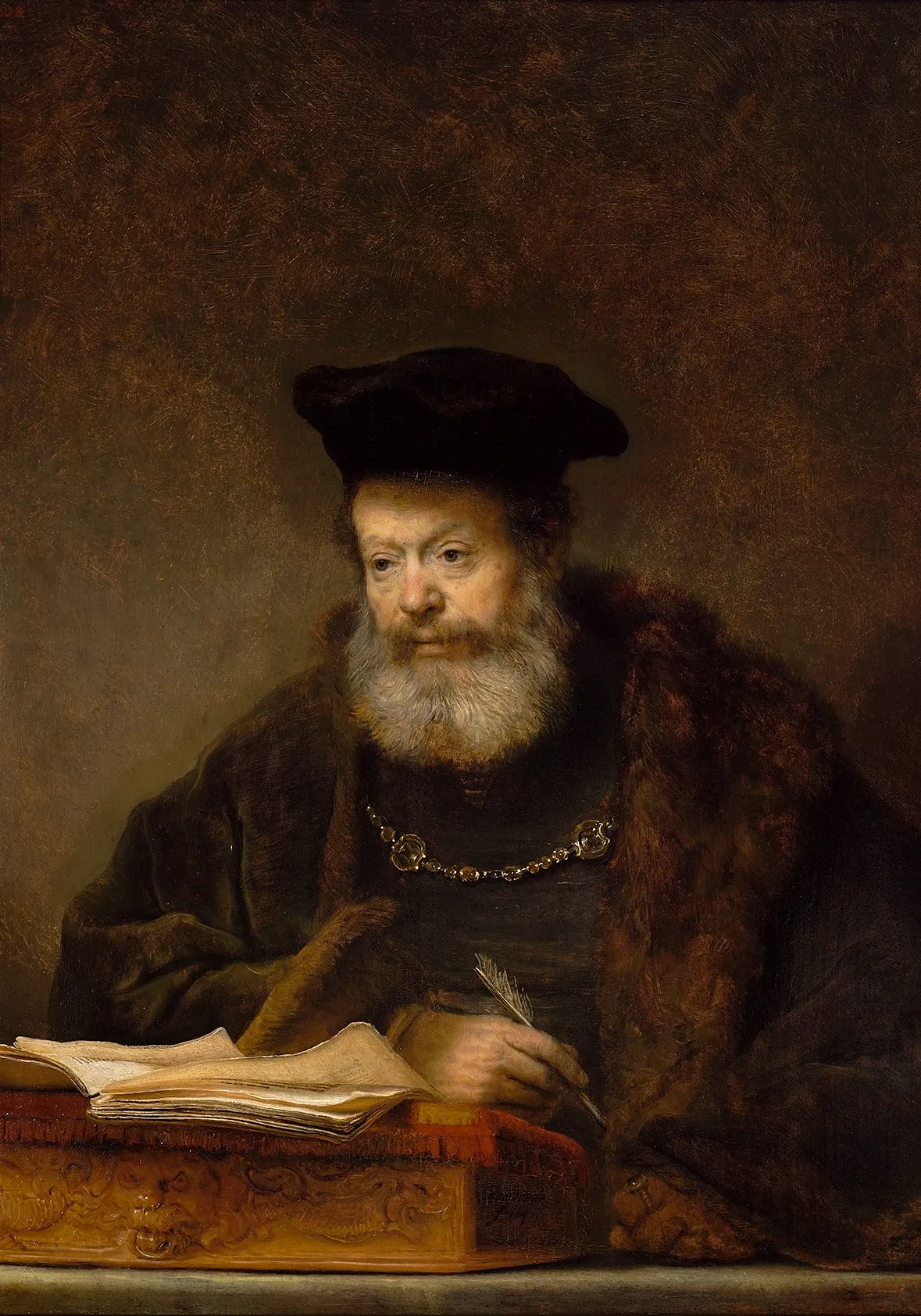
    In 1994, Countess Karolina Lanckorońska donated 37 pictures to the Royal Castle, including two paintings by Rembrandt: 'The Father of the Jewish Bride' and 'The Girl in a Picture Frame'.

  • Acquisition of Stradivari violin

    2018-2018Collection

    In December 2018, the castle acquired a violin created by Antonio Stradivari in 1685, officially named 'Polonia' to commemorate Poland's independence centenary.

  • Return of Bacciarelli painting

    2018-2018Collection

    In December 2018, a painting by Marcello Bacciarelli titled 'Portrait of Jerzy Mniszech with Daughter Elizabeth and Kiopek' (1795), considered missing, was returned to the castle's collections.

  • Copper-Roof Palace construction

    1651-1656Founding

    The Copper-Roof Palace was originally built as a patrician house by Wawrzyniec Reffus between 1651 and 1656.

  • Remodeling of Copper-Roof Palace

    1698-1701Renovation

    After 1657 destruction, the Copper-Roof Palace was completely remodeled in 1698–1701 for Jerzy Dominik Lubomirski, who expanded it by building a southern wing.

  • Addition of northern wing to Copper-Roof Palace

    1720-1720Renovation

    In 1720, the Copper-Roof Palace was rebuilt with the addition of a second northern wing and its interior was decorated with rococo paintings.

  • Stanisław II Augustus redesigns Copper-Roof Palace

    1777Renovation

    After 1777, the palace passed to King Stanisław II Augustus, who hired architect Domenico Merlini to redesign the interior rooms and join the library wing of the Royal Castle to it.

  • Reconstruction of Copper-Roof Palace after fire

    1948-1949Renovation

    The Copper-Roof Palace was burned in 1944 and reconstructed between 1948 and 1949, based on paintings by Bernardo Bellotto.

  • Nicholas I crowned King of Poland

    1829-1829Milestone

    On 24 May 1829, Nicholas I of Russia was crowned King of Poland in the Royal Castle's Senator's Hall.

  • Act of 5 November announced

    1916-1916Milestone

    On 5 November 1916, the Act of 5 November was announced in the Grand Hall of the Royal Castle.

  • April Constitution signed

    1935-1935Milestone

    On 23 April 1935, the April Constitution was signed in the 'Knight Hall' of the Royal Castle.

  • Presidential insignia stored

    1990Collection

    The insignia of presidential power, including the stamp of the President and national documents transferred by Ryszard Kaczorowski to Lech Wałęsa, are stored in the Castle.

  • Member of Association of Royal Residences of Europe

    Cultural significance

    The Royal Castle in Warsaw is an official member of the Association of the Royal Residences of Europe.

  • Commemorative coin issued

    2014-2014Milestone

    In 2014, the National Bank of Poland issued a 5 zloty coin depicting the Royal Castle in Warsaw as part of the 'Discover Poland' series.

Royal Castle in Warsaw: Unlocking Your Visit's FAQs

Considering a visit to the Royal Castle in Warsaw? You'll find answers to common queries here, from understanding those tricky Monday closures to knowing if you can park your carriage. Discover practical tips and prepare for your regal adventure.

Does the Royal Castle in Warsaw have free entry?

Yes, the Royal Castle in Warsaw offers free admission on Wednesdays for select routes, including the Royal Apartments, Lanckoroński Gallery, and the Tin-Roofed Palace. These free tickets must be collected in person at the Ticket Office on the day of your visit, and availability is limited.

Are there child tickets for the Royal Castle in Warsaw?

Yes, children up to the age of 7 can enter the Royal Castle in Warsaw for free, while a special school rate ticket of 1 PLN is available for youth and students.

How much are ticket prices for the Royal Castle in Warsaw?

Ticket prices for the Royal Castle in Warsaw vary by route, with individual adult tickets ranging from 30 PLN for the Tin-Roofed Palace up to 100 PLN for the comprehensive Golden Ticket. Most paid tickets include the cost of an audioguide rental.

Does the Royal Castle in Warsaw offer student or reduced tickets?

Yes, reduced tickets are available for various exhibitions at the Royal Castle in Warsaw, including a reduced rate of 45 PLN for the Royal Apartments and Parliament Chambers. Visitors must meet specific discount eligibility criteria to use these tickets.

Practical Tips for Visiting the Royal Castle in Warsaw

When planning your visit to the Royal Castle in Warsaw, it is helpful to note that there is no parking available directly at the site. Visitors are encouraged to consider public transportation or explore nearby parking options to ensure a smooth arrival. Planning your journey in advance can contribute to a more enjoyable experience at this historic venue.

Who the Royal Castle in Warsaw is For

The Royal Castle in Warsaw is well-suited for visitors with an interest in Polish royal history, European art, and architectural heritage. Guests can explore the richly appointed royal apartments and ceremonial interiors, gaining insight into the lives of past monarchs. The extensive collections of European paintings, including notable works by Rembrandt, along with diverse decorative arts, offer a comprehensive cultural experience. It is ideal for those seeking an immersive historical and artistic journey in Warsaw's Old Town.

Visuals of the Royal Castle in Warsaw

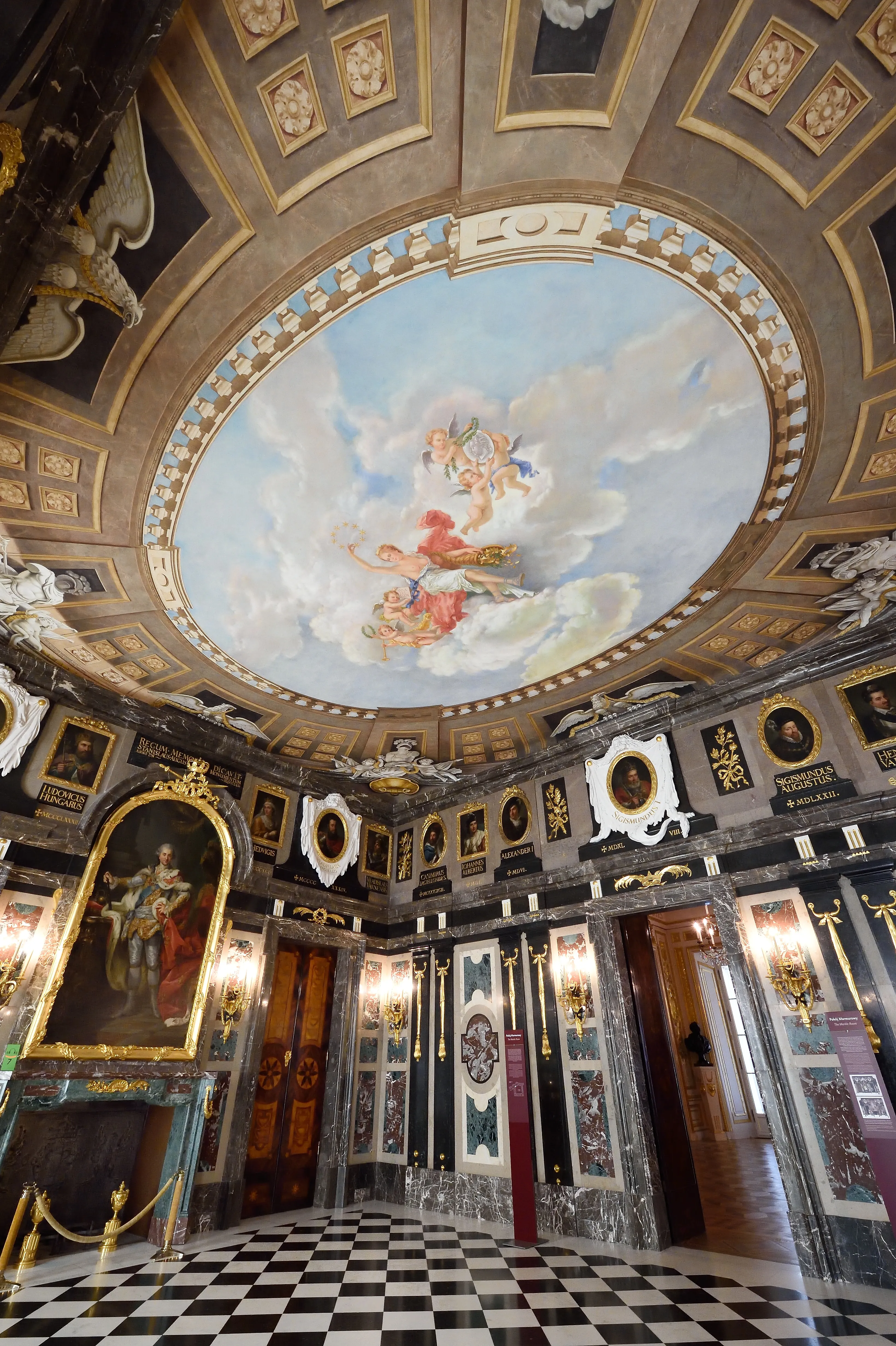
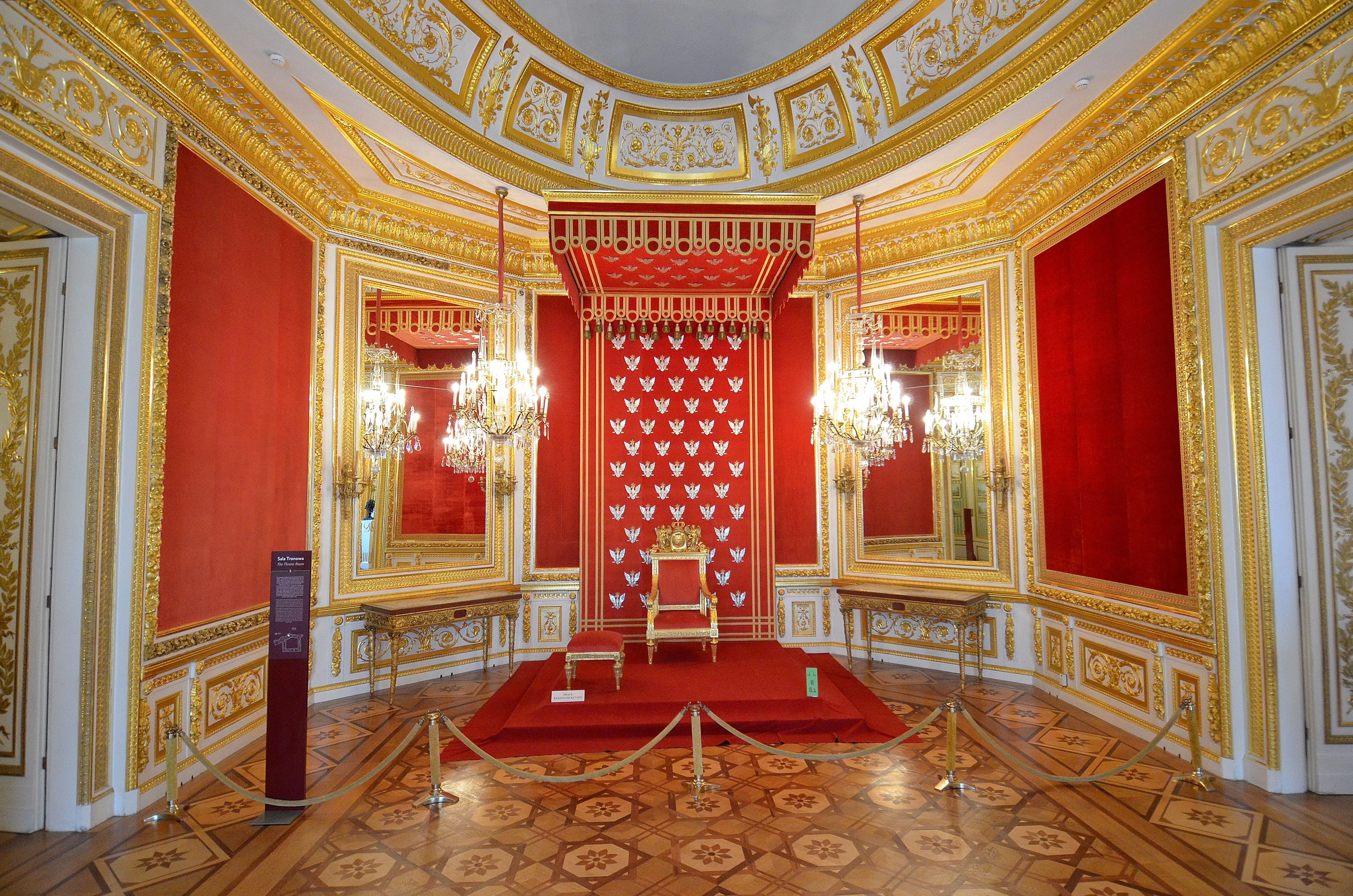
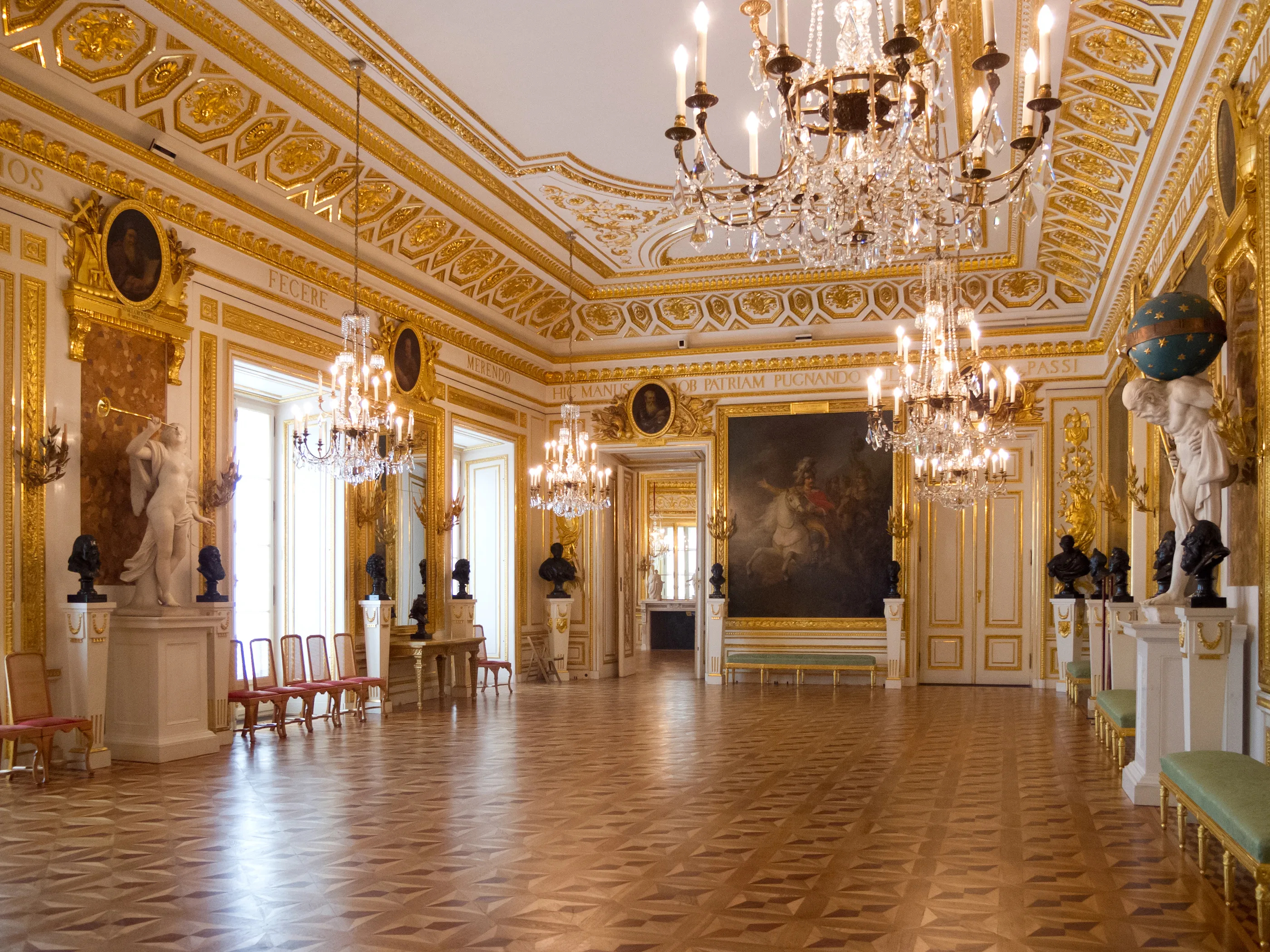
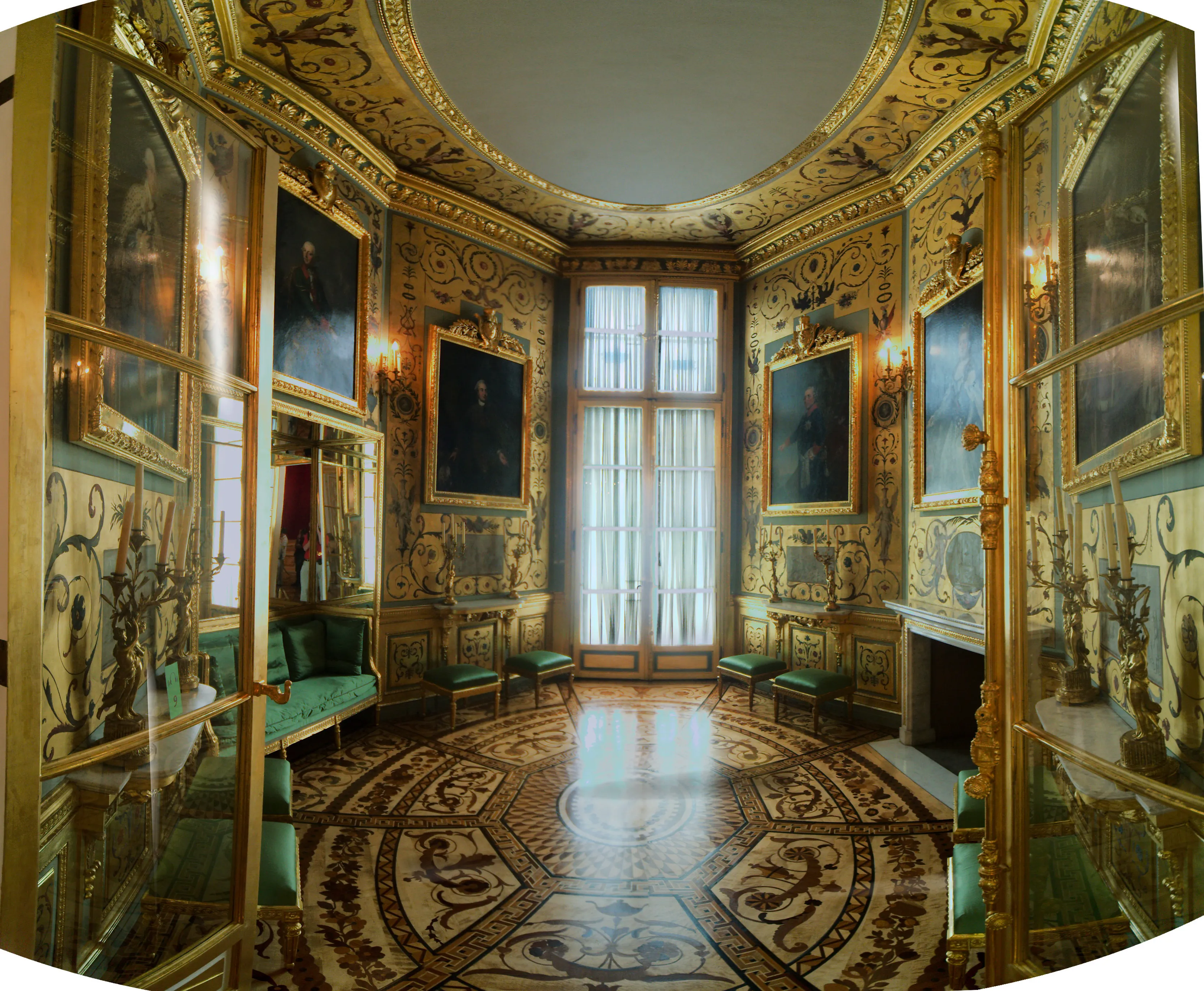
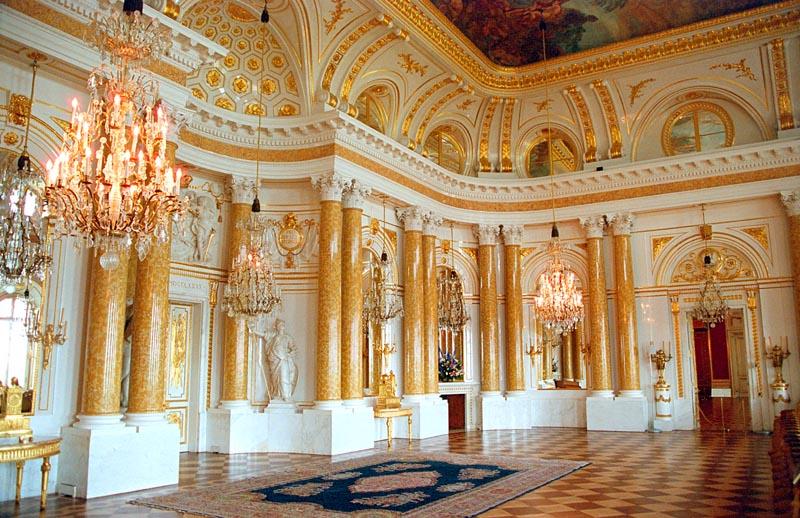
Explore the Royal Castle in Warsaw through a collection of compelling images. Visitors can anticipate views of its richly decorated ceremonial interiors, featuring elaborate ceiling frescoes, gilded frames, and polished marble rooms. The gallery also provides a glimpse into the art collections, including renowned European paintings by masters like Rembrandt, reflecting the historical residence's artistic treasures.
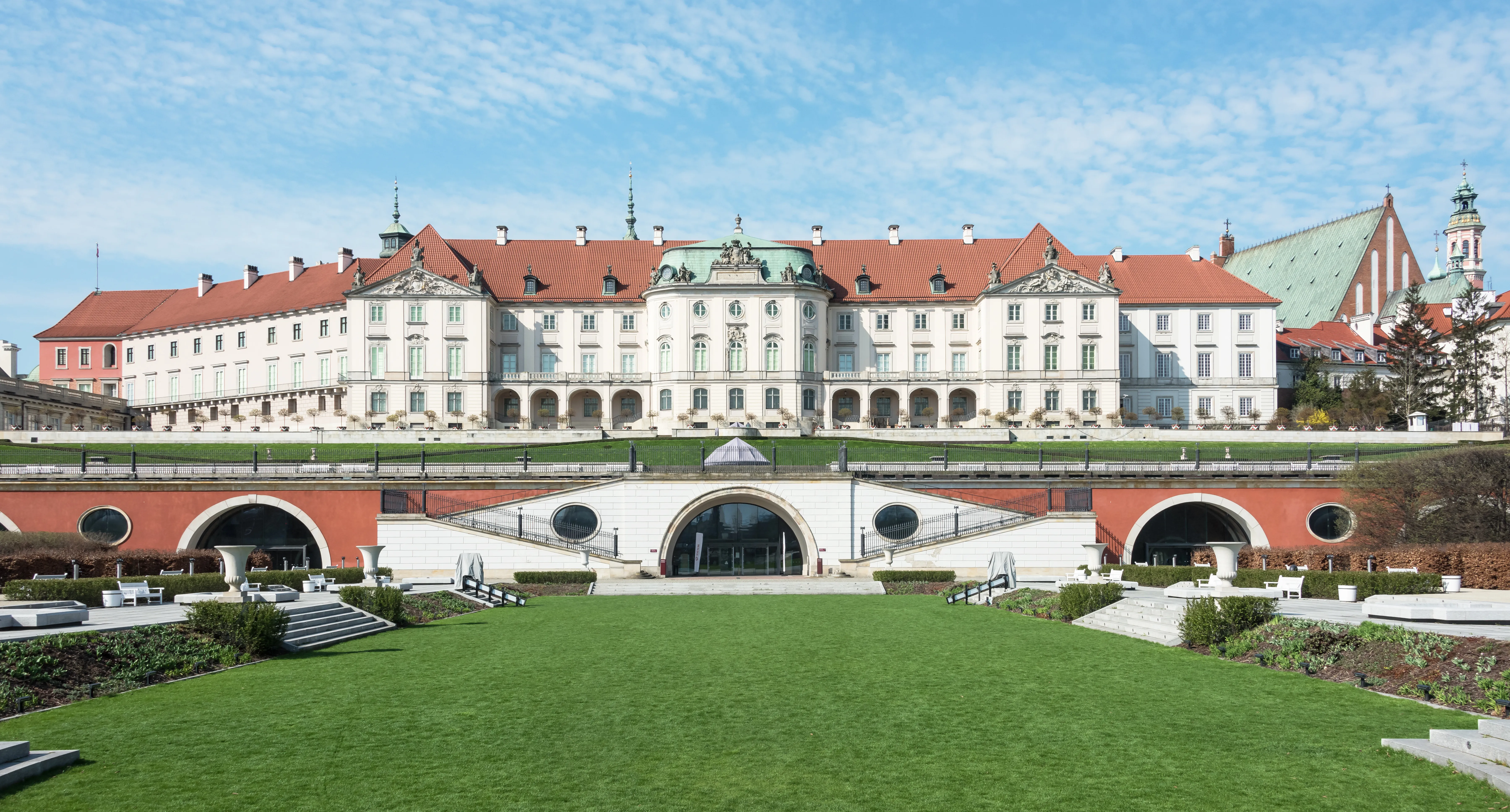
The Royal Castle in Warsaw with a red-tiled roof and white facade, viewed from a grassy area with a bridge and arches in the foreground under a blue sky.
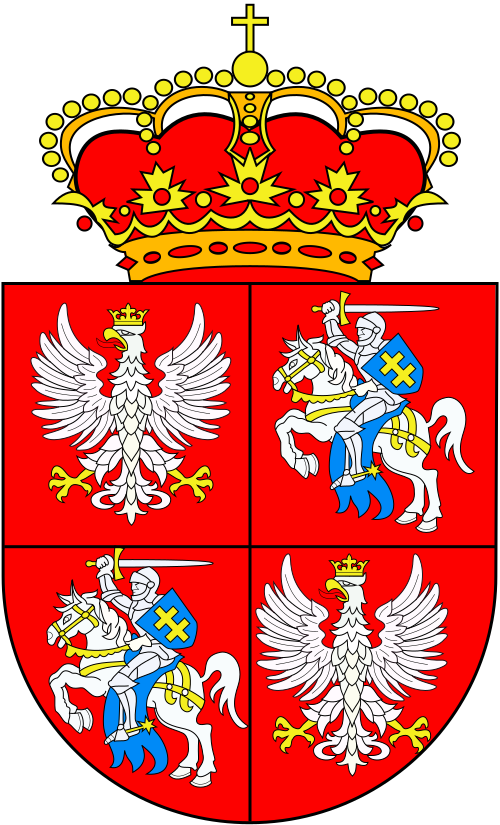
Crowned shield with four quadrants: two white eagles and two knights on horseback on a red background
Portrait of a bearded man in a black hat and fur-trimmed robe, seated at a desk with an open book and quill
Ornate interior room with a large ceiling fresco, gilded frames, marble walls, and a black-and-white checkered floor
Aerial view of the Royal Castle in Warsaw with red-roofed buildings, green gardens, and the Vistula River
Ornate throne room with gold and red decor, featuring a central throne, chandeliers, and a patterned floor.
ornate interior hall with gold decorations, chandeliers, and a large painting
Aerial view of the Royal Castle in Warsaw with red-roofed buildings and green gardens, set against the modern city skyline
Ornate interior room with gilded ceilings, large paintings, and a decorative mosaic floor
Ornate interior of the Royal Castle in Warsaw with golden columns, chandeliers, and a decorated ceiling
Warsaw

Find and Explore Warsaw Museums: Search for Cultural Attractions by Interest

Uncover Warsaw's rich history, profound art, and compelling cultural narratives.

Easily discover unique museums and cultural institutions across Warsaw. Tailor your exploration by selecting themes and interests that matter to you. Find diverse collections and immersive exhibits awaiting your visit.

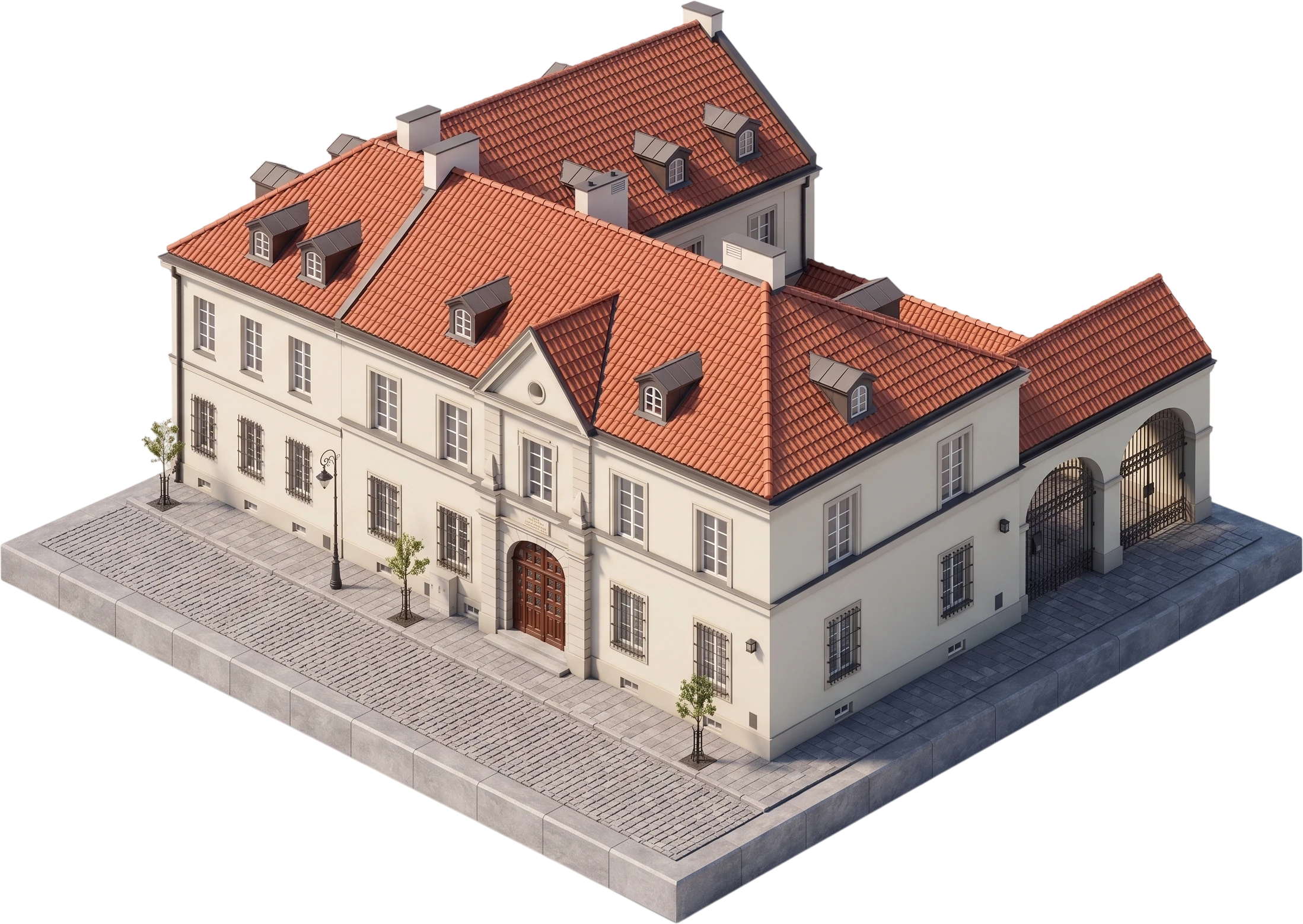
Explore Royal Castle in Warsaw with Warsaw
Guides, visitor info, and museum details in Warsaw
Find everything about Royal Castle in Warsaw in one place, including tickets, opening hours, current exhibitions, location details, visitor tips, nearby attractions, and the latest museum updates. Use these pages to plan your visit, discover what to see, and get practical information before you go.
Discover nearby museums similar to Royal Castle in Warsaw in Warsaw and plan your next cultural stop with confidence.
These recommendations prioritize real proximity to Royal Castle in Warsaw and help you find high-fit alternatives faster across Warsaw.
Use this curated list to compare museums near Royal Castle in Warsaw without opening multiple search pages. Each card gives you fast visual context and direct access to key details so you can decide quickly. If you are building a full day in Warsaw, this section helps you chain nearby visits with less planning effort.