Warsaw
Royal Palace & Park Complex

Royal Łazienki Museum: Palace & Park in Warsaw

A majestic palace, park, and garden complex in the heart of Warsaw.

HistoryArtArchitectureNatureLocal heritage

Explore the Royal Łazienki Museum, a stunning 18th-century royal residence set amidst extensive gardens. Discover the Palace on the Isle, the Royal Theatre, and various exhibitions, offering a journey through history, art, and nature in the heart of Warsaw.

The Royal Łazienki Museum is a sprawling historic park, palace, and garden complex in Warsaw, housing significant royal collections and hosting temporary art exhibitions.

Royal Łazienki Museum
The Royal Łazienki Museum: An Overview

The Royal Łazienki Museum is a significant cultural institution in Warsaw, encompassing an 18th-century palace-garden complex. It functions as a museum, presenting various art collections within historic structures like the Palace on the Isle and the Royal Theatre. Its expansive grounds feature meticulously maintained gardens and numerous pavilions, showcasing the grandeur of Poland's last king, Stanisław August Poniatowski. Visitors can explore this blend of classical architecture, art, and natural beauty, along with temporary exhibitions.

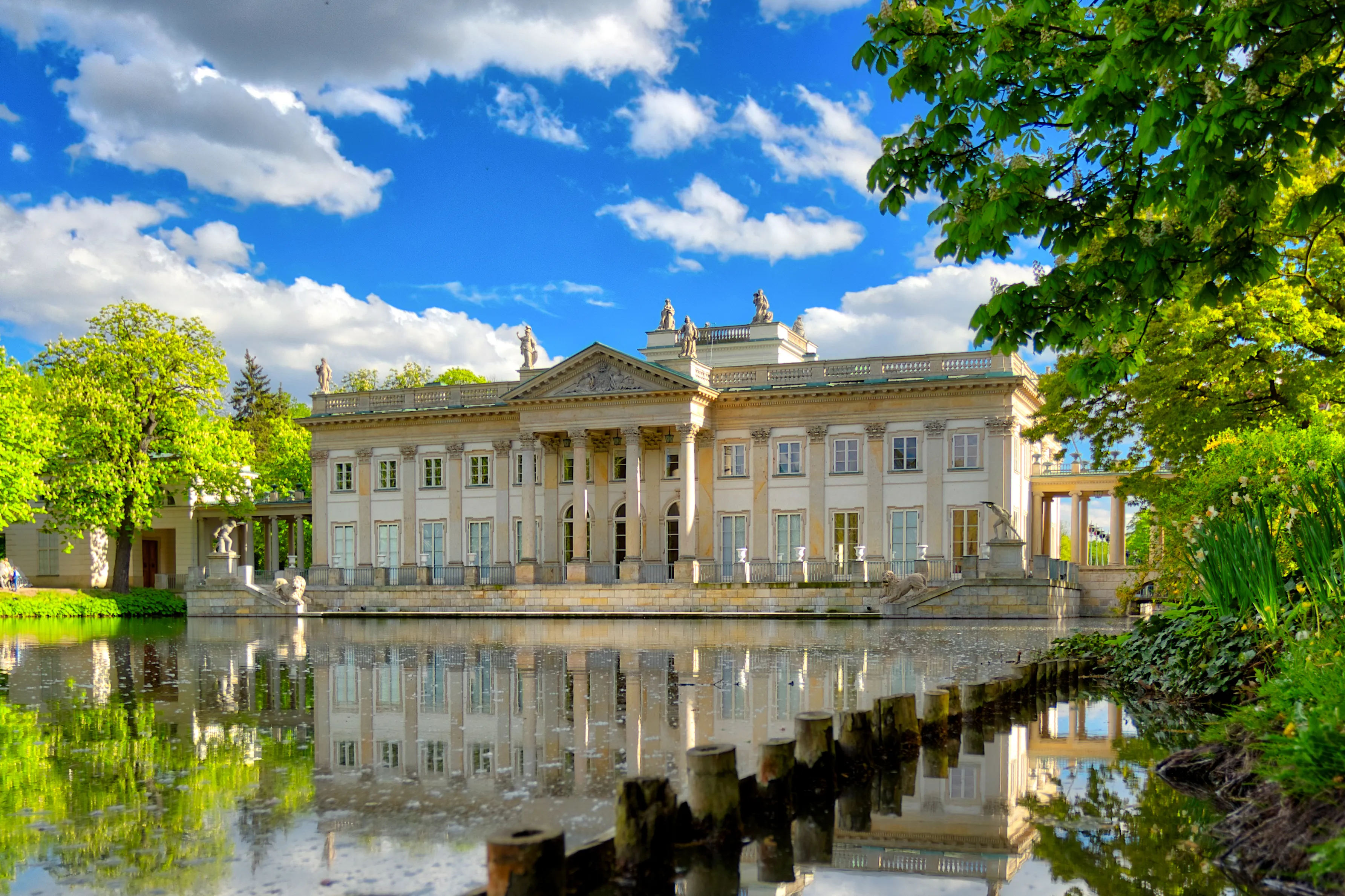
Neoclassical palace with columns and a pediment reflected in water, surrounded by green trees under a blue sky
Royal Łazienki Museum opening hours in Warsaw

Check today’s opening status, weekly schedule, and special date changes for Royal Łazienki Museum. Use these opening hours to plan your arrival and avoid closed times in Warsaw.

Monday
Tuesday
Wednesday
Thursday
Friday
Saturday
Sunday
-
10:00-17:00
10:00-17:00
10:00-18:00
10:00-18:00
12:00-20:00
10:00-16:00
Admission and Ticket Information for Royal Łazienki Museum

The Royal Łazienki Museum in Warsaw offers a mixed admission structure, encompassing both paid and free entry options. Visitors can explore various ticket categories, including complimentary access for children and specific groups. Additionally, dedicated tickets are available for students, seniors, and organized groups. Eligibility for certain ticket types may require valid identification.

Gardens Admission
Free

Open daily from 6:00 to 22:00 Access to historical park and gardens

Friday Buildings Admission
Free

Fridays only Individual visits only, no group reservations

Children (under 7)
Free

Free for children up to 7 years old

Visitor amenities and accessibility

The Royal Łazienki Museum in Warsaw offers a range of facilities designed to support a comfortable visit for diverse audiences. The grounds and historic buildings provide dedicated access resources for visitors with mobility, visual, or hearing impairments. Additionally, families are supported through practical amenities intended to assist caregivers during their time at the complex.

Certified service dog allowed

Available
Passes for Royal Łazienki Museum

Visitors to the Royal Łazienki Museum can utilize select sightseeing passes to experience the historic palace-and-park complex in Warsaw. Depending on the chosen pass, access to the site's permanent collections and various pavilions may be included as part of a broader city sightseeing itinerary.

Royal Łazienki Museum Location

The Royal Łazienki Museum is situated at Agrykoli 1 in Warsaw, Poland. This extensive palace-and-park complex provides a significant green space within the city, offering visitors a unique opportunity to explore royal residences and sculpture gardens in a picturesque setting.

© OpenStreetMap contributors

Agrykoli 1

00-460 Warsaw

Mazowieckie, PL

Visiting Royal Łazienki Museum

When preparing for your visit to the Royal Łazienki Museum in Warsaw, guests can take advantage of complimentary Wi-Fi available across the extensive park and palace complex. This connectivity may assist with navigating the grounds, accessing online information, or sharing your experience while exploring the various attractions within the museum's historical setting. Plan to use this amenity to enhance your time at this notable cultural site.

Visiting Royal Łazienki Museum

Discovering the Royal Łazienki Museum

The Royal Łazienki Museum in Warsaw presents a unique 18th-century palace-garden complex, offering visitors a distinctive journey through Polish royal history, art, and nature. This expansive attraction encompasses grand royal residences like the iconic Palace on the Isle and the historic Royal Theatre, which house diverse art and historical collections. Guests can wander through meticulously maintained royal gardens, encountering classical architecture and serene natural beauty. The museum regularly features temporary exhibitions, inviting exploration of both artistic and natural themes within its majestic grounds. It truly blends cultural heritage with a tranquil outdoor experience, reflecting the grandeur of its past.
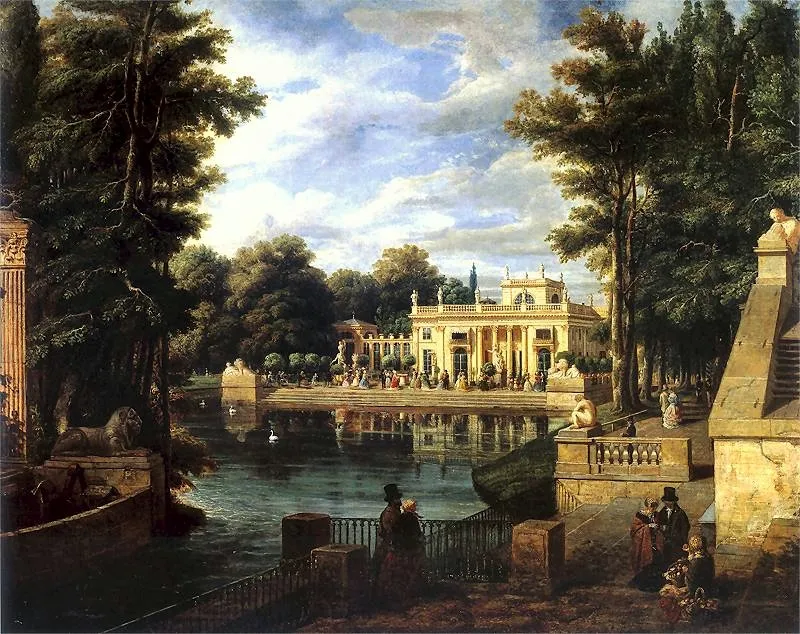
A painting of the Palace on the Isle at Royal Łazienki Museum, surrounded by trees and a lake with people in the foreground
Top exhibition picks at Royal Łazienki Museum
Curated museum program highlights and what to see now in Warsaw
Discover high-interest exhibitions at Royal Łazienki Museum, selected to help you prioritize your route, compare show themes, and plan a more rewarding museum visit in Warsaw.
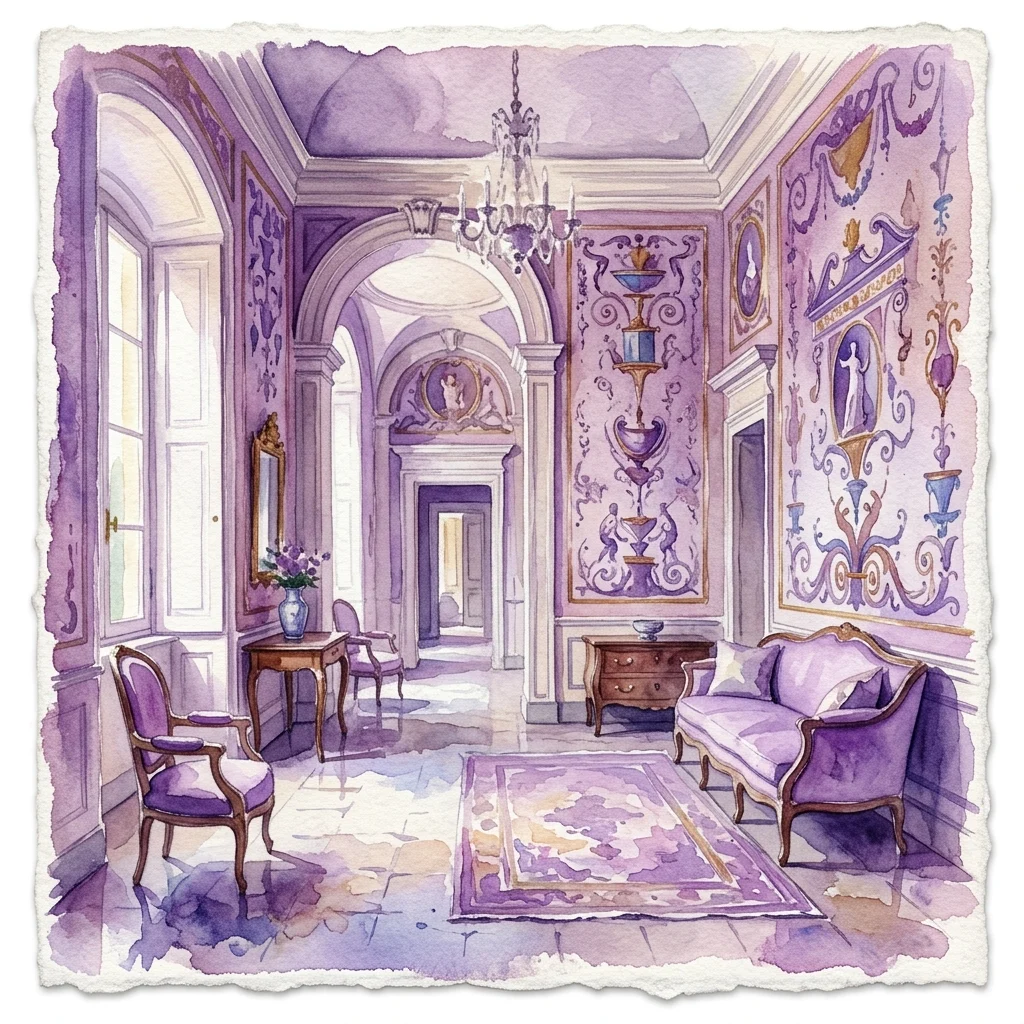
Watercolor illustration of a neoclassical interior in The White House villa at Royal Łazienki Museum, featuring purple grotesque wall paintings, period furniture, and a chandelier.
Permanent exhibition

The White House at the Royal Łazienki Museum

A historic royal villa featuring eighteenth-century interiors and art.

Explore a summer residence built for King Stanisław August, notable for its intricate grotesque ornamentation and restored period spaces. The site highlights eighteenth-century architecture alongside the Royal Collection of Graphics.

The White House
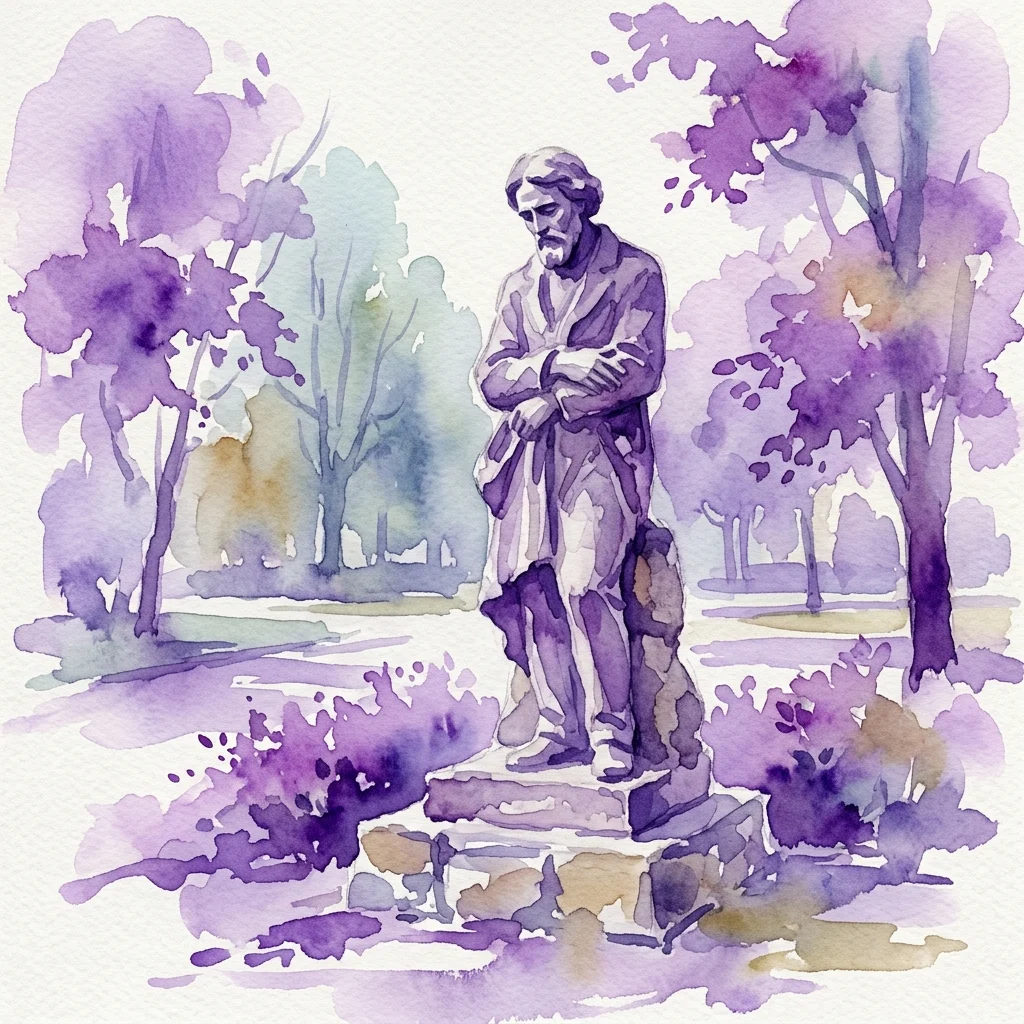
The Monument to Cyprian Kamil Norwid in Warsaw: Honoring a Polish Literary Figure
Permanent exhibition

The Monument to Cyprian Kamil Norwid in Warsaw: Honoring a Polish Literary Figure

Explore Julia Keilowa's iconic sculpture of the esteemed poet.

Discover Warsaw's first monument dedicated to Cyprian Kamil Norwid, the influential Polish poet. This stone replica of Julia Keilowa's sculpture captures Norwid's thoughtful essence, reflecting his enduring cultural impact. Explore its artistic details and historical context.

Norwid Monument
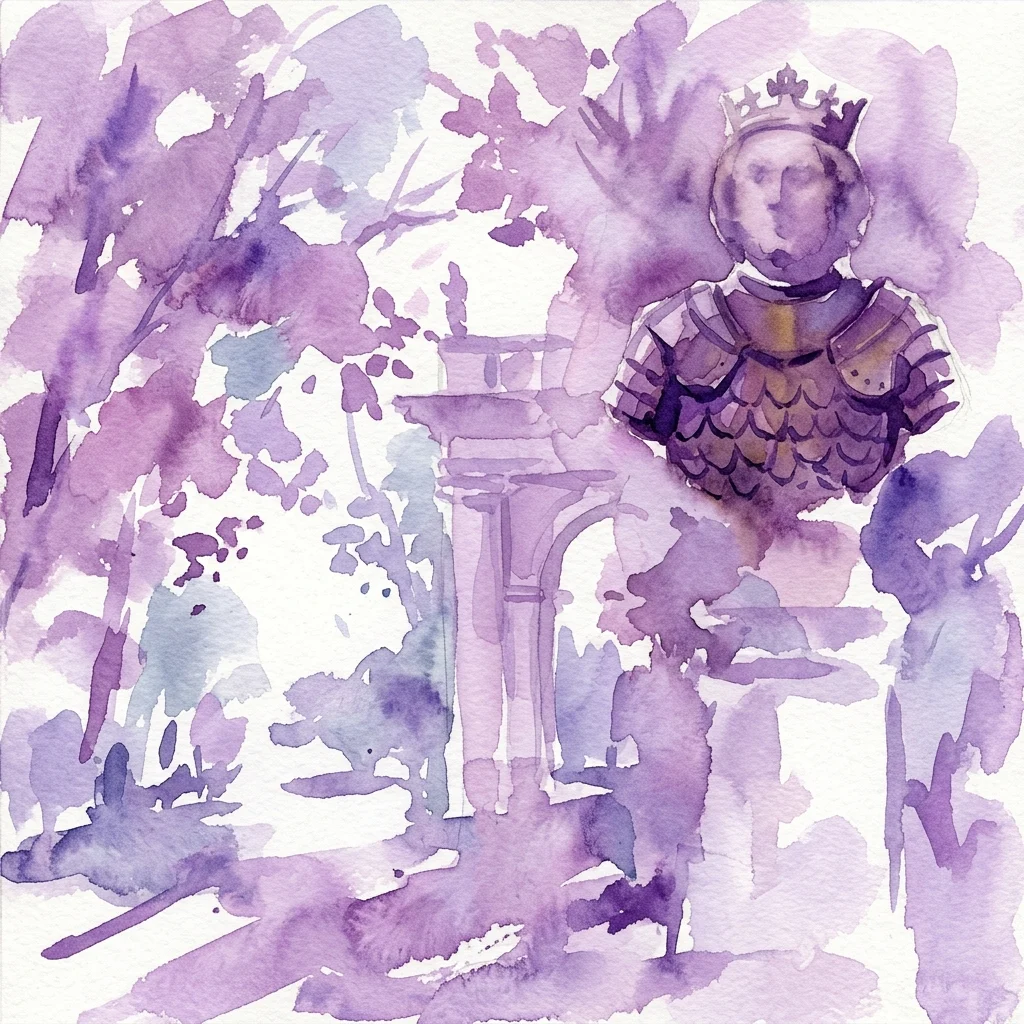
Monument of Stanisław August: Permanent Royal Sculpture at Royal Łazienki Museum
Permanent exhibition

Monument of Stanisław August: Permanent Royal Sculpture at Royal Łazienki Museum

Discover 18th-century Polish art and royal symbolism through this bronze bust.

This enduring monument features André Le Brun's 1784 bronze bust of King Stanisław August, masterfully cast by Edward Śluzek. Located in Royal Łazienki Park, it permanently displays the king in armor, symbolizing his role as a protector of his nation. Explore this significant piece of Polish art and royal history.

View Monument
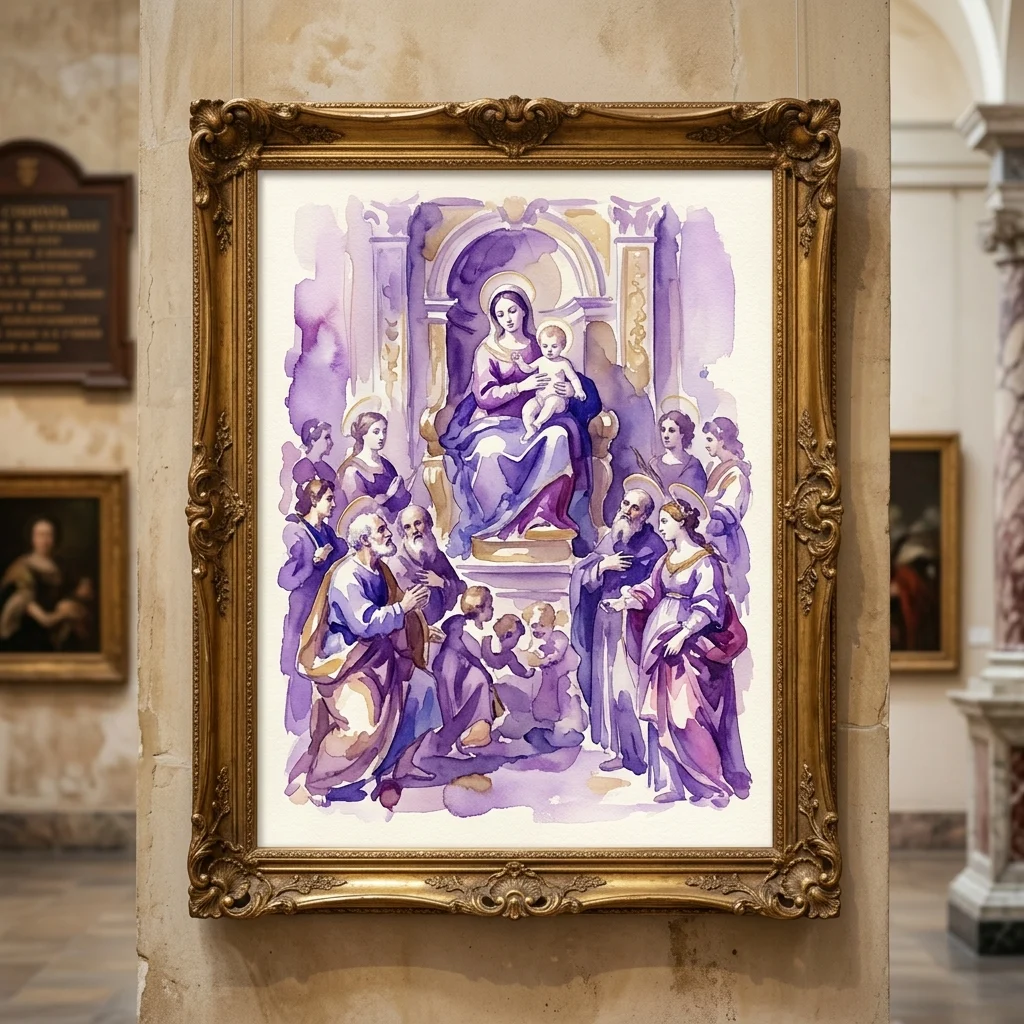
Madonna Enthroned with Child by Carracci at Royal Łazienki Museum
Permanent exhibition

Madonna Enthroned with Child by Carracci at Royal Łazienki Museum

A 17th-century Italian Baroque oil painting on copper.

This Baroque masterpiece by Ludovico Carracci depicts the Madonna and Child surrounded by various saints. Acquired by King Stanisław August Poniatowski in 1781, it is a significant part of the Royal Łazienki Museum's collection.

View Exhibition
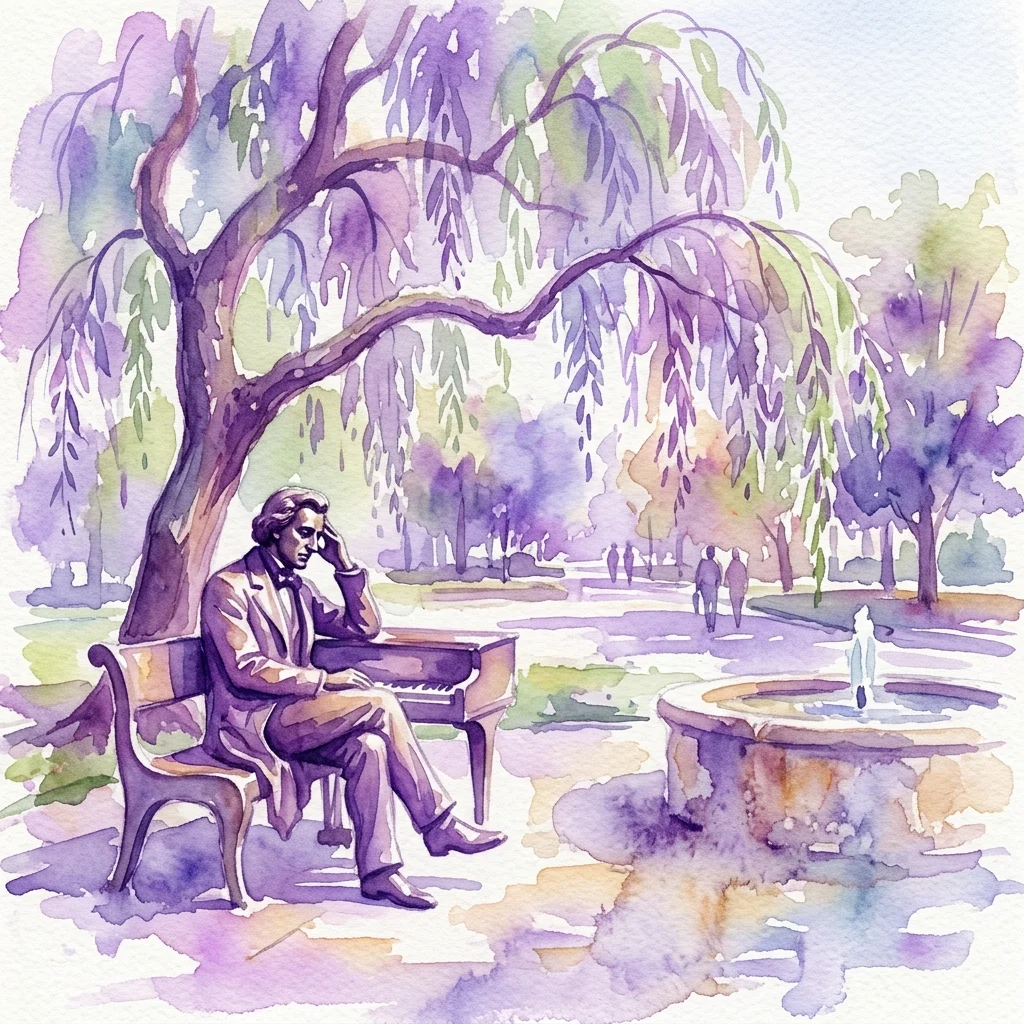
Fryderyk Chopin Monument: Iconic Bronze Sculpture in Warsaw's Royal Łazienki Park
Permanent exhibition

Fryderyk Chopin Monument: Iconic Bronze Sculpture in Warsaw's Royal Łazienki Park

Wacław Szymanowski's masterpiece depicting a composer's inspiration.

This enduring monument in Warsaw's Royal Łazienki Park symbolizes Polish cultural resilience. Experience the powerful depiction of Fryderyk Chopin, a musician finding inspiration under a beautiful weeping willow tree. Reconstructed in 1958, it remains a globally recognized public artwork.

Chopin Monument
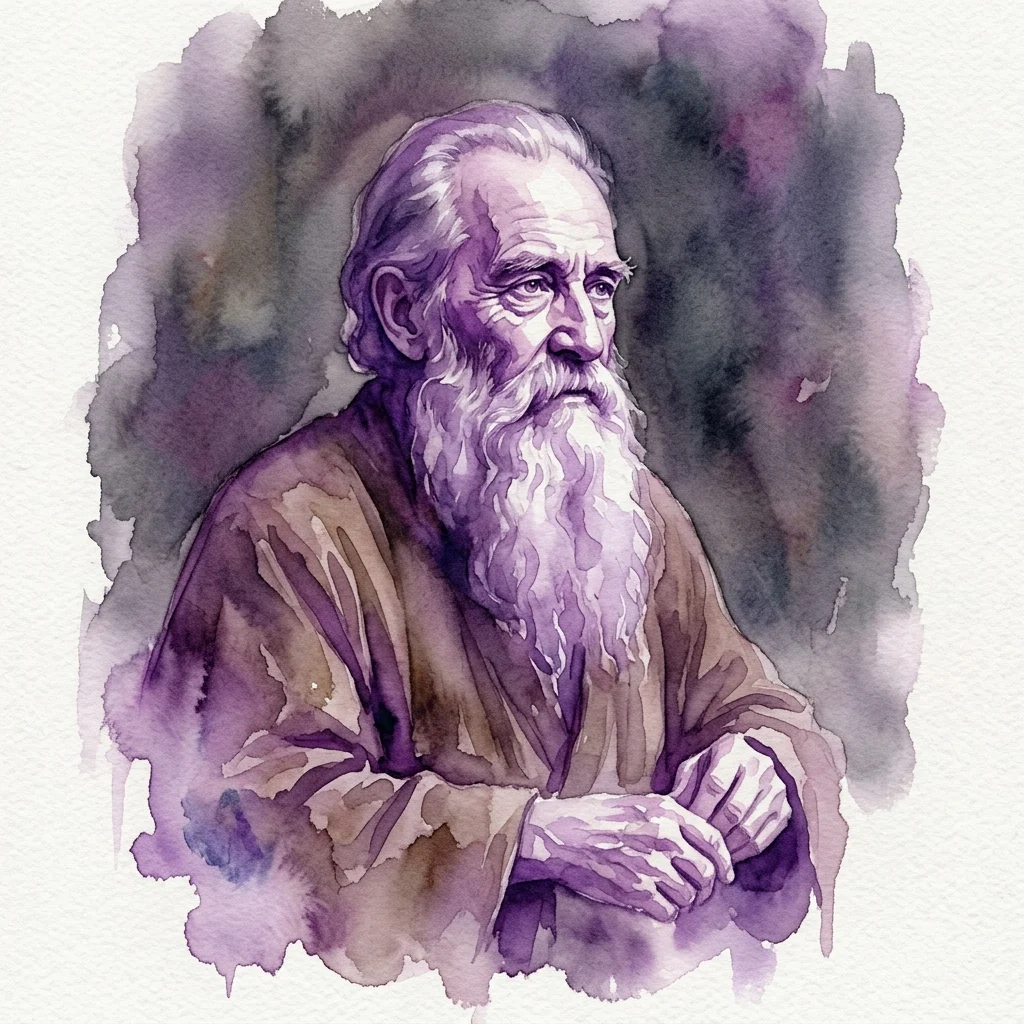
Discover Marcello Bacciarelli's "Old Man in a Brown Robe" at Royal Łazienki Museum
Permanent exhibition

Discover Marcello Bacciarelli's "Old Man in a Brown Robe" at Royal Łazienki Museum

An 18th-century oil painting and compelling character study.

This captivating oil on canvas artwork, created before 1783, is a notable piece within the museum's permanent collection. It portrays a character type, possibly serving as a study for a grander historical work or a portrait of a prominent individual.

Artwork Details
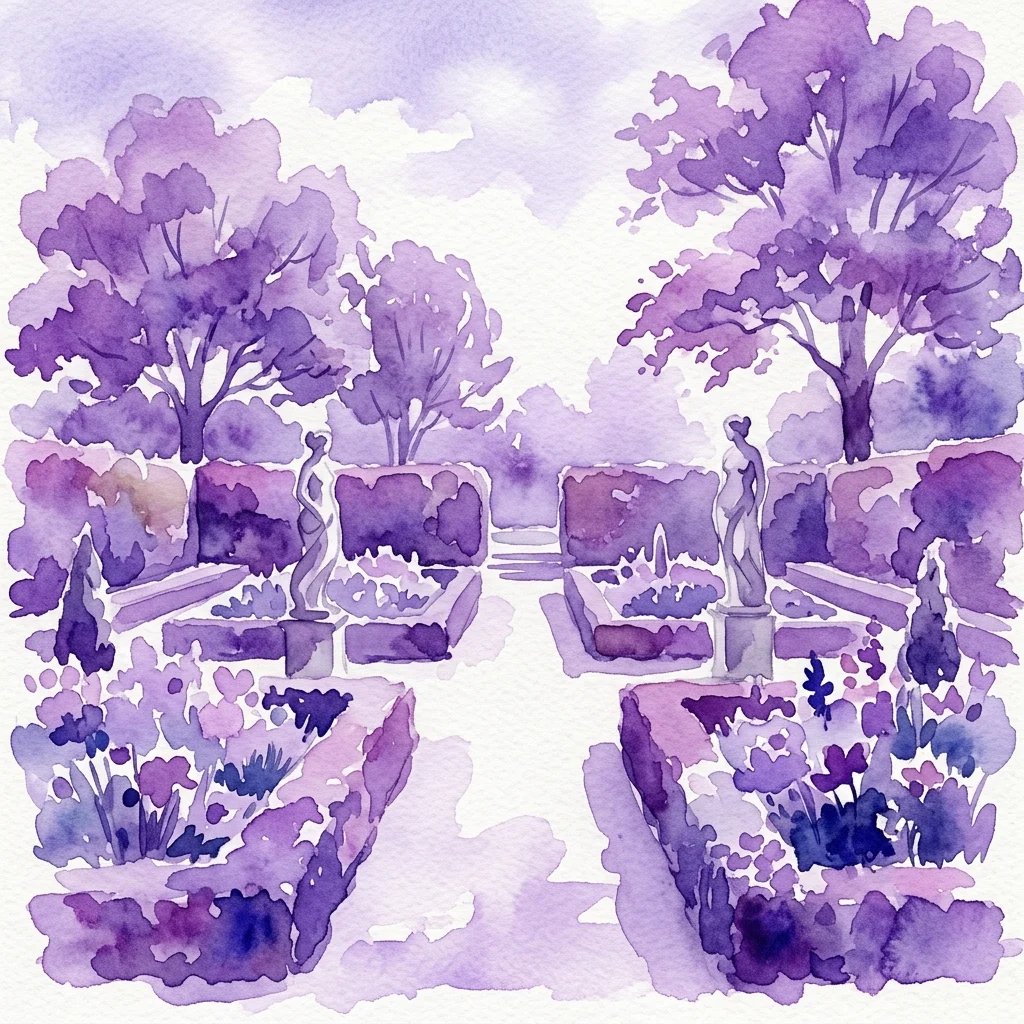
Explore the Modernist Garden of the 20th Century Exhibition at Royal Łazienki
Permanent exhibition

Explore the Modernist Garden of the 20th Century Exhibition at Royal Łazienki

A distinctive 20th-century landscape design and sculpture display.

Discover the Royal Łazienki Museum's Modernist Garden, a stunning example of 20th-century landscape art. Its design blends geometric precision with naturalistic elements, featuring noteworthy sculptures. This unique area provides insight into historical garden trends.

Modernist Garden Exhibition
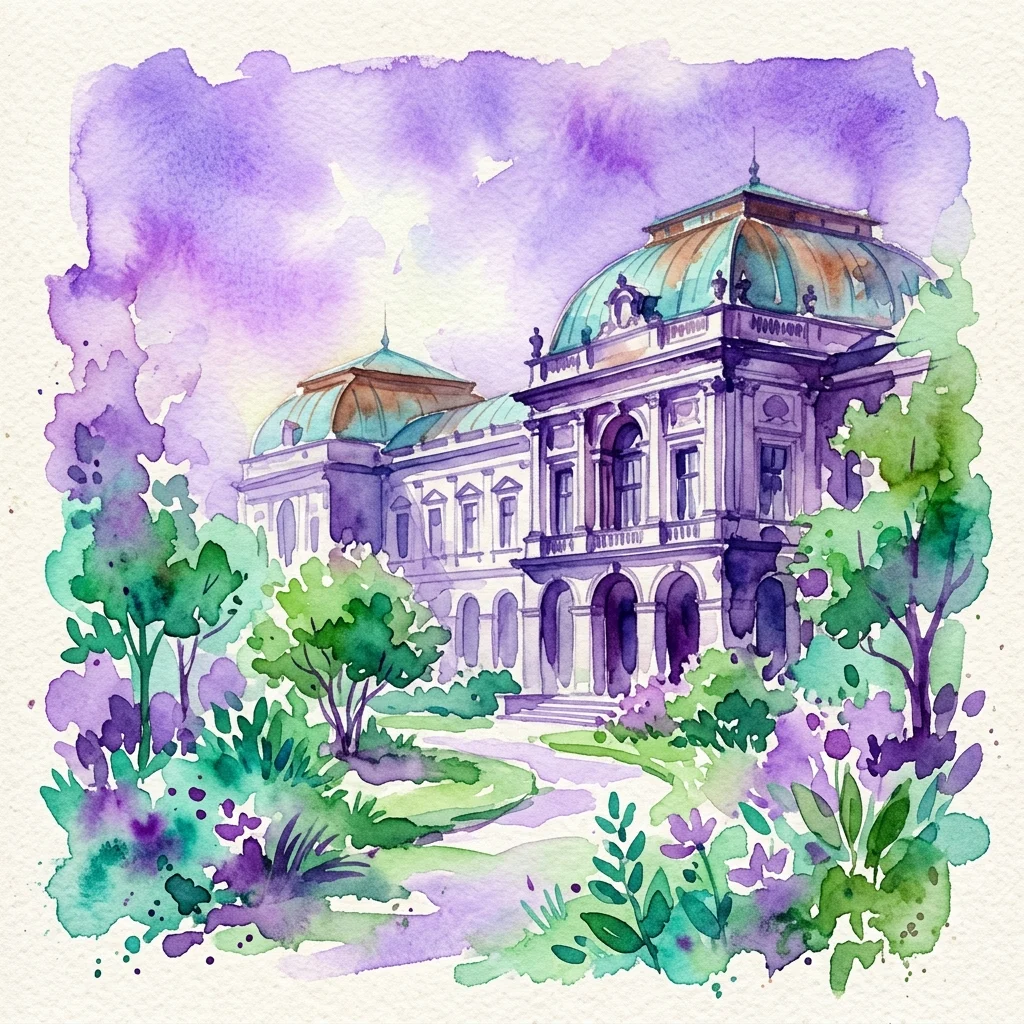
Watercolor illustration of the Myślewicki Palace, a classical building with curved copper roofs surrounded by lush green gardens and purple flowers.
Permanent exhibition

The Myślewicki Palace at Royal Łazienki Museum: A Classicist Architectural Landmark

Discover preserved 18th-century original décor and a rich royal history.

Explore the exquisite Myślewicki Palace, an early classicist residence from the late 18th century. Admire its unique design by Domenico Merlini and original interiors reflecting King Stanisław August's time, once home to significant historical figures.

Myślewicki Palace

Historical Development of Royal Łazienki Museum

The Royal Łazienki Museum in Warsaw began as royal estates in the mid-16th century, evolving in the 17th century with Baroque designs, including a bathing pavilion that lent its name to the gardens. A pivotal transformation occurred in 1764 when King Stanisław II August acquired the property. He extensively reshaped the grounds and developed the former bath-house into the **elegant classicist Palace on the Isle** over two decades, solidifying its role as a major cultural center of 18th-century European classicism. Despite extensive damage during World War II, a nearly two-decade-long reconstruction effort ensured parts of the complex reopened by the 1960s, preserving its heritage.

  • Largest park in Warsaw

    Overview

    Łazienki Park, also known as the Royal Baths Park, is the largest park in Warsaw, Poland, covering 76 hectares in the city center and forming part of the Royal Route.

  • Origins as royal estates

    1500-1599Founding

    In the mid-16th century, the Łazienki area became part of Queen Bona Sforza's estates, who initiated the construction of a wooden manor house with an Italian garden.

  • Ujazdów Castle construction

    1624Construction

    King Sigismund III Vasa erected a quadrilateral stone Ujazdów Castle north of the present Łazienki Park in 1624.

  • Baroque design by Tylman van Gameren

    1600-1699Architecture

    Most of the Łazienki Park buildings were designed in the Baroque style by Tylman van Gameren for Stanisław Herakliusz Lubomirski, including an ornate bathing pavilion that named the gardens.

  • Extensive garden remodeling

    1764Renovation

    In 1764, King Stanisław II August obtained Ujazdów and extensively remodeled the gardens, transforming the area.

  • Designation as a public park

    1918Opening

    In 1918, following Poland's resumption of independence, Łazienki was officially designated a public park.

  • 17th-century Baroque design

    1600-1699Historical period

    Łazienki Park's design originated in the 17th century by Tylman van Gameren in the Baroque style for Stanisław Herakliusz Lubomirski, taking its name from a bathing pavilion.

  • Mid-16th century estates

    1500-1599Historical period

    In the mid-16th century, the Łazienki area became part of Queen Bona Sforza's estates, who ordered the construction of a wooden manor house with an Italian garden.

  • 18th-century classicist style

    1750-1799Historical period

    As a palace and garden complex, Łazienki reflected the classicist style widespread in Europe during the latter half of the 18th century, known as the style of Stanislaus Augustus.

  • Palace on the Isle reconstruction

    1772-1791Renovation

    The former Lubomirski Bath-House was modified and reconstructed in stages over two decades starting in 1772, becoming the elegant classicist Palace on the Isle.

  • Palace on the Isle transformation

    1772-1793Architecture

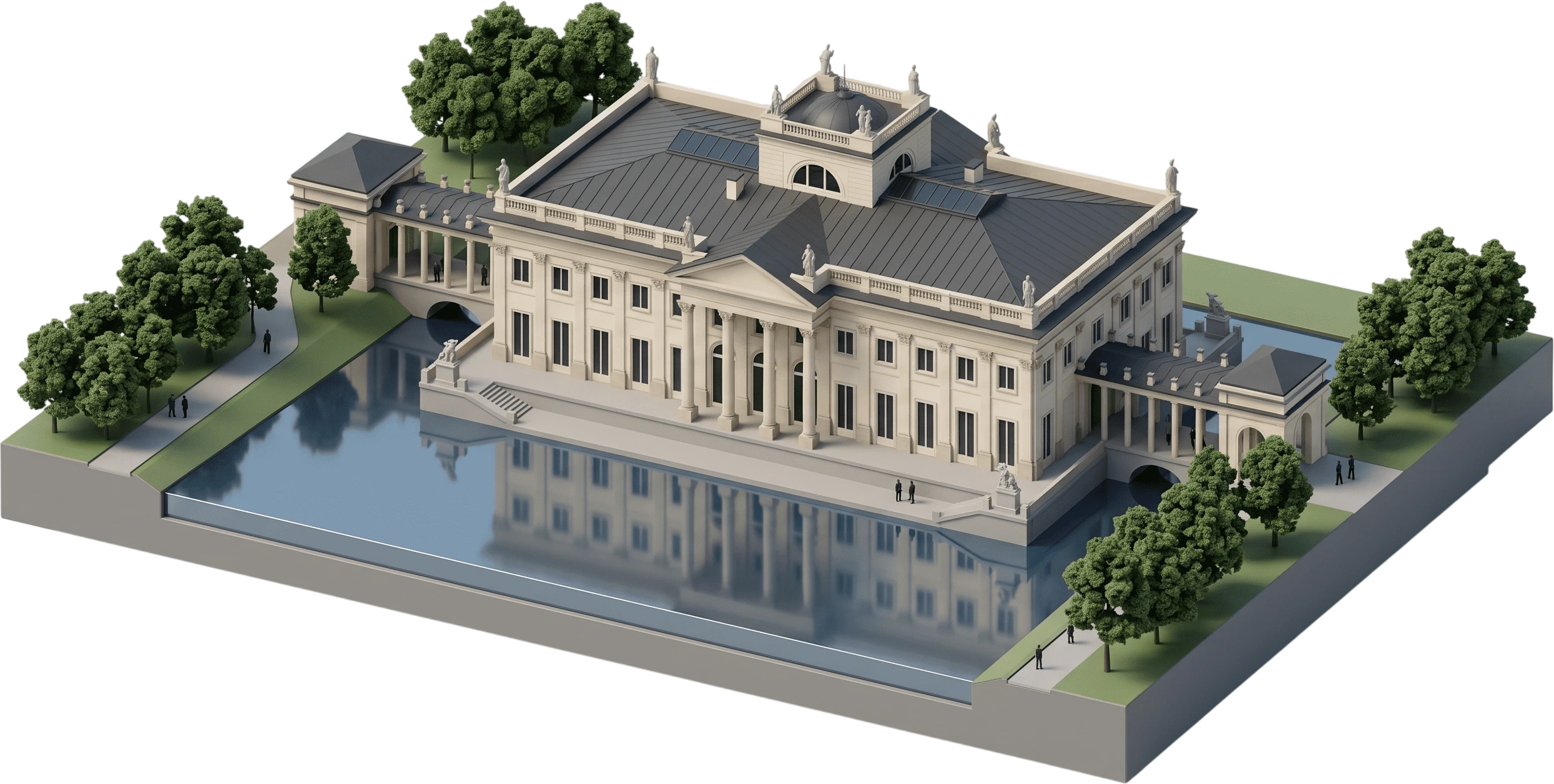
    The Palace on the Isle was transformed from a baroque Bath-House into a lavish palace with classicist interiors and facades, featuring annexes, a columned portico, and a triangular tympanum.

  • White House construction

    1774-1776Architecture

    The White House, a garden villa, was built in 1774-76 by Domenico Merlini, designed as a square with identical facades adorned with rustication and an attic.

  • Myślewicki Palace construction

    1775-1783Architecture

    The Myślewicki Palace was built starting in 1775, conceived as a one-storey villa set on a square, later expanded with wings and pavilions featuring Chinese-style roofs and an added floor.

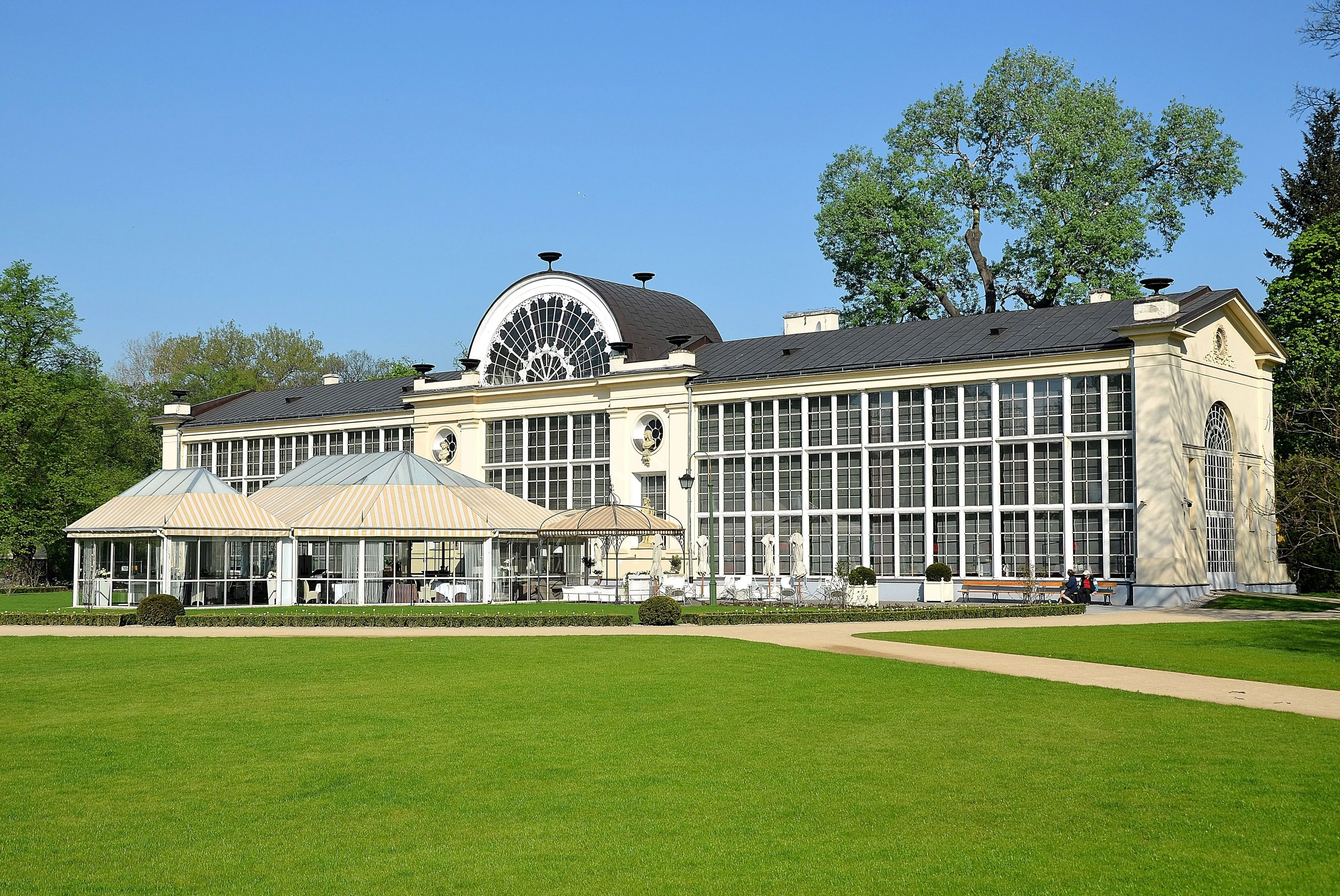
  • Old Orangery and Theatre construction

    1786-1788Architecture

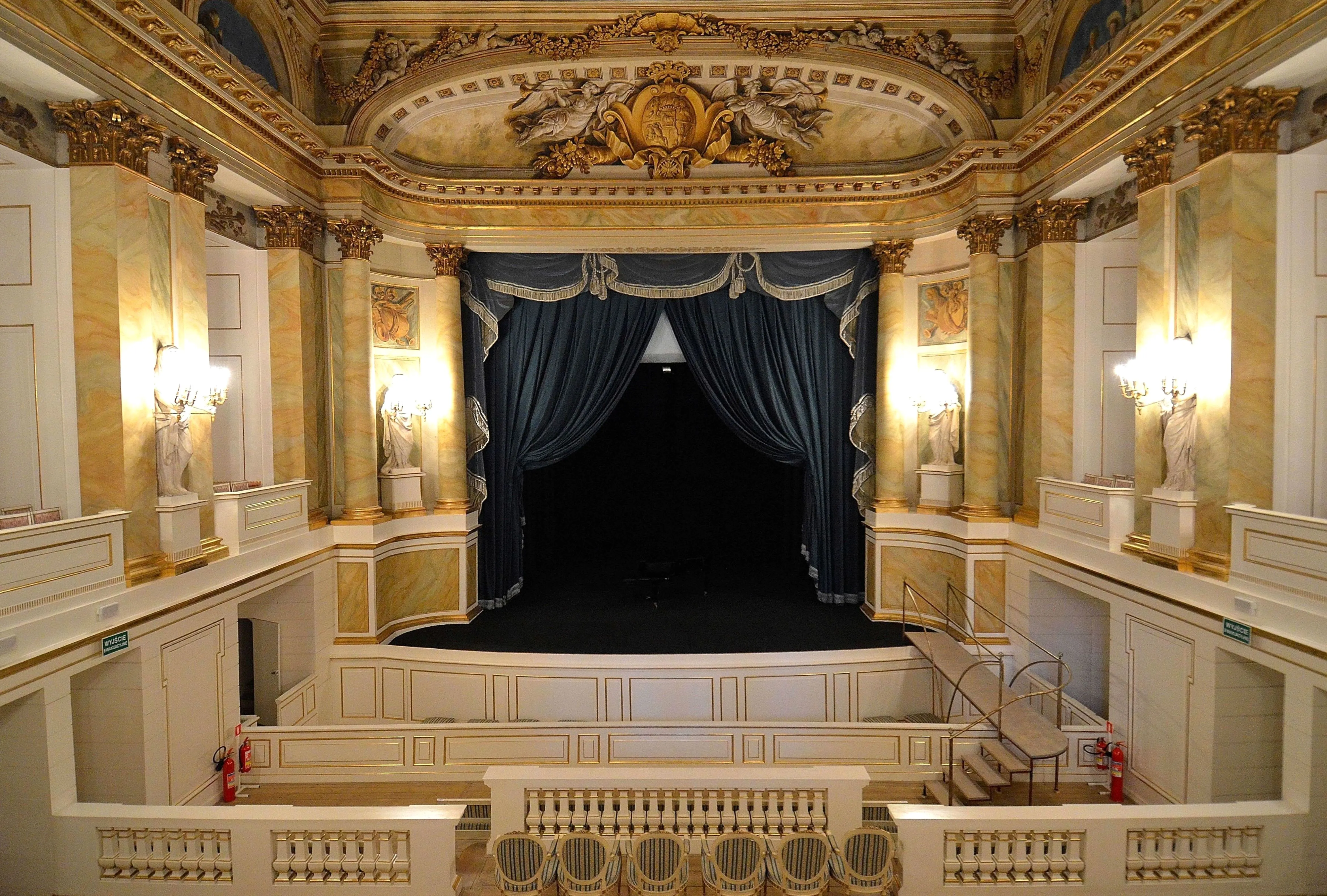
    The Old Orangery was erected in 1786–88 with an eastern wing housing a theatre, which remains a rare example of an 18th-century court theatre with richly decorated interiors.

  • Amphitheatre and stage construction

    1790-1793Architecture

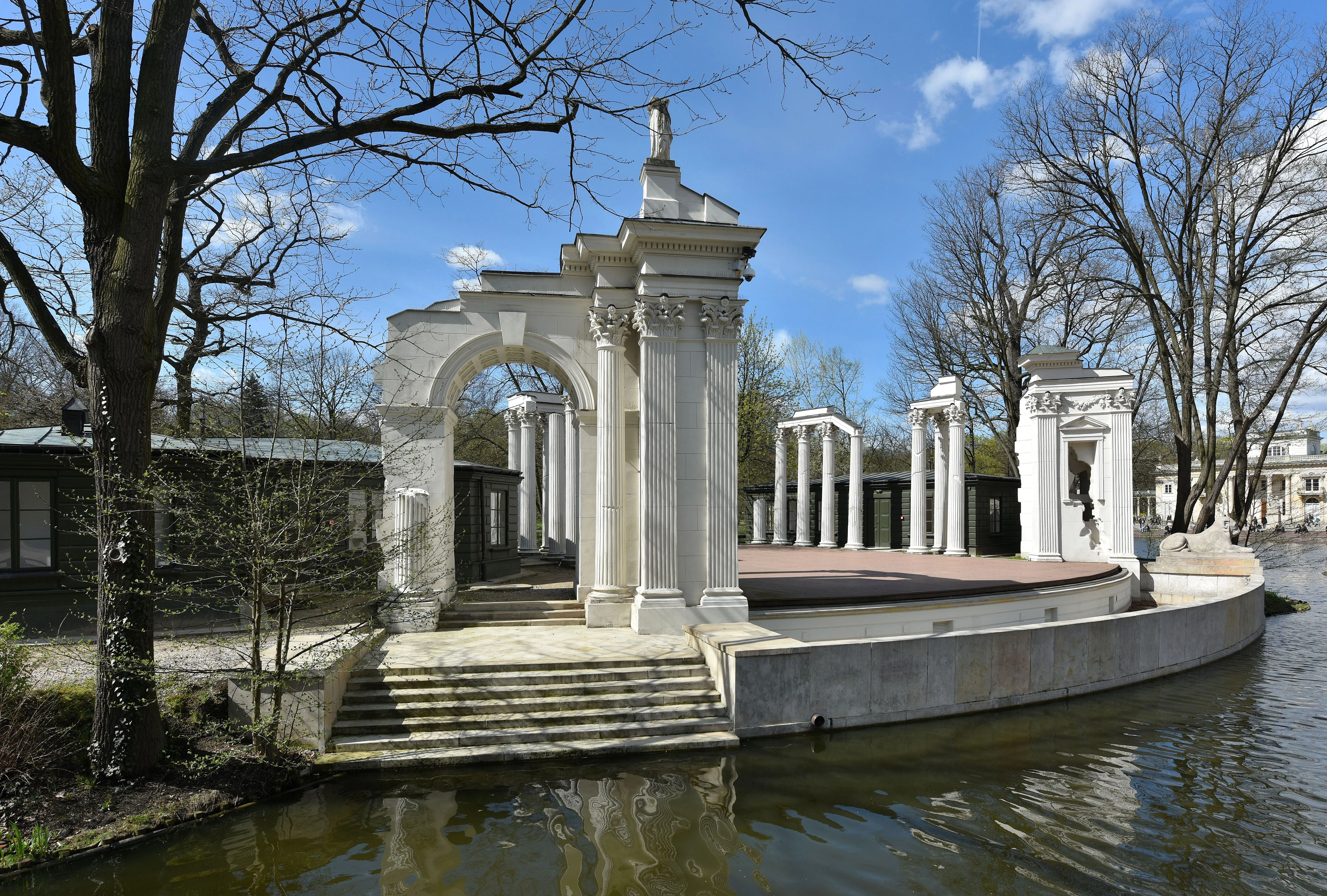
    The classical amphitheater and its stage on an isle were built in 1790–93 by Jan Chrystian Kamsetzer, inspired by ancient Greek and Roman architecture.

  • Old Guardhouse construction

    1791-1792Architecture

    Designed by Kamsetzer, the Old Guardhouse was built in 1791–92 to guard the palace approach and features a façade with Doric columns and a balustraded attic.

  • Temple of Diana and Egyptian Temple construction

    1822Architecture

    In 1822, Jakub Kubicki erected the classicist Temple of Diana and an Egyptian temple, situated near the southern Łazienki lake.

  • Stables and Coach-houses construction

    1825-1826Architecture

    Constructed in 1825–1826, the Stables and Coach-houses building featured a horseshoe shape with a central higher portion for staff quarters, and wings for stables and coach-houses.

  • Invalids' Barracks construction

    1825-1826Architecture

    Built in 1825–1826, the one-storey rectangular Invalids' Barracks exhibit severe architecture and likely were designed by Wilhelm Henryk Minter.

  • Narutowicz's house construction

    1830-1839Architecture

    Built in the 1830s, possibly as lodgings for senior army officers, Narutowicz's house features a façade with round panels and a three-sided projection at the back.

  • Bridge with monument to King John III Sobieski

    1777-1780Architecture

    The bridge, originally single-span and covered with stone, was erected in 1777–80, later widened in 1877. The central section was designed by Dominik Merlini.

  • Belvedere Palace major reconstruction

    1819-1822Renovation

    The Belvedere Palace underwent a major reconstruction between 1819–1822 to serve as Grand Duke Constantine's residence, remodeling the baroque structure into a classicist style.

  • Ujazdów Castle destruction and reconstruction

    1944-1975Construction

    The previous stone construction of Ujazdów Castle was destroyed by fire during the 1944 Warsaw Uprising, and the current building was constructed in 1975.

  • Palace on the Isle damage during WWII

    1939-1945Construction

    During the Nazi occupation in World War II, the Palace on the Isle was set on fire, and although its walls were drenched with petrol and drilled for dynamite, it was ultimately not blown up.

  • Post-WWII reconstruction of royal complex

    1945-1965Renovation

    Following World War II, an arduous reconstruction of the Łazienki royal complex began, lasting nearly two decades, with parts of the palace opening to the public in 1960 and 1965.

  • Stanisław Herakliusz Lubomirski

    1600-1699Notable person

    In the second half of the 17th century, Stanisław Herakliusz Lubomirski owned Ujazdów and was the first to draw attention to the wooded area, where he built two garden pavilions.

  • King Stanisław II August

    1764-1799Notable person

    King Stanisław II August obtained Ujazdów in 1764 and extensively remodeled the gardens, later transforming the former Lubomirski Bath-House into the Palace on the Isle.

  • Architect Tylman van Gameren

    1600-1699Notable person

    Tylman van Gameren, a renowned architect, designed the original baroque Bath-House around 1680, which is now part of the Palace on the Isle, and also designed buildings for Stanisław Herakliusz Lubomirski.

  • Architect Dominik Merlini

    1770-1799Notable person

    Dominik Merlini, along with Jan Chrystian Kamsetzer, designed new structures in the gardens, including leading the reconstruction of the Bath-House into the Palace on the Isle starting in 1784.

  • Architect Jan Chrystian Kamsetzer

    1770-1799Notable person

    Jan Chrystian Kamsetzer was involved in designing new structures in the gardens, including the classical amphitheater and stage (1790–93) and the Old Orangery (1786–88).

  • Architect Jakub Kubicki

    1819-1830Notable person

    Jakub Kubicki rebuilt the Belvedere in the late-classicist style (1819–1822) and erected new pavilions like the Egyptian Temple and Temple of Diana (1822).

  • President Gabriel Narutowicz

    1918-1922Notable person

    Following Poland's regained independence, Gabriel Narutowicz lived in a villa within the park for two years before becoming the first president of the resurrected Polish Republic.

  • New Orangery for tropical plants

    1860Collection

    The New Orangery was built in 1860 to shelter orange trees and tropical plants acquired by Tsar Alexander II, as the climate in Saint Petersburg was unsuitable for them.

  • Cultural center during Stanislaus Augustus's reign

    1764-1795Cultural significance

    Łazienki served as an important cultural center under Stanislaus Augustus, hosting famous Thursday Lunches and reflecting the classicist style, fostering arts and sciences.

  • Designated a public park in 1918

    1918Heritage status

    In 1918, following Poland's regaining of independence, Łazienki Park was officially designated as a public park.

  • First Polish play performed

    1578Milestone

    The site where Queen Anna Jagiellon's wooden manor house stood was immortalized in 1578 by the performance of the first Polish play, 'Dismissal of the Greek Envoys' by Jan Kochanowski.

  • Unveiling of King John III Sobieski monument

    1788Milestone

    A magnificent carousel was set into motion in 1788 to mark the unveiling of the King John III Sobieski monument.

  • Chopin monument erected

    1926Milestone

    The bronze statue of Frédéric Chopin, designed in 1907, was finally cast and erected in 1926 after delays caused by controversy and World War I.

  • Chopin monument destroyed by Germans

    1939-1945Milestone

    During World War II, the Chopin monument was the first Warsaw monument destroyed by the occupying Germans.

  • Transfer to Russian tsars

    1800-1899Ownership

    Following the partitions of Poland in the 19th century, Łazienki fell into the hands of the Russian tsars.

  • Donation to Polish Army

    1784Ownership

    In 1784, King Stanislaus Augustus donated the Ujazdów Castle property to the Polish Army.

  • Chopin concerts

    Other

    Free piano concerts are held before the Chopin monument on Sundays.

  • Museum of Hunting and Horsemanship

    1983Other

    The Museum of Hunting and Horsemanship, part of the Royal Łazienki Museum, opened in 1983 and is housed in two historic buildings within the park.

Royal Łazienki Museum FAQs: Answers and Quirks

Ever pondered if the Royal Łazienki Museum truly offers free Fridays or if youth can visit for just 1 PLN? Your most intriguing questions about this magnificent palace-and-park complex in Warsaw find their answers here. Explore our FAQs for all the practical details to plan your perfect visit.

What is the address of the Royal Łazienki Museum?

The Royal Łazienki Museum is located at Agrykoli 1, 00-460 Warsaw, Poland.

What is the postal code for the Royal Łazienki Museum?

The postal code for the Royal Łazienki Museum is 00-460.

Which city is the Royal Łazienki Museum in?

The Royal Łazienki Museum is located in the city of Warsaw, Poland.

Is parking available at Royal Łazienki Museum?

Information regarding parking availability at the Royal Łazienki Museum is not provided in the available data.

Tips for Visiting Royal Łazienki Museum

When planning a visit to the Royal Łazienki Museum, several amenities are available to enhance your experience. The complex is designed to be accessible for wheelchair users, offering dedicated routes and tours. Visitors who are blind or visually impaired, as well as those who are deaf or hard of hearing, can find specific resources to assist them during their visit. For families, the museum is stroller-friendly and provides baby changing facilities, making it convenient for caregivers with young children.

Royal Łazienki Museum Visitor Suitability

The Royal Łazienki Museum in Warsaw is well-suited for a diverse audience, including families, couples, solo visitors, and student or general groups. It appeals particularly to those interested in history, art, architecture, and nature, with its expansive palace-and-park complex. The venue offers significant accessibility features for visitors with mobility challenges, as well as resources for visually impaired and hard of hearing guests. Additionally, caregivers visiting with children can benefit from stroller-friendly routes and baby changing facilities, ensuring a comfortable visit for all.

Royal Łazienki Museum Photo Gallery

Explore the visual splendor of the Royal Łazienki Museum in Warsaw through this photo gallery. Visitors can expect to see stunning images of the Palace on the Isle, lush historic gardens, and elegant classical architecture. The collection showcases the museum's significant royal heritage and natural beauty, offering a comprehensive preview of its grandeur.
A painting of the Palace on the Isle at Royal Łazienki Museum, surrounded by trees and a lake with people in the foreground
Neoclassical palace with columns and a pediment reflected in water, surrounded by green trees under a blue sky
Black and white logo of the Royal Łazienki Museum with a crown-shaped leaf design and text
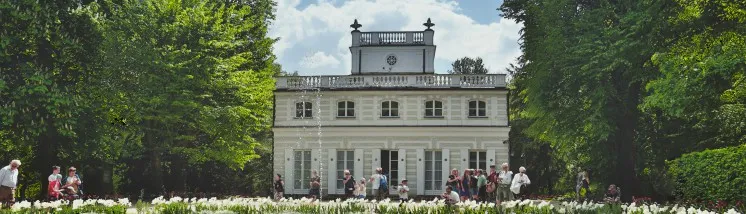
White neoclassical palace with a central dome and columns, surrounded by green trees and white flowers, with people in the foreground
Black and white logo of Royal Łazienki Museum with a crown-shaped leaf design and text 'ŁAZIENKI KRÓLEWSKIE'
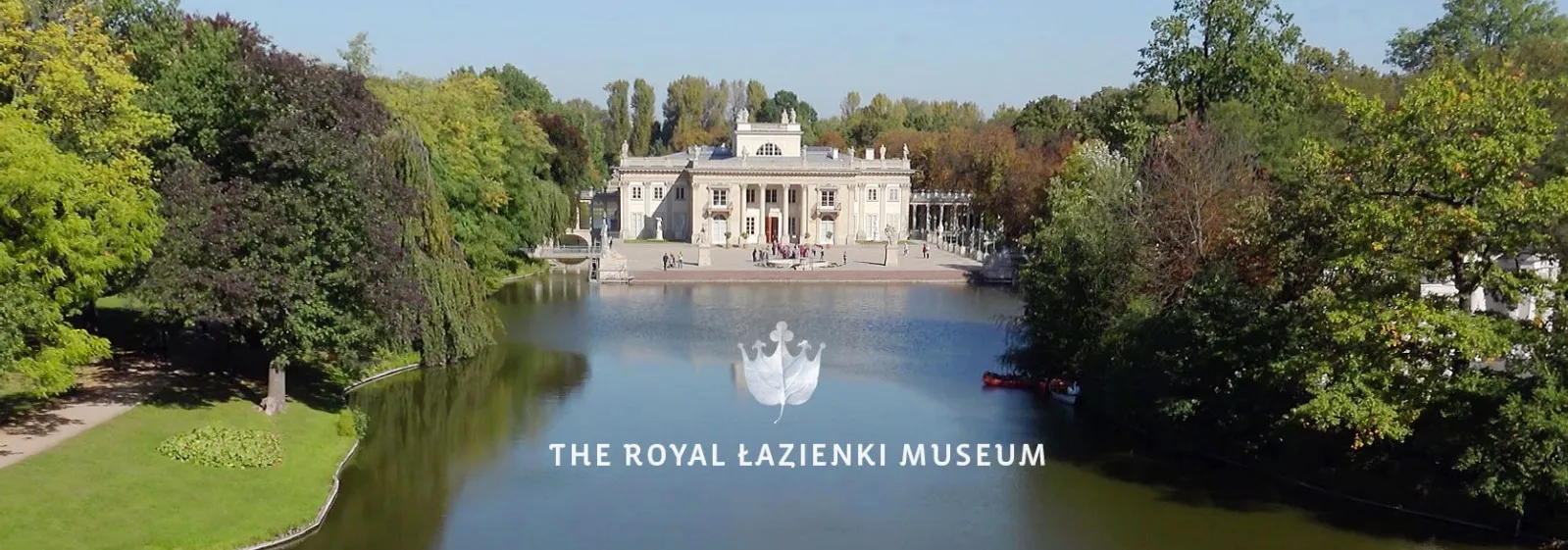
Aerial view of the Palace on the Isle at Royal Łazienki Museum, surrounded by trees and a pond with text overlay
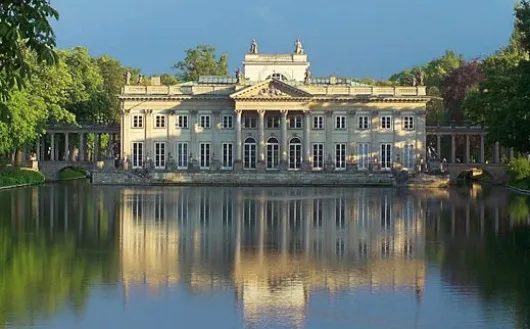
Neoclassical palace with columns and a triangular pediment reflected in a lake, surrounded by trees
Neoclassical amphitheater with white columns and steps leading to a water feature in a park setting
Ornate theater interior with blue curtains, gilded walls, and classical sculptures
Neoclassical building with large glass windows and a curved roof, surrounded by green lawns and trees under a clear blue sky
Warsaw

Find and Explore Warsaw Museums: Search for Cultural Attractions by Interest

Uncover Warsaw's rich history, profound art, and compelling cultural narratives.

Easily discover unique museums and cultural institutions across Warsaw. Tailor your exploration by selecting themes and interests that matter to you. Find diverse collections and immersive exhibits awaiting your visit.

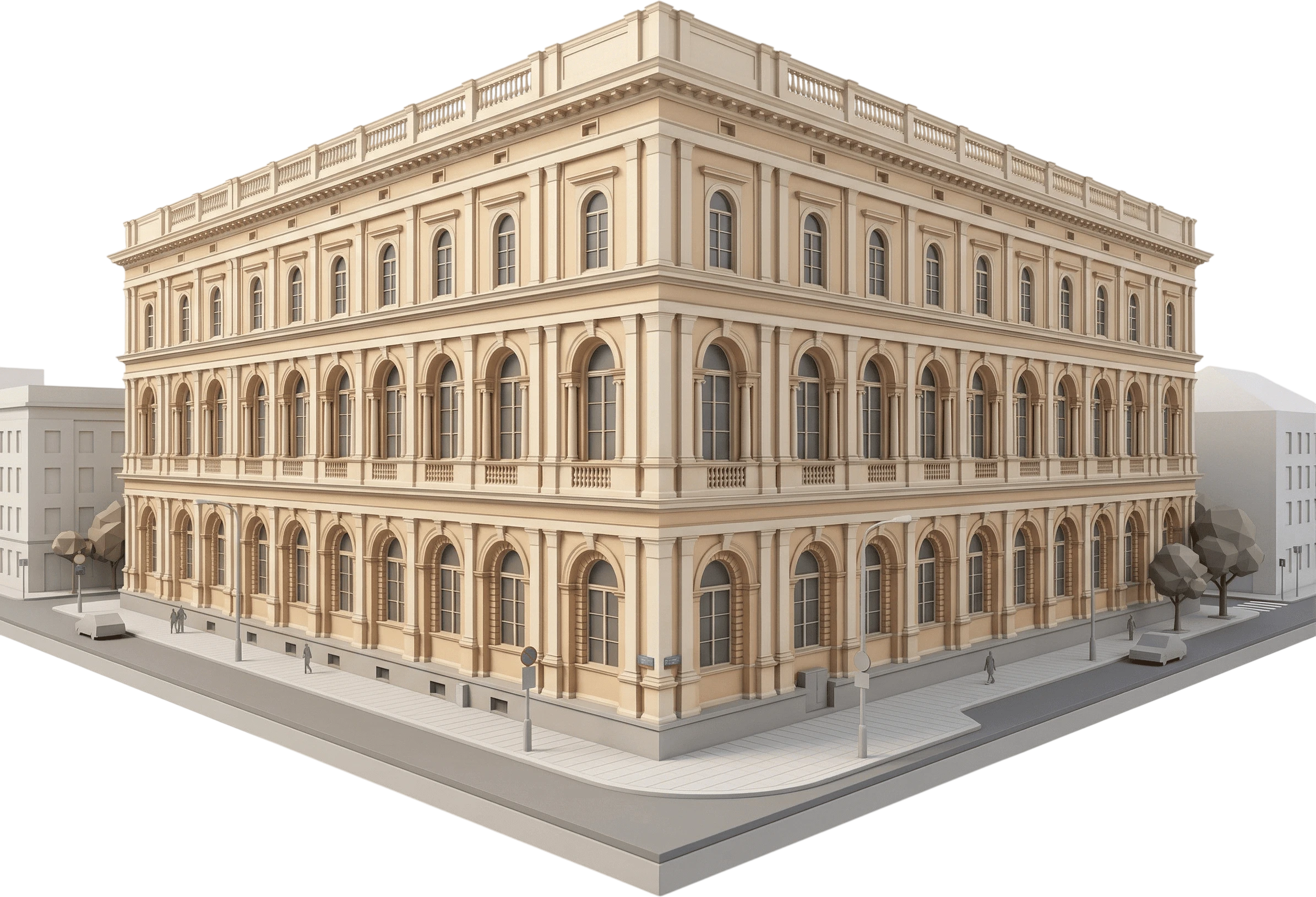
Explore Royal Łazienki Museum with Warsaw
Guides, visitor info, and museum details in Warsaw
Find everything about Royal Łazienki Museum in one place, including tickets, opening hours, current exhibitions, location details, visitor tips, nearby attractions, and the latest museum updates. Use these pages to plan your visit, discover what to see, and get practical information before you go.
Discover nearby museums similar to Royal Łazienki Museum in Warsaw and plan your next cultural stop with confidence.
These recommendations prioritize real proximity to Royal Łazienki Museum and help you find high-fit alternatives faster across Warsaw.
Use this curated list to compare museums near Royal Łazienki Museum without opening multiple search pages. Each card gives you fast visual context and direct access to key details so you can decide quickly. If you are building a full day in Warsaw, this section helps you chain nearby visits with less planning effort.