Amsterdam
News

The Ancient Roots of Astrology at the Embassy of the Free Mind

News from Embassy of the Free Mind

Explore the fascinating origins of astrology at the Embassy of the Free Mind, tracing its development from ancient Mesopotamia and Egypt to the Hellenistic fusion that shaped modern understanding. Discover how celestial observations evolved into a sophisticated system of prediction and personal guidance.

HistoryAstrologyCulturePhilosophy
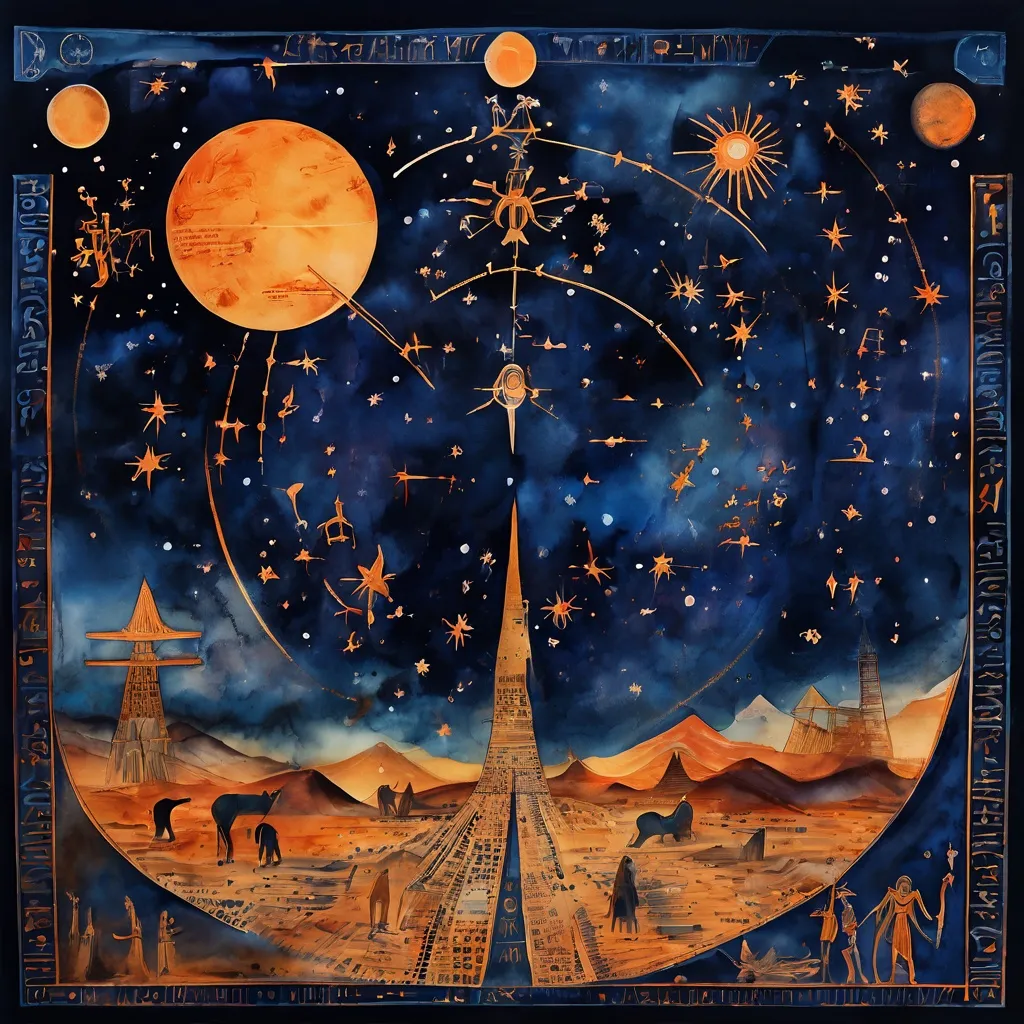
An artistic depiction of ancient astrological charts, featuring celestial bodies, Mesopotamian cuneiform, and Egyptian hieroglyphs against a starry night sky, representing the origins of astrology at the Embassy of the Free Mind.

Exploring the Ancient Roots of Astrology at Amsterdam's Embassy of the Free Mind

The Embassy of the Free Mind in Amsterdam invites visitors to delve into the historical development of astrology, a tradition with roots far deeper than its modern interpretations might suggest. A recent article by Charlotte Zhu, featured by the museum, provides an insightful journey through the ancient cultures that shaped astrological practices, from Mesopotamia to the Hellenistic period.

This exploration highlights how early civilizations observed the cosmos, seeking meaning and guidance that eventually evolved into the complex systems we recognize today. The museum, known for its focus on philosophical, spiritual, and humanist traditions, offers a natural setting to appreciate this rich intellectual heritage.

Mesopotamia: Early Celestial Interpretations

Astrology's earliest forms emerged in Mesopotamia around 2000 BCE. Here, the movements of celestial bodies were believed to convey messages from deities. Astrologers held significant societal roles, meticulously documenting astronomical events to inform state decisions.

Notable records include the Enuma Anu Enlil, a collection of roughly 70 clay tablets that linked cosmic occurrences—such as eclipses or comets—to potential earthly events like famine or political upheaval. Later, between 652 and 61 BCE, Mesopotamian scholars compiled the Astronomical Diaries. These tablets systematically recorded planetary movements alongside political events, wars, and even economic data. This rigorous record-keeping transformed astrology from simple observation into a predictive science. By the 5th century BCE, the familiar twelve zodiac signs were in use, and astrological focus began to expand from national destinies to include individual fates. A Mesopotamian clay tablet with an astrological diagram illustrates these early practices.

Egypt's Contribution: The Decans System

Parallel to Mesopotamian developments, ancient Egypt cultivated its own astrological traditions. Around 2100 BCE, Egyptians devised the "decans," dividing the sky into 36 segments, each representing ten degrees. These decans, which rose sequentially at dawn, served as a crucial tool for timekeeping and marking the progression of the year.

By the 3rd century BCE, the decans became integrated with zodiac signs and planetary positions. This system significantly influenced later astrological concepts, including the twelve "houses" that assign different areas of life—such as career or family—to specific sectors of a birth chart.

The Hellenistic Fusion: Modern Astrology Takes Shape

The form of astrology most recognized today largely solidified during the Hellenistic period, following Alexander the Great's conquests (334–323 BCE). This era fostered an unprecedented exchange of knowledge across Greek, Egyptian, and Mesopotamian cultures.

A pivotal figure was Berossus, a Babylonian priest from the 3rd century BCE, who introduced Mesopotamian astronomical and astrological knowledge to Greece. Greek philosophers and mathematicians, including Hipparchus, integrated these methods into their own studies, refining the zodiac and developing advanced systems for calculating planetary movements. They also linked astrology with philosophical schools like Stoicism and Platonism.

By the 1st century BCE, a comprehensive astrological system emerged. It incorporated the five visible planets, the Sun and Moon, twelve zodiac signs, twelve houses, and the concept of aspects—the angular relationships between celestial bodies. This period is termed Hellenistic because Greek became the primary language for recording and disseminating this new, integrated astrological wisdom, which combined scientific observation, philosophical thought, and spiritual inquiry.

The rich history of astrology, as illuminated by the Embassy of the Free Mind, showcases its evolution as a multidisciplinary practice woven into the fabric of ancient civilizations. For those interested in delving deeper into philosophical, spiritual, and humanist traditions, a visit to the Embassy of the Free Mind offers rich insights. Discover more cultural experiences like this in Amsterdam and plan your visit through Musemap (musemap.art) or explore other museums in the city.
Related museum topics and stories from Embassy of the Free Mind in Amsterdam
Explore connected topics from this article
Use topics from "The Ancient Roots of Astrology at the Embassy of the Free Mind" to discover related museum stories, film programs, and cultural events connected to Embassy of the Free Mind in Amsterdam.
Embassy of the Free Mind astrologyancient astrology originsMesopotamian astrologyEgyptian decans astrologyHellenistic astrologyhistory of celestial observationorigins of zodiac signsastrology cultural historyphilosophical traditions astrologyEmbassy of the Free Mind articlesCharlotte Zhu astrology
Related visitor FAQ for this news article
Helpful answers connected to this news topic
Browse quick visitor questions shown for this article, then open the full Embassy of the Free Mind FAQ page in Amsterdam to explore broader planning information.

What are the earliest known origins of astrology?

The earliest forms of astrology originated around 2000 BCE in Mesopotamia, where celestial movements were believed to carry messages from the gods and were closely tracked for state purposes.

How did ancient Egypt contribute to astrology?

Ancient Egypt developed the concept of 'decans,' divisions of the sky used for timekeeping, which later influenced astrological systems and the idea of planetary houses.

When did astrology take its current form?

Astrology as we recognize it today largely took shape during the Hellenistic period (after Alexander the Great's conquests), when Mesopotamian and Egyptian traditions fused with Greek philosophy and mathematics.

Who was a key figure in the Hellenistic fusion of astrology?

Berossus, a Babylonian priest in the 3rd century BCE, is a key figure who introduced Mesopotamian astrology to Greece, where it blended with Greek thought.

What elements characterize Hellenistic astrology?

Hellenistic astrology combined visible planets, the Sun and Moon, zodiac signs, astrological houses, and the concept of aspects (angular relationships between celestial bodies).

Why is it called 'Hellenistic' astrology?

It is called Hellenistic astrology because the earliest surviving horoscopes from this formative period were written in Greek, making it the common language for spreading this knowledge.

What is the significance of astrology's historical development?

The historical development shows astrology evolving from a tool for reading omens for empires to a personal system for guiding individuals, deeply integrated into the cultural understanding of the cosmos and human life.

About Embassy of the Free Mind in Amsterdam

Embassy of the Free Mind, Amsterdam

Explore wisdom traditions

HistoryArt

This page provides a comprehensive overview of the Embassy of the Free Mind in Amsterdam, helping you understand its unique focus on philosophical and spiritual traditions. Whether you're interested in historical manuscripts or contemporary thought, Musemap offers more details to plan your visit. Explore other unique museums and libraries in Amsterdam for a deeper cultural experience.

Open full Embassy of the Free Mind museum overview
Amsterdam

Find Museums in Amsterdam: Explore Diverse Cultural Attractions by Interest

Discover unique art, history, and science museums in the city.

Navigate Amsterdam's extensive cultural offerings to find the perfect museum for your next visit. Explore different themes and historical periods to enrich your understanding of art and heritage. Locate institutions that spark your curiosity and delve into their unique exhibits.

Explore Embassy of the Free Mind with Amsterdam
Guides, visitor info, and museum details in Amsterdam
Find everything about Embassy of the Free Mind in one place, including tickets, opening hours, current exhibitions, location details, visitor tips, nearby attractions, and the latest museum updates. Use these pages to plan your visit, discover what to see, and get practical information before you go.
Discover nearby museums similar to Embassy of the Free Mind in Amsterdam and plan your next cultural stop with confidence.
These recommendations prioritize real proximity to Embassy of the Free Mind and help you find high-fit alternatives faster across Amsterdam.
Use this curated list to compare museums near Embassy of the Free Mind without opening multiple search pages. Each card gives you fast visual context and direct access to key details so you can decide quickly. If you are building a full day in Amsterdam, this section helps you chain nearby visits with less planning effort.