Rare William Blake 'Book of Job' Proof Edition Explored at Embassy of the Free Mind in Amsterdam
The Embassy of the Free Mind in Amsterdam continues its mission to illuminate philosophical and spiritual traditions through unique cultural artifacts. Recently, research by Corey Andrews sheds light on a particularly rare item within its Bibliotheca Philosophica Hermetica collection: a proof edition of William Blake’s iconic "Illustrations of the Book of Job," dating from around 1826. This discovery offers a distinct glimpse into the artistic process of the renowned English poet, printmaker, and mystic.
Uncovering Blake's Artistic Method
A "proof run" represents an initial print batch of an artwork, created for the artist or publisher to identify and correct any imperfections before the final, wider distribution. The existence of a first edition proof run of Blake's "Illustrations of the Book of Job" makes this particular item exceptionally rare and valuable. It provides a window into the evolution of what many consider to be Blake's paramount achievements in engraving.
William Blake, largely overlooked during his lifetime, has since become a towering figure whose influence on Western mystical imagination is immense. His works, including his illustrations for the biblical Book of Job, continue to captivate and inspire.
The Timeless Narrative of Job
The biblical Book of Job explores profound themes of faith, suffering, and divine justice. It tells the story of Job, a righteous man whose steadfast piety is challenged when God permits "the Satan" to inflict immense hardship upon him. Despite losing family, wealth, and health, Job curses the day of his birth rather than cursing God, ultimately reaffirming his unwavering faith.
This archetypal narrative resonated deeply with many artists and thinkers throughout history, including Johann Wolfgang von Goethe, whose epic "Faust" also draws inspiration from the Book of Job's central motif of a bargain with higher powers.
Portraying Primordial Monsters: Behemoth and Leviathan
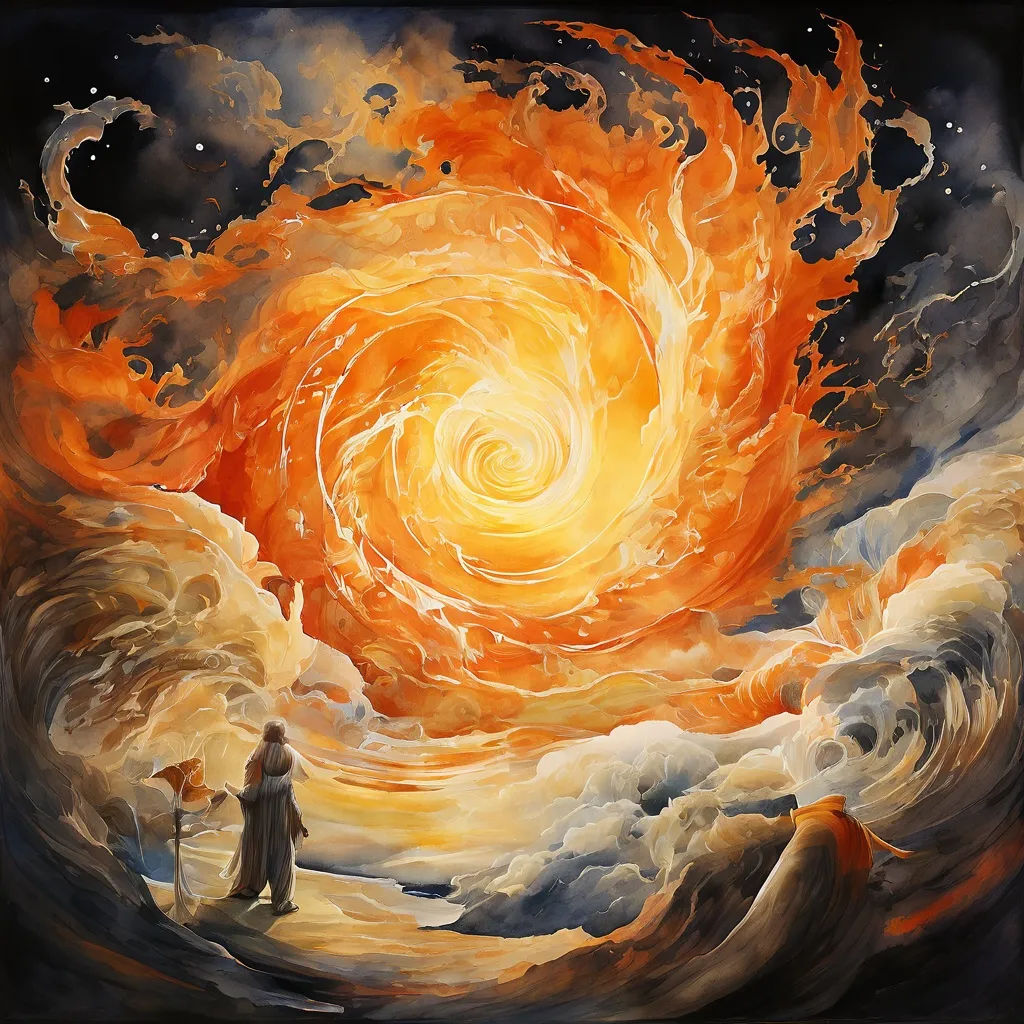
Among the most striking elements of the Book of Job are its descriptions of Behemoth and Leviathan, primordial monsters that symbolize chaos and immense power. Blake's engravings vividly bring these ancient legends to life. The text offers a particularly evocative portrayal of Leviathan:
“Can you pull in Leviathan with a fishhook, or tie down its tongue with a rope? Will it keep you begging for mercy? Will it speak to you with gentle words? If you lay a hand on it, you will remember the struggle and never do it again! Any hope of subduing it is false; the mere sight of it is overpowering. … Its back has rows of shields tightly sealed together; each is so close to the next that no air can pass between. Flames stream from its mouth; sparks of fire shoot out. Its chest is hard as rock, when it rises up the mighty are terrified. The sword that reaches it has no effect, nor does the spear or the dart or the javelin. It leaves a glistening wake behind it. Nothing on earth is its equal – a creature without fear. It looks down on all that are haughty; it is king over all that are proud.” — Job 41, 1-34, NIV.
Visitors interested in the full biblical passage can explore the complete description of Leviathan here.
Research and Discovery at the Bibliotheca Philosophica Hermetica
This insightful article was penned by Corey Andrews, a PhD candidate at the University of Amsterdam and a researcher with the Ritman Research Institute. His work, focusing on 17th and 18th-century Rosicrucianism and the life of Jan Amos Comenius, contributes to the ongoing scholarly exploration that defines the Embassy of the Free Mind.
The museum’s dedication to research ensures that its extensive collection of manuscripts and books continues to yield new understanding and interpretation for both scholars and the public. To delve deeper into the philosophical, spiritual, and humanist traditions preserved and studied here, consider visiting the Embassy of the Free Mind. You can explore more of Amsterdam's cultural offerings on Musemap (musemap.art) by browsing museums or checking what's on in the city.