Carel Visser's Monumental Sculptures Transform Rijksmuseum Gardens in Amsterdam
The Rijksmuseum in Amsterdam is set to host a significant outdoor exhibition featuring the works of influential Dutch sculptor Carel Visser. From June 5 to October 25, 2026, visitors can explore 13 monumental sculptures by Visser within the museum's gardens. This marks a notable occasion as it's the first time the Rijksmuseum's annual garden exhibition has been dedicated to a Dutch artist. Admission to the garden exhibition is free for all.
A Vision of Industrial Art in Nature
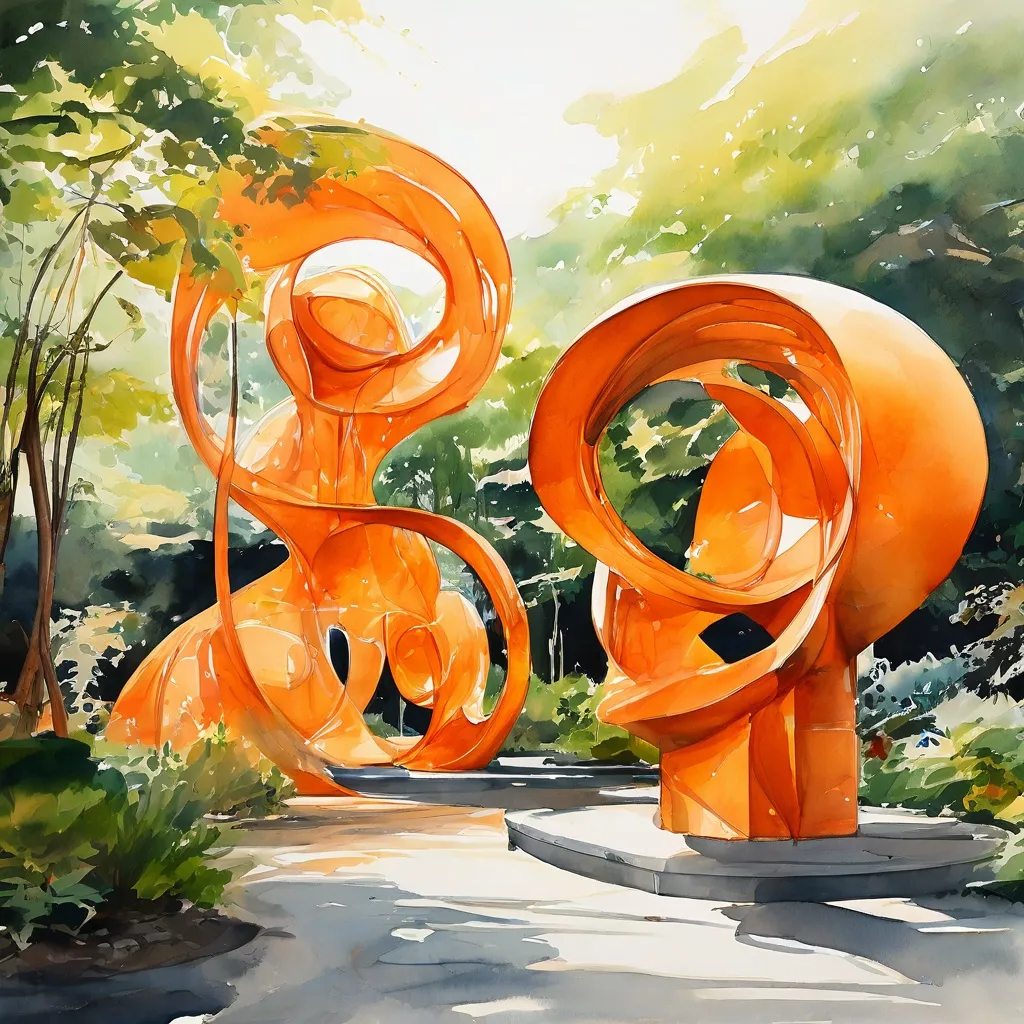
Carel Visser, celebrated as one of the 20th century's most impactful Dutch sculptors, utilized industrial materials like iron, steel, and concrete in his creations. Despite working with such robust elements, his minimalist forms frequently drew inspiration from natural shapes, offering a contrast to the purely abstract works often seen from his contemporaries. The exhibition features pieces that vary greatly in scale, with some reaching up to eight meters in height or five meters in length. These works have been gathered from various Dutch museums, private collections, and public installations to create this comprehensive retrospective. Taco Dibbits, director of the Rijksmuseum, noted how well the exhibition pieces complement existing garden installations like Signal 1 and 2.
Visser's artistic journey saw him move from early influences by artists like Constantin Brâncuși and Alberto Giacometti towards a distinct personal style marked by geometric abstraction, aligning with Minimal Art movements of the 1960s and 70s. His innovative approach involved working directly with a cutting torch and welding machine rather than relying on traditional sculpting methods. He also made extensive use of reflection in his works, a characteristic visible in pieces like Signal 1 and 2, Double Form 4 (1957–1958), and Big Four (1965).
Iconic Sculptures Reunited
The exhibition provides a rare opportunity to see several of Visser's sculptures that were originally designed for public spaces, now brought together. Works such as Jacob's Ladder (1954), standing eight meters tall and initially created for the post-war reconstruction exhibition E55 before its installation in Utrecht, will be featured. Another highlight is Lake (2006) from Apeldoorn, an enlargement of an earlier work inspired by the American reservoir Lake Powell, which was installed to mark Visser's award of the 2004 Wilhelminaring. Big Four (1965), a landmark piece from Amersfoort, also joins the display.
Inside the Rijksmuseum atrium, a sketch model of Flying Fish (1993) will be on view, offering insight into the monumental version found at Schiphol Airport’s Departure Hall 3. Other notable pieces, including Double Form 4 from the Kröller-Müller Museum and Two Birds (1954/1994), further illustrate Visser's artistic development and his exploration of form and material.
Carel Visser's Enduring Legacy
Throughout his career, Carel Visser received numerous accolades, including the 1972 Dutch State Prize for Visual Arts and Architecture and the 2005 Lifetime Achievement Award from the Netherlands Foundation for Visual Arts, Design and Architecture. His work is held in major modern art museums across the Netherlands and internationally, including Tate Modern in London. Visser's sculptures have also adorned public spaces in various cities, both within the Netherlands and abroad, solidifying his reputation as a significant figure in 20th-century art.
This compelling outdoor exhibition offers a unique chance to experience the breadth of Carel Visser’s work in the beautiful setting of the Rijksmuseum Gardens. To discover more cultural experiences and exhibitions like this across Amsterdam, explore Musemap (musemap.art) or find other museums in Amsterdam. You can also view more options on the Amsterdam map.