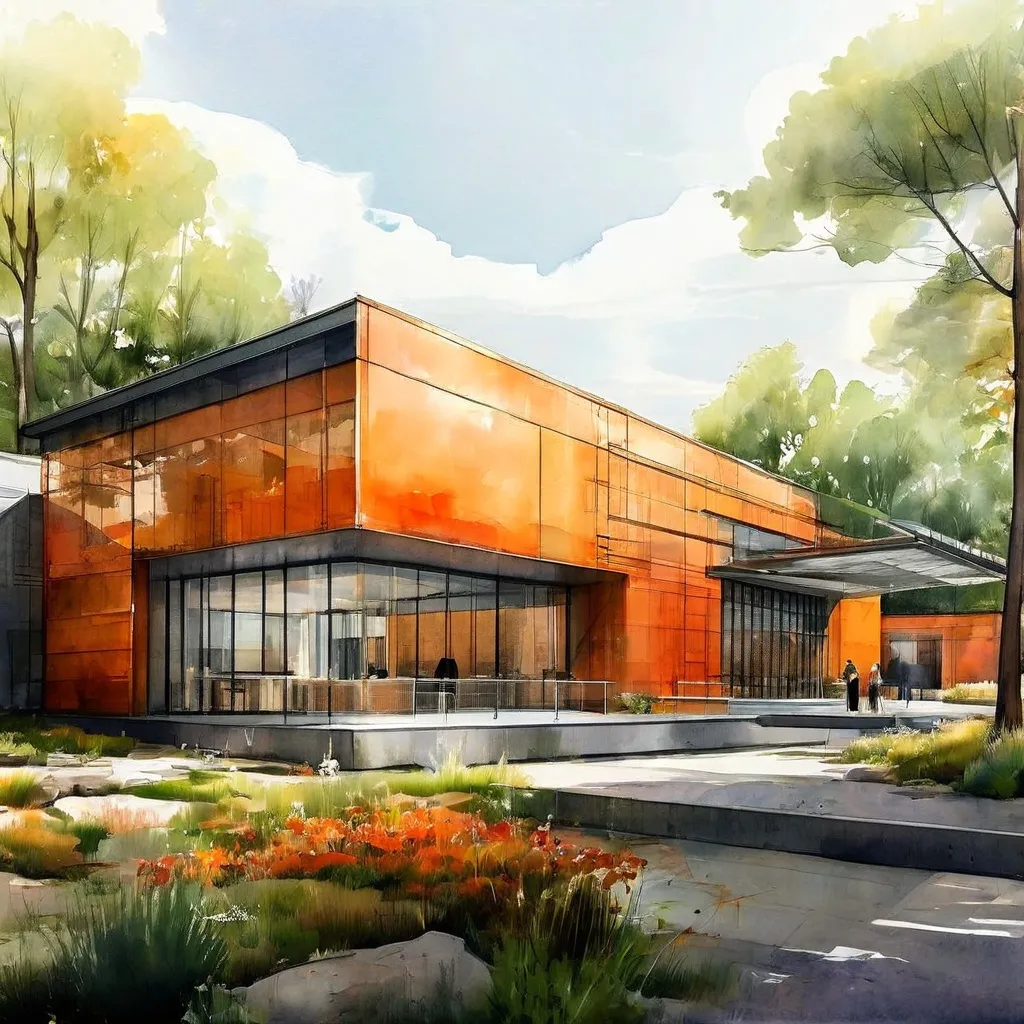
Rijksmuseum Amsterdam Collection Secured at New Netherlands Collection Centre in Amersfoort
The Netherlands Collection Centre (CC NL) has officially opened its doors in Amersfoort, marking a significant milestone for the preservation of Dutch heritage. This unique facility serves as a central hub for four major national collections, including that of the renowned Rijksmuseum in Amsterdam, along with the Netherlands Open Air Museum, Het Loo Palace, and the Cultural Heritage Agency (RCE). The collaboration brings together a vast array of historical and artistic objects under one roof, establishing a new standard for cultural heritage management in the country.
The inauguration took place on 13 September 2021, with Ingrid van Engelshoven, the then caretaker Minister for Education, Culture and Science, officially opening the centre. The minister emphasized that this modern, highly sustainable facility is designed to elevate heritage management and serve as a center of expertise for museum collection conservation. The strategic decision to combine these collections and foster active cooperation among the institutions makes CC NL an unparalleled venture globally.
A Central Hub for Dutch Cultural Heritage
For visitors and enthusiasts of institutions like the Rijksmuseum Amsterdam, the Netherlands Collection Centre plays a vital role behind the scenes. While not a public museum itself, CC NL ensures the long-term preservation and accessibility of a monumental number of artifacts. This consolidation provides a more holistic view of Dutch history, allowing for new connections between royal carriages and humble farm carts, as noted by Taco Dibbits, director of the Rijksmuseum. This integrated approach benefits future exhibitions and research, ultimately enriching the experience of those who engage with Dutch cultural institutions.
The centre houses approximately half a million objects, encompassing a diverse range from paintings, historical crafts, and furniture to jewelry, clothing, and clocks. Notable items include royal thrones, aristocratic cabinets, carousel horses, vintage bicycles, and even a steam engine weighing over 7,000 kg, alongside a five-meter-tall antique barrel organ named De Blauwe Mortier, which was part of the opening ceremony.
Advanced Conservation and Research Facilities
The partnership among the four organizations extends beyond simply sharing space; collections are merged, operations are jointly managed, and staff work as a single team. This collaboration enables CC NL to offer state-of-the-art facilities that benefit the entire cultural sector. Among these are the country's first dedicated quarantine chambers, designed to rid museum objects of insects and mold through freezing and oxygen deprivation. The centre also includes a professional photographic studio, an X-ray room, and two large conservation studios available for use by other cultural institutions. One example of the specialized work undertaken here is the conservation of Matthias Withoos's 350-year-old painting, View of Amersfoort, a large-scale work commissioned by the Flehite Museum.
The Netherlands Collection Centre actively encourages research into its extensive collections and enhances their mobility for loans to other museums. While the centre does not have a public function, it is accessible for research and educational purposes by appointment, with applications made through the relevant partner organizations.
Sustainable Design and Strategic Location
From its inception, CC NL was designed with sustainability as a core principle. The building has achieved an "Outstanding – 5 Stars" rating through the BREEAM NL Newbuild and Renovation quality mark system, placing it among the top ten most sustainable buildings in the Netherlands. Its innovative design includes insulating walls and the roof but not the floor, allowing the underlying ground layer to maintain a constant internal temperature. This minimizes the need for complex technical systems, reducing costs and risks. The building is entirely powered by 2,100 solar panels on its roof and utilizes a thermal energy storage system, with toilets flushed using rainwater.
The surrounding site also incorporates sustainability and nature development, featuring a bioswale trough that captures rainwater and supports local flora and fauna. Designed by cepezed, the building features three distinct sections: a sunlit "head" for offices, a "trunk" for collection storage, and central conservation studios forming the "heart."
The decision to locate CC NL in Amersfoort's Vathorst neighborhood was based on its central location and excellent accessibility, facilitating the movement of loaned works. It is also conveniently situated within walking distance of Amersfoort Vathorst station.
The comprehensive relocation of half a million objects from various depots to CC NL was a meticulously planned operation that took an entire year, involving nearly a hundred staff and multiple removal companies. The objects are organized by type rather than original owner, forming comprehensive study collections. More details about this innovative centre can be found on the Rijksmuseum's press release.
To discover more about the Rijksmuseum and other cultural institutions in the area, explore Musemap (musemap.art) for city-based experiences. You can browse museums in Amsterdam or view them directly on our map to plan your next visit.