Amsterdam
News

Rijksmuseum Explores Shifting Perceptions of 'Crawly Creatures'

News from Rijksmuseum

Discover 'Crawly Creatures,' an exhibition at the Rijksmuseum exploring how perceptions of insects, spiders, and other small animals have evolved through art and science. From symbols of evil to the beauty of creation and ecological importance, see historical and contemporary artistic interpretations.

ExhibitionArt HistoryScienceInsectsArachnids
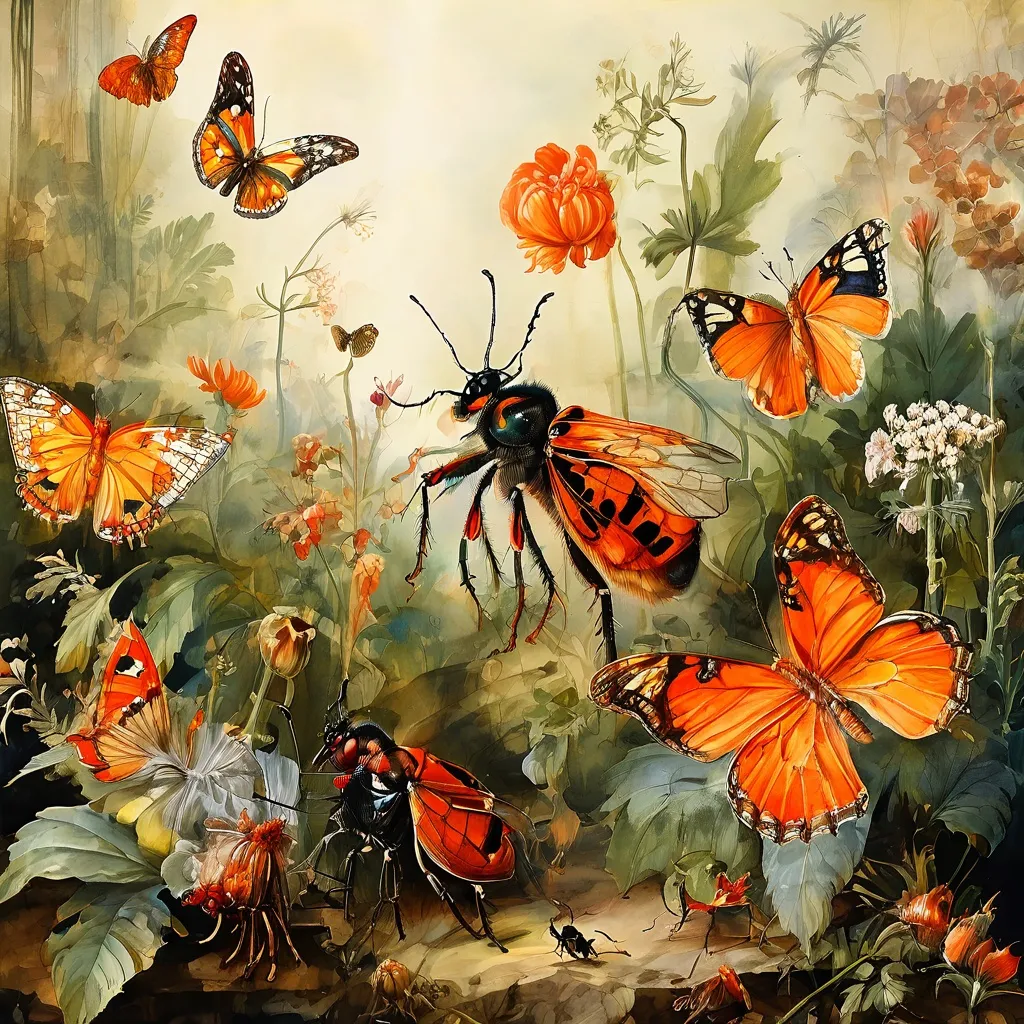
An artistic interpretation showcasing various insects and spiders, blending historical scientific illustrations with a modern aesthetic, set within a museum gallery context at the Rijksmuseum.

Rijksmuseum Amsterdam Unveils "Crawly Creatures" Exhibition: Art, Science, and Changing Perceptions

The Rijksmuseum in Amsterdam is presenting "Crawly Creatures," an exhibition that delves into the evolving perceptions of insects, spiders, and amphibians through art and science. Running from September 30, 2022, to January 15, 2023, the exhibit brings together over a thousand examples of these "tiny beasties," showcasing how they have been depicted and understood across centuries.

Visitors can explore a diverse collection ranging from vibrant butterflies and intricate spiders to intriguing toads. The exhibition reveals how these creatures, once associated with darker themes, captivated the imaginations of artists and scientists alike, including notable figures such as Albrecht Dürer, Wenzel Jamnitzer, Antoni van Leeuwenhoek, and Maria Sibylla Merian.

From Medieval Fear to Artistic Fascination

Historically, these creatures were often linked to death and the devil, appearing in medieval art as symbols of evil or merely as marginal decorative elements. A widespread belief in the spontaneous generation of such life from decaying matter reinforced these negative views. However, a gradual shift in perspective began in the 15th and 16th centuries. As their aesthetic qualities gained appreciation, these animals started to be recognized as examples of nature's beauty, slowly moving from the margins to the central focus of artistic works. A prime illustration of this change is Albrecht Dürer's 1505 drawing of a stag beetle, which is a highlight of this exhibition.

The 16th century also saw an increase in the popularity of crawly creatures in European royal courts' cabinets of curiosities (wunderkammers). The exhibition features extraordinary life casts and other items from these collections, including highlights from the Habsburg emperor's wunderkammer. The invention of the microscope further propelled scientific interest, revealing a previously unseen world and leading to discoveries about reproduction and metamorphosis. The exhibition also features significant works by naturalist Maria Sibylla Merian, who traveled to Suriname to document insect metamorphosis through drawings, with several of her esteemed works from the Royal Collection Trust on display. The "sottobosco" (forest-floor still life) genre, pioneered by Otto Marseus van Schrieck, emerged around 1650, merging art and scientific observation by making reptiles and insects central subjects.

Contemporary Art and Ecological Awareness

In recent decades, the role of these creatures in Earth's ecology has gained crucial recognition. "Crawly Creatures" extends its narrative to contemporary art, critically examining the human-animal relationship through modern installations.

The exhibition includes "Gravitational solitary semi-social solitary solitary Choreography LHS 477" (2019) by artist Tomás Saraceno, a unique spider/web sculpture woven by multiple spider species that occupies an entire gallery. Saraceno and the Arachnophilia community have also penned "An Open Letter for Invertebrate Rights," advocating for the recognition and respect of spider/webs' rights within the museum. In a commitment to this message, certain public areas of the Rijksmuseum will have limited cleaning during the exhibition to allow spiders to weave their webs freely.

Additionally, Colombian artist Rafael Gomezbarros presents his installation "Casa Tomada" (2008-present), featuring hundreds of ants occupying public spaces from floor to ceiling. This powerful work uses the ant as a symbol of resilience and cooperation, drawing attention to themes of migration and forced displacement, and continuing a long tradition of insects symbolizing urgent social issues.

Planning Your Visit to the Rijksmuseum

The "Crawly Creatures" exhibition is housed in the Phillips Wing of the Rijksmuseum. An accompanying book, compiled by Jan de Hond, Eric Jorink, and Hans Mulder, is available. The museum also offers selected English-language programs, including an artist talk and guided tours. The exhibition design for "Crawly Creatures" was conceived by Theun Mosk, who also designed the Clara the Rhinoceros exhibit.

Tickets for the exhibition became available in late August 2022 via the Rijksmuseum website, where visitors are advised to book a specific start time for their visit.

For more information on current and upcoming displays at the Rijksmuseum and other cultural institutions, explore the various exhibitions listed on Musemap (musemap.art). You can also discover other museums in Amsterdam to enhance your cultural journey.
Related museum topics and stories from Rijksmuseum in Amsterdam
Explore connected topics from this article
Use topics from "Rijksmuseum Explores Shifting Perceptions of 'Crawly Creatures'" to discover related museum stories, film programs, and cultural events connected to Rijksmuseum in Amsterdam.
Rijksmuseum Crawly Creatures exhibitionRijksmuseum insect artRijksmuseum spider exhibitionCrawly Creatures art historyDutch national museum exhibitionsart and science exhibitionhistorical depictions of insectscontemporary art installations RijksmuseumMaria Sibylla MerianAlbrecht Dürer insectsTomás Saraceno RijksmuseumRafael Gomezbarros Casa Tomada
Related visitor FAQ for this news article
Helpful answers connected to this news topic
Browse quick visitor questions shown for this article, then open the full Rijksmuseum FAQ page in Amsterdam to explore broader planning information.

What is the 'Crawly Creatures' exhibition at the Rijksmuseum about?

The exhibition delves into the changing perceptions of insects, spiders, and other small creatures throughout history, examining their representation in art and scientific study from the Middle Ages to the present day.

When can I visit the 'Crawly Creatures' exhibition at the Rijksmuseum?

The exhibition was open from September 30, 2022, to January 15, 2023. For current exhibitions, please check the Rijksmuseum's official website.

What historical periods and artists are featured in the 'Crawly Creatures' exhibition?

The exhibition covers periods from the Middle Ages through the 16th century and highlights artists and scientists like Albrecht Dürer, Wenzel Jamnitzer, Maria Sibylla Merian, and Peter Paul Rubens, alongside contemporary artists like Tomás Saraceno and Rafael Gomezbarros.

How did people view 'crawly creatures' in the Middle Ages compared to later periods?

In the Middle Ages, these creatures were often associated with evil and spontaneously generated from decay. Later, their aesthetic beauty and role in creation became appreciated, leading to detailed documentation and artistic depiction.

Are there any contemporary art installations in the 'Crawly Creatures' exhibition?

Yes, the exhibition features installations by renowned contemporary artists such as Tomás Saraceno, including a 'spider/web' sculpture, and Rafael Gomezbarros's ant installation 'Casa Tomada'.

Do I need special tickets for the 'Crawly Creatures' exhibition at the Rijksmuseum?

As this exhibition has concluded, specific ticketing information is no longer applicable. For current exhibitions, visitors generally need to book tickets in advance with a specific time slot via the Rijksmuseum website.

About Rijksmuseum in Amsterdam

Rijksmuseum Amsterdam Overview

Dutch Art & History Focus

ArtHistoryLocal heritage

This page offers a comprehensive overview of the Rijksmuseum, providing essential context for your visit to Amsterdam's premier national institution. Explore the Dutch masters and historical narratives before you go. Use Musemap to find other fascinating museums and cultural experiences nearby in Amsterdam.

Open full Rijksmuseum museum overview
Amsterdam

Find Museums in Amsterdam: Explore Diverse Cultural Attractions by Interest

Discover unique art, history, and science museums in the city.

Navigate Amsterdam's extensive cultural offerings to find the perfect museum for your next visit. Explore different themes and historical periods to enrich your understanding of art and heritage. Locate institutions that spark your curiosity and delve into their unique exhibits.

Explore Rijksmuseum with Amsterdam
Guides, visitor info, and museum details in Amsterdam
Find everything about Rijksmuseum in one place, including tickets, opening hours, current exhibitions, location details, visitor tips, nearby attractions, and the latest museum updates. Use these pages to plan your visit, discover what to see, and get practical information before you go.
Discover nearby museums similar to Rijksmuseum in Amsterdam and plan your next cultural stop with confidence.
These recommendations prioritize real proximity to Rijksmuseum and help you find high-fit alternatives faster across Amsterdam.
Use this curated list to compare museums near Rijksmuseum without opening multiple search pages. Each card gives you fast visual context and direct access to key details so you can decide quickly. If you are building a full day in Amsterdam, this section helps you chain nearby visits with less planning effort.