Rijksmuseum Acquires Key Works by Pioneering Artist Marlow Moss for its Amsterdam Collection
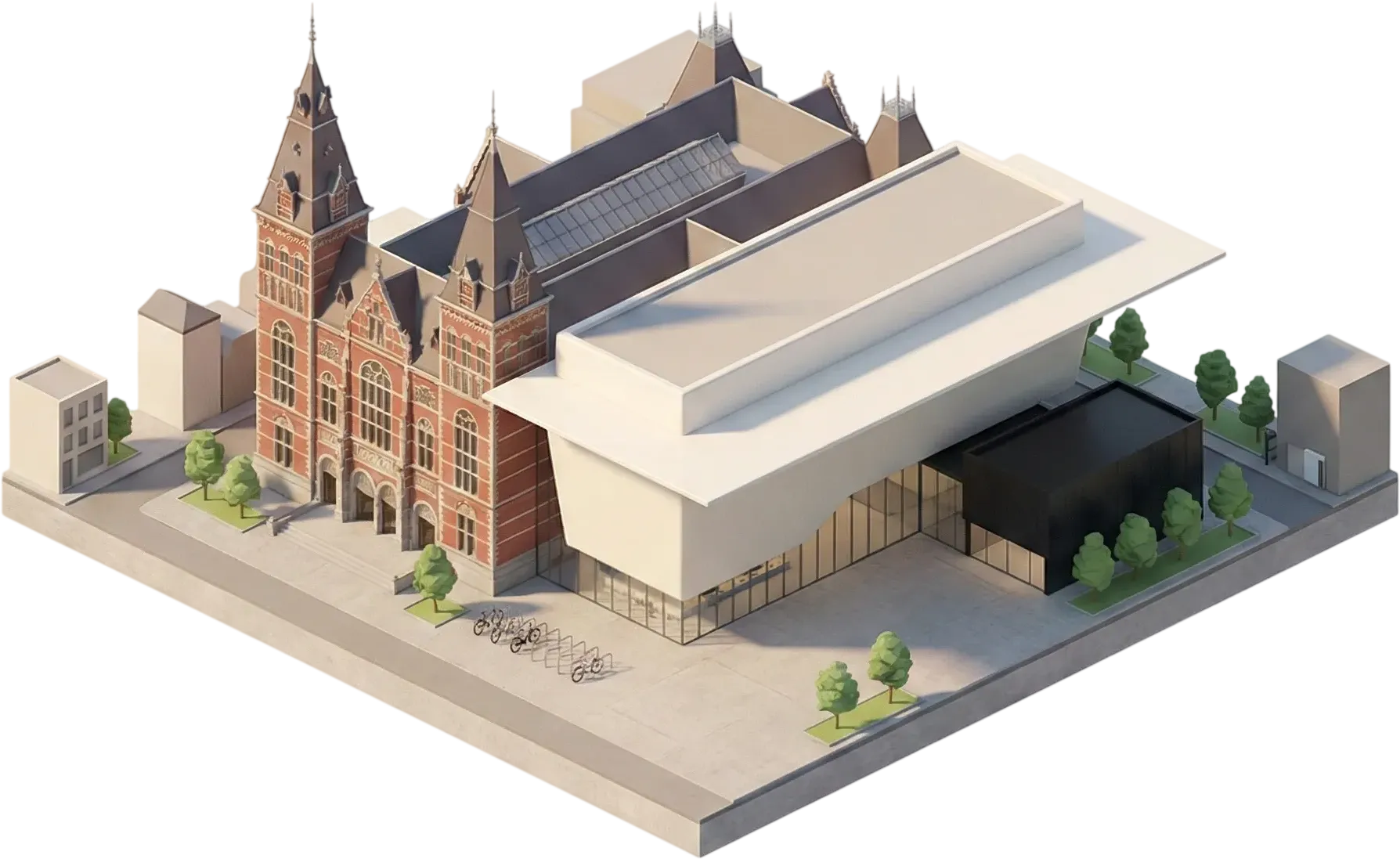
The Rijksmuseum in Amsterdam has announced a significant acquisition of three works by the influential abstract artist Marlow Moss. The newly added pieces include the 1948 painting White and Black (No 27) and two untitled drawings from around 1940 and 1957. These acquisitions enrich the museum's collection of 20th-century art and highlight Moss's important role in the development of abstract art in Europe and her challenging of societal norms around identity.
Visitors to the Rijksmuseum can now see these works on display as part of the permanent collection, offering a rare opportunity to experience the artistry of Marlow Moss.
Exploring Marlow Moss's Legacy in Amsterdam
Marlow Moss (London, 1889-1958) was a groundbreaking figure who made substantial contributions to abstract art. In 1932, Moss joined Abstraction-Création, an international group of artists dedicated to advancing abstract art's presence in Europe. The artist lived and worked in various locations, including Paris, Normandy, Cornwall, and the Dutch village of Biggekerke, maintaining close ties with Dutch artists like Piet Mondrian. Moss's artistic philosophy emphasized liberation from traditional perceptions, stating, "I don't see form. I only see space, movement and light."
Beyond artistic innovation, Moss was ahead of their time in personal expression, adopting a gender-neutral first name in the 1920s and viewing identity as a fluid concept. This commitment to challenging established ideas, both in art and society, makes Moss a unique and important artist. Mels Evers, Curator of 20th-Century Art, noted the rarity of original works by Moss due to past losses, making this acquisition particularly noteworthy.
Insights into Moss's Creative Process
The newly acquired pieces provide distinct perspectives on Marlow Moss's artistic journey:
- White and Black (No 27): This striking 1948 oil painting on a square canvas features a rhythmic arrangement of black lines. Its complete absence of color is unusual within Moss's body of work, making it one of only two known black and white paintings from the 1940s, with the other held by New York's Museum of Modern Art. Moss encouraged viewers to interpret such linear compositions as a form of musical notation. This work was previously owned by Moss’s partner, author A.H. ‘Netty’ Nijhoff.
- Two Untitled Drawings: One drawing from around 1957 is a precise sketch of a sculpture's rear, illustrating Moss’s meticulous calculation in art. The other, from about 1940, is a standalone piece featuring three colored circles that appear to move independently, a motif that also recurs in Moss’s sculptures. These drawings offer valuable insights into the artist’s systematic approach and preparatory studies.
Advancing Representation: The Women of the Rijksmuseum Project
This acquisition aligns with the Rijksmuseum’s ongoing "Women of the Rijksmuseum" research project, launched in March 2022. The initiative aims to integrate female narratives into the museum's collection and displays, striving for a more comprehensive representation of history. By identifying, investigating, and presenting stories about women artists and figures within its collection, and by acquiring new works like those by Marlow Moss, the project seeks to enrich the visitor experience and offer a more inclusive view of art and history.
The acquisition was made possible through the generous financial support of Pon and the Rijksmuseum Fonds, including the Irma Theodora Fonds, the ‘Vrouwen van het Rijksmuseum’ Fonds, and a private benefactor.
To discover more about the Rijksmuseum and other cultural highlights, explore additional museums in Amsterdam, or plan your next visit, check out Musemap (musemap.art) for detailed information on cultural spots across the city. You can browse museums in Amsterdam or view other current exhibitions on the platform.