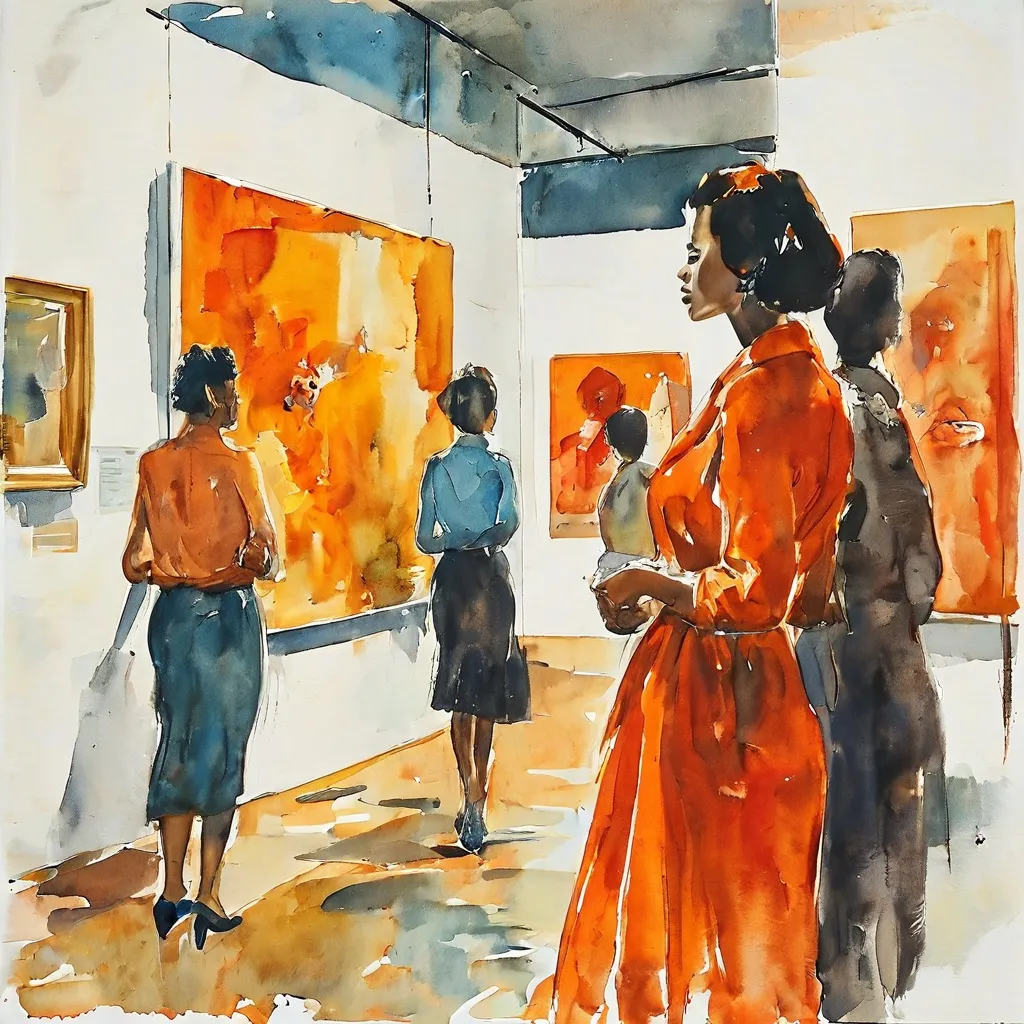
Stedelijk Museum Amsterdam Unveils Revitalized 1950-1980 Collection
The Stedelijk Museum Amsterdam has reimagined its permanent collection presentation from 1950 to 1980, offering fresh perspectives on art and design from this pivotal era. Titled Everyday, Someday and Other Stories, the renewed display focuses on amplifying underrepresented narratives by integrating works unseen for decades alongside new acquisitions, making their public debut for the first time in Amsterdam. Visitors can explore new connections between familiar and lesser-known pieces, providing a deeper understanding of the period's cultural landscape.
Highlighting Women Artists and Their Impact
A significant feature of the revamped exhibition is a dedicated space celebrating feminist art, exploring concepts of freedom, power, and the female form. Key works include Ana Mendieta’s Untitled (Facial Hair Transplants) from 1972, which provocatively challenges gender norms. Also prominently featured is Magdalena Abakanowicz’s monumental Vêtement Noir (Black Garment) from 1968, returning after her major solo exhibition at Tate Modern. This section also showcases pieces by artists such as Lee Bontecou, Nan Hoover, VALIE EXPORT, and Martha Rosler.
The presentation of American Abstract Expressionism has also been rehung, giving prominence to Helen Frankenthaler and her contemporaries. With the recent donation of her 1961 work Beach Scene, Frankenthaler is exhibited alongside artists she knew closely, including Barnett Newman, Jackson Pollock, Robert Motherwell, and Willem de Kooning. Her innovative 'soak-stain' technique influenced a new generation of painters, notably Morris Louis.
Diverse Inspirations for Abstraction
The 1960s saw abstraction flourish, with Western European and American artists building upon traditions like De Stijl and Russian Constructivism. However, the exhibition also broadens this view by exploring different global sources of abstract inspiration. Examples include Raja Babu Sharma, whose work draws from the ancient Indian philosophy of tantra, and Chavalit Soemprungsuk, who incorporated decorative Thai patterns. Japanese artist Naomi Kobayashi's geometric wall sculpture uses taut, fluid red threads to create a meditative quality. From Italy, Claudio Parmiggiani’s playful approach to abstraction transformed geometric shapes into animal figures sent on a journey in a delicate boat.
Exploring Spiritual Dimensions in Art
In contrast to the abstract works, another gallery presents paintings and sculptures that delve into rituals, myths, and spiritual experiences. These pieces narrate stories rooted in diverse cultures, often passed down through generations, with the human body frequently at their core. Some artworks touch upon themes of sexuality and resistance to conventional religious doctrines. Landscapes, too, acquire spiritual significance, serving as sites of memory and ritual. This section features artists such as Armand Baag, Winfred Dania, Ron Flu, Julio Galán, Ed Hart, Bhupen Khakhar, Felix de Rooy, Martin Saldana, Nova Sling, and Shinkichi Tajiri.
Early Innovations in Computer Art
The early 1960s marked the emergence of art where machines began to take on the artist's role, as seen in Jean Tinguely’s drawing machines and the kinetic abstract art of Gerhard von Graevenitz. This paved the way for the first computer-generated artworks of the late 1960s and early 1970s. Artists experimented with now-archaic technologies like plotter printers and punch cards. The exhibition highlights the pioneering work of Peter Struycken from the Netherlands, alongside pieces by Nam June Paik, Peter Laurens Mol, Lillian Schwartz, Alison Knowles, James Tenney, Manfred Mohr, Charles Mattox, and Jesus Rafael Soto.
The Artist's Connection to Nature and Everyday Life
During the 1970s, many artists sought a deeper engagement with daily life and the natural world, often developing their conceptual art in rural settings. Hans de Vries, working as a farmer in Groningen, meticulously documented natural phenomena. Dennis Oppenheim photographed shapes he created by sowing agricultural land in Finsterwolde. In Romania, Ana Lupas collaborated with local farmers to honor rural life during a time when state farms were replacing traditional small-scale agriculture. Jerzy Bereś's 1963 sculpture, Spook-bel, notably resembles a farming tool.
New Discoveries and Returning Favorites
The renewed collection offers several exciting firsts and comebacks for visitors. A room dedicated to new materials, including neon sculptures by Bruce Nauman and textile pieces by Richard Tuttle, features all of Hetty Huisman's three-dimensional ceramic works from the collection, on public display for the first time since 1968.
Making its exhibition debut is Bas Jan Ader's recently donated Untitled (Flower Work) from 1974, a significant piece capturing simple actions through a series of color photographs. In a section exploring hybrid masculinity, a major gift of works by Wally Stevens is on view, featuring self-portraits in diverse roles. Stevens, like Ulay and Pierre Molinier also displayed in this gallery, explored masculinity as a fluid concept.
Also returning after a considerable absence is the work of Wim T. Schippers. Alongside three wall pieces from his Fluxus period, the display includes footage from Van Oekel’s Discohoek, his iconic 1974-75 Dutch TV show, known for its chaotic and absurd parody of pop music programs.
To discover more about modern and contemporary art and design in the city, you can explore other museums in Amsterdam or browse what's on throughout the city with Musemap (musemap.art).