Stedelijk Museum Amsterdam Unveils Renewed 'Yesterday Today' Collection, Exploring Art Before 1950
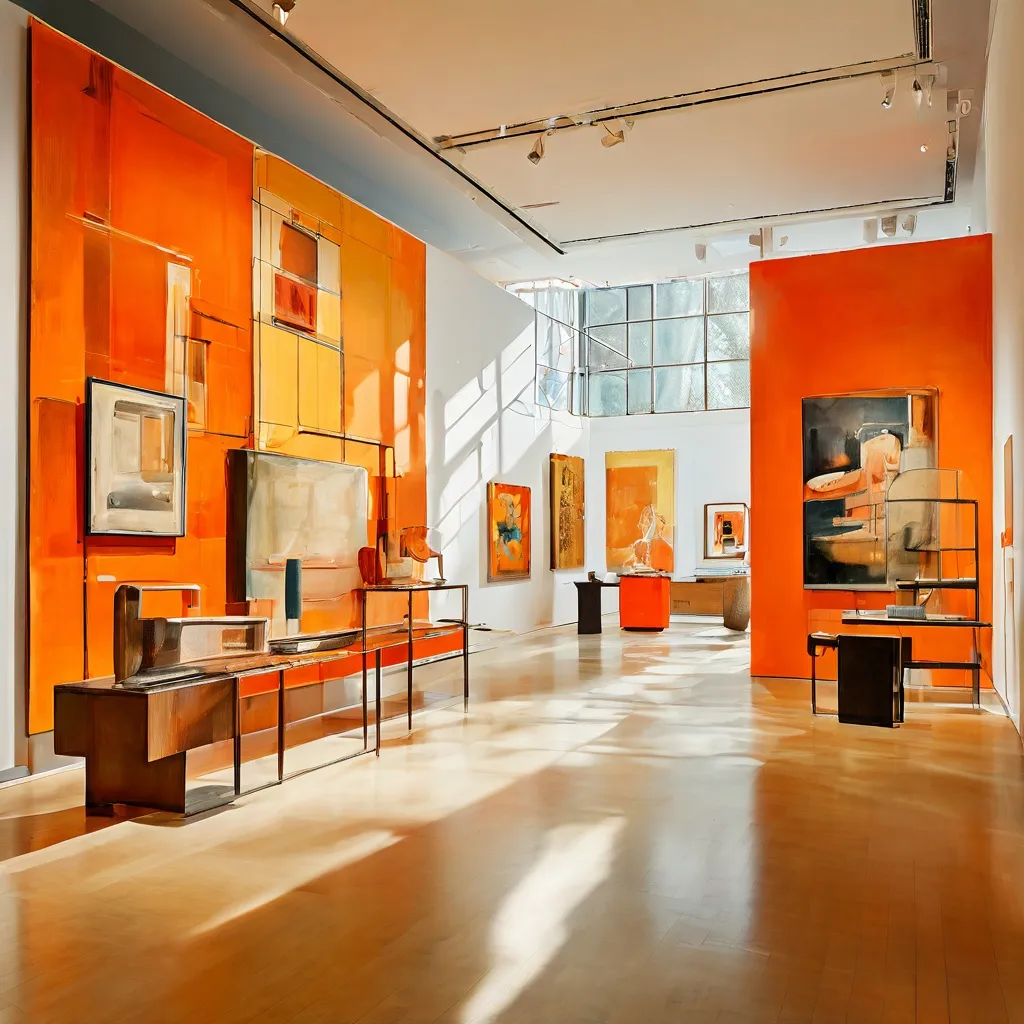
The Stedelijk Museum Amsterdam recently updated its collection presentation titled Yesterday Today, a deep dive into visual arts and design created before 1950. Originally launched in 2022, this refreshed exhibit highlights the intricate connections between artistic expression and significant societal developments. Visitors can explore how historical themes from this pivotal period resonate with contemporary issues, offering fresh perspectives on the past.
Exploring Societal Shifts Through Art and Design
The updated Yesterday Today presentation at the Stedelijk Museum features over three hundred works, weaving together famous pieces with lesser-known discoveries to reveal multiple narratives in art history. It showcases key artistic movements, including the Amsterdam School, Functionalism, De Stijl, Bauhaus, CoBrA, and the avant-garde works of artists like Kazimir Malevich and Olga Rozanova.
This extensive collection is set against the backdrop of an era marked by profound change, from the mid-19th century through the first half of the 20th century. This period saw rapid industrial growth, technological breakthroughs such as the electric light bulb and telephone, and the expansion of mass production and transportation. Socially, it was a time of intense activism, with women advocating for equal rights, workers demanding fair wages, and growing resistance against colonial exploitation. The two World Wars (1914–1918 and 1939–1945) also left an indelible mark, and the exhibition demonstrates how artists and designers responded to or even tried to influence these monumental events.
Highlighting Diverse Voices and Perspectives
A significant aspect of Yesterday Today is its dedicated focus on the contributions of women, not just as artists, but also as collectors, curators, and critics. For instance, the foundation of the Stedelijk Museum itself was laid by Sophia Adriana Lopez Suasso-de Bruijn's bequest. The exhibition prominently features works by female creators from the Interbellum period, including Charley Toorop, Else Berg, Nola Hatterman, Anneke van der Feer, Marlow Moss, Sonia Delaunay, and Jacoba van Heemskerck. It also highlights pioneering female designers of the Amsterdam School and international functionalism, such as Margaret Kropholler and Charlotte Perriand.
The presentation also explores how artists and designers engaged with social justice movements. From the late 19th century onwards, many artists aligned with workers to protest poor conditions and advocate for better treatment. Driven by social ideals, they believed art should address universal concerns beyond the privileged few. Examples include Else Berg’s portrayal of a rural boy from a mining area and graphic designers like Fré Cohen and Nico Schrier, who lent their talents to socialist causes. Julio González’s sculpture of a mother and child, created during the Spanish Civil War, became a powerful symbol of the socialist workers’ struggle.
Furthermore, Yesterday Today delves into evolving gender norms. Before contemporary terms like queer or non-binary became widespread, traditional distinctions between male and female roles were already being questioned. Post-World War I, women adopted more comfortable, often androgynous silhouettes and asserted their place in society, gaining voting rights and access to education. Some artists, like Sophia Elisabeth Warburg, adopted male pseudonyms (Nicolaas Warb) to navigate the male-dominated art world, while Marjorie Jewel Moss embraced the gender-neutral "Marlow Moss" and adopted a masculine style. Artist Ferdinand Erfmann, a crossdresser, challenged gender conventions both in his life and art.
Nature's Influence and Changing Worldviews
Around 1900, nature became a profound source of inspiration for artists. This was partly fueled by a romantic connection to the natural world and partly by scientific advances like the microscope, which offered new ways of seeing. Concerns about industrialization leading humanity away from nature also spurred a renewed appreciation for craftsmanship and "untouched" elements. Artists began stylizing natural forms in their work, with some, like Theo Colenbrander, reducing nature to almost abstract shapes.
Scientific discoveries, including radioactivity and electromagnetism, also reshaped perceptions of nature. These insights merged with religious beliefs to form theosophy, a philosophical movement that inspired artists like Jacoba van Heemskerck, Charley Toorop, and Heinrich Campendonk to explore a concealed fundamental wisdom believed to exist across world religions.
To learn more about current offerings at the Stedelijk Museum and plan your visit, you can explore other museums in Amsterdam or check what's on throughout the city. For more cultural discovery, browse Amsterdam's cultural map with Musemap (musemap.art).