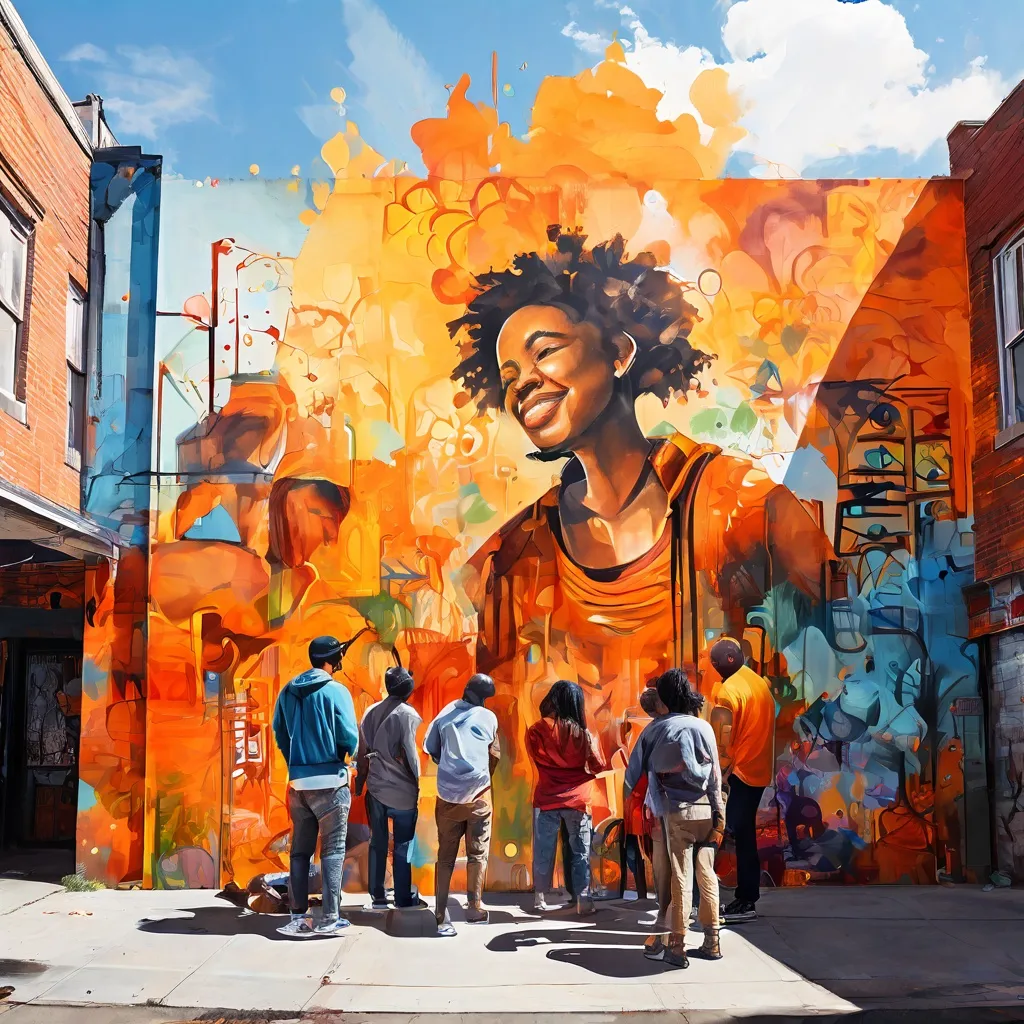
Street Art Museum Amsterdam's 2025 Review: A Year of Community and Urban Art in Amsterdam
The Street Art Museum Amsterdam (SAMA) reflects on 2025 as a year defined by depth, resilience, and connection, where street art transcended mere wall paintings to tell stories of people, memory, and the ongoing evolution of a neighborhood. This period saw SAMA navigating significant transitions, building its foundation on community trust and dedication.
SAMA's Resilient Year and Community Focus
Despite starting 2025 without structural funding, SAMA continued its mission through the commitment of its founder and a growing network of local artists, partners, and volunteers. This collective belief in the museum's work powered its operations, marking a year of rethinking, rebuilding, and relying on grassroots support rather than traditional certainty.
Street Art as Living Heritage in Amsterdam
SAMA advanced its core belief that street art deserves recognition as cultural heritage. Collaborating with the FARO Convention and the Rijksdienst voor het Cultureel Erfgoed, the museum helped establish one of the first valuation frameworks for street art within the Netherlands. Additionally, the Digital Street Art Depot expanded its scope, creating a dynamic archive where murals are preserved as VR capsules and shared memories, ensuring their stories continue even after physical changes to the urban landscape. This initiative highlights that preservation can mean keeping art alive through evolution, not just keeping it static.
Engaging Neighborhoods Through Creative Projects
In the Dichtersbuurt area of Amsterdam, SAMA fostered significant community engagement through various projects. Initiatives like the Buurttuin van Verhalen (Garden of Stories) involved approximately 460 participants in 30 activities as detailed by Cultuurparticipatie. The Community Living Lab engaged around 400 residents, while the De Vrije Bladen buurtkrant (Neighborhood Newspaper) connected with over 1000 residents. These efforts aimed to create spaces for gathering, dialogue, and belonging, collecting and reimagining local stories to form a living record of a neighborhood undergoing transformation.
Urban Art as a Catalyst for Change in the City
Across Amsterdam and beyond, SAMA positioned street art as a crucial link between art, policy, and public spaces. The museum engaged in diverse projects, from large-scale murals with housing corporations like Eigen Haard to offering strategic advisory services for municipalities such as Stadsdeel ZUID. SAMA also contributed to international knowledge exchange and developed programs like STRAATWIJS and STAR 2.0, which empower young people through creative participation. This work underscores street art’s capacity to build bridges between people, systems, and new possibilities.
A significant event of the year was Urbanites United: Amsterdam as a Living Canvas, a festival that brought together artists, residents, policymakers, and the public. The festival aimed to foster a shared conversation about the city, viewing it not as a static entity but as a continually co-created space.
Looking Ahead to 2026
By the close of 2025, SAMA experienced a positive shift, with its team restructuring, foundation stabilizing, and vision gaining clarity. The museum anticipates 2026 with a strengthened network, a validated methodology, and growing recognition of street art as a potent cultural and social force. As SAMA emphasizes, while street art might be temporary on walls, its impact resonates deeply within the community, ensuring its stories endure.
To discover more about the vibrant urban art scene, you can explore other museums in Amsterdam or locate various cultural spots on the Musemap map.