Madrid
Open now

An Exhibition Entry Exploring the Equestrian Sculpture of King Ferdinand VII (1820-1830) and Fernandine Style

Explore the intricate bronze techniques and historical significance of this 19th-century Spanish sculpture.

This detailed entry focuses on an equestrian sculpture of King Ferdinand VII, created between 1820 and 1830. Delve into the intricate details of its various bronze techniques, including gilded and blued finishes. The artwork embodies the Fernandine style, closely aligned with the French Empire aesthetic, offering insight into early 19th-century Spanish decorative arts.

About Escultura ecuestre en corveta de Fernando VII: 1820-1830 at Museo Nacional de Artes Decorativas in Madrid

Read curatorial context and practical visitor information for Escultura ecuestre en corveta de Fernando VII: 1820-1830 at Museo Nacional de Artes Decorativas in Madrid

Exhibition summary

This 'Piece of the Month' exhibition from April 2018 features an equestrian sculpture of King Ferdinand VII, dating between 1820-1830. The artwork showcases various bronze techniques and reflects the Fernandine style, closely related to the French Empire style.

Curatorial context

The 'Piece of the Month' exhibition for April 2018 presents an equestrian sculpture of King Ferdinand VII, who reigned from 1814-1833. The artwork exhibits the use of various bronze techniques, with the rider in gilded bronze, the saddle in blued bronze, and the base in gilded bronze using 'colored gold.' The original marble base has been replaced with a modern wooden one. Estimated to date between 1820-1830, the sculpture belongs to the Fernandine style, which is closely linked to the French Empire style and embodies its essential characteristics. The figure is cast, with the arm being a later addition. The main figure and base feature different gilding techniques, and the sovereign is depicted in the uniform of Captain General, adorned with insignia of various orders. The saddle is well-crafted, and the base is decorated with acanthus leaves. The possible attribution of this piece is to Manuel de Urquiza, a royal bronze worker who had previously worked for King Ferdinand VII.

Escultura ecuestre en corveta de Fernando VII: 1820-1830 key exhibition facts

Review exhibition status, schedule, venue context, and attribution details for Escultura ecuestre en corveta de Fernando VII: 1820-1830 at Museo Nacional de Artes Decorativas in Madrid

Venue
Museo Nacional de Artes Decorativas
Current status
Open now
Exhibition schedule
Information not currently available
Artist line / attribution
Possible attribution to Manuel de Urquiza
More from Museo Nacional de Artes Decorativas
Explore additional exhibitions from the same institution
Review other exhibitions from Museo Nacional de Artes Decorativas in Madrid to compare themes, timelines, and program direction while planning your museum visit.
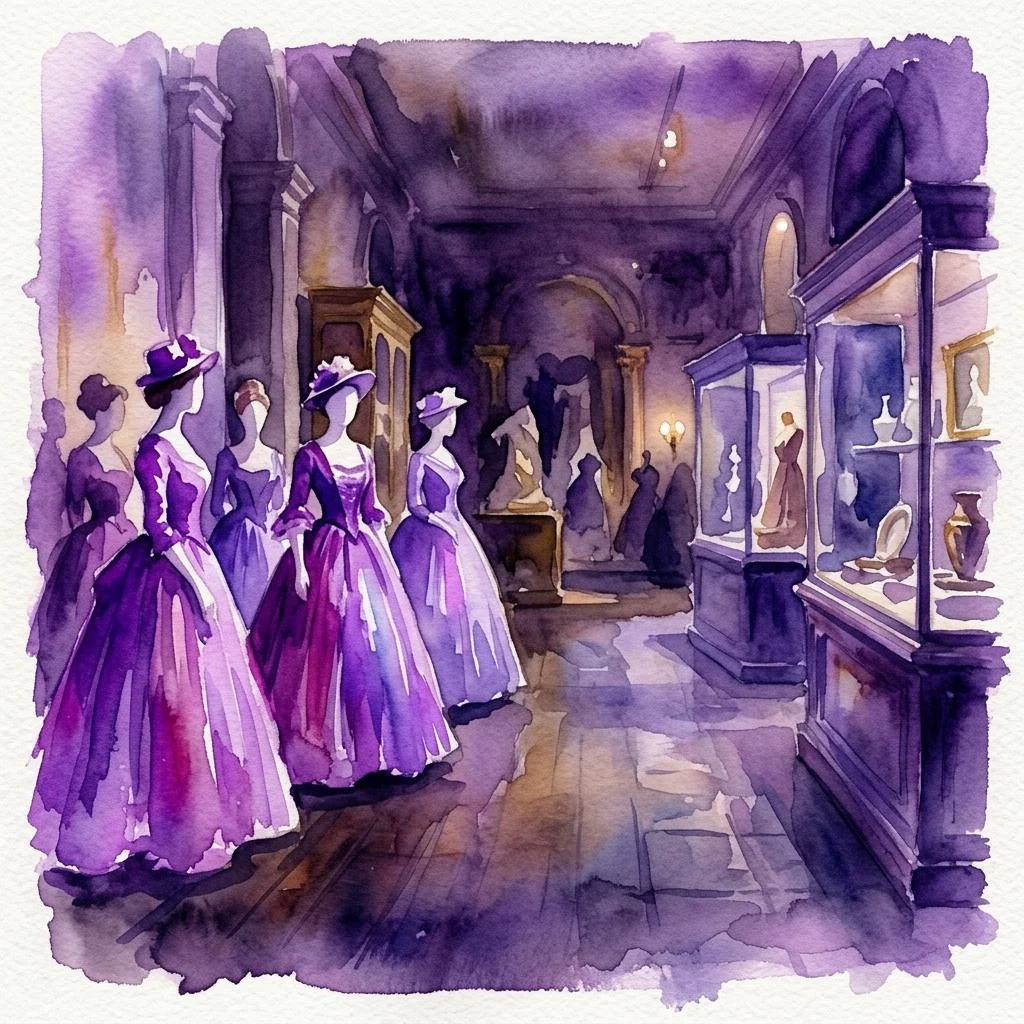
Watercolor illustration of a museum gallery featuring mannequins in 19th-century romantic-era dresses, with display cases and historical artifacts, evoking the fashion of Spain from 1833-1868.
Permanent exhibition

Explore "Romanticismo (1833-1868)": Spanish Fashion History from the Romantic Era

Witness social and stylistic shifts in clothing from 1833 to 1868.

This permanent exhibition delves into fashion trends during the Romantic period in Spain. Discover how the rising bourgeoisie influenced both male and female attire, contrasting somber men's wear with opulent women's styles.

Romanticismo Exhibition
A watercolor illustration of a Parisian haute couture workshop with mannequins displaying dramatic purple gowns, a designer draping fabric, and the Eiffel Tower visible through the window.
Permanent exhibition

Cristóbal Balenciaga: Exploring the Fashion Legacy at Decorative Arts Museum

A permanent exhibition on the master Spanish couturier's art.

Discover the unparalleled artistry of Cristóbal Balenciaga and his transformative impact on haute couture. This display showcases his innovative designs, mastery of fabrics, and pursuit of elegance. Learn about the iconic Spanish fashion house.

Balenciaga Exhibition
Watercolor illustration of Belle Époque fashion exhibit featuring four mannequins in elegant 1900s dresses, hats, and accessories, displayed in a museum gallery with period wallpaper and roped barriers.
Permanent exhibition

Discover Belle Époque Fashion: Women's Clothing Evolution (1898-1914)

Explore costume design and social influences from the early 20th century.

Journey through the Belle Époque (1898-1914) to see how women's fashion changed. This exhibit highlights the shift from restrictive corsetry to liberated, natural silhouettes, reflecting societal developments in historical attire.

Belle Époque Fashion
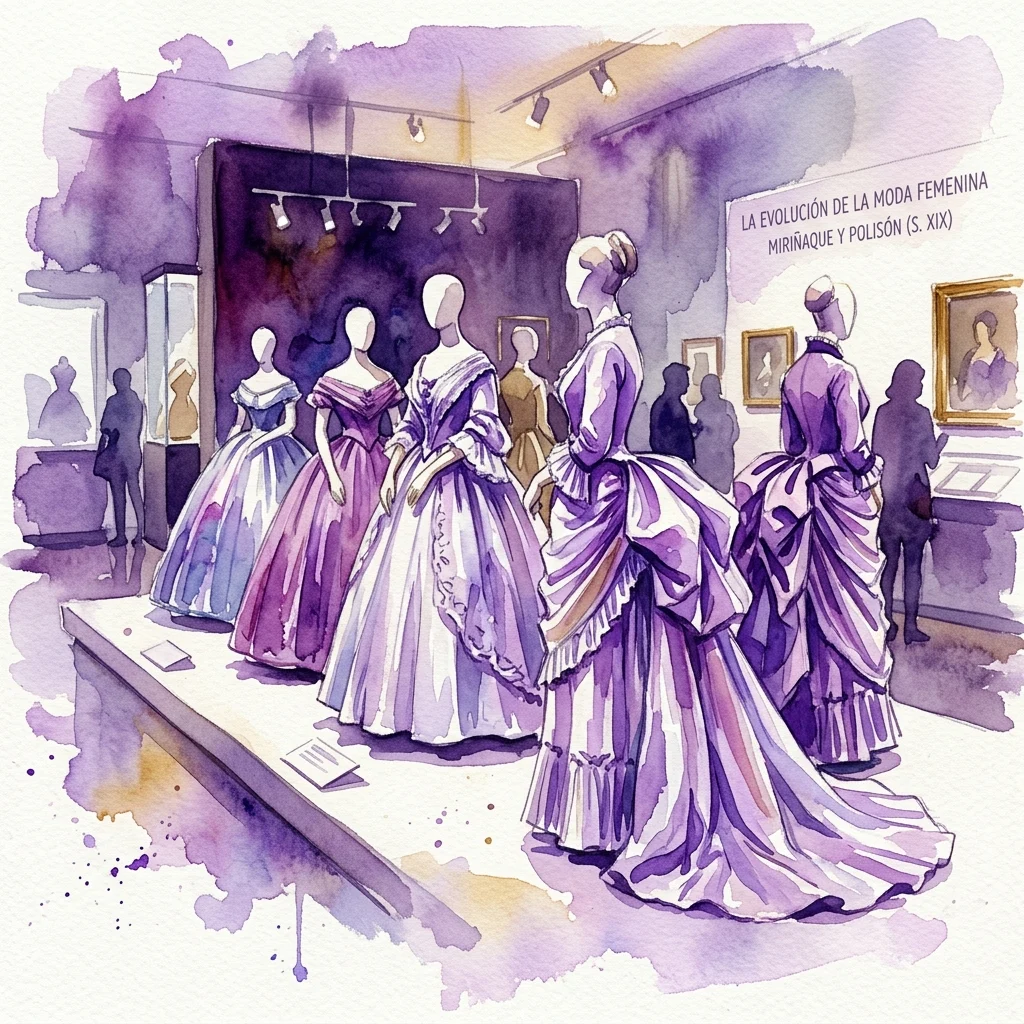
Watercolor illustration of a museum exhibition showcasing 19th-century Spanish women's dresses, highlighting the transition from miriñaque crinolines to polisón bustles, with mannequins in purple and white gowns under gallery lighting.
Permanent exhibition

Del miriñaque al polisón (1868-1898): Exploring Late 19th-Century Fashion Evolution

A permanent exhibition tracing the evolution of women's dress.

Examine the influences of society and designers on fashion from 1868 to 1898. See how the miriñaque silhouette transitioned to the polisón bustle. A key exploration of historical costume.

Fashion History Exhibition
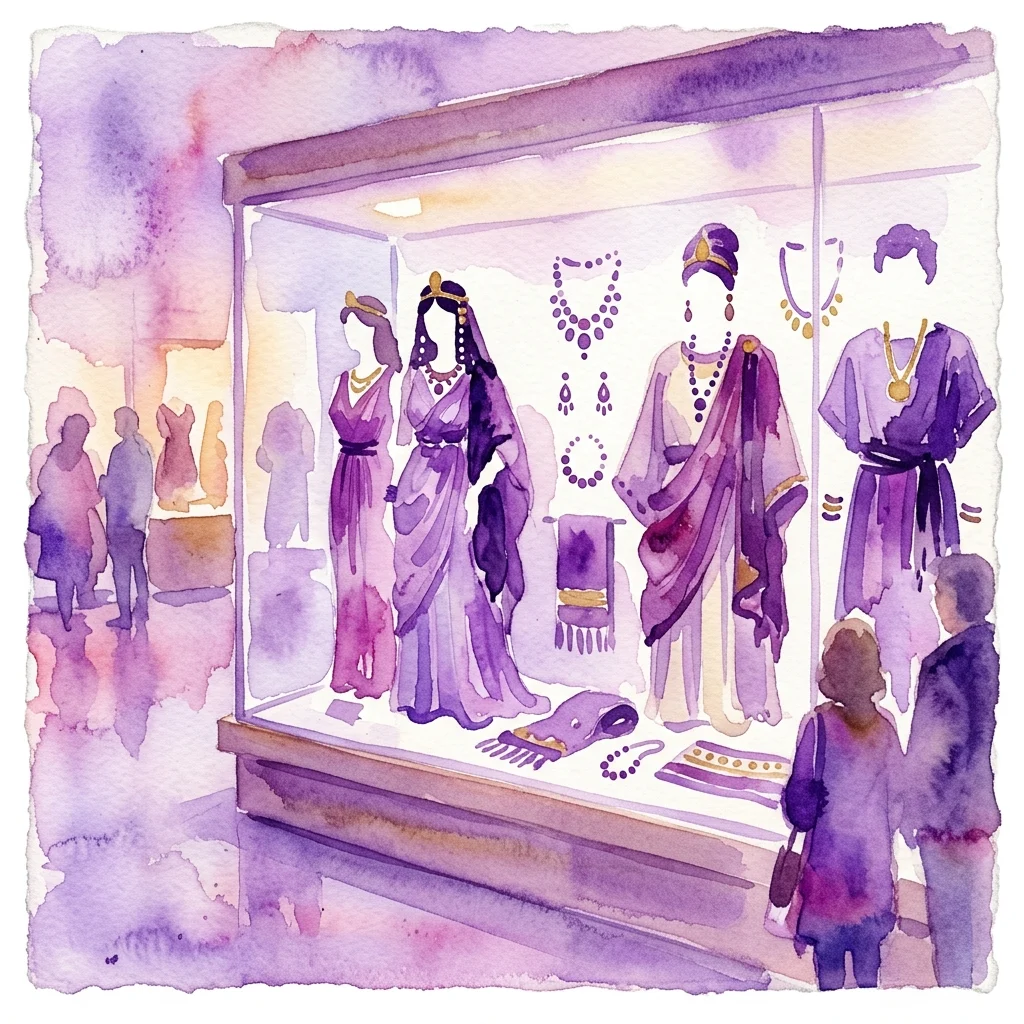
Watercolor illustration of a museum display case featuring ancient garments and jewelry, with visitors observing the exhibit on the 'Tiempos lejanos' (Distant Times) theme.
Permanent exhibition

Tiempos lejanos: The History of Clothing at Museo Nacional de Artes Decorativas

Delving into human adaptation and social differentiation through ancient attire.

This exhibition at Museo Nacional de Artes Decorativas reveals clothing's fundamental role for the human species. Understand how garments facilitated adaptation and social signaling, with rare fragments and art. A unique look at antiquity through dress.

Tiempos lejanos Exhibition
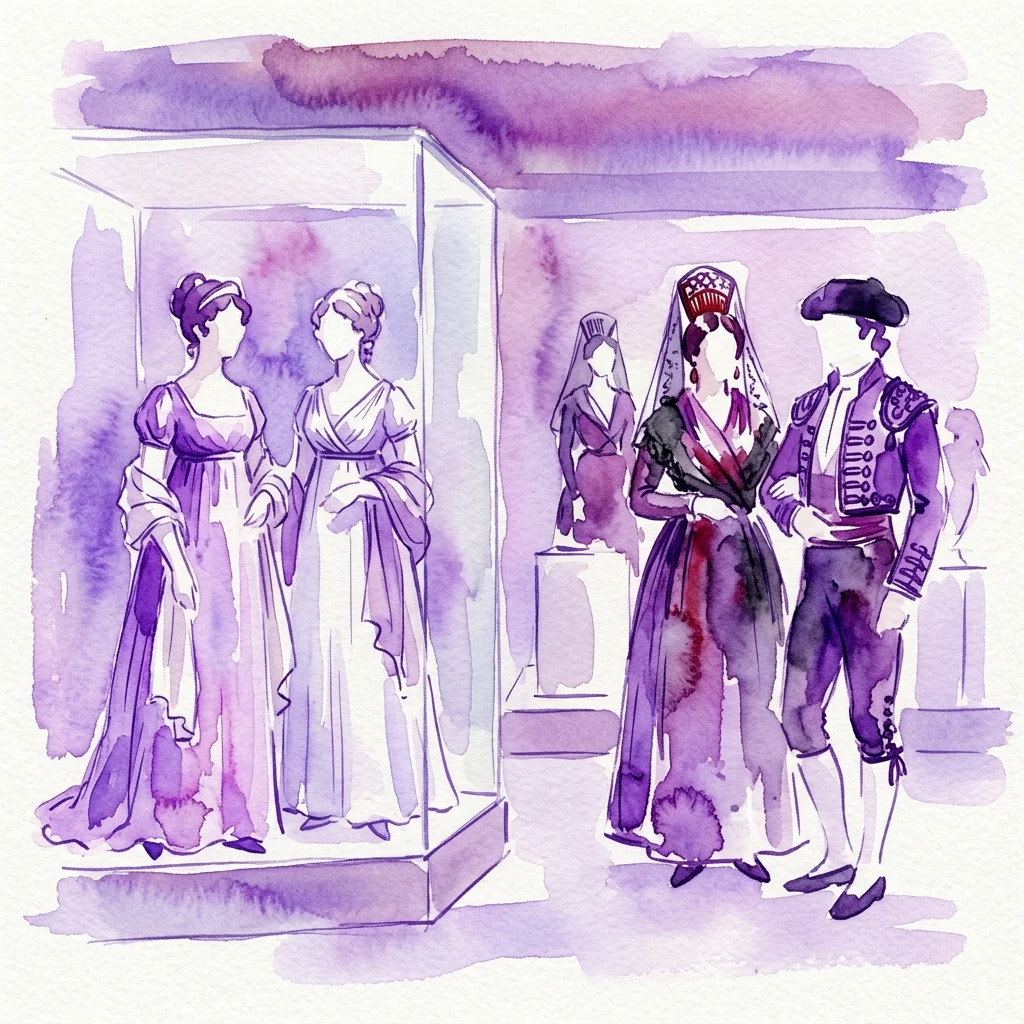
Watercolor illustration of 18th-19th century Spanish fashion in a museum display, featuring neoclassical dresses and traditional 'majismo' attire, reflecting the cultural shift from 1789-1833.
Permanent exhibition

Afrancesados y burgueses (1789-1833) Fashion Exhibition at Decorative Arts Museum

Explore fashion changes shaped by revolution, Neoclassicism, and Spanish majismo.

This permanent exhibition details the impact of social and economic shifts on fashion from 1789 to 1833. See how the French Revolution, Neoclassicism, and the unique Spanish 'majismo' style influenced period attire and cultural expression. Discover historical clothing examples.

Exhibition Details
Madrid

Find Exhibitions in Madrid: Explore Current Showcases and Cultural Events

Discover Madrid’s diverse art, history, and science cultural displays.

Navigate through Madrid’s vibrant exhibition scene to uncover artistic, historical, and scientific showcases. Pinpoint specific cultural experiences and plan your visits with ease. Explore an array of compelling displays across the city.