The permanent exhibition "History of Polish Sport and Olympism" traces the development of sports from ancient Greece to the present day, highlighting the origins of the modern Olympic Games and the history of sport in Poland. It features over 3,000 artifacts and nearly 600 photographs covering more than 40 sports disciplines.
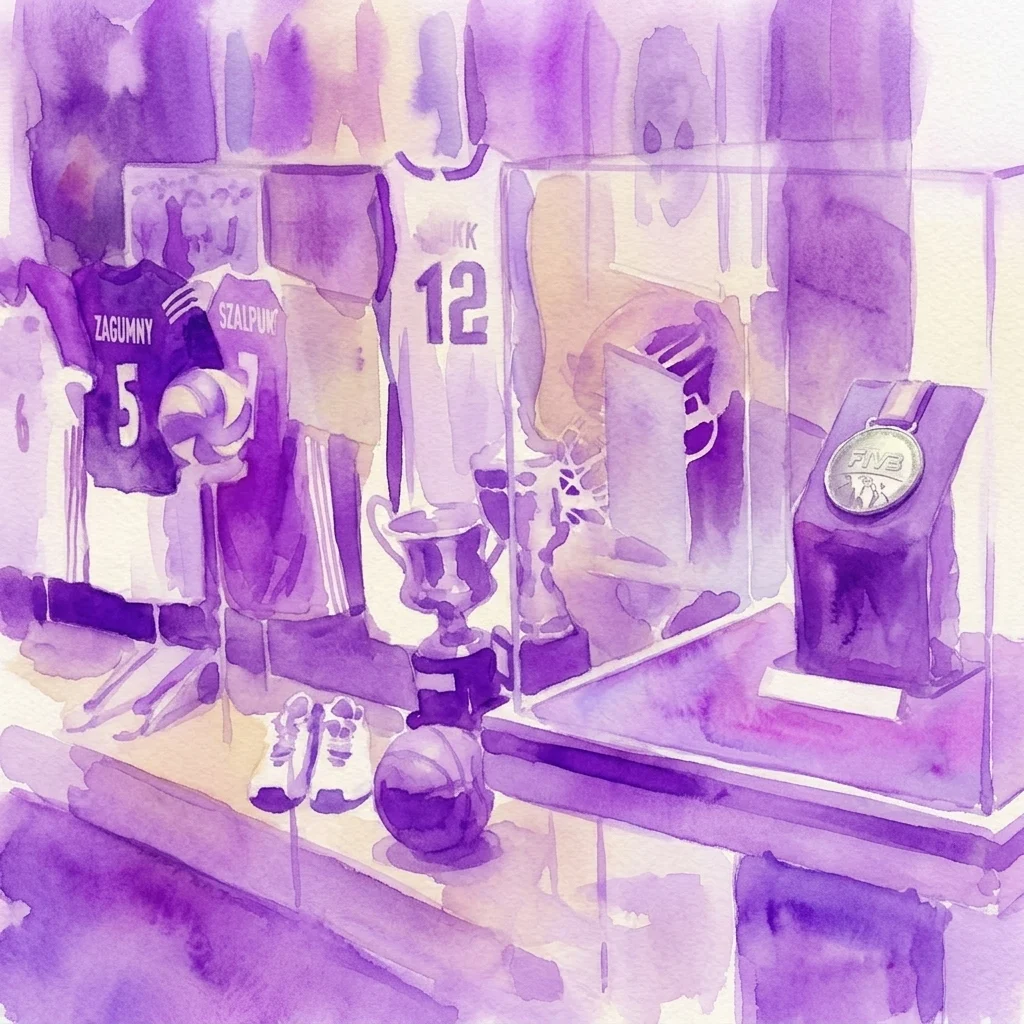
The permanent exhibition "History of Polish Sport and Olympism" offers a comprehensive journey through the world of sports, beginning with ancient Greece and progressing through the birth of the modern Olympic Games in the 19th century and the early days of sport in Poland during the 19th and 20th centuries, extending to contemporary times. Spanning approximately 1000 m² within the Olympic Centre, the exhibition displays over 3,000 artifacts and nearly 600 photographs, with a strong focus on Polish sports and tourism. The selection process was rigorous, given the museum's collection of over 50,000 artifacts and 55,000 photographs. The exhibition covers more than 40 disciplines in various aspects, including athletics, cycling, skiing, skating, tennis, fencing, equestrian sports, football, canoeing, judo, sailing, mountaineering, and both summer and winter tourism.
Among the exhibition's most compelling attractions are original Olympic medals and a kayak once used by Karol Wojtyła (later Pope John Paul II) on the Masurian Lakes. The display is further enriched with numerous films, audio recordings, and multimedia presentations. The exhibition also profiles many outstanding athletes from diverse sports fields, including notable figures such as the Kuchar brothers, Zbyszko Cyganiewicz, Waldemar Baszanowski, Bronisław Czech, Janusz Kusociński, Maria Kwaśniewska, Stanisława Walasiewicz, Jadwiga Jędrzejowska, Karol Rómmel, Adam Pappé, Jerzy Kulej, Irena Szewińska, Bronisław Malinowski, Stanisław Królak, Ryszard Szurkowski, Władysław Komar, Kazimierz Deyna, Wanda Rutkiewicz, Mateusz Kusznierewicz, Otylia Jędrzejczak, Adam Małysz, and Robert Korzeniowski.