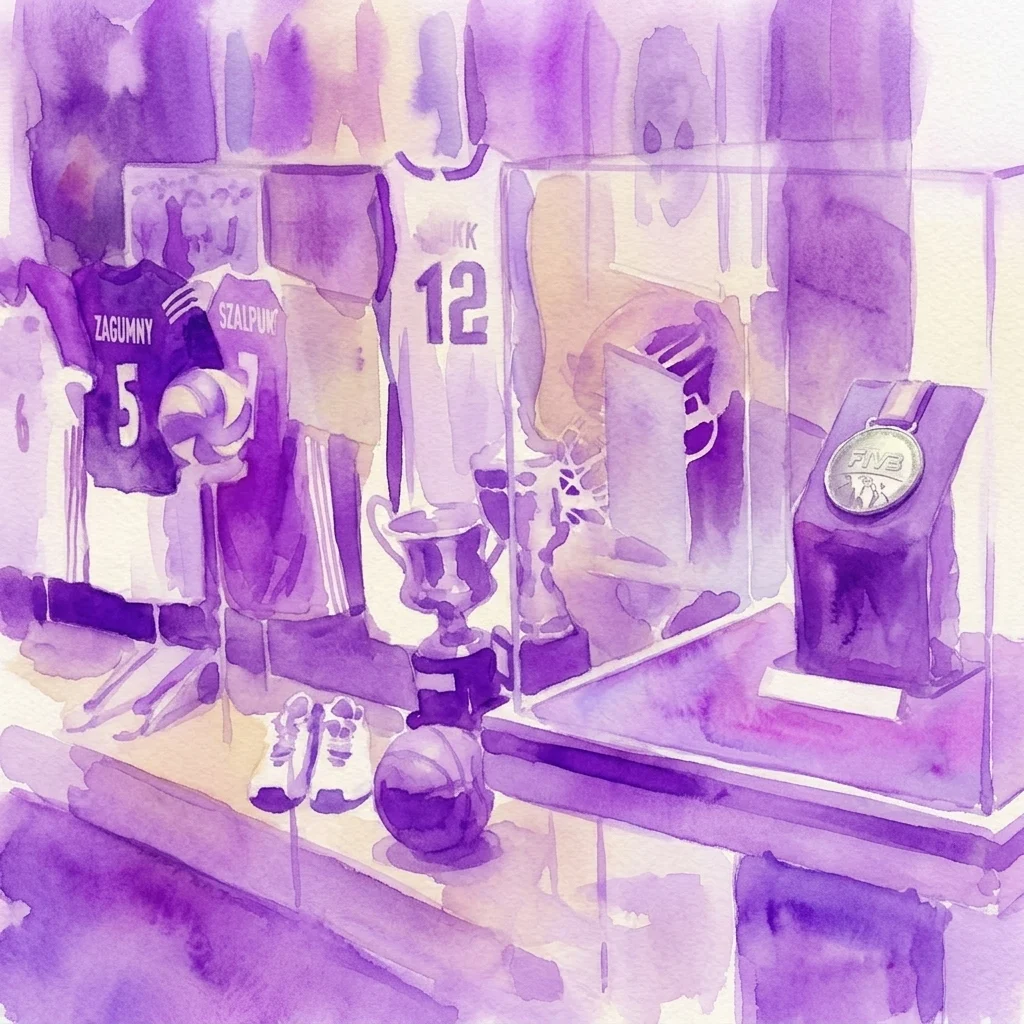
This exhibition, linked to the book 'Games of Life and Death. Athletes in the Warsaw Uprising' by Agnieszka Cubała, explores the dual lives of athletes during the Warsaw Uprising. It reveals how prominent figures in sports transitioned from stadiums and arenas to the battlefields, showcasing their extraordinary stories of courage and resilience.
The exhibition 'Games of Life and Death. Athletes in the Warsaw Uprising' delves into the remarkable experiences of Polish athletes who fought in the Warsaw Uprising. The content is largely derived from Agnieszka Cubała's book of the same name, which portrays these individuals not just as fighters but as charismatic figures with adventurous lives, often lived on the edge.
The exhibition highlights how athletes—including Olympians, footballers, rowers, and fencers—traded their sports arenas for the front lines during World War II. It details their involvement in clandestine operations, acts of sabotage, and transportation of weapons, often alongside their civilian duties. The text emphasizes how these individuals, accustomed to competition and high stakes on the field, faced the ultimate 'games of life and death' during the Uprising. It draws parallels between their previous achievements in sports and their roles as soldiers, sanitaries, and couriers.
Several prominent figures are featured, such as General Tadeusz Komorowski 'Bór,' an accomplished equestrian; General Leopold Okulicki 'Kobra,' a football enthusiast; and General Tadeusz Pełczyński 'Grzegorz,' who participated in a wide range of sports. Eugeniusz Lokajski 'Brok,' an Olympic athlete and chronicler of the Uprising, is also a key figure, whose athletic past twice saved his life. The exhibition also recounts the stories of Tadeusz Makowiecki 'Tadeusz,' a swimmer who survived perilous situations, and Maria Kwaśniewska, an Olympic javelin medalist, whose photograph with Hitler indirectly aided many Warsaw residents during the occupation. Other notable figures include Henryk Roycewicz 'Leliwa,' Jan Rodowicz 'Anoda,' Andrzej Łapicki, Jan Mulak, Kornel Makuszyński, Krystyna Zachwatowicz-Wajda, and Krzysztof Sobieszczański 'Kolumb,' illustrating the broad spectrum of athletes and their varied roles and passions.
Beyond individual stories, the exhibition examines the broader themes of values, choices, and post-war reflections, as exemplified by the experiences of couples like Irena and Tadeusz Komorowski, Zofia and Bohdan Tomaszewski, and Danuta and Andrzej Zawadzki. The narrative underscores the resilience, courage, and spirit of these individuals who, despite immense hardship, embodied the motto: 'Retreating in thought should only serve to draw conclusions, not to dwell on.' The promotion for the book occurred on July 30th, with the book's premiere on August 1, 2018, anchoring the exhibition's context to that year.