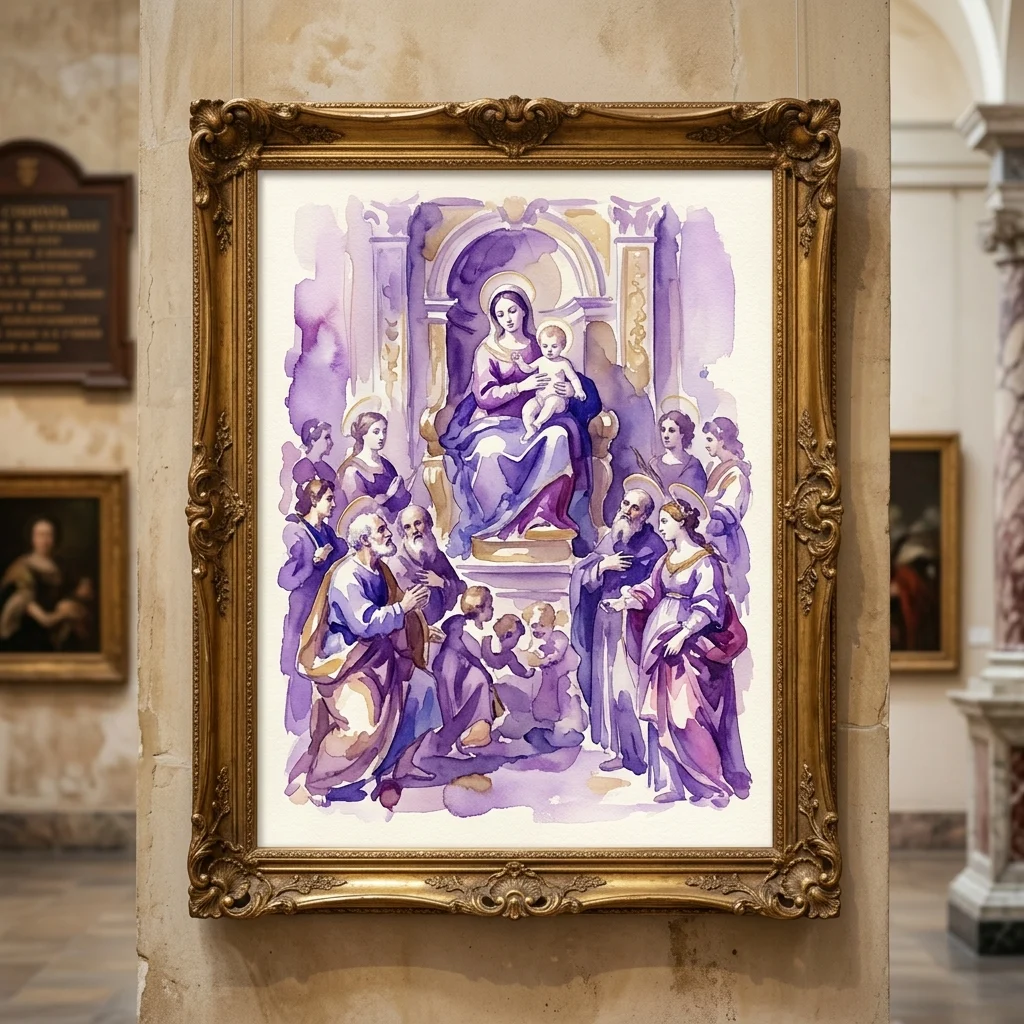
This exhibition in the Royal Łazienki Museum features heliograms by Nicolas Grospierre, displayed in the Sala Salomona. The artworks, created by sunlight, color, and matter, fill the spaces left by Bacciarelli's paintings destroyed during WWII, creating a dialogue between absence and presence.
The Royal Łazienki Museum presents 'Heliograms in the Sala Salomona. In Search of Light,' an exhibition showcasing the works of Nicolas Grospierre. These large-format heliograms, created using sunlight, color, and material, occupy the empty frames in the Sala Salomona of the Palace on the Isle, which once held Bacciarelli's paintings depicting scenes from the life of King Solomon. These original murals, created between 1788-1793 as part of King Stanisław August's iconographic program, were destroyed during World War II. The exhibition by Grospierre is a contemporary response, with his heliograms reflecting "both presence and absence, permanence and impermanence," serving as a bridge between the physical and the metaphysical. Heliography, a camera-less photographic technique, uses sunlight to create abstract forms on materials like velvet, making each piece unique and unpredictable. This project invites contemporary creators to explore the artistic and ideological visions of Stanisław August, filling the void left by historical destruction with new artistic interpretations.
The Sala Salomona's original decorations by Marcello Bacciarelli, featuring scenes from the life of the biblical King Solomon, were intended as a symbolic manifestation of the king's reforms and aspirations. They represented the ideal ruler guided by wisdom and justice, aiming for national prosperity and peace. The depiction of the Jerusalem Temple and Solomon's procession with the Ark of the Covenant symbolized the Constitution of May 3rd, Stanisław August's greatest achievement. However, these murals were entirely lost in the fire set by the Germans in 1944. Since the palace's renovation and reopening in the 1960s, the gilded frames and wall spaces have remained empty. The museum's decision to invite contemporary artists to reimagine the space signifies a thoughtful engagement with history, absence, and artistic interpretation, using Grospierre's heliograms as the inaugural project.