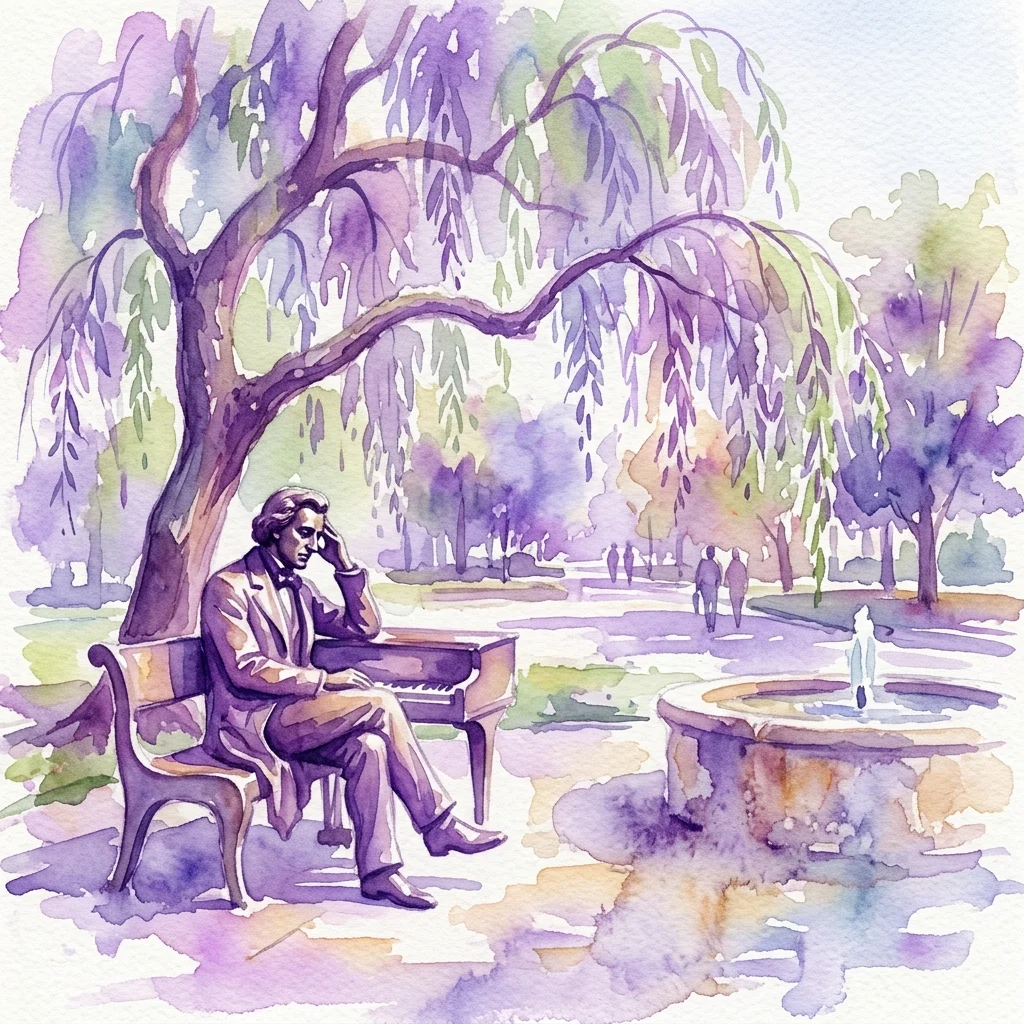
This section of the Royal Łazienki Park represents a 19th-century European Romantic garden, influenced by English landscape styles. It features picturesque layouts, winding paths, a pond with an island (now gone), and classical-inspired pavilions like the Temple of Sibyl and the Egyptian Temple.
The Romantic Garden, situated near the Belweder Palace, is a distinguished example of 19th-century European garden design, drawing inspiration from English landscape parks and the Beautiful and Picturesque styles. Developed between 1819-1822 during the period when the Łazienki Park was owned by Russian Emperor Alexander I, its transformation was overseen by architect Jakub Kubicki. This garden section features a pond with an irregular, picturesque shoreline, once adorned with a tree-covered island fashionable in gardens of the late 18th and early 19th centuries.
Notable structures within the garden include the Temple of Sibyl/Diana, built in 1822 and inspired by Greek peripteral architecture, featuring wooden construction, white paint, and iron lions guarding its entrance. Nearby, the Egyptian Temple, also from 1822, incorporates elements of ancient Egyptian architecture, with lotus columns and water-spouting lions, and was originally intended for growing figs. The garden's design emphasizes open sightlines, with views towards the pond, artificial river with bridges, and the Belweder Palace. It is further enriched by diverse 19th-century plantings, including poplars, oaks, ashes, and various shrubs, and its layout is defined by winding paths and the Chinese Avenue marking its boundary.