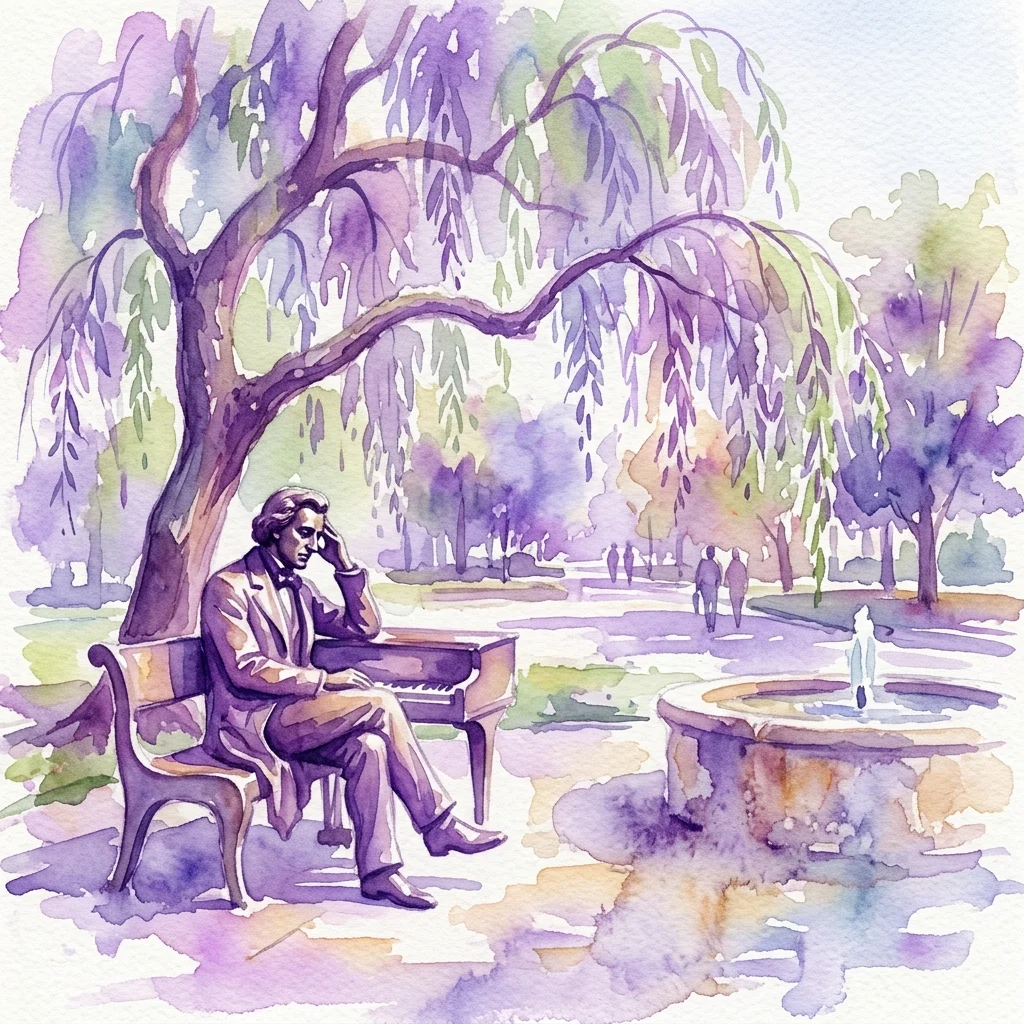
This lecture explores the significant role of the Łazienki Park in Stanisław Wyspiański's renowned drama "Noc listopadowa". The event delves into how the park became a symbolic "antechamber of Hades" for the playwright, examining the play's literary, historical, and mythological dimensions.
The lecture ""Teatr mój widzę ogromny". Łazienki w "Nocy listopadowej" Wyspiańskiego" delves into the profound connection between the Royal Łazienki Park and Stanisław Wyspiański's famous drama. The presentation highlights how Łazienki served as a crucial setting, transforming into a symbolic "antechamber of Hades" within the play. The speaker, Maria Jolanta Olszewska, a historian and literary scholar, will analyze the complex layers of "Noc listopadowa", which is characterized by its innovative use of artistic means beyond literature, including painting, music, and theater. The lecture situates the drama within the context of "total theater" and compares it to Adam Mickiewicz's "Dziady". Key to understanding "Noc listopadowa" are its ties to the November Uprising of 1830, Greek mythology, particularly the myth of Demeter and Persephone, and the symbolic role of Warsaw. The lecture emphasizes the play as a "drama of place," where historical events, the fate of the Polish nation, and the specific setting of Łazienki are deeply intertwined.
This lecture is part of the event program accompanying the temporary exhibition "Ikonosfera Wyspianskiego. Noc listopadowa w Łazienkach Królewskich". Maria Jolanta Olszewska, a professor and researcher with extensive experience in 19th and 20th-century Polish literature and drama, will lead the discussion. Her academic interests include literary history, genealogy, the intersection of literature and utilitarian genres, and the history of drama and theater. Her past publications and research focus on various aspects of Polish literature and its historical context.